Key Takeaway
Getting your TB-500 reconstitution calculator right is important for a safe and effective protocol. If your TB-500 arrives as a lyophilized (freeze-dried) powder, you'll need to mix it with bacteriostatic water before you can inject it.
Getting your TB-500 reconstitution right is important for a safe and effective protocol. If your TB-500 arrives as a lyophilized (freeze-dried) powder, you'll need to mix it with bacteriostatic water before you can inject it. The process is simple, but precision matters) both for safety and for getting the correct dose.
Key Takeaways: - Understand what you need before you start - Step-by-Step Reconstitution Process - Calculating Your Injection Dose - Storage and Handling Best Practices
This guide walks you through the entire reconstitution process step by step. We'll cover what you need, how to mix it, how to calculate your dose, and how to store it properly afterward.
What You Need Before You Start
Before you reconstitute your TB-500, gather everything you'll need. Having it all laid out in advance makes the process smooth and reduces the chance of contamination.
Your TB-500 vial. This is the small vial containing the lyophilized powder. Check the label for the total amount of peptide (this is usually measured in milligrams (mg). Common vial sizes are 2 mg and 5 mg. You'll need this number to calculate your dose.
Bacteriostatic water (BAC water). This is sterile water that contains 0.9% benzyl alcohol as a preservative. It's specifically designed for reconstituting injectable medications. Don't use regular water, saline, or any other liquid. Your pharmacy will typically supply this with your order.
Insulin syringes. You'll need syringes marked in units (U-100 insulin syringes are standard). These have fine needles appropriate for subcutaneous injection. You'll use one syringe to add water to the vial and a fresh syringe for each injection.
Alcohol swabs. Use these to clean the rubber stoppers on both the BAC water vial and the TB-500 vial before piercing them. This prevents contamination.
A clean, flat workspace. Wash your hands thoroughly with soap and water before handling anything. Work on a clean, flat surface away from pets, food, and drafts.
"What makes tirzepatide particularly interesting is the dual GIP/GLP-1 mechanism. We're seeing that GIP receptor activation appears to amplify the metabolic effects in ways we didn't fully anticipate from the preclinical data.") Dr. Ania Jastreboff, MD, PhD, Yale School of Medicine, lead author of SURMOUNT-1[1]
Step-by-Step Reconstitution Process
Follow these steps carefully. Take your time (there's no rush, and accuracy is more important than speed.
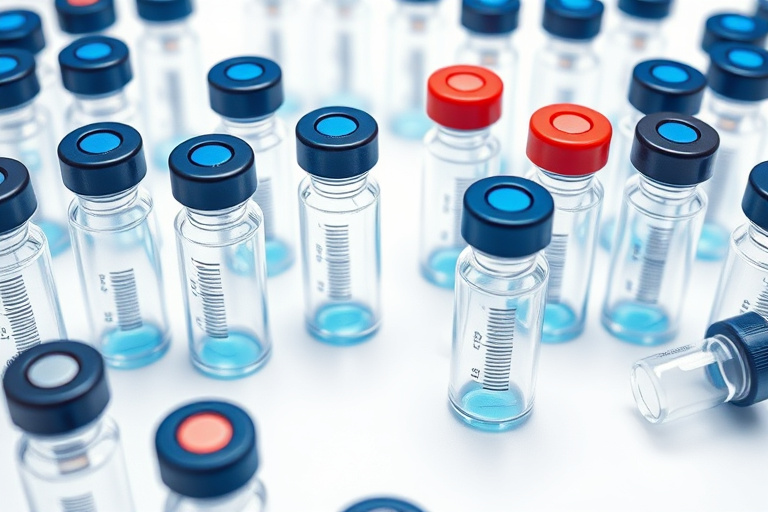
Step 1[2]: Check your vial. Look at the TB-500 powder inside the vial. It should appear as a white or off-white cake or powder. If it looks discolored, wet, or unusual, don't use it) contact your pharmacy.
Step 2: Clean the stoppers. Use an alcohol swab to wipe the rubber stopper on top of your TB-500 vial. Use a separate swab for your BAC water vial. Let them air dry for a few seconds.
Step 3: Draw up bacteriostatic water. Using a clean insulin syringe, draw up the amount of BAC water you want to add. The amount you add determines your concentration (more water means a more diluted solution and larger injection volumes per dose.
Free Download: Peptide Protocol Planner (12-Week) Includes a reconstitution reference card, dose calculation worksheet, and injection tracking log. Get yours free) we'll email it to you instantly. [Download Your Free Protocol Planner]
A common approach for a 5 mg vial is to add 2 mL (200 units on an insulin syringe) of BAC water. This creates a concentration of 2.5 mg per mL. For a 2 mg vial, adding 1 mL (100 units) gives you a concentration of 2 mg per mL. Use our to find the exact volume for your specific vial and target dose.
Step 4: Add water slowly. Insert the needle through the rubber stopper of the TB-500 vial. Aim the needle at the inside wall of the vial (not directly at the powder. Release the water slowly, letting it trickle down the glass wall. Don't squirt it directly onto the powder, as this can damage the peptide.
Step 5: Let it dissolve. Gently swirl the vial with a rolling motion between your palms. Don't shake it vigorously) aggressive shaking can damage peptide bonds. The powder should dissolve within a few minutes, resulting in a clear, colorless solution. If particles remain after gentle swirling, let it sit in the refrigerator for 10 to 15 minutes, then swirl again.
Step 6: Inspect the solution. The reconstituted TB-500 should be clear and free of visible particles. If it appears cloudy, contains floating particles, or is discolored, don't use it. Contact your pharmacy.
Calculating Your Injection Dose
Once your TB-500 is reconstituted, you need to know how many units to draw for each injection. This depends on your prescribed dose and the concentration you created.
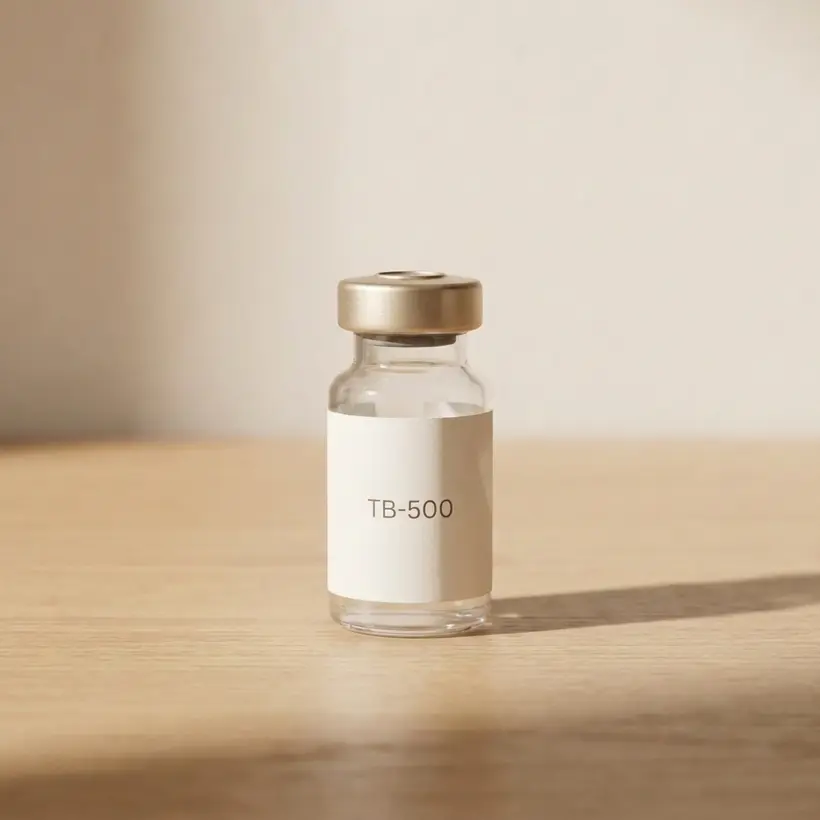
From the FormBlends catalog
TB-500 (Thymosin Beta-4)
Universal repair peptide for tissue regeneration · From $49/mo · compounded by a licensed 503A pharmacy, dispensed only after provider review.
Learn about TB-500 (Thymosin Beta-4) →The formula is simple:
Dose in units = (Prescribed dose in mg / Total mg in vial) x Total units of water added
Example: Your provider prescribed 2.5 mg of TB-500. You have a 5 mg vial and added 200 units (2 mL) of BAC water.
2.5 mg / 5 mg = 0.5 0.5 x 200 units = 100 units per injection
So you would draw 100 units (1 mL) on your insulin syringe for each 2.5 mg dose.
Another example: Your provider prescribed 2 mg. You have a 5 mg vial with 200 units of water added.
2 mg / 5 mg = 0.4 0.4 x 200 units = 80 units per injection
If math isn't your thing, don't stress it. Our does all of this for you. Just enter your vial size, the amount of water you added, and your prescribed dose (it tells you exactly how many units to draw.
You can also log each dose in the to stay on track with your protocol schedule.
Storage and Handling Best Practices
Proper storage keeps your reconstituted TB-500 effective and safe throughout your protocol.
Store reconstituted TB-500 in the refrigerator at 36 to 46 degrees Fahrenheit (2 to 8 degrees Celsius). The door shelf works fine. Just make sure the vial is upright and not at risk of falling.
Never freeze reconstituted peptides. Freezing can damage the peptide structure and compromise effectiveness. If your reconstituted TB-500 accidentally freezes, don't use it) contact your pharmacy for a replacement.
Keep it away from light. Store the vial in a dark area of your refrigerator or keep it in its original box. Extended light exposure can degrade peptides over time.
Use within the recommended timeframe. Most pharmacies recommend using reconstituted TB-500 within 28 to 30 days. Write the reconstitution date on the vial with a marker so you can track freshness. If you won't use the entire vial within that window, consider using a smaller amount of BAC water to create a more concentrated solution that requires fewer total injections.
Always use a fresh syringe for each injection. Never reuse syringes (even for drawing from the same vial. Reused needles are dull, more painful, and increase infection risk.
Dispose of needles safely. Use a proper sharps container. Never throw loose needles in the trash. Your pharmacy can advise on local disposal options.
For detailed guidance on reconstitution techniques across different peptides, visit our .
Frequently Asked Questions
How much bacteriostatic water do I add to TB-500?
The amount of BAC water is flexible) it determines the concentration of your solution. A common approach is 1 to 2 mL per vial. More water means a more dilute solution and larger injection volumes. Use our to find the ideal amount based on your vial size and prescribed dose.
Can I use regular water to reconstitute TB-500?
No. Always use bacteriostatic water (BAC water) specifically designed for reconstitution. Regular sterile water lacks the preservative (benzyl alcohol) that keeps the solution safe for multi-dose use. Using regular water increases contamination risk and limits how long the solution stays viable.
How long does reconstituted TB-500 last?
Reconstituted TB-500 stored in the refrigerator is generally considered viable for 28 to 30 days, though your pharmacy may provide specific guidance. Write the date of reconstitution on the vial so you can track it. Discard any unused solution after the recommended period.
What happens if I shake the vial too hard?
Vigorous shaking can damage peptide bonds through a process called denaturation. This may reduce the effectiveness of the peptide. Always use gentle swirling or rolling motions to dissolve the powder. If the solution becomes foamy from shaking, let it sit until bubbles settle before using.
Can I travel with reconstituted TB-500?
Reconstituted TB-500 needs to stay refrigerated, which can complicate travel. Use an insulated cooler bag with ice packs for short trips. For longer travel, discuss options with your provider, they may suggest timing your reconstitution around your travel schedule or adjusting your protocol temporarily.
Your Personalized Plan Is Waiting
No two patients are the same, and your protocol shouldn't be either. FormBlends providers create customized treatment plans based on your health profile, goals, and preferences.
Medical References
- Jastreboff AM, Aronne LJ, Ahmad NN, et al. Tirzepatide Once Weekly for the Treatment of Obesity. N Engl J Med. 2022;387(3):205-216. [PubMed | ClinicalTrials.gov | DOI]
- Wilding JPH, Batterham RL, Calanna S, et al. Once-Weekly Semaglutide in Adults with Overweight or Obesity. N Engl J Med. 2021;384(11):989-1002. [PubMed | ClinicalTrials.gov | DOI]
- Davies M, Færch L, Jeppesen OK, et al. Semaglutide 2.4 mg once a week in adults with overweight or obesity, and type 2 diabetes (STEP 2). Lancet. 2021;397(10278):971-984. [PubMed | ClinicalTrials.gov | DOI]
- Wadden TA, Bailey TS, Billings LK, et al. Effect of Subcutaneous Semaglutide vs Placebo as an Adjunct to Intensive Behavioral Therapy on Body Weight in Adults With Overweight or Obesity (STEP 3). JAMA. 2021;325(14):1403-1413. [PubMed | ClinicalTrials.gov | DOI]
- Rubino D, Abrahamsson N, Davies M, et al. Effect of Continued Weekly Subcutaneous Semaglutide vs Placebo on Weight Loss Maintenance in Adults With Overweight or Obesity (STEP 4). JAMA. 2021;325(14):1414-1425. [PubMed | ClinicalTrials.gov | DOI]
- Garvey WT, Batterham RL, Bhatt DL, et al. Two-year effects of semaglutide in adults with overweight or obesity (STEP 5). Nat Med. 2022;28(10):2083-2091. [PubMed | ClinicalTrials.gov | DOI]
Sources &. References
- Bock-Marquette I, Saxena A, White MD, et al. Thymosin beta4 activates integrin-linked kinase and promotes cardiac cell migration, survival and cardiac repair. Nature. 2004;432(7016):466-472. Doi:10.1038/nature03000
- Malinda KM, Sidhu GS, Mani H, et al. Thymosin beta4 accelerates wound healing. J Invest Dermatol. 1999;113(3):364-368. Doi:10.1046/j.1523-1747.1999.00708.x
Nothing in this article should be construed as medical advice. The information provided is educational only. Always consult with your healthcare provider before beginning, modifying, or discontinuing any medication or treatment. FormBlends connects patients with licensed providers for individualized care.
Last updated: 2026-03-24
Ready when you are
TB-500 (Thymosin Beta-4)
Universal repair peptide for tissue regeneration · From $49/mo · compounded by a licensed 503A pharmacy, dispensed only after provider review.
Learn about TB-500 (Thymosin Beta-4) →