Key Takeaway
TB-500 (thymosin beta-4) is a peptide prescribed for tissue repair, recovery support, and inflammation management. If your provider has prescribed TB-500, understanding TB-500 reconstitution calculator is important for safe, accurate dosing.
TB-500 (thymosin beta-4) is a peptide prescribed for tissue repair, recovery support, and inflammation management. If your provider has prescribed TB-500, understanding TB-500 reconstitution is important for safe, accurate dosing. This guide covers the complete mixing process, common dose calculations, and storage recommendations specific to TB-500.
Key Takeaways: - Understanding TB-500 Vial Sizes and Typical Doses - Learn how to reconstitute tb-500 - TB-500 Dose Calculations Made Simple - TB-500 Storage and Handling Tips
Always follow your provider's instructions for dosing and frequency. The information here is educational and designed to help you understand the process.
How TB-500 Vial Sizes and Typical Doses
TB-500 from 503A compounding pharmacies commonly comes in 5 mg or 10 mg vials of lyophilized powder. Some providers prescribe custom strengths, so always check your specific label.
Typical TB-500 doses prescribed by providers range from 500 mcg to 2,500 mcg (2.5 mg) per injection. Protocols often include a loading phase with higher or more frequent doses, followed by a maintenance phase at lower frequency.
A common loading protocol might look like:
- Loading phase (weeks 1-4): 2,000-2,500 mcg twice per week
- Maintenance phase (weeks 5+): 500-1,000 mcg once or twice per week
These are example ranges only. Your provider will customize your protocol based on your condition, body weight, and response.
Because TB-500 doses tend to be larger than BPC-157 doses, the reconstitution volume you choose matters for injection comfort. Higher water volumes mean larger injection volumes, which some people find less comfortable. Our helps you find the optimal balance.
"What makes tirzepatide particularly interesting is the dual GIP/GLP-1 mechanism. We're seeing that GIP receptor activation appears to amplify the metabolic effects in ways we didn't fully anticipate from the preclinical data.") Dr. Ania Jastreboff, MD, PhD, Yale School of Medicine, lead author of SURMOUNT-1[2]
How to Reconstitute TB-500
The mixing process for TB-500 follows standard peptide reconstitution steps. Here's the walkthrough.
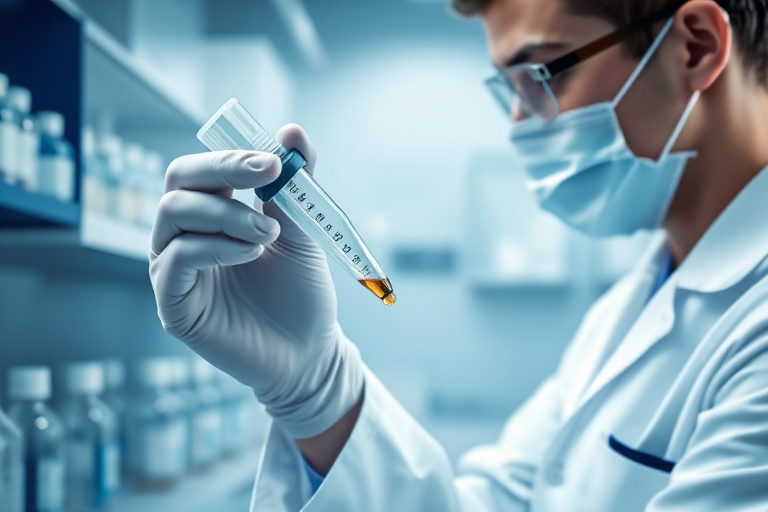
What you need: TB-500 vial, bacteriostatic water, insulin syringes, alcohol swabs, a clean workspace.
Step 1[3]: Wash your hands thoroughly with soap and water.
Step 2: Swab the rubber stoppers on both the TB-500 vial and the bacteriostatic water vial with alcohol. Let them air dry.
Step 3: Draw your chosen volume of bacteriostatic water into a syringe. For a 5 mg vial, 1-2 mL is common. For a 10 mg vial, 2-3 mL works well.
Step 4: Insert the needle into the TB-500 vial at an angle. Let the water stream down the inside wall of the glass. Don't spray it directly onto the powder.
Step 5: Swirl the vial gently by rolling it between your palms. TB-500 dissolves relatively quickly (usually within 2-3 minutes. Never shake the vial.
Step 6: Check the solution. It should be clear and colorless. If you see cloudiness or floating particles, don't use it.
Step 7: Write the date and concentration on the vial. Refrigerate immediately.
For detailed technique tips and common mistakes to avoid, see our .
Use our free to get your exact TB-500 dose in syringe units before you mix.
TB-500 Dose Calculations Made Simple
Here are reference charts for common TB-500 setups. Always verify with your provider before using these numbers.
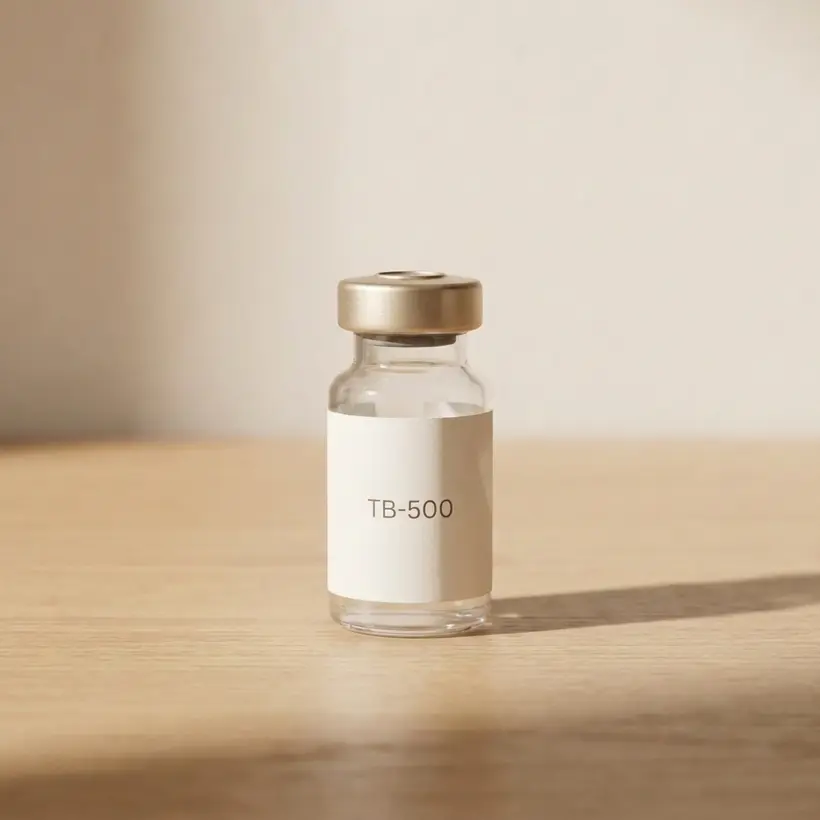
From the FormBlends catalog
TB-500 (Thymosin Beta-4)
Universal repair peptide for tissue regeneration · From $49/mo · compounded by a licensed 503A pharmacy, dispensed only after provider review.
Learn about TB-500 (Thymosin Beta-4) →5 mg vial + 1 mL BAC water (50 mcg per unit):
| Prescribed Dose | Syringe Units | Doses Per Vial |
|---|---|---|
| 500 mcg | 10 units | 10 doses |
| 750 mcg | 15 units | ~6 doses |
| 1,000 mcg | 20 units | 5 doses |
| 2,000 mcg | 40 units | 2.5 doses |
| 2,500 mcg | 50 units | 2 doses |
5 mg vial + 2 mL BAC water (25 mcg per unit):
| Prescribed Dose | Syringe Units | Doses Per Vial |
|---|---|---|
| 500 mcg | 20 units | 10 doses |
| 750 mcg | 30 units | ~6 doses |
| 1,000 mcg | 40 units | 5 doses |
| 2,000 mcg | 80 units | 2.5 doses |
| 2,500 mcg | 100 units | 2 doses |
Notice that at higher doses with 2 mL of water, you'd be drawing 80-100 units) nearly a full syringe. Some people prefer 1 mL of water to keep injection volumes smaller. This is purely a comfort preference and doesn't affect the peptide's effectiveness.
At a loading dose of 2,500 mcg twice weekly from a 5 mg vial, you'd use one vial per week. During maintenance at 750 mcg twice weekly, a vial would last about 3 weeks.
The tracks your vial usage and helps you plan reorders so you never run short.
TB-500 Storage and Handling Tips
TB-500 follows standard peptide storage guidelines with a few specifics worth noting.
Unreconstituted vials: Store in the refrigerator at 36-46 degrees Fahrenheit. TB-500 in lyophilized form is stable for months under refrigeration. It can tolerate short periods at room temperature during shipping or handling.
Reconstituted vials: Refrigerate immediately after mixing. Use within 28 days. TB-500 solution should remain clear throughout its shelf life. Any cloudiness indicates degradation.
Injection sites: TB-500 is typically administered as a subcutaneous injection. The abdomen, upper thigh, and upper arm are common sites. Some providers recommend injecting near the area of concern, while others note that TB-500 acts systemically regardless of injection site. Follow your provider's recommendation.
Combining with BPC-157: Many providers prescribe TB-500 alongside BPC-157 in what's known as a . If your provider prescribes both, they'll come in separate vials and are reconstituted independently. You can inject them at the same time in different sites or at different times of day.
Tracking: Keep a log of every dose, injection site, and any observations about your recovery progress. The makes this easy with one-tap dose logging and a built-in progress journal.
Frequently Asked Questions
How long does it take for TB-500 to start working?
Individual responses vary. Some people report noticing improvements in recovery and comfort within the first 1-2 weeks. Others see gradual changes over 4-6 weeks. Many protocols include a loading phase specifically to build tissue levels faster. Share your observations with your provider at follow-up visits.
Can I inject TB-500 and BPC-157 at the same time?
If your provider has prescribed both, you can generally inject them during the same session (just use different injection sites and separate syringes. Never mix two different peptides in the same syringe or vial unless your pharmacy specifically prepared them as a blend.
What's the difference between TB-500 and thymosin beta-4?
TB-500 is a synthetic fragment of the naturally occurring thymosin beta-4 protein. It contains the active region believed responsible for the tissue repair properties. When prescribed through a compounding pharmacy, the terms are sometimes used interchangeably, but TB-500 technically refers to the synthetic peptide.
How should I handle a TB-500 vial during travel?
Keep reconstituted TB-500 in an insulated bag with a gel ice pack. The vial needs to stay refrigerated. For longer trips, consider bringing unreconstituted vials and BAC water separately, then mixing at your destination. Carry your prescription documentation when flying.
Is TB-500 the same thing you see advertised for horses?
No. Veterinary TB-500 products are manufactured under different standards and aren't tested for human safety. TB-500 prescribed through FormBlends is prepared by a licensed US-based 503A compounding pharmacy under strict quality controls for human use. Never use veterinary or research-grade products.
Let's Make This Happen
The research is clear. The options are available. The only question is whether it's right for you. A FormBlends provider can help you decide) no pressure, no commitment.
Medical References
- Goldstein AL, Hannappel E, Sosne G, Kleinman HK. Thymosin beta4: a multi-functional regenerative peptide. Basic properties and clinical applications. Expert Opin Biol Ther. 2012;12(1):37-51. [PubMed | DOI]
- Jastreboff AM, Aronne LJ, Ahmad NN, et al. Tirzepatide Once Weekly for the Treatment of Obesity. N Engl J Med. 2022;387(3):205-216. [PubMed | ClinicalTrials.gov | DOI]
- Wilding JPH, Batterham RL, Calanna S, et al. Once-Weekly Semaglutide in Adults with Overweight or Obesity. N Engl J Med. 2021;384(11):989-1002. [PubMed | ClinicalTrials.gov | DOI]
- Davies M, Færch L, Jeppesen OK, et al. Semaglutide 2.4 mg once a week in adults with overweight or obesity, and type 2 diabetes (STEP 2). Lancet. 2021;397(10278):971-984. [PubMed | ClinicalTrials.gov | DOI]
- Wadden TA, Bailey TS, Billings LK, et al. Effect of Subcutaneous Semaglutide vs Placebo as an Adjunct to Intensive Behavioral Therapy on Body Weight in Adults With Overweight or Obesity (STEP 3). JAMA. 2021;325(14):1403-1413. [PubMed | ClinicalTrials.gov | DOI]
- Rubino D, Abrahamsson N, Davies M, et al. Effect of Continued Weekly Subcutaneous Semaglutide vs Placebo on Weight Loss Maintenance in Adults With Overweight or Obesity (STEP 4). JAMA. 2021;325(14):1414-1425. [PubMed | ClinicalTrials.gov | DOI]
- Garvey WT, Batterham RL, Bhatt DL, et al. Two-year effects of semaglutide in adults with overweight or obesity (STEP 5). Nat Med. 2022;28(10):2083-2091. [PubMed | ClinicalTrials.gov | DOI]
Sources &. References
- Sikiric P, Hahm KB, Blagaic AB, et al. Stable Gastric Pentadecapeptide BPC 157, Robert's Cytoprotection, Adaptive Cytoprotection, and Therapeutic Effects. Curr Pharm Des. 2018;24(18):1990-2001. Doi:10.2174/1381612824666180515125918
- Chang CH, Tsai WC, Lin MS, et al. The promoting effect of pentadecapeptide BPC 157 on tendon healing involves tendon outgrowth, cell survival, and cell migration. J Appl Physiol. 2011;110(3):774-780. Doi:10.1152/japplphysiol.00945.2010
- Seiwerth S, Brcic L, Vuletic LB, et al. BPC 157 and blood vessels. Curr Pharm Des. 2014;20(7):1121-1125. Doi:10.2174/13816128113199990421
- Bock-Marquette I, Saxena A, White MD, et al. Thymosin beta4 activates integrin-linked kinase and promotes cardiac cell migration, survival and cardiac repair. Nature. 2004;432(7016):466-472. Doi:10.1038/nature03000
- Malinda KM, Sidhu GS, Mani H, et al. Thymosin beta4 accelerates wound healing. J Invest Dermatol. 1999;113(3):364-368. Doi:10.1046/j.1523-1747.1999.00708.x
- Ionescu M, Frohman LA. Pulsatile secretion of growth hormone (GH) persists during continuous stimulation by CJC-1295, a long-acting GH-releasing hormone analog. J Clin Endocrinol Metab. 2006;91(12):4792-4797. Doi:10.1210/jc.2006-1702
This article is for educational purposes only and doesn't constitute medical advice. Always consult with a licensed healthcare provider before starting, changing, or stopping any medication or supplement. FormBlends connects you with licensed providers who can evaluate your individual health needs.
Last updated: 2026-03-24
Ready when you are
TB-500 (Thymosin Beta-4)
Universal repair peptide for tissue regeneration · From $49/mo · compounded by a licensed 503A pharmacy, dispensed only after provider review.
Learn about TB-500 (Thymosin Beta-4) →