Key Takeaway
BPC-157 is one of the most commonly prescribed peptides for tissue repair and recovery support. If your provider has prescribed it, you'll need to know BPC-157 reconstitution) how to mix the freeze-dried powder with bacteriostatic water so you can accurately draw and inject your doses.
BPC-157 is one of the most commonly prescribed peptides for tissue repair and recovery support. If your provider has prescribed it, you'll need to know BPC-157 reconstitution calculator) how to mix the freeze-dried powder with bacteriostatic water so you can accurately draw and inject your doses. This guide gives you the exact steps, common dose calculations, and best practices for handling BPC-157 at home.
Key Takeaways: - Standard BPC-157 Vial Sizes and Concentrations - Common BPC-157 Doses and Syringe Measurements - Learn how to reconstitute bpc-157 step by step - BPC-157 Injection Sites and Protocol Tips
Nothing here replaces your provider's specific instructions. Always follow the dose and frequency they prescribe for your individual protocol.
Standard BPC-157 Vial Sizes and Concentrations
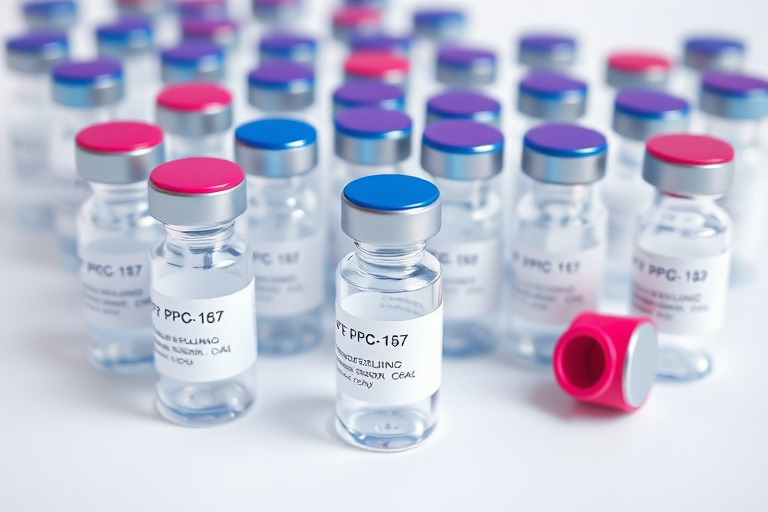
BPC-157 from compounding pharmacies typically comes in 5 mg or 10 mg vials of lyophilized powder. Your pharmacy label will show the exact amount.
The most common reconstitution approach for a 5 mg vial is adding 2 mL of bacteriostatic water. This gives you:
- Concentration: 2.5 mg per mL (2,500 mcg per mL)
- 25 mcg per syringe unit (on a 100 unit insulin syringe)
For a 10 mg vial with 2 mL of bacteriostatic water:
- Concentration: 5 mg per mL (5,000 mcg per mL)
- 50 mcg per syringe unit
"The key to successful GLP-1 therapy is setting realistic expectations and supporting patients through the titration phase. The side effects are manageable for most people, but they need to know what to expect.", Dr. Caroline Apovian, MD, Harvard Medical School
These are starting points. Your provider may recommend a different water volume based on your dose. The key is choosing a volume that gives you a clean, easy-to-measure number of syringe units per dose.
Use the to plug in your specific vial size, water volume, and prescribed dose. It shows you exactly how many units to draw.
Common BPC-157 Doses and Syringe Measurements
BPC-157 doses prescribed by providers typically range from 200-500 mcg per injection. Here's what those doses look like with common reconstitution setups.
View data table
| Category | Clinical Interest Score | Detail |
|---|---|---|
| BPC-157 | 88 | Tissue repair and gut healing |
| TB-500 | 82 | Injury recovery |
| Sermorelin | 78 | Growth hormone support |
| Ipamorelin | 75 | Anti-aging and recovery |
| GHK-Cu | 70 | Skin and tissue repair |
5 mg vial + 2 mL BAC water (25 mcg per unit):
| Prescribed Dose | Syringe Units | Doses Per Vial |
|---|---|---|
| 200 mcg | 8 units | 25 doses |
| 250 mcg | 10 units | 20 doses |
| 300 mcg | 12 units | ~16 doses |
| 500 mcg | 20 units | 10 doses |
5 mg vial + 1 mL BAC water (50 mcg per unit):
| Prescribed Dose | Syringe Units | Doses Per Vial |
|---|---|---|
| 200 mcg | 4 units | 25 doses |
| 250 mcg | 5 units | 20 doses |
| 300 mcg | 6 units | ~16 doses |
| 500 mcg | 10 units | 10 doses |
At a common protocol of 250 mcg twice daily from a 5 mg vial, you'll get about 10 days per vial and need 3 vials per month.
These are reference calculations only. Your provider sets your dose based on your clinical needs. Never adjust your dose without consulting them first.
Get your exact BPC-157 dose measurements with our free . Enter your vial size and prescribed dose for instant results.
How to Reconstitute BPC-157 Step by Step
The reconstitution process for BPC-157 follows the same steps as any peptide. Here's the specific walkthrough.

From the FormBlends catalog
BPC-157
The body protection compound for accelerated healing · From $169/mo · compounded by a licensed 503A pharmacy, dispensed only after provider review.
View BPC-157 →Step 1[1]: Gather supplies. You need your BPC-157 vial, bacteriostatic water, a fresh insulin syringe for drawing the water, a separate syringe for your dose, and alcohol swabs.
Step 2: Clean the stoppers. Swab both vial tops with alcohol pads. Let them air dry for 10 seconds.
Step 3: Draw bacteriostatic water. Pull back the plunger on your syringe to your desired volume (for example, 2 mL). Insert the needle into the BAC water vial, invert it, and draw slowly. Check for air bubbles.
Step 4: Add water to the BPC-157 vial. Insert the needle into the BPC-157 vial and angle it so the water runs down the glass wall. Don't aim at the powder. Let the water trickle in gently.
Step 5: Mix gently. Roll the vial between your palms for 1-2 minutes. Never shake it. BPC-157 typically dissolves quickly (within 2-3 minutes.
Step 6: Inspect. The solution should be clear and colorless. If cloudy or discolored, don't use it.
Step 7: Label. Write the date and concentration on the vial. Store in the refrigerator immediately.
For a deeper break down reconstitution technique including common mistakes to avoid, see our .
BPC-157 Injection Sites and Protocol Tips
Most providers prescribe BPC-157 as a subcutaneous injection. Some recommend injecting near the area of concern when possible, while others say the injection site doesn't matter for systemic effects. Follow your provider's guidance.
Common injection sites:
- Abdomen (2+ inches from belly button)
- Upper thigh (outer or front)
- Near the injury site (if instructed by your provider)
Timing: Some protocols call for once daily dosing, others twice daily (morning and evening). Take your doses at consistent times for the best results.
Duration: BPC-157 protocols typically run 4-12 weeks depending on the clinical goal. Your provider will tell you when to stop or adjust.
Tracking: Log every dose in the to keep a clean record for your provider. The app also tracks your vial usage so you know when to reorder.
Stacking: BPC-157 is sometimes prescribed alongside TB-500 in what's called a . If your provider recommends a combination protocol, they'll give you specific dosing instructions for each peptide.
Frequently Asked Questions
How long does reconstituted BPC-157 last in the refrigerator?
Reconstituted BPC-157 typically remains stable for 28-30 days when stored at 36-46 degrees Fahrenheit. Write the date you mixed it on the vial and discard any remaining solution after 28 days. Some pharmacies may provide different stability data for their specific formulation.
Can I take BPC-157 orally instead of injecting it?
Some research has explored oral BPC-157 for gastrointestinal applications. But oral bioavailability is generally lower than injectable routes for systemic effects. Your provider will determine the best route of administration for your specific needs. Don't switch from injectable to oral without consulting them.
What if I miss a dose of BPC-157?
If you miss a dose, take it as soon as you remember unless it's close to your next scheduled dose. Don't double up to compensate. Missing an occasional dose is unlikely to significantly impact your protocol. If you're frequently forgetting, set reminders in the .
Is BPC-157 the same as what I see sold online as "research peptides"?
No. BPC-157 prescribed through FormBlends is prepared by a licensed US-based 503A compounding pharmacy under strict quality controls. Research-grade peptides sold online aren't regulated, may not be what the label claims, and aren't intended for human use. Always get peptides through a legitimate medical provider.
How do I know if my BPC-157 dose is working?
Results from BPC-157 vary based on your condition and protocol. Some people notice improvements within the first week, while others see gradual changes over 4-6 weeks. Keep notes on your symptoms and progress, and share them with your provider at follow-up visits. The includes a progress journal for this purpose.
Start your progress Today
Every transformation starts with a single step. Talk to a licensed FormBlends provider about whether this approach is right for you) consultations are free and confidential.
Medical References
- Wilding JPH, Batterham RL, Calanna S, et al. Once-Weekly Semaglutide in Adults with Overweight or Obesity. N Engl J Med. 2021;384(11):989-1002. [PubMed | ClinicalTrials.gov | DOI]
- Davies M, Færch L, Jeppesen OK, et al. Semaglutide 2.4 mg once a week in adults with overweight or obesity, and type 2 diabetes (STEP 2). Lancet. 2021;397(10278):971-984. [PubMed | ClinicalTrials.gov | DOI]
- Wadden TA, Bailey TS, Billings LK, et al. Effect of Subcutaneous Semaglutide vs Placebo as an Adjunct to Intensive Behavioral Therapy on Body Weight in Adults With Overweight or Obesity (STEP 3). JAMA. 2021;325(14):1403-1413. [PubMed | ClinicalTrials.gov | DOI]
- Rubino D, Abrahamsson N, Davies M, et al. Effect of Continued Weekly Subcutaneous Semaglutide vs Placebo on Weight Loss Maintenance in Adults With Overweight or Obesity (STEP 4). JAMA. 2021;325(14):1414-1425. [PubMed | ClinicalTrials.gov | DOI]
- Garvey WT, Batterham RL, Bhatt DL, et al. Two-year effects of semaglutide in adults with overweight or obesity (STEP 5). Nat Med. 2022;28(10):2083-2091. [PubMed | ClinicalTrials.gov | DOI]
Sources &. References
- Sikiric P, Hahm KB, Blagaic AB, et al. Stable Gastric Pentadecapeptide BPC 157, Robert's Cytoprotection, Adaptive Cytoprotection, and Therapeutic Effects. Curr Pharm Des. 2018;24(18):1990-2001. Doi:10.2174/1381612824666180515125918
- Chang CH, Tsai WC, Lin MS, et al. The promoting effect of pentadecapeptide BPC 157 on tendon healing involves tendon outgrowth, cell survival, and cell migration. J Appl Physiol. 2011;110(3):774-780. Doi:10.1152/japplphysiol.00945.2010
- Seiwerth S, Brcic L, Vuletic LB, et al. BPC 157 and blood vessels. Curr Pharm Des. 2014;20(7):1121-1125. Doi:10.2174/13816128113199990421
- Bock-Marquette I, Saxena A, White MD, et al. Thymosin beta4 activates integrin-linked kinase and promotes cardiac cell migration, survival and cardiac repair. Nature. 2004;432(7016):466-472. Doi:10.1038/nature03000
- Malinda KM, Sidhu GS, Mani H, et al. Thymosin beta4 accelerates wound healing. J Invest Dermatol. 1999;113(3):364-368. Doi:10.1046/j.1523-1747.1999.00708.x
- Ionescu M, Frohman LA. Pulsatile secretion of growth hormone (GH) persists during continuous stimulation by CJC-1295, a long-acting GH-releasing hormone analog. J Clin Endocrinol Metab. 2006;91(12):4792-4797. Doi:10.1210/jc.2006-1702
Nothing in this article should be construed as medical advice. The information provided is educational only. Always consult with your healthcare provider before beginning, modifying, or discontinuing any medication or treatment. FormBlends connects patients with licensed providers for individualized care.
Last updated: 2026-03-24
Ready when you are
BPC-157
The body protection compound for accelerated healing · From $169/mo · compounded by a licensed 503A pharmacy, dispensed only after provider review.
View BPC-157 →