

Deep research
About Epitalon (Epithalon Injectable)
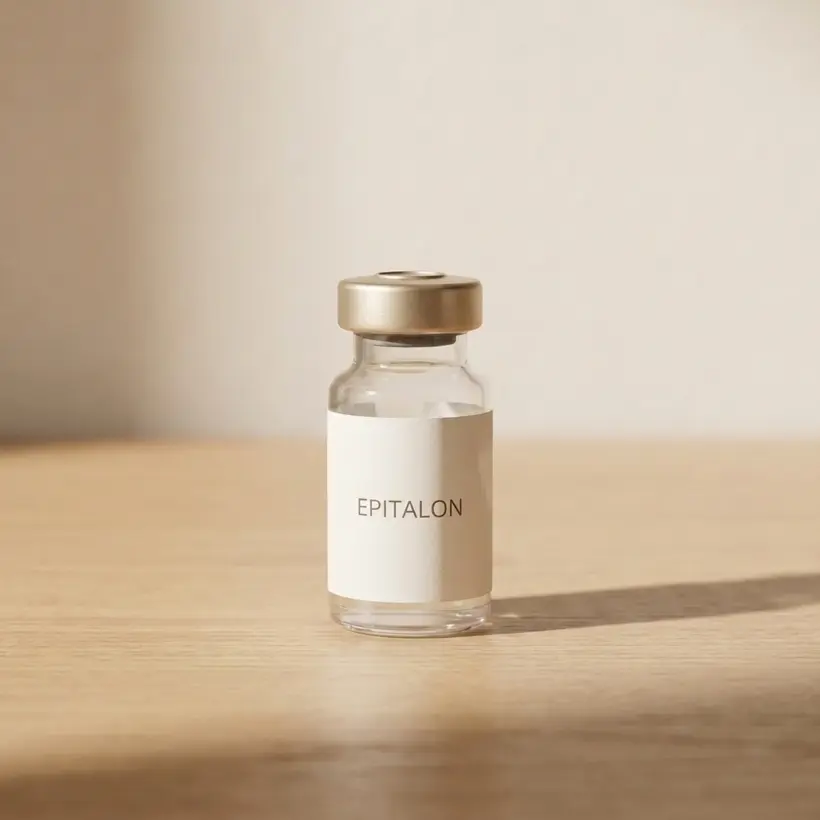
Epitalon is the injectable formulation of the synthetic tetrapeptide Ala-Glu-Asp-Gly (AEDG), identical in sequence and molecular weight (~390 Da, CAS 307297-39-8) to epithalamin, but optimized for direct subcutaneous administration rather than the oral bioregulator capsule form. The injectable route provides more immediate and predictable effects on pineal function and melatonin production, making it the preferred format for protocols targeting sleep and circadian rhythm restoration.
The pineal gland's capacity to produce melatonin declines substantially with age. Melatonin secretion decreases by approximately 10-15% per decade after age 30, driven by progressive calcification of the pineal gland (corpora arenacea) and reduced pinealocyte function. By age 60, many individuals produce less than half the nocturnal melatonin they did at age 20. By age 75, the nocturnal melatonin surge may be barely detectable. This decline contributes to disrupted sleep architecture, impaired immune surveillance (melatonin receptors MT1 and MT2 are expressed on T-cells and NK cells), reduced antioxidant protection (melatonin scavenges hydroxyl radicals and stimulates glutathione peroxidase), and accelerated cellular aging.
Epitalon restores pineal melatonin production by upregulating the rate-limiting enzyme in melatonin synthesis: AANAT (arylalkylamine N-acetyltransferase, also called serotonin N-acetyltransferase). AANAT converts serotonin to N-acetylserotonin, which is then methylated by ASMT (acetylserotonin O-methyltransferase) to produce melatonin. Clinical studies in elderly patients demonstrated that a 10-14 day course of subcutaneous epitalon normalized the circadian melatonin rhythm, restoring the nocturnal surge amplitude to levels comparable to adults 20-30 years younger. These effects persisted for 4-6 months after a single treatment course.
The restored endogenous melatonin production is fundamentally different from exogenous melatonin supplementation. When the pineal gland produces melatonin naturally, it is released in response to circadian cues (darkness signaling via the retinohypothalamic tract to the SCN to the superior cervical ganglion to the pineal), ensuring proper timing and duration. Exogenous melatonin supplements provide a fixed dose at a fixed time, lack the natural secretory dynamics, and can suppress endogenous production through negative feedback. Epitalon restores the body's own production machinery, allowing physiologically appropriate, circadian-regulated melatonin release.
Beyond melatonin restoration, epitalon activates telomerase (hTERT transcription upregulation), providing the same telomere-maintenance and longevity benefits documented for the bioregulator form epithalamin. The 2.4-fold telomerase activation and 44% extension of fibroblast replicative lifespan apply equally to the injectable form, as the active peptide is identical.
Pharmacokinetically, subcutaneous epitalon is rapidly absorbed with peak plasma levels at 15-30 minutes. The small tetrapeptide distributes to the pineal gland and other target tissues within 1-2 hours. Standard protocols involve daily subcutaneous injections for 10-20 consecutive days, repeated every 4-6 months. The 4-6 month duration of effect reflects epigenetic modifications to gene promoters (AANAT, hTERT) that persist long after the peptide is cleared.
Storage: lyophilized epitalon should be stored at -20C for long-term stability or 2-8C for up to 60 days. Reconstitute with bacteriostatic water for injection. Reconstituted vials should be stored at 2-8C and used within 21 days. The peptide is stable at pH 4-7 and is not light-sensitive, though light protection is recommended as a general precaution.
Safety data mirrors the extensive epithalamin literature: no serious adverse events in over 35 years of clinical research. Injection site reactions (mild redness, transient soreness) are the only commonly reported effects. No immunogenicity, hepatotoxicity, nephrotoxicity, or cardiovascular effects have been observed. The restored melatonin production does not cause daytime sedation because it follows the natural circadian pattern (elevated only during darkness hours).