FormBlends Tools
Personalized GLP-1 Journey Planner
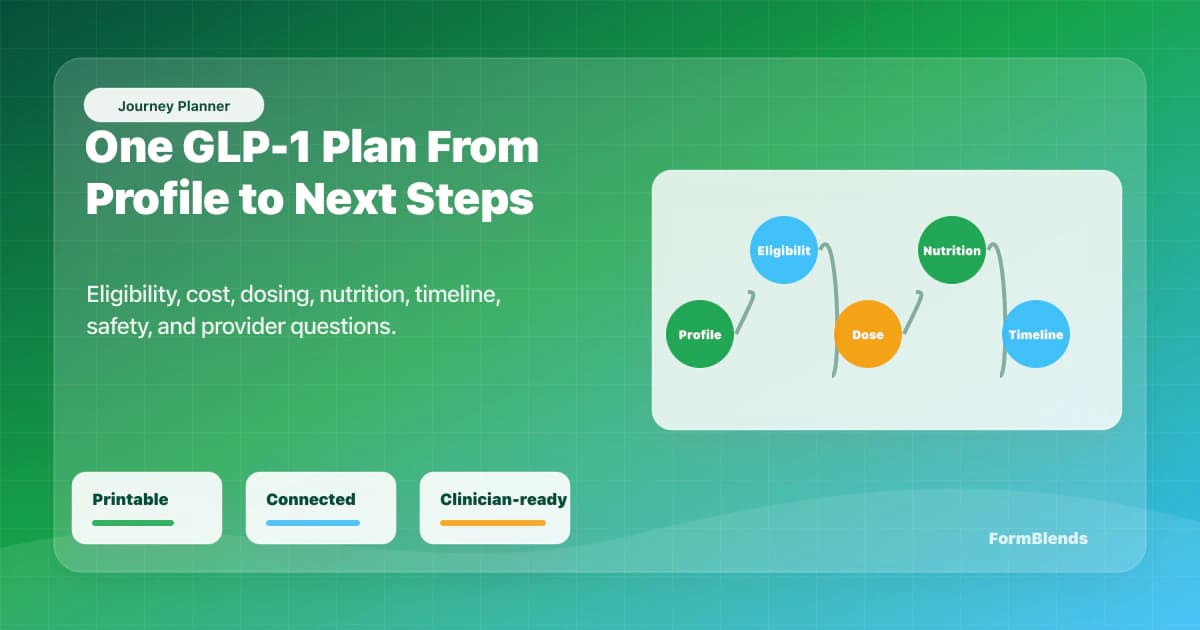
Build one printable planning summary that connects eligibility, titration, expected timeline, nutrition, side-effect readiness, medication review flags, provider comparison, and pharmacy safety checks.
Profile
Health and treatment inputs
Weight-related conditions
Current medications
Diabetes
Thyroid
Hormones
Blood thinners
Blood pressure
Cholesterol
Mental health
Stomach/GI
Pain relief
Anti-inflammatory
Fluid balance
Anxiety
Supplements
Plan
Personalized GLP-1 snapshot
Eligibility
Timeline
Nutrition
Medication flags
Dose schedule
Weeks 1-4
0.25 mg
Once weekly
Oct 23, 2026 - Nov 19, 2026
Starter phase focused on tolerability.
Weeks 5-8
0.5 mg
Once weekly
Nov 20, 2026 - Dec 17, 2026
First escalation; appetite effects often become more noticeable.
Weeks 9-12
1.0 mg
Once weekly
Dec 18, 2026 - Jan 14, 2027
Therapeutic range for many patients.
Weeks 13-16
1.7 mg
Once weekly
Jan 15, 2027 - Feb 11, 2027
Higher efficacy phase; monitor GI tolerance.
Week 17+
2.4 mg
Once weekly
Starts Feb 12, 2027
Common labeled maintenance target for weight management.
Side-effect readiness
Reported study-group rates for Wegovy 2.4 mg. These rates cover trial treatment, rather than the selected dose phase. Label source.
Smaller meals, slower eating, lower-fat foods, and delayed escalation if needed.
Hydration and provider review if persistent or severe.
Call a clinician for repeated vomiting or dehydration symptoms.
Fluids, fiber as tolerated, movement, and clinician-approved stool softeners.
Track severity and seek care for intense or persistent pain.
Hydration, regular meals, and blood-pressure review if recurring.
Nutrition targets
Complete age, sex, height, weight, and activity to calculate targets.
Cost and provider path
Modeled monthly
$190
Modeled total
$1,049
Add a monthly budget to compare affordability.
Questions for your clinician
- Based on my BMI, health history, and current medications, am I a candidate for Semaglutide?
- Which labs should I complete before starting and when should we recheck them?
- What dose-escalation pace would you choose if I have nausea, reflux, constipation, or fatigue?
- How should I adjust protein, fluids, and resistance training to reduce muscle loss risk?
- What documentation would support prior authorization or an appeal for my plan?
Next actions
- Confirm eligibility, contraindications, and medication history with a licensed clinician.
- Document baseline weight, waist, blood pressure, current medications, and recent labs before starting.
- Create a weekly injection reminder and rotate sites instead of repeating the same area.
Red flags
Seek urgent medical guidance for severe or persistent abdominal pain, repeated vomiting, dehydration, signs of allergic reaction, fainting, very low blood sugar symptoms, pregnancy, or any symptom that feels sudden or unsafe.
Methodology
This planner uses a shared local profile to combine BMI screening, weight-loss timeline modeling, standard GLP-1 titration patterns, nutrition estimates from Mifflin-St Jeor, clinical-trial average side-effect rates, and common medication review flags. Compounded medications are not FDA-approved, and public pharmacy registration data should be verified against official sources.
Timeline and cost outputs are planning estimates. They do not predict individual results, insurance approval, medication availability, prescribing eligibility, or safety.