About
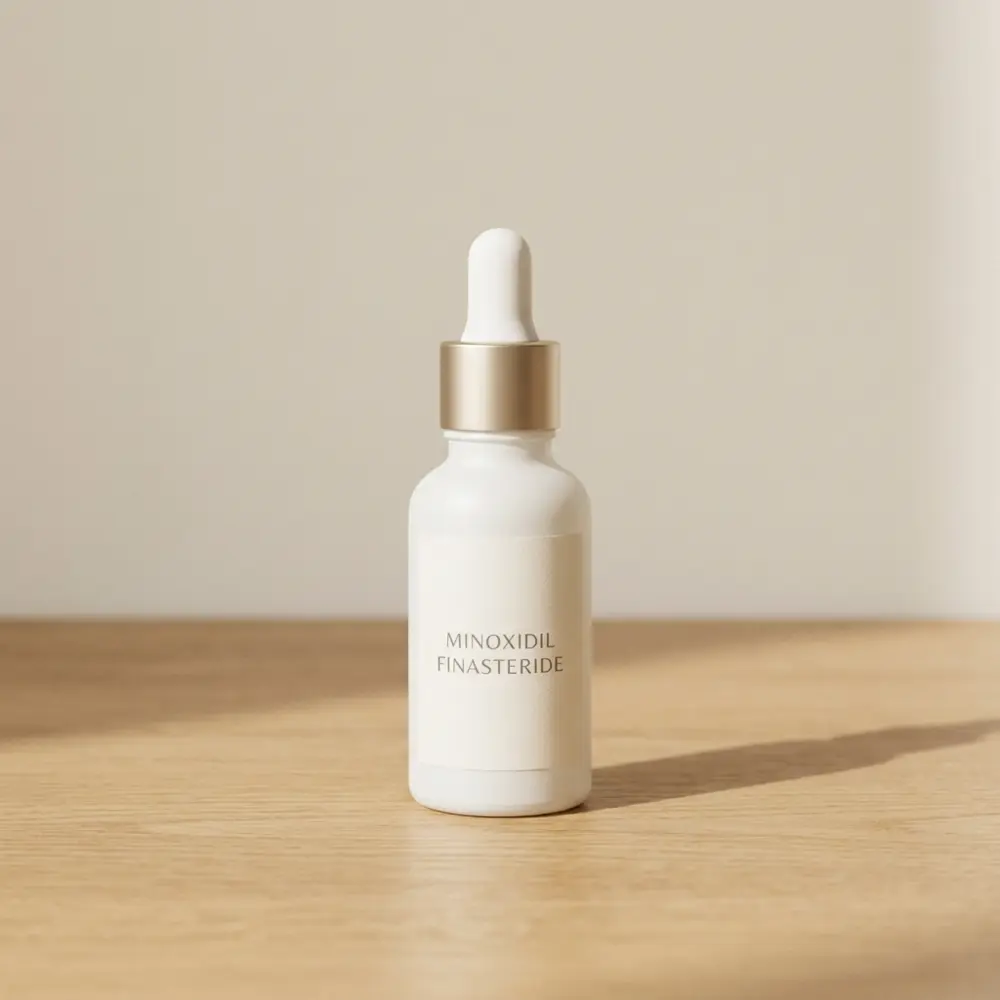
About Minoxidil + Finasteride Topical
Minoxidil and finasteride address hair loss through fundamentally different mechanisms, and combining them in a single topical formulation allows both pathways to be targeted simultaneously with one application. Minoxidil is a vasodilator and potassium channel opener that is thought to improve blood flow and nutrient delivery to hair follicles while extending the active growth (anagen) phase of the hair cycle. Finasteride at low topical doses is used to locally reduce DHT activity at the follicle level.
This compounded topical solution is applied directly to affected areas of the scalp, typically once or twice daily as directed by your prescribing provider. Because it is applied to the scalp rather than taken orally, the topical route may result in lower systemic absorption of finasteride compared to the oral tablet, though individual absorption can vary. Directions from your provider should be followed precisely regarding application amount, frequency, and technique.
As with all hair loss treatments, patience is required. Hair follicles cycle slowly, and most individuals using a combined topical formulation would not expect to see meaningful changes in density or coverage before three to six months of consistent daily use. Some individuals see continued improvement over twelve months or more. Stopping treatment is generally associated with a gradual return to the previous pattern of loss.
This formulation is compounded by a licensed 503A compounding pharmacy and requires a prescription. It is appropriate for individuals, typically adult men, seeking a single daily topical application that addresses both the vascular and hormonal contributors to androgenetic alopecia. Women who are pregnant or may become pregnant should not use finasteride-containing products and should discuss alternatives with a provider.
Side effects associated with topical minoxidil can include scalp irritation, dryness, or unwanted facial hair if the product contacts non-scalp skin. The topical finasteride component may carry a lower systemic side-effect burden than oral finasteride, though this can vary. Your FormBlends provider will review your health history to determine whether this formulation is suitable for you.