Free shipping on orders over $150  |  All products third-party tested for 99%+ purity Shop Now

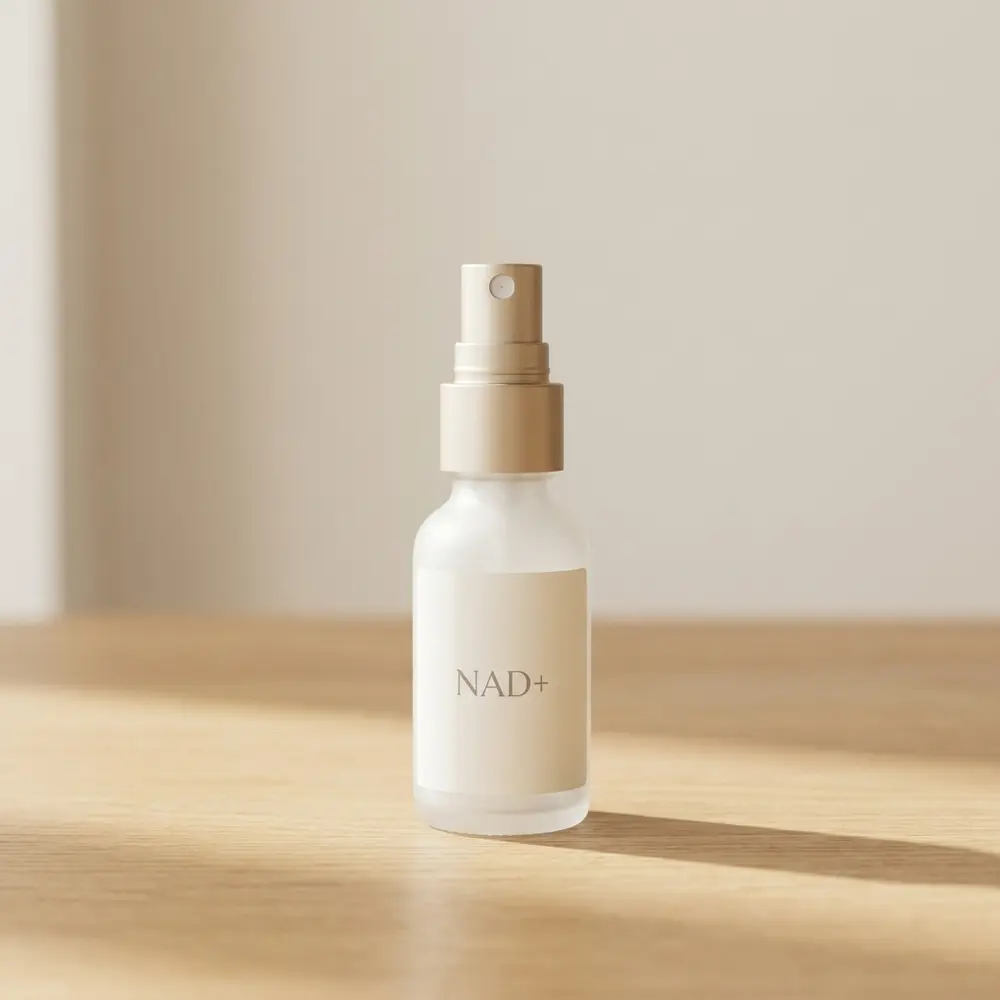
Save 34%NAD+ Nasal Spray

99.5%

HPLC Verified

COA

Available

ISO

Certified Lab

Anti-Aging & Longevity

NAD+ Nasal Spray

Direct NAD+ delivery via intranasal route for rapid cellular energy restoration

4.7|756 reviews
$79$119Save 34%

15ml nasal spray | 100mg/ml

Free shipping over $150
Same-day shipping
30-day guarantee
Temperature controlled

About NAD+ Nasal Spray

NAD+ Nasal Spray delivers nicotinamide adenine dinucleotide (NAD+, MW 663.43 Da, CAS 53-84-9) in its oxidized, biologically active form directly via the intranasal route. NAD+ is a dinucleotide consisting of an adenine base and a nicotinamide base joined by two phosphate groups, with the molecular formula C21H27N7O14P2. It serves as an electron carrier in over 500 enzymatic reactions in human metabolism, including the entire mitochondrial electron transport chain (Complexes I and II), the citric acid cycle, fatty acid beta-oxidation, and alcohol metabolism.

NAD+ serves as an obligate co-substrate for three families of enzymes with critical roles in aging and cellular maintenance. Sirtuins (SIRT1-7) are NAD+-dependent protein deacylases that regulate epigenetic silencing, DNA repair, mitochondrial biogenesis, inflammation, and metabolic homeostasis. PARPs (poly-ADP-ribose polymerases, especially PARP1) are NAD+-consuming enzymes that detect and repair single-strand DNA breaks. CD38/CD157 are NAD+-glycohydrolases that regulate calcium signaling and immune cell function. All three enzyme families compete for the same declining pool of NAD+, creating a metabolic bottleneck that worsens with age.

NAD+ levels decline by approximately 50% between ages 40 and 60 across multiple tissues, as documented in studies published in Cell Metabolism and Nature Aging. This decline is driven by increased NAD+ consumption (PARP activation from accumulated DNA damage, CD38 upregulation from chronic inflammation) and decreased NAD+ synthesis (reduced expression of NAMPT, the rate-limiting enzyme in the NAD+ salvage pathway). The decline impairs sirtuin function (particularly SIRT1 and SIRT3), reduces mitochondrial efficiency, compromises DNA repair capacity, and accelerates epigenetic aging.

Intranasal delivery of intact NAD+ offers several advantages over oral NAD+ precursors (NMN, NR/nicotinamide riboside). Oral precursors must survive gastric acid, be absorbed intestinally, enter the bloodstream, and then be converted through multiple enzymatic steps (NR -> NMN -> NAD+, requiring NMRK1/2 and NMNAT1/2/3 respectively) before becoming active. Each conversion step has limited capacity and tissue-specific expression. Intranasal NAD+ delivers the finished, active coenzyme directly. The nasal mucosa is highly vascularized with rapid systemic absorption, and the olfactory pathway provides direct brain delivery bypassing the blood-brain barrier, which is particularly important because the brain has the highest metabolic rate of any organ (consuming ~20% of total body energy) and is therefore most sensitive to NAD+ decline.

Users report rapid effects on mental clarity, sustained energy, and exercise recovery within 15-30 minutes of intranasal administration, consistent with direct delivery of the active coenzyme rather than waiting hours for precursor conversion. Preclinical studies have shown that intranasal NAD+ reduces infarct volume by up to 86% in the middle cerebral artery occlusion (MCAO) stroke model, demonstrating potent neuroprotection. NAD+ improved neuronal survival under oxidative stress conditions in cortical neuron cultures.

Pharmacokinetically, intranasal bioavailability of NAD+ is estimated at 5-10 times that of oral NAD+ due to bypassing gastrointestinal degradation by NAD+ glycohydrolases and first-pass hepatic metabolism. The dinucleotide structure allows absorption through nasal epithelial cell junctions and transcellular transport. Peak blood levels are reached within 15-30 minutes. NAD+ has a plasma half-life of approximately 30-45 minutes, but cellular effects persist for hours as the molecule is incorporated into enzymatic pools.

For storage, NAD+ nasal spray should be kept at 2-8C (refrigerated) both before and after opening. NAD+ is sensitive to heat and light, which promote degradation to nicotinamide and ADP-ribose. Use opened sprays within 30 days. Do not freeze. The solution is buffered at pH 6-7 for stability and nasal comfort. The metered pump delivers a consistent dose with each spray.

Safety observations indicate that intranasal NAD+ is well-tolerated. The most common side effects are mild nasal stinging or tingling upon administration (due to the dinucleotide's slightly acidic nature), which typically resolves within 1-2 minutes. No systemic adverse effects have been reported in published nasal delivery studies. NAD+ is an endogenous molecule present in every cell; exogenous administration restores declining levels rather than introducing a foreign compound. Intravenous NAD+ infusions (much higher doses than nasal delivery) have been used safely in clinical settings for decades, establishing a broad safety margin.


Key Benefits

Direct NAD+ delivery bypassing GI degradation and multi-step precursor conversion
Rapid 15-30 minute onset vs hours for oral NMN/NR precursors
Brain delivery via olfactory nerve pathway critical for highest-metabolic-rate organ
Restores substrate for sirtuins (SIRT1-7), PARPs, and CD38 enzyme families
86% infarct volume reduction in preclinical MCAO stroke model
NAD+ declines ~50% between ages 40-60 driving metabolic aging
5-10x bioavailability vs oral NAD+ administration
Endogenous molecule restoring declining levels with well-established IV safety history

Published Research

NAD+ declines ~50% between ages 40-60 (Cell Metabolism, Nature Aging).

MW 663.43 Da, CAS 53-84-9, C21H27N7O14P2.

Obligate co-substrate for sirtuins (SIRT1-7, deacylases), PARPs (DNA repair), CD38 (calcium/immune signaling).

Intranasal bioavailability estimated 5-10x oral NAD+ (bypasses GI NAD+ glycohydrolases and hepatic first-pass).

Neuroprotection: 86% infarct volume reduction in MCAO stroke model.

NAMPT (salvage pathway rate-limiting enzyme) expression declines with age.

Olfactory pathway delivers NAD+ directly to CNS.

Over 500 NAD+-dependent enzymatic reactions in human metabolism.

Published in Cell Metabolism, Nature Aging, PNAS, Redox Biology.

View Full Research Library


Browse All Anti-Aging & Longevity Products

Cutting-edge peptides for cellular rejuvenation

NAD+ Nasal Spray$79.00$119.00