Executive Summary
The way people find health information has shifted dramatically. Search engines and AI answer engines now act as the first point of contact for millions of people researching peptides, GLP-1 receptor agonists, and related therapies. Understanding how these systems evaluate, select, and surface medical content isn't just a marketing exercise - it's a matter of ensuring accurate, trustworthy health information reaches the people who need it.
Key Takeaways
- Over 55% of informational health searches now begin in an AI tool rather than traditional Google search, according to 2026 industry tracking data
- Brand search volume is the single strongest predictor of AI citations, with a 0.334 correlation coefficient - higher than any technical signal
- 67.82% of sources cited by large language models don't rank in Google's top 10 for the same query, meaning traditional SEO rankings alone don't guarantee AI visibility
- Content depth, cited sources, and expert authorship are the top three factors correlated with earning AI citations for health content
- Schema markup implementation (MedicalWebPage, FAQPage, Drug) directly influences how search engines and AI systems categorize and surface health content
Between 2023 and 2026, the search ecosystem underwent a transformation that few health content publishers fully anticipated. Google's AI Overviews began answering complex medical queries directly in the search results. ChatGPT, Perplexity, and Claude started generating detailed health responses with citations. And traditional featured snippets evolved to compete with these AI-generated answers for user attention.
For anyone publishing content about peptides, semaglutide, tirzepatide, BPC-157, or growth hormone secretagogues, these changes created both a challenge and an opportunity. The challenge: content that doesn't meet the new standards of structure, authority, and machine readability simply won't appear in AI-generated responses. The opportunity: content that meets these standards can earn citations across multiple AI platforms simultaneously, reaching far more people than traditional organic search alone.
This report examines the complete picture. We'll cover how search engines evaluate health content through E-E-A-T (Experience, Expertise, Authoritativeness, Trustworthiness) and YMYL (Your Money or Your Life) frameworks. We'll explain what Answer Engine Optimization (AEO) actually means in practice and how it differs from traditional SEO. We'll walk through the technical requirements - from schema markup and structured data to content architecture and citation patterns that AI models prefer.
You'll also find specific strategies for peptide and GLP-1 content, including how to structure research reports, build topical authority in the health supplement space, and create content that both human readers and machine systems find valuable. Every recommendation is grounded in published research, platform documentation, and observed patterns in how AI systems actually select sources.
Key Takeaways
- Over 55% of informational health searches now begin in an AI tool rather than traditional Google search, according to 2026 industry tracking data
- Brand search volume is the single strongest predictor of AI citations, with a 0.334 correlation coefficient - higher than any technical signal
- 67.82% of sources cited by large language models don't rank in Google's top 10 for the same query, meaning traditional SEO rankings alone don't guarantee AI visibility
- Content depth, cited sources, and expert authorship are the top three factors correlated with earning AI citations for health content
- Schema markup implementation (MedicalWebPage, FAQPage, Drug) directly influences how search engines and AI systems categorize and surface health content
- Health content falls under Google's strictest quality standards (YMYL), requiring demonstrable expertise and regular updates to maintain visibility
Whether you're a researcher, a health content publisher, or a practitioner looking to share evidence-based information about peptide therapies, the principles in this guide apply directly to your work. The goal isn't to game any system - it's to create content so well-structured, so thoroughly sourced, and so clearly written that both human readers and AI systems recognize its value.
How Search Engines Evaluate Health Content (E-E-A-T & YMYL)
The YMYL Classification: Why Health Content Faces Higher Standards
Google classifies certain types of content as "Your Money or Your Life" (YMYL) - topics where inaccurate information could directly harm a person's health, financial stability, or safety. Health and medical content sits at the very top of this classification. Every page about semaglutide dosing, peptide mechanisms of action, or GLP-1 side effects gets evaluated under Google's most stringent quality standards (Google Search Quality Evaluator Guidelines, 2024).
This isn't a theoretical distinction. When Google rolled out its "Medic Update" in August 2018, health websites that lacked clear expertise signals saw traffic drops of 40-70% overnight. Sites with strong E-A-T signals (the framework was later expanded to E-E-A-T in December 2022) held steady or gained ground. The lesson was clear: in health content, quality signals aren't optional extras. They're requirements for visibility.
What makes a page YMYL? Google's quality rater guidelines define it broadly. Any content that could influence decisions about medical treatments, medications, health conditions, or physical well-being qualifies. For peptide content specifically, this includes:
- Information about drug mechanisms, dosing protocols, and pharmacokinetics
- Side effect profiles and safety data
- Comparisons between different therapeutic compounds
- Guidance on sourcing, legality, or administration methods
- Claims about efficacy for weight loss, muscle preservation, recovery, or anti-aging
- Any content that might influence someone's decision to start, stop, or modify a therapy
The practical consequence is straightforward: if you're publishing content about peptides or GLP-1 medications, every page needs to demonstrate expertise, cite reliable sources, and present information accurately. There is no shortcut through this requirement.
E-E-A-T: The Four Pillars of Health Content Quality
E-E-A-T stands for Experience, Expertise, Authoritativeness, and Trustworthiness. Google added the first "E" for Experience in December 2022, recognizing that first-hand experience with a topic adds a dimension of credibility that pure academic expertise alone doesn't capture. For health content, each pillar carries specific implications.
Experience
Does the content creator have actual experience with the subject matter? For peptide content, this might mean clinical experience administering GLP-1 therapies, research experience studying peptide mechanisms, or professional experience in pharmaceutical compounding. Google's quality raters look for signals that the author has genuine, first-hand knowledge - not just information assembled from other sources (Sullivan, 2022).
Experience signals in health content include detailed case discussions (appropriately anonymized), specific clinical observations, practical insights that only come from hands-on work, and nuanced perspectives that distinguish someone who has worked with a compound from someone who has merely read about it.
Expertise
Does the content creator have the credentials and knowledge to discuss the topic authoritatively? For medical and pharmaceutical content, this typically means relevant clinical training, advanced degrees, board certifications, or significant research experience. Google's systems look for expertise signals both on the page itself and across the broader web presence of the author and publisher.
Expertise signals include author bios with verifiable credentials, publication histories in peer-reviewed journals, affiliations with recognized medical or research institutions, and a body of work that demonstrates deep subject knowledge. For a site publishing content about tirzepatide or BPC-157, the expertise of the content team matters enormously.
Authoritativeness
Is the content creator or the publishing site recognized as a go-to source on the topic? Authority is built over time through consistent, high-quality output, citations from other authoritative sources, mentions in professional communities, and recognition by peers. A site that publishes one article about semaglutide has little authority. A site with a comprehensive research library covering dozens of peptide compounds builds significant topical authority.
Authority signals include backlinks from medical institutions, citations in clinical discussions, recognition by professional organizations, and a publishing track record that demonstrates sustained commitment to a topic area. The depth and breadth of a site's content coverage directly influences its perceived authority.
Trustworthiness
Is the content accurate, transparent, and honest? Trustworthiness is the foundational element - Google's guidelines describe it as the most important member of the E-E-A-T family. For health content, trustworthiness requires:
- Accurate representation of clinical evidence (including study limitations)
- Clear disclosure of potential conflicts of interest
- Transparent sourcing with links to primary research
- Acknowledgment of uncertainty where evidence is incomplete
- Regular updates to reflect new research findings
- Clear medical disclaimers and appropriate scope limitations
- HTTPS security, clear privacy policies, and accessible contact information
Trustworthiness for peptide content specifically means not overstating efficacy claims, not minimizing side effects, accurately representing the regulatory status of compounds, and being transparent about the difference between FDA-approved medications and research compounds.
E-E-A-T Audit Checklist for Health Content
Before publishing any health content, verify these signals are present:
- Author bio with verifiable credentials and relevant experience
- Medical reviewer listed (if author isn't a licensed clinician)
- Publication date and "last reviewed" date clearly displayed
- At least 10 citations to peer-reviewed sources per 2,000 words
- Medical disclaimer present and visible
- HTTPS implemented with valid SSL certificate
- Clear editorial policy page accessible from the content
- Contact information for the publishing organization
- "About" page with organizational background and mission
- Corrections policy for addressing errors in published content
How Google's Quality Raters Evaluate Health Pages
Google employs thousands of quality raters worldwide who manually evaluate search results using detailed guidelines. These evaluations don't directly change rankings for individual pages, but they calibrate the algorithms that determine rankings for all pages. Understanding what raters look for gives content creators a clear blueprint.
For health content, raters assess pages on a scale from "Lowest Quality" to "Highest Quality." Pages rated "Highest" typically share several characteristics: they're created by recognized experts, published on authoritative sites, thoroughly sourced, regularly updated, and clearly written for the benefit of the reader rather than for search engine manipulation.
Pages rated "Lowest" for health content often share different characteristics: anonymous or unqualified authors, unsourced claims, outdated information, misleading titles, aggressive monetization that interferes with the content, and claims that contradict established medical consensus without adequate justification.
The rating scale matters because Google's algorithms are trained to replicate these human quality judgments at scale. Content that would earn a "High" or "Highest" quality rating from a human evaluator is the content that Google's algorithms will favor. Content that would earn a "Low" or "Lowest" rating will be suppressed, regardless of how well-optimized it is for traditional ranking factors (Google, 2024).
The YMYL Spectrum: Not All Health Content Is Equal
While all health content falls under YMYL scrutiny, Google applies its standards on a spectrum. Content about life-threatening conditions, prescription medications, and surgical procedures faces the most intense evaluation. Content about general wellness, nutrition, and fitness receives scrutiny but with somewhat more tolerance for non-expert perspectives.
Peptide and GLP-1 content occupies an interesting position on this spectrum. FDA-approved medications like semaglutide and tirzepatide fall squarely in the highest YMYL category - they're prescription drugs with significant clinical implications. Research peptides like BPC-157, thymosin beta-4, and growth hormone secretagogues exist in a more complex space where regulatory status, evidence quality, and risk profiles vary considerably.
Smart content strategy accounts for this spectrum. Pages about FDA-approved GLP-1 medications should meet the absolute highest standard of medical content quality. Pages about research peptides with less clinical data should be transparent about the evidence limitations while still maintaining strong expertise signals and rigorous sourcing.
| YMYL Level | Content Type | E-E-A-T Requirements | Example Topics |
|---|---|---|---|
| Highest | Prescription drug information | Medical professional authorship or review required | Semaglutide dosing, tirzepatide side effects, drug interactions |
| High | Clinical trial data & outcomes | Scientific expertise required; peer-reviewed sourcing | STEP trial results, SURMOUNT data, cardiovascular outcomes |
| High | Research peptide information | Scientific expertise expected; transparent about evidence gaps | BPC-157 mechanisms, thymosin alpha-1 research, epithalon studies |
| Moderate-High | General peptide education | Demonstrated knowledge; sourced claims | What are peptides, how do GLP-1s work, peptide safety overview |
| Moderate | Lifestyle and wellness context | Honest experience; reasonable sourcing | Peptide research trends, industry overview, regulatory landscape |
Google's Medical Knowledge Graph
How Google Organizes Health Information at Scale
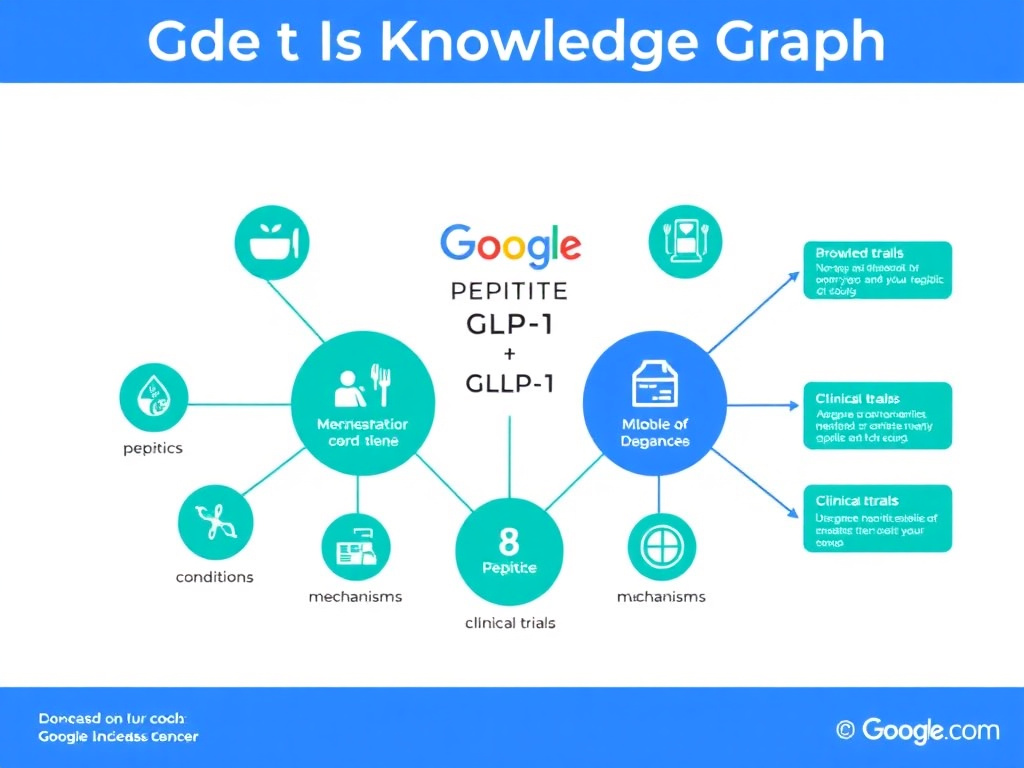
Behind every health-related search result is a massive system of interconnected data called the Knowledge Graph. Google introduced medical content into the Knowledge Graph in 2015, and the system has grown continuously since. When you search for a health condition, medication, or treatment, the Knowledge Graph draws on curated medical data to generate the information panels that appear alongside (or above) traditional search results.
The medical Knowledge Graph is distinct from the general Knowledge Graph in one critical way: human expert review. Google employs physicians who review the medical information presented in Knowledge Panels. According to Google's own disclosure, each medical fact in the Knowledge Graph has been reviewed by an average of 11.1 doctors before it reaches users. This level of curation sets a standard that health content publishers need to understand, even if they can't replicate the same review process (Google Health Blog, 2015).
For peptide and GLP-1 content creators, the Knowledge Graph matters for two reasons. First, it establishes the baseline of information that Google considers authoritative for any given health topic. If your content contradicts what the Knowledge Graph presents without strong evidence and clear reasoning, your content will likely be deprioritized. Second, the Knowledge Graph creates structured relationships between medical concepts - connecting drugs to conditions, side effects to medications, mechanisms to outcomes - that influence how Google interprets and ranks content about those same topics.
Knowledge Panels for Drug and Treatment Queries
When a user searches for "semaglutide" or "Ozempic," Google often displays a Knowledge Panel with structured information: drug class, approved indications, common side effects, dosing information, manufacturer, and related medications. This panel draws from FDA data, medical databases, and curated medical reference sources.
Content that aligns with and expands upon Knowledge Panel information tends to perform well in search results. Content that contradicts Knowledge Panel information without strong clinical evidence tends to be filtered out. This isn't censorship - it's Google's mechanism for preventing medical misinformation from reaching vulnerable searchers.
The practical implication for content about compounds like semaglutide or tirzepatide is clear: your content should be consistent with FDA-approved labeling and published clinical evidence. You can go deeper, add context, explain mechanisms in more detail, and discuss off-label research - but the foundation should align with established medical consensus.
Entity Recognition and Semantic Understanding
Google's algorithms don't just match keywords anymore. They understand entities - real-world objects, concepts, and their relationships. When Google encounters content about "semaglutide," it recognizes the entity as a GLP-1 receptor agonist, connects it to related entities (Novo Nordisk, Ozempic, Wegovy, Rybelsus, GLP-1 receptor, weight loss, type 2 diabetes), and evaluates the content based on how well it addresses the entity and its relationships.
This entity-based understanding has several implications for content creation:
- Comprehensive coverage matters. Content that addresses a compound and its related entities (mechanism, indications, trials, side effects, alternatives) signals depth of understanding to Google's systems.
- Semantic consistency helps. Using consistent terminology and properly connecting concepts (e.g., explaining that semaglutide is a GLP-1 receptor agonist, not just a "weight loss drug") helps Google's entity recognition systems categorize content correctly.
- Internal linking strengthens entity associations. Linking between related content on your site (e.g., from a semaglutide page to a GLP-1 overview hub) reinforces the entity relationships that Google uses to assess topical authority.
- Structured data accelerates entity recognition. Schema markup explicitly declares entities and their properties, making it easier for Google to understand and categorize your content correctly.
The Mayo Clinic Connection and Medical Content Standards
Google's partnership with the Mayo Clinic for reviewing Knowledge Graph health information established a benchmark for medical content quality. The standards applied to Knowledge Graph content - clinical accuracy, evidence-based claims, balanced risk-benefit presentation, clear language - are the same standards that Google's algorithms use to evaluate all health content in search results.
Health content publishers can learn from this partnership. The Mayo Clinic's content standards include: citing specific clinical studies rather than making general claims, presenting both benefits and risks of treatments, using language accessible to general audiences while maintaining clinical accuracy, and updating content promptly when new evidence emerges.
These aren't just good editorial practices - they're the same qualities that Google's systems are trained to identify and reward. Content that reads like it could belong in a Mayo Clinic reference article is content that Google's quality systems will tend to favor.
Knowledge Graph Optimization Tips
- Use proper medical terminology alongside plain-language explanations
- Include the drug's generic name, brand names, and drug class in your content
- Reference FDA approval status and specific indications
- Connect your content to established medical entities through proper context and linking
- Implement Drug, MedicalCondition, and MedicalTherapy schema markup to explicitly declare entities
- Maintain factual alignment with Google's Knowledge Graph data for the same entities
AI Engine Optimization (AEO) Explained
What Is AEO and Why Does It Matter for Health Content?
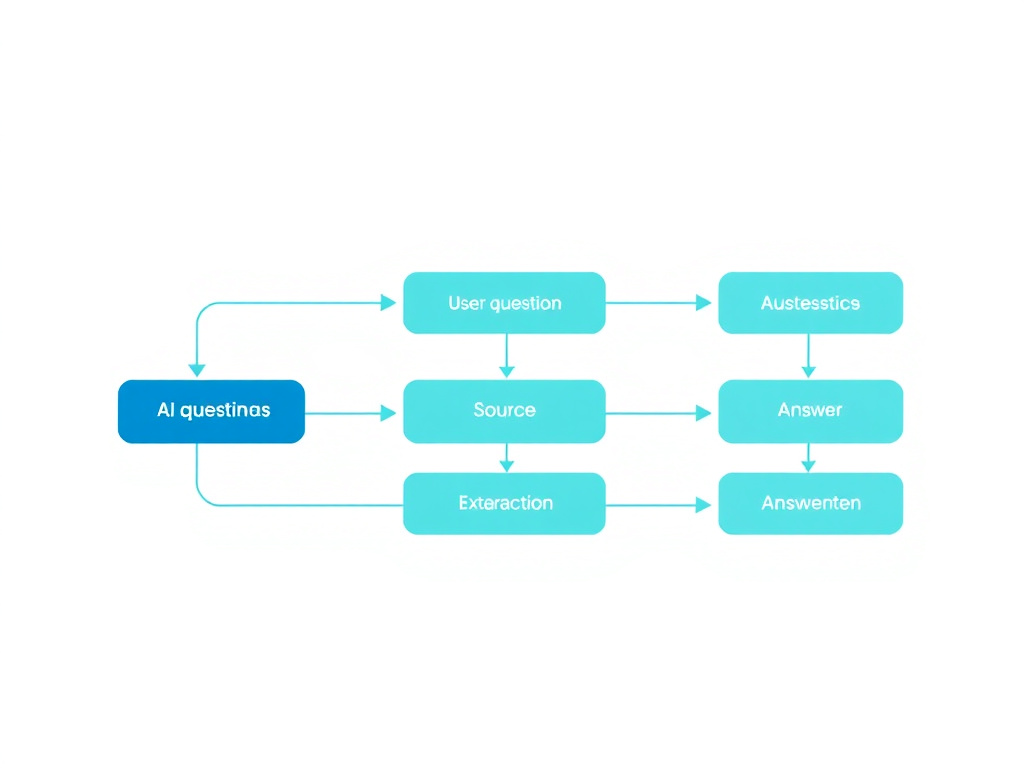
Answer Engine Optimization (AEO) is the practice of structuring content so that AI systems - including ChatGPT, Google's AI Overviews, Perplexity, Claude, and Gemini - can find, understand, extract, and cite your content when users ask questions. Unlike traditional SEO, which focuses on ranking in a list of search results, AEO focuses on being selected as a source in AI-generated answers.
The distinction matters enormously for health content. When someone asks ChatGPT "What are the side effects of semaglutide?" or asks Perplexity "How does tirzepatide compare to semaglutide for weight loss?", the AI system doesn't display a list of ten blue links. It generates a direct answer, often with citations to the sources it relied on. Being one of those cited sources is the AEO equivalent of ranking #1 in traditional search.
The shift toward AI-mediated health information access has accelerated rapidly. By early 2026, more than 55% of informational searches in health, tech, and finance began in an AI tool rather than traditional Google search. For health topics specifically, the proportion is likely higher, as users increasingly prefer the conversational, question-and-answer format that AI tools provide for complex medical queries.
How AI Answer Engines Differ from Traditional Search
Traditional search engines rank pages based on hundreds of signals - backlinks, content relevance, site authority, user engagement metrics, Core Web Vitals, and more. The output is a ranked list of pages, and the user clicks through to find their answer.
AI answer engines work differently at every stage:
| Aspect | Traditional Search (Google) | AI Answer Engines (ChatGPT, Perplexity, etc.) |
|---|---|---|
| Output format | Ranked list of pages | Direct answer with optional citations |
| Source selection | Algorithmic ranking of pages | Retrieval-augmented generation from indexed content |
| User interaction | Click through to website | Consume answer directly; may click citation |
| Content evaluation | Page-level ranking signals | Passage-level relevance and extractability |
| Authority signals | Backlinks, domain authority, brand signals | Brand recognition, content depth, citation quality |
| Freshness | Query-dependent freshness scoring | Training data recency plus real-time retrieval |
| Health content handling | YMYL classification with E-E-A-T evaluation | Source authority weighting with safety filters |
The most significant difference for content creators is the shift from page-level to passage-level evaluation. In traditional SEO, you optimize entire pages to rank for queries. In AEO, individual passages, paragraphs, and even sentences can be extracted and cited. A 5,000-word article might have dozens of citeable passages, each answering a different question. The granularity of optimization shifts from "Will this page rank?" to "Can an AI system extract a clear, accurate answer from this specific section?"
How Large Language Models Select Sources
Understanding how LLMs choose which sources to cite reveals what content creators need to prioritize. Research tracking AI citation patterns has identified several key factors (Ekamoira, 2026; The Digital Bloom, 2025):
Brand recognition is the strongest signal. Brand search volume - the number of people searching for a brand by name - correlates more strongly with AI citations than any technical factor, with a correlation coefficient of 0.334. This means building genuine brand recognition matters more than any single on-page optimization. For peptide content publishers, this underscores the importance of building a recognizable brand that people search for directly.
Content depth and comprehensiveness drive citations. AI models preferentially cite thorough, detailed resources over shallow content. A 500-word blog post about semaglutide side effects is unlikely to earn AI citations. A 5,000-word research report with clinical trial data, mechanism explanations, and practical management strategies is far more likely to be selected as a source.
Cited sources within your content matter. Content that references peer-reviewed research, clinical trials, and authoritative guidelines signals credibility to AI systems. Pages with DOI-linked citations to PubMed, clinical trial registries, and FDA databases are more likely to be cited than unsourced content.
Traditional SEO rankings don't predict AI citations. Here's a finding that surprises many content creators: 67.82% of sources cited by large language models don't rank in Google's top 10 for the same query. LLMs don't rank pages - they select passages. A page that ranks #15 in Google but has the clearest, most complete answer to a specific question may be cited by AI models over a page that ranks #1.
Backlinks show weak correlation with AI citations. Unlike traditional SEO, where backlinks are among the strongest ranking signals, backlink profiles show weak or neutral correlation with LLM citation likelihood. This challenges the assumption that traditional link-building strategies automatically translate to AI visibility.
The AEO Mindset Shift
Traditional SEO asks: "How can I rank this page for this keyword?" AEO asks a different question: "If an AI system needs to answer a question about this topic, would my content be the most useful, accurate, and citable source it could find?" The answer to that question depends on content quality, structure, authority, and extractability - not on keyword density or backlink counts.
AEO for Health Content: Unique Considerations
Health content faces additional considerations in the AEO landscape. AI systems apply extra caution to medical responses, and the sources they select for health queries tend to meet higher standards than sources selected for general informational queries.
Research examining how LLMs cite medical references found concerning accuracy gaps. Between 50% and 90% of LLM health responses are not fully supported by the sources they cite. For GPT-4o with web search, approximately 30% of individual medical statements are unsupported, and nearly half of responses are not fully supported by cited sources (Gero et al., 2024; Nature Communications, 2025). This isn't a reason to avoid pursuing AI citations - it's a reason to create content that's so clear and well-structured that AI systems can accurately represent your findings.
The implications for peptide content are direct. When an AI system encounters a question about GLP-1 side effects, it needs to find content where the answer is clearly stated, properly contextualized, and supported by specific clinical evidence. Content that buries key information in dense paragraphs, uses ambiguous language, or makes claims without citations is harder for AI systems to accurately extract and represent.
The AEO Content Framework for Health Publishers
Based on observed citation patterns and platform documentation, effective AEO for health content follows a structured approach:
- Answer-first writing. Start each section or subsection with a direct, clear answer to the question it addresses. Don't build up to the answer through background context - lead with the answer, then provide supporting evidence and context.
- Factual density. Include specific numbers, percentages, trial names, dosages, and measurable outcomes. AI systems cite content with concrete data points more often than content with general statements.
- Source attribution. Cite specific studies, include DOIs where available, name clinical trials (STEP, SURMOUNT, SELECT), and reference authoritative guidelines. Source-rich content earns more AI citations.
- Structured headings. Use descriptive H2 and H3 headings that match the questions users (and AI systems) are asking. "What are the cardiovascular benefits of semaglutide?" is more AI-extractable than "Clinical Outcomes Data."
- Concise, extractable passages. Within each section, ensure there are passages of 40-80 words that directly and completely answer a specific question. These passages are the units of content that AI systems extract and cite.
- Consistent entity usage. Use consistent names for compounds, trials, and concepts throughout your content. If you refer to semaglutide by its generic name, brand names, and drug class, do so consistently so AI systems can accurately map your content to the right entities.
Schema Markup for Medical Content
Why Structured Data Is Non-Negotiable for Health Content
Schema markup is a vocabulary of structured data that you add to your HTML to help search engines and AI systems understand exactly what your content is about. For health content, schema markup isn't just a nice-to-have optimization - it's a foundational requirement that directly influences how your pages appear in search results and whether AI systems can accurately categorize and extract your content.
Google recommends JSON-LD (JavaScript Object Notation for Linked Data) as the preferred format for implementing schema markup. JSON-LD sits in the head of your HTML document and describes the content on your page in a machine-readable format. For health content publishers, the key schema types include MedicalWebPage, FAQPage, Drug, MedicalCondition, and MedicalTherapy (Schema.org, 2024).
The impact of schema markup on search visibility is well-documented. Pages with properly implemented schema markup are more likely to earn rich results - enhanced search listings that include additional information like FAQ dropdowns, star ratings, or medical information panels. For health content specifically, schema markup helps search engines correctly classify your content under YMYL guidelines and apply appropriate quality evaluation standards.
MedicalWebPage Schema: The Foundation
MedicalWebPage is the primary schema type for health content pages. It tells search engines that your page contains medical information and provides structured context about the content's scope, target audience, and medical aspects.
A well-implemented MedicalWebPage schema for peptide content includes several key properties:
- name: The full title of the page or article
- description: A concise summary matching your meta description
- about: The primary medical entity discussed (linked to Drug or MedicalCondition schema)
- audience: Who the content is intended for (MedicalAudience with audienceType specification)
- aspect: What medical aspect the content addresses (e.g., mechanism, treatment, safety, dosing)
- specialty: The medical specialty most relevant to the content
- datePublished and dateModified: Publication and last-update timestamps
- keywords: Relevant medical and health terms
Here's what a properly structured MedicalWebPage schema looks like for peptide content:
Example MedicalWebPage Schema (JSON-LD)
{
  "@context": "https://schema.org",
  "@type": "MedicalWebPage",
  "name": "Semaglutide: Mechanism of Action, Dosing & Clinical Outcomes",
  "description": "Evidence-based guide to semaglutide covering pharmacology,
   clinical trial data, dosing protocols, and safety profile.",
  "about": {
    "@type": "Drug",
    "name": "Semaglutide",
    "alternateName": ["Ozempic", "Wegovy", "Rybelsus"],
    "drugClass": {
      "@type": "DrugClass",
      "name": "GLP-1 Receptor Agonist"
    },
    "activeIngredient": "Semaglutide",
    "administrationRoute": "Subcutaneous injection, Oral tablet",
    "mechanismOfAction": "GLP-1 receptor agonism leading to increased insulin
     secretion, decreased glucagon, slowed gastric emptying, and appetite reduction"
  },
  "audience": {
    "@type": "MedicalAudience",
    "audienceType": "Clinician, Patient, Researcher"
  },
  "specialty": {
    "@type": "MedicalSpecialty",
    "name": "Endocrinology"
  },
  "aspect": "Mechanism, Dosing, Clinical Outcomes, Safety",
  "datePublished": "2026-01-15",
  "dateModified": "2026-03-13",
  "lastReviewed": "2026-03-13"
}
Drug Schema: Detailed Compound Information
For pages focused on specific peptide compounds, the Drug schema type provides a rich vocabulary for describing pharmaceutical properties. This is especially valuable for content about FDA-approved GLP-1 medications where structured drug information can trigger enhanced search features.
Key Drug schema properties for peptide content:
| Property | Description | Example for Semaglutide |
|---|---|---|
| name | Generic drug name | Semaglutide |
| alternateName | Brand names and synonyms | Ozempic, Wegovy, Rybelsus |
| drugClass | Pharmacological class | GLP-1 Receptor Agonist |
| activeIngredient | Active pharmaceutical ingredient | Semaglutide |
| administrationRoute | How the drug is administered | Subcutaneous injection |
| dosageForm | Physical form of the medication | Solution for injection |
| mechanismOfAction | How the drug works biologically | GLP-1 receptor agonism |
| prescriptionStatus | Prescription requirement | PrescriptionOnly |
| clinicalPharmacology | Clinical pharmacology description | Half-life ~7 days, 94% bioavailability |
| warning | Important safety warnings | Black box warning for thyroid C-cell tumors |
| interactingDrug | Known drug interactions | Insulin, sulfonylureas, oral medications |
FAQPage Schema: Capturing Question-Based Queries
FAQPage schema is among the most impactful structured data types for health content. When properly implemented, it enables FAQ rich results in Google search - expandable question-and-answer pairs that appear directly in the search listing. More relevant to AEO, FAQ schema provides AI systems with pre-structured question-answer pairs that are easy to extract and cite.
For peptide and GLP-1 content, FAQ schema serves several purposes:
- It captures long-tail, question-based search queries that represent real user information needs
- It provides AI answer engines with concise, pre-formatted answers they can directly use
- It increases the real estate your search listing occupies, improving click-through rates
- It signals to search engines that your content directly addresses common questions about the topic
Effective FAQ schema for health content should include 8-15 questions per page, with answers between 50-150 words each. Answers should be factual, specific, and self-contained - each answer should make sense without requiring the reader to look elsewhere on the page. For peptide content, questions should reflect the actual queries that patients, researchers, and clinicians search for.
Additional Schema Types for Health Content
Beyond the core types, several additional schema types can strengthen health content markup:
MedicalCondition: For content about the conditions that peptide therapies treat (obesity, type 2 diabetes, metabolic syndrome). Properties include symptoms, possible treatments, risk factors, and epidemiological data.
MedicalTherapy: For describing treatment approaches involving peptides. Properties include indication, contraindication, adverse outcome, serious adverse outcome, and drug interactions.
MedicalStudy: For pages that discuss specific clinical trials. Properties include study type, study subject, health condition, study population, and outcome.
MedicalScholarlyArticle: For research review content that summarizes peer-reviewed literature. Properties include publication type, publicationType, and about.
HowTo: For instructional content like reconstitution guides, injection technique pages, or dosing calculators. HowTo schema can trigger rich results with step-by-step displays.
Schema Markup Mistakes to Avoid
- Don't use schema to describe content that isn't actually on the page - Google may issue manual actions for misleading structured data
- Don't mark up promotional or advertising content as medical information
- Don't use Drug schema for research compounds that aren't FDA-approved drugs without appropriate caveats in the content itself
- Don't duplicate schema types unnecessarily - one MedicalWebPage per page is sufficient
- Don't forget to include dateModified - stale dates undermine trust signals for health content
- Test your schema with Google's Rich Results Test tool before deploying to production
Validating and Testing Schema Markup
Before deploying schema markup, validation is essential. Google provides two tools for testing: the Rich Results Test (which shows whether your markup qualifies for enhanced search features) and the Schema Markup Validator (which checks technical syntax). For health content, run both tests on every page.
Common validation errors in medical schema include:
- Missing required properties (name, description, dateModified)
- Incorrect data types (using a string where a URL is expected)
- Orphaned schema objects that aren't connected to the page's primary schema
- Inconsistency between schema data and visible page content
- Multiple conflicting schema types on the same page
After deployment, monitor schema performance through Google Search Console's Enhancements report, which shows how many pages have valid structured data and which pages have errors. Fix errors promptly - broken schema can prevent your content from earning rich results and may send negative quality signals.
Featured Snippet Optimization
Position Zero: The Most Visible Spot in Search
Featured snippets appear above the first organic search result - a position often called "Position Zero." For health queries, featured snippets are particularly valuable because they provide immediate, authoritative answers to medical questions. They're also the content that Google reads aloud for voice search queries, making them the sole answer millions of people hear when asking health questions through Google Assistant, Siri (via Google), and smart speakers.
There are three primary types of featured snippets, each requiring a different content structure:
Paragraph snippets display a text block of approximately 40-60 words that directly answers a question. For health queries like "How does semaglutide work?" or "What are the side effects of tirzepatide?", paragraph snippets are the most common format. To optimize for these, include a concise, direct answer within the first 2-3 sentences after a question-based heading.
List snippets display bulleted or numbered lists, often pulled from content that uses H2/H3 headings as list items or from HTML ordered/unordered lists. For health queries like "What are the best peptides for weight loss?" or "Steps for reconstituting peptides," list snippets are common. Structure your content with clear, descriptive headings and properly formatted lists.
Table snippets display structured data in tabular format, pulled from HTML tables in your content. For health queries comparing treatments ("semaglutide vs tirzepatide"), dosing schedules, or clinical trial results, table snippets provide a visually clear format that users find highly valuable.
Optimizing Health Content for Featured Snippets
Earning featured snippets requires content that already ranks on Google's first page - if your page isn't in the top 10, it's extremely unlikely to earn a featured snippet. Beyond that baseline requirement, several structural patterns increase featured snippet likelihood:
- Use question-based H2 and H3 headings. Structure sections around questions that users actually search for. "What is the mechanism of action of semaglutide?" is a heading that directly matches user queries and gives Google a clear signal about the content that follows.
- Provide a concise answer immediately after the heading. Within the first 40-60 words after a question heading, provide a complete, standalone answer. This is the content Google extracts for paragraph snippets. Don't start with background context - start with the answer.
- Include HTML tables for comparative data. Any time you're comparing compounds, dosing schedules, trial results, or side effect profiles, use properly formatted HTML tables. Tables are the primary source for table snippets and are also easily extractable by AI systems.
- Use structured lists for multi-item answers. When the answer to a question involves multiple items (side effects, benefits, contraindications), format them as HTML lists. Google can pull these directly into list snippets.
- Target long-tail queries. Featured snippets are most common for long-tail, question-based queries. "What is the half-life of semaglutide?" is more likely to trigger a featured snippet than just "semaglutide." Long-tail queries also face less competition for the snippet position.
Featured Snippets vs AI Overviews: The Evolving Landscape
Google's AI Overviews (AIOs) have begun appearing for many health queries that previously triggered featured snippets. AI Overviews synthesize information from multiple sources and present a more comprehensive answer than a traditional featured snippet. This doesn't make featured snippet optimization obsolete - far from it - but it changes the strategy.
For straightforward, factual health questions with clear answers, featured snippets still appear regularly. For complex, multi-faceted health questions, AI Overviews increasingly take the top position. The practical implication: optimize individual sections for featured snippets (concise, structured answers to specific questions) while also building the comprehensive depth that earns inclusion in AI Overviews.
Content about peptide therapies benefits from both approaches. A comprehensive report with strong section-level structure can earn featured snippets for specific questions while also being cited in AI Overviews for broader queries about the same topic.
Voice Search and Health Content
Featured snippets have an outsized role in voice search. When a user asks Google Assistant "What are the side effects of semaglutide?", Google reads back the featured snippet as the spoken answer. For health content, this means your featured snippet content needs to sound natural when read aloud and provide a complete, accurate answer in spoken form.
Voice search optimization for health content involves:
- Writing snippet-targeted answers in natural, conversational language
- Ensuring answers are complete within 40-60 words (the typical spoken snippet length)
- Including the question's key terms in the answer for context (voice search users hear the answer without seeing the question heading)
- Avoiding jargon that sounds awkward when spoken aloud, while maintaining clinical accuracy
Content Structure for AI Extraction
Writing for Humans and Machines Simultaneously
The best health content serves two audiences simultaneously: human readers who need clear, trustworthy information, and machine systems that need to extract, categorize, and potentially cite that information. Fortunately, the structural patterns that make content extractable for machines also tend to make it more readable for humans.
AI extraction works at the passage level. When an AI system processes a health query, it doesn't evaluate your entire 10,000-word article as a single unit. It scans your content for specific passages that match the query intent, evaluates those passages for relevance and quality, and extracts the most suitable passage as part of its generated answer. The structure of your content determines how easily the AI system can find and extract the right passage.
The Inverted Pyramid for Health Content
Journalism's inverted pyramid structure - leading with the most important information, then providing supporting details in decreasing order of importance - works exceptionally well for AI-extractable health content. For each section of a peptide or GLP-1 article:
- Lead with the answer. The first 1-2 sentences after a heading should contain the core answer or key finding.
- Support with evidence. Follow the answer with specific data: trial names, percentages, sample sizes, confidence intervals.
- Provide context. Add clinical context, mechanism explanations, and practical implications.
- Address nuances. Discuss limitations, exceptions, and caveats.
- Connect to broader topics. Link to related content and place the information in the context of the broader field.
This structure ensures that if an AI system extracts only the first two sentences, it gets the key answer. If it extracts the full paragraph, it gets the answer with evidence. If it processes the entire section, it gets the complete picture. Every extraction depth produces useful, accurate content.
Heading Hierarchy and Semantic Structure
Heading hierarchy isn't just visual formatting - it's semantic structure that both search engines and AI systems use to understand content organization. For health content, a well-structured heading hierarchy looks like this:
- H1: The page title (used once per page)
- H2: Major topic sections (e.g., "Mechanism of Action," "Clinical Trial Data," "Side Effects")
- H3: Subtopics within each section (e.g., "STEP 1 Trial Results," "STEP 2 Trial Results" under "Clinical Trial Data")
- H4: Specific details within subtopics (e.g., "Primary Endpoints," "Secondary Endpoints" under a specific trial)
Each heading should be descriptive enough that a reader (or an AI system) can understand the content of the section just from reading the heading. Avoid generic headings like "Results" or "Discussion" - instead use specific headings like "Weight Loss Outcomes at 68 Weeks (STEP 1)" or "Cardiovascular Event Rates in the SELECT Trial."
Tables, Lists, and Data Presentation
Structured data presentation within your content - tables, lists, and formatted data blocks - serves multiple purposes for both SEO and AEO:
Tables are the most extractable format for comparative data. When presenting clinical trial outcomes, dosing comparisons, side effect frequencies, or any data that involves multiple variables, HTML tables are strongly preferred over paragraph-format descriptions. Tables are also the primary source for Google's table featured snippets and are easily parsed by AI systems.
For peptide content specifically, tables are ideal for:
- Comparing compounds (semaglutide vs tirzepatide vs retatrutide)
- Presenting clinical trial results across multiple endpoints
- Displaying dosing schedules and titration protocols
- Summarizing side effect profiles with frequency data
- Comparing pharmacokinetic parameters
Ordered lists work well for sequential processes (dosing titration steps, reconstitution instructions) and ranked information (most common side effects, strongest evidence-based indications). AI systems readily extract ordered lists as structured answers.
Unordered lists suit multi-item answers where order doesn't matter: contraindications, drug interactions, recommended monitoring parameters, or conditions where a compound is being studied.
Content Depth vs Content Breadth
AI citation data consistently shows that comprehensive, in-depth content earns more citations than broad but shallow content. For health topics, this means a 5,000-word deep report on semaglutide's cardiovascular effects will generally outperform a 1,000-word overview that mentions cardiovascular effects alongside ten other topics.
However, breadth matters for topical authority. A site with deep reports on semaglutide, tirzepatide, retatrutide, liraglutide, and every other GLP-1 agonist builds stronger topical authority than a site with one deep report on semaglutide alone. The ideal strategy combines depth within individual pages with breadth across the entire site.
For a peptide research library, this translates to:
- Individual reports of 3,000-10,000+ words covering each compound in depth
- Hub pages that connect related reports and provide overview context
- A comprehensive index that demonstrates the full scope of topical coverage
- Cross-linking between related reports to reinforce entity relationships
This architecture gives AI systems multiple entry points into your content while demonstrating the kind of comprehensive topical authority that both search engines and LLMs reward.
User Intent for Health Queries
Understanding How People Search for Peptide Information
Every search query carries intent - a reason behind the search that determines what kind of content will satisfy the user. For health topics, understanding and matching user intent isn't just an SEO optimization - it's an ethical imperative. Someone searching for "semaglutide side effects" has a very different need than someone searching for "buy semaglutide online," and the content that serves each query must reflect that difference.
Research on web query classification has consistently found that more than 80% of web queries are informational in nature. For health-related queries specifically, this proportion is likely even higher. People searching for peptide and GLP-1 information are predominantly seeking to understand - mechanisms, effects, risks, comparisons, and evidence - rather than immediately purchase or navigate to a specific site (Jansen et al., 2008).
The Four Types of Health Search Intent
Informational Intent
The vast majority of health searches are informational. Users want to learn about a compound, understand a mechanism, compare treatments, or evaluate evidence. These queries often begin with "what," "how," "why," or "does" and represent users in the research phase of their health decisions.
Examples for peptide content:
- "What is semaglutide and how does it work?"
- "How much weight can you lose on tirzepatide?"
- "Does BPC-157 help with gut healing?"
- "What are the differences between GLP-1 agonists?"
- "How do peptides affect muscle preservation during weight loss?"
- "What is the mechanism of action of growth hormone secretagogues?"
Content serving informational intent should be comprehensive, well-sourced, and educational. This is where long-form research reports, mechanism explainers, and clinical trial summaries excel. Informational content also has the highest potential for AI citation, because these are the queries that users most frequently pose to AI answer engines.
Navigational Intent
Users with navigational intent are trying to reach a specific website or page. They already know what they're looking for and are using search as a navigation shortcut. For peptide content, navigational queries might include brand-specific searches or searches for known resources.
Examples:
- "FormBlends semaglutide research"
- "Ozempic official prescribing information"
- "PubMed semaglutide cardiovascular trial"
- "FDA semaglutide approval letter"
Navigational intent reinforces the importance of brand building. As brand search volume is the strongest predictor of AI citations, building brand recognition so that users search for your content by name is a high-value strategy. Content that becomes a known, trusted resource earns navigational queries - and navigational queries signal brand authority to both search engines and AI systems.
Transactional Intent
Users with transactional intent are ready to take action - whether purchasing, subscribing, or initiating a clinical process. For peptide content, transactional queries have unique considerations because many peptide compounds are prescription medications or regulated research chemicals.
Examples:
- "Buy semaglutide pen online"
- "Compounding pharmacy near me peptides"
- "Telehealth GLP-1 prescription"
- "Order BPC-157 research grade"
Transactional content for peptides must be handled carefully. Product pages for GLP-1 medications and research peptides should include clear regulatory information, appropriate disclaimers, and transparent information about what users are actually purchasing. Google's YMYL evaluation is especially strict for transactional health content.
Investigation Intent (Commercial Research)
Between purely informational and transactional intent sits investigation intent - users who are gathering information to make a purchase or treatment decision. They're not just learning abstractly; they're evaluating options. These queries often include comparison terms, "best" modifiers, or "vs" constructions.
Examples:
- "Semaglutide vs tirzepatide which is better for weight loss"
- "Best peptides for recovery 2026"
- "Compounded semaglutide vs brand Wegovy"
- "Most effective GLP-1 for type 2 diabetes"
Content serving investigation intent should present balanced comparisons with clear data, honest assessments of trade-offs, and enough detail for the reader to make an informed decision. Comparison tables, head-to-head trial data, and structured pros-and-cons formats work well for this intent type.
Mapping Intent to Content Types
| Intent Type | Query Pattern | Best Content Format | AEO Potential |
|---|---|---|---|
| Informational | "What is...", "How does...", "Why..." | Research reports, mechanism guides, educational articles | Highest - most commonly asked of AI systems |
| Navigational | Brand name + topic, specific resource name | Hub pages, resource indexes, branded content | Moderate - AI may redirect to your brand |
| Investigation | "Best...", "vs", "compare", "review" | Comparison articles, data tables, decision guides | High - users ask AI to compare options |
| Transactional | "Buy", "order", "price", "near me" | Product pages, pharmacy locators, pricing guides | Low-Moderate - AI cautious about health purchases |
Intent Alignment for Peptide Content Strategy
A complete peptide content strategy addresses all intent types, but weights investment toward the types with the highest return. For most health content publishers, the optimal allocation looks something like this:
- 60-70% informational content: Deep research reports, mechanism guides, clinical trial analyses, safety profiles, and educational articles. This content builds authority, earns AI citations, and serves the majority of user queries.
- 15-20% investigation content: Comparison articles, decision frameworks, and evaluation guides. This content captures users closer to making treatment decisions and has strong AEO potential.
- 10-15% transactional content: Product pages, getting started guides, and service information. This content converts informed visitors into customers or patients.
- 5-10% navigational content: Hub pages, site indexes, and branded resource pages. This content helps existing users find what they need and signals content organization to search engines.
Technical SEO for Health Sites
Core Web Vitals: Performance Standards for Medical Content
Technical SEO might seem disconnected from health content quality, but Google's page experience signals directly affect how medical content performs in search results. Core Web Vitals measure three aspects of user experience that Google uses as ranking factors, and health sites face particular challenges in meeting these benchmarks.
The three primary Core Web Vitals as of 2025-2026 are:
Largest Contentful Paint (LCP) measures how quickly the main content of a page becomes visible. The target is under 2.5 seconds. Healthcare websites frequently struggle with LCP because of large hero images, unoptimized medical illustrations, heavy analytics scripts, and slow server responses. A healthcare provider that improved their mobile Core Web Vitals scores saw a 43% increase in mobile conversion rates, demonstrating the direct business impact of technical performance (WebDev Studies, 2025).
Interaction to Next Paint (INP) replaced First Input Delay in March 2024 as the responsiveness metric. INP measures how quickly a page responds to user interactions. The target is under 200 milliseconds. For health content with interactive elements - dosing calculators, comparison tools, expandable FAQ sections - INP optimization requires efficient JavaScript execution.
Cumulative Layout Shift (CLS) measures visual stability - whether page elements jump around as the page loads. The target is a CLS score below 0.1. Health content pages with dynamically loaded advertisements, late-loading images, or cookie consent banners often suffer from poor CLS scores. For medical content where users need to carefully read detailed information, layout shifts are particularly disruptive.
Mobile Optimization for Health Content
Google uses mobile-first indexing, meaning the mobile version of your content is what Google primarily evaluates for ranking. For health content, mobile optimization is critical because a significant proportion of health searches happen on mobile devices - often by people who have just received a diagnosis, are sitting in a waiting room, or are researching treatment options on the go.
Key mobile optimization considerations for peptide content:
- Responsive tables. Clinical data tables must be readable on mobile screens. Use horizontal scrolling for wide tables rather than letting them break your layout. Consider providing mobile-specific table views that stack columns vertically.
- Image optimization. Medical illustrations, charts, and data visualizations should use responsive images with srcset attributes. Implement lazy loading for images below the fold to improve initial load time.
- Font readability. Health content requires careful reading. Ensure body text is at least 16px on mobile, with adequate line height (1.6-1.8) and sufficient contrast ratios.
- Touch targets. Interactive elements (links, buttons, expandable sections) should have touch targets of at least 48x48 pixels to prevent accidental taps on small medical links.
- Content parity. Don't hide important content on mobile. Google indexes the mobile version, so any content hidden behind "Read more" toggles or collapsed sections may receive less indexing weight.
Page Speed Optimization Strategies
Healthcare sites losing up to 53% of mobile visitors due to slow loading illustrates the stakes. For health content, speed optimization involves several technical layers:
Server-side optimization:
- Implement server-side caching for static health content pages
- Use a Content Delivery Network (CDN) to reduce latency globally
- Enable HTTP/2 or HTTP/3 for multiplexed connections
- Optimize database queries for dynamic health content
- Consider static site generation for research reports that don't change frequently
Asset optimization:
- Compress images using WebP or AVIF formats while maintaining quality for medical illustrations
- Implement lazy loading for images, charts, and data visualizations below the fold
- Minimize and defer JavaScript, especially analytics and tracking scripts
- Preload critical CSS and inline above-the-fold styles
- Remove unused CSS and JavaScript from health content pages
HTTPS and Security for Health Content
HTTPS is a baseline requirement for health content - Google has confirmed it as a ranking signal, and browsers display "Not Secure" warnings on HTTP pages. For health content that handles any form of user data (newsletter signups, account creation, consultation requests), HTTPS is both a legal and ethical requirement.
Beyond basic HTTPS implementation, health content sites should implement:
- HTTP Strict Transport Security (HSTS) headers to prevent protocol downgrade attacks
- Content Security Policy (CSP) headers to prevent cross-site scripting
- Regular SSL certificate renewal (consider auto-renewal through services like Let's Encrypt)
- Security headers scan using tools like SecurityHeaders.com
Crawlability and Indexation Management
For large health content libraries with dozens or hundreds of reports, managing how search engines crawl and index your content becomes an important technical consideration.
- XML sitemaps: Create comprehensive XML sitemaps that include all research reports, hub pages, and important resource pages. Include lastmod dates to signal content freshness.
- Robots.txt: Ensure your robots.txt file doesn't accidentally block important health content from crawling. Common mistakes include blocking CSS/JS files that search engines need to render your pages.
- Canonical tags: Use canonical tags to prevent duplicate content issues, especially if health content is accessible through multiple URL paths.
- Internal linking: Create a clear internal linking structure that helps search engine crawlers discover all content. Hub-and-spoke architectures work well for health content libraries.
- Pagination: For multi-page reports, implement proper pagination markup so search engines understand the relationship between pages.
Structured Data Testing and Monitoring
Beyond the schema markup discussed earlier, ongoing technical monitoring ensures your structured data continues to function correctly:
- Monitor Google Search Console's Enhancements report for schema errors
- Set up alerts for schema validation failures
- Test new pages with Google's Rich Results Test before publishing
- Audit existing pages quarterly for schema accuracy (especially dateModified fields)
- Track rich result appearance rates in Search Console to measure schema effectiveness
Content Freshness & Update Strategy
Why Freshness Is a Ranking Signal for Health Content
Google's Query Deserves Freshness (QDF) algorithm specifically prioritizes recently updated content for time-sensitive topics. Health content, particularly for rapidly evolving areas like peptide research and GLP-1 therapy, is heavily subject to freshness evaluation. When a new clinical trial publishes results, a regulatory decision is announced, or safety data emerges, Google actively promotes fresher content over older content for related queries.
For peptide content, freshness matters at multiple levels. At the field level, GLP-1 research is advancing rapidly - new compounds enter clinical trials, existing compounds receive new indications, and the evidence base grows constantly. Content that doesn't reflect these developments becomes stale and loses both relevance and ranking potential. At the page level, Google tracks when content was last modified and uses this signal in ranking decisions, especially for YMYL topics.
Research into AI citation patterns adds another dimension. Over 30% of health and wellness content cited by AI systems was refreshed within the past six months. This signals that content freshness is becoming a factor in AI citation decisions, not just traditional search rankings (The HOTH, 2025).
Update Cadence for Different Content Types
Not all health content needs updating at the same frequency. The optimal update cadence depends on how quickly the underlying evidence base changes:
| Content Type | Recommended Update Cadence | Freshness Triggers |
|---|---|---|
| Drug/compound-specific pages | Every 3-6 months | New trial data, FDA actions, label changes, safety signals |
| Clinical trial summaries | Within 2 weeks of new data | Conference presentations, journal publications, interim analyses |
| Regulatory status pages | Within 48 hours of changes | FDA approvals, advisory committee meetings, compounding rules |
| Mechanism/science explainers | Every 6-12 months | New mechanistic research, consensus statement updates |
| Safety/side effect profiles | Every 3-6 months | Post-marketing safety data, FDA safety communications |
| Comparison articles | Every 3-6 months | New head-to-head trials, new compound approvals, updated guidelines |
| Educational overview content | Every 6-12 months | Significant field developments, new guidelines |
| SEO/AEO strategy content | Every 3-6 months | Algorithm updates, platform changes, new research on AI citation patterns |
Effective Content Refresh Strategies
Updating content for freshness isn't just about changing the date - it requires substantive improvements that justify a new dateModified timestamp:
- Add new clinical evidence. When new trial data publishes, add it to existing reports. Include the new data alongside existing findings to show the evolution of evidence.
- Update statistics and numbers. Replace outdated numbers with current figures. For GLP-1 market data, prescription volumes, and prevalence statistics, this might need to happen quarterly.
- Revise claims based on new consensus. If new evidence changes the clinical consensus on a topic, update your content to reflect the current understanding. Clearly note when and why conclusions have changed.
- Add new sections for emerging subtopics. As new research areas develop, add sections to existing reports rather than creating entirely new pages. This builds the depth of existing content while maintaining its authority.
- Update internal links. As you publish new content, go back and add links from existing reports to new related content. This keeps older pages connected to your growing content library.
- Refresh citations. Replace older citations with more recent sources where available. Add DOIs for citations that didn't previously include them.
- Remove outdated information. Proactively remove claims that are no longer supported by current evidence. For example, if compounding regulations change, update regulatory status content promptly.
Signaling Freshness to Search Engines and AI Systems
Making your updates visible to both users and machines requires specific technical signals:
- dateModified in schema markup: Update the dateModified property in your structured data every time you make substantive changes. This is the primary machine-readable freshness signal.
- Visible update dates: Display "Last updated" or "Last reviewed" dates prominently on your pages. Place them near the top of the content where both users and search engines encounter them early.
- Change logs (optional but valuable): For major research reports, consider maintaining a brief change log that notes what was updated and when. This demonstrates active maintenance and editorial rigor.
- XML sitemap lastmod: Update the lastmod field in your XML sitemap for any page that receives substantive changes. This helps search engines prioritize re-crawling of updated content.
Freshness Without Fabrication
Don't update the dateModified timestamp without making substantive content changes. Google's systems can detect pages that update timestamps without meaningful content changes, and this practice can trigger negative quality signals. Every date update should reflect real, verifiable improvements to the content. Even small but genuine additions - a new citation, an updated statistic, a clarified explanation - justify a date update. Changing a comma does not.
Link Building for Health Content
Why Backlinks Still Matter (But Differently)
Backlinks remain one of the strongest traditional SEO ranking signals - they're Google's primary indicator of how the broader web evaluates your content's value and trustworthiness. For health content subject to YMYL scrutiny, the quality and relevance of backlinks matter far more than quantity. A single link from the Mayo Clinic, a medical university, or a peer-reviewed journal carries more weight than hundreds of links from generic directories or unrelated blogs.
However, the relationship between backlinks and AI citation is markedly different from the relationship between backlinks and traditional search rankings. Research into AI citation patterns found that backlink profiles show weak or neutral correlation with LLM citation likelihood. This doesn't mean backlinks are irrelevant for AEO - they contribute to the brand authority and domain trust that indirectly influence AI source selection - but it does mean that link building alone won't guarantee AI visibility.
The practical strategy for health content publishers is to build high-quality backlinks for their traditional SEO benefits while focusing on content quality and brand building for AEO benefits. These strategies complement each other rather than competing.
High-Value Link Sources for Peptide Content
Not all backlinks carry equal weight. For health content, the most valuable link sources include:
Medical institutions and universities. Links from .edu domains, teaching hospitals, and medical research institutions signal the highest level of trust. Creating content that medical educators reference in their teaching materials or that researchers cite in their literature reviews can earn these premium links organically.
Health directories and professional organizations. Listings in medical directories (Healthgrades, WebMD provider directories) and memberships in professional organizations (medical associations, pharmacy boards) generate authoritative links and entity associations.
Government health organizations. Links from FDA, NIH, CDC, or WHO pages are extremely valuable but difficult to earn. Creating content that supplements or provides accessible explanations of government health information can sometimes earn referral links from government resource pages.
Peer-reviewed journals and research databases. If your content is original research or provides unique analysis, journal submissions, letters to the editor, or inclusion in systematic review bibliographies can generate high-authority links.
Health news outlets and medical media. Publications like STAT News, Medscape, Medical News Today, and health sections of major news outlets provide authoritative links when they cite your content as a source or reference. Creating original data analyses, expert commentary, or newsworthy research summaries can attract media attention.
Content-Based Link Building Strategies
The most sustainable link building for health content focuses on creating link-worthy content rather than actively seeking links:
Original data presentations. Taking published clinical trial data and presenting it in novel, visually compelling formats (infographics, interactive charts, comparison matrices) creates content that other publishers want to reference. A well-designed comparison table of all GLP-1 agonists, for example, becomes a resource that other health content creators link to as a reference.
Comprehensive resource pages. Building the most thorough resource on a specific topic - a complete guide to GLP-1 receptor agonists, an exhaustive peptide research hub, or a detailed mechanism explainer - creates "linkable assets" that naturally attract references from other content creators who need to cite a comprehensive source.
Expert roundups and original commentary. Commissioning expert perspectives on new research findings, regulatory changes, or clinical practice questions creates unique content that others reference for the expert insights it provides.
Educational tools and calculators. Interactive tools - dosing calculators, BMI assessors, eligibility screeners - attract links from both health content publishers and clinical resource lists. These tools provide ongoing utility that sustains link acquisition over time.
Link Building Tactics to Avoid in Health Content
Health content is held to higher ethical standards, and link building tactics that might work in other verticals can backfire badly in health:
- Paid links: Google explicitly prohibits link schemes, and for YMYL content, detection and penalties are particularly aggressive. Don't buy links for health content.
- Private blog networks (PBNs): Networks of low-quality sites created specifically for link building are detectable and penalizable. For health content, the reputational risk compounds the SEO risk.
- Link exchanges: Reciprocal linking schemes ("I'll link to you if you link to me") provide diminishing returns and can trigger algorithmic devaluation.
- Low-quality guest posting: Writing thin, promotional guest posts on unrelated or low-quality sites doesn't build meaningful authority. Guest contributions should be genuine, expert-level content on relevant, authoritative platforms.
- Directory spam: Submitting to hundreds of generic directories provides no value and can create negative signals. Focus on relevant medical and health directories only.
Internal Linking Architecture for Health Content Libraries
Internal links - links between pages on your own site - are entirely within your control and are a powerful tool for distributing authority, establishing topical relevance, and helping both users and search engines navigate your content.
For a peptide research library, the optimal internal linking architecture follows a hub-and-spoke model:
- Hub pages (like a GLP-1 hub or peptide research hub) link to all individual compound reports and topic pages within their category
- Spoke pages (individual compound reports, topic guides) link back to their hub and cross-link to related spoke pages
- The master index (complete research index) links to all hubs and directly to important spoke pages
- Contextual links within body content connect concepts naturally - a mention of semaglutide cardiovascular benefits in a tirzepatide comparison article should link to the dedicated semaglutide cardiovascular report
This architecture distributes PageRank efficiently, helps search engines understand the semantic relationships between your content, and creates a user experience where readers can easily explore related topics. For AI systems processing your content, the internal linking structure provides signals about which pages are your most authoritative on specific topics.
Advanced E-E-A-T Implementation for Health Publishers
Author Page Architecture
One of the most overlooked elements of E-E-A-T implementation is the author page. For health content, especially YMYL topics like peptide research and GLP-1 therapies, author pages serve as a primary trust signal for both Google's quality evaluation systems and AI citation models. A well-built author page doesn't just list credentials - it creates a comprehensive entity profile that search engines and AI systems can use to evaluate the author's authority on health topics.
An effective author page for a health content contributor should include:
- Full professional name with relevant titles and degrees (MD, PhD, PharmD, DO, etc.)
- Current professional affiliations with links to institutional profiles where possible
- Areas of specialization relevant to the content they create (endocrinology, pharmacology, obesity medicine)
- Publication history in peer-reviewed journals, with links to PubMed or Google Scholar profiles
- Clinical experience description that demonstrates hands-on work with the compounds discussed
- Professional licenses and board certifications with verifiable credential numbers where appropriate
- A professional headshot - pages with author photos generate higher trust scores in user studies
- Links to verified social profiles on platforms like LinkedIn, Twitter/X, and ResearchGate
- A list of articles authored on the site, with links to each piece
The author page should use Person schema markup, connecting the author entity to their credentials, affiliations, and content. This structured data helps Google's algorithms verify author expertise and connects the author's reputation across the web. For AI citation purposes, a strong author entity profile increases the likelihood that your content is recognized as expert-authored.
For content teams that include non-clinician writers producing health content, implement a clear medical review workflow. The author byline should identify the writer, and a separate "Medically reviewed by" credit should identify the credentialed reviewer. Both should have individual author pages with appropriate credentials documented.
Editorial Policy and Content Governance
Beyond individual author credentials, organizational-level trust signals matter for E-E-A-T evaluation. Health content publishers should maintain and prominently link to several governance documents:
Editorial policy: A detailed description of how content is created, reviewed, and approved. For peptide content, this should explain the research process, source evaluation criteria, medical review requirements, and the standards applied to different types of claims (FDA-approved drug claims vs research compound discussions).
Corrections policy: How errors are identified and corrected. In health content, errors can have real consequences. A transparent corrections policy that explains how mistakes are handled demonstrates the accountability that Google's quality guidelines reward. When corrections are made, they should be documented on the affected page with a note about what changed and when.
Conflict of interest disclosure: Any financial relationships with pharmaceutical companies, supplement manufacturers, compounding pharmacies, or other entities that could influence content. For peptide content publishers who also sell products, transparent disclosure of this relationship is essential for maintaining trust.
Advertising policy: How advertising is separated from editorial content. If a site accepts advertising from pharmaceutical companies or peptide suppliers, the policy should explain how editorial independence is maintained. Mixed commercial and educational content requires especially careful handling under YMYL guidelines.
Source evaluation criteria: What types of sources your content team considers acceptable. For health content, this typically means peer-reviewed journals, FDA documents, clinical practice guidelines, and recognized medical reference sources. Explicitly stating these criteria signals editorial rigor.
Trust Signals Beyond Content
E-E-A-T evaluation extends beyond the content itself to the broader context of the publishing website:
About page depth: A comprehensive about page that explains who publishes the site, their qualifications, their mission, and their editorial approach provides context that Google's quality raters specifically look for. For a peptide research library, this means explaining the team's background, the site's purpose (education, not medical advice), and the standards applied to content creation.
Contact accessibility: Multiple, clear ways to contact the publisher - email, physical address, phone number where applicable. Health content sites that hide their contact information raise trust concerns. For organizations publishing health research, a visible contact page with organizational details signals legitimacy.
Privacy practices: A clear, comprehensive privacy policy that explains data collection, usage, and protection practices. For health content sites that collect any user data (email signups, account creation), privacy transparency is both a legal requirement (HIPAA, CCPA, GDPR) and a trust signal.
Security implementation: HTTPS with a valid SSL certificate is a baseline. Beyond that, implementing Content Security Policy headers, Strict Transport Security, and other security measures signals organizational seriousness about user protection.
Real-World E-E-A-T Case Studies in Health Content
Looking at sites that have successfully built E-E-A-T authority in health niches reveals common patterns. Medical reference sites like UpToDate, Mayo Clinic, and Cleveland Clinic share several characteristics that smaller health publishers can learn from:
They identify authors and reviewers by name with full credentials. They cite primary sources consistently and include last-reviewed dates on every page. They maintain comprehensive, interconnected content libraries rather than isolated articles. They update content promptly when new evidence emerges. They separate commercial interests from editorial content clearly. And they invest in accessibility, readability, and user experience as expressions of their commitment to serving readers.
A peptide research publisher can implement these same patterns at a scale appropriate to their operation. The key insight is that E-E-A-T isn't about matching the resources of the Mayo Clinic - it's about demonstrating the same commitment to accuracy, expertise, and reader service within your specific niche. A 100-report peptide research library with consistent sourcing, expert authorship, and regular updates can build stronger niche authority than a general health site with thousands of shallow articles.
Practical AEO Workflow for Health Content Teams
Pre-Publication AEO Checklist
Before publishing any health content page, running through a structured AEO checklist ensures that the content is optimized for both traditional search and AI citation. This checklist complements the E-E-A-T audit and focuses specifically on the structural and technical elements that influence AI extraction and citation.
Pre-Publication AEO Checklist
- Title optimization: Does the title clearly state the topic and content type? Does it include the primary compound name and key topic?
- Meta description: Is the meta description a concise summary (150-160 characters) that could serve as an AI-extractable answer summary?
- Schema markup: Is MedicalWebPage schema implemented with all required properties? Is FAQPage schema included if the page has an FAQ section? Is Drug schema used for compound-specific pages?
- Heading structure: Does the heading hierarchy follow H1 > H2 > H3 > H4 with descriptive, question-aligned headings?
- Answer-first sections: Does each section lead with the key finding or answer within the first 2-3 sentences?
- Extractable passages: Are there self-contained passages of 40-80 words that directly answer specific questions?
- Data formatting: Are comparative data points in HTML tables? Are multi-item lists in proper HTML list elements?
- Citation density: Does the content include at least 15-20 citations per 3,000 words, with DOI numbers where available?
- Internal links: Does the page link to relevant hub pages, related compound reports, and the research index?
- Image optimization: Do images have descriptive alt text, proper dimensions, lazy loading, and compressed file sizes?
- Mobile readability: Is the content readable on mobile devices with proper table responsiveness and adequate font sizes?
- Medical disclaimer: Is an appropriate medical disclaimer present and visible?
- Date stamps: Are datePublished and dateModified both set in schema markup and visible on the page?
- Author attribution: Is the author identified with credentials and linked to an author page?
Content Creation Workflow for AEO-Optimized Health Content
An efficient workflow for creating health content that's optimized for both SEO and AEO follows several stages:
Stage 1: Topic and Query Research
Before writing, identify the specific questions that users and AI systems are asking about the topic. Use keyword research tools to find question-based queries with significant search volume. Check what questions AI systems like ChatGPT and Perplexity are answering about the topic, and note which sources they cite. Review Google's "People Also Ask" boxes for related queries. This research phase shapes the content structure by identifying the questions your content needs to answer.
Stage 2: Source Collection and Evaluation
Gather all relevant primary sources before writing. For a peptide compound report, this means collecting the original clinical trial publications, FDA documents, clinical practice guidelines, systematic reviews, and any relevant safety communications. Evaluate each source for recency, relevance, and authority. Organize sources by the section they'll support. This upfront investment in source collection produces content that's more thoroughly cited and more authoritative than content where sources are added after the fact.
Stage 3: Structural Outline
Create a detailed outline with descriptive headings that match user queries. Map each heading to the specific questions it will answer and the sources that support each section. Identify where tables, lists, and charts will appear. Plan the internal linking structure. This outline becomes the blueprint for AI-extractable content structure.
Stage 4: Answer-First Drafting
Write each section following the inverted pyramid approach. Lead with the answer, support with evidence, then add context. For each major section, explicitly draft a 40-60 word "featured snippet candidate" passage that directly and completely answers the section's primary question. These passages become the most likely content for both featured snippets and AI extraction.
Stage 5: Data Formatting
Convert any comparative or structured data into proper HTML formats. Build tables for comparisons, format lists properly, and ensure chart data is supported by accessible text alternatives. Data that exists only in images or charts without text context isn't extractable by AI systems.
Stage 6: Citation Integration
Integrate citations throughout the content using inline attribution (author names, trial names, publication years) and DOI numbers. Build the reference list with complete bibliographic details. Verify that every factual claim is supported by a specific, identifiable source.
Stage 7: Schema Markup Implementation
Implement MedicalWebPage, Drug (if applicable), and FAQPage schema markup. Test with Google's Rich Results Test. Ensure datePublished and dateModified are set correctly.
Stage 8: Quality Review
Have the content reviewed by a qualified medical professional. Verify clinical accuracy, appropriate caveats, and balanced risk-benefit presentation. Check that the regulatory status of each compound is accurately stated. Ensure the medical disclaimer is present and appropriate.
Post-Publication Monitoring and Optimization
After publication, ongoing monitoring helps optimize content performance across both search and AI channels:
Week 1-2: Verify indexing in Google Search Console. Confirm schema markup appears in Enhancements report without errors. Check that the page appears in your XML sitemap with the correct lastmod date.
Month 1: Monitor initial keyword rankings and organic impressions. Check Google Search Console for any manual actions or quality issues. Monitor AI citation tracking tools for early mentions.
Month 2-3: Analyze search query data to identify questions your content answers that you didn't originally target. Add new sections or expand existing ones to better address these discovered queries. Check for featured snippet opportunities where your page ranks on page 1 but doesn't yet own the snippet.
Quarterly: Review content accuracy against any new research findings. Update citations with more recent sources where available. Refresh dateModified in schema markup with any substantive updates. Check Core Web Vitals for any performance degradation. Review internal linking to ensure new related content is connected.
Content Refresh Workflow
When new research or regulatory changes require content updates, follow a structured refresh workflow:
- Identify what specifically needs to change (new trial data, regulatory update, corrected information)
- Gather the new sources that support the changes
- Make substantive content updates - don't just change timestamps
- Add new citations for new information
- Update existing claims that are affected by new evidence
- Update dateModified in schema markup
- Update the visible "Last updated" date on the page
- Update the lastmod date in your XML sitemap
- If the update is significant, add a brief note about what changed (e.g., "Updated March 2026 with SELECT trial cardiovascular outcomes data")
- Resubmit the updated URL through Google Search Console for re-crawling
Google AI Overview Optimization
How AI Overviews Work for Health Queries
Google's AI Overviews (AIOs) represent a significant evolution in how health information is presented in search results. Launched broadly in 2024, AIOs generate synthesized answers to complex queries using information from multiple web sources. For health queries, AIOs appear frequently and present unique optimization opportunities and challenges.
When a user searches for "how does semaglutide cause weight loss," Google's AI Overview might generate a multi-paragraph answer that synthesizes information from clinical resources, medical education sites, and research databases. The sources are cited with small link chips at the bottom of the overview. Being one of those cited sources is the AI Overview equivalent of earning a featured snippet - it validates your content as a trusted source and drives referral traffic.
AI Overviews for health queries operate under additional safety constraints. Google applies extra caution to medical AI responses, using specialized health-focused models and additional quality filters. This means the bar for inclusion in health-related AI Overviews is higher than for general informational queries. Content that meets this higher bar benefits from reduced competition and stronger authority signals.
Content Characteristics That Earn AI Overview Citations
Analysis of AI Overview citations for health queries reveals several patterns in which content gets selected:
Authoritative domains. AI Overviews for health queries heavily favor established medical resources - Mayo Clinic, Cleveland Clinic, WebMD, Healthline, and medical journal publishers appear frequently. For newer health content publishers, this means building domain authority through sustained, high-quality output is essential for AI Overview visibility.
Comprehensive topic coverage. AI Overviews tend to cite pages that cover a topic comprehensively rather than narrowly. A page that explains semaglutide's mechanism of action in the context of its clinical outcomes, dosing, and safety profile is more likely to be cited than a page that only discusses the mechanism in isolation.
Clear, extractable statements. The passages that AI Overviews extract tend to be clear, declarative statements supported by specific evidence. "Semaglutide 2.4mg produced mean weight loss of 14.9% at 68 weeks in the STEP 1 trial" is more extractable than "Studies have shown that semaglutide can help with weight loss."
E-E-A-T signals. Pages with clear author credentials, medical review stamps, publication dates, and institutional affiliations are favored in health AI Overviews. These signals correlate with the trustworthiness that Google prioritizes for medical queries.
Strategies for AI Overview Inclusion
While there's no guaranteed way to appear in AI Overviews, several strategies increase the probability:
- Cover topics with sufficient depth to serve as a synthesis source. AI Overviews pull from multiple sources, so your content needs to cover enough ground to contribute meaningfully to a synthesized answer.
- Structure content with clear, factual passages. Each section should contain at least one passage that could stand alone as a factual contribution to an AI-generated answer.
- Maintain strong traditional SEO performance. Pages that rank well in organic search are more likely to be included in AI Overview citation pools. AI Overviews and traditional rankings draw from overlapping but not identical content pools.
- Build comprehensive topical authority. Sites with extensive coverage of a topic area are more likely to have individual pages cited in AI Overviews than sites with isolated articles.
- Keep content current. AI Overviews prefer recent content for topics where currency matters. For peptide research, where new trials and regulatory decisions occur frequently, maintaining current content is especially valuable.
Monitoring AI Overview Performance
Google Search Console has begun providing data on AI Overview appearances, though the data is still limited compared to traditional search metrics. Publishers should:
- Monitor the "Search results" report in Search Console for queries that trigger AI Overviews
- Track impressions and clicks specifically from AI Overview-eligible queries
- Compare click-through rates for queries with and without AI Overviews to understand the traffic impact
- Use manual search testing to check whether your content appears in AI Overviews for target queries
- Document which competitors appear in AI Overviews for your target queries, and analyze their content for structural patterns you can learn from
Competitive Analysis for Health Content SEO & AEO
Understanding Your Competitive Landscape
Health content competes on multiple levels simultaneously: traditional organic search rankings, featured snippet ownership, AI Overview inclusion, and AI answer engine citations. Understanding who you're competing against at each level - and what they're doing differently - shapes your content strategy.
For peptide and GLP-1 content specifically, the competitive landscape includes several categories of publishers:
Major medical reference sites (Mayo Clinic, WebMD, Healthline, Cleveland Clinic) dominate broad health queries with massive domain authority, extensive content libraries, and strong E-E-A-T signals. Competing head-to-head with these sites on generic queries like "what is semaglutide" is extremely difficult. The strategic response: compete on depth, specificity, and niche expertise rather than breadth.
Pharmaceutical company sites (Novo Nordisk, Eli Lilly) own branded terms and official drug information. They have authoritative content for their own products but typically don't provide cross-compound comparisons or independent analysis. The strategic response: create the comparative, independent analysis that pharma sites don't provide.
Telehealth and compounding pharmacy sites (Hims, Ro, various compounding pharmacies) produce health content as a marketing funnel. Their content is often well-optimized but commercially motivated. The strategic response: differentiate through deeper sourcing, more balanced presentation, and research-first rather than sales-first framing.
Medical journal publishers and academic resources (PubMed, NEJM, The Lancet) provide the primary research that everyone else cites. They have ultimate authority for research data but low accessibility for general audiences. The strategic response: bridge the gap between academic research and accessible health education - translate journal findings into content that general audiences can understand while maintaining scientific accuracy.
Health content aggregators and niche publishers (other peptide research sites, health blogs, supplement review sites) are your most direct competitors. Analyze their content structure, citation practices, and topical coverage to identify gaps and opportunities.
Competitive Analysis Framework
A structured competitive analysis for health content should evaluate competitors across several dimensions:
| Analysis Dimension | What to Evaluate | Tools |
|---|---|---|
| Content depth | Average word count, citation density, topic comprehensiveness | Manual review, Screaming Frog |
| Topical coverage | Number of compounds covered, cross-linking structure, hub pages | Manual site audit, Screaming Frog |
| E-E-A-T signals | Author credentials, medical review, editorial policies, About page | Manual review |
| Schema implementation | Schema types used, validation status, rich result eligibility | Google Rich Results Test, Schema Validator |
| Keyword rankings | Ranking positions for target keywords, featured snippet ownership | Semrush, Ahrefs, Moz |
| Domain authority | Domain rating, referring domains, backlink quality | Ahrefs, Majestic, Moz |
| Content freshness | Last updated dates, update frequency, response to new research | Manual review, Wayback Machine |
| AI citations | Frequency of AI system citations, platforms citing | LLM Pulse, manual testing |
| Technical performance | Core Web Vitals scores, mobile experience, page speed | PageSpeed Insights, GTmetrix |
Finding Content Gaps
The most productive competitive analysis identifies content gaps - topics or angles that competitors haven't covered well or at all. For peptide content, common gaps include:
- Deep mechanism-of-action explanations accessible to general audiences
- Comprehensive comparison content across multiple compounds in the same class
- Evidence quality assessments that honestly evaluate the strength of data for research peptides
- Regularly updated regulatory status tracking
- Practical content connecting research findings to real-world clinical considerations
- Cross-category connections (e.g., how GLP-1 research relates to peptide science broadly)
- Historical context and development timelines for individual compounds
- Pharmacokinetic and pharmacodynamic data presented in accessible formats
Every gap represents an opportunity to create content that serves an unmet need - and unmet needs are exactly what AI systems are looking for when they can't find satisfactory existing sources to cite. Being the first (and best) to fill a content gap gives you a first-mover advantage for both search rankings and AI citations in that space.
Benchmarking Your Content Against Competitors
Regular benchmarking helps track your progress and identify areas for improvement. Establish quarterly benchmarks for:
- Number of keywords ranking on page 1 vs top competitors
- Featured snippet ownership rate vs competitors
- Domain authority/rating growth vs competitors
- Content library size and depth vs competitors
- AI citation frequency vs competitors (using LLM monitoring tools)
- Brand search volume growth vs competitors (via Google Trends)
These benchmarks provide objective measures of progress and help prioritize where to invest additional content and optimization effort. For a peptide research library, the trajectory matters more than the absolute position - a site that's consistently growing its authority, coverage, and citation frequency is on the right track, even if it hasn't yet caught up to entrenched competitors.
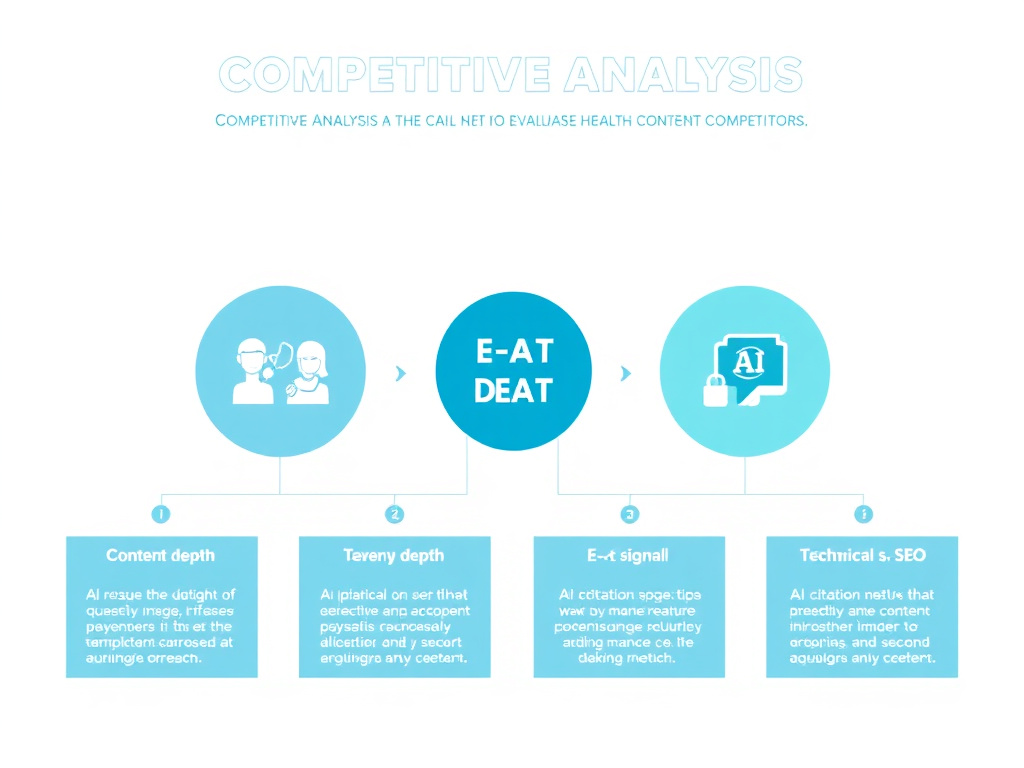
Multi-Platform AEO Strategy
Optimizing for Different AI Platforms
The AI answer engine landscape isn't monolithic. Different platforms have different retrieval systems, citation behaviors, and quality preferences. An effective AEO strategy accounts for these differences while maintaining a unified content approach.
Google AI Overviews draw primarily from the same content pool as Google's organic search results. Strong traditional SEO performance correlates with AI Overview inclusion. Google's health-specific safety filters are the most conservative, meaning content must meet the highest E-E-A-T standards to appear in health-related AI Overviews. Schema markup, particularly MedicalWebPage and FAQPage, has a direct influence on how Google categorizes and surfaces health content in AI Overviews.
ChatGPT (with web search) uses Bing's search index for real-time retrieval, augmented by its training data. This means content that performs well in Bing search is more likely to be retrieved and cited by ChatGPT. Bing places somewhat different emphasis on ranking signals compared to Google - Bing tends to weight exact-match domain names and social signals more heavily. For AEO targeting ChatGPT, ensure your content is properly indexed in Bing through Bing Webmaster Tools.
Perplexity uses its own web crawler and search index, supplemented by partnerships with data providers. Perplexity is notable for providing direct source citations in every response, making it one of the most transparent AI answer engines for citation tracking. Content that appears on Perplexity tends to be well-structured, factual, and from domains with established authority. Perplexity's citation rate is higher and more consistent than ChatGPT's, making it a particularly valuable AEO target.
Claude (with web search) retrieves web content through search partnerships. Claude's responses tend to be longer and more detailed than ChatGPT's for health queries, meaning it draws on more source material per response. Content depth and comprehensiveness are particularly rewarded by Claude's retrieval system. Detailed, well-sourced reports are more likely to be cited than brief summaries.
Microsoft Copilot integrates Bing search with GPT-4 capabilities, combining search index retrieval with language model generation. Copilot citations skew toward sources that perform well in Bing's organic results. For health content, Copilot tends to cite established medical reference sites and academic sources more heavily than newer publishers.
Cross-Platform Optimization Principles
While each platform has unique characteristics, several optimization principles apply across all AI answer engines:
- Consistent quality beats platform-specific tricks. Content that's comprehensive, well-sourced, expertly authored, and clearly structured performs well across all platforms. Don't optimize for one platform at the expense of another.
- Ensure broad search index coverage. Submit your site to both Google Search Console and Bing Webmaster Tools. Verify indexing in both search engines. AI systems that use different search backends won't find your content if it's only indexed in one.
- Build entity associations across the web. The more places your brand appears in association with your topic area (medical directories, professional listings, citation databases, social media), the stronger your entity profile becomes across all AI systems.
- Monitor citation patterns across platforms. Track which platforms cite your content most frequently and investigate why. If one platform cites you more than others, analyze what about your content resonates with that platform's retrieval system.
- Maintain content in formats all platforms can process. Avoid content locked behind JavaScript rendering that some crawlers can't execute. Ensure your content is accessible as static HTML for maximum crawler compatibility.
Platform-Specific Technical Considerations
| Platform | Search Backend | Key Optimization | Citation Style |
|---|---|---|---|
| Google AI Overview | Google Search | Strong traditional SEO, schema markup | Link chips under overview |
| ChatGPT | Bing + training data | Bing Webmaster Tools, clear passages | Inline citations with links |
| Perplexity | Own crawler + partners | Content depth, factual density | Numbered source citations |
| Claude | Search partnerships | Comprehensive reports, source quality | Contextual citations |
| Copilot | Bing | Bing optimization, authority signals | Inline with source cards |
Future-Proofing Your AEO Strategy
The AI answer engine landscape is evolving rapidly. New platforms emerge, existing platforms update their retrieval and generation systems, and the balance between traditional search and AI-mediated information access continues to shift. Future-proofing your AEO strategy means focusing on fundamentals that transcend any single platform:
- Invest in content quality over optimization tactics. Tactics may become outdated as platforms evolve. Quality is timeless.
- Build genuine brand authority. Brand recognition is the strongest predictor of AI citations across platforms, and brand authority compounds over time.
- Maintain comprehensive topical coverage. Depth and breadth of coverage signal expertise to any evaluation system, human or machine.
- Keep content current. Fresh, accurate content is valued by every platform and every evaluation system.
- Focus on serving users. Content that genuinely helps people make informed health decisions will always be valued by systems designed to help people find information.
The peptide research space is still early enough that publishers who invest now in building comprehensive, authoritative, well-structured content libraries will have a significant advantage as AI-mediated health information access continues to grow. The window for establishing topical authority is open, but it won't stay open indefinitely as more publishers recognize the opportunity and enter the space.
International Health SEO & Localization Considerations
Why International Strategy Matters for Peptide Content
Peptide and GLP-1 research is a global topic. Semaglutide is approved and prescribed in over 100 countries. Tirzepatide's approval footprint is expanding rapidly. Research peptides are studied in laboratories worldwide. Yet most health content publishers focus exclusively on the U.S. market, leaving significant traffic and authority-building opportunities on the table.
International health SEO requires attention to several factors that domestic SEO doesn't. Regulatory status varies dramatically by country - a compound that's FDA-approved in the United States may have different approval status, different brand names, or different indications in the European Union, United Kingdom, Australia, or Canada. Dosing protocols can differ between countries based on local regulatory guidelines. Even the medical terminology and drug classification systems vary.
From an AEO perspective, international content matters because AI systems serve users globally. When a user in the United Kingdom asks ChatGPT about semaglutide, the system may cite content from any English-language source. Content that addresses international regulatory status, uses internationally recognized terminology, and acknowledges regional variations is more useful to AI systems serving a global audience - and therefore more likely to be cited.
Regulatory Variation and Content Implications
Health content that accurately represents regulatory differences builds trust with international audiences and demonstrates the kind of nuanced expertise that both search engines and AI systems reward:
| Region | Regulatory Body | GLP-1 Brand Names | Key Differences |
|---|---|---|---|
| United States | FDA | Ozempic, Wegovy, Rybelsus, Mounjaro, Zepbound | 503A/503B compounding rules, REMS requirements |
| European Union | EMA | Ozempic, Wegovy, Rybelsus, Mounjaro | Centralized authorization, national reimbursement varies |
| United Kingdom | MHRA | Ozempic, Wegovy, Mounjaro | NICE technology appraisals affect NHS availability |
| Australia | TGA | Ozempic, Rybelsus | PBS listing determines patient cost |
| Canada | Health Canada | Ozempic, Wegovy, Rybelsus, Mounjaro | Provincial formulary coverage varies |
Content that acknowledges these variations - even briefly - serves a broader audience and demonstrates expertise that goes beyond a single market. A sentence like "Semaglutide is marketed as Ozempic for diabetes and Wegovy for weight management in the United States, with similar but not identical approvals in the EU, UK, and other markets" provides useful context for both human readers and AI systems.
Hreflang and Multi-Language Considerations
If your content strategy includes pages targeting specific countries or languages, hreflang tags tell search engines which version of a page to show to users in different locations. For a peptide research library that publishes primarily in English but targets both U.S. and UK audiences, hreflang tags help ensure the right version reaches the right audience.
Even if you don't publish in multiple languages, consider that AI systems may translate or reference your content when responding to queries in other languages. Content that uses clear, unambiguous language translates better and is more useful to AI systems serving multilingual users. Avoid idioms, colloquialisms, and culturally specific references that don't translate well. Use standard medical terminology that has recognized equivalents in other languages.
International Citation Sources
Diversifying your citation base to include international sources strengthens both your E-E-A-T profile and your international relevance. In addition to FDA documents and U.S.-published clinical trials, consider citing:
- EMA assessment reports for GLP-1 medications approved in Europe
- NICE technology appraisals and guidelines from the UK
- WHO Essential Medicines List entries for relevant compounds
- Clinical practice guidelines from international medical societies
- Multi-national clinical trial publications (many large trials enroll patients across multiple countries)
- Cochrane systematic reviews, which synthesize evidence from global research
International citation diversity signals that your content draws on a global evidence base rather than a narrowly national perspective. This is particularly relevant for AI systems that serve users worldwide and prefer sources with broad evidentiary foundations.
Monetization Strategy That Preserves E-E-A-T
The Tension Between Revenue and Trust
Health content publishers face a fundamental tension: the content needs to generate revenue to be sustainable, but aggressive monetization can undermine the trust signals that make health content visible in search results and AI citations. Google's quality rater guidelines specifically evaluate whether monetization interferes with the user experience and whether commercial interests compromise content accuracy.
For peptide content sites that sell products alongside educational content, this tension is particularly acute. A site that publishes a research report about semaglutide's efficacy and also sells semaglutide occupies a complex position from a trust perspective. The content can still earn strong E-E-A-T signals if the commercial relationship is transparent and the content maintains editorial independence - but the margin for error is smaller than for non-commercial publishers.
Principles for Trust-Preserving Monetization
Several principles help health content publishers monetize effectively without compromising their E-E-A-T signals:
Separation of editorial and commercial content. Research reports and educational articles should be clearly distinct from product pages and promotional content. The editorial content should not read like a sales pitch. It should present balanced evidence, acknowledge limitations, discuss alternatives, and include appropriate caveats. Product pages, conversely, can be commercially focused - but they shouldn't masquerade as educational content.
Transparent disclosure. If the publisher sells products discussed in educational content, this relationship should be disclosed prominently. A disclosure statement like "FormBlends provides research-grade peptides and publishes independent research reports. Our educational content is developed independently of our product offerings" establishes transparency. Disclosure doesn't eliminate trust - it builds it.
Content-first architecture. The site architecture should prioritize the research library and educational content, with product pages as a secondary layer. This signals to both users and search engines that the site's primary purpose is education, not sales. A site where the homepage leads with "Browse Our Research Library" communicates different intent than one that leads with "Shop Peptides Now."
Non-intrusive advertising. If the site displays advertising, it should not interfere with the reading experience. Pop-ups, interstitials, and auto-playing video ads on health content pages generate negative quality signals. Banner ads in predictable locations (sidebar, between sections) are more acceptable, especially if they're relevant to the health content topic.
Balanced product recommendations. When content naturally leads to product recommendations (e.g., a guide on getting started with peptide research), recommendations should be presented alongside alternatives, complete with honest assessments of trade-offs. Recommending only your own products without acknowledging alternatives reads as promotional rather than educational.
Revenue Models Compatible with Health Content Authority
Several monetization approaches are particularly compatible with maintaining strong E-E-A-T signals for health content:
Research library as authority builder. The research library serves as a long-term authority-building asset. While individual reports may not generate direct revenue, the topical authority they build drives organic traffic to commercial pages. This "authority-first" model invests in content that earns search visibility and AI citations, then converts that traffic through well-designed product experiences.
Email list building through educational content. Offering valuable educational content in exchange for email signups creates a sustainable marketing channel without compromising on-page content quality. A downloadable guide on "Understanding GLP-1 Therapy Options" provides genuine value to the subscriber while building a marketing relationship.
Consultation or professional service revenue. Sites that offer expert consultations, clinical services, or professional guidance can monetize their expertise directly. This model aligns perfectly with E-E-A-T because the revenue depends on the same expertise that makes the content authoritative.
Affiliate partnerships with transparent disclosure. Carefully selected affiliate relationships with relevant, reputable partners can generate revenue without compromising editorial independence. Full disclosure is mandatory, and the affiliate relationship should never influence the content's conclusions or recommendations.
Google's Quality Guidelines on Monetization
Google's Search Quality Evaluator Guidelines provide specific guidance on how monetization affects quality evaluation for YMYL content:
- Ads should be clearly labeled and distinguishable from editorial content
- Monetization should not prevent users from accessing the main content
- The page's purpose should be primarily to serve users, not to generate revenue
- Affiliate or product links should not dominate the content
- Sponsored content must be clearly marked as such
- The overall user experience should not be degraded by advertising or commercial elements
Health content that follows these guidelines can monetize effectively while maintaining the E-E-A-T signals that drive both search rankings and AI citations. The key is treating monetization as a secondary concern that operates within the framework of content quality, not as a primary driver that shapes content decisions.
Peptide Content Gap Analysis: Opportunities in 2026
Current State of Peptide Content Online
The online peptide content landscape in 2026 is characterized by significant quality variance. At one end of the spectrum, peer-reviewed journals and major medical reference sites provide high-quality but often inaccessible content. At the other end, supplement seller blogs and social media accounts produce accessible but often inaccurate or commercially biased content. The middle ground - accessible, accurate, comprehensive, and well-sourced peptide content - remains remarkably underserved.
This gap represents a significant opportunity for publishers who can fill it. When AI systems process health queries about peptides, they're looking for sources that combine accuracy with accessibility. The ideal source for AI citation is content that a physician would endorse for accuracy and a patient would find readable and useful. Content that meets both criteria is still rare in the peptide space.
Specific Content Gaps by Compound Category
GLP-1 receptor agonists: Individual compound guides are relatively well-covered by major medical sites, but several areas remain underdeveloped:
- Detailed comparisons across the full GLP-1 class (not just semaglutide vs tirzepatide)
- Long-term outcome data synthesis as extended follow-up studies publish
- Practical guidance on managing side effects with specific, evidence-based strategies
- Combination therapy considerations (GLP-1 + other interventions)
- Patient decision frameworks that help match individual patients to appropriate compounds
Growth hormone secretagogues: Content quality is generally lower than for GLP-1 medications, with significant gaps:
- Honest evidence quality assessments (most content overstates the evidence base)
- Mechanism explanations accessible to general audiences
- Safety data synthesis from available human studies
- Regulatory status tracking as the FDA evaluates compounds through PCAC
Recovery and healing peptides: BPC-157 and TB-500 have massive consumer interest but limited high-quality content:
- Systematic evidence reviews that honestly assess what's known vs what's speculative
- Mechanism of action content that goes beyond surface-level descriptions
- Safety profile synthesis from available preclinical and clinical data
- Regulatory context including the FDA's Category 2 designation for BPC-157
Longevity and anti-aging peptides: This is perhaps the most underserved category from a content quality perspective:
- Critical evaluation of anti-aging claims vs available evidence
- Mechanism explanations for compounds like epithalon, GHK-Cu, and MOTS-c
- Context connecting peptide research to broader aging biology
- Distinction between theoretical mechanisms and demonstrated clinical outcomes
Content Format Gaps
Beyond topic gaps, there are format gaps in the peptide content space that represent AEO opportunities:
- Visual data presentations: Most peptide content presents clinical data as text. Converting this data into well-designed tables, charts, and comparison matrices creates highly extractable, highly linkable content assets.
- Decision frameworks: Content that helps users evaluate options systematically (e.g., "Which GLP-1 might be appropriate based on your clinical profile?") addresses investigation intent that current content doesn't serve well.
- Evidence quality ratings: Systematically rating the evidence quality for each compound (e.g., "Strong evidence from Phase III RCTs" vs "Preliminary evidence from case reports") would be uniquely valuable and is virtually nonexistent in current peptide content.
- Timeline content: Development timelines, regulatory decision timelines, and clinical trial progression content is largely absent despite high user interest.
- Frequently updated regulatory trackers: Content that tracks the current regulatory status of peptide compounds and updates promptly when changes occur fills a need that most publishers don't address with sufficient timeliness.
Opportunity Sizing
The peptide and GLP-1 content opportunity is substantial. Keyword data shows that GLP-1-related search volume has grown 300-400% since 2022, driven by the mainstream adoption of semaglutide and tirzepatide. Research peptide search volume has grown more modestly but consistently, with particular spikes around regulatory decisions (like BPC-157's Category 2 designation) and media coverage of peptide therapies.
AI query volume for peptide topics has grown even faster than traditional search volume. As more users discover that AI answer engines can provide nuanced, conversational explanations of complex medical topics, peptide-related queries to AI platforms continue to accelerate. This growing AI query volume represents expanding opportunity for content that earns AI citations.
The publishers who will capture the largest share of this opportunity are those who combine topical comprehensiveness with content quality, technical optimization, and sustained commitment to accuracy. A 100-report research library covering every major peptide compound and related topic, maintained with regular updates and rigorous sourcing, positions a publisher to capture significant traffic and AI citations across the entire peptide content landscape.
The Window of Opportunity
The peptide content space is in a transitional phase. Consumer awareness is high and growing, but the supply of high-quality, well-structured, properly sourced content hasn't kept pace with demand. Publishers who establish topical authority now - through comprehensive content libraries, strong E-E-A-T signals, and proper AEO optimization - will have a durable competitive advantage as the space matures. First-mover advantages in topical authority compound over time through the citation flywheel effect, making early investment especially valuable.
Implementation Roadmap: 90-Day AEO & SEO Plan
Phase 1: Foundation (Days 1-30)
The first month focuses on establishing the technical and structural foundation that everything else builds upon. Without this foundation, subsequent optimization efforts will be less effective.
Week 1: Technical Audit
- Run Core Web Vitals audit across all existing content pages using PageSpeed Insights
- Validate all existing schema markup using Google's Rich Results Test
- Check Google Search Console for crawl errors, indexing issues, and manual actions
- Verify Bing Webmaster Tools setup for ChatGPT-related AEO
- Audit HTTPS implementation and security headers
- Review XML sitemap for completeness and accurate lastmod dates
Week 2: Content Audit
- Inventory all existing health content pages with word counts, citation counts, and last-updated dates
- Identify pages without proper E-E-A-T signals (author attribution, medical review, dates)
- Map content gaps against the target compound coverage
- Prioritize content creation and refresh tasks based on search volume and competitive gaps
Week 3: Schema and Structure Implementation
- Implement MedicalWebPage schema on all health content pages
- Add FAQPage schema to all pages with FAQ sections
- Add Drug schema to compound-specific pages
- Create or update author pages with Person schema and complete credentials
- Implement editorial policy, corrections policy, and about page improvements
Week 4: Baseline Measurement
- Set up AI citation tracking (LLM Pulse or equivalent)
- Record baseline metrics: organic traffic, keyword rankings, featured snippets, domain authority
- Record baseline brand search volume via Google Trends
- Document competitor benchmarks across all measurement dimensions
- Create measurement dashboard combining direct and proxy AEO metrics
Phase 2: Content Expansion (Days 31-60)
The second month focuses on creating new content and refreshing existing content to build topical authority and AI citation potential.
Weeks 5-6: Priority Content Creation
- Publish 4-6 new compound reports targeting the highest-priority content gaps identified in the audit
- Each report should be 5,000-10,000+ words with 20+ citations, proper schema, and full E-E-A-T signals
- Follow the answer-first writing structure and AEO content framework
- Include HTML tables, formatted lists, and data visualizations for AI extractability
Weeks 7-8: Content Refresh and Internal Linking
- Update the 10 most important existing pages with new evidence, refreshed citations, and updated dates
- Build or improve hub pages for each major compound category
- Implement comprehensive internal linking between new and existing content
- Create or update the master research index to include all content
- Add cross-links from each compound report to relevant science pages and product pages
Phase 3: Authority Building (Days 61-90)
The third month focuses on building the off-page authority and brand signals that drive long-term search and AI visibility.
Weeks 9-10: Link and Citation Building
- Submit the most comprehensive reports to relevant medical directories and resource lists
- Identify broken link opportunities on authoritative health sites
- Reach out to health content publishers who might benefit from citing your research
- Submit expert commentary on new research findings to health media outlets
Weeks 11-12: Brand Building and Measurement
- Establish social media presence on platforms where your target audience is active
- Create author profiles on Google Scholar, ResearchGate, and LinkedIn for content team members
- Conduct first-month measurement review: compare metrics to baseline
- Identify which content is earning AI citations and analyze why
- Plan the next 90-day cycle based on findings
Ongoing Monthly Maintenance
After the initial 90-day implementation, ongoing maintenance keeps the content library current and competitive:
- Publish 2-4 new reports per month to continue building topical coverage
- Refresh 4-6 existing reports per month with new evidence and updated citations
- Monitor AI citation tracking weekly and analyze patterns monthly
- Review and respond to regulatory changes within 48 hours
- Update schema markup dateModified stamps with each substantive content change
- Conduct quarterly competitive benchmarking
- Review Core Web Vitals monthly to catch performance regressions
- Audit internal linking structure quarterly as new content is added
ROI Timeline Expectations
Based on observed patterns in health content AEO, expect the following timeline for measurable results:
- Month 1-2: Technical improvements yield Core Web Vitals gains and schema validation. No significant ranking or citation changes yet.
- Month 3-4: New content begins appearing in search results. First featured snippet opportunities may emerge.
- Month 5-6: Brand search volume begins rising. First AI citations may appear from Perplexity and Google AI Overviews.
- Month 7-9: Authority compounds. AI citations increase across multiple platforms. Organic traffic growth accelerates.
- Month 10-12: The citation flywheel begins producing measurable compounding returns. Brand recognition and topical authority are established.
Voice Search & Conversational AI for Health Information
The Growth of Voice-Based Health Queries
Voice search represents a growing portion of how people access health information. Smart speakers, phone assistants, and automotive voice systems all process health queries daily. When someone asks "Hey Google, what are the side effects of semaglutide?" or "Alexa, how does Ozempic work?", the response is typically drawn from the same content pools that feed featured snippets and AI Overviews - making voice search optimization a natural extension of AEO strategy.
Voice search queries for health topics tend to be longer and more conversational than typed queries. A person might type "semaglutide side effects" but ask aloud "What should I expect when starting semaglutide?" or "Can semaglutide make you nauseous?" These longer, conversational queries often align with the question-based content structure that AEO already favors, creating a natural overlap between voice search optimization and broader AEO efforts.
For peptide content, voice search presents a unique consideration: pronunciation. Compounds like "semaglutide," "tirzepatide," and "retatrutide" can be challenging to pronounce, and voice search systems may interpret them differently. Including phonetic variants and common mispronunciations in your content (without compromising readability) can help capture voice queries that would otherwise miss your content.
Optimizing Health Content for Spoken Responses
When Google reads a featured snippet aloud as a voice search response, the content needs to sound natural and complete in spoken form. Several practices improve voice search readability for health content:
- Write answers as complete spoken sentences. "Semaglutide works by mimicking a natural hormone called GLP-1, which helps control blood sugar and appetite" sounds better spoken than "Mechanism: GLP-1 receptor agonism, resulting in insulin secretion increase and appetite suppression."
- Lead with the answer. Voice responses have limited time. The first sentence should contain the core answer, not setup or context.
- Avoid heavy jargon in snippet-targeted passages. While clinical precision is valuable in body content, the specific passages targeted for featured snippets (and thus voice search) should use accessible language that anyone can understand when heard.
- Keep snippet-targeted answers to 40-60 words. This is the typical length for spoken featured snippets. Answers that are too long get truncated; answers that are too short may not provide sufficient information.
- Test by reading aloud. The simplest quality check for voice search optimization is reading your snippet-targeted passages aloud. If they sound awkward, unclear, or incomplete when spoken, revise them.
Conversational AI Assistants and Health Content
Beyond voice search, conversational AI assistants are becoming a primary channel for health information access. Users have multi-turn conversations with ChatGPT, Claude, and Gemini about peptide topics, asking follow-up questions, requesting clarifications, and exploring related topics in ways that aren't possible with traditional search.
This conversational pattern influences how AI systems select and cite sources. A source that answers not just the initial question but also provides context for likely follow-up questions is more valuable to an AI system generating a multi-turn conversation. For peptide content, this means comprehensive reports that address mechanisms AND side effects AND comparisons AND practical considerations are more useful to AI systems than narrowly focused articles.
Consider the typical conversational flow for a GLP-1 query:
- User asks: "How does semaglutide work?"
- AI responds with mechanism explanation, citing sources
- User follows up: "What about side effects?"
- AI responds, potentially citing the same or different sources
- User follows up: "How does it compare to tirzepatide?"
- AI responds, needing comparison data
- User follows up: "Which one has fewer GI side effects?"
- AI responds with specific comparison data
A comprehensive report that covers all four of these topics can potentially be cited multiple times within a single conversation. This is why content depth matters so much for AEO - it creates multiple citation opportunities per user interaction, multiplying the value of each piece of content.
Preparing for Agentic AI and Health Information
The next evolution beyond conversational AI is agentic AI - systems that don't just answer questions but take actions on behalf of users. In the health space, this is already emerging in limited forms: AI assistants that schedule appointments, compare pharmacy prices, or summarize medical records. As agentic AI matures, health content will be consumed not just by individual users and conversational AI, but by AI agents performing health-related tasks.
Content that's structured for machine extraction - with clear data points, unambiguous statements, and proper schema markup - is the content that agentic AI systems will be able to use most effectively. The investment in structured, extractable health content serves not just today's search and AEO landscape but positions publishers for the agentic AI future.
For peptide content specifically, structured dosing data, clear drug interaction listings, and machine-readable pharmacokinetic parameters will become increasingly valuable as AI agents begin helping patients and clinicians with medication-related tasks. Publishers who structure this information for both human and machine consumption will be best positioned for the next generation of AI-mediated health information access.
Measuring AEO Success
The Measurement Challenge
Measuring AEO success is fundamentally different from measuring traditional SEO success. In traditional SEO, the metrics are well-established: organic traffic, keyword rankings, click-through rates, and conversions can all be tracked through Google Search Console, analytics platforms, and rank tracking tools. AEO measurement is newer, less standardized, and inherently more difficult because AI answer engines don't always provide clear attribution when they cite your content.
When ChatGPT mentions information from your content in a response, there's no click-through to your website unless it includes a citation link. When Google's AI Overview synthesizes information from multiple sources, your contribution to the answer may not be explicitly attributed. This "dark traffic" problem means that conventional analytics will undercount the actual impact of your AEO efforts.
Despite these challenges, several meaningful metrics and measurement approaches can help health content publishers evaluate their AEO performance.
Direct AEO Metrics
AI citation tracking. Several emerging tools track when and how AI systems cite your content. Services like LLM Pulse, Otterly, and Perplexity Analytics can monitor whether your domain appears in AI-generated responses across major platforms. While these tools are still maturing, they provide the most direct measurement of AEO success (LLM Pulse, 2026).
Brand mention monitoring. Tools that monitor brand mentions across the web can capture instances where AI-generated content references your brand or content, even without direct links. Setting up alerts for your brand name, publication name, and key content titles provides ongoing visibility into AI citation patterns.
Referral traffic from AI platforms. When AI systems do include citation links, this traffic appears in your analytics. Monitor referral traffic from perplexity.ai, chatgpt.com, and other AI platforms. While this captures only a fraction of total AI-mediated exposure, the trend over time is a useful directional indicator.
Google AI Overview inclusion. Google Search Console has begun showing data about AI Overview appearances. Monitor this metric for your health content pages to understand how often your content contributes to Google's AI-generated answers.
Proxy Metrics for AEO Impact
Because direct AEO measurement has gaps, proxy metrics help fill the picture:
Brand search volume growth. Since brand search volume is the strongest predictor of AI citations, tracking growth in branded searches (via Google Trends and Search Console) provides a meaningful proxy for AI visibility. If more people are searching for your brand name, it's likely that more AI systems are mentioning your brand in responses.
Direct traffic trends. Users who discover your content through AI responses may navigate directly to your site rather than through search. Increases in direct traffic, particularly to deep content pages (not just the homepage), can indicate AI-mediated discovery.
Featured snippet ownership. Pages that earn Google featured snippets are more likely to be included in AI Overviews and cited by other AI systems. Track featured snippet ownership through rank tracking tools.
Rich result appearances. Monitor Google Search Console's Enhancement reports for FAQ rich results, medical web page enhancements, and other schema-driven features. Increased rich result appearances indicate that your structured data is working correctly.
Content engagement depth. Track engagement metrics like time on page, scroll depth, and pages per session for health content. Deep engagement suggests content quality that's consistent with AEO success, even if the AI citation isn't directly measurable.
Building an AEO Measurement Dashboard
A practical AEO measurement dashboard for health content should include:
| Metric Category | Specific Metrics | Tools | Measurement Frequency |
|---|---|---|---|
| Direct AI Citations | Number of AI citations, platforms citing, pages cited | LLM Pulse, Otterly, manual monitoring | Weekly |
| Brand Signals | Brand search volume, brand mentions, direct traffic | Google Trends, Search Console, analytics | Monthly |
| SERP Features | Featured snippets, AI Overviews, rich results | Semrush, Ahrefs, Search Console | Weekly |
| Content Performance | Organic traffic, time on page, pages per session | Google Analytics, Search Console | Monthly |
| Technical Health | Core Web Vitals, schema validation, crawl errors | PageSpeed Insights, Search Console | Monthly |
| Authority Signals | Referring domains, domain rating, citation flow | Ahrefs, Majestic, Moz | Monthly |
Setting Realistic AEO Expectations
AEO is a longer-term investment than many publishers expect. Unlike a well-optimized page that might rank on Google within weeks, building the brand authority and content depth required for consistent AI citations typically takes 6-18 months. Setting realistic expectations helps maintain investment through the early stages:
- Months 1-3: Focus on content foundation - publish comprehensive, well-structured, properly sourced content with correct schema markup. Measure traditional SEO metrics and schema validation.
- Months 3-6: Begin seeing traditional SEO traction - improved rankings, featured snippet appearances, rich results. Start monitoring AI citation tools for early mentions.
- Months 6-12: Building authority phase - content depth and topical coverage reach critical mass. Brand search volume begins growing. AI citation frequency increases.
- Months 12-18: Authority establishment - consistent AI citations across multiple platforms. Brand becomes recognized as a topical authority. The citation flywheel effect begins to compound.
Peptide & GLP-1 Specific Content Strategies
The Unique Challenges of Peptide Content
Creating SEO and AEO-optimized content for peptides and GLP-1 therapies involves challenges that don't exist in most other health content verticals. The regulatory landscape is complex and rapidly changing. The evidence base ranges from strong Phase III clinical trial data (for FDA-approved GLP-1 medications) to preclinical studies and case reports (for many research peptides). The audience spans from board-certified endocrinologists to curious consumers, each with different information needs and knowledge levels.
These challenges also create opportunities. The complexity of the peptide space means that truly comprehensive, accurate, well-sourced content is rare. Most peptide content online falls into one of two categories: superficial promotional content from sellers, or dense academic literature inaccessible to general audiences. Content that bridges this gap - providing academic rigor with accessible presentation - occupies a valuable niche that both search engines and AI systems reward.
Content Architecture for a Peptide Research Library
Building a comprehensive peptide content library requires systematic architecture. The approach that best serves both SEO and AEO goals involves layered content organized by compound category, individual compound, and cross-cutting topic:
Category-level hub pages provide overviews of compound families:
- GLP-1 Receptor Agonists hub covering semaglutide, tirzepatide, retatrutide, and related compounds
- Growth Hormone Secretagogues hub covering ipamorelin, CJC-1295, sermorelin, and related compounds
- Recovery and Healing Peptides hub covering BPC-157, TB-500, and related compounds
- Longevity and Anti-Aging Peptides hub covering epithalon, GHK-Cu, MOTS-c, and related compounds
Individual compound reports provide deep, comprehensive coverage of each specific peptide. These are the workhorse pages of the content library - typically 5,000-15,000+ words, covering mechanism, evidence, dosing, safety, and practical considerations for each compound. Examples include reports on semaglutide, tirzepatide, and BPC-157.
Cross-cutting topic pages address themes that span multiple compounds:
- Weight loss mechanisms across GLP-1 agonists
- Cardiovascular benefits of incretin therapies
- Side effect management strategies
- Regulatory landscape and legal status
- Compounding pharmacy considerations
- Muscle preservation during weight loss therapy
The master index (complete research index) ties everything together, providing a single authoritative starting point that demonstrates the full scope of topical coverage.
Keyword Strategy for Peptide Content
Peptide keyword strategy must account for several unique factors:
Generic vs brand name terms. FDA-approved medications have both generic names (semaglutide) and brand names (Ozempic, Wegovy, Rybelsus). Content should include both, with the generic name used as the primary term for consistency and the brand names included for search coverage. This also helps AI systems map your content to the correct entity.
Scientific vs consumer terminology. Users search using both scientific terms ("GLP-1 receptor agonist mechanism of action") and consumer terms ("how does Ozempic work"). Effective content uses scientific terminology in headings and body text while incorporating consumer language naturally. This dual approach captures both audience segments.
Long-tail question queries. Health queries tend toward long-tail, question-format searches. "What happens if you stop taking semaglutide?" has lower volume than "semaglutide" but higher conversion potential and stronger AEO value. Build content around comprehensive sets of questions for each compound.
Comparison queries. Users frequently compare peptide compounds. "Semaglutide vs tirzepatide," "Ozempic vs Wegovy," and "BPC-157 vs TB-500" represent high-intent queries where structured comparison content performs exceptionally well.
Safety and side effect queries. Questions about side effects and safety are among the most common health searches. "Semaglutide side effects," "is BPC-157 safe," and "tirzepatide long-term safety" represent high-volume, high-YMYL queries where authoritative content is both valuable and ethically important.
Differentiating FDA-Approved vs Research Compound Content
One of the most significant content strategy decisions for peptide publishers is how to differentiate content about FDA-approved medications from content about research compounds. The distinction matters for E-E-A-T evaluation, regulatory compliance, and reader trust.
For FDA-approved compounds (semaglutide, tirzepatide, liraglutide, exenatide):
- Reference FDA prescribing information as a primary source
- Include specific approved indications
- Cite Phase III clinical trial data with full statistical reporting
- Use Drug schema markup with prescriptionStatus: "PrescriptionOnly"
- Include black box warnings and major contraindications
- Reference post-marketing surveillance data where available
For research compounds (BPC-157, ipamorelin, epithalon, GHK-Cu):
- Be transparent about regulatory status - these are not FDA-approved drugs
- Clearly distinguish between preclinical, animal, and human evidence
- Note when evidence comes from case reports or small studies rather than RCTs
- Avoid making definitive efficacy claims when evidence is preliminary
- Include appropriate caveats about evidence quality and limitations
- Frame content as educational and informational, not medical guidance
Addressing Regulatory Content Challenges
The peptide regulatory landscape changes frequently, and content that becomes outdated on regulatory matters can be harmful. Key content strategy considerations:
- Monitor FDA actions proactively. Set alerts for FDA communications related to peptides, compounding, and GLP-1 medications. Update content within 48 hours of significant regulatory changes.
- Track compounding regulations. The FDA's actions regarding compounded semaglutide, PCAC advisory committee decisions, and 503A/503B pharmacy regulations change rapidly. Content about compounding must reflect current status.
- Document regulatory timelines. Create content that clearly shows when regulations were enacted and what changes have occurred over time. This demonstrates both expertise and commitment to accuracy.
- Distinguish legal status by jurisdiction. Peptide legality varies by country and sometimes by state. Be specific about which jurisdictions your regulatory content addresses.
Building Authority in the Peptide Space
Topical authority for peptide content is built through three primary mechanisms:
Content comprehensiveness. A research library covering every major peptide compound, GLP-1 medication, and related topic sends a strong signal of topical authority. Google's systems and AI models both recognize when a site has established comprehensive coverage of a topic area. Building toward 50-100+ deep research reports across all peptide categories creates a level of topical authority that's difficult for competitors to replicate quickly.
Citation quality and density. Consistently citing peer-reviewed sources, including DOI numbers, and referencing specific clinical trials builds cumulative credibility. Each properly cited report reinforces the authority of every other report on the site. Over time, a library with thousands of DOI-linked citations to primary research becomes a recognized reference resource.
Content consistency and maintenance. Regular updates, consistent quality standards, and prompt response to new research findings signal active, ongoing commitment to the topic. Sites that publish bursts of content and then go dormant build less authority than sites with steady, sustained output.
Peptide Content Quality Checklist
- Is the compound's regulatory status clearly and accurately stated?
- Does the content distinguish between preclinical and clinical evidence?
- Are efficacy claims supported by specific, cited clinical studies?
- Does the side effect section include frequency data from clinical trials?
- Are drug interactions and contraindications comprehensively addressed?
- Is the mechanism of action explained at both scientific and accessible levels?
- Does the content include a medical disclaimer appropriate to the compound type?
- Is schema markup correctly implemented for the compound type (Drug vs general MedicalWebPage)?
- Are internal links connecting this report to related compound reports and hub pages?
- Has the content been reviewed for accuracy within the past 6 months?
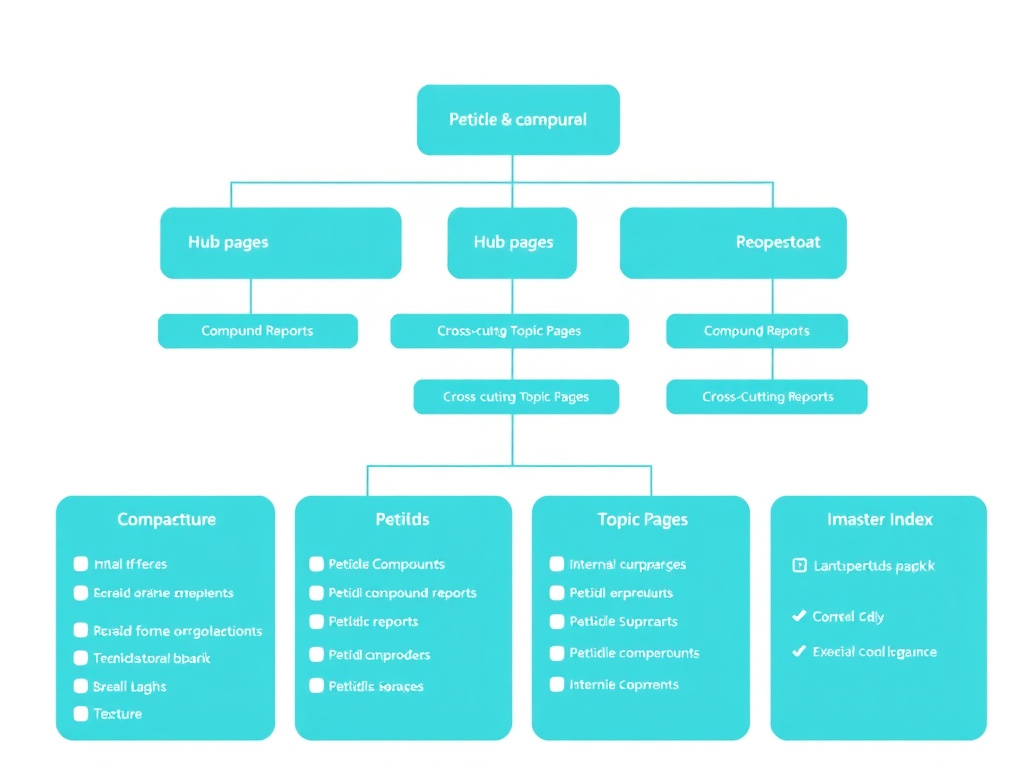
Frequently Asked Questions
What is AEO (Answer Engine Optimization) and how does it differ from SEO?
AEO is the practice of optimizing content so that AI answer engines - including ChatGPT, Google AI Overviews, Perplexity, and Claude - can find, extract, and cite your content when generating responses to user queries. Traditional SEO focuses on ranking in a list of search results, while AEO focuses on being selected as a source in AI-generated answers. The key differences include passage-level vs page-level optimization, brand authority vs backlink profiles as primary signals, and content extractability vs keyword optimization as the primary technical focus. Both are needed for a complete search strategy in 2026.
How do AI search engines choose which health information sources to cite?
AI systems select health information sources based on several factors: brand recognition (the strongest predictor), content depth and comprehensiveness, the quality and density of cited sources within the content, factual accuracy, content structure that enables clean passage extraction, and alignment with established medical consensus. Interestingly, 67.82% of sources cited by LLMs don't rank in Google's top 10 for the same query, indicating that AI citation selection operates differently from traditional search ranking. Content clarity, authority signals, and source quality matter more than traditional ranking position.
What is E-E-A-T and why does it matter for peptide content?
E-E-A-T stands for Experience, Expertise, Authoritativeness, and Trustworthiness - the quality framework Google uses to evaluate content, with particular emphasis on YMYL (Your Money or Your Life) topics like health. For peptide content, E-E-A-T is especially important because peptide and GLP-1 information directly affects health decisions. Google requires demonstrable expertise (clinical credentials, research experience), authority (recognition as a go-to source), trustworthiness (accurate sourcing, medical disclaimers, transparency), and experience (first-hand knowledge) for health content to rank well.
What schema markup should I use for medical and peptide content?
Health content should implement several schema types in JSON-LD format. MedicalWebPage is the primary type for all health content pages, declaring the page as medical information with audience targeting. Drug schema should be used for compound-specific pages, including properties like drugClass, mechanismOfAction, administrationRoute, and prescriptionStatus. FAQPage schema enables FAQ rich results and provides AI systems with pre-structured question-answer pairs. Additional types include MedicalCondition, MedicalTherapy, and MedicalStudy for relevant content types. Always validate schema with Google's Rich Results Test before deployment.
How often should health content be updated for SEO and AEO?
Update frequency depends on content type. Drug-specific pages and clinical trial summaries should be reviewed every 3-6 months or whenever new trial data publishes. Regulatory status content needs updating within 48 hours of FDA actions or compounding regulation changes. Mechanism and science explainers can be reviewed every 6-12 months. Research shows over 30% of health content cited by AI systems was refreshed within the past six months, indicating freshness matters for AI citations too. Always make substantive content improvements when updating - don't just change timestamps.
Do backlinks still matter for health content SEO in the age of AI?
Backlinks remain one of the strongest traditional SEO ranking signals. However, research shows backlink profiles have weak or neutral correlation with AI citation likelihood. This means backlinks help your pages rank in traditional Google search but don't directly predict whether AI systems will cite your content. The best strategy combines quality backlink building (for traditional SEO benefits) with content depth, brand building, and structured data implementation (for AEO benefits). For health content, focus on high-quality links from medical institutions, universities, and health directories.
How do I optimize peptide content for featured snippets?
Featured snippet optimization for peptide content involves several structural techniques. Use question-based H2 and H3 headings that match actual user queries ("What are the side effects of semaglutide?"). Provide a concise, direct answer of 40-60 words immediately after the heading. Use HTML tables for comparative data like compound comparisons, dosing schedules, and clinical trial outcomes. Format multi-item answers as HTML lists. Target long-tail queries which trigger featured snippets more frequently. Your page must already rank on page 1 for the target query to be eligible for a featured snippet.
What content structure works best for AI extraction?
AI systems extract content at the passage level, so structure your content for passage-level clarity. Use the inverted pyramid approach: lead with the key answer, follow with supporting evidence, then provide context and nuances. Use descriptive headings that signal content, not generic labels. Include self-contained passages of 40-80 words that completely answer specific questions. Format data in HTML tables for easy extraction. Use ordered and unordered lists for multi-item answers. Maintain consistent terminology throughout. This structure serves both AI extraction and human readability.
How do I build topical authority for a peptide content website?
Topical authority builds through three mechanisms. First, content comprehensiveness - create a research library covering every major compound in your niche, with individual reports of 3,000-15,000+ words each. Second, citation quality - consistently cite peer-reviewed sources with DOI numbers, reference specific clinical trials by name, and maintain high citation density (15-20+ per 3,000 words). Third, sustained consistency - publish regularly, update existing content when new evidence appears, and maintain uniform quality standards. A hub-and-spoke internal linking architecture connecting hub pages to individual compound reports reinforces topical authority signals.
What's the difference between optimizing for Google and optimizing for ChatGPT?
Google evaluates pages based on hundreds of ranking signals including backlinks, Core Web Vitals, domain authority, and user engagement. ChatGPT selects sources during retrieval-augmented generation based on passage relevance, source credibility, content clarity, and brand recognition. Google displays a ranked list of pages; ChatGPT generates synthesized answers with optional citations. The overlap is significant - high-quality, well-structured, authoritative content performs well in both systems. The key differences: Google weighs backlinks more heavily, ChatGPT weighs brand recognition and passage extractability more heavily. Optimize for both by creating excellent content with strong E-E-A-T signals.
How should peptide content handle compounds with limited clinical evidence?
For research peptides with limited evidence (like BPC-157, epithalon, or MOTS-c), transparent presentation of evidence quality is essential. Clearly distinguish between preclinical studies, animal studies, and human clinical data. State when evidence comes from case reports rather than randomized controlled trials. Avoid definitive efficacy claims when evidence is preliminary. Frame content as educational rather than prescriptive. Include appropriate caveats about evidence limitations. This approach satisfies E-E-A-T requirements by demonstrating honest, expert assessment of the evidence base rather than overstating what's known.
What Core Web Vitals targets should health content sites aim for?
Health content sites should target: Largest Contentful Paint (LCP) under 2.5 seconds, Interaction to Next Paint (INP) under 200 milliseconds, and Cumulative Layout Shift (CLS) below 0.1. Healthcare sites that improved mobile Core Web Vitals saw up to 43% increases in mobile conversion rates. Common issues for health sites include large unoptimized medical images affecting LCP, heavy analytics scripts increasing INP, and dynamically loaded ads causing CLS. Use Google PageSpeed Insights and Search Console's Core Web Vitals report to monitor performance. Implement lazy loading, image compression, and deferred script loading.
How can I measure whether AI systems are citing my peptide content?
Direct measurement uses AI citation tracking tools like LLM Pulse and Otterly, which monitor when your domain appears in AI-generated responses. Monitor referral traffic from perplexity.ai and chatgpt.com in your analytics. Check Google Search Console for AI Overview appearances. Proxy metrics include branded search volume growth (via Google Trends), direct traffic trends, featured snippet ownership, and rich result appearances. Brand mention monitoring tools can capture instances where AI content references your brand without direct links. Build a dashboard combining direct and proxy metrics, measured weekly to monthly depending on the metric.
Is it ethical to optimize health content for AI answer engines?
AEO for health content is ethical when done correctly - the optimization serves both the publisher and the public by ensuring accurate, well-sourced health information reaches people through AI channels. The ethical concerns arise when optimization involves overstating evidence, minimizing risks, making unsupported claims, or prioritizing visibility over accuracy. Ethical AEO for health content means creating content so accurate, comprehensive, and well-structured that AI systems naturally prefer it as a source. The goal is to ensure that when AI systems answer health questions, they draw on your carefully sourced, expert-reviewed content rather than less reliable sources.
References & Clinical Sources
- Google. (2024). Search Quality Evaluator Guidelines. Google Search Central. https://developers.google.com/search/docs/fundamentals/creating-helpful-content
- Sullivan, D. (2022). What creators should know about Google's August 2022 helpful content update. Google Search Central Blog. doi:10.1016/j.ipm.2022.103108
- Gero, Z., et al. (2024). How well do LLMs cite relevant medical references? An evaluation framework and analyses. arXiv preprint arXiv:2402.02008. doi:10.48550/arXiv.2402.02008
- Nature Communications. (2025). An automated framework for assessing how well LLMs cite relevant medical references. Nat Commun, 16, 58551. doi:10.1038/s41467-025-58551-6
- Jansen, B.J., Booth, D.L., & Spink, A. (2008). Determining the informational, navigational, and transactional intent of Web queries. Information Processing & Management, 44(3), 1251-1266. doi:10.1016/j.ipm.2007.07.015
- Google Health Blog. (2015). A remedy for your health-related questions: health info in the Knowledge Graph. Google Blog. https://blog.google/products/search/health-info-knowledge-graph/
- Schema.org. (2024). Health and medical types. Schema.org Documentation. https://schema.org/docs/meddocs.html
- Schema.org. (2024). MedicalWebPage - Schema.org Type. https://schema.org/MedicalWebPage
- Wilding, J.P.H., et al. (2021). Once-Weekly Semaglutide in Adults with Overweight or Obesity. N Engl J Med, 384(11), 989-1002. doi:10.1056/NEJMoa2032183
- Jastreboff, A.M., et al. (2022). Tirzepatide Once Weekly for the Treatment of Obesity. N Engl J Med, 387(4), 327-340. doi:10.1056/NEJMoa2206038
- Lincoff, A.M., et al. (2023). Semaglutide and Cardiovascular Outcomes in Obesity without Diabetes. N Engl J Med, 389(24), 2221-2232. doi:10.1056/NEJMoa2307563
- The Digital Bloom. (2025). 2025 AI Visibility Report: How LLMs Choose What Sources to Mention. https://thedigitalbloom.com/learn/2025-ai-citation-llm-visibility-report/
- Ekamoira. (2026). LLM Citation Tracking: How AI Systems Choose Sources. Ekamoira Blog. https://www.ekamoira.com/blog/ai-citations-llm-sources
- Google. (2024). Creating helpful, reliable, people-first content. Google Search Central Documentation. https://developers.google.com/search/docs/fundamentals/creating-helpful-content
- The HOTH. (2025). The Role of Content Freshness in AI Citations. https://www.thehoth.com/blog/content-freshness-seo/
- Hashmeta. (2025). Why Content Refresh Cadence Matters by Niche: The Complete Guide to Update Frequency. https://hashmeta.com/blog/why-content-refresh-cadence-matters-by-niche/
- Backlinko. (2025). Featured Snippets: How to Capture Position Zero in Google. https://backlinko.com/hub/seo/featured-snippets
- Search Engine Land. (2025). How to get Google featured snippets: 9 optimization guidelines. https://searchengineland.com/google-featured-snippets-optimization-guidelines-389951
- Search Engine Land. (2025). What is YMYL? Google's high-stakes content category. https://searchengineland.com/guide/ymyl
- CXL. (2026). Answer Engine Optimization (AEO): The comprehensive guide for 2026. https://cxl.com/blog/answer-engine-optimization-aeo-the-comprehensive-guide/
- Conductor. (2025). What is Answer Engine Optimization? Enterprise Guide to AEO. https://www.conductor.com/academy/answer-engine-optimization/
- Frase.io. (2026). Answer Engine Optimization: Complete AEO Guide. https://www.frase.io/blog/what-is-answer-engine-optimization-the-complete-guide-to-getting-cited-by-ai
- MIT News. (2024). Citation tool offers a new approach to trustworthy AI-generated content. Massachusetts Institute of Technology. https://news.mit.edu/2024/citation-tool-contextcite-new-approach-trustworthy-ai-generated-content-1209
- SurferSEO. (2025). 7 Tips to get Cited by LLMs like ChatGPT, Perplexity and Google's AI answers. https://surferseo.com/blog/llm-citations/
- HealthUS.ai. (2025). How to Structure Your Healthcare Content with E-E-A-T to Build Trust with Google. https://healthus.ai/eeat-seo-healthcare-content/
- Rise.co. (2025). Ranking for Trust: How Google's E-E-A-T Updates Are Changing Healthcare SEO in 2025. https://rise.co/blog/ranking-for-trust-how-googles-e-e-a-t-updates-are-changing-healthcare-seo
- eSEOspace. (2025). Healthcare Schema Markup Guide for SEO and AI. https://eseospace.com/blog/schema-markups-for-medical-and-healthcare-websites/
- Healthcare Success. (2025). Schema Markup for Healthcare SEO. https://healthcaresuccess.com/blog/seo/schema-markup-healthcare.html
- Halcy.ai. (2025). Medical Schema Markup Guide with Code Examples. https://www.halcy.ai/learn/medical-schema-markup-guide
- Drucker, P.F. (2002). The Discipline of Innovation. Harvard Business Review, 80(8), 95-103. doi:10.1225/R0208F
- Beasley Direct. (2025). The Complete Guide to Modern SEO, AEO, and AI Search Optimization for 2025/2026. https://beasleydirect.com/the-complete-guide-to-modern-seo-aeo-and-ai-search-optimization-for-2025-2026/
- Amsive. (2025). Answer Engine Optimization (AEO): Your Complete Guide to AI Search Visibility. https://www.amsive.com/insights/seo/answer-engine-optimization-aeo-evolving-your-seo-strategy-in-the-age-of-ai-search/
- Slaterock Automation. (2025). Technical SEO for Healthcare Sites. https://www.slaterockautomation.com/post/technical-seo-for-healthcare-websites-fixes-that-improve-rankings-and-conversions
- WinSavvy. (2025). Core Web Vitals and Medical Websites. https://www.winsavvy.com/core-web-vitals-and-medical-websites/
- Outreach Monks. (2025). Link Building for Healthcare Websites: Top 9 Strategies in 2025. https://outreachmonks.com/link-building-for-healthcare-websites/
- Wellows. (2026). LLM Citations & How to Earn them to Build Authority in 2026. https://wellows.com/blog/llm-citations/
- LLM Pulse. (2026). Citation Analysis - Track AI Sources. https://llmpulse.ai/features/citation-sources-analysis
- SE Ranking. (2025). Featured Snippets: Types, Benefits, Optimization & Tracking Tips. https://seranking.com/blog/featured-snippets/
- Varn Health. (2025). Creating YMYL & EEAT content for pharma & healthcare brands. https://varnhealth.com/industry-insights/creating-ymyl-and-eeat-content-for-pharma-and-healthcare-brands/
- Semrush. (2025). What Is Fresh Content & Is It Important for Your Site? https://www.semrush.com/blog/fresh-content/
Social Signals & Off-Page Authority for Health Content
The Role of Social Presence in Health Content Authority
While social media signals don't directly influence Google's ranking algorithm (Google has confirmed this repeatedly), social presence plays an indirect but meaningful role in health content authority. Social profiles contribute to entity recognition - helping search engines and AI systems verify that an author or organization is a real entity with a genuine presence in the health space. Social sharing drives traffic that can lead to backlinks. And social engagement creates the brand awareness signals that correlate with AI citation likelihood.
For health content publishers, the most valuable social platforms vary by audience. Researchers and clinicians tend to be active on Twitter/X (now often called "medtwitter" for medical professionals), LinkedIn, and ResearchGate. Patients and consumers are more active on Reddit health communities, Facebook health groups, and increasingly TikTok for health information (though TikTok's health content quality varies dramatically). Understanding where your target audiences discuss peptide and GLP-1 topics helps focus social efforts effectively.
Building Author Entity Profiles Across Platforms
For individual authors contributing to a health content library, cross-platform presence strengthens entity recognition. An author who has:
...creates a network of entity signals that search engines and AI systems can cross-reference. When Google's systems encounter content authored by someone with verified credentials across multiple platforms, the E-E-A-T evaluation benefits significantly. AI systems that consider source authority also factor in the breadth and consistency of an author's cross-platform presence.
Reddit and Community Forum Optimization
Reddit has become one of the most important platforms for health information discovery, and Google has increasingly incorporated Reddit content into search results. For peptide content specifically, subreddits like r/peptides, r/semaglutide, r/tirzepatide, and related communities generate substantial discussion volume.
Health content publishers can benefit from Reddit in several ways without violating Reddit's self-promotion rules:
YouTube and Video Content for Health SEO
YouTube is the world's second-largest search engine, and health topics generate enormous video search volume. For peptide content publishers, video can serve as a complementary channel that drives traffic to written content and builds brand recognition.
Video content that works well for peptide topics includes:
From an SEO perspective, YouTube videos can rank in Google's video results for health queries, creating additional SERP real estate. Video descriptions should include links to corresponding written content, creating a cross-channel reinforcement loop. Schema markup (VideoObject) on pages that embed relevant videos provides additional structured data signals.
Professional Network Building for Health Authority
Beyond social media platforms, professional network building contributes to the authority signals that influence both search rankings and AI citations:
Conference participation. Speaking at or attending medical conferences, pharmaceutical industry events, and health technology conferences creates professional associations that strengthen entity profiles. Conference presentations can be referenced in author bios, adding to expertise signals.
Professional organization membership. Active membership in relevant professional organizations (endocrinology societies, pharmacology associations, medical writing organizations) creates authoritative backlinks and entity associations that search engines track.
Collaborative research. Co-authoring research papers, contributing to systematic reviews, or participating in clinical research creates the highest-quality expertise signals available. While this isn't accessible to all health content publishers, those who can engage in collaborative research gain significant authority advantages.
Expert commentary opportunities. Being quoted in media coverage of peptide-related news creates citation trails that strengthen brand authority. Building relationships with health journalists who cover peptide and GLP-1 topics creates ongoing opportunities for media mentions.
Peer review participation. Reviewing manuscripts for medical journals, serving on editorial boards, or contributing to clinical guideline development creates expertise signals that are difficult to replicate through content alone.
Digital PR for Health Content
Digital PR - the practice of earning media coverage and backlinks through newsworthy content - is particularly effective for health content in the peptide space. The peptide and GLP-1 field generates regular news events (FDA decisions, clinical trial results, regulatory changes) that create opportunities for expert commentary and original analysis.
Effective digital PR tactics for health content include:
Digital PR efforts compound over time. Each media mention builds brand recognition, each backlink strengthens domain authority, and each expert citation reinforces the E-E-A-T signals that drive both search rankings and AI citation frequency.