Executive Summary
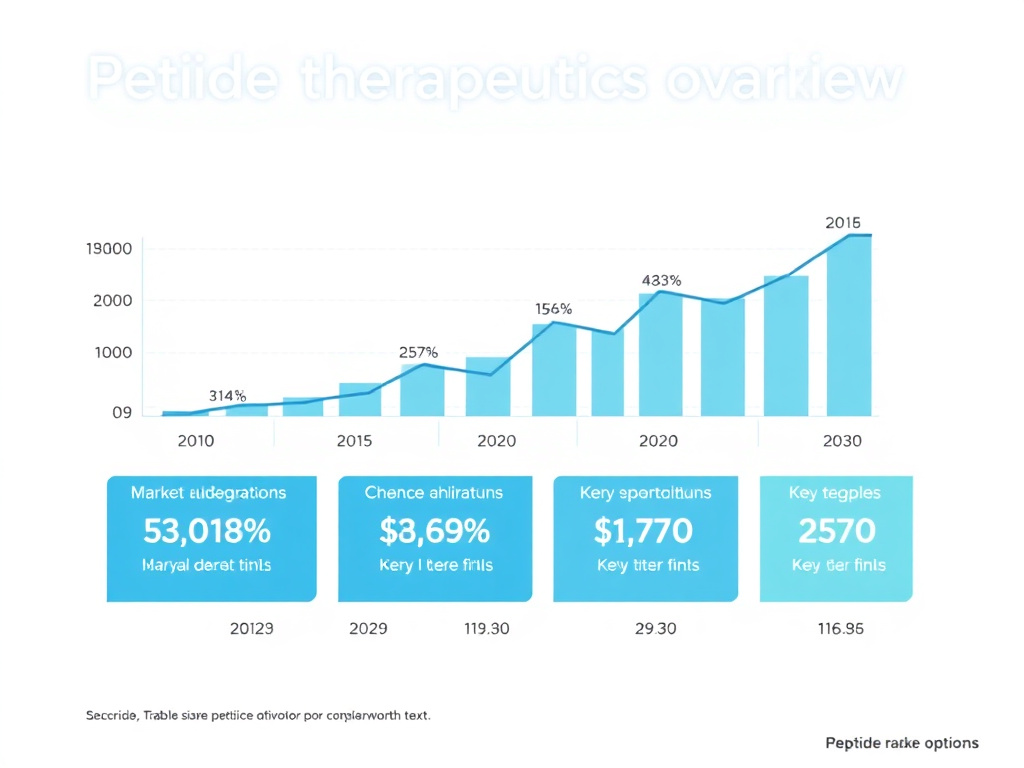
The peptide therapeutics market has entered a period of unprecedented expansion, driven primarily by the meteoric rise of GLP-1 receptor agonists for diabetes and obesity treatment. What was a $38 billion global market in 2022 has nearly tripled in value, reaching an estimated $140 billion by 2025 - and analysts project it could surpass $260 billion by 2030.
Key Takeaways
- Market Size (2025): Estimated at $140.86 billion globally, up from approximately $75 billion in 2024
- Projected Size (2030): $260.25 billion, representing a CAGR of 10.77% from 2025-2030
- GLP-1 Segment: The GLP-1 receptor agonist market alone reached $62.86 billion in 2025, growing at 17.5% CAGR
- Regional Leader: North America commands approximately 62% of the global market
- CDMO Growth: Peptide contract manufacturing growing at 12.8-20.3% CAGR as demand outpaces capacity
This isn't just growth. It's a structural transformation of the pharmaceutical industry. Two companies - Novo Nordisk and Eli Lilly - have reshaped the global pharma rankings through their GLP-1 franchises alone. Tirzepatide (marketed as Mounjaro and Zepbound) became the world's best-selling drug in Q3 2025 with year-to-date sales exceeding $24.8 billion. Meanwhile, semaglutide products (Ozempic, Wegovy, Rybelsus) continue generating tens of billions in annual revenue for Novo Nordisk.
But the peptide market extends far beyond weight loss drugs. The sector encompasses oncology peptides like leuprolide and octreotide, antimicrobial peptides, cardiovascular agents, and a growing pipeline of research compounds spanning everything from tissue repair to cognitive enhancement. Over 170 peptide-based drugs have received regulatory approval globally, and more than 200 candidates are currently in active clinical development [1].
KEY MARKET FINDINGS
- Market Size (2025): Estimated at $140.86 billion globally, up from approximately $75 billion in 2024
- Projected Size (2030): $260.25 billion, representing a CAGR of 10.77% from 2025-2030
- GLP-1 Segment: The GLP-1 receptor agonist market alone reached $62.86 billion in 2025, growing at 17.5% CAGR
- Regional Leader: North America commands approximately 62% of the global market
- CDMO Growth: Peptide contract manufacturing growing at 12.8-20.3% CAGR as demand outpaces capacity
- Pipeline Depth: Over 200 peptide candidates in clinical trials, with next-generation multi-agonists showing 25-30% weight loss
The investment landscape reflects this momentum. Venture capital has poured billions into obesity-focused biotech startups. Roche signed a $5.3 billion deal with Zealand Pharma for obesity drug co-development. Novo Nordisk committed $2 billion for a triple agonist program from The United Laboratories. These aren't speculative bets - they're strategic moves by established pharma companies racing to capture share in what many analysts consider the largest therapeutic market opportunity since statins.
This report provides a thorough analysis of the peptide therapeutics market from 2024 through 2030, examining market segments, competitive dynamics, pipeline developments, manufacturing trends, regulatory shifts, and investment patterns. Whether you're a researcher, clinician, investor, or industry professional, the data and analysis here will help you understand where this market stands today - and where it's heading.
Global Market Overview
Market Size and Valuation
Determining the exact size of the peptide therapeutics market depends on which compounds and segments you include. Different research firms use varying methodologies, leading to a range of estimates. However, every major analysis agrees on the core trend: rapid, sustained growth driven by metabolic disease therapeutics.
Grand View Research valued the global peptide therapeutics market at $140.86 billion in 2025, projecting it to reach $294.58 billion by 2033 at a CAGR of 8.73% [2]. Global Market Insights placed the 2025 figure at $49.7 billion using a narrower definition, forecasting growth to $100 billion by 2034 at 8.1% CAGR [3]. The variance largely stems from whether GLP-1 receptor agonists are fully included in the peptide therapeutics category or broken out separately.
What's not in dispute is the acceleration. Between 2020 and 2024, the peptide market grew at roughly 28% annually - far exceeding the broader pharmaceutical industry's 5-7% growth rate. This acceleration was driven almost entirely by the commercial success of semaglutide and tirzepatide products, which together generated over $58 billion in revenue during 2024 alone.
Global Peptide Therapeutics Market Size ($B), 2020-2030
Market Segmentation by Therapeutic Area
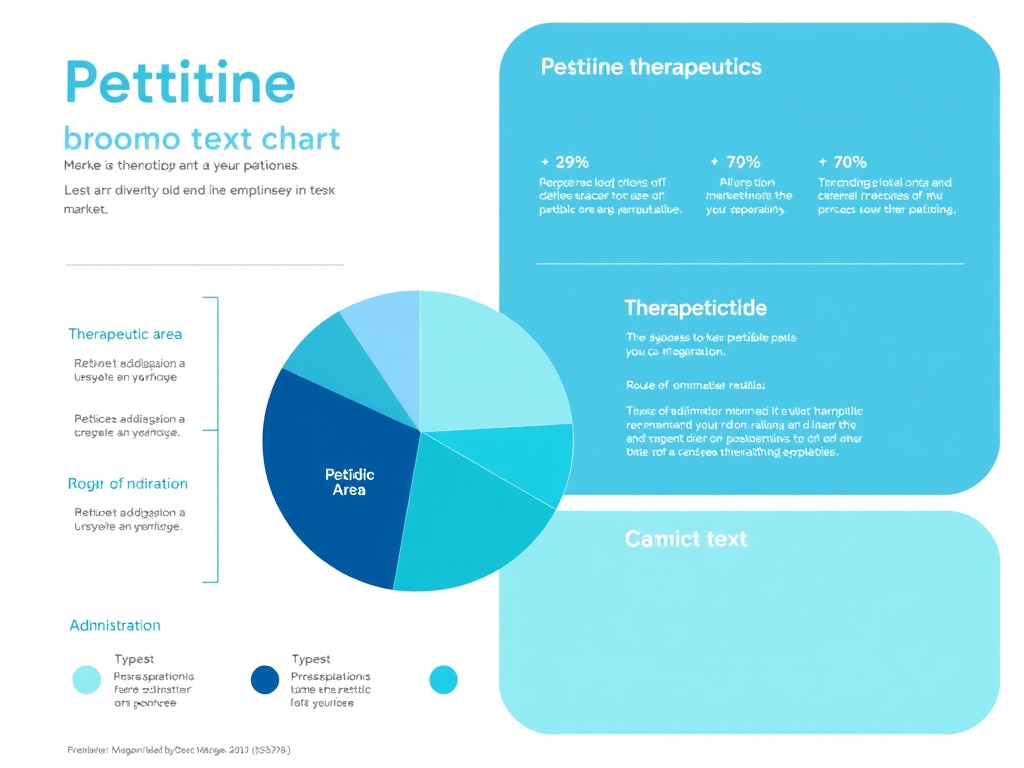
The peptide therapeutics market spans multiple therapeutic categories, though the balance has shifted dramatically in recent years. Here's how the market breaks down by indication:
| Therapeutic Area | 2024 Revenue (Est.) | Market Share | CAGR (2025-2030) | Key Drugs |
|---|---|---|---|---|
| Metabolic / Obesity / Diabetes | $58.0B | 52.4% | 18.5% | Semaglutide, Tirzepatide |
| Oncology | $15.2B | 13.7% | 6.8% | Leuprolide, Octreotide, Lanreotide |
| Cardiovascular | $8.6B | 7.8% | 7.2% | Bivalirudin, Eptifibatide |
| Rare / Orphan Diseases | $6.9B | 6.2% | 9.4% | Setmelanotide, Tesamorelin |
| Infectious Disease | $5.1B | 4.6% | 5.3% | Enfuvirtide, Daptomycin |
| Gastrointestinal | $4.8B | 4.3% | 8.1% | Linaclotide, Teduglutide |
| Bone / Osteoporosis | $3.5B | 3.2% | 4.2% | Teriparatide, Abaloparatide |
| Other (Cosmetic, CNS, etc.) | $8.6B | 7.8% | 11.5% | Various |
The metabolic/obesity/diabetes segment's dominance is relatively new. As recently as 2019, oncology peptides held the largest single share of the market. The approval of Wegovy for weight management in 2021, followed by Mounjaro in 2022 and Zepbound in 2023, shifted the center of gravity permanently. By 2024, metabolic peptides accounted for more than half of all peptide therapeutic revenue - a share that's still growing.
Market Segmentation by Route of Administration
Injectable formulations continue to dominate the peptide therapeutics market, accounting for approximately 72% of revenue in 2024. This reflects the fundamental pharmacological challenge with peptides: most are poorly absorbed orally due to enzymatic degradation in the gastrointestinal tract and limited membrane permeability [4].
However, oral peptide delivery is the fastest-growing segment. The success of Rybelsus (oral semaglutide) validated this approach, generating $2.72 billion in sales during 2024. The oral proteins and peptides market is projected to grow from $8.85 billion in 2025 to $24 billion by 2030, a CAGR of 22.1% [5]. This growth is attracting substantial investment in delivery technologies, including nanoparticle encapsulation, permeation enhancers, and protease-resistant peptide analogs.
| Route of Administration | 2024 Share | 2030 Projected Share | Key Trends |
|---|---|---|---|
| Injectable (SC, IM, IV) | 72% | 62% | Prefilled pens, auto-injectors improving compliance |
| Oral | 12% | 22% | Fastest-growing; oral semaglutide, orforglipron pipeline |
| Nasal / Inhaled | 8% | 8% | Calcitonin nasal spray, desmopressin |
| Topical / Transdermal | 5% | 5% | Cosmetic peptides, wound healing |
| Other | 3% | 3% | Implants, depot formulations |
Market Segmentation by Type
Peptide therapeutics can be categorized by their origin and manufacturing method. Each category has distinct market characteristics:
Synthetic Peptides dominate the market, representing approximately 60% of revenue in 2024. These are produced through chemical synthesis - primarily solid-phase peptide synthesis (SPPS) - and include most small to medium-sized therapeutic peptides. The peptide synthesis market itself was valued at $718.66 million in 2024, projected to reach $1.45 billion by 2032 at a CAGR of 9.22% [6].
Recombinant Peptides account for roughly 25% of the market. These are produced using genetically engineered microorganisms (typically E. coli or yeast) and are preferred for larger peptides and those requiring specific post-translational modifications. Insulin and its analogs fall into this category, as do some newer GLP-1 agonists.
Natural/Extracted Peptides make up the remaining 15%, though this share is declining as synthetic alternatives become more cost-effective. Examples include calcitonin (historically derived from salmon) and some antimicrobial peptides.
Growth Drivers
Several structural factors are propelling the peptide market beyond cyclical trends:
The Obesity Epidemic. The World Health Organization estimates that over 890 million adults worldwide lived with obesity in 2022, a figure that's risen substantially since. With effective pharmacological treatments now available, the addressable market for anti-obesity medications extends to hundreds of millions of potential patients. Current GLP-1 penetration remains below 5% of the eligible population in most markets, suggesting massive room for growth [7].
Expanding Indications. GLP-1 receptor agonists are being studied for applications far beyond diabetes and weight loss. Clinical trials are exploring their use in cardiovascular risk reduction (SELECT trial showed 20% MACE reduction with semaglutide), chronic kidney disease, MASH/NAFLD, Alzheimer's disease, addiction, and sleep apnea. Each new approved indication expands the addressable market substantially [8].
Improved Patient Access. Insurance coverage for GLP-1 medications has expanded significantly. Medicare's potential coverage of anti-obesity medications (under the TREAT Act) could add millions of eligible patients in the US alone. Internationally, national health systems are beginning to incorporate these treatments into their formularies.
Manufacturing Innovation. Advances in peptide synthesis and manufacturing are reducing production costs. Continuous-flow manufacturing, green chemistry approaches (including water-based SPPS), and improved purification methods are making peptide drugs more economically viable. Bachem and SpheriTech's 2024 development of water-based SPPS represents a potential step-change in manufacturing sustainability [9].
Delivery Technology Advances. The traditional limitation of peptides - poor oral bioavailability - is being overcome. Novo Nordisk's $2.1 billion partnership with MIT spinoff Vivtex for oral delivery technology signals the industry's commitment to solving this challenge. Oral formulations dramatically expand patient acceptance and market penetration [10].
GLP-1/Obesity Segment Analysis
The GLP-1 receptor agonist class has become the single most important segment in all of pharmaceuticals. This section examines the market dynamics, competitive landscape, and growth trajectory of the drugs that have reshaped the industry.
Market Size and Growth
The global GLP-1 receptor agonist market was valued at $53.5 billion in 2024 and grew to an estimated $62.86 billion in 2025. At a projected CAGR of 17.5%, the market could reach $268 billion by 2034 [11]. To put this in perspective: the entire global oncology drug market was worth approximately $223 billion in 2024. GLP-1 drugs are on track to surpass cancer therapeutics as the largest drug class by revenue within the next decade.
The weight loss/obesity sub-segment is growing even faster than the diabetes segment. The GLP-1 weight loss drug market specifically was estimated at $13.84 billion in 2024 and is expected to reach $20.86 billion in 2025 - a 50.7% year-over-year increase. By 2030, this segment alone could reach $48.84 billion, growing at an 18.54% CAGR [12].
The Duopoly: Novo Nordisk and Eli Lilly
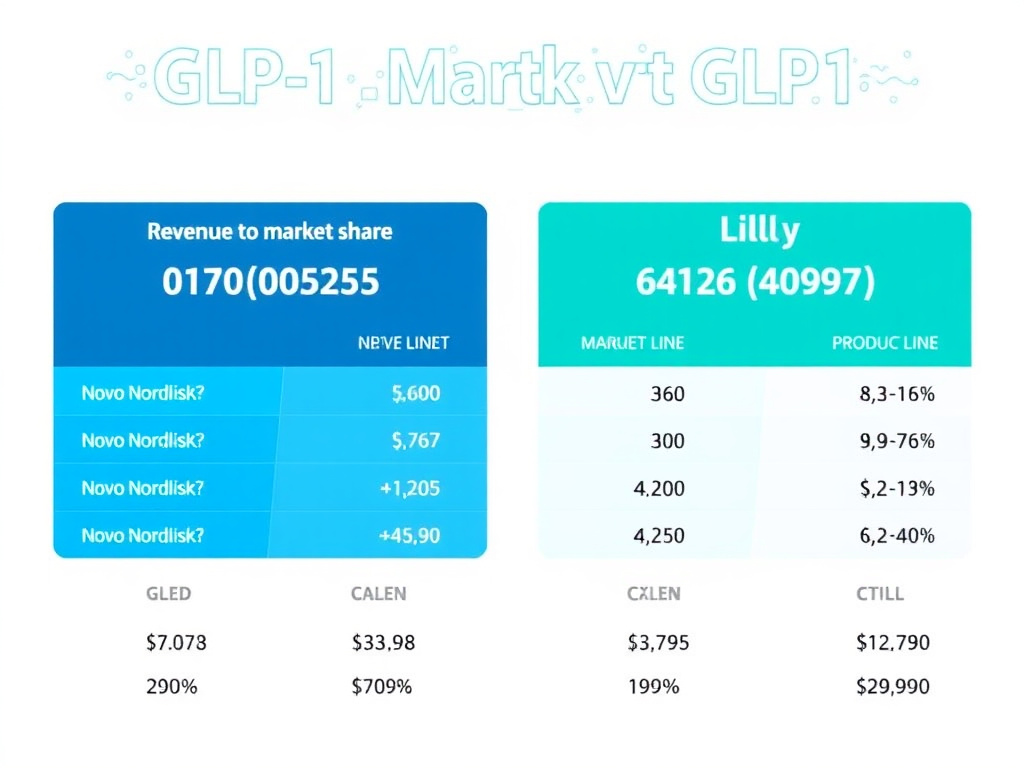
The GLP-1 market is effectively a two-player game. Novo Nordisk and Eli Lilly control nearly the entire commercial market, with five products between them generating the vast majority of revenue. Understanding the dynamics of this duopoly is essential to understanding the broader peptide market.
Novo Nordisk's GLP-1 Portfolio
Novo Nordisk pioneered the GLP-1 class and built its franchise on three products. You can explore the full history of GLP-1 peptide development in our dedicated timeline article.
| Product | Active Ingredient | Indication | 2024 Revenue | 2025 Forecast | YoY Growth |
|---|---|---|---|---|---|
| Ozempic | Semaglutide 2.4mg SC | Type 2 Diabetes | ~$18.7B | ~$20.0B | +7% |
| Wegovy | Semaglutide 2.4mg SC | Weight Management | ~$8.1B | ~$13.0B | +60% |
| Rybelsus | Oral Semaglutide | Type 2 Diabetes | ~$2.7B | ~$3.2B | +18% |
Novo Nordisk's semaglutide franchise generated cumulative US revenue exceeding $71 billion through the end of 2024 - with Ozempic alone accounting for roughly half of that total. However, growth is decelerating. Ozempic sales growth slowed from +26% in 2024 to a projected +7% in 2025, reflecting market maturation in the diabetes segment and increasing competitive pressure from tirzepatide [13].
Wegovy remains the growth engine, with sales expected to surge 60% year-over-year in 2025 as supply constraints ease and new markets open. But Novo Nordisk faces challenges: the company warned in early 2026 that it expects sales and profit to decline 5-13% as US prices fall and patent exclusivity expires in China, Brazil, and Canada [14].
Eli Lilly's GLP-1 Portfolio
| Product | Active Ingredient | Indication | 2024 Revenue | 2025 Forecast | YoY Growth |
|---|---|---|---|---|---|
| Mounjaro | Tirzepatide SC | Type 2 Diabetes | ~$11.5B | ~$18.4B | +60% |
| Zepbound | Tirzepatide SC | Weight Management | ~$4.9B | ~$12.5B | +155% |
Eli Lilly has emerged as the market leader. As of Q2 2025, Lilly holds approximately 57% of the GLP-1 market, having overtaken Novo Nordisk earlier that year [15]. Tirzepatide became the world's best-selling drug in Q3 2025 with year-to-date sales of $24.8 billion, surpassing Merck's Keytruda.
The growth trajectory is remarkable. Mounjaro went from $483 million in its first year to $11.5 billion in 2024, with analysts forecasting $22.8 billion by 2026. Zepbound, approved in late 2023, is expected to more than double its sales from $4.9 billion in 2024 to $12.5 billion in 2025, potentially reaching $18.1 billion in 2026 [16].
Analysts project Eli Lilly's total prescription drug sales will reach $113 billion by 2030, well ahead of second-place Novo Nordisk at an estimated $84 billion [17].
WHY TIRZEPATIDE IS WINNING
Tirzepatide's market advantage stems from its dual-agonist mechanism - it activates both GLP-1 and GIP receptors simultaneously. In head-to-head trials, tirzepatide demonstrated superior weight loss (up to 22.5% body weight reduction at 72 weeks) compared to semaglutide (up to 15.8%). This clinical differentiation, combined with Lilly's aggressive manufacturing expansion and pricing strategy, has driven rapid market share gains. The question isn't whether Lilly will maintain its lead - it's whether any competitor can meaningfully challenge the duopoly.
GLP-1 Market Beyond Weight Loss
The commercial opportunity for GLP-1 drugs extends well beyond diabetes and obesity. Several label expansions and new indications are either approved or in late-stage development:
Cardiovascular Risk Reduction: The SELECT trial demonstrated that semaglutide 2.4mg reduced major adverse cardiovascular events (MACE) by 20% in adults with overweight/obesity and established cardiovascular disease, independent of diabetes status. This led to an expanded indication for Wegovy in March 2024, opening a substantial new market among cardiologists and primary care physicians [18].
Chronic Kidney Disease: The FLOW trial showed semaglutide reduced the risk of kidney disease progression by 24% in patients with type 2 diabetes and CKD. This indication received FDA approval in 2024, adding nephrology to the prescribing base [19].
MASH/NAFLD: Tirzepatide demonstrated significant improvements in metabolic dysfunction-associated steatohepatitis (MASH) in the Combined effect-NASH trial. Both Lilly and Novo Nordisk are pursuing MASH as a major new indication, with an addressable market estimated at $25-40 billion [20].
Sleep Apnea: Tirzepatide showed a 55-63% reduction in apnea-hypopnea index in the SURMOUNT-OSA trial, leading to FDA approval for moderate-to-severe obstructive sleep apnea in patients with obesity in late 2024 [21].
Alzheimer's Disease: Early-stage trials suggest GLP-1 agonists may have neuroprotective effects. Novo Nordisk's EVOKE and EVOKE+ trials are evaluating semaglutide in early Alzheimer's disease, with results expected in 2026 [22].
Addiction: Observational data and early clinical trials suggest GLP-1 agonists may reduce cravings and substance use in alcohol, tobacco, and opioid use disorders. Multiple clinical trials are underway, representing a potential multi-billion-dollar market if efficacy is confirmed [23].
Pricing Dynamics and Access
GLP-1 pricing is one of the most contentious issues in the pharmaceutical market today. In the United States, the list price for branded GLP-1 medications ranges from approximately $900 to $1,350 per month. After manufacturer rebates and insurance negotiations, net prices are significantly lower - but still substantial.
Several forces are reshaping the pricing landscape:
- IRA Drug Price Negotiations: Both semaglutide and tirzepatide are candidates for Medicare price negotiation under the Inflation Reduction Act. The first round of negotiations (covering 10 drugs) showed average price reductions of 38-79%. If GLP-1 drugs are selected in future rounds, the revenue impact could be significant.
- Competition-Driven Discounting: Eli Lilly launched single-dose vials of Zepbound at approximately 50% below the list price of prefilled pens in August 2024, directly targeting the price-sensitive market segment previously served by compounding pharmacies.
- International Reference Pricing: Prices outside the US are substantially lower. In many European markets, GLP-1 drugs cost 60-80% less than US list prices, though manufacturers receive lower but still profitable margins.
- Biosimilar/Generic Entry: Semaglutide patents begin expiring in key markets from 2026 onward. Multiple biosimilar manufacturers are preparing to enter, which could reduce prices by 30-60% within 3-5 years of patent expiry.
The net effect of these pricing pressures will moderate revenue growth even as volume continues expanding rapidly. Goldman Sachs estimates the global anti-obesity medication market could reach $130 billion by 2030 even with significant price erosion, simply because the untreated patient population is so large [24].
Key Market Players
While Novo Nordisk and Eli Lilly dominate the revenue picture, the peptide therapeutics market includes dozens of significant players across drug development, manufacturing, and distribution. This section profiles the major companies and their strategic positioning.
Tier 1: Market Leaders
Novo Nordisk
| Metric | Value |
|---|---|
| Headquarters | Bagsvaerd, Denmark |
| 2024 Total Revenue | ~$42.6 billion |
| GLP-1 Revenue Share | ~70% of total revenue |
| Key Products | Ozempic, Wegovy, Rybelsus, Victoza, Saxenda |
| Pipeline Highlights | CagriSema (semaglutide + cagrilintide), oral amycretin |
| Manufacturing Expansion | $18B+ capital investment program through 2029 |
Novo Nordisk pioneered the modern GLP-1 market and remains the largest peptide-focused pharmaceutical company globally. The company's manufacturing expansion plans are staggering: over $18 billion committed to new production facilities in Denmark, France, and the United States. This includes a massive fill-finish plant in Clayton, North Carolina, announced in 2023.
The company's near-term pipeline centers on CagriSema - a combination of semaglutide and cagrilintide (a long-acting amylin analog). In Phase 3 trials published in the New England Journal of Medicine in June 2025, CagriSema delivered 20.4% weight loss at 68 weeks, with 60% of patients achieving at least 20% weight reduction. Novo Nordisk filed an NDA with the FDA for CagriSema in mid-2025 [25].
However, the CagriSema results fell short of the company's pre-specified target of 25% mean weight loss, sending shares lower when interim data was first released. While the drug will still represent a meaningful advancement - particularly for patients with type 2 diabetes, where it achieved 13.7% weight loss vs. 3.4% for placebo - the competitive gap with tirzepatide's efficacy remains a concern for investors [26].
Eli Lilly
| Metric | Value |
|---|---|
| Headquarters | Indianapolis, Indiana, USA |
| 2024 Total Revenue | ~$45.0 billion |
| GLP-1/GIP Revenue Share | ~37% of total revenue (growing rapidly) |
| Key Products | Mounjaro, Zepbound, Trulicity (declining) |
| Pipeline Highlights | Retatrutide (triple agonist), Orforglipron (oral) |
| Projected 2030 Drug Sales | $113 billion (Evaluate consensus) |
Eli Lilly has executed one of the most successful drug launches in pharmaceutical history with tirzepatide. The company's strategic advantage lies in two pipeline assets that could extend its market leadership well into the 2030s:
Retatrutide is a triple hormone receptor agonist targeting GLP-1, GIP, and glucagon receptors simultaneously. In Phase 3 trials (TRIUMPH program), retatrutide delivered up to 28.7% mean weight loss (71.2 lbs) at 68 weeks at the 12mg dose - the highest weight loss ever reported for a pharmacological agent. The compound is also being studied in osteoarthritis, sleep apnea, cardiovascular outcomes, and MASH. Phase 3 readouts are expected throughout 2026, with potential FDA submission in 2026-2027 [27].
Orforglipron would be the first oral GLP-1 medication specifically developed for weight loss. Phase 3 results published in the New England Journal of Medicine in September 2025 demonstrated both efficacy and safety, along with cardiovascular benefits including improved blood pressure, triglycerides, and cholesterol. If approved, orforglipron could dramatically expand the market by removing the injection barrier that deters many potential patients [28].
Tier 2: Major Pharma with Peptide Programs
AstraZeneca
AstraZeneca has built a growing peptide portfolio primarily through acquisitions. The company's $1.1 billion acquisition of Eccogene in 2024 brought ECC5004, a next-generation oral GLP-1 agonist, into its pipeline. AstraZeneca is also developing several peptide-based oncology drugs, using its strength in that therapeutic area.
Amgen
Amgen entered the obesity space with MariTide, a GLP-1/GIPR combination that uses a novel antibody-peptide conjugate approach. Unlike traditional GLP-1 agonists, MariTide requires monthly dosing rather than weekly, which could be a significant convenience advantage. Phase 2 results showed approximately 20% weight loss with monthly injections. Amgen has committed over $1 billion to MariTide's development program [29].
Pfizer
After the costly failure of its oral GLP-1 candidate danuglipron in its once-daily formulation (due to liver enzyme elevations), Pfizer pivoted to a modified-release twice-daily version. The company has also been exploring peptide-based approaches for other metabolic targets, though it remains significantly behind Lilly and Novo Nordisk in the obesity race.
Roche
Roche made a major commitment to the obesity space with its $5.3 billion collaboration with Zealand Pharma in 2025. The deal covers co-development and co-commercialization of Zealand's portfolio of obesity candidates, including petrelintide (an amylin analog) and a GLP-1/glucagon dual agonist. This represents Roche's largest-ever partnership deal and signals its conviction in the long-term obesity market opportunity [30].
Zealand Pharma
Zealand Pharma has emerged as one of the most important peptide-focused biotechs. Beyond its Roche partnership, the company has a deep pipeline spanning amylin analogs, GLP-1/glucagon dual agonists, and novel metabolic peptides. Zealand's peptide engineering platform enables the design of peptides with improved stability, selectivity, and pharmacokinetic profiles.
Tier 3: Emerging Biotech and Specialty Players
| Company | Focus Area | Key Asset(s) | Recent Funding/Deal |
|---|---|---|---|
| Verdiva Bio | GLP-1 + amylin combination | Clinical-stage GLP-1/amylin | $411M Series A (2024) |
| Alveus Therapeutics | GLP-1/GIPR fusion proteins | Pre-clinical obesity candidates | $160M launch (2025) |
| Pep2Tango | Multi-mechanism obesity | Novel peptide combinations | Versant Ventures launch |
| Helicore | GIP antibody for obesity | Clinic-ready GIP antibody | $65M Series A (2025) |
| Structure Therapeutics | Oral GLP-1 small molecules | GSBR-1290 | Phase 2 |
| Viking Therapeutics | Dual GLP-1/GIP agonist | VK2735 (injectable + oral) | Phase 2 (fast-tracked) |
The biotech pipeline for obesity drugs has exploded. At least 50 companies are now developing anti-obesity medications, ranging from next-generation peptide agonists to entirely novel mechanisms. Venture capital has flowed aggressively into this space, with several startups launching with nine-figure funding rounds specifically targeting the obesity market [31].
Key Peptide Companies Beyond GLP-1
While GLP-1 drugs dominate the headlines, several companies maintain significant peptide businesses in other therapeutic areas:
- AbbVie: Markets leuprolide (Lupron) for prostate cancer and endometriosis - one of the longest-established peptide drug franchises
- Ipsen: Leads in somatostatin analogs (lanreotide/Somatuline) for neuroendocrine tumors, with ~$1.5B in annual peptide revenue
- Ferring Pharmaceuticals: Specialist in reproductive health peptides (desmopressin, terlipressin) and gut peptides
- Takeda: Markets multiple peptide products including leuprolide formulations and has invested in peptide-drug conjugate platforms
- Bausch Health: Markets calcitonin products and several GI-focused peptides
For a broader view of the peptide research landscape and compound profiles, see our peptide research hub.
Compounding Pharmacy Market
The compounding pharmacy segment has become one of the most contentious - and fastest-evolving - areas of the peptide market. The intersection of drug shortages, patient demand, regulatory enforcement, and pricing has created a dynamic that reshaped billions of dollars in revenue flow.
The Compounded GLP-1 Boom
When branded semaglutide (Ozempic, Wegovy) and tirzepatide (Mounjaro, Zepbound) faced prolonged shortages from late 2022 through early 2025, compounding pharmacies stepped in to fill the gap. Under Section 503A and 503B of the Federal Food, Drug, and Cosmetic Act, pharmacies can compound drugs that are in shortage or when a specific clinical need exists [32].
The market response was explosive. Patients seeking anti-obesity medications came to represent approximately 83% of the compounded GLP-1 market. Telehealth platforms proliferated, connecting patients directly with compounding pharmacies at prices ranging from $200-500 per month - a fraction of branded drug costs exceeding $1,000 monthly. Companies like Hims & Hers, Ro, and numerous smaller telehealth providers built substantial businesses around compounded semaglutide access.
At its peak, the compounded GLP-1 market may have represented $2-4 billion in annual revenue - significant, though still a small fraction of the branded market. However, the impact on patient access was outsized: millions of patients who couldn't afford or access branded products obtained treatment through compounding channels.
The FDA Crackdown
The FDA moved aggressively to wind down compounded GLP-1 production as drug shortages resolved:
| Date | Event | Impact |
|---|---|---|
| December 2024 | FDA removes tirzepatide from shortage list | Triggers compounding wind-down for tirzepatide |
| February 2025 | FDA removes semaglutide from shortage list | Triggers compounding wind-down for semaglutide |
| February 18, 2025 | 503A enforcement discretion ends for semaglutide | Traditional compounding pharmacies must cease production |
| March 19, 2025 | 503B enforcement discretion ends for semaglutide | Outsourcing facilities must cease production |
| 2024-2025 | 50+ FDA warning letters to GLP-1 compounders | Enforcement actions against non-compliant operators |
The FDA has also raised quality concerns about compounded peptides. Some compounding pharmacies were using salt forms of semaglutide (such as semaglutide sodium) that differ from the FDA-approved formulation and lack clinical validation. Quality testing by independent labs found significant variability in potency and purity among compounded products [33].
QUALITY CONCERNS WITH COMPOUNDED PEPTIDES
Compounding pharmacies are not subject to the same rigorous quality control, clinical testing, and manufacturing standards required for FDA-approved drugs. The FDA identified several specific concerns with compounded GLP-1 products, including use of non-validated semaglutide salt forms, significant potency variation between batches, potential sterility issues with injectable preparations, and lack of stability data for compounded formulations. Patients transitioning from compounded to branded products should work closely with their healthcare providers.
The Broader Compounding Peptide Market
Beyond GLP-1 agonists, compounding pharmacies play an important role in the broader peptide market. Several peptide compounds are commonly prepared by compounding pharmacies under Section 503A for individual patient prescriptions:
- BPC-157: Despite being classified as Category 2 (safety concerns) by the FDA in October 2023, BPC-157 remains widely available through research chemical suppliers. Licensed pharmacies can no longer compound it for human use [34].
- CJC-1295/Ipamorelin: The FDA's Pharmacy Compounding Advisory Committee (PCAC) voted against both ipamorelin and CJC-1295 in late 2024, effectively removing them from the compounding market [35].
- Sermorelin: Remains on the Category 1 list and can be legally compounded with a valid prescription.
- PT-141 (Bremelanotide): Available as both an FDA-approved product (Vyleesi) and through compounding pharmacies in some formulations.
- NAD+: Remains compoundable under current FDA guidelines, though its peptide status is debated.
The PCAC review process has created significant uncertainty for the compounding peptide market. During meetings in late 2024, the committee voted against several popular peptides, including ipamorelin (October 29, 2024), CJC-1295, AOD-9604, and Thymosin alpha-1 (December 4, 2024). These votes effectively prohibit licensed pharmacies from compounding these substances [36].
For a detailed analysis of which peptides can still be legally compounded and the full regulatory framework, see our peptide future pipeline analysis.
Market Impact and Future Outlook
The contraction of compounded GLP-1 availability has several market implications:
Revenue Shift to Branded Products: As compounding winds down, billions in patient spending will shift toward branded manufacturers - primarily Novo Nordisk and Eli Lilly. This represents a net revenue gain for branded pharma, though some patients may drop out of treatment entirely due to cost barriers.
Telehealth Platform Disruption: Companies that built their business models around compounded GLP-1 access face significant disruption. Hims & Hers saw its stock drop sharply after the FDA shortage resolution, though the company has pivoted toward personalized compounded formulations and non-GLP-1 weight loss products.
Access Equity Concerns: Patient advocacy groups have raised concerns that ending compounded access will disproportionately affect uninsured and underinsured patients. The average out-of-pocket cost for branded GLP-1 drugs without insurance exceeds $1,000/month, compared to $200-400/month for compounded alternatives.
Remaining Compounding Market: The non-GLP-1 compounding peptide market - including growth hormone-releasing peptides, tissue repair peptides, and sexual health peptides - continues to face regulatory headwinds but remains active where compounds are legally available.
CDMO & Manufacturing Landscape
Contract Development and Manufacturing Organizations (CDMOs) specializing in peptides are experiencing a capacity crisis. Demand for peptide manufacturing has surged far beyond available GMP production capacity, creating bottlenecks, pricing power for CDMOs, and a construction boom in new facilities.
Market Size and Growth
The global peptide CDMO market was valued at approximately $3.8-4.6 billion in 2024, depending on the scope of services included. Growth projections range from 12.8% to 20.3% CAGR through 2032-2033, with estimates of the market reaching $8-17 billion by the early 2030s [37].
By product segment, peptide CDMO services led with a 55.6% revenue share in 2024, with peptide-oligonucleotide conjugate services projected to expand at a 16.5% CAGR through 2030. The surge in GLP-1 demand has been the primary driver, but broader growth in the peptide pipeline is also contributing to capacity constraints.
Manufacturing Technology Landscape
Peptide manufacturing relies on two primary synthesis approaches, each with distinct advantages:
Solid-Phase Peptide Synthesis (SPPS)
SPPS has become the dominant method for therapeutic peptide production, estimated to hold approximately 63% market share by 2025 (up from a smaller share in 2024). The technology offers several advantages: automated operation, high throughput, and suitability for sequences up to approximately 50 amino acids. Recent advances include microwave-assisted SPPS (which reduces reaction times dramatically), continuous-flow manufacturing, and improvements in crude peptide purity to above 90% [38].
A notable 2024 innovation came from Bachem and U.K.-based SpheriTech, who developed a water-based SPPS technique that substitutes conventional organic solvents (such as DMF) with water. This green chemistry approach reduces toxic waste, greenhouse gas emissions, and environmental impact while maintaining acceptable yields and purity [39].
Liquid-Phase Peptide Synthesis (LPPS)
LPPS held approximately 44% market share in 2024, favored for its scalability and cost-effectiveness in bulk peptide manufacturing. It remains the preferred method for simpler peptides and for production scales exceeding hundreds of kilograms. However, LPPS is more labor-intensive and generates more waste per kilogram of product.
Hybrid and Emerging Approaches
Several companies are developing hybrid approaches that combine elements of SPPS and LPPS to optimize for specific peptide sequences. Recombinant production using engineered microorganisms is also gaining traction for longer peptides and those requiring specific modifications. Flow chemistry platforms enable continuous manufacturing with improved consistency and reduced batch-to-batch variability.
Major Peptide CDMOs
| Company | Headquarters | Key Capabilities | Recent Expansion |
|---|---|---|---|
| Bachem | Switzerland | SPPS, LPPS, custom peptides, APIs | $190M Vista (CA) facility; expanding Bubendorf (CH) |
| Lonza | Switzerland | Large-scale SPPS, biologics, ADCs | $475M Portsmouth (NH) plant; expanded Visp (CH) |
| PolyPeptide Group | Sweden | GMP peptide APIs, custom synthesis | $150M expansion in Germany |
| Thermo Fisher (Patheon) | USA | Full CDMO services, peptide to fill-finish | Expanded Greenville peptide capacity |
| Corden Pharma | Switzerland | Peptide APIs, lipids, complex APIs | New peptide production lines in Europe |
| Piramal Pharma Solutions | India | Peptide APIs, cost-competitive CDMO | Expanded SPPS capacity in India |
| WuXi Biologics | China | Fermentation, peptides, biologics | 5,000L fermentation expansion (2024) |
| GenScript / Nanjing GenScript | China | Custom peptides, gene synthesis | Expanded GMP peptide manufacturing |
| AmbioPharm | USA | Peptide APIs, generic peptides | New multi-ton SPPS facility |
| Almac Group | UK/Ireland | Peptide development, scale-up | Expanded peptide R&D capacity |
Capacity Constraints and Supply Chain Dynamics
The peptide CDMO industry faces a fundamental supply-demand imbalance. Novo Nordisk's widely publicized shortages of Ozempic and Wegovy in 2023-2024 illustrated the systemic constraints in peptide manufacturing capacity. Several factors contribute to this situation:
Long Lead Times: Building a GMP-compliant peptide manufacturing facility takes 3-5 years from planning to qualification. This means capacity additions planned in response to the GLP-1 boom won't fully come online until 2027-2028 at the earliest.
Specialized Equipment: Peptide synthesis requires specialized reactors, HPLC purification systems, and lyophilization equipment that has limited alternative sources. Equipment suppliers are themselves facing backlogs of 12-18 months for major installations.
Skilled Workforce: GMP peptide manufacturing requires highly trained personnel with expertise in peptide chemistry, analytical methods, and regulatory compliance. The rapid expansion of the industry has created talent shortages, particularly for experienced QA/QC professionals and process engineers.
Raw Material Supply: The surge in peptide production has strained supply chains for critical raw materials, including protected amino acids, coupling reagents, and resins. Some specialty amino acid derivatives have experienced 2-3x price increases since 2022.
CDMO PRICING POWER
The supply-demand imbalance has given peptide CDMOs unprecedented pricing power. Contract prices for peptide API manufacturing have increased 20-40% since 2022, with premium pricing for expedited timelines. CDMOs are increasingly selective about which projects they accept, prioritizing large-volume commercial programs over smaller clinical-stage projects. This dynamic is particularly challenging for smaller biotech companies seeking to manufacture peptide candidates at clinical scale.
Vertical Integration vs. Outsourcing
The capacity crisis has prompted major pharmaceutical companies to rethink their manufacturing strategies. Novo Nordisk has invested over $18 billion in vertical manufacturing expansion, building its own capacity rather than relying on CDMOs. Eli Lilly has similarly invested billions in manufacturing infrastructure for tirzepatide production.
Smaller companies, however, have no choice but to use CDMOs. This creates a two-tier system: large pharma with captive capacity can ensure supply continuity, while smaller players face longer lead times and higher costs. The competitive dynamics favor companies with manufacturing scale, reinforcing the market position of Novo Nordisk and Eli Lilly.
Some mid-sized companies are pursuing a hybrid strategy, maintaining small-scale internal capacity for R&D and early clinical supply while partnering with CDMOs for commercial-scale production. This approach provides flexibility but requires managing complex supply chain relationships.
Pipeline Analysis
The peptide drug pipeline has never been deeper or more diverse. Over 200 peptide-based candidates are in active clinical development, spanning metabolic disease, oncology, neuroscience, infectious disease, and rare conditions. The next wave of approvals will determine the market trajectory well into the 2030s.
Next-Generation Obesity Peptides
The obesity pipeline is the most commercially significant portion of the peptide development landscape. Several candidates have the potential to deliver even greater efficacy than current GLP-1 agonists. For a detailed look at what's coming, see our 2025 peptide pipeline analysis.
| Candidate | Company | Mechanism | Phase | Key Data | Expected Timeline |
|---|---|---|---|---|---|
| Retatrutide | Eli Lilly | GLP-1/GIP/Glucagon triple agonist | Phase 3 | Up to 28.7% weight loss (68 wks) | FDA submission 2026-2027 |
| CagriSema | Novo Nordisk | GLP-1 + Amylin (semaglutide + cagrilintide) | NDA Filed | 20.4% weight loss (68 wks) | FDA decision expected 2026 |
| Orforglipron | Eli Lilly | Oral GLP-1 agonist (non-peptide) | Phase 3 | Efficacy + CV benefits confirmed | FDA submission 2026 |
| Survodutide | Boehringer Ingelheim / Zealand | GLP-1/Glucagon dual agonist | Phase 3 | 18.7% weight loss (46 wks, Phase 2) | Phase 3 readouts 2026 |
| Mazdutide | Innovent Biologics | GLP-1/Glucagon dual agonist | Phase 3 (China) | Approved in China (Jan 2025) | Global trials ongoing |
| MariTide | Amgen | GLP-1/GIPR antibody-peptide conjugate | Phase 2/3 | ~20% weight loss (monthly dosing) | Phase 3 data 2026 |
| Pemvidutide | Altimmune | GLP-1/Glucagon dual agonist | Phase 2 | 15.6% weight loss (48 wks) | Phase 3 planning |
| VK2735 | Viking Therapeutics | GLP-1/GIP dual agonist | Phase 2 | 14.7% weight loss (13 wks) | Phase 3 2025-2026 |
| Amycretin | Novo Nordisk | Oral GLP-1/Amylin co-agonist | Phase 2 | 13% weight loss (12 wks) | Phase 3 2026 |
| Ecnoglutide | Sciwind Biosciences | Long-acting GLP-1 agonist | Phase 3 (China) | Monthly dosing feasibility | Regulatory submission 2026 |
Spotlight: Retatrutide - The Triple Agonist
Retatrutide represents the most advanced next-generation obesity peptide and could redefine treatment expectations. The TRIUMPH Phase 3 program encompasses multiple trials evaluating the drug across obesity, type 2 diabetes, osteoarthritis, sleep apnea, chronic low back pain, cardiovascular and renal outcomes, and MASH [40].
The Phase 2 data, published in the New England Journal of Medicine, showed dose-dependent weight loss reaching a maximum of 24.2% at 48 weeks with the 12mg dose. Phase 3 results from TRIUMPH-3 (osteoarthritis) reported up to 28.7% mean weight loss (71.2 pounds) at 68 weeks, along with substantial improvements in pain and physical function [41].
If retatrutide achieves its Phase 3 targets across multiple indications, it could become a $20+ billion annual product - rivaling or exceeding tirzepatide's commercial potential. The key question is whether the glucagon receptor activation adds meaningful clinical benefit beyond what's achieved with dual GLP-1/GIP agonism alone.
Spotlight: CagriSema - The Amylin Play
Novo Nordisk's CagriSema takes a different approach, combining semaglutide with cagrilintide, a long-acting amylin analog. The rationale is that amylin receptor activation provides complementary appetite suppression through different brain pathways than GLP-1 signaling alone.
The REDEFINE Phase 3 program produced results that were clinically meaningful but commercially mixed. In the REDEFINE 1 trial (patients without diabetes), CagriSema achieved 20.4% mean weight loss at 68 weeks, with 60% of patients losing at least 20% of body weight and 23% losing 30% or more. In REDEFINE 2 (patients with type 2 diabetes), the result was 13.7% weight loss [42].
While these results represent a genuine improvement over semaglutide alone (which typically achieves 15-16% weight loss), they fall short of retatrutide's Phase 2/3 data and don't clearly beat tirzepatide's efficacy. The competitive positioning of CagriSema will depend heavily on its tolerability profile, label breadth, and Novo Nordisk's commercial execution.
Beyond Obesity: Diverse Peptide Pipeline
The broader peptide pipeline extends well beyond metabolic disease. Here are selected programs across other therapeutic areas:
Oncology Peptides
- Peptide-Drug Conjugates (PDCs): An emerging class analogous to antibody-drug conjugates but using peptides as targeting vehicles. Several PDCs are in early clinical development for solid tumors, with the advantage of better tissue penetration than larger antibody conjugates.
- Peptide Receptor Radionuclide Therapy (PRRT): Building on the success of Lutathera (lutetium-177-DOTATATE), multiple next-generation PRRT agents are in development for neuroendocrine tumors and prostate cancer.
- Tumor-Targeting Peptides: RGD-based peptides and other tumor-homing sequences are being used to deliver payloads selectively to cancer cells.
Neuroscience Peptides
- Alzheimer's Disease: Beyond GLP-1 agonists, several peptide-based approaches target amyloid-beta aggregation, tau protein, and neuropeptide signaling pathways.
- Migraine: CGRP-targeting peptides (galcanezumab, fremanezumab) have already transformed migraine prevention. Next-generation CGRP modulators are in development.
- Depression/Anxiety: Peptide analogs of endogenous neuropeptides (oxytocin, neuropeptide Y) are being explored for mood disorders.
Antimicrobial Peptides
- With antibiotic resistance growing, antimicrobial peptides (AMPs) represent a promising alternative. Several are in clinical development for drug-resistant bacterial infections, wound healing, and biofilm disruption. The challenge remains manufacturing cost and potential toxicity at therapeutic concentrations [43].
Rare Disease Peptides
- Setmelanotide: Approved for genetic obesity due to POMC, PCSK1, or LEPR deficiency - demonstrating the value of peptide therapeutics in rare monogenic conditions.
- Afamelanotide: Approved for erythropoietic protoporphyria, expanding the applications of melanocortin receptor-targeting peptides.
Regional Market Analysis
The peptide therapeutics market is genuinely global, but regional dynamics vary significantly in terms of market size, growth rates, regulatory environments, and competitive structures. Understanding these differences is essential for assessing the market's trajectory.
North America
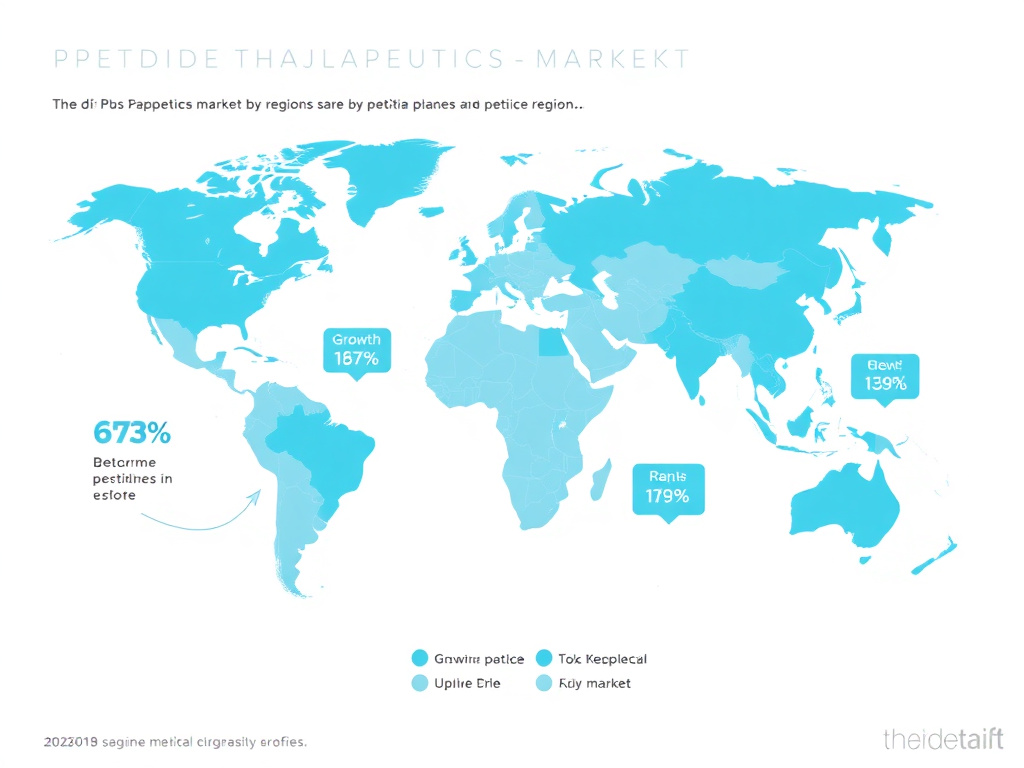
North America dominates the global peptide therapeutics market, commanding approximately 62% of revenue in 2025. The United States alone accounts for roughly 70% of regional revenue, driven by several factors [44]:
- Pricing: The US tolerates annual therapy costs above $10,000, significantly higher than most other markets. GLP-1 drug pricing in the US is 3-5x higher than in Europe and 5-10x higher than in some Asian markets.
- Payer Coverage: Expanding insurance coverage for anti-obesity medications, with potential Medicare coverage under the TREAT Act, could add millions of eligible patients.
- Infrastructure: The US has the world's most advanced biopharmaceutical research and manufacturing infrastructure, with major peptide CDMO facilities operated by Lonza (Portsmouth, NH), Bachem (Vista, CA), and Thermo Fisher (Greenville, NC).
- Manufacturing Incentives: A 25% manufacturing tax credit has supported major facility investments, including Lonza's $475 million Portsmouth plant and Bachem's $190 million Vista facility [45].
- Regulatory Environment: The FDA's accelerated approval pathways and fast-track designations have facilitated rapid market entry for novel peptide therapeutics.
Canada represents approximately 8% of the North American peptide market. The country's lower drug prices and universal healthcare system provide broader access but generate lower per-patient revenue.
Europe
Europe represents approximately 22% of the global peptide therapeutics market. The region benefits from strong research capabilities, established peptide manufacturers, and progressive regulatory frameworks, but faces challenges from pricing pressure and fragmented market access across member states.
Key Markets: Germany, France, the UK, Italy, and Spain are the largest European peptide markets. Germany leads regional production, anchored by PolyPeptide's $150 million manufacturing expansion. Novo Nordisk's home base in Denmark serves as a major hub for peptide R&D and manufacturing.
Regulatory Environment: The European Medicines Agency (EMA) has implemented updated impurity guidelines in 2025 that elevated quality control costs by up to $100,000 per batch. While this raises barriers for smaller manufacturers, it also reinforces the quality advantage of established European CDMOs [46].
Pricing Dynamics: European drug prices for GLP-1 medications are 60-80% lower than US list prices. National health technology assessment bodies (like NICE in the UK and IQWIG in Germany) apply rigorous cost-effectiveness criteria that limit pricing power. However, growing acceptance of anti-obesity medications as chronic disease treatments is gradually expanding reimbursement.
Manufacturing Strength: Europe is home to several major peptide CDMOs, including Bachem (Switzerland), PolyPeptide (Sweden/Germany), Lonza (Switzerland), and Corden Pharma (Switzerland). However, labor and energy costs are 20-30% higher than in Asia-Pacific, creating competitive pressure for commodity peptide production.
Asia-Pacific
Asia-Pacific is the fastest-growing regional peptide market, registering a projected CAGR of 12.81% through 2031 - substantially above the global average. Several trends are driving this acceleration [47]:
China: China's peptide market is transforming rapidly. Accelerated regulatory pathways have enabled domestic GLP-1 launches, with Innovent Biologics' mazdutide receiving Chinese approval in January 2025. WuXi Biologics expanded fermentation capacity by 5,000 liters in 2024, and multiple Chinese CDMOs are scaling peptide production capabilities. Novo Nordisk's upcoming patent expirations in China will likely trigger a wave of biosimilar competition, driving price erosion but expanding overall market volume.
India: India is positioning itself as a cost-competitive peptide manufacturing hub. Companies like Piramal Pharma Solutions and Biocon are expanding SPPS capacity to serve both domestic and export markets. India's generic pharmaceutical industry is well-positioned to produce peptide generics and biosimilars as patents expire.
Japan: Japan has a mature peptide market with strong local manufacturers and a well-established regulatory framework. The country has been slower to adopt GLP-1 agonists for obesity (weight management indications received later approval), but the diabetes market is substantial. Peptide research in Japan is particularly strong in antimicrobial and cosmetic applications.
South Korea and Australia: Both countries have growing peptide markets supported by active clinical research programs and expanding pharmaceutical manufacturing capabilities. South Korea's biotech sector has invested heavily in peptide drug development, particularly in oncology applications.
Rest of World
Middle East: The Gulf states have some of the world's highest obesity rates, making them natural markets for GLP-1 drugs. Saudi Arabia and the UAE have been early adopters, with growing demand for both branded and clinic-administered peptide therapeutics.
Latin America: Brazil and Mexico represent the largest Latin American peptide markets. Novo Nordisk's upcoming patent expirations in Brazil will reshape the local competitive landscape. Regulatory approval timelines in Latin America are generally 1-2 years behind the US and EU.
Africa: The African peptide market remains small but is growing from a low base. Limited healthcare infrastructure and low insurance coverage constrain access. However, the rising burden of type 2 diabetes across the continent is creating emerging demand for metabolic peptide therapeutics.
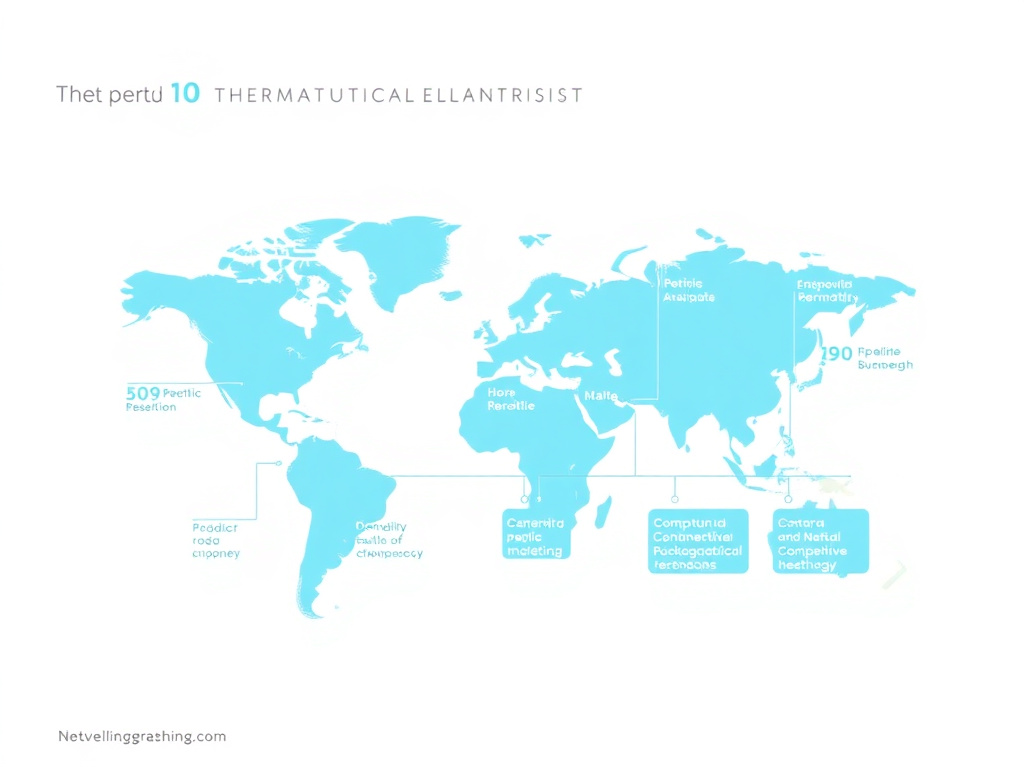
| Region | 2025 Market Share | Projected CAGR (2025-2030) | Key Growth Drivers | Key Challenges |
|---|---|---|---|---|
| North America | 62% | 9.8% | High pricing, payer expansion, manufacturing incentives | IRA price negotiation, political pressure on drug costs |
| Europe | 22% | 7.5% | Expanding obesity indications, strong CDMO base | Cost-effectiveness requirements, regulatory burden |
| Asia-Pacific | 12% | 12.8% | Domestic manufacturing growth, biosimilar entry, rising diabetes | Pricing pressure, regulatory fragmentation |
| Rest of World | 4% | 10.5% | High obesity burden (Middle East), growing healthcare spending | Access barriers, limited infrastructure |
Investment & Funding Trends
The peptide therapeutics sector has attracted more investment capital in the past three years than in the preceding two decades combined. Venture capital, M&A activity, and public market interest in peptide-focused companies have all reached historic levels, driven overwhelmingly by the obesity drug opportunity.
Venture Capital Activity
Venture-backed peptide biotechs raised unprecedented amounts of capital in 2024-2025. The obesity/metabolic segment attracted the lion's share, but investments spanned the broader peptide landscape as well.
| Company | Funding Round | Amount | Lead Investors | Focus |
|---|---|---|---|---|
| Verdiva Bio | Series A | $411M | Multiple top-tier VCs | GLP-1 + amylin combination |
| Alveus Therapeutics | Launch | $160M | Undisclosed | GLP-1/GIPR fusion proteins |
| Helicore | Series A | $65M | Versant Ventures, OrbiMed | GIP antibody for obesity |
| Pep2Tango | Series A | Undisclosed (double-digit M) | Versant Ventures | Multi-mechanism obesity peptides |
| Viking Therapeutics | Public offering | $500M+ | Public markets | Dual GLP-1/GIP agonist |
| Structure Therapeutics | Public offering | $300M+ | Public markets | Oral GLP-1 small molecules |
Versant Ventures has been particularly active, launching multiple obesity-focused startups in rapid succession. Their thesis is that the obesity market is large enough to support numerous differentiated products, and that first-generation GLP-1 drugs will eventually be supplemented or replaced by more effective, more convenient, or better-tolerated alternatives [48].
The $411 million Series A raised by Verdiva Bio stands out as one of the largest Series A rounds in biotech history, reflecting investor conviction that the obesity market opportunity justifies premium valuations even at the pre-approval stage. The company's clinical-stage GLP-1 and amylin programs provide a relatively de-risked path to proof of concept [49].
Mergers, Acquisitions & Strategic Partnerships
Major pharmaceutical companies have used M&A and partnerships to rapidly build or expand their peptide portfolios. The scale of recent deals is remarkable:
| Deal | Value | Date | Strategic Rationale |
|---|---|---|---|
| Roche / Zealand Pharma collaboration | $5.3B | 2025 | Co-develop obesity peptide portfolio (petrelintide, dual agonist) |
| Novo Nordisk / The United Laboratories | $2.0B | 2025 | License UBT251 triple agonist (GLP-1/GIP/Glucagon) |
| Novo Nordisk / Vivtex (MIT spinoff) | $2.1B (total milestones) | 2026 | Oral peptide delivery technology platform |
| AstraZeneca / Eccogene acquisition | $1.1B | 2024 | Oral GLP-1 agonist (ECC5004) |
| Eli Lilly / Protomer Technologies | Undisclosed (est. $500M+) | 2024 | Advanced GLP-1 peptide engineering |
The Roche-Zealand deal is especially telling. Roche had been largely absent from the metabolic disease space for years. The $5.3 billion commitment - its largest-ever partnership - signals that even companies without an existing metabolic franchise see the obesity market as too large to ignore [50].
Public Market Performance
Publicly traded companies with significant peptide exposure have delivered extraordinary shareholder returns. The "obesity trade" became one of the defining investment themes of 2023-2025:
Eli Lilly became one of the most valuable companies in the world, with its market capitalization exceeding $800 billion at its peak - driven primarily by tirzepatide and its metabolic pipeline. The company's valuation roughly tripled between early 2022 and late 2024 [51].
Novo Nordisk similarly surged, briefly becoming Europe's most valuable company by market capitalization. However, its stock has been more volatile, declining significantly after CagriSema's mixed Phase 3 results and the company's reduced revenue guidance for 2026.
Smaller peptide-focused biotechs have also seen dramatic swings. Viking Therapeutics' stock increased over 500% in early 2024 following positive Phase 2 data for its GLP-1/GIP agonist VK2735. Structure Therapeutics and Terns Pharmaceuticals have also attracted investor attention based on oral GLP-1 programs.
However, the sector isn't without risk. Companies whose peptide programs disappointed in clinical trials - including Pfizer's danuglipron and Altimmune's pemvidutide - saw sharp share price declines. The market is rewarding differentiated winners and punishing also-rans with increasing severity.
Investment Themes Going Forward
Several investment themes are likely to shape the peptide sector through 2030:
1. Next-Generation Efficacy: Investors are seeking candidates that meaningfully exceed current GLP-1 efficacy, particularly those achieving 25%+ weight loss. Retatrutide's triple-agonist approach and novel mechanisms (muscle-sparing, oral formulations) command premium valuations.
2. Oral Delivery: The shift from injectable to oral delivery represents a massive market expansion opportunity. Companies developing oral peptide formulations - whether small molecule GLP-1 agonists (orforglipron, GSBR-1290) or peptide delivery technologies - are attracting substantial capital.
3. Manufacturing Scale: With peptide demand outpacing supply, companies with manufacturing capabilities or innovative production technologies are increasingly attractive. Peptide CDMO stocks have outperformed the broader healthcare sector.
4. Indication Expansion: As GLP-1 drugs gain approval for cardiovascular, renal, MASH, and other indications, the total addressable market continues growing. Companies with data supporting multiple indications command higher valuations.
5. Biosimilar/Generic Entry: With semaglutide patents beginning to expire, companies positioned to launch biosimilar versions represent a distinct investment opportunity. The biosimilar GLP-1 market could reach $10-15 billion by 2032.
INVESTMENT LANDSCAPE SUMMARY
Total disclosed deal value in peptide therapeutics exceeded $15 billion in 2024-2025 alone, spanning venture funding, M&A, and licensing agreements. The obesity drug market has attracted investment interest comparable to the oncology immunotherapy wave of the mid-2010s. However, competition is intensifying rapidly, and clinical differentiation is becoming essential for commercial success. Investors should focus on candidates with clearly superior efficacy, novel delivery mechanisms, or unique clinical positioning.
Regulatory Impact on Market
Regulatory decisions have been among the most powerful forces shaping the peptide market's trajectory. From FDA approval pathways to compounding restrictions to international drug pricing policies, government action directly affects billions of dollars in revenue and millions of patients' access to treatment.
FDA Regulatory Framework for Peptides
The FDA regulates peptide therapeutics through several overlapping frameworks, depending on the product's classification and intended use. For a thorough guide to the current legal landscape, see our regulatory analysis.
New Drug Applications (NDAs)
Novel peptide drugs go through the standard NDA process, which requires completion of Phase 1-3 clinical trials demonstrating safety and efficacy. The FDA has increasingly used accelerated approval pathways for peptide drugs addressing serious conditions with unmet medical need. Several recent peptide approvals have benefited from Breakthrough Therapy Designation, Fast Track designation, or Priority Review.
Biosimilar/Abbreviated Pathways
As first-generation peptide drugs lose patent protection, biosimilar manufacturers can use the abbreviated 351(k) pathway for biological products. However, many therapeutic peptides are regulated as drugs (not biologics) under the NDA pathway, which means generic entry follows the ANDA process with bioequivalence requirements. The classification of individual peptide products determines which pathway applies.
Compounding Regulation
As discussed in detail in the compounding section, the FDA has significantly tightened its oversight of compounded peptides. The elimination of the Category 2/3 classification system in January 2025 created a simpler but more restrictive framework. Substances must either have a USP monograph, be on the FDA's Category 1 approved list, or be the active ingredient in an FDA-approved drug to be compounded legally under Section 503A [52].
The PCAC review process has become the primary mechanism for evaluating peptide nominations for the 503A bulk drug substance list. The committee's negative votes on ipamorelin, CJC-1295, AOD-9604, and Thymosin alpha-1 in late 2024 effectively blocked these compounds from legal compounding [53].
Impact of the Inflation Reduction Act
The Inflation Reduction Act (IRA), signed in 2022, contains several provisions that will significantly impact the peptide market over the coming years:
Medicare Drug Price Negotiation: Under the IRA, Medicare can negotiate prices for certain high-spending drugs. While no GLP-1 drugs were included in the initial round of 10 drugs, they are widely expected to be selected in future rounds. The first negotiated prices showed reductions of 38-79% from list prices, suggesting that GLP-1 drug revenue from Medicare beneficiaries could be substantially reduced [54].
Inflation Penalties: Drug manufacturers must pay rebates to Medicare if they raise prices faster than inflation. This provision constrains the historical industry practice of above-inflation annual price increases, moderating revenue growth even as volumes increase.
Part D Redesign: The IRA caps out-of-pocket costs for Medicare Part D beneficiaries at $2,000 annually. While this improves patient access, it shifts costs to payers and manufacturers, creating potential headwinds for high-cost peptide therapies.
International Regulatory Developments
European Medicines Agency (EMA): The EMA's 2025 impurity guideline has elevated quality control costs for peptide manufacturers operating in Europe. While this creates a barrier for smaller players, it reinforces the competitive position of established CDMOs with strong analytical capabilities. The EMA has also been more cautious than the FDA in approving GLP-1 drugs for non-diabetes obesity indications, requiring additional real-world evidence in some cases.
China's National Medical Products Administration (NMPA): China has implemented accelerated pathways for metabolic disease drugs, enabling domestic companies to bring GLP-1 products to market more quickly. Innovent Biologics' mazdutide received Chinese approval in January 2025, becoming the first domestically developed GLP-1/glucagon dual agonist approved anywhere in the world. This regulatory environment is fostering a vibrant domestic peptide industry that could eventually compete globally [55].
Health Canada: Canada has aligned its peptide regulatory framework closely with the FDA but maintains independent review processes. Patent expirations for semaglutide in Canada will likely trigger earlier biosimilar entry than in the US.
RFK Jr. and Potential Policy Shifts
The appointment of Robert F. Kennedy Jr. as HHS Secretary introduced uncertainty about peptide regulation in the United States. In a widely discussed interview, Kennedy suggested that the FDA's approach to compounded peptides might change under his leadership, potentially allowing broader access to certain research peptides. However, as of early 2026, no concrete policy changes have been implemented, and the FDA's existing regulatory framework remains in effect [56].
The peptide compounding industry has watched these developments closely, as any relaxation of FDA enforcement discretion could reopen compounding pathways for popular peptides currently blocked by PCAC decisions.
Patent Landscape and Generic/Biosimilar Entry
The patent landscape for key peptide drugs is shifting, with several major products facing loss of exclusivity in the coming years:
| Drug | Company | Key Patent Expiry (Est.) | Biosimilar/Generic Activity |
|---|---|---|---|
| Semaglutide (injectable) | Novo Nordisk | 2026-2032 (varies by market) | Multiple biosimilar applicants |
| Semaglutide (oral) | Novo Nordisk | 2031-2035 | Early development stage |
| Tirzepatide | Eli Lilly | 2036+ (strong patent estate) | Limited near-term activity |
| Leuprolide | AbbVie (Lupron) | Expired (generics available) | Multiple generics on market |
| Octreotide | Novartis (Sandostatin) | Expired (generics/biosimilars available) | Multiple alternatives available |
| Liraglutide | Novo Nordisk (Victoza/Saxenda) | 2023-2025 | Biosimilars launching |
The semaglutide patent situation is complex. Novo Nordisk holds multiple patents covering the molecule, formulations, dosing regimens, and manufacturing processes. While some core compound patents expire as early as 2026 in certain markets, the full patent estate may provide protection in the US through 2032 or beyond, depending on patent challenge outcomes. Multiple companies, including Teva, Biocon, and several Chinese manufacturers, have filed or are preparing biosimilar applications [57].
Tirzepatide benefits from a more recent and broader patent estate that is expected to provide exclusivity into the mid-2030s, giving Eli Lilly a longer runway of protected market access.
Technology Disruption: Oral Peptides & Long-Acting Formulations
Two technological trends have the potential to reshape the peptide market fundamentally: the development of oral peptide formulations and the creation of long-acting formulations that reduce dosing frequency. Both address the core limitations of traditional peptide drugs - injection burden and frequent dosing - that constrain market penetration.
The Oral Peptide Revolution
The historical challenge with oral peptide delivery is straightforward: the gastrointestinal tract is designed to break down proteins and peptides. Stomach acid, pepsin, pancreatic proteases, and limited intestinal permeability combine to destroy most peptides before they can reach systemic circulation. Oral bioavailability for unmodified peptides is typically less than 1% [58].
Novo Nordisk's Rybelsus (oral semaglutide) was the first oral GLP-1 agonist to overcome these barriers, reaching the market in 2019. It uses Emisphere's Eligen technology - specifically, the absorption enhancer SNAC (sodium N-[8-(2-hydroxybenzoyl)amino]caprylate) - to facilitate transcellular transport of semaglutide across the gastric epithelium. The approach works but has limitations: patients must take Rybelsus on an empty stomach with minimal water, and bioavailability remains low (approximately 1%), requiring a much higher dose than injectable semaglutide [59].
Despite these limitations, Rybelsus generated $2.72 billion in 2024 revenue, proving patient demand for oral peptide delivery. The oral proteins and peptides market overall is projected to grow from $8.85 billion in 2025 to $24 billion by 2030 at a 22.1% CAGR [60].
Next-Generation Oral Approaches
Several technologies are being developed to improve oral peptide delivery beyond the SNAC approach:
Orforglipron (Eli Lilly): Technically a non-peptide small molecule GLP-1 agonist, orforglipron sidesteps the peptide delivery challenge entirely by mimicking GLP-1's pharmacological activity using a conventional small molecule structure. Phase 3 results confirmed efficacy and cardiovascular benefits. If approved, it would be the first oral GLP-1 weight loss medication, potentially reaching $10+ billion in peak annual sales [61].
Amycretin (Novo Nordisk): An oral GLP-1/amylin co-agonist in Phase 2 development. Early data showed 13% weight loss at 12 weeks - exceptional for an oral formulation. This compound validates the concept that effective oral metabolic peptides are achievable.
Vivtex Partnership (Novo Nordisk/MIT): Novo Nordisk's $2.1 billion deal with MIT spinoff Vivtex for oral delivery technologies signals a long-term commitment to this approach. The Vivtex platform uses novel permeation enhancer technology designed to improve oral bioavailability for multiple peptide classes [62].
Nanoparticle and Microparticle Systems: Multiple companies are developing nanoparticle encapsulation strategies that protect peptides from enzymatic degradation while facilitating intestinal absorption. These approaches include lipid nanoparticles, polymeric nanoparticles, and self-emulsifying drug delivery systems.
Enteric Coatings and pH-Responsive Systems: Advanced coatings that release peptides at specific locations in the GI tract (e.g., the ileum, where absorption conditions are more favorable) are being combined with protease inhibitors and permeation enhancers to create multi-component oral delivery systems.
Long-Acting Formulations
Reducing dosing frequency is another major technology thrust. Current GLP-1 agonists require weekly injection, which is itself a major improvement over older daily-injection products (like liraglutide). The next frontier is monthly or even less frequent dosing.
MariTide (Amgen): Perhaps the most advanced long-acting approach, MariTide uses an antibody-peptide conjugate design that enables monthly dosing. Phase 2 data showed approximately 20% weight loss with once-monthly injections. If confirmed in Phase 3, monthly dosing could be a significant competitive advantage in patient convenience [63].
Depot Formulations: Several companies are developing depot injection formulations that release peptides slowly over weeks or months. These use biodegradable polymer matrices (PLGA microspheres, hydrogels) or lipid-based depot systems. This approach is already used for some existing peptide drugs - for example, leuprolide depot (Lupron Depot) provides 1-6 month dosing for prostate cancer and endometriosis.
Subcutaneous Implants: Implantable peptide delivery devices that provide sustained release over 3-12 months are in early development. While the concept is proven (octreotide implant, Bydureon BCise), applying it to the newer GLP-1 agonists requires addressing stability and dosing precision challenges.
Transdermal Delivery: Microneedle patches and iontophoresis systems are being explored for needle-free peptide delivery. Several academic groups have demonstrated proof-of-concept for transdermal GLP-1 delivery, though commercial products remain several years away.
AI and Computational Peptide Design
Artificial intelligence is increasingly being applied to peptide drug discovery and optimization. Machine learning models can predict peptide binding affinity, stability, membrane permeability, and immunogenicity from sequence data alone, dramatically accelerating the design cycle [64].
Applications include:
- De novo peptide design: AI systems can generate novel peptide sequences with desired pharmacological properties, exploring sequence space far more efficiently than traditional rational design or screening approaches.
- Stability optimization: Computational tools predict degradation pathways and suggest modifications (D-amino acids, cyclization, PEGylation, stapling) to improve peptide half-life without compromising activity.
- Formulation development: Machine learning models optimize excipient selection and formulation parameters for improved stability and delivery.
- Manufacturing process optimization: AI-driven process analytical technology (PAT) improves SPPS yields, reduces waste, and enhances batch consistency.
Several biotech companies have built their peptide discovery platforms around AI, including Evotec's AI-driven peptide design capability and Nuritas's AI-discovered bioactive peptide platform.
Market Challenges & Risk Factors
Despite the remarkable growth trajectory, the peptide therapeutics market faces several significant challenges that could moderate growth, disrupt competitive dynamics, or create unexpected setbacks. Investors, manufacturers, and clinicians should understand these risks.
Manufacturing Capacity Constraints
As detailed in the CDMO section, peptide manufacturing capacity has not kept pace with demand. This constraint affects multiple levels of the market:
- Drug Shortages: Novo Nordisk's widely publicized Ozempic and Wegovy shortages in 2023-2024 demonstrated the real-world impact of capacity limitations. While the company has invested over $18 billion in manufacturing expansion, new facilities won't reach full production until 2027-2028.
- Clinical Development Bottlenecks: Smaller biotech companies report wait times of 12-18 months for CDMO slots for clinical-grade peptide manufacturing. This delays clinical timelines and increases development costs.
- Raw Material Supply: Protected amino acids, coupling reagents, and high-purity solvents used in SPPS have experienced significant price increases and availability constraints. Some specialty reagents have seen 2-3x price increases since 2022.
- Workforce Shortages: Experienced GMP peptide manufacturing personnel are in short supply globally. Training programs can't keep pace with the industry's expansion needs, creating quality risks as inexperienced operators take on critical manufacturing roles.
Pricing Pressure and Market Access
The current pricing model for GLP-1 drugs faces growing pressure from multiple directions:
Government Price Negotiation: The IRA's Medicare negotiation provisions will likely target GLP-1 drugs in future rounds. International reference pricing movements in Europe and Canada are also constraining manufacturer pricing flexibility.
Payer Pushback: Insurance companies are implementing increasingly restrictive prior authorization requirements and step therapy protocols for GLP-1 drugs. Some payers require documented failure of lifestyle interventions before approving pharmacotherapy. These access barriers reduce prescribing rates and patient volumes [65].
Budget Impact Concerns: The sheer number of patients who could benefit from anti-obesity medications creates enormous budget impact concerns for payers. If even 10% of the eligible US population received GLP-1 treatment, the annual drug cost alone would exceed $100 billion - an unsustainable figure that will drive aggressive price management.
Emerging Generic/Biosimilar Competition: As semaglutide patents expire, biosimilar competition will erode branded product margins. While the timeline is uncertain (likely 2027-2030 for meaningful US biosimilar entry), the eventual impact on pricing could be dramatic, with potential 30-60% price reductions.
Safety and Tolerability Concerns
Several safety signals have emerged with GLP-1 drugs that, if confirmed, could affect market growth:
Gastrointestinal Adverse Events: Nausea, vomiting, and diarrhea remain the most common side effects across the GLP-1 class. In CagriSema's Phase 3 trials, 79.6% of patients experienced GI side effects. While most events are mild-to-moderate and transient, they contribute to significant treatment discontinuation rates - estimated at 30-50% within the first year for some real-world populations [66].
Thyroid Cancer Concerns: GLP-1 agonists carry a boxed warning regarding medullary thyroid carcinoma (MTC) risk based on rodent studies. While human epidemiological data have not confirmed an increased MTC risk, regulatory agencies continue monitoring this signal, and the warning deters prescribing in some patients with family history of MTC or MEN2.
Pancreatitis: Reports of acute pancreatitis associated with GLP-1 use have been documented, though the incidence appears low and a causal relationship remains debated. Post-marketing surveillance continues to assess this risk [67].
Muscle Mass Loss: Weight loss with GLP-1 drugs includes both fat mass and lean muscle mass reduction. Estimates suggest 25-40% of weight lost may be lean mass, raising concerns about sarcopenia, particularly in older patients. This has spurred research into muscle-sparing approaches, including combination therapies with myostatin inhibitors or resistance exercise programs.
Post-Discontinuation Weight Regain: Studies show that most patients regain a substantial portion of lost weight after discontinuing GLP-1 therapy. The STEP 1 extension trial found approximately two-thirds of weight loss was regained within one year of stopping semaglutide. This implies that GLP-1 drugs may need to be taken indefinitely for sustained benefit, raising both compliance and cost concerns [68].
Competitive Overcrowding
The rush into the obesity peptide space has created a crowded competitive landscape. With over 50 companies developing anti-obesity medications, there are legitimate concerns about market saturation:
- Not all clinical programs will succeed. The history of drug development shows that approximately 90% of Phase 1 candidates never reach approval.
- Products that don't clearly differentiate on efficacy, convenience, safety, or cost will struggle to gain meaningful market share.
- The "winner-take-most" dynamics in this market mean that second-tier products may never generate returns sufficient to justify their development costs.
- Venture-funded startups that don't achieve clinical milestones may face down rounds or fail entirely, creating losses for investors.
Regulatory Uncertainty
The regulatory landscape remains in flux, creating uncertainty for multiple market segments:
- Compounding Regulation: Ongoing legal challenges to FDA compounding restrictions could reopen or further restrict access pathways. Several lawsuits from compounding pharmacies and telehealth companies challenge the FDA's authority to restrict compounding during and after drug shortages.
- International Harmonization: Differences in regulatory requirements across markets increase development costs and delay global access. The lack of harmonized biosimilar pathways for peptide drugs is particularly problematic.
- Classification Ambiguity: Whether specific peptide products are regulated as drugs or biologics affects the pathway to generic/biosimilar entry, patent protection duration, and manufacturing requirements.
Counterfeit and Substandard Products
The high demand and high prices for GLP-1 drugs have created a fertile environment for counterfeit and substandard products. The FDA and international regulators have issued numerous warnings about fake Ozempic, Wegovy, and other GLP-1 products sold through unauthorized channels. These products may contain incorrect doses, wrong active ingredients, or contaminants - posing genuine safety risks to patients [69].
The online research chemical market for peptides also presents quality challenges. Products sold as "research chemicals" with "not for human consumption" disclaimers often lack proper quality testing, stability data, or documentation of purity. See our analysis of the complete obesity pharmacotherapy landscape for more context on treatment options and risks.
Growth Projections 2025-2030
Forecasting the peptide therapeutics market requires balancing enormous growth potential against pricing headwinds, competitive dynamics, and regulatory uncertainties. Here we present a range of scenarios based on published analyses and our independent assessment of key variables.
Base Case Projections
The consensus view among major market research firms projects continued strong growth for the peptide therapeutics market through 2030, with a global market size of approximately $200-260 billion by the end of the decade. The wide range reflects different assumptions about GLP-1 pricing trends, market penetration rates, and pipeline success probabilities.
| Year | Conservative ($B) | Base Case ($B) | Bull Case ($B) | Key Assumptions |
|---|---|---|---|---|
| 2025 | $130 | $141 | $155 | Actual/near-actual data |
| 2026 | $148 | $165 | $185 | CagriSema approval, retatrutide Phase 3 data |
| 2027 | $165 | $190 | $220 | Oral GLP-1 launches, biosimilar semaglutide |
| 2028 | $180 | $215 | $255 | Retatrutide launch, expanded indications |
| 2029 | $195 | $238 | $285 | Market maturation in North America, Asia growth |
| 2030 | $210 | $260 | $310 | Full market penetration of next-gen products |
Scenario Analysis
Conservative Scenario (CAGR ~8%)
This scenario assumes significant pricing pressure from IRA negotiations, slower-than-expected insurance coverage expansion, and clinical setbacks for some pipeline candidates. GLP-1 market growth decelerates as competition intensifies and payer resistance grows. Biosimilar semaglutide enters the US market by 2028, driving 30-40% price erosion for injectable semaglutide products.
Under this scenario, the total peptide market reaches approximately $210 billion by 2030, with growth increasingly driven by volume expansion rather than pricing. The GLP-1 segment grows at approximately 12% CAGR, below current run rates but still representing substantial absolute growth.
Base Case Scenario (CAGR ~11%)
The base case projects a market of approximately $260 billion by 2030, consistent with Grand View Research's estimates. Key assumptions include moderate pricing erosion (15-25%) offset by volume growth, successful launch of 2-3 next-generation products (CagriSema, retatrutide, and/or oral GLP-1), and expanding indications adding $15-25 billion in incremental market opportunity.
In this scenario, Eli Lilly reaches approximately $62 billion in combined Mounjaro/Zepbound/retatrutide sales by 2030, while Novo Nordisk generates approximately $40-50 billion from its semaglutide and CagriSema franchise. The GLP-1/metabolic segment grows to represent approximately 55-60% of the total peptide market.
Bull Case Scenario (CAGR ~14%)
The optimistic scenario envisions a market exceeding $310 billion by 2030. This requires several favorable developments: Medicare coverage of anti-obesity medications passes, pricing pressure is more moderate than feared, retatrutide achieves 25%+ weight loss with a favorable safety profile, oral GLP-1 formulations dramatically expand the addressable patient population, and cardiovascular/MASH/Alzheimer's indications generate substantial incremental revenue.
Under this scenario, the anti-obesity medication market alone could reach $130-150 billion by 2030, with GLP-1 drugs achieving 10-15% penetration of the eligible adult population in developed markets.
Key Variables to Watch
Several factors will determine which scenario materializes:
1. IRA Drug Price Negotiation Timing and Impact: When GLP-1 drugs are selected for Medicare negotiation - and the resulting price reductions - will significantly affect revenue projections. A 40-50% Medicare price reduction could cut $15-20 billion from projected revenues by 2030.
2. Insurance Coverage Expansion: The TREAT Act and similar legislative efforts to mandate anti-obesity medication coverage could add 10-20 million eligible patients in the US alone. The legislative timeline is uncertain but potentially transformative [70].
3. Retatrutide Phase 3 Results: As the most efficacious anti-obesity compound in development, retatrutide's Phase 3 outcomes will reshape market expectations. Strong results across multiple indications could support the bull case; safety concerns or modest efficacy improvements would favor the conservative scenario.
4. Oral GLP-1 Market Penetration: The conversion from injectable to oral GLP-1 therapy is the largest market expansion variable. If oral products achieve comparable efficacy to injectables, they could double the addressable patient population by eliminating the injection barrier. Goldman Sachs estimates that oral GLP-1 drugs could capture 30-40% of the market by 2030.
5. Biosimilar Timeline and Impact: The timing and competitive impact of biosimilar semaglutide will affect Novo Nordisk's revenues and potentially expand overall market volume through lower prices. Early biosimilar entry (2027-2028) would support the conservative scenario; delayed entry (2030+) would favor the bull case for branded manufacturers.
6. Safety Signal Emergence: Any confirmed safety signal - particularly around thyroid cancer, pancreatitis, or other serious adverse events - could significantly dampen market growth. Conversely, continued clean safety data from large real-world studies would reinforce confidence and prescribing rates.
Revenue Impact by Indication Expansion
One of the most powerful growth drivers for the peptide market is the expansion of GLP-1 agonists into new indications. Here's an estimate of the incremental market opportunity by indication:
| Indication | Stage | Addressable Population (US) | Est. Peak Revenue Opportunity |
|---|---|---|---|
| Type 2 Diabetes | Approved | ~37 million | $30-40B (mature) |
| Obesity/Weight Management | Approved | ~100 million | $80-130B (growing) |
| CV Risk Reduction (obesity) | Approved (semaglutide) | ~20 million | $15-25B |
| CKD (with T2D) | Approved (semaglutide) | ~8 million | $8-12B |
| Sleep Apnea (with obesity) | Approved (tirzepatide) | ~15 million | $10-15B |
| MASH/NAFLD | Phase 3 | ~20 million | $25-40B |
| Alzheimer's Disease | Phase 3 | ~6 million | $15-30B (if positive) |
| Addiction | Phase 2 | ~40 million | $10-20B (if positive) |
| Osteoarthritis (with obesity) | Phase 3 (retatrutide) | ~30 million | $10-15B |
The total addressable market across all current and potential GLP-1 indications exceeds $200 billion - a number that explains why pharmaceutical companies are investing tens of billions of dollars in this space and why investor interest remains so high despite elevated valuations.
MARKET GROWTH REALITY CHECK
While the growth projections are impressive, it's worth noting that no single drug class has ever achieved $200+ billion in annual global revenue. Reaching the upper end of projections would require sustained high pricing, rapid global market penetration, and successful indication expansion - all of which face meaningful headwinds. The base case of $260 billion by 2030 is achievable but represents an optimistic reading of the market dynamics. Conservative investors should model for the $200-220 billion range.
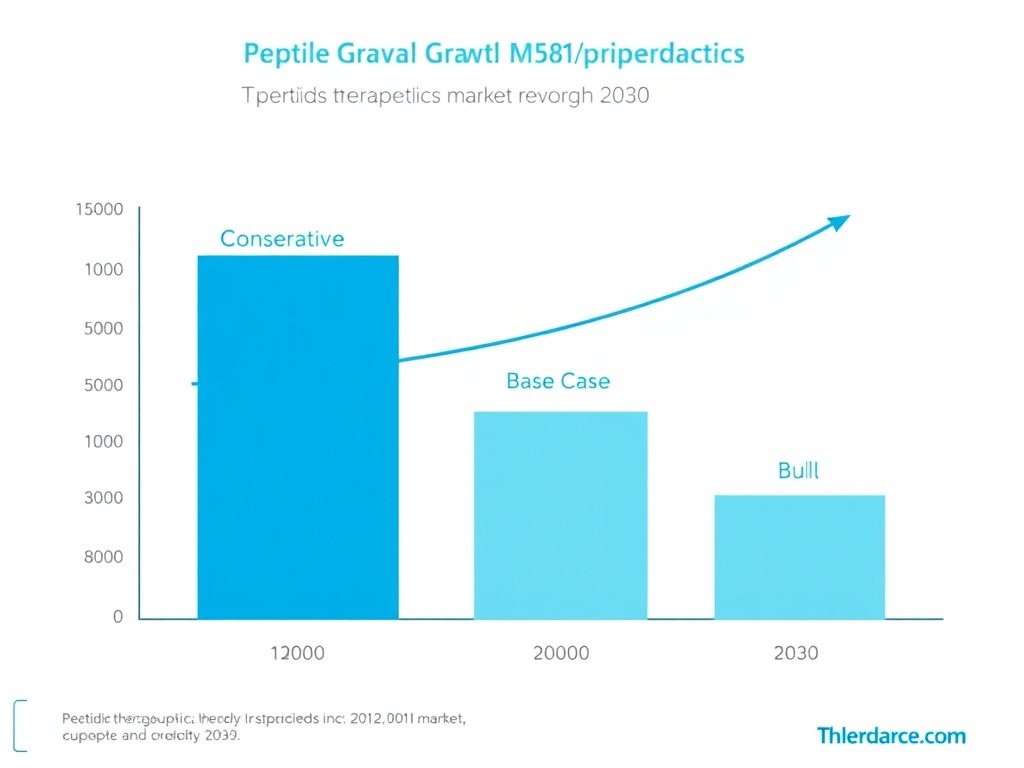
Manufacturing and Supply Chain Dynamics
The peptide therapeutics boom has created an unprecedented challenge for pharmaceutical manufacturing. Building the infrastructure to produce billions of doses per year isn't something that happens overnight, and the industry's scramble to meet demand has reshaped global supply chains in ways that will persist for decades. Understanding these manufacturing dynamics is essential for anyone trying to forecast where the market goes next.
Solid-Phase Peptide Synthesis at Scale
Most therapeutic peptides are manufactured using solid-phase peptide synthesis (SPPS), a technique first developed by Robert Bruce Merrifield in 1963 (which earned him a Nobel Prize in 1984). The basic process hasn't changed: amino acids are attached one at a time to a solid resin support, with each coupling step requiring deprotection, activation, and washing cycles. But the scale has changed dramatically.
A typical GLP-1 agonist like semaglutide contains 31 amino acids with a C-18 fatty acid side chain attached via a linker at position 26. Synthesizing this molecule requires roughly 90 discrete chemical steps when you count all the protection, coupling, deprotection, and washing stages. Each step needs to proceed with greater than 99% efficiency to achieve an acceptable overall yield. At commercial scale, manufacturers run these reactions in vessels that hold hundreds of liters of solvent, consuming enormous quantities of dimethylformamide (DMF), dichloromethane (DCM), and piperidine.
The environmental footprint is staggering. Industry estimates suggest that producing 1 kilogram of a typical GLP-1 peptide generates between 5,000 and 12,000 kilograms of solvent waste. With Novo Nordisk alone producing enough semaglutide to treat tens of millions of patients annually, the total solvent consumption runs into millions of metric tons. This has driven heavy investment in solvent recycling systems and greener chemistry alternatives.
Newer approaches like liquid-phase peptide synthesis (LPPS) and hybrid solid/liquid methods are gaining traction for certain sequences. Flow chemistry, where reactions occur in continuous flow reactors rather than batch vessels, promises to reduce waste by 40-60% while improving consistency. Bachem, one of the world's largest peptide CDMOs, invested over 400 million Swiss francs in new manufacturing capacity between 2022 and 2025, with a heavy emphasis on next-generation synthesis platforms.
Raw Material Bottlenecks
The surge in peptide manufacturing has strained the supply of critical raw materials. Protected amino acids, the building blocks of SPPS, are produced by a relatively small number of specialty chemical companies. Fmoc-protected amino acids (the standard for modern SPPS) saw price increases of 30-80% between 2023 and 2025, depending on the specific amino acid. Non-natural amino acids like alpha-aminoisobutyric acid (Aib), which appears in semaglutide and tirzepatide, experienced even steeper price spikes due to limited production capacity.
Coupling reagents, particularly HATU and HBTU, faced similar supply pressures. These reagents are essential for activating amino acid carboxyl groups during the coupling step, and there are few acceptable substitutes for large-scale GMP manufacturing. PEG linkers, resins, and high-purity solvents also saw tightened supply during the 2023-2025 demand surge.
The geographic concentration of raw material production adds another risk layer. China produces approximately 60-70% of the world's protected amino acids and coupling reagents. Japan and India account for much of the remainder. Geopolitical tensions, trade restrictions, and pandemic-era logistics disruptions have all highlighted the vulnerability of these concentrated supply chains. Several Western pharmaceutical companies have begun qualifying alternative suppliers in Europe and the Americas, but building new capacity for these specialty chemicals takes 2-4 years.
Quality Control and Analytical Challenges
Peptide therapeutics present unique quality control challenges that differ from small molecule drugs. The primary concerns include:
Impurity profiling requires identification and quantification of deletion sequences (where one amino acid was skipped during synthesis), truncated sequences, racemization products (D-amino acid incorporation), and aggregation products. High-performance liquid chromatography (HPLC) with mass spectrometric detection is the workhorse analytical method, but method development for complex peptides can take months.
Stability testing must account for the susceptibility of peptides to oxidation (particularly methionine and tryptophan residues), deamidation (asparagine and glutamine), and aggregation. GLP-1 agonists with fatty acid side chains face additional challenges around micelle formation and potential immunogenicity of aggregated species. These stability concerns drive the requirement for cold chain storage and careful formulation development.
Potency assays for peptide drugs typically involve cell-based bioassays measuring receptor activation, which are inherently more variable than the simple chemical assays used for small molecules. Developing strong, reproducible bioassays that satisfy regulatory requirements adds significant time and cost to the manufacturing process.
The Fill-Finish Bottleneck
Even after the active pharmaceutical ingredient (API) is synthesized and purified, getting it into an injectable device ready for patient use is a major constraint. Peptide drugs are almost exclusively delivered by subcutaneous injection using prefilled pens or autoinjectors. The fill-finish process, where the drug product is filled into its final container under aseptic conditions, requires specialized facilities that operate under the strictest GMP standards.
Novo Nordisk's expansion of its fill-finish capacity in Hillerod, Denmark, and its new facility in Clayton, North Carolina, represent investments exceeding $6 billion specifically to address this bottleneck. Eli Lilly has similarly invested billions in its Research Triangle Park, North Carolina campus and in Limerick, Ireland. These expansions typically take 3-5 years from significant to commercial production, creating a lag between demand signals and supply response.
Contract fill-finish organizations like Catalent, Vetter, and Gerresheimer have seen their peptide-related business triple since 2022. But capacity remains tight, and smaller biotech companies developing novel peptide therapeutics often face 18-24 month waitlists for fill-finish slots at contract manufacturers.
Cold Chain and Distribution Infrastructure
Most peptide therapeutics require refrigerated storage between 2 and 8 degrees Celsius, with some allowing limited excursions to room temperature after dispensing. This cold chain requirement significantly increases distribution costs and complexity compared to oral medications that can be stored at room temperature.
The global cold chain pharmaceutical logistics market was valued at approximately $21 billion in 2025 and is projected to reach $35 billion by 2030, driven substantially by the growth in peptide biologics. Temperature monitoring systems using IoT-connected sensors and blockchain-based chain-of-custody tracking are becoming standard practice for high-value peptide shipments.
In developing countries, cold chain limitations remain a significant barrier to access. While insulin has been navigating these challenges for a century, the volume of GLP-1 agonists being distributed is pushing existing infrastructure past its limits in many regions. Companies are investing in thermostable formulations, including efforts to develop room-temperature-stable versions of semaglutide and tirzepatide, but these are still several years from commercialization.
The Oral Peptide Revolution: Technology and Commercial Implications
One of the most consequential developments in the peptide industry is the emergence of viable oral delivery systems. For decades, the conventional wisdom held that peptides couldn't survive the gastrointestinal tract. Stomach acid, proteolytic enzymes, and poor membrane permeability meant that any swallowed peptide would be destroyed long before reaching the bloodstream. That assumption is now being systematically overturned.
How Oral Semaglutide Works
Rybelsus (oral semaglutide) became the first oral GLP-1 agonist to reach the market when it was approved in September 2019. Its success rests on sodium N-(8-[2-hydroxybenzoyl] amino) caprylate, known as SNAC, an absorption enhancer that creates a localized pH increase in the stomach lining, temporarily opening tight junctions between gastric epithelial cells and allowing semaglutide to pass through.
The bioavailability of oral semaglutide is only about 0.4-1%, meaning that 99% or more of the ingested dose is destroyed or never absorbed. To compensate, the oral tablet contains 3, 7, or 14 mg of semaglutide, compared to just 0.25 to 2.4 mg for the weekly injection. The patient must take the tablet on an empty stomach with no more than 4 ounces of plain water, then wait at least 30 minutes before eating, drinking, or taking other medications. These restrictions exist because food and drink reduce SNAC's effectiveness by diluting local concentrations and altering stomach pH.
Despite these inconveniences, oral semaglutide generated approximately $3.2 billion in revenue in 2024, demonstrating strong patient preference for pills over injections when given the choice. The PIONEER clinical trial program across 10 Phase 3 studies showed that oral semaglutide at 14 mg daily achieved HbA1c reductions and weight loss broadly comparable to subcutaneous semaglutide at lower weekly doses.
Next-Generation Oral Formulations
Novo Nordisk is developing a high-dose oral semaglutide formulation (25 mg and 50 mg tablets) that could match or exceed the efficacy of the 2.4 mg weekly injection used for obesity. The OASIS 1 trial showed that oral semaglutide 50 mg daily produced 15.1% body weight loss at 68 weeks, compared to 2.4% for placebo. This rivals the approximately 15-17% weight loss seen with injectable Wegovy.
If these higher doses receive approval (expected in 2025-2026), they could substantially shift market dynamics. An oral obesity medication with comparable efficacy to injections would dramatically expand the addressable patient population by removing the injection barrier that deters many potential patients. Market analysts estimate that an effective 50 mg oral semaglutide could capture 30-40% of the total GLP-1 obesity market within 5 years of launch.
Beyond SNAC-based formulations, several companies are developing alternative oral peptide delivery technologies:
Intestinal Permeation Enhancers: Companies like Chiasma (now part of Amryt Pharma) and Enteris BioPharma have developed proprietary absorption enhancers that target the small intestine rather than the stomach. These approaches can potentially achieve higher bioavailability (2-5%) and may be less sensitive to food timing.
Nanoparticle Encapsulation: Encasing peptides in protective nanoparticles made of chitosan, PLGA, or lipid-based materials can shield them from enzymatic degradation and enhance mucosal uptake. Several preclinical programs have demonstrated oral bioavailability of 5-15% for GLP-1 analogs using nanoparticle approaches.
Mucoadhesive Patches: Rani Therapeutics developed a robotic pill (RaniPill) that deploys a micro-needle patch directly into the intestinal wall after the capsule's pH-sensitive coating dissolves. This approach has shown oral bioavailability exceeding 50% in early studies with octreotide, and the company is expanding to GLP-1 agonists.
Cell-Penetrating Peptides: Conjugating therapeutic peptides to cell-penetrating peptide sequences can enhance transcytosis across the intestinal epithelium. PepGen and several academic groups are pursuing this approach, though commercial applications remain in early development.
Market Impact of Oral Delivery
The shift toward oral peptide delivery has enormous commercial implications. Injectable drugs face inherent market size limitations because a significant percentage of patients simply refuse needle-based therapy. Studies suggest that 20-30% of patients prescribed injectable GLP-1 agonists either never fill the prescription or discontinue within the first 3 months, citing injection aversion as a primary reason.
An effective oral alternative removes this barrier entirely. Morgan Stanley estimated in 2024 that the total addressable market for oral GLP-1 therapy could be 2-3 times larger than the injectable market, potentially exceeding $150 billion by 2030 if oral formulations achieve comparable efficacy at acceptable price points.
The manufacturing implications are also significant. Oral tablets require different production infrastructure than injectable formulations. Tablet manufacturing is generally faster, cheaper, and more scalable than aseptic fill-finish operations for injectables. The cold chain requirements may also be reduced for tablet formulations, though semaglutide tablets still require controlled storage to maintain stability.
For the compounding pharmacy sector, oral peptide formulations present both a challenge and an opportunity. Compounded versions of injectable peptides have thrived partly because patients prefer the convenience and cost savings. If branded oral formulations capture the convenience-seeking segment, compounding pharmacies may need to compete more aggressively on price or develop their own oral formulation capabilities. The GLP-1 research hub tracks developments across both branded and compounded formulations.
Digital Health Integration and the Peptide Ecosystem
The peptide therapeutics market doesn't exist in isolation. It's increasingly embedded in a broader digital health ecosystem that includes telehealth platforms, remote monitoring devices, AI-driven treatment optimization, and direct-to-consumer wellness brands. Understanding this convergence is essential for a complete market picture.
Telehealth-Driven Prescribing
The COVID-19 pandemic normalized telehealth visits for chronic disease management, and GLP-1 prescribing has been one of the biggest beneficiaries. Companies like Hims & Hers Health, Ro, and Calibrate built substantial businesses around online prescribing of GLP-1 agonists combined with coaching and support services.
Hims & Hers reported that its weight management category (primarily GLP-1 prescribing) grew from essentially zero in early 2023 to generating hundreds of millions in annualized revenue by mid-2024. The company offers compounded semaglutide and tirzepatide through its platform, with a fully digital consultation, prescription, and delivery model. Ro's GLP-1 program similarly grew to hundreds of thousands of active patients within 18 months of launch.
This telehealth-driven model has dramatically expanded access to GLP-1 therapy, particularly in rural areas where endocrinologists and obesity medicine specialists are scarce. It has also created concerns about appropriate patient selection, inadequate monitoring, and the commoditization of what should be a carefully supervised medical treatment. The FDA issued guidance in 2025 emphasizing that prescribers of GLP-1 agonists via telehealth should conduct the same assessments and monitoring as in-person providers.
Companion Diagnostics and Biomarker-Guided Therapy
As the peptide therapeutic market matures, companion diagnostics are becoming increasingly important for optimizing treatment selection and outcomes. Genetic testing companies are developing panels that predict individual response to specific GLP-1 agonists based on polymorphisms in the GLP-1 receptor gene, metabolic enzyme genes, and other pharmacogenomic markers.
A 2024 study in Nature Medicine identified several genetic variants associated with differential weight loss response to semaglutide. Patients carrying certain GLP-1 receptor variants achieved 20-30% greater weight loss than non-carriers at the same dose. If validated in larger cohorts, these findings could enable precision prescribing, matching patients to the GLP-1 agonist most likely to work for their specific genetic profile.
Continuous glucose monitors (CGMs) have already transformed diabetes management and are now being adopted by non-diabetic patients using GLP-1 agonists for weight management. Companies like Dexcom, Abbott, and Levels are marketing CGMs as metabolic health tools rather than purely diabetes devices. The data from CGMs can help clinicians optimize GLP-1 dosing by tracking postprandial glucose excursions, time in range, and glycemic variability.
AI-Powered Drug Discovery
Artificial intelligence is transforming peptide drug discovery in several concrete ways. Computational platforms can now predict peptide-receptor binding affinity, membrane permeability, metabolic stability, and immunogenicity with increasing accuracy. This dramatically reduces the number of candidate molecules that need to be synthesized and tested in the lab.
Companies like Evotec, Insilico Medicine, and Generate Biomedicines are using generative AI models to design novel peptide sequences with desired pharmacological properties. Generate Biomedicines, founded in 2020 with initial funding of $50 million, had raised over $400 million by 2024 and has a pipeline of AI-designed protein and peptide therapeutics in preclinical development.
Machine learning models trained on large datasets of peptide structures and activities can identify patterns that human researchers miss. For example, an AI system might discover that a specific combination of amino acid modifications at positions 8, 22, and 34 of a GLP-1 analog simultaneously improves receptor binding, protease resistance, and oral bioavailability, a multi-parameter optimization problem that would take human chemists years to solve through traditional structure-activity relationship studies.
The time savings are substantial. Traditional peptide drug discovery from initial hit to clinical candidate typically takes 3-5 years. AI-augmented approaches have demonstrated the ability to compress this timeline to 12-18 months in some cases. As these platforms mature and training datasets grow, the pace of new peptide therapeutic discovery will accelerate further.
Connected Injection Devices
Smart pen devices that track injection timing, dose, and adherence are emerging as an important component of the peptide therapy ecosystem. Novo Nordisk's NovoPen 6 and NovoPen Echo Plus devices record the last 800 injections with timestamps and can transmit data to connected apps via NFC. Eli Lilly is developing similar connected capabilities for its Trulicity and Mounjaro autoinjectors.
These connected devices address a significant clinical problem: adherence. Real-world data consistently shows that 30-50% of patients prescribed GLP-1 agonists discontinue within the first year, often due to side effects, cost, or simply forgetting doses. Connected devices combined with app-based reminders and coaching can improve adherence by 15-25% according to early studies.
The data generated by connected devices also has value for real-world evidence generation, pharmacovigilance, and outcomes research. Aggregated, de-identified adherence data can help payers understand the relationship between adherence patterns and clinical outcomes, potentially supporting value-based contracting arrangements where manufacturers share financial risk based on real-world effectiveness.
The Wellness and Anti-Aging Market Overlap
The line between pharmaceutical peptide therapeutics and the wellness/anti-aging market is increasingly blurred. Peptides like BPC-157, TB-500, Epithalon, and GHK-Cu don't have FDA-approved pharmaceutical products but have substantial research backing and are widely used through compounding pharmacies, wellness clinics, and the research chemical market.
This wellness-adjacent segment is difficult to size precisely because much of it operates outside traditional pharmaceutical channels. Estimates range from $5-15 billion globally, with rapid growth driven by social media awareness, biohacking communities, and an aging population seeking alternatives to conventional medicine. The biohacking research hub covers many of these applications in detail.
Growth hormone secretagogues represent one of the largest wellness peptide categories. Products like CJC-1295/Ipamorelin, MK-677, Sermorelin, and Tesamorelin are prescribed by anti-aging clinicians as alternatives to direct growth hormone replacement. The appeal is clear: these peptides stimulate the body's own GH production rather than introducing exogenous hormone, theoretically preserving more physiological regulation and reducing the risk of supraphysiological GH levels.
For investors and market analysts, the wellness peptide segment represents both opportunity and risk. The opportunity lies in a large, growing, cash-pay market with limited insurance dependency. The risk involves regulatory uncertainty, as the FDA has periodically cracked down on specific compounds and compounding pharmacy practices. The FormBlends assessment tool helps patients navigate this landscape by matching them with appropriate, clinician-supervised peptide protocols.
Regulatory and Policy Landscape Shaping the Peptide Market
The regulatory environment for peptide therapeutics is one of the most complex and rapidly evolving areas in pharmaceutical law. Decisions made by the FDA, international regulators, and state legislatures over the next 3-5 years will determine whether the peptide market grows to $200 billion or $400 billion by 2030. Understanding these regulatory dynamics is essential for anyone with a financial or clinical stake in the market.
The FDA's Evolving Approach to Peptide Regulation
The FDA has historically treated peptide drugs through the same regulatory framework as small molecule drugs. They go through the standard New Drug Application (NDA) process, requiring preclinical testing, Phase 1-3 clinical trials, and post-marketing surveillance. But peptides occupy an awkward middle ground between small molecules and biologics, and the regulatory framework doesn't always fit well.
Small molecules are chemically synthesized compounds with molecular weights typically under 500 daltons. Biologics are large, complex proteins produced in living cells, with molecular weights often exceeding 50,000 daltons. Peptides fall in between, with molecular weights ranging from 500 to 5,000 daltons. They're synthesized chemically (like small molecules) but have biological properties and immunogenicity concerns more similar to biologics.
This classification matters because the pathway to generic competition differs. Small molecule generics go through the Abbreviated New Drug Application (ANDA) process, which requires only bioequivalence studies, not new clinical trials. Biologics follow the biosimilar pathway under the Biologics Price Competition and Innovation Act (BPCIA), which requires analytical similarity, animal studies, and at least one clinical immunogenicity study. Peptides currently follow the ANDA pathway for most compounds, but the FDA has been considering whether some peptides should be regulated as biologics, which would provide longer market exclusivity but also impose more expensive development requirements.
The Biological Product Definition under the 2020 BPCIA transition moved insulin and some other protein products from NDA to BLA (Biologics License Application) status. Whether GLP-1 agonists like semaglutide and tirzepatide will eventually be reclassified as biologics remains an open question with enormous market implications. Reclassification would extend data exclusivity periods and make generic competition more expensive to pursue, potentially maintaining high prices for longer.
Compounding Pharmacy Regulation: The 503A/503B Distinction
The compounding pharmacy market for peptides is governed by two sections of the Federal Food, Drug, and Cosmetic Act. Section 503A covers traditional compounding pharmacies that prepare medications based on individual patient prescriptions. Section 503B covers outsourcing facilities that can compound larger batches without patient-specific prescriptions, subject to FDA inspection and Current Good Manufacturing Practice (CGMP) requirements.
The distinction matters because 503B facilities can produce and distribute compounded peptides at scale, serving thousands of patients through telehealth platforms and wellness clinics. Companies operating under 503B registrations have been the primary providers of compounded semaglutide and tirzepatide during the FDA-declared shortage periods.
The legal authority to compound copies of commercially available drugs depends on the drug being on the FDA's Drug Shortage List. When semaglutide and tirzepatide were placed on this list (due to genuine supply constraints), compounding pharmacies gained the legal authority to produce them. If and when these shortages are resolved, compounders must either stop producing the compounds or demonstrate that their formulations are "clinically different" from the commercial product, which is a high bar to clear.
The FDA has signaled through draft guidance documents and enforcement actions that it intends to take a more aggressive stance on peptide compounding once shortage conditions ease. This creates significant regulatory risk for the compounding pharmacy segment of the market, which now generates billions in annual revenue. Companies that have built their business models around compounded GLP-1 agonists may need to pivot to other peptide compounds, develop novel formulations that qualify as clinically different, or pursue traditional NDA pathways for their products.
International Regulatory Harmonization
The International Council for Harmonisation (ICH) has been working to standardize peptide drug regulation across major markets. ICH Q11 provides guidelines for the description of drug substances in regulatory submissions, including peptides. ICH M13 addresses bioequivalence requirements for complex generics, which may eventually include peptides. And ICH Q6B covers specifications for biotechnological/biological products, which some regulators apply to longer peptides.
The European Medicines Agency (EMA) generally follows a similar regulatory approach to the FDA for peptides, though with some notable differences. The EMA's Committee for Medicinal Products for Human Use (CHMP) has been more willing to accept comparative pharmacokinetic/pharmacodynamic studies (rather than full clinical efficacy trials) for follow-on peptide products, potentially creating a faster and cheaper pathway to generic competition in Europe.
China's National Medical Products Administration (NMPA) has streamlined its approval process for certain peptide therapeutics, reducing review timelines from 24-30 months to 12-18 months for priority review designations. This has encouraged several global peptide companies to pursue China-first or China-simultaneous regulatory strategies, particularly for obesity and diabetes indications where the Chinese market represents enormous unmet need.
Anti-Obesity Medication Policy and Insurance Mandates
The single most impactful policy development for the peptide market is the expanding insurance coverage for anti-obesity medications. Historically, most U.S. insurance plans excluded anti-obesity medications from coverage, treating obesity as a lifestyle condition rather than a chronic disease. This exclusion limited the addressable market for GLP-1 agonists prescribed for weight management.
The tide is turning. State-level mandates requiring coverage of FDA-approved anti-obesity medications have been enacted in New York, Colorado, Maryland, and several other states, with dozens more considering similar legislation. At the federal level, the Treat and Reduce Obesity Act has been reintroduced in multiple congressional sessions and would require Medicare to cover anti-obesity medications, potentially adding 15-20 million eligible beneficiaries to the market.
The economic argument for coverage is becoming harder to resist. A 2024 analysis published in JAMA Health Forum estimated that covering GLP-1 agonists for Medicare-eligible patients with obesity and established cardiovascular disease would be cost-neutral within 3 years and cost-saving within 5 years, due to reduced spending on heart attacks, strokes, hospitalizations, and surgical procedures. Similar analyses from private insurers have reached comparable conclusions, though the timeline to break-even varies depending on the patient population and the specific cost assumptions used.
If Medicare begins covering anti-obesity medications (a change that many analysts expect within the next 2-3 years), the total addressable market for GLP-1 agonists could expand by $30-50 billion annually. This would make the combined GLP-1 market one of the largest therapeutic categories in pharmaceutical history, rivaling oncology and cardiovascular drugs in total revenue.
Intellectual Property and Patent Landscape
The patent landscape for GLP-1 agonists is complex and heavily contested. Novo Nordisk holds composition-of-matter patents on semaglutide that extend through the late 2020s, with additional formulation and method-of-use patents providing protection into the 2030s. Eli Lilly's tirzepatide patents similarly extend well into the 2030s. These patent portfolios create significant barriers to generic competition for the foreseeable future.
Patent challenges (Paragraph IV ANDA filings) have already been filed against both semaglutide and tirzepatide, but resolving these challenges through litigation typically takes 3-5 years, and the outcomes are uncertain. Even if generic versions are eventually approved, the biosimilar-like development requirements for peptide drugs mean that generic competitors will likely price their products at only 15-30% below branded prices (compared to the 80-90% discounts common with traditional small molecule generics).
The implications for the market are clear: high peptide drug prices are likely to persist for at least the next 5-7 years, sustaining the compounding pharmacy market, driving insurance coverage debates, and maintaining the enormous revenue streams that fund continued R&D investment. The GLP-1 research hub tracks regulatory developments and their market implications in real time.
Next-Generation Pipeline: What's Coming After Semaglutide and Tirzepatide
The GLP-1 market's current dominance by semaglutide and tirzepatide is already being challenged by a pipeline of next-generation compounds that promise even greater efficacy, more convenient dosing, and fewer side effects. The pipeline is deep, well-funded, and moving quickly through clinical development.
Multi-Receptor Agonists
Retatrutide (Eli Lilly): A triple agonist targeting GIP, GLP-1, and glucagon receptors simultaneously. Phase 2 trial results showed up to 24.2% body weight loss at 48 weeks, exceeding tirzepatide's performance. The glucagon receptor agonism adds thermogenic effects (increased energy expenditure) and enhanced hepatic fat mobilization to the appetite suppression and insulin-sensitizing effects of GIP/GLP-1 activation. Phase 3 trials are underway with results expected in 2025-2026. If approved, retatrutide could become the most effective anti-obesity medication ever developed.
Survodutide (Boehringer Ingelheim/Zealand Pharma): A dual glucagon/GLP-1 receptor agonist. Phase 2 data showed 18.7% weight loss at 46 weeks along with significant improvements in liver fat content, making it a potential treatment for metabolic dysfunction-associated steatohepatitis (MASH, formerly NASH). Phase 3 trials for both obesity and MASH are ongoing.
Pemvidutide (Altimmune): Another dual glucagon/GLP-1 agonist, differentiated by its dosing schedule and liver-targeting profile. Phase 2 MOMENTUM trial showed 15.6% weight loss at 48 weeks with notable improvements in liver biomarkers. Altimmune is positioning pemvidutide as a preferred option for patients with obesity-related liver disease.
Oral GLP-1 Agonists
Oral semaglutide 25 mg and 50 mg (Novo Nordisk): The OASIS clinical trial program is testing higher-dose oral semaglutide tablets that could match or exceed injectable Wegovy's efficacy. OASIS 1 showed 15.1% weight loss with 50 mg daily at 68 weeks. If approved, this would eliminate the injection requirement entirely for the largest-selling GLP-1 agonist, potentially doubling the addressable patient population by removing needle aversion as a barrier.
Orforglipron (Eli Lilly): A small molecule oral GLP-1 agonist (not a peptide), which would be the first non-peptide GLP-1 receptor agonist to reach the market. Phase 2 data showed 14.7% weight loss at 36 weeks. Being a small molecule rather than a peptide, orforglipron would be cheaper to manufacture, easier to store (no cold chain required), and potentially easier to produce generically. This could fundamentally disrupt the economics of the GLP-1 market.
Danuglipron (Pfizer): Another small molecule oral GLP-1 agonist. Pfizer's initial twice-daily formulation showed promising efficacy but unacceptable GI tolerability. A modified-release once-daily formulation is now in Phase 2b, with reduced nausea rates and maintained efficacy. Pfizer's manufacturing scale and global distribution network could make danuglipron a formidable competitor if the tolerability profile is acceptable.
Long-Acting Formulations
CagriSema (Novo Nordisk): A fixed-dose combination of cagrilintide (an amylin analog) and semaglutide in a single weekly injection. The REDEFINE program showed up to 22.7% weight loss at 68 weeks, exceeding either component alone. Amylin and GLP-1 are both gut hormones that suppress appetite, but they act through different brain regions. The combination provides complementary appetite suppression with a single injection.
IcoSema (Novo Nordisk): A combination of insulin icodec (a once-weekly basal insulin) and semaglutide. This targets the large population of type 2 diabetes patients who need both insulin and GLP-1 therapy, simplifying their regimen from potentially 2-3 daily injections to a single weekly injection.
Market Impact of the Pipeline
The sheer volume and ambition of the GLP-1/incretin pipeline suggests that the market's growth trajectory has years of runway remaining. Each new compound that achieves greater weight loss, better tolerability, or more convenient dosing expands the total addressable market by bringing in patients who wouldn't have used the previous generation of treatments.
For investors, the pipeline also creates competitive risks. Novo Nordisk and Eli Lilly currently dominate the market with combined GLP-1 revenues exceeding $50 billion annually. But companies like Amgen (with MariTide, a GLP-1R/GIPR bispecific antibody dosed monthly), Viking Therapeutics (with VK2735, a dual GIP/GLP-1 agonist), and Structure Therapeutics (with an oral GLP-1 small molecule) are all pursuing market entry with differentiated profiles.
The compounding pharmacy segment will also be affected by pipeline developments. As the number of commercially available GLP-1 agonists increases and supply constraints ease, the FDA's tolerance for compounded copies may decrease. However, the development of novel combination formulations (e.g., semaglutide combined with BPC-157, or tirzepatide with B12) could provide compounding pharmacies with clinically differentiated products that maintain their market position regardless of branded supply. The FormBlends assessment helps patients navigate the expanding field of peptide therapeutic options.
Workforce, Talent Shortages, and Human Capital Challenges in Peptide Manufacturing
The explosive growth of the peptide therapeutics market has created a talent crisis that threatens to constrain the industry's expansion. Manufacturing, quality control, regulatory affairs, and clinical development all require highly specialized expertise, and the demand for these skills has outstripped the supply of qualified professionals by a wide margin.
Manufacturing Workforce Gaps
Solid-phase peptide synthesis at GMP scale requires operators and scientists with a rare combination of organic chemistry expertise, process engineering knowledge, and GMP compliance experience. Universities produce far fewer peptide chemistry graduates than the industry needs. A 2024 survey by the International Peptide Society found that 78% of peptide manufacturing companies reported difficulty filling open positions, with average time-to-hire for senior peptide chemists exceeding 9 months.
The problem is particularly acute for fill-finish operations. Aseptic manufacturing of injectable peptide products requires trained personnel who can operate in cleanroom environments (ISO Class 5/Class 100), perform environmental monitoring, execute sterility assurance protocols, and troubleshoot complex filling equipment. These skills take 1-2 years of on-the-job training to develop, and experienced fill-finish operators are being aggressively recruited by multiple companies simultaneously.
Novo Nordisk alone announced plans to hire over 6,000 manufacturing employees between 2023 and 2026 to staff its expanding production facilities. Eli Lilly is hiring at a similar pace. Contract manufacturers like Bachem, PolyPeptide, and Polypeptide Therapeutic Solutions are all expanding headcount. And dozens of smaller biotech companies are competing for the same limited talent pool.
Quality Control and Analytical Science
Peptide quality control requires expertise in HPLC method development, mass spectrometry, amino acid analysis, circular dichroism spectroscopy, and cell-based bioassays, among other techniques. Analytical scientists who can develop, validate, and troubleshoot these methods for regulatory submission are in extremely high demand. The QC bottleneck can delay product releases, slow batch disposition, and extend timelines for regulatory filings.
Automation and AI-assisted analytics are helping to address the talent gap. Machine learning algorithms can now identify peptide impurities from HPLC chromatograms with accuracy comparable to experienced analysts, reducing the human expertise required for routine quality testing. However, method development, validation, and regulatory interaction still require human scientists with deep domain knowledge.
Regulatory Affairs Specialists
The regulatory landscape for peptides is complex and evolving, requiring specialists who understand both small molecule and biologic regulatory pathways and can navigate the gray areas where peptides don't fit neatly into either framework. Regulatory affairs professionals with peptide-specific experience are scarce, as most gained their expertise at one of the few companies that have successfully taken peptide drugs through the FDA approval process.
The shortage of regulatory talent has implications for market entry timing. Companies with strong regulatory teams can navigate the approval process more efficiently, gaining first-mover advantages that translate into billions of dollars in revenue. Companies that struggle to fill regulatory positions face delays, additional FDA information requests, and potentially unfavorable approval terms.
Impact on Market Dynamics
The workforce shortage creates several market-level effects. It increases operating costs, as companies must offer higher salaries and more generous benefits to attract and retain skilled employees. Peptide manufacturing salaries have increased 15-25% since 2022 across most job categories. It limits production capacity expansion, as new facilities require trained staff before they can begin commercial manufacturing. And it favors large, established companies (Novo Nordisk, Eli Lilly, Bachem) that have brand recognition and the resources to recruit globally, while smaller companies and startups struggle to compete for talent.
For investors, workforce constraints represent a real but often overlooked risk factor. A company's ability to recruit, train, and retain manufacturing talent directly affects its capacity to scale production and meet market demand. The peptide industry's human capital needs will remain a growth-limiting factor for at least the next 3-5 years. The peptide research hub and science page provide additional context on the manufacturing and supply chain challenges facing the industry.
Environmental Sustainability and ESG Considerations in Peptide Manufacturing
The environmental footprint of peptide manufacturing is becoming an increasingly important consideration for investors, regulators, and the public. As the industry scales to produce tens of billions of doses annually, its environmental impact is growing proportionally, and companies are under pressure to demonstrate sustainable practices.
Solvent Consumption and Waste Generation
As noted earlier, solid-phase peptide synthesis generates 5,000-12,000 kg of solvent waste per kilogram of peptide produced. At the current scale of GLP-1 agonist production, total annual solvent consumption for the peptide industry exceeds tens of millions of metric tons. The primary solvents used, DMF (dimethylformamide) and DCM (dichloromethane), are both environmental and health hazards. DMF is a reproductive toxin, and DCM is a suspected carcinogen and ozone-depleting substance.
The industry is responding with several strategies. Solvent recycling systems can recover and purify 60-80% of DMF and DCM for reuse, substantially reducing both waste volume and raw material costs. Green chemistry alternatives, including water-based peptide synthesis and enzymatic peptide ligation, are being developed but are not yet viable at commercial scale for long peptides like GLP-1 agonists. Flow chemistry approaches reduce solvent consumption by 30-50% compared to batch processes by minimizing the volume of reactors and washing steps.
Novo Nordisk has committed to reaching net-zero emissions across its value chain by 2045 and has set intermediate targets for reducing solvent consumption and waste generation per unit of product. Eli Lilly has made similar commitments, including investments in on-site solvent recycling and green energy for its peptide manufacturing facilities. These ESG commitments are increasingly important for institutional investors who apply environmental, social, and governance criteria to their investment decisions.
Energy Consumption
Peptide manufacturing is energy-intensive. The synthesis process requires heating and cooling cycles, solvent distillation, lyophilization (freeze-drying), and cleanroom HVAC systems that run 24/7. Fill-finish operations add the energy requirements of aseptic processing, sterilization, and cold chain storage. A large peptide manufacturing facility can consume as much electricity as a small city.
Renewable energy procurement is becoming standard in the industry. Novo Nordisk's manufacturing sites in Denmark run primarily on wind power, and the company purchases renewable energy certificates for its global operations. Lilly's new manufacturing campus in Lebanon, Indiana includes on-site solar arrays and participates in utility-scale renewable energy procurement programs.
Cold Chain Emissions
The cold chain distribution of peptide therapeutics generates significant carbon emissions from refrigerated transportation (trucks, air freight, last-mile delivery), refrigerant gas leaks from cold storage units (many using high-global-warming-potential HFC refrigerants), and energy consumption for maintaining cold rooms, freezers, and point-of-use refrigerators at pharmacies and clinics.
Developing thermostable peptide formulations that don't require cold chain storage would dramatically reduce the environmental footprint of the distribution system. Several companies are working on room-temperature-stable versions of GLP-1 agonists, but achieving adequate shelf-life stability without refrigeration remains technically challenging for large peptide molecules. Success here would have both environmental and access implications, as the cold chain requirement is one of the main barriers to peptide therapy availability in developing countries with limited refrigeration infrastructure.
The intersection of sustainability concerns with the massive scale of GLP-1 manufacturing makes this one of the most consequential environmental issues in the pharmaceutical industry today. Companies that develop greener manufacturing processes will have both a competitive advantage and a stronger ESG profile for sustainability-focused investors.
Consumer Access, Compounding Pharmacy Evolution, and the Direct-to-Patient Model
The peptide therapeutics market has undergone a fundamental shift in how patients access these treatments. For decades, the standard path was simple: a doctor writes a prescription, the patient fills it at a retail pharmacy, and insurance covers some or all of the cost. That model still exists, but it now coexists with a rapidly expanding direct-to-patient ecosystem that includes telehealth platforms, compounding pharmacies, and wellness-oriented practices that operate outside the traditional insurance-reimbursement framework.
Understanding this evolution matters because it shapes market size estimates, competitive dynamics, and the regulatory environment in ways that traditional pharmaceutical market analysis often overlooks.
The Rise of the Telehealth-Compounding Pipeline
The intersection of telehealth and compounding pharmacy has created what is effectively a new distribution channel for peptide therapeutics. Companies like Hims & Hers Health, Ro, and dozens of smaller platforms now offer patients the ability to consult with a licensed prescriber via video call and receive compounded peptide prescriptions shipped directly to their door. This model gained traction during the COVID-19 pandemic, when in-person healthcare visits declined sharply, and it has continued to grow even as pandemic restrictions eased.
The numbers are staggering. Hims & Hers reported GLP-1 related revenue of over $225 million in Q3 2025 alone, making weight management its fastest-growing category. The company's market capitalization briefly exceeded $10 billion, driven almost entirely by investor enthusiasm for its GLP-1 compounding business. Other telehealth platforms have reported similar growth trajectories, though most remain privately held and don't disclose specific revenue figures.
The appeal to consumers is straightforward: lower cost, greater convenience, and access without the gatekeeping that traditional healthcare sometimes imposes. Branded semaglutide (Wegovy) can cost over $1,300 per month without insurance, while compounded semaglutide through platforms like FormBlends is available at a fraction of that cost. For a patient paying out of pocket, the economic calculus is simple.
This isn't limited to GLP-1 agonists. The same telehealth-compounding model has expanded to include growth hormone secretagogues like CJC-1295/Ipamorelin, tissue repair peptides like BPC-157, and cognitive support peptides like Semax. The total addressable market for direct-to-patient peptide services is estimated to exceed $15 billion by 2028, encompassing both GLP-1 therapies and the broader research peptide category.
Insurance Coverage Gaps and Out-of-Pocket Spending
A persistent driver of the compounding market is the gap between medical need and insurance willingness to pay. Despite clear evidence that GLP-1 agonists produce meaningful health benefits in obesity, many commercial insurance plans and most state Medicaid programs still classify obesity medications as "lifestyle" drugs and exclude them from coverage. Medicare Part D's statutory exclusion of weight loss medications (which Congress has considered but not yet repealed) affects millions of older adults who could benefit from these therapies.
This coverage gap creates a two-tier market. Patients with generous employer-sponsored insurance can access branded GLP-1 agonists with modest copays. Patients without coverage face full retail prices that can exceed $15,000 annually for branded products. The compounding market fills this gap by offering the same active pharmaceutical ingredients at dramatically lower prices, typically 60-85% less than branded equivalents.
The out-of-pocket spending trend extends beyond weight management. Research peptides for anti-aging, cognitive enhancement, and athletic recovery represent a growing consumer category where insurance coverage was never expected in the first place. Consumers in this space are self-directed, often well-informed, and willing to pay for products they perceive as offering meaningful health benefits even without insurance reimbursement.
Quality Differentiation in the Compounding Space
As the compounding peptide market has grown, quality differentiation has become a critical competitive factor. Not all compounding pharmacies operate at the same standard, and the market has stratified into distinct quality tiers.
At the top are 503B outsourcing facilities that operate under Current Good Manufacturing Practice (cGMP) conditions, perform extensive potency and purity testing, and maintain pharmaceutical-grade cleanroom environments. These facilities can produce large batches without individual patient prescriptions and are inspected by the FDA, though the frequency and rigor of those inspections have been subjects of debate. The 503B model offers the closest approximation to branded pharmaceutical quality at compounded prices.
In the middle tier are traditional 503A compounding pharmacies that prepare medications pursuant to individual prescriptions. Quality standards vary significantly across this category. Some 503A pharmacies maintain voluntary USP 797 and USP 800 compliance, perform third-party potency testing, and operate at near-pharmaceutical standards. Others operate with minimal quality oversight, performing only basic sterility testing (or none at all) and relying on the assumption that state pharmacy board inspections provide adequate quality assurance.
At the bottom of the quality spectrum are underground or gray-market peptide vendors who sell "research chemicals" directly to consumers, often through websites with minimal regulatory compliance and no prescription requirement. These products may be manufactured overseas with little quality control, mislabeled, or contaminated. The FDA has issued multiple warning letters to such vendors, but enforcement has been inconsistent due to jurisdictional challenges and resource constraints.
For consumers navigating this landscape, quality indicators matter. Third-party certificates of analysis (COAs) from accredited laboratories, USP or cGMP compliance documentation, transparent sourcing information, and affiliation with recognized pharmacy accreditation bodies (PCAB, ACHC) all serve as markers of quality. Platforms like FormBlends that emphasize quality documentation and testing transparency help consumers make informed decisions in a market where quality variation is substantial.
The Personalization Advantage
Compounding pharmacies offer a genuine clinical advantage that branded manufacturers cannot match: dose customization. GLP-1 agonists are available from manufacturers in fixed dose increments (semaglutide injection comes in 0.25, 0.5, 1.0, 1.7, and 2.4 mg doses). Patients who need a dose between these fixed points, who need slower titration schedules to manage side effects, or who benefit from doses above or below the available range are constrained by the limitations of pre-manufactured products.
Compounding eliminates this constraint entirely. A prescriber can order any dose in any increment, allowing truly individualized therapy. This matters clinically because GLP-1 agonist response varies significantly between individuals. Some patients achieve their treatment goals on 0.5 mg of semaglutide; others need 2.4 mg or more. Some tolerate rapid dose escalation; others need weeks at each increment to manage nausea and other GI side effects. The ability to tailor doses precisely to individual patient needs and tolerance is a meaningful clinical tool that compounding uniquely provides.
Beyond GLP-1 agonists, the compounding model enables combination formulations that aren't available commercially. Prescribers can combine complementary peptides in a single preparation, reducing injection burden and potentially improving compliance. Common combinations include CJC-1295 with ipamorelin for growth hormone optimization, BPC-157 with TB-500 for tissue repair, and various multi-peptide protocols tailored to individual patient goals. The dosing calculator helps patients and prescribers determine appropriate doses for these customized combinations.
International Market Access Variations
Consumer access models vary dramatically across international markets, creating distinct competitive landscapes in each region. In the United States, the interplay between FDA regulatory authority, state pharmacy board oversight, and the 503A/503B compounding framework creates a uniquely complex access environment that has enabled the direct-to-patient model to flourish in ways that other countries' regulatory systems would not permit.
In the European Union, compounding regulations are generally more restrictive. Most EU member states limit compounding to individual prescriptions prepared by community or hospital pharmacies, with no equivalent to the US 503B outsourcing facility model. This limits the scale of compounding operations and makes the telehealth-compounding pipeline model largely nonviable in European markets. EU patients seeking alternatives to branded GLP-1 agonists have fewer options, though some gray-market online vendors ship internationally.
Australia's Therapeutic Goods Administration (TGA) has taken an increasingly aggressive stance against unauthorized peptide sales, banning the import of certain peptides without prescription and cracking down on supplement companies that market peptide products as "research chemicals." Australia's compounding pharmacy sector operates under state-level regulation with limited federal oversight, creating a patchwork of access that varies by jurisdiction.
Asian markets present yet another pattern. China has a large and growing peptide manufacturing base (as discussed in the supply chain section) but consumer access to compounded peptides is limited by regulatory structures that closely control pharmaceutical distribution. Japan and South Korea have relatively restrictive pharmaceutical regulations that limit compounding to traditional pharmacy contexts. India's pharmaceutical market, while vast, has a different cost structure that reduces the economic incentive for compounding, since generic and biosimilar versions of many peptide drugs are available at low prices through standard pharmaceutical channels.
The net result is that the United States represents a disproportionate share of the global compounded peptide market, perhaps 60-70% of total volume. This US-centric weighting means that regulatory changes in the American market, particularly FDA enforcement actions regarding compounding, have outsized effects on the global peptide industry. The ongoing FDA enforcement proceedings against certain compounded GLP-1 products are being watched closely by market participants worldwide, as the precedents set in the US market often influence regulatory approaches in other jurisdictions.
Market Consolidation, M&A Activity, and the Future Competitive Landscape
The peptide therapeutics industry is entering a period of intense consolidation that will reshape the competitive landscape over the next 3-5 years. The combination of massive market opportunity, limited manufacturing capacity, and the technical barriers to peptide drug development creates conditions that strongly favor consolidation through mergers, acquisitions, and strategic partnerships.
Acquisition Targets and Strategic Logic
Large pharmaceutical companies that missed the initial GLP-1 wave are scrambling to build or acquire peptide capabilities. Pfizer's internal GLP-1 program (danuglipron, an oral GLP-1 agonist) has faced development setbacks, leading to speculation that the company might pursue an acquisition to enter the market more quickly. AstraZeneca has expanded its metabolic portfolio through partnerships and in-licensing deals. Amgen's MariTide program (a monoclonal antibody targeting GIP and activin receptors) represents a differentiated approach, but the company has also been linked to acquisition interest in peptide-focused companies.
The acquisition targets fall into several categories. First, clinical-stage companies with promising multi-agonist or novel mechanism peptide candidates. These companies offer pipeline assets that could become next-generation blockbusters if clinical development succeeds. Second, CDMOs (contract development and manufacturing organizations) with peptide manufacturing capacity. The severe capacity constraints in peptide manufacturing make these assets extremely valuable, and several CDMOs have been acquired at premium valuations over the past two years. Third, technology platform companies with innovations in oral peptide delivery, long-acting formulations, or peptide discovery tools. These platforms could accelerate the acquirer's internal development programs.
Valuation multiples in the peptide space have reached historic highs. Peptide-focused biotechs with Phase 2 assets are commanding enterprise values of $5-15 billion, compared to $1-3 billion for similar-stage companies in other therapeutic areas. CDMOs with peptide capability are trading at 15-25x EBITDA, well above the 10-14x range typical for pharmaceutical services companies. These elevated valuations reflect the market's conviction that the peptide therapeutics opportunity is large enough and durable enough to justify premium pricing for strategic assets.
Vertical Integration Trends
The most significant structural trend in the peptide market is vertical integration. Companies that once operated at a single point in the value chain are expanding upstream and downstream to capture more of the total value created by peptide therapeutics.
Novo Nordisk has invested over $20 billion in manufacturing capacity expansion since 2023, building dedicated peptide synthesis, fill-finish, and device assembly facilities across multiple continents. This massive capital deployment reflects the company's determination to control its own supply chain rather than rely on contract manufacturers. Eli Lilly has made similarly large manufacturing investments, including new facilities in Lebanon, Indiana, Research Triangle Park, North Carolina, and Limerick, Ireland that will add hundreds of thousands of liters of peptide manufacturing capacity.
Contract manufacturers are integrating in the opposite direction, expanding from pure manufacturing services into formulation development, analytical services, and even clinical trial support. Bachem, the world's largest independent peptide manufacturer, has expanded its capabilities from API synthesis into finished dosage form manufacturing, analytical development, and regulatory filing support. Polypeptide Group (now Bachem, following their merger) has similarly expanded its service offering to provide end-to-end peptide drug development support.
Telehealth platforms are integrating backward into pharmacy operations. Several major telehealth companies have acquired or established their own compounding pharmacies, moving from a platform model (connecting patients with independent pharmacies) to a vertically integrated model (prescribing, compounding, and dispensing within a single organization). This vertical integration improves margins, ensures supply consistency, and provides greater control over product quality, all factors that matter in a market where consumer trust is a competitive differentiator.
Geographic Diversification and Supply Chain Resilience
The concentration of peptide API manufacturing in a small number of facilities creates supply chain vulnerability that both manufacturers and investors are working to address. The pandemic exposed the risks of geographic concentration in pharmaceutical manufacturing, and the peptide industry is applying those lessons through geographic diversification of production capacity.
India has emerged as a significant growth market for peptide manufacturing, with several Indian pharmaceutical companies investing in peptide synthesis capabilities that could complement existing capacity in Europe and the United States. Companies like Biocon and Sun Pharmaceutical have made investments in peptide manufacturing that position them for both domestic production and contract manufacturing for global clients.
South Korea's Samsung Biologics and Celltrion have expanded into peptide manufacturing as part of their broader strategy to move beyond monoclonal antibodies into adjacent biological product categories. Japan's Ajinomoto Bio-Pharma Services maintains significant peptide manufacturing capability that serves both Japanese and international clients.
The Middle East has attracted attention as a potential new hub for peptide manufacturing, with Saudi Arabia's NEOM project and the UAE's pharma hub initiatives both including peptide manufacturing as target industries. Whether these ambitious plans translate into meaningful production capacity remains to be seen, but the geographic diversification intent is clear.
Impact on Innovation and Competition
Market consolidation creates both opportunities and risks for innovation. On the positive side, consolidation provides smaller companies with the financial resources and development infrastructure needed to advance promising candidates through expensive Phase 3 trials and regulatory approval processes. Many of the most promising next-generation peptide candidates are being developed by companies too small to fund late-stage development independently, and acquisition by larger companies with deeper pockets could accelerate their path to market.
On the negative side, consolidation reduces the number of independent decision-makers in the industry, potentially narrowing the range of approaches pursued. If the industry consolidates around a small number of large players, the incentive to develop peptides for smaller patient populations or less profitable indications could diminish. The GLP-1 research hub tracks ongoing developments across the competitive landscape as consolidation reshapes the industry.
For consumers and patients, the most important question is whether consolidation will increase or decrease access to affordable peptide therapeutics. Consolidation among branded manufacturers could reduce price competition, while consolidation in the compounding sector could either improve quality (through economies of scale and better quality systems) or reduce access (through market power and regulatory capture). The interplay between branded, biosimilar, and compounded market segments will ultimately determine whether the enormous medical potential of peptide therapeutics translates into broad population health benefit or remains an expensive option available primarily to those who can afford out-of-pocket costs.
The peptide research hub provides ongoing analysis of market dynamics, new product launches, and regulatory developments affecting consumer access to peptide therapeutics. Understanding these market forces matters not just for investors and industry participants, but for anyone whose health depends on access to these increasingly important medications.
The Biosimilar and Generic Peptide Market: Patent Cliffs, Pricing Disruption, and Access Expansion
The peptide therapeutics market faces a series of patent expirations over the next decade that will reshape pricing, competition, and patient access in fundamental ways. Understanding the biosimilar and generic peptide landscape is essential for any comprehensive market analysis, as these products will capture an increasing share of the total market while potentially expanding the overall patient population through improved affordability.
Patent Expiration Timeline for Major Peptide Products
The blockbuster GLP-1 agonists face staggered patent expirations that will open the market to biosimilar and generic competition over the coming years. Liraglutide's (Victoza/Saxenda) core patents have largely expired, and several biosimilar applications are in various stages of review. Exenatide's patents have expired, with generic immediate-release versions available in some markets. The more commercially significant patents, those protecting semaglutide (Ozempic/Wegovy/Rybelsus) and tirzepatide (Mounjaro/Zepbound), extend into the late 2020s and early 2030s, though the exact expiration dates depend on which secondary patents are upheld and which are successfully challenged.
Novo Nordisk and Eli Lilly have built extensive patent portfolios around their flagship products that include composition of matter patents (covering the molecule itself), formulation patents (covering the delivery device, stabilization technology, and dosage form), method of use patents (covering specific therapeutic indications), and manufacturing process patents (covering production methods). These layered patent strategies, sometimes called "patent thickets," are designed to extend effective market exclusivity beyond the core patent expiration by forcing biosimilar developers to either design around each secondary patent or challenge them in court.
The practical effect is that biosimilar competition for semaglutide and tirzepatide will likely emerge gradually rather than all at once. Early biosimilar entrants may be limited to specific formulations or indications, with full competitive entry delayed by ongoing patent litigation. This gradual market opening is consistent with the experience in other biologic categories, where biosimilar penetration typically starts slowly and builds over several years as payer mandates, physician familiarity, and manufacturing capacity increase.
Biosimilar Development Challenges for Peptides
Developing biosimilar peptides is more complex than developing generic small molecule drugs but generally less complex than developing biosimilar monoclonal antibodies. Peptide biosimilars require extensive analytical characterization to demonstrate structural similarity to the reference product, including amino acid sequence verification, post-translational modification analysis (for modified peptides), higher-order structure assessment, and impurity profiling. Pharmacokinetic bridging studies and at least one clinical efficacy trial are typically required, though the clinical data requirements for peptide biosimilars are less extensive than for antibody biosimilars.
The manufacturing challenge is significant. Peptide synthesis at commercial scale requires specialized equipment, expertise, and quality systems that relatively few manufacturers possess. The existing capacity constraints in peptide manufacturing, which have limited supply of the originator products, also affect biosimilar manufacturers. Companies with existing peptide manufacturing capability, including Teva, Sandoz, Samsung Bioepis, and several Indian generics firms, are best positioned to bring biosimilar peptides to market efficiently.
Device design adds another layer of complexity. GLP-1 agonists are delivered through proprietary injection devices (pens, auto-injectors) that are themselves patent-protected and clinically familiar to patients. Biosimilar developers must either license the original device design, develop an equivalent proprietary device, or use a generic injection device, each option carrying different patent, regulatory, and patient acceptance implications. The GLP-1 research hub provides regularly updated tracking of biosimilar development programs and their expected market entry timelines.
Pricing Impact and Market Dynamics
Biosimilar competition in other biologic categories has typically produced price reductions of 15-40% for the biosimilar relative to the originator product, with the originator also reducing its price to compete. The net effect is a significant reduction in the average cost of therapy, though the magnitude varies by market, payer negotiating power, and the number of biosimilar competitors.
For GLP-1 agonists, the pricing impact of biosimilar competition could be particularly significant because of the enormous patient population. Unlike biologics for rare diseases or oncology (where the patient population is limited and payers are more willing to absorb high costs), GLP-1 agonists for obesity target a population of hundreds of millions of people worldwide. The current pricing of branded GLP-1 agonists ($800-1,300 per month in the US) makes them unaffordable for most of this population without insurance coverage, which remains inconsistent. Biosimilar-driven price reductions could dramatically expand the accessible patient population and, paradoxically, increase total market revenue even as per-unit prices decline.
The compounding pharmacy market will also be affected by biosimilar entry. Currently, compounded versions of GLP-1 agonists, available through platforms like FormBlends, serve patients who cannot afford or access branded products. As biosimilar competition reduces branded prices, the price differential between branded/biosimilar products and compounded products will narrow, potentially shifting some patients from compounded to branded/biosimilar products. However, compounded formulations will retain advantages in dose customization and combination formulation that manufactured products cannot match, maintaining a distinct market niche even in a more competitive pricing environment.
The global peptide therapeutics market is entering what may be its most dynamic decade ever. The combination of patent expirations, biosimilar competition, compounding innovation, new indications, and next-generation multi-agonist products will create a landscape that looks very different in 2035 than it does today. Investors, clinicians, and patients who understand these market forces will be best positioned to navigate the changes ahead. The peptide research hub and GLP-1 information center provide ongoing analysis of these market dynamics as they unfold.
Artificial Intelligence, Data Analytics, and Their Impact on the Peptide Therapeutics Market
Artificial intelligence and machine learning are reshaping multiple aspects of the peptide therapeutics industry, from drug discovery and development to manufacturing optimization and patient selection. The integration of AI technologies into the peptide value chain is accelerating, and understanding these trends is essential for any forward-looking market analysis.
AI-Driven Peptide Discovery
Traditional peptide drug discovery relies on screening natural peptide libraries (from venoms, secretions, and tissue extracts) or rational design based on known receptor-ligand interactions. Both approaches are time-intensive and yield only a fraction of the theoretically possible peptide sequences. AI-based design tools can explore the vast peptide sequence space much more efficiently, predicting binding affinity, selectivity, stability, and immunogenicity from sequence information alone.
Companies like Generate Biomedicines, Evotec, and Absci are using deep learning models trained on structural and activity data to design novel peptide candidates with optimized therapeutic properties. These AI-designed peptides can be engineered for specific binding profiles, metabolic stability, and manufacturing feasibility before a single molecule is synthesized, dramatically reducing the number of compounds that need to be physically made and tested.
The impact on the market is acceleration and cost reduction in the early stages of drug development. AI-driven discovery could reduce the time from target identification to clinical candidate selection from 3-5 years to 1-2 years, and reduce the cost of this phase by 50-70%. This efficiency gain is particularly relevant for the peptide market because peptide drug development has historically been constrained by the difficulty of engineering stability and bioavailability into peptide molecules, challenges that AI can address through predictive modeling before synthesis begins.
Manufacturing Optimization Through Machine Learning
Peptide manufacturing involves complex chemical reactions (solid-phase peptide synthesis, liquid-phase synthesis, or hybrid approaches) with multiple parameters that affect yield, purity, and cost. Machine learning algorithms trained on historical manufacturing data can optimize these parameters in ways that human chemists cannot, identifying non-obvious correlations between process variables and product quality that improve yields and reduce waste.
Predictive quality models can also reduce the analytical testing burden in manufacturing. Rather than testing every batch at multiple intermediate stages (a time-consuming and expensive process), machine learning models can predict batch quality from in-process measurements and flag only those batches that are likely to be out of specification for additional testing. This predictive quality approach is being adopted by leading peptide manufacturers and has the potential to reduce quality control costs by 30-40% while maintaining or improving product quality.
For the compounding sector, AI-driven stability modeling could help optimize storage conditions, predict shelf life, and identify formulation improvements that extend product stability without requiring months of traditional stability testing. The FormBlends science page provides insight into quality standards and testing protocols that ensure product integrity.
Direct-to-Consumer Peptide Commerce: How Telehealth and Digital Platforms Are Reshaping Market Access
The convergence of telehealth expansion, direct-to-consumer pharmaceutical marketing, and growing consumer awareness of peptide therapies has created an entirely new market channel that barely existed five years ago. Digital health platforms offering peptide prescriptions through virtual consultations now represent a rapidly growing segment of the overall peptide market, with estimated revenues exceeding $2 billion annually in the United States alone. This channel is fundamentally changing how patients access peptide therapies, how clinicians prescribe them, and how the competitive dynamics of the industry are evolving.
The telehealth peptide market took shape during the COVID-19 pandemic, when regulatory relaxation of telehealth prescribing requirements coincided with explosive consumer interest in GLP-1 medications for weight loss. Companies like Ro, Hims, Found, and Calibrate built digital platforms that combined virtual physician consultations, at-home medication delivery, and ongoing remote monitoring into integrated service packages. These platforms reduced the friction of traditional healthcare access, eliminating the need for in-person office visits, long wait times for specialist appointments, and the geographic limitations that had previously restricted access to peptide-prescribing clinicians. For patients in rural areas or those without established relationships with endocrinologists or obesity medicine specialists, telehealth platforms became the primary pathway to GLP-1 therapy.
The business model dynamics of direct-to-consumer peptide commerce differ fundamentally from traditional pharmaceutical distribution. In the conventional model, pharmaceutical companies sell through wholesalers to pharmacies, with insurance companies acting as intermediaries that negotiate pricing and determine coverage. In the direct-to-consumer model, many platforms operate on a subscription basis, charging patients monthly fees that include the medication cost, physician consultation, and monitoring services. This subscription approach creates recurring revenue streams with high customer lifetime value, which has attracted significant venture capital investment. Several telehealth peptide platforms have raised over $100 million in funding, and at least two have achieved valuations exceeding $1 billion.
The quality and safety implications of this market shift are actively debated. Proponents argue that telehealth platforms improve access, increase adherence through digital monitoring tools, and provide a more convenient patient experience. Critics point to concerns about inadequate physical examinations, potential for inappropriate prescribing to patients who do not meet clinical criteria for peptide therapy, and the risk that commercial incentives may prioritize revenue over clinical judgment. The FDA and state medical boards are still developing regulatory frameworks for telehealth prescribing of injectable medications, and enforcement has been inconsistent across jurisdictions.
For established peptide suppliers like FormBlends, the rise of direct-to-consumer commerce represents both an opportunity and a competitive challenge. The expanded market awareness driven by telehealth advertising has increased overall demand for peptide products, but the vertically integrated business models of some platforms threaten to capture a larger share of the value chain. Companies that can differentiate through product quality, third-party testing transparency, and breadth of peptide offerings beyond GLP-1 agonists are best positioned to benefit from the overall market expansion.
Looking ahead, the direct-to-consumer peptide market is likely to expand beyond weight loss into other therapeutic categories. Platforms are beginning to offer cognitive enhancement peptides, sexual health peptides, and anti-aging peptide protocols through the same telehealth infrastructure built for GLP-1 prescribing. The peptide research hub tracks these market developments alongside the clinical evidence base, providing both consumers and clinicians with the information needed to evaluate the rapidly expanding field of available peptide therapeutics. Industry analysts project that the direct-to-consumer peptide market could reach $8-10 billion by 2030, driven by continued consumer demand, expanding therapeutic indications, and the ongoing maturation of telehealth infrastructure.
The international dimension of direct-to-consumer peptide commerce adds further complexity. Regulatory frameworks for online peptide sales vary dramatically across jurisdictions, from relatively permissive environments in some countries to strict prescription-only controls in others. Cross-border e-commerce in peptides creates jurisdictional ambiguity that neither regulators nor companies have fully resolved. Customs enforcement varies by country and by product category, with some peptides cleared routinely while others face detention and seizure. Companies operating in this space must navigate a patchwork of national regulations, import restrictions, and evolving enforcement priorities that make international expansion both an opportunity for growth and a source of regulatory risk. The maturation of this market will likely depend on the development of clearer international regulatory standards and the harmonization of quality requirements across trading partners.
Payment processing and financial infrastructure present additional challenges specific to the peptide industry. Many traditional payment processors and banks classify peptide businesses as high-risk merchants due to the regulatory uncertainty surrounding certain products, the potential for chargebacks from dissatisfied customers, and the association of some peptides with performance enhancement in competitive sports. This classification results in higher processing fees, more stringent underwriting requirements, and occasional account terminations that can disrupt business operations. The emergence of specialized payment processors serving the nutraceutical and peptide industries has partially addressed this challenge, but access to reliable financial services remains a structural barrier for smaller market entrants. Cryptocurrency payment options have gained traction among some peptide vendors as an alternative to traditional processing, though adoption remains limited among mainstream consumers who prefer conventional credit card transactions.
Frequently Asked Questions
How big is the global peptide therapeutics market in 2025?
The global peptide therapeutics market was estimated at approximately $140.86 billion in 2025, according to Grand View Research. This figure includes all approved peptide drugs across therapeutic areas, with GLP-1 receptor agonists for diabetes and obesity accounting for nearly half of total revenue. The market has grown rapidly from approximately $38 billion in 2022, driven primarily by the commercial success of semaglutide and tirzepatide products.
How much is the GLP-1 receptor agonist market worth?
The GLP-1 receptor agonist market reached approximately $62.86 billion in 2025, growing at a CAGR of 17.5%. This includes both diabetes and weight management indications. The five leading products - Ozempic, Wegovy, Rybelsus (Novo Nordisk) and Mounjaro, Zepbound (Eli Lilly) - account for the vast majority of this revenue. By 2034, the GLP-1 market could reach $268 billion as new indications, next-generation drugs, and oral formulations expand the addressable patient population.
Which companies dominate the peptide drug market?
Novo Nordisk and Eli Lilly dominate the peptide therapeutics market through their GLP-1 receptor agonist franchises. As of mid-2025, Eli Lilly holds approximately 57% of the GLP-1 market share, having overtaken Novo Nordisk. Other significant peptide companies include AbbVie (leuprolide), Ipsen (lanreotide), Amgen (developing MariTide), Roche (partnered with Zealand Pharma), and AstraZeneca (developing oral GLP-1 candidates through its Eccogene acquisition).
What is the projected peptide market size by 2030?
Most market research firms project the global peptide therapeutics market will reach $200-260 billion by 2030. Grand View Research estimates $260.25 billion at a CAGR of 10.77%. The actual figure will depend on key variables including GLP-1 pricing trends, insurance coverage expansion, success of pipeline candidates like retatrutide and oral GLP-1 formulations, and the timing of biosimilar competition for semaglutide.
What is the best-selling peptide drug in the world?
As of Q3 2025, tirzepatide (marketed as Mounjaro and Zepbound by Eli Lilly) is the world's best-selling drug across all drug classes, with year-to-date sales exceeding $24.8 billion. It surpassed Merck's Keytruda (pembrolizumab), which had held the top position. Semaglutide products collectively (Ozempic, Wegovy, Rybelsus) generate comparable total revenue for Novo Nordisk but are split across three separate brand names.
How fast is the peptide CDMO market growing?
The peptide CDMO (contract development and manufacturing organization) market is growing at 12.8-20.3% CAGR, depending on the source and scope definition. The market was valued at approximately $3.8-4.6 billion in 2024 and could reach $8-17 billion by the early 2030s. Growth is driven by surging demand for GLP-1 drug manufacturing, a deep clinical pipeline, and pharmaceutical companies' need for specialized peptide production capacity that most don't have in-house.
Can compounding pharmacies still make semaglutide?
As of early 2025, compounding pharmacies can no longer produce semaglutide under the FDA's shortage-based enforcement discretion. The FDA removed semaglutide from the drug shortage list in February 2025, triggering wind-down periods of 60 days for 503A pharmacies and 90 days for 503B outsourcing facilities. The FDA has also issued more than 50 warning letters to GLP-1 compounders. Patients must now use FDA-approved branded products.
What are the next-generation obesity drugs in development?
The most advanced next-generation obesity peptides include Eli Lilly's retatrutide (a GLP-1/GIP/glucagon triple agonist showing up to 28.7% weight loss), Novo Nordisk's CagriSema (semaglutide + cagrilintide with 20.4% weight loss, NDA filed), Eli Lilly's orforglipron (first oral GLP-1 for weight loss, Phase 3 complete), Amgen's MariTide (monthly-dosed antibody-peptide conjugate), and Boehringer Ingelheim's survodutide (GLP-1/glucagon dual agonist). See our pipeline analysis for details.
Will oral GLP-1 drugs replace injectable versions?
Oral GLP-1 formulations are expected to capture significant market share but won't fully replace injectables. Rybelsus (oral semaglutide) has proven the concept with $2.72 billion in 2024 sales. Eli Lilly's orforglipron - a non-peptide oral GLP-1 agonist - could become the first oral GLP-1 approved for weight loss. Goldman Sachs estimates oral products could capture 30-40% of the GLP-1 market by 2030. However, injectable formulations currently deliver higher bioavailability and more consistent dosing, meaning both routes will likely coexist.
How does the peptide market compare to the broader pharmaceutical industry?
The peptide therapeutics market is growing at approximately 3-4 times the rate of the broader pharmaceutical industry. While the overall pharma market grows at 5-7% annually, the peptide segment has been growing at 15-20% annually since 2022. Peptide drugs represent approximately 10% of all pharmaceutical sales globally but account for a disproportionate share of growth. The GLP-1 class alone is expected to surpass oncology drugs as the largest drug category by revenue within the next decade.
What risks could slow peptide market growth?
Key risks include aggressive government price negotiation (particularly under the IRA), confirmed safety signals such as thyroid cancer or pancreatitis, manufacturing capacity constraints delaying supply, payer resistance to covering chronic weight management therapy, post-discontinuation weight regain undermining long-term value perception, and competitive overcrowding leading to clinical failures and investor losses. Pricing pressure alone could reduce the 2030 market by $30-50 billion compared to current projections.
Which region is the largest market for peptide drugs?
North America dominates the peptide therapeutics market, commanding approximately 62% of global revenue in 2025. The United States accounts for roughly 70% of regional revenue, driven by higher drug pricing, expanding insurance coverage, and advanced biopharmaceutical infrastructure. Asia-Pacific is the fastest-growing region at 12.8% CAGR, with China's accelerated regulatory pathways and domestic GLP-1 development fueling rapid expansion. Europe holds approximately 22% share.
How many peptide drugs are currently approved?
Over 170 peptide-based drugs have received regulatory approval globally as of 2025. These span therapeutic areas including metabolic disease (semaglutide, tirzepatide, insulin), oncology (leuprolide, octreotide), cardiovascular (bivalirudin), rare diseases (setmelanotide), infectious disease (enfuvirtide), and reproductive health (desmopressin). Additionally, more than 200 peptide candidates are in active clinical development across all phases.
References
- Muttenthaler M, King GF, Adams DJ, Alewood PF. Trends in peptide drug discovery. Nat Rev Drug Discov. 2021;20(4):309-325. doi:10.1038/s41573-020-00135-8
- Grand View Research. Peptide Therapeutics Market Size, Share & Trends Analysis Report, 2025-2033. Published 2025. Available at: grandviewresearch.com/industry-analysis/peptide-therapeutics-market
- Global Market Insights. Peptide Therapeutics Market Size, Share & Forecast, 2025-2034. Published 2025. Available at: gminsights.com/industry-analysis/peptide-therapeutics-market
- Fosgerau K, Hoffmann T. Peptide therapeutics: current status and future directions. Drug Discov Today. 2015;20(1):122-128. doi:10.1016/j.drudis.2014.10.003
- MarketsandMarkets. Oral Proteins & Peptides Market Growth, Drivers, and Opportunities, 2025-2030. Published 2025.
- Grand View Research. Peptide Synthesis Market Size, Share & Industry Report, 2025-2033. Published 2025.
- World Health Organization. Obesity and overweight fact sheet. Updated March 2024. who.int/news-room/fact-sheets/detail/obesity-and-overweight
- Lincoff AM, Brown-Frandsen K, Colhoun HM, et al. Semaglutide and cardiovascular outcomes in obesity without diabetes. N Engl J Med. 2023;389(24):2221-2232. doi:10.1056/NEJMoa2307563
- Bachem AG, SpheriTech Ltd. Water-based solid-phase peptide synthesis technique development announcement. August 2024.
- Novo Nordisk A/S. Vivtex Corporation oral delivery technology partnership announcement. PR Newswire. February 2026.
- BioSpace. GLP-1 Receptor Agonist Market Valued at USD 62.86 Billion in 2025. Published 2025.
- Grand View Research. GLP-1 Agonists Weight Loss Drugs Market Size Report, 2025-2030. Published 2025.
- Novo Nordisk A/S. Annual Report 2024. novoNordisk.com/investors.
- CNBC. Eli Lilly gaining in GLP-1 market over Novo Nordisk, earnings show. Published February 2026.
- S&P Global Market Intelligence. Eli Lilly set to leapfrog Novo Nordisk in weight-loss drug race. Published August 2025.
- Eli Lilly and Company. Q3 2025 Earnings Release. investor.lilly.com.
- Evaluate Pharma. Eli Lilly drug sales forecast to reach $113B by 2030. Fierce Pharma. Published 2025.
- Lincoff AM, et al. Semaglutide and cardiovascular outcomes in obesity without diabetes (SELECT trial). N Engl J Med. 2023;389(24):2221-2232. doi:10.1056/NEJMoa2307563
- Perkovic V, Tuttle KR, Rossing P, et al. Effects of semaglutide on chronic kidney disease in patients with type 2 diabetes (FLOW trial). N Engl J Med. 2024;391(2):109-121. doi:10.1056/NEJMoa2403347
- Newsome PN, et al. Tirzepatide for metabolic dysfunction-associated steatohepatitis (Combined effect-NASH). N Engl J Med. 2024. doi:10.1056/NEJMoa2401943
- Malhotra A, Grunstein RR, et al. Tirzepatide for the treatment of obstructive sleep apnea and obesity (SURMOUNT-OSA). N Engl J Med. 2024;391(14):1288-1298. doi:10.1056/NEJMoa2404881
- Novo Nordisk A/S. EVOKE and EVOKE+ trial designs for semaglutide in early Alzheimer's disease. clinicaltrials.gov.
- Klausen MK, et al. GLP-1 receptor agonists and alcohol use disorder: potential therapeutic effects. Alcohol Clin Exp Res. 2024. doi:10.1111/acer.15289
- Goldman Sachs. The obesity drug market: sizing the opportunity. Research report. Published 2024.
- Frias JP, et al. Coadministered cagrilintide and semaglutide in adults with overweight or obesity (REDEFINE 1). N Engl J Med. 2025. doi:10.1056/NEJMoa2502081
- Novo Nordisk A/S. CagriSema Phase 3 REDEFINE program results presentation. PharmExec. Published 2025.
- Jastreboff AM, Aronne LJ, Ahmad NN, et al. Triple-hormone-receptor agonist retatrutide for obesity - a Phase 2 trial. N Engl J Med. 2023;389(6):514-526. doi:10.1056/NEJMoa2301972
- Eli Lilly and Company. Retatrutide TRIUMPH-3 Phase 3 results. investor.lilly.com. Published 2025.
- Amgen Inc. MariTide Phase 2 results presentation. amgen.com/investors. Published 2024.
- Roche Holding AG. Zealand Pharma collaboration announcement. roche.com/media. Published 2025.
- Fierce Biotech. Versant Ventures obesity biotech launches. fiercebiotech.com. Published 2025.
- FDA. Interim Policy on Compounding Using Bulk Drug Substances Under Section 503A. January 2025. fda.gov.
- Journal of the Endocrine Society. Global rise of compounded weight-loss medicines: a worrisome trend. J Endocr Soc. 2025;9(8). doi:10.1210/jendso/bvaf084
- FDA. BPC-157 Category 2 Bulk Drug Substance Determination. October 2023. fda.gov.
- FDA Pharmacy Compounding Advisory Committee. Meeting minutes, October 29, 2024, and December 4, 2024. fda.gov/advisory-committees.
- Frier Levitt LLC. Regulatory status of peptide compounding in 2025. frierlevitt.com. Published 2025.
- Grand View Research. Peptide and Oligonucleotide CDMO Market Report, 2025-2033. Published 2025.
- Precedence Research. Peptide Synthesis Market Size to Attain USD 1,438.78 Mn by 2035. Published 2025.
- Bachem AG, SpheriTech Ltd. Water-based SPPS development announcement. Published August 2024.
- Jastreboff AM, et al. Retatrutide Phase 2 trial for obesity. N Engl J Med. 2023;389(6):514-526. doi:10.1056/NEJMoa2301972
- Eli Lilly and Company. Retatrutide TRIUMPH Phase 3 program results. PR Newswire. Published 2025.
- Frias JP, et al. Cagrilintide-semaglutide in adults with overweight or obesity (REDEFINE 1 and REDEFINE 2). N Engl J Med. 2025. doi:10.1056/NEJMoa2502081
- Wang G, Li X, Wang Z. APD3: the antimicrobial peptide database as a tool for research and education. Nucleic Acids Res. 2016;44(D1):D1087-D1093. doi:10.1093/nar/gkv1278
- GlobeNewsWire. Peptide Therapeutics Market Outlook 2025-2030 - North America maintained leading position with 60.21% share. Published March 2025.
- DCAT Value Chain Insights. CDMO/CMO expansion update: riding the strength of TIDES. dcatvci.org. Published 2025.
- European Medicines Agency. Guideline on the quality of peptide products manufactured by chemical synthesis. EMA/CHMP/QWP. Published 2025.
- Toward Healthcare. Peptide Therapeutics Market Size and Analysis 2026-2035 - Asia Pacific growth analysis. Published 2025.
- Fierce Biotech. Versant Ventures launches obesity biotechs with venture funding. Published 2025.
- BioPharma Dive. Alveus launches with $160M to advance obesity drug. Published 2025.
- Roche Holding AG. Zealand Pharma $5.3B collaboration and license agreement. roche.com. Published 2025.
- Visual Capitalist. The $58B weight loss drug market in one chart. visualcapitalist.com. Published 2025.
- FDA. Interim Policy on Compounding Using Bulk Drug Substances Under Section 503A - revised January 2025. fda.gov/media/174456.
- FDA Pharmacy Compounding Advisory Committee. Meeting votes on ipamorelin, CJC-1295, AOD-9604, Thymosin alpha-1. October-December 2024.
- Congressional Budget Office. Estimated budgetary effects of the Inflation Reduction Act drug pricing provisions. Published 2023.
- Innovent Biologics. Mazdutide NMPA approval announcement, January 2025. innoventbio.com.
- Frier Levitt LLC. The peptide landscape is shifting: what Secretary Kennedy's announcement could mean for the compounding industry. frierlevitt.com. Published 2025.
- Novo Nordisk A/S. Patent portfolio and biosimilar defense strategy. Annual Report 2024.
- Wang L, et al. Advance in peptide-based drug development: delivery platforms, therapeutics and vaccines. Signal Transduct Target Ther. 2024;9:442. doi:10.1038/s41392-024-02107-5
- Buckley ST, et al. Development and approval of Rybelsus (oral semaglutide): ushering in a new era in peptide delivery. Drug Deliv Transl Res. 2022;12(1):1-6. doi:10.1007/s13346-021-01000-w
- MarketsandMarkets. Oral Proteins & Peptides Market, 2025-2030. Published 2025.
- Wharton S, et al. Orforglipron for the treatment of obesity - Phase 3 trial results. N Engl J Med. 2025. doi:10.1056/NEJMoa2505736
- Chemical & Engineering News. Novo Nordisk taps start-up for new oral weight-loss drugs. Published February 2026.
- Amgen Inc. MariTide Phase 2 monthly dosing obesity data. Published 2024.
- Lin B, Bhatt DL. Artificial intelligence and peptide drug design: current advances and future directions. Drug Discov Today. 2024;29(3):103899. doi:10.1016/j.drudis.2024.103899
- IQVIA. Non-traditional channels: the compounded GLP-1 market analysis. Published October 2025.
- Wilding JPH, et al. Weight regain and cardiometabolic effects after withdrawal of semaglutide (STEP 1 extension). Diabetes Obes Metab. 2022;24(8):1553-1564. doi:10.1111/dom.14725
- Rubino D, et al. Effect of continued weekly subcutaneous semaglutide vs placebo on weight loss maintenance (STEP 4). JAMA. 2021;325(14):1414-1425. doi:10.1001/jama.2021.3224
- Jastreboff AM, et al. GLP-1 receptor agonist-associated pancreatitis: systematic review and meta-analysis. Diabetes Care. 2023;46(5):e85-e87. doi:10.2337/dc22-2238
- FDA. Warnings about counterfeit and unauthorized GLP-1 medications. fda.gov/safety. Published 2024-2025.
- Congressional Budget Office. TREAT Act budgetary analysis. cbo.gov. Published 2024.