All GLP-1 medications from licensed 503A compounding pharmacies Browse Products

Can Tirzepatide Cause Anxiety or Panic Attacks? What the Data Says

What the data shows on tirzepatide and anxiety, the four mechanisms that may explain reported cases, and a working protocol when symptoms appear.

By FormBlends Editorial Research|Source reviewed by FormBlends Medical Team|

Source Reviewed

Written by FormBlends Editorial Research · Checked against primary sources by FormBlends Medical Team

Can Tirzepatide Cause Anxiety or Panic Attacks? What the Data Says custom 2026 header image for Weight Loss Answers
Custom header image for Can Tirzepatide Cause Anxiety or Panic Attacks? What the Data Says, Weight Loss Answers, and better treatment decision-making.
In This Article

This article is part of our Weight Loss Answers collection.

Search and AI answer brief

Practical answer: Can Tirzepatide Cause Anxiety or Panic Attacks? What the Data Says

What the data shows on tirzepatide and anxiety, the four mechanisms that may explain reported cases, and a working protocol when symptoms appear.

Short answer

What the data shows on tirzepatide and anxiety, the four mechanisms that may explain reported cases, and a working protocol when symptoms appear.

Search intent

This page answers a specific Weight Loss Answers question rather than a generic overview.

What to verify

semaglutide, tirzepatide, safety and contraindications

How to use it

Use this information to prepare sharper questions for a licensed provider.

Direct answer (40-60 words)

Tirzepatide is not a known cause of anxiety in clinical trials, where psychiatric adverse events were rare. Real-world reports do describe new or worsened anxiety in some patients, often linked to blood sugar swings, rapid weight loss stress, or pre-existing mood vulnerability. Most cases are mild and improve with dose stabilization or supportive care.

Table of contents

  1. The 30-second answer
  2. What the clinical trials reported
  3. What real-world data and case reports show
  4. Four mechanisms that may explain anxiety on tirzepatide
  5. Blood sugar swings as the most likely cause
  6. Pre-existing mental health and tirzepatide
  7. The injection-day pattern: real or coincidental?
  8. Differentiating anxiety from physical side effects
  9. A working protocol when anxiety appears
  10. When to call a provider, when to call 988
  11. Compounded tirzepatide considerations
  12. FAQ
  13. Footer disclaimers

What the clinical trials reported

Tirzepatide's main clinical trials (the SURPASS series for diabetes and SURMOUNT series for obesity) did not find a meaningful signal for anxiety as an adverse event.

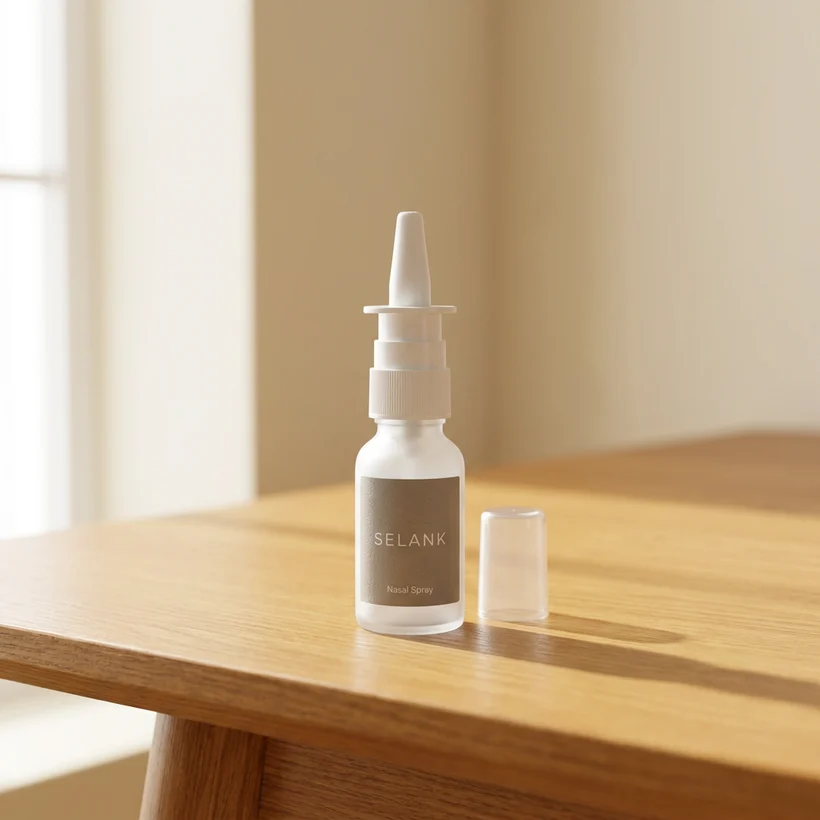
Selank Nasal Spray

From the FormBlends catalog

Selank Nasal Spray

Anxiolytic peptide spray for stress relief without sedation or dependence · From $129/mo · compounded by a licensed 503A pharmacy, dispensed only after provider review.

View Selank Nasal Spray →

In SURMOUNT-1 (Jastreboff et al., New England Journal of Medicine, 2022), the largest trial in the obesity population (N = 2,539 over 72 weeks):

  • Psychiatric adverse events overall: 5 to 7% across treatment arms, similar to placebo
  • Anxiety specifically: not flagged as a notable adverse event
  • Depression: not flagged as a notable adverse event
  • Suicidal ideation: rare, not significantly different from placebo

The most common adverse events in the trials were gastrointestinal: nausea, diarrhea, vomiting, constipation. Mental health events were a small fraction of total adverse events.

This is broadly consistent with the larger GLP-1 class. Semaglutide trials and earlier liraglutide trials have similarly not shown a strong anxiety signal.

The clinical trial data suggests that for the average patient, tirzepatide does not directly cause anxiety. That doesn't mean no individual patient experiences anxiety on the medication. It means the rate isn't high enough to register against placebo background noise in a controlled trial.

What real-world data and case reports show

Pharmacovigilance databases (FAERS in the US, similar systems in Europe) collect adverse event reports from clinicians and patients after a drug is on the market. These databases capture rarer events that don't show up in trials.

A 2024 pharmacovigilance analysis of GLP-1 receptor agonists found:

  • Psychiatric adverse events comprised approximately 1.18% of total reported events for tirzepatide
  • Within psychiatric events, anxiety was the most commonly reported (about 39% of psychiatric reports)
  • Reported anxiety events frequently included terms like "anxiety," "panic attack," or "worsening anxiety"
  • Most reports came in the first 4 to 12 weeks of treatment

This data has limitations. Voluntary reporting systems are subject to confirmation bias (patients and clinicians attribute new symptoms to a recently started medication). They don't establish causation. They don't capture how often the same symptoms occur in patients not on the medication.

What the data does suggest: a small subset of patients experiences new or worsened anxiety after starting tirzepatide. The proportion is meaningfully smaller than the proportion experiencing GI symptoms, but it isn't zero.

Case reports in the medical literature describe individual patients with new panic attacks, generalized anxiety, or worsening of pre-existing anxiety after starting tirzepatide or semaglutide. Some cases resolve with dose reduction. Some resolve with discontinuation. Some persist.

Four mechanisms that may explain anxiety on tirzepatide

Researchers have proposed several mechanisms for how a GLP-1/GIP receptor agonist could affect mood. None are definitively established for tirzepatide specifically.

Mechanism 1: Blood sugar fluctuations. Tirzepatide lowers blood sugar by increasing insulin response and suppressing glucagon. In non-diabetic patients, blood sugar usually stays in a normal range, but the variability can change. Mild hypoglycemia produces symptoms (shakiness, sweating, racing heart, anxiety) that are functionally identical to a panic attack. This is the most concrete mechanism with the most evidence.

Mechanism 2: Direct GLP-1 receptor effects in the brain. GLP-1 receptors are expressed in the hippocampus, amygdala, and other regions involved in mood regulation. Animal studies have shown both anxiolytic and anxiogenic effects of GLP-1 receptor agonists, depending on the brain region and the receptor subtype involved. Whether this translates to humans is unclear.

Mechanism 3: Psychological stress from rapid weight loss. Losing 15 to 20% of body weight in 6 to 12 months is a significant identity change. Patients sometimes report disorientation about clothing, body image, social attention, and habits. For patients with pre-existing anxiety or eating disorder history, the change can trigger symptoms.

Mechanism 4: Side effect burden. Persistent nausea, fatigue, sleep disruption, or food aversion can themselves produce anxiety-like symptoms or worsen pre-existing anxiety. The discomfort and uncertainty of titration can feel like anxiety even when the underlying cause is physical.

The most likely scenario for any individual patient is a combination of factors. Sorting out which is which usually requires a careful history and sometimes a trial of dose adjustment.

Blood sugar swings as the most likely cause

Of the four mechanisms, blood sugar fluctuation is the one most often documented in clinical practice and the one most amenable to direct intervention.

What hypoglycemia feels like:

  • Sudden onset of shakiness or trembling
  • Sweating, especially cool clammy sweat
  • Racing heart, palpitations
  • Lightheadedness or dizziness
  • Confusion or difficulty concentrating
  • A sense of dread or impending doom
  • Hunger, sometimes intense

This list overlaps almost completely with panic attack symptoms. The distinguishing features:

  • Hypoglycemia usually resolves within 15 to 30 minutes of eating something with carbohydrates
  • Hypoglycemia is more common when meals are skipped or very low-carb
  • Hypoglycemia is more common in the morning before eating, in the late afternoon, or after exercise
  • Panic attacks typically resolve on their own within 20 to 30 minutes regardless of food
  • Panic attacks have psychological triggers (specific situations, anticipatory anxiety)
  • Panic attacks often produce derealization (feeling unreal) which is uncommon in hypoglycemia

A patient who keeps a finger-stick glucose meter handy can check during episodes. A reading under 70 mg/dL during symptoms is diagnostic for hypoglycemia. A normal reading during symptoms suggests a different cause.

For patients without diabetes, hypoglycemia on tirzepatide is uncommon but not zero. The risk is higher with:

  • Skipping meals or eating very low-carbohydrate
  • Significant alcohol intake
  • Combining tirzepatide with other glucose-lowering medications
  • Aggressive caloric restriction

Eating regular meals with adequate carbohydrate (especially earlier in the day) and avoiding long fasts during titration substantially reduces this risk.

Pre-existing mental health and tirzepatide

Patients with pre-existing anxiety, depression, or panic disorder are not excluded from tirzepatide treatment. The drug doesn't have an absolute contraindication for these conditions.

What pre-existing mental health changes:

  • The threshold for noticing new symptoms is lower
  • Existing symptoms can flare during any major medical change
  • Coordination between the prescribing provider and any mental health provider becomes more important
  • The patient and provider need to be more attentive to warning signs

For patients in active treatment for anxiety or depression, the standard recommendation is to:

  • Continue current psychiatric medications during tirzepatide titration
  • Don't change psychiatric medications and start tirzepatide simultaneously
  • Keep regular contact with the mental health provider
  • Have a plan for worsening symptoms (when to call, what to do)
  • Track mood as well as physical side effects during the first 12 weeks

Most patients with stable, well-controlled mental health conditions do fine on tirzepatide. The drug doesn't typically destabilize stable patients. The risk profile is higher for patients with active or poorly controlled symptoms at baseline.

The injection-day pattern: real or coincidental?

Some patients describe anxiety that peaks 1 to 3 days after their weekly injection and improves by day 5 to 7. The pattern matches tirzepatide's pharmacokinetics: blood levels peak 24 to 72 hours after injection and decline through the rest of the week.

Whether this is a real biological pattern or anticipatory anxiety isn't fully resolved. Some possibilities:

  • Real: peak drug exposure produces transient mood effects through receptor activity
  • Real: peak gastrointestinal side effects produce transient discomfort that feels like anxiety
  • Real: peak appetite suppression on injection day disrupts eating patterns and affects blood sugar
  • Coincidental: anticipation of side effects creates anxiety regardless of actual drug effect
  • Coincidental: weekly cycles of any kind feel patterned even when they're not

Practical observation that helps sort this out: keeping a daily symptom log for 3 to 4 weeks. If symptoms cluster reliably 24 to 72 hours after injection, the pattern is probably real. If they're scattered through the week, the pattern is probably less specific.

For patients with reliable post-injection anxiety, options include:

  • Splitting the dose into smaller, more frequent injections (with provider guidance)
  • Dose reduction temporarily to see if symptoms improve
  • Pre-emptive use of any prescribed anti-anxiety medication on injection days
  • Better hydration and structured meal timing on injection days

Differentiating anxiety from physical side effects

Some symptoms can be either anxiety or a known physical side effect. Sorting them out matters for treatment.

SymptomAnxiety likely ifPhysical side effect likely if
Racing heartTriggered by situations or thoughtsComes with chest tightness or shortness of breath after exercise
Shortness of breathComes with hyperventilation patternComes with chest pain or swelling
NauseaComes with worry or ruminationWorse after meals, especially fatty ones
InsomniaMind racing at bedtimeWakes up due to GI symptoms
FatigueDoesn't improve with restImproves with hydration or food
LightheadednessTriggered by panic-like episodesTriggered by standing up quickly (suggests dehydration)

When in doubt, the safe move is medical evaluation. Cardiac symptoms in particular should be assessed in person rather than self-diagnosed as anxiety. For more on physical symptoms, see related guide.

A working protocol when anxiety appears

If you experience new or worsened anxiety on tirzepatide, here's a structured approach.

Step 1: Rule out physical causes (first 1 to 2 days).

  • Check blood glucose during episodes if possible
  • Assess hydration (dark urine = dehydrated)
  • Note timing relative to injection day
  • Note timing relative to meals
  • Eat regular balanced meals for 48 to 72 hours

Step 2: Track patterns (first 2 to 3 weeks).

  • Daily symptom log: time, severity, triggers, what helped
  • Note injection day, current dose, recent dose changes
  • Note relevant life stressors
  • Note sleep quality

Step 3: Adjust supportive factors.

  • Hydration: half body weight in ounces of water daily, more during nausea
  • Meals: regular, balanced, with adequate carbs
  • Sleep: 7 to 9 hours, consistent schedule
  • Caffeine: reduce to under 200 mg daily during titration (caffeine worsens anxiety)
  • Alcohol: minimize during titration
  • Exercise: regular but not extreme

Step 4: Loop in your provider if symptoms persist past 2 to 4 weeks.

  • Bring your symptom log
  • Discuss whether dose reduction or pause is appropriate
  • Discuss whether anxiety treatment (therapy, medication) is appropriate

Step 5: Treat anxiety as a separate condition if needed.

  • Cognitive behavioral therapy is first-line for many anxiety disorders
  • SSRI or SNRI medications can be combined with tirzepatide if needed
  • Short-term anxiolytics (benzodiazepines) are usually avoided as first-line but may be used briefly

The key principle: don't ignore symptoms that interfere with your life, but also don't immediately discontinue tirzepatide. Most cases resolve with adjustment rather than stopping.

When to call a provider, when to call 988

Within 24 to 48 hours, call your provider if:

  • New persistent anxiety lasting more than a few days
  • Anxiety interfering with sleep more than 2 nights per week
  • Worsening of pre-existing anxiety despite medication adjustments
  • New panic attacks more than 2 episodes per week
  • Symptoms that are limiting work, school, or daily function

Same day or urgent, call your provider if:

  • New or worsening depression
  • Sleep loss or appetite changes (beyond the medication's normal appetite effects)
  • Hopelessness or feeling like things won't improve
  • Increased substance use as coping

Immediate help (988 Suicide and Crisis Lifeline, or 911):

  • Suicidal thoughts, especially with a plan
  • Thoughts of harming yourself or others
  • Severe agitation that you can't manage
  • Acute psychiatric emergency

Tirzepatide doesn't carry a suicidal ideation warning the way some psychiatric medications do, but new or worsening mood symptoms warrant attention regardless of cause.

Compounded tirzepatide considerations

Compounded tirzepatide contains the same active ingredient as Zepbound and Mounjaro. The mental health profile is the same in mechanism, though the clinical and pharmacovigilance data on compounded versions specifically is more limited.

Some compounded preparations include B12 or other additives. None of these typically affect mood.

Compounded tirzepatide is not FDA-approved and is not interchangeable with brand-name products. Patients using compounded medications should work with the prescribing provider on any mental health concerns, just as they would with branded medication.

For pricing context, see related guide.

FAQ

Can tirzepatide cause anxiety?

Tirzepatide is not a known direct cause of anxiety in clinical trials. Real-world reports describe new or worsened anxiety in a small subset of patients, often linked to blood sugar swings, side effect burden, or rapid weight loss stress.

Can tirzepatide cause panic attacks?

Panic-attack-like symptoms have been reported, often during early titration. Many of these episodes turn out to be hypoglycemia (low blood sugar), which produces nearly identical symptoms. Checking glucose during episodes helps differentiate.

Are anxiety symptoms on tirzepatide common?

No. Pharmacovigilance data suggests psychiatric adverse events comprise about 1% of total reported events, and anxiety is most common within that category. Most patients don't experience anxiety on the medication.

How long do tirzepatide anxiety symptoms last?

Most cases improve within 4 to 12 weeks of dose stabilization. Symptoms triggered by hypoglycemia resolve within minutes of eating. Symptoms related to titration usually settle as the body adapts to a stable dose.

Should I stop tirzepatide if I'm having anxiety?

Not without provider guidance. Most cases respond to supportive measures (hydration, regular meals, blood sugar monitoring, dose adjustment) rather than discontinuation.

Can I take SSRIs or SNRIs with tirzepatide?

Yes, in most cases. There's no direct interaction. Coordination with a mental health provider for the SSRI/SNRI is appropriate when starting either medication.

Does tirzepatide cause depression?

Clinical trial data doesn't show a strong depression signal. Real-world reports describe both new depression and unchanged or improved mood across patients. Pre-existing depression should be co-managed during tirzepatide use.

Why do I feel anxious the day after my injection?

Possible reasons: peak drug levels affecting receptor activity, peak GI side effects feeling like anxiety, blood sugar swings from appetite suppression, or anticipatory worry. A symptom log over 3 to 4 weeks helps identify the pattern.

Can hypoglycemia mimic a panic attack?

Yes, almost identically. Shakiness, sweating, racing heart, dread, and confusion are common to both. Checking blood glucose during an episode is the most reliable way to differentiate.

Is anxiety on tirzepatide a sign I should switch to semaglutide?

Not necessarily. Both medications can cause similar effects through similar mechanisms. A switch may help in some cases but isn't guaranteed to. Discuss with your provider.

How do I tell anxiety from a real medical emergency?

Anxiety doesn't usually cause persistent chest pain, severe shortness of breath, or symptoms that get worse rather than peak and resolve. Cardiac and respiratory symptoms warrant in-person evaluation.

Yes. Cognitive behavioral therapy is effective for many anxiety presentations. It's especially helpful for the psychological adjustment to rapid weight loss and identity changes.

Author / review note

Reviewed by the FormBlends Medical Team. References include the SURMOUNT-1 trial publication (Jastreboff et al., New England Journal of Medicine, 2022), the Mounjaro and Zepbound prescribing information (Eli Lilly, 2024), published pharmacovigilance analyses of GLP-1 receptor agonist psychiatric events, and the National Institute of Mental Health guidelines on anxiety disorder evaluation.

Platform Disclaimer. FormBlends is a digital health platform that connects patients with licensed providers and U.S.-based pharmacies. We do not manufacture, prescribe, or dispense medication directly. All clinical decisions are made by independent licensed providers.

Compounded Medication Notice. Compounded semaglutide and tirzepatide are not FDA-approved. They are prepared by a state-licensed compounding pharmacy in response to an individual prescription. Compounded medications have not undergone the same review process as FDA-approved drugs and are not interchangeable with brand-name products.

Results Disclaimer. Individual results vary. Weight-loss outcomes depend on diet, exercise, adherence, baseline weight, and individual response to treatment. Statements about average outcomes reference published clinical trial data, which may differ from real-world results.

Trademark Notice. Zepbound and Mounjaro are registered trademarks of Eli Lilly and Company. Wegovy and Ozempic are registered trademarks of Novo Nordisk A/S. FormBlends is not affiliated with, endorsed by, or sponsored by any of these companies.

Selank Nasal Spray

Ready when you are

Selank Nasal Spray

Anxiolytic peptide spray for stress relief without sedation or dependence · From $129/mo · compounded by a licensed 503A pharmacy, dispensed only after provider review.

View Selank Nasal Spray →
Browse the full catalog →

Evidence standard

How this page was source-checked

Editorial policy

FormBlends does not claim an individual clinician byline unless a named reviewer is available. For this page, the editorial team checks medical and regulatory claims against primary sources, clinical trials, public datasets, and regulator guidance.

PubMed evidence trail

Research sources used to frame this page

For Can Tirzepatide Cause Anxiety or Panic Attacks? What the Data Says, FormBlends checks the page topic against primary trials, systematic reviews, guidelines, and current PubMed-indexed literature where available. These citations are context, not medical advice, proof of eligibility, or a claim that every study applies to every patient.

GLP-1 decision path

Use this page to decide if a provider review is the right next step

Direct answer

Can Tirzepatide Cause Anxiety or Panic Attacks? What the Data Says research is most useful when it helps you compare eligibility, expected results, side effects, cost, and the supervision needed before treatment.

Evidence check

The strongest GLP-1 pages connect the practical answer to clinical trials, FDA labeling where applicable, and real access constraints.

Safety check

A licensed clinician still needs to review health history, contraindications, current medications, side effects, and dose escalation.

Next step

When the page matches your goal, continue into the FormBlends get-started flow so the intake can route you toward the right prescription review path.

Original tools and data

Use the FormBlends research stack

These assets are built to be useful beyond a single article: shareable data pages, calculators, provider comparisons, and safety checks that give Google and readers something original to crawl.

Editorial refresh

Practical 2026 note for Can Tirzepatide Cause Anxiety or Panic Attacks? What the Data Says

For this weight loss answers page, the 2026 refresh focuses on semaglutide, tirzepatide, cash-pay pricing, safety signals, can, cause so the article stays close to the question behind "Can Tirzepatide Cause Anxiety or Panic Attacks? What the Data Says".

The useful details are the practical ones: what to verify, what changes risk or cost, and which details separate Can Tirzepatide Cause Anxiety or Panic Attacks? What the Data Says from nearby GLP-1, peptide, hormone, or provider-comparison searches.

Readers can use the added context to bring sharper questions to a licensed provider before making a treatment, cost, or care decision.

Can Tirzepatide Cause Anxiety or Panic Attacks? What the Data Says custom 2026 image for weight loss answers on FormBlends

Custom 2026 image for Can Tirzepatide Cause Anxiety or Panic Attacks? What the Data Says, weight loss answers, and better treatment decision-making.

Image description: Unique image for this page covering Can Tirzepatide Cause Anxiety or Panic Attacks? What the Data Says, weight loss answers, safety, cost, provider selection, and patient decision-making.

Medical Disclaimer: This content is for informational purposes only and does not constitute medical advice. Always consult a qualified healthcare provider before starting, stopping, or changing any medication or treatment. FormBlends articles are source-checked against medical and regulatory references, but they are not a substitute for a personal medical consultation.

Written by FormBlends Editorial Research

Prepared by FormBlends Editorial Research. Claims are checked against primary regulatory, trial, label, and public-health sources where available. Reviewed by FormBlends Medical Team for medical accuracy, sourcing, and patient-safety framing.

Ready to get started?

Provider-reviewed GLP-1 and peptide therapy, delivered to your door.

Start Your Consultation

Ready to Start Your Weight Loss Journey?

Get a free medical consultation with a licensed provider. Compounded GLP-1 medications starting at $99/month with free shipping.

Next Best Reads

Free Tools

Provider-informed calculators to support your weight loss journey.