The short answer
Zepbound doesn't list insomnia as a top-line side effect, but sleep disruption is real and common. Tirzepatide changes blood-sugar curves, slows digestion, shifts hunger and cortisol rhythms, and triggers nighttime GI symptoms. Each pathway can fragment sleep. Most cases resolve within 4 to 8 weeks at a stable dose with targeted timing changes.
Table of contents
- The 30-second answer
- The mechanisms: how tirzepatide reaches your sleep
- What clinical trials say about sleep on Zepbound
- Transient vs persistent insomnia: which one you have
- The five most common patterns of Zepbound-related insomnia
- The step-up protocol: from timing fixes to sleep aids
- Foods, drinks, and behaviors that wreck GLP-1 sleep
- When to call your provider
- The dose-response question: does higher dose mean worse sleep?
- FAQ
- Footer disclaimers
The mechanisms: how tirzepatide reaches your sleep
Zepbound's active ingredient, tirzepatide, is a dual GLP-1 and GIP receptor agonist. Both receptors are expressed in the gut, the pancreas, and parts of the brain that regulate appetite, energy use, and circadian timing. Insomnia on tirzepatide isn't usually a single direct effect. It's a stack of smaller effects.
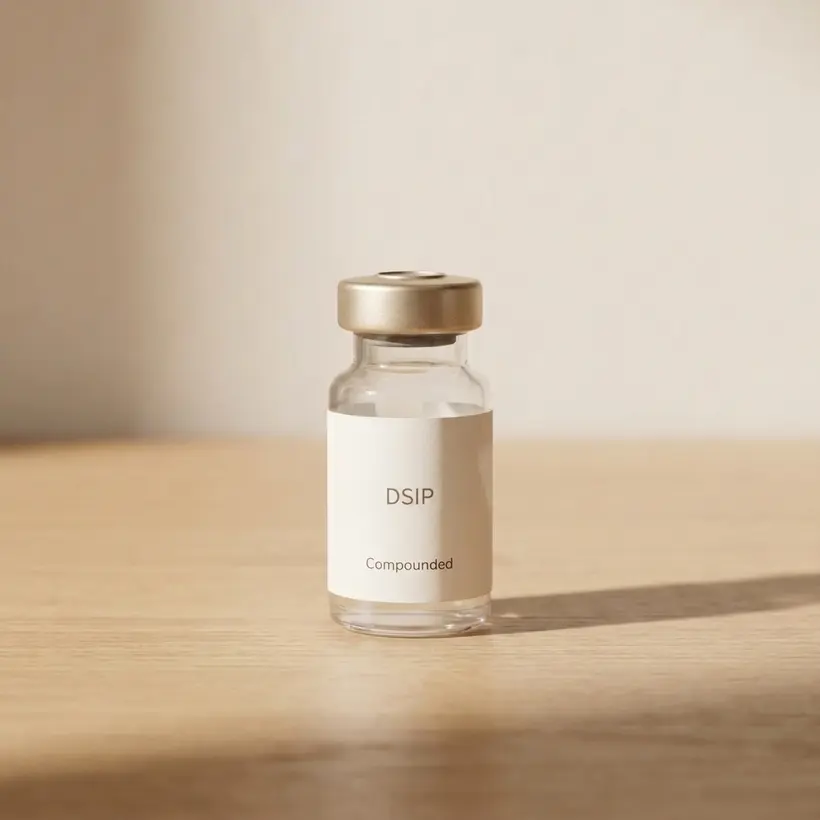
From the FormBlends catalog
DSIP (Delta Sleep-Inducing Peptide)
Restore deep, restorative delta wave sleep · From $179/mo · compounded by a licensed 503A pharmacy, dispensed only after provider review.
View DSIP (Delta Sleep-Inducing Peptide) →Five pathways do most of the work:
- Slowed gastric emptying. Food sits in the stomach 2 to 4 times longer than baseline. A late dinner you'd normally process by midnight can still be sloshing at 3 a.m., causing reflux, fullness, or mild nausea that wakes you.
- Blood-sugar smoothing. Tirzepatide flattens glucose curves. Some patients (especially those who used to have late-evening reactive lows) wake at 2 to 4 a.m. as their body adjusts to the new pattern. The cortisol and adrenaline released during a low-glucose moment is a known trigger of mid-night wake-ups.
- Cortisol rhythm shifts during weight loss. Active fat loss raises evening cortisol modestly. Higher evening cortisol delays sleep onset and shortens the deepest sleep stages.
- Nighttime GI symptoms. Reflux, mild nausea, abdominal cramping, or the urge to use the bathroom (constipation-related straining or diarrhea-related urgency) all wake people up. Patients usually blame "insomnia" without realizing the trigger is GI.
- Vivid dreams and REM changes. A subset of patients report unusually vivid, sometimes uncomfortable dreams during the first 4 to 8 weeks. The exact mechanism isn't settled, but GLP-1 signaling does reach areas of the hypothalamus and brainstem that regulate REM sleep.
The takeaway: if you're sleeping poorly on Zepbound, the question isn't "is this from the medication." It probably is. The useful question is "which pathway is doing it," because the fixes are different.
What clinical trials say about sleep on Zepbound
Insomnia isn't on the labeled top-line adverse-event list for Zepbound, which is part of why the connection is under-discussed. Clinical trials track it, but at lower rates than nausea or diarrhea.
| Trial | Drug | Insomnia / sleep disturbance rate | Placebo rate |
|---|---|---|---|
| SURMOUNT-1 (tirzepatide for obesity, N = 2,539) | Tirzepatide 15 mg | ~3% reported sleep disturbance | ~1.5% |
| SURMOUNT-1 | Tirzepatide 5 mg | ~2.1% | ~1.5% |
| SURPASS-2 (tirzepatide for diabetes) | Tirzepatide 15 mg | ~2.5% | ~1.4% |
| STEP 1 (semaglutide for obesity) | Semaglutide 2.4 mg | ~3.2% | ~2% |
Real-world reports run higher, in the 8 to 15% range during the first 8 weeks. The gap between trial-labeled "insomnia" and patient-reported sleep problems probably reflects how trials code symptoms. A patient who wakes twice at night because of reflux gets coded as "GI side effect," not "insomnia," even though the lived experience is poor sleep.
The risk window is the first 6 to 8 weeks of treatment and the 1 to 3 weeks after each dose escalation. Most patients adapt within that window. A smaller share develop persistent sleep changes that need a different approach.
Transient vs persistent insomnia: which one you have
Transient insomnia is the more common pattern. It tends to:
- Start within the first 1 to 3 weeks of starting Zepbound or escalating doses
- Show up as mid-night wake-ups (1 to 4 a.m.) more than trouble falling asleep
- Track with GI symptoms or vivid dreams
- Improve as your body adapts to the new dose
- Resolve fully within 4 to 8 weeks at a stable dose
Persistent insomnia is less common but worth watching for. It tends to:
- Continue past the 8-week adaptation window
- Get worse as you escalate doses rather than better
- Cause both trouble falling asleep and trouble staying asleep
- Track with rising daytime anxiety
- Affect daytime function (memory, mood, work performance)
- Not respond to timing changes alone
If you have persistent insomnia 8+ weeks into a stable dose and you've already corrected the obvious behavioral triggers, talk with your provider. The fix is sometimes a dose reduction, sometimes a switch to morning dosing of the GLP-1 (where applicable), and sometimes short-term sleep-aid support.
The five most common patterns of Zepbound-related insomnia
Most patients fit one of these patterns. Identifying yours points to the right fix.
Pattern 1: The 2 a.m. reflux wake-up. You fall asleep fine. You wake up around 1 to 3 a.m. with burning chest, sour taste, or pressure. You sit up, the symptoms ease, and you eventually get back to sleep. Cause: slowed gastric emptying plus a late dinner. Fix: eat 3+ hours before bed, elevate the head of the bed, see our acid reflux protocol.
Pattern 2: The 3 a.m. wake-up with no clear cause. You sleep until 3 or 4 a.m., then wake suddenly and feel alert. Heart rate may be elevated. Cause: usually a glucose dip plus cortisol surge. Fix: a small protein-and-fat snack 1 to 2 hours before bed (small handful of nuts, half a hard-boiled egg, plain Greek yogurt). Avoid simple carbs in the evening.
Pattern 3: Trouble falling asleep, vivid dreams when you do. Your mind races at bedtime. When you do sleep, dreams are unusually intense. Cause: probably a CNS effect of GLP-1 receptor activation. Fix: this one usually rides itself out by week 6 to 8. Avoid screens after 9 p.m., add a 30-minute wind-down, consider melatonin 0.3 to 0.5 mg (not 5 to 10 mg, which is too much).
Pattern 4: Multiple wake-ups for bathroom or GI urgency. Constipation-related straining, mild diarrhea, or full-bladder wakeups. Cause: GI side effects of titration plus shifted fluid timing. Fix: front-load fluids before 6 p.m., manage constipation proactively, time the dose earlier in the week if possible.
Pattern 5: General sleep fragmentation with daytime anxiety. No clear single trigger. You feel "wired but tired," sleep poorly all night, and notice rising anxiety during the day. Cause: weight-loss-related cortisol shift, sometimes amplified by undereating during the day. Fix: make sure you're hitting protein targets (0.7 to 1 g per pound of goal weight), front-load calories earlier in the day, consider a magnesium glycinate trial, and talk with your provider if it persists past 6 weeks.
Most patients who think they have "Zepbound insomnia" actually have one of these specific patterns. Treating the pattern works better than reaching for sleep medication.
The step-up protocol: from timing fixes to sleep aids
Standard sequence for managing GLP-1-related sleep disruption. Start at step 1. If a step doesn't help within a week, move to the next.
Step 1: Dose timing and meal timing fixes.
- Move your weekly injection to a morning rather than an evening if you can
- Eat your last full meal at least 3 hours before bed
- Limit fluids 90 minutes before bed (front-load earlier in the day)
- Add a small protein-fat snack 60 to 90 minutes before bed if 3 a.m. wake-ups are the issue
- Reduce or remove caffeine after noon
- Skip evening alcohol entirely during titration (it fragments sleep heavily on a slowed-emptying stomach)
About half of patients with GLP-1-related insomnia get meaningful relief within 7 to 14 days of consistent timing changes alone.
Step 2: Sleep environment and behavior.
- Cool the bedroom to 65 to 68°F
- Black-out curtains or a sleep mask
- A consistent wake time, even on weekends
- 30-minute wind-down with no screens
- Elevate the head of the bed by 6 to 8 inches if reflux is a factor
Step 3: Low-dose targeted supplements.
- Magnesium glycinate 200 to 400 mg, 60 minutes before bed (helps with sleep depth and is well-tolerated)
- Melatonin 0.3 to 0.5 mg, 60 minutes before bed (low dose works better than high dose for most people)
- L-theanine 200 mg, can be combined with magnesium
These are not regulated as drugs and effects are modest, but they're low-risk and often enough.
Step 4: Over-the-counter short-term sleep aids.
- Diphenhydramine (Benadryl, Unisom) 25 to 50 mg, occasionally for breakthrough nights
- Doxylamine (Unisom SleepTabs) 25 mg, similar profile
- Both can cause next-day grogginess and shouldn't be used most nights
These should be a bridge, not a habit. Most sleep specialists recommend keeping use to 2 or 3 nights a week at most.
Step 5: Provider-directed evaluation.
If sleep problems persist past 8 weeks at a stable dose despite the steps above, ask your provider about:
- A dose reduction
- A switch to a different GLP-1 medication
- Short-term prescription sleep support (trazodone 25 to 50 mg is commonly used; benzodiazepines and z-drugs are rarely first-line)
- Screening for sleep apnea, which is independent of the medication but often unmasked during weight loss
- Cognitive behavioral therapy for insomnia (CBT-I), which has the best long-term track record for any kind of insomnia
Foods, drinks, and behaviors that wreck GLP-1 sleep
Triggers are individual, but the common offenders are:
- Caffeine after noon. Half-life is 5 to 6 hours, so a 3 p.m. coffee still has measurable effect at midnight.
- Alcohol within 4 hours of bed. Alcohol is sedating in the first hour and stimulating in the second half of the night. On a slowed-emptying stomach, the disruption is amplified.
- Late, large, fatty meals. Fat slows emptying further on top of what the medication is doing.
- Spicy food in the evening. Doesn't increase acid production directly but worsens the perception of reflux.
- Heavy fluid intake after 8 p.m. Increases bathroom wake-ups, which are already more common during titration.
- Late-day high-intensity exercise. Raises core body temperature and cortisol; on a sensitized GLP-1 patient, this can delay sleep onset by an hour or more.
Behaviors:
- Working in bed. Trains the brain that bed equals alertness.
- Phone scrolling at 11 p.m. Both blue light and the cognitive engagement work against sleep.
- Inconsistent wake times on weekends. Disrupts circadian timing more than people realize.
A 7 to 10 day food and behavior log usually surfaces a personal trigger. Fix that one trigger before adding supplements.
When to call your provider
Within 1 to 2 weeks:
- Insomnia that's interfering with daytime function for more than a week
- New onset of severe sleep problems after months on a stable dose
- Worsening insomnia despite consistent timing and behavioral fixes
- Insomnia paired with new daytime anxiety, low mood, or panic
Same day:
- Persistent vomiting at night that's preventing sleep
- Severe reflux that's waking you most nights despite OTC management
- Signs of dehydration (dizziness, dark urine, low output)
Emergency care:
- Chest pain that wakes you and doesn't resolve quickly
- Suicidal thoughts (rare on tirzepatide but worth saying explicitly)
- Severe new shortness of breath while lying down
The line between "fix your dinner timing" and "call the doctor" usually corresponds to whether daytime function is breaking down. A few rough nights during titration is normal. A pattern of daytime impairment is not.
The dose-response question: does higher dose mean worse sleep?
The published trial data suggests a modest dose-response for sleep disturbance:
- 2.5 mg dose: ~1.8% reported sleep issues
- 5 mg dose: ~2.1%
- 10 mg dose: ~2.7%
- 15 mg dose: ~3.0%
The increase from 5 mg to 15 mg is real but modest. Most of the symptom load shows up acutely after a dose escalation rather than at any single steady-state dose. Patients often describe a 7 to 14 day "rough patch" after going from 5 to 7.5 mg or 7.5 to 10 mg, then sleep returns to a new baseline.
Practical rule: if you have moderate sleep issues at 5 mg and your provider wants to escalate, expect a rough 1 to 2 weeks at the new dose, then re-assess. If sleep is unmanageable at 5 mg, escalating without addressing the underlying pattern is unlikely to help.
A subset of patients have a non-linear response: tolerable sleep at 5 mg, severe insomnia at 7.5 mg, then adaptation by 10 mg. This usually reflects individual receptor sensitivity rather than a clean dose-response curve, and waiting it out at the new dose for 3 to 4 weeks is often the right move.
FAQ
Why does Zepbound cause insomnia?
There isn't a single direct mechanism. Tirzepatide slows gastric emptying (causing reflux and nighttime GI symptoms), changes blood-sugar curves (causing 3 a.m. wake-ups), shifts cortisol rhythms during active weight loss, and reaches CNS receptors that affect REM sleep and dreams. Most patients have one or two of these patterns rather than all five.
Is insomnia a permanent side effect of Zepbound?
For most patients, no. Sleep problems are most common during the first 6 to 8 weeks and during dose escalations. Most adapt within 4 to 8 weeks at a stable dose. A small share of patients develop persistent insomnia that needs a different approach.
How long does Zepbound-induced insomnia last?
Typically 1 to 3 weeks per dose escalation. The first dose tends to be the worst. If insomnia persists beyond 8 weeks at a stable dose, a provider conversation is warranted.
Can I take melatonin with Zepbound?
Yes. There are no known interactions between melatonin and tirzepatide. A low dose (0.3 to 0.5 mg) tends to work as well as or better than the 5 to 10 mg doses sold over the counter, with fewer next-day effects.
Can I take Benadryl or Unisom with Zepbound?
Yes, occasionally. There are no known direct interactions, but both diphenhydramine and doxylamine cause next-day grogginess and aren't ideal for regular use. Limit to 2 to 3 nights a week.
Does compounded tirzepatide cause the same insomnia as brand-name Zepbound?
Yes. Both contain tirzepatide and act through the same mechanism. The sleep-disruption risk is comparable. Compounded versions sometimes contain additives like B12 that don't typically affect sleep.
Should I stop Zepbound if I can't sleep?
Not without provider guidance. Most insomnia is manageable with timing changes plus low-risk supplements. If sleep is severely disrupted past 8 weeks at a stable dose despite the protocol above, your provider may recommend a dose reduction or temporary discontinuation.
Why am I waking up at 3 a.m. on Zepbound?
The most common reasons are a small overnight glucose dip with cortisol surge (fix: a protein-fat snack before bed), nighttime reflux (fix: earlier dinner and bed-head elevation), or a vivid-dream wake-up (usually self-limiting by week 8).
Can Zepbound cause anxiety that affects sleep?
Some patients report rising daytime anxiety during weight loss, partly from cortisol shifts and partly from undereating. The result can look like insomnia. The fix is usually nutritional (hit protein targets, don't drop calories below 1,200 to 1,400 a day) rather than a sleep intervention.
Is melatonin safe for long-term use on Zepbound?
Short-term use (a few weeks to months) at low doses is well tolerated. Long-term use isn't well-studied for any population. If you find you need it nightly to sleep, that's a signal to address the underlying cause, not to settle into chronic melatonin use.
Are vivid dreams on Zepbound a sign of something serious?
Usually not. Vivid dreams during the first 4 to 8 weeks are common and tend to fade as the body adapts. Persistent nightmares or dreams that are causing daytime distress warrant a provider conversation.
Can I drink alcohol on Zepbound if I sleep poorly?
Probably not, while you're titrating. Alcohol sedates in the first hour and disrupts sleep heavily in the second half of the night. On a slowed-emptying stomach, it also worsens reflux. A 4-week alcohol-free trial often resolves a lot of "Zepbound insomnia."
What if my sleep is fine but I have vivid, uncomfortable dreams?
Mention it to your provider, but it's usually transient. If dreams become disturbing or include themes that feel out of character, that's worth a more direct conversation.
Does exercise timing affect Zepbound sleep?
Yes. High-intensity exercise within 3 to 4 hours of bedtime raises core body temperature and cortisol enough to delay sleep onset. Morning or early-afternoon workouts tend to improve sleep on tirzepatide.
For more on managing GI symptoms that disrupt sleep, see our acid reflux protocol at /articles/answers-hub/why-zepbound-may-cause-acid-reflux-understanding-the-connection/. For dose-timing flexibility questions, see /articles/answers-hub/is-it-ok-to-take-zepbound-a-day-early/.
Author / review note
Reviewed by the FormBlends Medical Team. References include the SURMOUNT-1 trial publication (Jastreboff et al., New England Journal of Medicine, 2022), SURPASS-2 (Frias et al., NEJM, 2021), and AASM clinical practice guidelines on the pharmacologic treatment of chronic insomnia (2017).
Image suggestions
- Hero: dim bedroom at 3 a.m. with a clock face visible
- Inline 1: simple labeled diagram of the gut-brain axis showing GLP-1 receptor sites
- Inline 2: a chart of overnight glucose curves on tirzepatide vs placebo
- Inline 3: the five-pattern decision tree as a flowchart
Internal links to other rewrites
/articles/answers-hub/why-zepbound-may-cause-acid-reflux-understanding-the-connection//articles/answers-hub/is-it-ok-to-take-zepbound-a-day-early//articles/answers-hub/can-zepbound-cause-dizziness-understanding-the-connection/
JSON-LD FAQ schema
Footer disclaimers
Platform Disclaimer. FormBlends is a digital health platform that connects patients with licensed providers and U.S.-based pharmacies. We do not manufacture, prescribe, or dispense medication directly. All clinical decisions are made by independent licensed providers.
Compounded Medication Notice. Compounded semaglutide and tirzepatide are not FDA-approved. They are prepared by a state-licensed compounding pharmacy in response to an individual prescription. Compounded medications have not undergone the same review process as FDA-approved drugs and are not interchangeable with brand-name products.
Results Disclaimer. Individual results vary. Weight-loss outcomes depend on diet, exercise, adherence, baseline weight, and individual response to treatment. Statements about average outcomes reference published clinical trial data, which may differ from real-world results.
Trademark Notice. Zepbound is a registered trademark of Eli Lilly and Company. Benadryl, Unisom, and other brand names referenced are trademarks of their respective owners. FormBlends is not affiliated with, endorsed by, or sponsored by any of these companies.
Related guides
- Can Zepbound Cause Dizziness? The Mechanisms, the Patterns, and a Working Protocol to Fix It
- Why Zepbound (and Compounded Tirzepatide) Causes Acid Reflux: The Mechanism and a Working Protocol to Stop It
- Is Dry Mouth a Side Effect of Zepbound? The Mechanisms, Dental Risks, and a Working Protocol to Fix It
- Can You Take Berberine With Tirzepatide? Mechanisms, Risks, and a Practical Protocol
- Can You Take Omeprazole With Zepbound? The Interaction, the Timing, and a Working Protocol
- Can Zepbound Cause Irregular Periods? The Mechanisms, the Patterns, and What's Worth a Call to Your Provider
Ready when you are
DSIP (Delta Sleep-Inducing Peptide)
Restore deep, restorative delta wave sleep · From $179/mo · compounded by a licensed 503A pharmacy, dispensed only after provider review.
View DSIP (Delta Sleep-Inducing Peptide) →