Key Takeaway
Surgery creates controlled damage that your body must heal. This post surgery peptide recovery resource covers the important information you need to make informed decisions. A post-surgery peptide recovery protocol may help your body heal faster, reduce inflammation, and restore function sooner.
Surgery creates controlled damage that your body must heal. This post surgery peptide recovery resource covers the important information you need to make informed decisions. A post-surgery peptide recovery protocol may help your body heal faster, reduce inflammation, and restore function sooner. BPC-157, TB-500, and GH peptides each contribute unique healing mechanisms that complement standard surgical recovery.
All post-surgical peptide use must be coordinated with your surgeon and prescribing provider.
The Post-Surgery Stack
BPC-157 (250-500mcg subcutaneous, twice daily): Promotes localized tissue healing, blood vessel formation, and reduces inflammation. Can be injected near the surgical site (subcutaneous, not into the wound) for targeted healing.
TB-500 (2.5mg subcutaneous, twice weekly loading): Provides systemic healing support through cell migration and tissue remodeling. Helps your entire body participate in the recovery process.
CJC-1295 (100mcg) + Ipamorelin (200mcg) at bedtime: Optimizes GH for tissue repair, sleep quality, and immune function during recovery.
Free Download: Wolverine Stack Card Post-surgery recovery protocol card with timeline, milestones, and return-to-activity guidelines. Get yours free) we'll email it to you instantly. [Download Your Free Stack Card]
Timeline and Protocol
Pre-surgery (if time allows): Some providers start BPC-157 1-2 weeks before surgery to improve tissue health. Discuss with your surgeon first. Most providers recommend stopping TB-500 1-2 weeks before surgery due to its effects on angiogenesis.
Post-surgery week 1-2: Start BPC-157 and TB-500 once cleared by your surgeon (typically 3-7 days post-op). Add CJC-1295/Ipamorelin for sleep and recovery support. Focus on rest and prescribed rehabilitation.
Week 3-6: Continue full protocol. Active rehabilitation alongside peptide support. Monitor healing progress.
Week 7-12: Transition TB-500 to maintenance dosing. Continue BPC-157 as needed. Maintain GH peptide protocol for ongoing recovery support.
important: Never start peptides before getting surgeon clearance. Coordinate with both your surgeon and your . Use the for accurate preparation.
Track recovery milestones in the . Read about the for detailed healing protocols.
Dosing Strategy by Surgery Type
Different surgical procedures create different types of tissue damage. Your dosing protocol should match the specific healing demands of your surgery, not follow a one-size-fits-all approach.
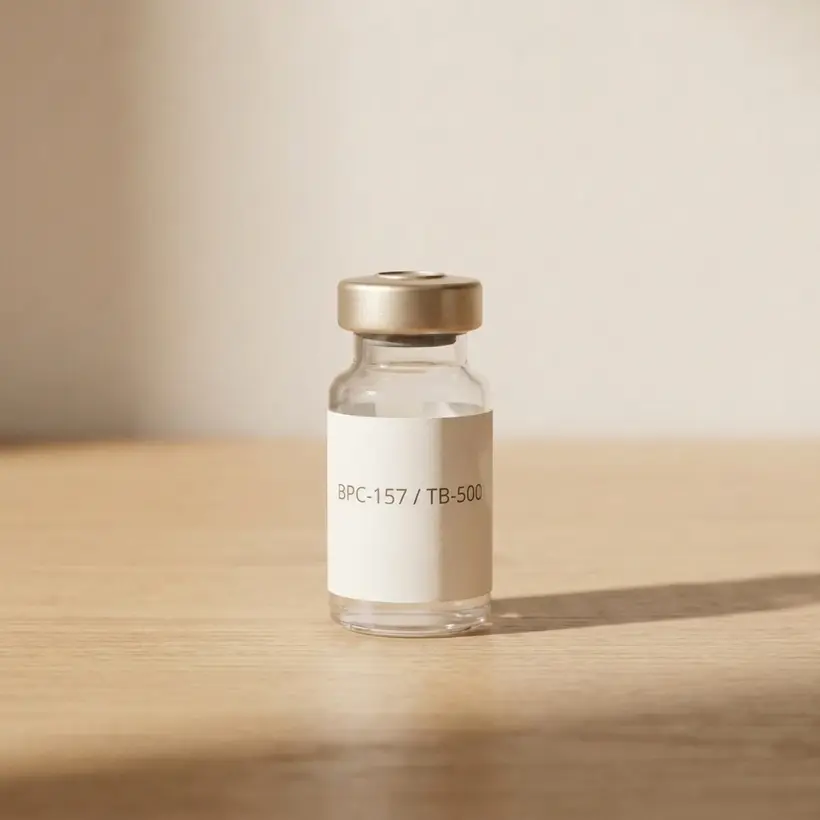
From the FormBlends catalog
BPC-157 / TB-500 Blend
The ultimate recovery stack in one vial · From $249/mo · compounded by a licensed 503A pharmacy, dispensed only after provider review.
View BPC-157 / TB-500 Blend →Orthopedic surgery (joint replacement, ACL repair, rotator cuff): - BPC-157: 500mcg twice daily for weeks 1-4, dropping to 250mcg twice daily for weeks 5-8 - Inject BPC-157 subcutaneously within 2-3 inches of the surgical site when possible - TB-500: 2.5mg twice weekly for 4 weeks (loading), then 2.5mg weekly for 4-8 weeks - These procedures involve connective tissue and bone, which heal slowly. Plan for 10-12 weeks on protocol minimum
Abdominal surgery (hernia repair, gallbladder removal, GI procedures): - BPC-157: 250mcg twice daily, injected in the abdominal subcutaneous tissue away from the incision - TB-500: Standard loading protocol (2.5mg twice weekly for 4 weeks) - GI procedures benefit from BPC-157's well-studied gastroprotective properties - Shorter protocols of 6-8 weeks are often sufficient for soft tissue abdominal procedures
Cosmetic surgery (rhinoplasty, facelift, liposuction, breast augmentation): - BPC-157: 250mcg twice daily at a distal injection site (not near the cosmetic site unless your surgeon approves) - TB-500: 2.5mg weekly (skip the aggressive loading to avoid excessive early angiogenesis near cosmetic incisions) - CJC-1295/Ipamorelin: Standard bedtime dosing for skin and tissue repair support - Discuss with your cosmetic surgeon whether injection near the surgical area is appropriate, as some surgeons prefer systemic delivery only
Spinal surgery (fusion, discectomy, laminectomy): - BPC-157: 500mcg twice daily for the full 8-12 week protocol - TB-500: Standard loading and maintenance - Spinal procedures involve both bone and nerve tissue recovery. The GH peptide component is particularly important because growth hormone supports nerve repair and bone density
Always confirm your specific dosing with your , who will coordinate directly with your surgical team.
Pre-Surgery Preparation Checklist
What you do in the 2-4 weeks before surgery can meaningfully affect how fast you recover afterward. Preparing your body for surgical stress gives you a head start on healing.
Lab work to complete 2-4 weeks before surgery: - Complete metabolic panel (CMP) to establish baseline organ function - CBC with differential to check immune and clotting baselines - IGF-1 to establish your growth hormone status before adding GH peptides post-op - CRP (C-reactive protein) to measure your baseline inflammatory load - Vitamin D, zinc, and iron levels, since deficiencies in these slow wound healing significantly
Nutritional preparation (start 2 weeks before surgery): - Increase protein intake to 1g per pound of bodyweight daily (amino acids are the raw materials for tissue repair) - Supplement with Vitamin C (1,000mg daily) to support collagen synthesis - Add zinc (30mg daily) if your labs show levels below 80 mcg/dL - Eliminate alcohol completely for at least 7 days before surgery (alcohol impairs clotting and immune function) - Stop all blood-thinning supplements (fish oil, turmeric, ginkgo) 10 days before surgery per your surgeon's instructions
Medication and peptide timing: - If your provider has started BPC-157 pre-operatively, confirm with your surgeon whether to pause it 24-48 hours before the procedure - Stop TB-500 at least 1-2 weeks before surgery - Inform your anesthesiologist about all peptides and supplements you have been using - Prepare your post-operative peptide supplies in advance so everything is reconstituted and ready when you get surgeon clearance after the procedure
Home recovery setup: - Prepare your injection supplies in a clean, accessible location (you may have limited mobility post-op) - Set up a tracking log or use the for medication timing, pain scores, and milestone tracking - Arrange for someone to assist with injection preparation during the first 3-5 days if your mobility will be limited
What to Track During Recovery
Tracking objective data during recovery helps your provider fine-tune the protocol and helps you see progress even when it feels slow.
Daily tracking (first 4 weeks): - Pain level on a 0-10 scale at the same time each day (morning and evening) - Swelling at the surgical site (use a tape measure at the same anatomical landmarks) - Range of motion if relevant (record maximum comfortable range in degrees) - Sleep duration and quality rating (GH peptides should improve deep sleep, which accelerates tissue repair) - Injection times, doses, and any injection site reactions
Weekly tracking (throughout the protocol): - Photographs of the surgical site from the same angle and distance (visual progress is often more informative than subjective feel) - Functional milestones: walking distance, weight-bearing status, ability to perform daily tasks - Medication usage, especially pain medication (a declining need for pain medication is a strong signal that healing is progressing)
Lab monitoring (every 4-6 weeks): - CRP to confirm inflammation is trending downward - IGF-1 to verify GH peptide response - CBC to monitor immune recovery - Metabolic panel to confirm no adverse effects from the protocol
Red flags that require immediate provider contact: - Sudden increase in pain after a period of improvement - New redness, warmth, or drainage at the surgical site (possible infection) - Fever above 101F at any point during recovery - Unusual swelling that worsens rather than improves - Any adverse reaction at injection sites (persistent lumps, redness spreading beyond 1 inch)
Bring your tracking data to every follow-up with both your surgeon and your . Objective data allows for better protocol adjustments than memory alone.
Frequently Asked Questions
When can I start peptides after surgery?
Timing varies by procedure. Most providers recommend waiting 3-7 days post-surgery. Always get explicit surgeon approval before starting any peptide.
Will peptides interfere with surgical healing?
BPC-157 and TB-500 support natural healing processes. They shouldn't interfere with surgical repair. But their effects on angiogenesis and tissue remodeling make surgeon awareness important.
Can I use peptides after cosmetic surgery?
Yes, with surgeon approval. Many cosmetic surgery patients use BPC-157 and GH peptides to support healing. Discuss timing with your surgical team.
Should I tell my surgeon about peptide use?
Yes, always. Full transparency with your surgical team is non-negotiable. Your surgeon needs to know about every substance you're using to make safe decisions about your care, anesthesia, and post-operative management.
Can I combine this protocol with physical therapy?
Absolutely. Physical therapy and peptide protocols are complementary. The peptides support tissue healing at the cellular level while PT restores function, strength, and range of motion. Coordinate the timing of both for the best results.
Let's Make This Happen
The research is clear. The options are available. The only question is whether it's right for you. A FormBlends provider can help you decide (no pressure, no commitment.
Sources &. References
- Sikiric P, Hahm KB, Blagaic AB, et al. Stable Gastric Pentadecapeptide BPC 157, Robert's Cytoprotection, Adaptive Cytoprotection, and Therapeutic Effects. Curr Pharm Des. 2018;24(18):1990-2001. Doi:10.2174/1381612824666180515125918
- Chang CH, Tsai WC, Lin MS, et al. The promoting effect of pentadecapeptide BPC 157 on tendon healing involves tendon outgrowth, cell survival, and cell migration. J Appl Physiol. 2011;110(3):774-780. Doi:10.1152/japplphysiol.00945.2010
- Seiwerth S, Brcic L, Vuletic LB, et al. BPC 157 and blood vessels. Curr Pharm Des. 2014;20(7):1121-1125. Doi:10.2174/13816128113199990421
- Bock-Marquette I, Saxena A, White MD, et al. Thymosin beta4 activates integrin-linked kinase and promotes cardiac cell migration, survival and cardiac repair. Nature. 2004;432(7016):466-472. Doi:10.1038/nature03000
- Malinda KM, Sidhu GS, Mani H, et al. Thymosin beta4 accelerates wound healing. J Invest Dermatol. 1999;113(3):364-368. Doi:10.1046/j.1523-1747.1999.00708.x
- Ionescu M, Frohman LA. Pulsatile secretion of growth hormone (GH) persists during continuous stimulation by CJC-1295, a long-acting GH-releasing hormone analog. J Clin Endocrinol Metab. 2006;91(12):4792-4797. Doi:10.1210/jc.2006-1702
Nothing in this article should be construed as medical advice. The information provided is educational only. Always consult with your healthcare provider before beginning, modifying, or discontinuing any medication or treatment. FormBlends connects patients with licensed providers for individualized care.
Last updated: 2026-03-24
Ready when you are
BPC-157 / TB-500 Blend
The ultimate recovery stack in one vial · From $249/mo · compounded by a licensed 503A pharmacy, dispensed only after provider review.
View BPC-157 / TB-500 Blend →