All GLP-1 medications from licensed 503A compounding pharmacies Browse Products

BPC-157 + TB-500 Recovery Stack Dosage Guide

Detailed dosage guide for the BPC-157 and TB-500 recovery stack. Covers dose ranges, body weight adjustments, injury-specific dosing, reconstitution...

By Dr. James Walker, MD, MPH|Reviewed by Dr. David Kim, MD, FACE||

Medically Reviewed

Written by Dr. James Walker, MD, MPH · Reviewed by Dr. David Kim, MD, FACE

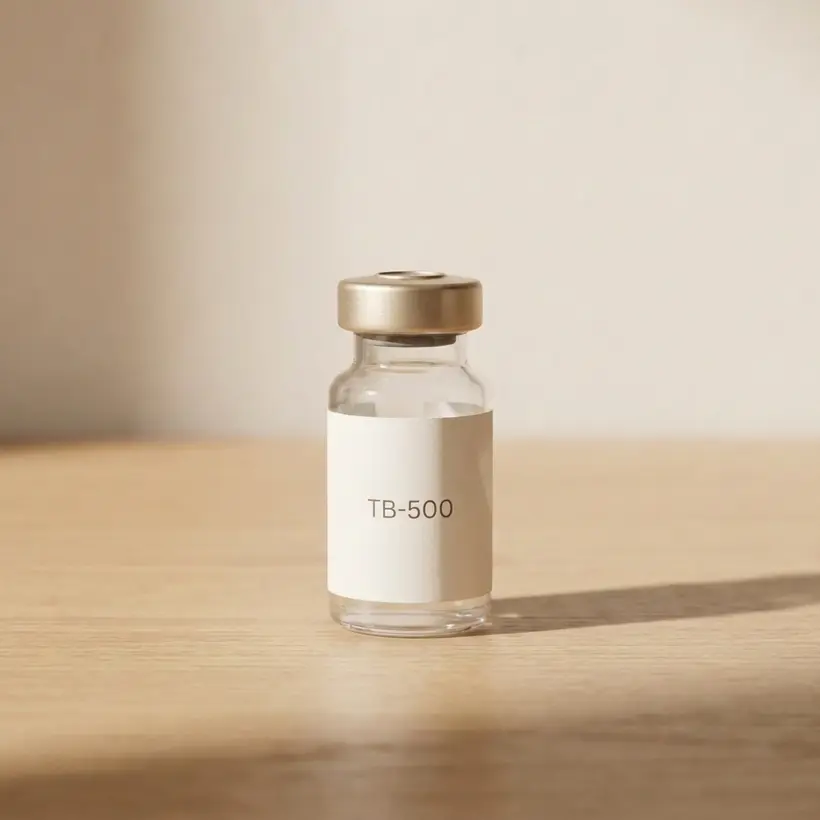
BPC-157 + TB-500 Recovery Stack Dosage Guide custom 2026 header image for Peptide Therapy
Custom header image for BPC-157 + TB-500 Recovery Stack Dosage Guide, Peptide Therapy, and better treatment decision-making.
In This Article

This article is part of our Peptide Therapy collection. See also: GLP-1 Guides | Provider Comparisons

Search and AI answer brief

Practical answer: BPC-157 + TB-500 Recovery Stack Dosage Guide

Detailed dosage guide for the BPC-157 and TB-500 recovery stack. Covers dose ranges, body weight adjustments, injury-specific dosing, reconstitution...

Short answer

Detailed dosage guide for the BPC-157 and TB-500 recovery stack. Covers dose ranges, body weight adjustments, injury-specific dosing, reconstitution...

Search intent

This page answers a specific Peptide Therapy question rather than a generic overview.

What to verify

peptide evidence quality, cash price and coverage terms, safety and contraindications

How to use it

Use this information to prepare sharper questions for a licensed provider.

Key Takeaway

Detailed dosage guide for the BPC-157 and TB-500 recovery stack. Covers dose ranges, body weight adjustments, injury-specific dosing, reconstitution calculator math, and how to adjust based on healing progress.

BPC-157 is typically dosed at 250 to 500 mcg per injection once or twice daily, while TB-500 is dosed at 2 to 2.5 mg per injection once or twice weekly, with both administered subcutaneously. The exact dose depends on injury severity, body weight, treatment phase, and individual response.

BPC-157 Dosage Details

Standard Dose Range

  • Low dose: 200-250 mcg per injection (suitable for mild injuries or maintenance)
  • Standard dose: 250-500 mcg per injection (most common therapeutic range)
  • High dose: 500-750 mcg per injection (severe injuries, under clinical guidance)

Dosing Frequency

  • Acute healing phase: Twice daily (morning and evening, approximately 12 hours apart)
  • Consolidation phase: Once daily
  • Maintenance phase: Once daily or every other day

Total Daily Dose

Most protocols result in a total daily BPC-157 dose of 250 to 1000 mcg (0.25 to 1 mg). The twice-daily approach at 250 mcg per injection (500 mcg total daily) is the most commonly cited protocol across clinical practices.

TB-500 Dosage Details

Standard Dose Range

  • Low dose: 1-1.5 mg per injection (lighter individuals or mild injuries)
  • Standard dose: 2-2.5 mg per injection (most common)
  • High dose: 5 mg per injection (severe injuries, loading phase, under clinical guidance)

Dosing Frequency

  • Loading phase (weeks 1-4): Twice per week (for example, Monday and Thursday)
  • Consolidation phase (weeks 5-8): Once per week
  • Maintenance phase (weeks 9+): Once every 2 weeks

Total Weekly Dose

During the loading phase, total weekly TB-500 intake is typically 4 to 5 mg. This drops to 2 to 2.5 mg during consolidation and 2 mg every two weeks during maintenance.

Popular Therapeutic Peptides by Use Case Clinical Interest Score 0 22 44 66 88 88 82 78 75 70 BPC-157 TB-500 Sermorelin Ipamorelin GHK-Cu Based on published peptide research literature
Popular Therapeutic Peptides by Use Case. Based on published peptide research literature.
View data table
Bar chart showing popular therapeutic peptides by use case: BPC-157 (88), TB-500 (82), Sermorelin (78), Ipamorelin (75), GHK-Cu (70)
CategoryClinical Interest ScoreDetail
BPC-15788Tissue repair and gut healing
TB-50082Injury recovery
Sermorelin78Growth hormone support
Ipamorelin75Anti-aging and recovery
GHK-Cu70Skin and tissue repair
Illustration for BPC-157 + TB-500 Recovery Stack Dosage Guide

Combined Stack Dosing by Injury Severity

Mild Injuries (Minor Strains, Mild Tendonitis, Overuse)

PeptideDoseFrequencyDuration
BPC-157250 mcgOnce daily4-6 weeks
TB-5002 mgOnce per week4-6 weeks

Moderate Injuries (Partial Tears, Significant Tendinopathy, Post-Surgical)

PeptideDoseFrequencyDuration
BPC-157500 mcgTwice daily (weeks 1-4), once daily (weeks 5-8)8-12 weeks
TB-5002.5 mgTwice per week (weeks 1-4), once per week (weeks 5-8)8-12 weeks

Severe Injuries (Complete Tears, Major Surgery, Chronic Degenerative Conditions)

PeptideDoseFrequencyDuration
BPC-157500-750 mcgTwice daily (weeks 1-6), once daily (weeks 7-12)12+ weeks
TB-5002.5-5 mgTwice per week (weeks 1-6), once per week (weeks 7-12)12+ weeks

Body Weight Adjustments

While most BPC-157 and TB-500 protocols use fixed doses, body weight can influence response, particularly with TB-500:.

Check your GLP-1 eligibility

Use our free BMI Calculator to see if you may qualify for provider-reviewed GLP-1 therapy.

Try the BMI Calculator →
  • Under 130 lbs (60 kg): Consider the lower end of dose ranges (BPC-157: 200-250 mcg. TB-500: 1.5-2 mg)
  • 130-200 lbs (60-90 kg): Standard doses are appropriate
  • Over 200 lbs (90 kg): May benefit from higher end of ranges (BPC-157: 500 mcg. TB-500: 2.5 mg)

Dose adjustments should be guided by clinical response and provider recommendations rather than weight calculations alone.

Reconstitution and Dosing Math

BPC-157

BPC-157 commonly comes in 5 mg vials. When reconstituted with 2 mL of bacteriostatic water:

  • Concentration = 2.5 mg/mL (2500 mcg/mL)
  • 250 mcg dose = 0.1 mL (10 units on an insulin syringe)
  • 500 mcg dose = 0.2 mL (20 units on an insulin syringe)
  • One 5 mg vial provides 10 doses at 500 mcg or 20 doses at 250 mcg

Peptide reconstitution calculator

TB-500

TB-500 commonly comes in 5 mg or 10 mg vials. When reconstituting a 5 mg vial with 2 mL of bacteriostatic water:

  • Concentration = 2.5 mg/mL
  • 2 mg dose = 0.8 mL (80 units on an insulin syringe)
  • 2.5 mg dose = 1.0 mL (100 units on an insulin syringe)
  • One 5 mg vial provides 2 doses at 2.5 mg

When reconstituting a 10 mg vial with 2 mL of bacteriostatic water:

  • Concentration = 5 mg/mL
  • 2 mg dose = 0.4 mL (40 units)
  • 2.5 mg dose = 0.5 mL (50 units)
  • One 10 mg vial provides 4 doses at 2.5 mg

Oral BPC-157 Dosing

For gut-focused applications, BPC-157 can be taken orally. Oral dosing is typically higher than subcutaneous dosing to account for reduced bioavailability through the digestive tract.

  • Oral BPC-157: 250-500 mcg, twice daily, on an empty stomach
  • Oral capsules (stable arginine salt form): Follow manufacturer's dosing instructions, typically 250-500 mcg per capsule

Oral BPC-157 is particularly effective for gastric ulcers, intestinal inflammation, and gut barrier repair. For musculoskeletal injuries, subcutaneous injection near the injury site remains the preferred route. oral vs injectable BPC-157

Timing Your Doses

BPC-157 Timing

  • No fasting required
  • For twice-daily dosing, space injections approximately 12 hours apart (for example, 7 AM and 7 PM)
  • Some practitioners recommend dosing after exercise to capitalize on the recovery window

TB-500 Timing

  • No fasting required
  • For twice-weekly dosing, space injections 3-4 days apart (for example, Monday and Thursday)
  • Can be administered at any time of day

When to Increase or Decrease Your Dose

Consider Increasing If

  • Minimal healing progress after 3-4 weeks at the current dose
  • Injury is severe and initial assessment suggests higher dosing is appropriate
  • No side effects at the current dose
  • Provider recommends titration based on clinical assessment

Consider Decreasing If

  • Significant healing has occurred and maintenance is the goal
  • Any unexpected side effects (rare with these peptides)
  • Transitioning from acute healing to consolidation phase
  • Cost management over a long treatment course

Cost at Different Dose Levels

Monthly costs vary based on dosing frequency and source:

  • Low-dose maintenance: Approximately $100-150/month Contact provider for current pricing Contact provider for current pricing
  • Standard acute protocol: Approximately $200-350/month
  • High-dose intensive protocol: Approximately $350-500+/month

Pre-mixed BPC-157/TB-500 blends from compounding pharmacies can offer cost savings compared to purchasing separate vials. peptide cost comparison

Frequently Asked Questions

What is the most common BPC-157 dose?

The most widely used BPC-157 dose is 250-500 mcg per injection, administered once or twice daily via subcutaneous injection. A total daily dose of 500 mcg (either as a single injection or split into two 250 mcg injections) is the most commonly cited across clinical peptide practices.

How much TB-500 should I take per week?

During the loading phase, 4-5 mg per week (split into two injections of 2-2.5 mg) is standard. During consolidation, this drops to 2-2.5 mg once per week. During maintenance, 2 mg every two weeks is common. Your provider can adjust these amounts based on your injury and response.

Can I take a higher dose to heal faster?

There's a ceiling to dose-response benefits. Doubling the dose doesn't necessarily double the healing speed. Staying within established therapeutic ranges is more effective and safer than dramatically exceeding them. If healing is slower than expected, discuss improvement strategies with your provider rather than arbitrarily increasing doses.

How many vials will I need for a full cycle?

For an 8-week standard protocol (BPC-157 at 500 mcg twice daily, TB-500 at 2.5 mg twice weekly for 4 weeks then weekly): you would need approximately 11-12 vials of BPC-157 (5 mg each) and 5-6 vials of TB-500 (5 mg each). Pre-mixed blends or larger vial sizes can reduce the total number of vials needed. recovery stack supply calculator

Is twice-daily BPC-157 necessary, or is once daily enough?

Once-daily dosing is effective for many injuries, particularly mild to moderate conditions. Twice-daily dosing maintains more consistent tissue levels and is generally recommended for acute injuries, severe conditions, or during the initial 2-4 weeks of treatment. Your provider can help determine the appropriate frequency based on your specific situation.

This article is for informational purposes only and doesn't constitute medical advice. Always consult a qualified healthcare provider before beginning any peptide therapy protocol.

Published by FormBlends.

Evidence standard

How this page was source-checked

Editorial policy

FormBlends does not claim an individual clinician byline unless a named reviewer is available. For this page, the editorial team checks medical and regulatory claims against primary sources, clinical trials, public datasets, and regulator guidance.

PubMed evidence trail

Research sources used to frame this page

For BPC-157 + TB-500 Recovery Stack Dosage Guide, FormBlends checks the page topic against primary trials, systematic reviews, guidelines, and current PubMed-indexed literature where available. These citations are context, not medical advice, proof of eligibility, or a claim that every study applies to every patient.

Peptide decision path

Move from research interest to supervised review

Direct answer

BPC-157 + TB-500 Recovery Stack Dosage Guide should be evaluated through research status, legal access, source quality, safety context, and clinician oversight rather than a shortcut purchase decision.

Evidence check

Useful peptide pages should separate human data, animal research, mechanistic evidence, and marketing claims.

Safety check

Peptides can vary by legal status, compounding pathway, purity testing, patient history, and interaction risk.

Next step

If the topic still fits your goal after reading, the get-started flow should collect the clinical context needed for provider review.

FormBlends Editorial Context

Reviewed May 14, 2026

Detailed dosage guide for the BPC-157 and TB-500 recovery stack. Covers dose ranges, body weight adjustments, injury-specific dosing, reconstitution math, and how to adjust based on healing progress. "BPC-157 + TB-500 Recovery Stack Dosage Guide" is most useful when you treat it as decision prep, not a shortcut. The page is built around dosing literacy and clinician follow-up, with the highest-value checks sitting around BPC-157, TB-500, dosing. Because this article has 10 major sections, scan the headings first and then use the FAQ or summary sections to pressure-test the answer. If the answer affects treatment, cost, pharmacy choice, or dosing, bring the specifics to a licensed clinician before acting.

  • Confirm whether the page is discussing an FDA-approved use, a compounded option, or research-only context.
  • Ask a licensed clinician how the evidence applies to your health history, medications, labs, and side-effect risk.
  • Check the latest label, trial update, pharmacy policy, or state rule when the article touches medication access.

Original tools and data

Use the FormBlends research stack

These assets are built to be useful beyond a single article: shareable data pages, calculators, provider comparisons, and safety checks that give Google and readers something original to crawl.

Editorial refresh

Practical 2026 note for BPC

BPC now carries extra 2026 context around BPC-157, cash-pay pricing, safety signals, bpc, 157, 500, because those are the subtopics readers tend to compare before they trust a medical or wellness recommendation.

Instead of adding filler, this page keeps the named treatment terms, practical verification points, and next-step questions close to bpc 157 tb 500 recovery stack dosage.

Readers should use the section to check current eligibility, pharmacy or provider policies, and safety questions with a licensed professional before acting.

BPC custom 2026 image for peptide therapy on FormBlends

Custom 2026 image for BPC, peptide therapy, and better treatment decision-making.

Image description: Unique image for this page covering BPC, peptide therapy, safety, cost, provider selection, and patient decision-making.

Download the Peptide Quick Reference Card

A printable 2-page reference covering popular peptides, dosing ranges, stacking protocols, and storage.

Free download. We'll also send helpful GLP-1 guides to your inbox. Unsubscribe anytime.

Medical Disclaimer: This content is for informational purposes only and does not constitute medical advice. Always consult a qualified healthcare provider before starting, stopping, or changing any medication or treatment. FormBlends articles are source-checked against medical and regulatory references, but they are not a substitute for a personal medical consultation.

Written by Dr. James Walker, MD, MPH

Internal Medicine. This article was researched against primary regulatory, trial, prescribing, and manufacturer sources where available. Reviewed by Dr. David Kim, MD, FACE for medical accuracy, sourcing, and patient-safety framing.

Ready to get started?

Provider-reviewed GLP-1 and peptide therapy, delivered to your door.

Start Your Consultation

Ready to Start Your Weight Loss Journey?

Get a free medical consultation with a licensed provider. Compounded GLP-1 medications starting at $99/month with free shipping.

Next Best Reads

Free Tools

Provider-informed calculators to support your weight loss journey.