Key Takeaway
Surgery is stressful on your body. This TB-500 post surgery recovery healing resource covers the important information you need to make informed decisions. Tissues are cut, moved, and repaired. Healing takes time.
Surgery is stressful on your body. This TB-500 post surgery recovery healing resource covers the important information you need to make informed decisions. Tissues are cut, moved, and repaired. Healing takes time. If you're looking into TB-500 for post-surgery recovery and healing, you aren't alone. More people are asking their providers about peptide therapy to support surgical outcomes.
Key Takeaways: - Learn how surgery affects your body's repair systems - Understand what research suggests about tb-500 and surgical healing - Practical Considerations for Post-Surgical Use - Types of Surgeries Where TB-500 Is Being Explored
TB-500 (a synthetic form of Thymosin Beta-4) has been studied for its tissue repair properties, including wound healing, blood vessel formation, and inflammation reduction. These are all processes that matter after surgery. Here is what you need to know.
How Surgery Affects Your Body's Repair Systems
About the post-surgical healing process helps explain why TB-500 has attracted interest in this area.
After surgery, your body launches a complex repair cascade that happens in overlapping phases:
Phase 1: Inflammation (days 1-5). Your immune system sends inflammatory cells to the surgical site. This causes the swelling, redness, and warmth you experience after surgery. While uncomfortable, this inflammation is necessary) it clears damaged tissue and fights infection.
Phase 2: Proliferation (days 5-21). New blood vessels form (angiogenesis). Fibroblasts arrive and start producing collagen. New tissue begins filling in the wound. This is where the real rebuilding happens.
"Compounding pharmacies serve a critical role in healthcare, but patients need to understand the difference between a properly regulated 503B facility and an unregulated operation. Ask about PCAB accreditation and third-party testing.", Dr. Scott Brunner, PharmD, Alliance for Pharmacy Compounding
Phase 3: Remodeling (weeks 3 to 12+ months). The new tissue reorganizes and strengthens. Collagen fibers realign along stress lines. The scar matures and strengthens. This phase can take up to two years for some surgeries.
TB-500's studied mechanisms (promoting cell migration, supporting angiogenesis, and reducing excessive inflammation) align with phases 1 and 2 of this healing cascade. That's the biological basis for its potential role in post-surgical recovery.
What Research Suggests About TB-500 and Surgical Healing
The research on Thymosin Beta-4 and wound healing is extensive in animal models, though human surgical recovery studies are limited.

Wound healing acceleration. Multiple animal studies have shown that TB-500 treatment can speed wound closure. In research models, TB-500-treated wounds showed faster epithelialization (skin cell coverage) compared to untreated controls.
Free Download: Peptide Protocol Planner (12-Week) Organize your post-surgical peptide protocol with this structured planner. Track doses, recovery milestones, and communicate progress to your surgical team. Get yours free (we'll email it to you instantly. [Email Input] [Download Button]
Improved blood vessel formation. Post-surgical healing depends heavily on blood supply to the wound. TB-500's ability to promote angiogenesis may support better nutrient and oxygen delivery to healing tissues. Animal studies show increased vascularization in TB-500-treated tissue.
Reduced scar formation. Some animal Preclinical research, including the landmark Bock-Marquette et al. Study (Nature, 2004), demonstrates that thymosin beta-4 may influence how scar tissue forms, potentially leading to less dense, more organized scarring. This is particularly relevant for surgeries where excessive scarring could impair function (like joint surgeries or abdominal procedures).
Anti-inflammatory modulation. TB-500 may help regulate the inflammatory phase) not eliminating it (which would impair healing) but preventing excessive inflammation that delays recovery. This balanced approach to inflammation may support a smoother healing process.
Cardiac surgery research. Some of the most advanced Thymosin Beta-4 research involves cardiac tissue. Studies have explored its potential for supporting heart tissue recovery after cardiac procedures. While this is specialized, it illustrates the breadth of TB-500's studied healing properties.
As with all peptide research, it's important to distinguish between animal studies and proven human clinical applications. Your provider can help you understand how the current evidence applies to your specific surgical situation.
Practical Considerations for Post-Surgical Use
If your provider recommends TB-500 as part of your post-surgical recovery plan, several practical factors come into play.
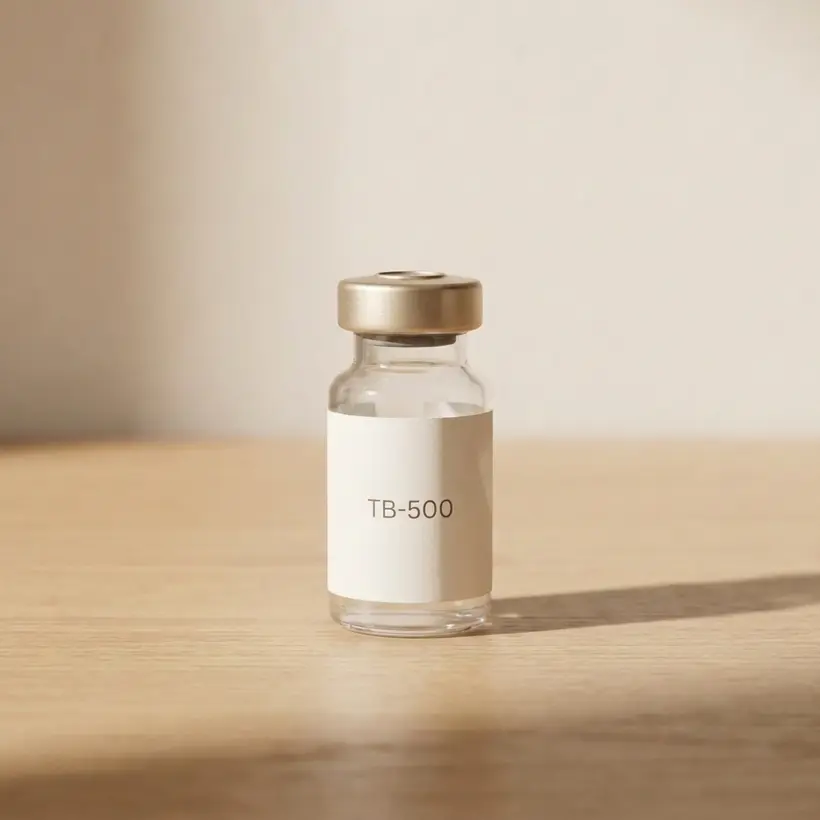
From the FormBlends catalog
TB-500 (Thymosin Beta-4)
Universal repair peptide for tissue regeneration · From $49/mo · compounded by a licensed 503A pharmacy, dispensed only after provider review.
Learn about TB-500 (Thymosin Beta-4) →Timing relative to surgery. The timing of TB-500 initiation varies by provider philosophy and surgery type. Some providers start TB-500 before surgery to prepare the body for healing. Others begin shortly after surgery once the initial inflammatory phase is underway. Your provider and surgical team will coordinate timing.
Communication with your surgical team. This is important. Your surgeon needs to know about any peptide therapy you're using. While there are no well-documented interactions between TB-500 and common surgical medications or anesthesia, transparency ensures your entire medical team is informed.
Standard post-surgical care still applies. TB-500 is a potential addition to your recovery (not a replacement for standard care. Follow your surgeon's instructions regarding wound care, activity restrictions, physical therapy, and follow-up appointments.
Monitoring for complications. Post-surgical complications can include infection, excessive bleeding, blood clots, and poor wound healing. While there's no evidence that TB-500 increases these risks, any new symptom after surgery should be reported to your surgical team immediately) don't attribute it to peptide therapy.
Your can work alongside your surgical team to design an appropriate protocol. The goal is an integrated approach where peptide therapy complements, not replaces, your surgeon's treatment plan.
Types of Surgeries Where TB-500 Is Being Explored
While research is still evolving, providers are exploring TB-500 in the context of various surgical procedures:
Orthopedic surgeries. ACL reconstruction, rotator cuff repair, meniscus surgery, and tendon repair are among the most common. These surgeries involve tissues with limited blood supply, making TB-500's angiogenesis properties potentially relevant. Some providers combine TB-500 with for these cases) the approach.
Abdominal surgeries. Hernia repair, appendectomy, and other abdominal procedures involve wound healing in an area with significant tissue layers. TB-500's wound healing research may be relevant here.
Skin and soft tissue procedures. Skin grafts, cosmetic procedures, and wound debridement all involve tissue repair where TB-500's cell migration and wound healing properties have been studied.
Dental and oral surgery. Some providers are exploring peptide therapy for post-dental surgery healing, though this is an emerging application with limited published data.
Not every surgery warrants peptide therapy. Minor procedures with straightforward healing may not benefit from the added complexity and cost. Discuss the risk-benefit ratio with your provider based on your specific procedure.
Frequently Asked Questions
Should I tell my surgeon about TB-500?
Absolutely. Full transparency with your entire medical team is important. Your surgeon needs to know about all medications, supplements, and peptides you're taking. This is a safety issue, not a preference. Most surgeons will appreciate your openness and can factor it into your care plan.
Can I start TB-500 before surgery?
Some providers do prescribe TB-500 before surgery to potentially prepare the body for healing. This decision should be made collaboratively between your peptide provider and your surgeon. Timing depends on the type of surgery, your health status, and provider preferences.
How long after surgery should I use TB-500?
Treatment duration varies by surgery type and individual healing response. Common protocols run 8-12 weeks post-surgery. Your provider will assess your progress and determine when to stop or transition to a maintenance phase. Some patients need shorter courses. others benefit from longer treatment.
Is TB-500 safe to use with post-surgical pain medications?
There are no well-documented interactions between TB-500 and common post-surgical medications (pain relievers, antibiotics, anti-nausea drugs). But always inform your provider about your complete medication list. Your FormBlends provider can evaluate potential considerations based on your specific medications.
Will insurance cover TB-500 for post-surgical recovery?
TB-500 is typically not covered by insurance as it's a compounded peptide therapy. FormBlends offers so you know your costs upfront. Discuss the investment with your provider in the context of your overall recovery goals.
What's Your Next Move?
You have the information. Now let a licensed provider help you put it into action. FormBlends makes it simple, answer a few questions and get a personalized recommendation.
Medical References
- Goldstein AL, Hannappel E, Sosne G, Kleinman HK. Thymosin beta4: a multi-functional regenerative peptide. Basic properties and clinical applications. Expert Opin Biol Ther. 2012;12(1):37-51. [PubMed | DOI]
Sources &. References
- Bock-Marquette I, Saxena A, White MD, et al. Thymosin beta4 activates integrin-linked kinase and promotes cardiac cell migration, survival and cardiac repair. Nature. 2004;432(7016):466-472. Doi:10.1038/nature03000
- Malinda KM, Sidhu GS, Mani H, et al. Thymosin beta4 accelerates wound healing. J Invest Dermatol. 1999;113(3):364-368. Doi:10.1046/j.1523-1747.1999.00708.x
This content is provided for informational and educational purposes only. It isn't a substitute for professional medical advice, diagnosis, or treatment. Always seek the advice of a licensed healthcare provider with any questions about a medical condition or treatment plan.
Last updated: 2026-03-24
Ready when you are
TB-500 (Thymosin Beta-4)
Universal repair peptide for tissue regeneration · From $49/mo · compounded by a licensed 503A pharmacy, dispensed only after provider review.
Learn about TB-500 (Thymosin Beta-4) →