Key Takeaways
- The interaction is not pharmacokinetic. Hydrocodone and semaglutide do not change each other's plasma levels in a meaningful way.
- The interaction is functional. Both drugs slow gastric emptying and reduce gut motility. Constipation, delayed oral drug absorption, and nausea all worsen with the combination.
- The American Society of Anesthesiologists issued 2023 guidance recommending consideration of holding GLP-1 medications before procedures involving sedation, due to retained gastric contents and aspiration risk.
- Acute postoperative opioid use while on a GLP-1 medication is usually safe with active bowel management and short course duration.
- Chronic combined use (daily opioids plus a weekly GLP-1) deserves a more careful conversation, including non-opioid pain alternatives where possible.
Direct answer
Hydrocodone and Ozempic do not directly interact at the pharmacokinetic level. They interact at the level of the gut. Both slow gastric emptying. Both can cause nausea. Hydrocodone causes the constipation almost everyone associates with opioids; semaglutide adds another layer of slowed transit. The combination is usable in short courses with bowel management, but is more carefully evaluated in chronic use and in the perioperative window.
Table of contents
- What hydrocodone is and how it acts
- What Ozempic does to gut motility
- The shared mechanism: gastric emptying
- Constipation as the predictable problem
- The ASA 2023 perioperative guidance
- Aspiration risk in sedation cases
- Multimodal pain control as the better default
- The chronic-pain patient who is also on a GLP-1
- Decision framework
- The contrary view: this concern is overstated
- FAQ
- Sources
What hydrocodone is and how it acts
Hydrocodone is a semisynthetic opioid. It binds mu opioid receptors in the central nervous system to produce analgesia, drowsiness, and respiratory depression at high doses. It also binds mu receptors throughout the GI tract, where the effect is reduced motility, increased fluid absorption, and constipation.
From the FormBlends catalog
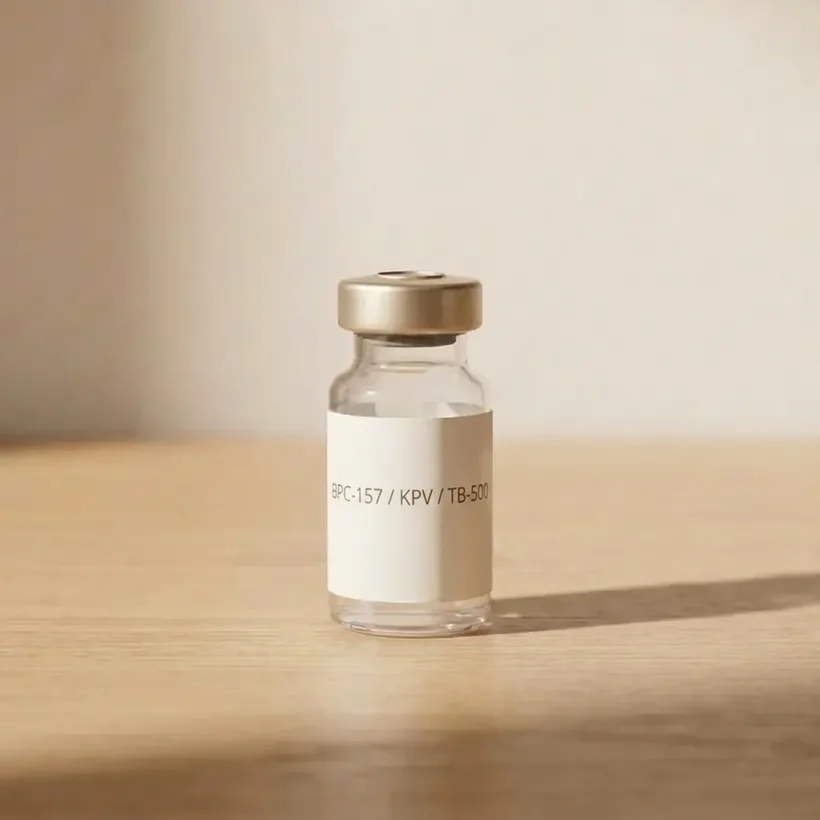
BPC-157 / KPV / TB-500 Blend
Three-pathway recovery support in one peptide blend · From $279/mo · compounded by a licensed 503A pharmacy, dispensed only after provider review.
View BPC-157 / KPV / TB-500 Blend →Hydrocodone is commonly prescribed as Norco or Vicodin, both formulated with acetaminophen. The combined product limits total daily dose because of the acetaminophen ceiling (3,000 to 4,000 mg per day in adults with normal liver function).
What Ozempic does to gut motility
Semaglutide activates GLP-1 receptors in the stomach, small intestine, and brainstem. The effect on the stomach is a meaningful delay in gastric emptying, particularly of solids, particularly in the first weeks of therapy. The effect on appetite is mediated through hypothalamic GLP-1 receptors.
Most patients adapt to the gastric emptying effect over weeks to months. Some never fully adapt and report ongoing slow emptying throughout therapy. The colon is less directly affected, but slow gastric and small bowel transit contribute to constipation.
The shared mechanism: gastric emptying
The functional overlap is at gastric emptying. Both classes slow it. The clinical consequences:
Slower onset of oral medications. Drugs absorbed from the small intestine reach peak plasma levels later than usual. A patient who would normally feel a hydrocodone tablet at 30 minutes might feel it at 60 to 90 minutes on Ozempic. This sometimes leads patients to dose-stack, taking a second tablet before the first one has fully absorbed, which can result in unexpectedly high peak levels later.
Retained gastric contents. Food, fluids, and prior medication doses can linger in the stomach longer than usual. This is the basis for the perioperative aspiration concern.
Persistent fullness and nausea. Patients on the combination often describe a "stuck" sensation that lasts hours after a meal. Adding opioid-mediated nausea on top is unpleasant.
Constipation as the predictable problem
Opioid-induced constipation occurs in roughly 40 to 80% of patients on chronic opioids, depending on dose and duration. It is the most reliable opioid side effect, more consistent than nausea, sedation, or itching. Tolerance does not develop the way it does for other opioid effects.
Semaglutide is associated with constipation in roughly 24% of patients in the STEP trials (Wilding et al., NEJM 2021). The mechanism is slower transit and reduced fluid intake from nausea.
Stacked, patients commonly experience constipation that is harder to treat with a single agent. Effective management in the post-operative window often requires:
- A scheduled stimulant laxative (senna or bisacodyl) started on day one of opioid therapy.
- An osmotic agent (polyethylene glycol 17 g daily) added if needed.
- Adequate hydration, often more than the patient feels like drinking.
- Early mobilization where appropriate.
- Stopping the opioid as soon as pain control allows.
The ASA 2023 perioperative guidance
In June 2023, the American Society of Anesthesiologists issued a consensus statement recommending consideration of holding GLP-1 medications before elective procedures involving sedation or general anesthesia. The recommendation: hold the day of procedure for daily-dosed GLP-1s, and consider holding for one week before procedure for weekly-dosed agents (semaglutide, tirzepatide).
The rationale: case reports of pulmonary aspiration during induction of anesthesia in patients on GLP-1 medications, attributed to retained gastric contents despite standard NPO times. The guidance is not a hard rule, and updated guidance in 2024 has been somewhat softer, but it has changed practice at most U.S. surgical centers.
For patients planning a procedure who are also expecting postoperative opioid prescriptions, this is the moment to have a coordinated plan with the surgeon, the anesthesiologist, and the GLP-1 prescriber. Three different teams sometimes give three different instructions.
Aspiration risk in sedation cases
The fear specific to anesthesia is pulmonary aspiration of gastric contents during induction. If the stomach has not emptied despite NPO status, induction can produce passive regurgitation that reaches the airway. This is a low-frequency event but the consequences (aspiration pneumonitis, ARDS) can be severe.
Several anesthesia groups have responded by using point-of-care gastric ultrasound to evaluate stomach contents in GLP-1 patients before induction. Where ultrasound shows a full stomach, cases are sometimes delayed or modified (rapid sequence induction with cricoid pressure).
Multimodal pain control as the better default
For most postoperative pain, opioids are no longer the primary modality. Multimodal pain management uses:
- Scheduled acetaminophen (the cornerstone, up to 3,000 mg per day in adults with normal liver function).
- NSAIDs where appropriate (with the kidney caveats relevant on GLP-1 medications).
- Regional nerve blocks where the surgical site allows.
- Ice, elevation, gentle activity.
- Opioids reserved for breakthrough pain and short courses.
On a GLP-1 medication, the case for shifting weight off opioids is stronger, because the GI and aspiration concerns add to the usual opioid downsides.
The chronic-pain patient who is also on a GLP-1
The harder population is the patient with a chronic pain condition (post-surgical, neuropathic, osteoarthritis) who has been on daily opioids for months or years, and now starts a GLP-1 for diabetes or obesity. The combination is sometimes the right answer; sometimes it is the prompt to revisit the pain plan.
Practical points for this patient:
- Bowel regimen needs to be scheduled, not as needed. Senna 8.6 mg one to two tablets at bedtime is a reasonable starting point.
- Hydration becomes essential. A target of 64 to 80 ounces per day is reasonable for most adults absent fluid restrictions.
- Periodic reassessment of opioid need is warranted. Some patients find appetite reduction and weight loss reduce their pain (especially knee, hip, low back) enough to taper.
- Buprenorphine, which has different opioid pharmacology and may have less GI slowing, is occasionally an alternative discussed with pain specialists.
Decision framework
If you are planning surgery and on Ozempic: tell your surgeon and anesthesiologist before the procedure date. Confirm whether to hold the GLP-1 in advance, and how the postoperative pain plan will work.
If you are filling a short opioid prescription after a procedure: start a stool softener and stimulant laxative on day one. Drink extra water. Take the opioid only as needed. Stop as early as you can.
If you are on chronic opioids and your provider is starting you on Ozempic: ask about a bowel regimen up front. Plan for the first weeks to be GI-rough. Consider whether the chronic pain plan can be optimized in parallel.
If you experience severe constipation, abdominal pain, vomiting, or inability to pass gas on the combination: contact a provider promptly. The differential includes ileus and, rarely, bowel obstruction. These are not problems to wait out at home.
The contrary view: this concern is overstated
A reasonable counterpoint: millions of patients have taken short courses of hydrocodone while on Ozempic with no remarkable problem beyond manageable constipation. The drug-drug "interaction" is mostly nuisance-level. Aspiration events during anesthesia are real but rare. The framing in some clinical literature borders on alarmist.
That is partly fair for short, post-procedure courses in healthy adults. The risk is concentrated in specific groups: patients undergoing sedation procedures, patients on chronic high-dose opioids, patients with pre-existing GI motility issues, and the elderly. For those groups, the concern is real. For a 35-year-old getting a dental procedure with a five-day Norco prescription, the risk is small if bowel function is supported.
Compounded medication note for this topic
For Hydrocodone and Ozempic: Two Drugs That Both Stop Your Gut, keep the pharmacy distinction clear: when compounded semaglutide or tirzepatide is prescribed, it is prepared for an individual patient by a licensed 503A compounding pharmacy. Compounded preparations are not FDA-approved drug products and are not interchangeable with Ozempic, Wegovy, Mounjaro, or Zepbound.
The practical question is not whether a compounded medication is a brand substitute. It is whether the prescription, pharmacy label, concentration, follow-up plan, and adverse-event support are clear enough for your specific medical history.
FAQ
Can you take hydrocodone with Ozempic?
No direct pharmacokinetic interaction. Both slow gastric emptying and reduce gut motility, so the combination commonly produces severe constipation, nausea, and delayed drug absorption. Short courses with bowel management are usually acceptable.
Does Ozempic affect how opioids work?
Yes, indirectly. Delayed gastric emptying means oral opioids may reach peak levels later than expected.
Will Ozempic make opioid constipation worse?
Almost certainly. Both drugs slow transit. A scheduled bowel regimen is recommended.
Should I stop Ozempic before surgery if I am getting opioids afterward?
Current ASA guidance recommends considering holding for one week before elective procedures involving sedation. Confirm with your surgical and anesthesia teams.
Can hydrocodone cause more nausea on Ozempic?
Yes. Anti-emetics in the short post-operative window help.
How long should I take hydrocodone after surgery while on Ozempic?
Most acute postoperative opioid courses are three to five days regardless of GLP-1 status. The GLP-1 layer is another reason to stay short.
Can I take Norco or Vicodin with Ozempic?
Same interaction profile as plain hydrocodone, with the added consideration of the acetaminophen ceiling.
Is tramadol safer than hydrocodone on Ozempic?
Tramadol has weaker opioid effects and milder GI slowing but its own seizure and serotonergic risks. There is no clean winner.
What about oxycodone with Ozempic?
Same general interaction profile as hydrocodone. Stronger opioid, similar GI slowing pattern.
Can opioids cause gastroparesis on Ozempic?
Both contribute to slowed gastric emptying. True gastroparesis (severe persistent delayed emptying) is uncommon, but transient symptoms resembling it are common during the combination.
Related guides
- Victoza vs Ozempic: How the Two GLP-1 Drugs Actually Compare
- What Is Wegovy For? The Two FDA-Approved Indications and How the Mechanism Drives Both
- Adderall and Ozempic: Why Two Appetite Suppressants Need Extra Guardrails
- Can You Take Hydrocodone With Ozempic? The Real Interaction Picture
- Why Mounjaro and Compounded Tirzepatide Cause Skin Sensitivity: The Two Distinct Mechanisms and How to Stop Each
- Why Do Glp-1 Drugs Stop Working
Sources
- Wilding JPH et al. Once-Weekly Semaglutide in Adults with Overweight or Obesity. New England Journal of Medicine. 2021 (STEP 1).
- American Society of Anesthesiologists. Consensus-Based Guidance on Preoperative Management of Patients on Glucagon-Like Peptide-1 Receptor Agonists. 2023.
- Novo Nordisk. Ozempic (semaglutide injection) Prescribing Information. 2023.
- Pannemans J et al. Glucagon-Like Peptide-1 Receptor Agonists and the Risk of Pulmonary Aspiration During Endoscopy. Gastroenterology. 2023.
- Sharma A et al. Opioid-Induced Constipation: Pathophysiology, Clinical Consequences, and Management. Clinical Therapeutics. 2017.
- Camilleri M et al. Opioids and the Gastrointestinal Tract. Aliment Pharmacology and Therapeutics. 2014.
- Klein S et al. Postoperative Multimodal Pain Management. JAMA Surgery. 2022.
- FDA Drug Label. Hydrocodone/Acetaminophen (Norco) Prescribing Information. 2021.
- Marso SP et al. Semaglutide and Cardiovascular Outcomes in Patients with Type 2 Diabetes. New England Journal of Medicine. 2016.
- Chou R et al. Management of Postoperative Pain: A Clinical Practice Guideline. Journal of Pain. 2016.
- Joshi GP et al. Society for Ambulatory Anesthesia Statement on GLP-1 Agonists in the Perioperative Setting. 2023.
- Webster L et al. Methylnaltrexone for Opioid-Induced Constipation. New England Journal of Medicine. 2008.
Footer disclaimers
Platform Disclaimer. FormBlends connects patients with independent clinicians and U.S. pharmacies. We do not prescribe opioids or anesthesia plans. Perioperative decisions and pain management belong with your surgical team and prescriber.
Compounded Medication Notice. Compounded semaglutide is not FDA-approved and is dispensed by state-licensed compounding pharmacies under individual prescriptions. It is not interchangeable with brand-name Ozempic.
Results Disclaimer. Constipation, nausea, and gastric emptying effects vary across patients. Statements about frequency reflect clinical trial averages, not predictions for an individual.
Trademark Notice. Ozempic is a registered trademark of Novo Nordisk. Norco and Vicodin are registered trademarks of their respective manufacturers. FormBlends is not affiliated with these companies.
Ready when you are
BPC-157 / KPV / TB-500 Blend
Three-pathway recovery support in one peptide blend · From $279/mo · compounded by a licensed 503A pharmacy, dispensed only after provider review.
View BPC-157 / KPV / TB-500 Blend →