Executive Summary
Cerebrolysin is a purified preparation of low-molecular-weight neuropeptides and free amino acids derived from porcine (pig) brain tissue. Approved in over 50 countries across Europe, Asia, and Latin America for stroke, traumatic brain injury, and dementia, it remains one of the most clinically studied neurotrophic agents in existence - yet it has never received FDA approval in the United States.
Key Takeaways
- Cerebrolysin is a complex mixture of over 14,000 peptides derived from porcine brain tissue, collectively mimicking endogenous neurotrophic factors
- Approved in 50+ countries for stroke, TBI, and dementia - but not in the US or UK
- A 2025 meta-analysis of 14 RCTs (2,884 patients) found significant improvement in post-stroke neurological recovery (NIHSS mean difference: +1.39)
- In TBI, meta-analyses show improved GCS and GOS scores with early administration being most effective
- Administered intravenously (10-50 mL) or intramuscularly (up to 5 mL), typically for 10-21 day treatment courses
What makes Cerebrolysin unusual is its complexity. Unlike most pharmaceutical agents that deliver a single active molecule, Cerebrolysin contains thousands of bioactive peptides that collectively mimic the activity of endogenous neurotrophic factors such as brain-derived neurotrophic factor (BDNF), nerve growth factor (NGF), glial cell line-derived neurotrophic factor (GDNF), and ciliary neurotrophic factor (CNTF). This multi-target approach has attracted both clinical enthusiasm and scientific debate for over four decades.
The clinical evidence base is substantial. Multiple meta-analyses encompassing thousands of patients have evaluated Cerebrolysin's effects on acute ischemic stroke recovery, with the most recent 2025 analysis of fourteen randomized controlled trials (2,884 patients) reporting significant improvement in neurological outcomes as measured by the NIHSS scale. In traumatic brain injury, systematic reviews of over 8,000 patients show statistically significant improvements in Glasgow Coma Scale and Glasgow Outcome Scale scores. For Alzheimer's disease and vascular dementia, the picture is more nuanced, with evidence suggesting modest cognitive benefits that remain clinically debated.
Key Takeaways
- Cerebrolysin is a complex mixture of over 14,000 peptides derived from porcine brain tissue, collectively mimicking endogenous neurotrophic factors
- Approved in 50+ countries for stroke, TBI, and dementia - but not in the US or UK
- A 2025 meta-analysis of 14 RCTs (2,884 patients) found significant improvement in post-stroke neurological recovery (NIHSS mean difference: +1.39)
- In TBI, meta-analyses show improved GCS and GOS scores with early administration being most effective
- Administered intravenously (10-50 mL) or intramuscularly (up to 5 mL), typically for 10-21 day treatment courses
- Safety profile is generally favorable, with adverse events comparable to placebo in most controlled trials
This report examines the full scope of Cerebrolysin research: its molecular composition, neurotrophic signaling mechanisms, clinical trial data across multiple neurological conditions, pediatric applications, dosing protocols, safety considerations, and how it compares with other neuroprotective peptides like Semax, Dihexa, and P21. Whether you're a clinician reviewing the evidence, a researcher exploring neurotrophic therapy, or someone interested in the science of brain repair, you'll find the most current data and analysis here.
Historical Context and Development
The story of Cerebrolysin begins in Austria in the early 1970s, when researchers at Ebewe Pharma (now EVER Neuro Pharma) set out to develop a brain-derived preparation that could deliver neurotrophic support to the injured or aging nervous system. The concept was rooted in a straightforward biological insight: the brain produces its own repair molecules, but many of these molecules are too large to be administered therapeutically because they can't cross the blood-brain barrier. By breaking down brain tissue into small peptide fragments, the researchers hypothesized they could create a preparation that retained neurotrophic activity while being small enough for systemic delivery.
The initial product was crude by today's standards, but it worked well enough to attract clinical interest. Early case reports from Austrian and German neurologists described improved recovery in stroke patients treated with Cerebrolysin, leading to the first formal clinical trials in the late 1970s and early 1980s. By the mid-1980s, Cerebrolysin had received regulatory approval in Austria, and it gradually spread to other European markets, Asia, and Latin America over the following decades.
The scientific understanding of Cerebrolysin's composition evolved dramatically alongside advances in analytical chemistry. In the 1990s, researchers began characterizing specific neurotrophic factor fragments in the preparation. The discovery of BDNF-like activity in Cerebrolysin in the late 1990s was particularly significant, as it coincided with the explosion of research into BDNF's role in brain plasticity, mood regulation, and neurodegeneration. By the 2010s, high-resolution mass spectrometry had revealed the full scope of Cerebrolysin's complexity, with thousands of distinct peptides identified for the first time.
Today, Cerebrolysin occupies a unique position in the pharmaceutical landscape. It's one of the most widely prescribed neuroprotective agents worldwide, yet it remains essentially unknown in the United States and United Kingdom. This paradox reflects both the drug's genuine therapeutic potential and the challenges of evaluating complex biological mixtures within regulatory frameworks designed for single-molecule drugs.
The Neurotrophic Factor Revolution
To understand why Cerebrolysin matters, it helps to understand the broader context of neurotrophic factor research. Neurotrophic factors are proteins that the nervous system produces to support the survival, growth, and function of neurons. The discovery of these factors, beginning with Rita Levi-Montalcini's identification of nerve growth factor (NGF) in the 1950s, fundamentally changed our understanding of how the brain develops, maintains itself, and responds to injury.
The "neurotrophic hypothesis" suggests that many neurological and psychiatric conditions involve disruptions in neurotrophic factor signaling. In Alzheimer's disease, BDNF and NGF levels are depleted in the hippocampus and cortex. After stroke, the surviving brain tissue depends on neurotrophic support to reorganize and compensate for lost functions. In depression, reduced BDNF levels correlate with symptom severity, and antidepressant treatments raise BDNF levels. After traumatic brain injury, the balance between neurotrophic (protective) and neurotoxic (damaging) signals determines how much of the initially surviving tissue will ultimately be salvaged.
Given this understanding, the therapeutic logic of Cerebrolysin becomes clear: if neurotrophic factor deficiency contributes to neurological disease and injury, then restoring neurotrophic support should help. The challenge has always been delivery. Recombinant neurotrophic factors (like purified BDNF or NGF) are large proteins that don't cross the blood-brain barrier effectively when given systemically. Direct brain injection is possible but impractical for most patients. Cerebrolysin sidesteps this problem by providing small peptide fragments that mimic neurotrophic factor activity and can reach the brain through standard IV or IM administration.
Understanding the Clinical Trial Landscape
Before examining the evidence in detail, it's worth understanding the geography and methodology of Cerebrolysin research. The majority of clinical trials have been conducted in Europe (particularly Austria, Germany, and Eastern Europe), Russia, China, South Korea, and Southeast Asia. This geographic distribution reflects both the drug's regulatory approval pattern and the research interests of investigators in these regions.
The methodological quality of Cerebrolysin trials has improved substantially over the decades. Early studies in the 1980s and 1990s were often small, open-label, and methodologically limited. More recent trials, particularly those conducted from 2010 onward, have been larger, well-designed, randomized, double-blind, placebo-controlled studies that meet modern clinical trial standards. The meta-analyses that synthesize this evidence have applied rigorous inclusion criteria, generally focusing on the higher-quality trials.
Skeptics have raised legitimate concerns about the evidence base. Many trials were industry-funded (by EVER Neuro Pharma), which can introduce bias. Publication bias is possible, with positive trials more likely to be published than negative ones. The geographic concentration of studies may limit generalizability. And the heterogeneity of patient populations (different stroke severities, different ages, different comorbidities) makes it difficult to identify exactly which patients benefit most. These concerns don't invalidate the evidence, but they should inform how we interpret it.
The Broader Context of Neuroprotective Research
Cerebrolysin doesn't exist in isolation. It's part of a broader effort to find effective neuroprotective therapies for brain injury and neurodegenerative disease. To appreciate what Cerebrolysin has achieved, it helps to understand the landscape in which it operates.
The history of neuroprotective drug development is largely a history of failure. Over 1,000 compounds that showed neuroprotective effects in animal models of stroke have been tested in human clinical trials, and virtually all have failed to demonstrate clinical benefit. These failures include calcium channel blockers, glutamate receptor antagonists, free radical scavengers, anti-inflammatory agents, growth factors, and many other classes of drugs. The reasons for these failures are debated, but several factors are commonly cited: the use of young, healthy animals in preclinical studies that don't reflect elderly patients with comorbidities; the difficulty of delivering drugs to the brain in therapeutic concentrations; the narrow therapeutic windows of many agents; and the fundamental problem of trying to protect brain tissue with a single-target drug when brain injury involves dozens of simultaneous destructive cascades.
Against this backdrop, Cerebrolysin's clinical evidence is actually quite remarkable. While its effect sizes are modest, the fact that it shows consistent, statistically significant benefits across multiple meta-analyses puts it in a very small category of neuroprotective agents that have demonstrated any clinical benefit at all. The multi-target mechanism that makes Cerebrolysin difficult to characterize pharmacologically may be precisely what gives it an advantage over single-mechanism approaches: by addressing multiple injury pathways simultaneously, it avoids the "one pathway blocked, eleven pathways still active" problem that has defeated so many other candidates.
This context is important for setting expectations. Cerebrolysin is not a miracle drug that reverses brain damage. It's a neurotrophic support agent that produces modest, measurable improvements in neurological outcomes when used alongside standard medical care and rehabilitation. In a field where the standard for "success" has been virtually impossible to achieve, these modest improvements represent genuine clinical progress.
Understanding Evidence Quality: A Guide for Readers
Throughout this report, we reference multiple types of evidence, from cell culture studies to meta-analyses of randomized controlled trials. Understanding the hierarchy of evidence helps readers assess the strength of different claims:
- Meta-analyses of RCTs (highest quality): These combine data from multiple controlled trials to produce more precise estimates of treatment effects. Cerebrolysin has multiple meta-analyses in stroke, TBI, and dementia, placing it among the better-studied neuroprotective agents.
- Individual RCTs: Well-designed randomized controlled trials provide strong evidence. Cerebrolysin has several large RCTs (CASTA, CARS series) and many smaller ones.
- Observational studies: These track outcomes in patients treated in clinical practice. They provide real-world data but are susceptible to confounding factors. Much of the TBI data comes from observational studies.
- Case series and reports: These describe treatment experiences in small groups of patients. They can generate hypotheses but cannot establish efficacy. Most pediatric Cerebrolysin data is at this level.
- Animal studies: These demonstrate biological mechanisms and potential effects but don't always translate to humans. Cerebrolysin has extensive animal data supporting its mechanisms.
- In vitro studies (lowest but still valuable): Cell culture experiments reveal mechanisms but operate in a simplified system far removed from clinical reality.
When evaluating any claim about Cerebrolysin, consider the level of evidence supporting it. The stroke recovery evidence is supported by the highest levels of evidence (multiple meta-analyses of RCTs), while emerging applications like psychiatric treatment or anti-aging effects are supported primarily by lower levels (case series, animal studies). Both types of evidence have value, but they carry different degrees of certainty.
Composition & Neurotrophic Factors
Origin and Manufacturing
Cerebrolysin is manufactured by EVER Neuro Pharma (formerly Ebewe Pharma), an Austrian pharmaceutical company now part of the EVER Pharma group. The manufacturing process begins with porcine brain tissue, which undergoes standardized biotechnological processing including enzymatic proteolysis, ultrafiltration, and purification steps designed to yield a consistent, reproducible product.
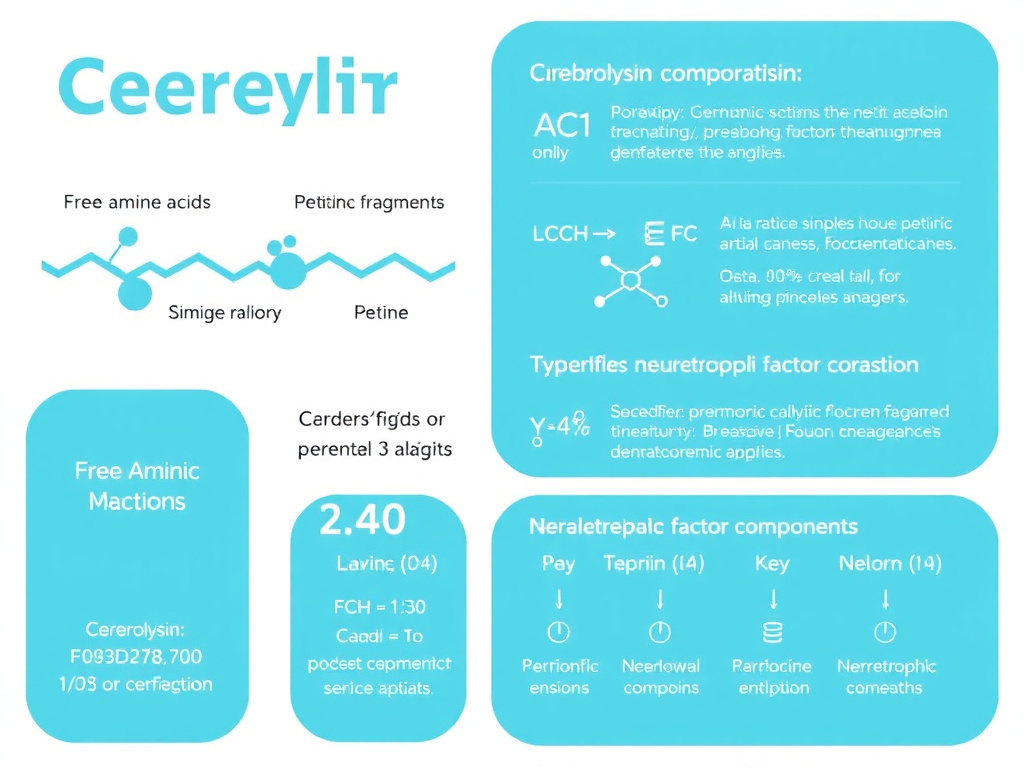
The result is a clear, amber-colored, aqueous solution containing approximately 215.2 mg/mL of a peptide preparation known as Cerebrolysin concentrate. By weight, this breaks down into roughly 75% free L-amino acids and 25% low-molecular-weight peptides, all with molecular weights below 10,000 daltons. This size threshold is important because it allows the peptides to cross the blood-brain barrier, a property that many larger neurotrophic proteins lack.
Proteomic Analysis: What's Actually in the Vial
Early characterizations of Cerebrolysin described it simply as a mixture of amino acids and peptides. But modern proteomic techniques have revealed a far more complex picture. High-resolution mass spectrometry has identified as many as 14,635 distinct peptides within Cerebrolysin, corresponding to fragments of 1,643 different porcine neuronal proteins. This is not a simple peptide supplement. It's a concentrated extract of the brain's own molecular toolkit.
Among the proteins identified are fragments of structural proteins (tubulins, neurofilament proteins), synaptic proteins (synapsins, synaptotagmins), metabolic enzymes, signaling molecules, and - most relevantly - neurotrophic factors. The precise composition varies slightly between production lots, but the manufacturing process is designed to maintain consistent biological activity across batches.
| Component Category | Approximate % | Key Examples | Biological Role |
|---|---|---|---|
| Free L-amino acids | ~75% | Glutamate, GABA precursors, taurine | Neurotransmitter precursors, cellular building blocks |
| Low-MW peptides | ~25% | Neurotrophic factor fragments, structural protein fragments | Signal transduction, neuroprotection |
| Neurotrophic fragments | Trace amounts | BDNF, NGF, GDNF, CNTF, IGF-1, IGF-2 fragments | Neuronal survival, growth, differentiation |
| Synaptic protein fragments | Trace amounts | Synapsins, synaptotagmins | Synaptic plasticity, neurotransmitter release |
Neurotrophic Factor Components
The neurotrophic factor content of Cerebrolysin is what sets it apart from simple amino acid supplements or single-peptide therapies. Researchers have confirmed the presence of biologically active fragments corresponding to several major neurotrophic factors:
Brain-Derived Neurotrophic Factor (BDNF)
BDNF is arguably the most important neurotrophic factor in the adult brain. It supports the survival of existing neurons, promotes the growth and differentiation of new neurons and synapses, and plays a central role in learning, memory, and synaptic plasticity. BDNF levels are reduced in Alzheimer's disease, depression, and after traumatic brain injury. Cerebrolysin contains BDNF-like peptide fragments and, critically, also stimulates endogenous BDNF production in the brain. For context, Semax also works partly through BDNF upregulation, though its mechanism differs from Cerebrolysin's multi-factor approach.
Nerve Growth Factor (NGF)
NGF was the first neurotrophic factor discovered (earning Rita Levi-Montalcini the Nobel Prize in 1986). It's essential for the maintenance and survival of cholinergic neurons in the basal forebrain - the same neurons that degenerate in Alzheimer's disease. Cerebrolysin contains NGF-mimetic peptide fragments that can activate TrkA receptors, supporting cholinergic neuron survival. This mechanism complements the approach taken by Dihexa, which also targets neurotrophic signaling through a different molecular pathway (HGF/c-Met).
Glial Cell Line-Derived Neurotrophic Factor (GDNF)
GDNF is particularly relevant to dopaminergic neurons, making it of interest in Parkinson's disease research. It also supports motor neuron survival and promotes the growth of various peripheral nerve types. GDNF-related peptide fragments in Cerebrolysin may contribute to its effects on motor recovery after stroke and TBI.
Ciliary Neurotrophic Factor (CNTF)
CNTF promotes the survival of motor neurons and oligodendrocytes (the cells that produce myelin in the central nervous system). Its presence in Cerebrolysin may partly explain the compound's observed effects on white matter recovery and remyelination in certain injury models.
Insulin-Like Growth Factors (IGF-1 and IGF-2)
Both IGF-1 and IGF-2 fragments have been identified in Cerebrolysin. These growth factors play roles in neuronal survival, axonal growth, and myelination. IGF-1 signaling is particularly relevant to post-injury brain repair and has been linked to exercise-induced neuroplasticity.
Multi-Factor vs. Single-Factor Approach
A common question is why Cerebrolysin uses a mixture of neurotrophic factors rather than a single purified factor like recombinant BDNF. The answer lies in the biology of brain repair. Neuronal survival and recovery depend on multiple overlapping signaling pathways working together. Clinical trials of single neurotrophic factors (like recombinant NGF for Alzheimer's) have generally produced disappointing results, possibly because isolated factors can't replicate the complex signaling environment that neurons need. Cerebrolysin's multi-factor composition may be closer to what injured brain tissue actually encounters during natural repair processes.
The Amino Acid Profile
While the peptide components often receive the most attention, the free amino acid fraction (approximately 75% by weight) also contributes to Cerebrolysin's biological activity. The amino acid profile is rich in several neurologically relevant amino acids:
- Glutamate and aspartate: Excitatory amino acid precursors that, at physiological concentrations, support normal synaptic transmission. The concentrations in Cerebrolysin are carefully controlled to provide metabolic substrate without contributing to excitotoxicity.
- Glycine: An inhibitory neurotransmitter and co-agonist at the NMDA receptor. Glycine's presence may help modulate excitatory neurotransmission and support inhibitory balance in the injured brain.
- Taurine: While not incorporated into proteins, taurine has well-documented neuroprotective properties, including antioxidant activity, calcium homeostasis regulation, and membrane stabilization.
- Branched-chain amino acids (leucine, isoleucine, valine): These amino acids serve as energy substrates for neurons during metabolic stress and may support protein synthesis during recovery.
- Methionine and cysteine: Sulfur-containing amino acids that contribute to antioxidant defense through glutathione synthesis.
- Tyrosine and tryptophan: Precursors to catecholamine neurotransmitters (dopamine, norepinephrine) and serotonin, respectively, potentially supporting neurotransmitter production during recovery.
The amino acid fraction serves multiple roles: as building blocks for protein synthesis in recovering neurons, as neurotransmitter precursors, as metabolic substrates for energy-depleted brain tissue, and as direct participants in neuroprotective processes. While the amino acids alone would not account for Cerebrolysin's neurotrophic effects, they complement the bioactive peptide fraction by providing the raw materials neurons need to respond to neurotrophic signals.
Blood-Brain Barrier Penetration
A critical feature of Cerebrolysin is that its components can cross the blood-brain barrier (BBB). The BBB is a selective permeability barrier formed by tight junctions between the endothelial cells lining brain capillaries. It protects the brain from circulating toxins and pathogens but also prevents most therapeutic molecules from reaching brain tissue. This has been the Achilles' heel of virtually every neurotrophic factor therapy attempted: recombinant BDNF, NGF, and GDNF all failed to show clinical benefit when given systemically, largely because they couldn't reach the brain in therapeutic concentrations.
Cerebrolysin circumvents this problem through size. The molecular weight cutoff for BBB permeability is approximately 500-600 daltons for most molecules, though peptides can sometimes cross at higher weights through specific transport mechanisms. Cerebrolysin's peptide components are all under 10,000 daltons, and many are in the 500-3,000 dalton range where BBB penetration is feasible. The free amino acids cross the BBB through specific amino acid transporters expressed on the endothelial surface.
Pharmacokinetic studies using radiolabeled Cerebrolysin have confirmed that its components reach the brain parenchyma after systemic administration. Peak brain concentrations are achieved within 30-60 minutes of IV infusion, with detectable levels persisting for several hours. The distribution is not uniform across brain regions, with the hippocampus and cortex showing particularly high uptake, which aligns with these regions' high expression of neurotrophic factor receptors.
An additional consideration is that the BBB becomes more permeable after stroke and TBI, which actually facilitates Cerebrolysin's delivery to the injured areas where it's needed most. This natural BBB disruption creates a therapeutic opportunity: neurotrophic peptides can access the perilesional tissue through the compromised barrier, even if they might not cross an intact BBB as effectively.
Quality Control and Batch Consistency
Because Cerebrolysin is a biological product rather than a synthetic chemical, batch-to-batch consistency is a legitimate concern. EVER Neuro Pharma addresses this through standardized manufacturing protocols, in-process controls, and biological activity testing of each batch. The company uses several assays to verify that each lot maintains consistent neurotrophic activity, including cell survival assays and neurite outgrowth tests using neuronal cell cultures.
The manufacturing process involves several key quality control steps:
- Source material control: Porcine brain tissue is sourced from certified, disease-free animals through a controlled supply chain. The tissue undergoes veterinary inspection and TSE (transmissible spongiform encephalopathy) testing.
- Process standardization: The enzymatic proteolysis conditions (enzyme type, concentration, temperature, duration, pH) are precisely controlled to ensure reproducible peptide profiles.
- Ultrafiltration: Multiple filtration steps remove larger proteins (potential immunogens) and ensure the final product contains only low-molecular-weight components.
- Biological activity assays: Each batch is tested for neurotrophic activity using validated cell-based assays measuring neuronal survival and neurite outgrowth.
- Sterility and purity testing: Standard pharmaceutical quality controls including endotoxin testing, sterility testing, and heavy metal analysis.
- Stability testing: Long-term and accelerated stability studies ensure product integrity throughout its shelf life.
That said, the inherent complexity of the product means that exact peptide profiles will vary somewhat between lots. This is not unlike the situation with other biological medicines (such as heparin or insulin derived from animal sources), though it does present challenges for regulatory agencies accustomed to chemically defined drugs with precise molecular specifications. The European Medicines Agency and other regulatory bodies that have approved Cerebrolysin have accepted the manufacturer's approach to demonstrating batch consistency through biological activity rather than precise chemical composition.
Comparison with Other Brain-Derived Preparations
Cerebrolysin is not the only brain-derived neuropeptide preparation on the market. Cortexin (derived from bovine brain cortex) and Cerebrolysate (a less purified brain extract) are available in some markets, particularly Russia. However, Cerebrolysin is distinguished by several factors:
- Porcine vs. bovine origin: Porcine brain proteins are more similar to human brain proteins than bovine ones, potentially offering better biological compatibility. Additionally, concerns about bovine spongiform encephalopathy (BSE/mad cow disease) make bovine-derived products less desirable from a safety perspective.
- Purification level: Cerebrolysin undergoes more extensive purification than many competing products, resulting in a more defined and reproducible composition.
- Clinical evidence: Cerebrolysin has by far the largest clinical evidence base of any brain-derived neuropeptide preparation, with dozens of randomized controlled trials and multiple meta-analyses.
- International regulatory approvals: Cerebrolysin holds more regulatory approvals than any competing brain extract product.
Pharmacokinetics and Brain Distribution
Understanding how Cerebrolysin is absorbed, distributed, metabolized, and eliminated is essential for rational dosing and for interpreting clinical trial results. As a complex biological mixture, Cerebrolysin's pharmacokinetics are more complicated than those of a single-molecule drug, but key parameters have been characterized through preclinical and clinical studies.
Absorption and Distribution
When administered intravenously, Cerebrolysin's components are immediately available in the systemic circulation. Peak plasma concentrations are achieved within minutes of completing the infusion. For intramuscular injection, absorption is somewhat slower, with peak plasma levels occurring approximately 30-60 minutes after injection, depending on the injection site, volume, and local blood flow.
The distribution of Cerebrolysin's peptide components follows a pattern consistent with their small molecular size. They distribute rapidly into the extracellular fluid, with a distribution volume suggesting penetration into tissue compartments beyond the plasma space. The critical pharmacokinetic question, of course, is how much reaches the brain.
Studies using radiolabeled Cerebrolysin components have demonstrated measurable brain penetration within 30 minutes of systemic administration. The brain-to-plasma ratio varies by region, with higher uptake observed in the hippocampus, cortex, and striatum, areas with dense neurotrophic factor receptor expression. This preferential distribution to brain regions relevant to learning, memory, and motor function aligns with Cerebrolysin's clinical effects.
Several factors influence brain penetration:
- Blood-brain barrier status: In healthy individuals, BBB penetration is moderate. After stroke or TBI, when the BBB is disrupted in the injured area, penetration increases substantially in the perilesional zone, effectively concentrating the drug where it's needed most.
- Dose: Higher IV doses produce higher brain concentrations, supporting the clinical observation that 30-50 mL doses are more effective than 5-10 mL doses for acute conditions.
- Infusion rate: Slower infusions maintain more sustained plasma levels, which may favor BBB transport via saturable carrier mechanisms.
- Age: BBB permeability tends to increase with age (particularly in the presence of cerebrovascular disease), which could mean that elderly patients achieve higher brain concentrations than younger patients receiving the same dose.
Metabolism and Elimination
Cerebrolysin's peptide components are metabolized through normal peptide degradation pathways, primarily by peptidases in the plasma, tissues, and brain. The free amino acid components are incorporated into normal amino acid metabolism pathways. Unlike many drugs that require hepatic cytochrome P450 metabolism, Cerebrolysin's degradation occurs through ubiquitous enzymatic pathways, which is why it has minimal drug-drug interaction potential.
The elimination half-life of Cerebrolysin's peptide components varies by size and type, but generally falls in the range of 30 minutes to several hours for plasma clearance. However, the biological effects persist much longer than the plasma presence would suggest, indicating that Cerebrolysin triggers intracellular signaling cascades and gene expression changes that continue long after the parent peptides have been cleared. This is analogous to how a brief pulse of neurotrophic factor can trigger sustained changes in neuronal gene expression through activation of transcription factors like CREB (cAMP response element-binding protein).
The amino acid components are eliminated through normal amino acid metabolic pathways, including transamination, deamination, and incorporation into new proteins. Excess amino acids are ultimately converted to urea (excreted renally) and carbon dioxide (exhaled). This is why renal function monitoring is recommended in patients with kidney disease, as the amino acid load could theoretically exacerbate renal impairment.
Pharmacokinetic Implications for Clinical Use
Several pharmacokinetic features have practical implications for how Cerebrolysin is used clinically:
- Once-daily dosing is sufficient: While plasma half-life is relatively short, the sustained biological effects (through intracellular signaling) mean that once-daily dosing provides adequate neurotrophic support. Some of the sustained effect may also relate to the drug's influence on gene transcription, which can alter protein expression for hours to days after a single exposure.
- Treatment courses rather than continuous therapy: The observation that benefits persist beyond the treatment period supports the use of defined treatment courses (10-21 days) rather than continuous administration. The brain appears to respond to the neurotrophic "pulse" by upregulating its own repair mechanisms, which then continue operating after the exogenous support is withdrawn.
- Higher doses for acute conditions: The dose-dependent brain penetration supports using higher doses (30-50 mL IV) for acute conditions where maximal brain exposure is desirable, and lower doses (5-10 mL IM) for maintenance or prophylactic applications where sustained, lower-level support is the goal.
- Morning administration preference: Since some patients experience mild stimulatory effects (likely related to the amino acid composition and neurotrophic factor activation), morning administration helps avoid sleep disturbance.
Pharmacodynamic Considerations
The pharmacodynamics of Cerebrolysin, meaning its effects on the body rather than the body's effects on it, involve multiple time scales. Immediate effects (within minutes to hours) include glutamate modulation, free radical scavenging, and calcium homeostasis regulation. Intermediate effects (hours to days) include anti-inflammatory signaling, anti-apoptotic pathway activation, and neurotrophic factor receptor engagement. Long-term effects (days to weeks) include neurogenesis stimulation, synaptogenesis, axonal sprouting, and epigenetic modifications.
This multi-timescale pharmacodynamic profile means that the full benefits of Cerebrolysin treatment may not be apparent immediately. Early improvements (first week) likely reflect the acute neuroprotective effects, while later improvements (weeks 2-12) reflect the neurotrophic and neuroplastic effects that take longer to manifest as measurable clinical improvement.
Pharmacokinetic Drug Interactions
One of Cerebrolysin's practical advantages is its minimal potential for pharmacokinetic drug interactions. Because its peptide components are metabolized by ubiquitous peptidases rather than by specific hepatic enzymes (like cytochrome P450 isoforms), Cerebrolysin doesn't compete for metabolism with the vast majority of pharmaceutical drugs. This is particularly relevant in acute neurological care, where patients often receive multiple concurrent medications including anticoagulants, antiplatelets, antihypertensives, statins, antiepileptics, and analgesics.
The only theoretically relevant pharmacokinetic interaction involves the renal excretion of amino acid metabolites. In patients receiving other renally cleared drugs (particularly at high doses), the additional renal load from Cerebrolysin's amino acid content could theoretically affect the clearance of concurrent medications. In practice, this has not been documented as a clinically significant interaction, but awareness of the theoretical possibility is appropriate in patients with borderline renal function receiving multiple renally cleared medications.
Comparison with Intravenous Amino Acid Preparations
A question sometimes raised is whether Cerebrolysin's effects could be replicated by standard intravenous amino acid preparations (like those used in parenteral nutrition). The answer is no, for several reasons. While the free amino acid fraction provides metabolic support, the neurotrophic effects of Cerebrolysin are attributable to its bioactive peptide components, not to the individual amino acids. Standard amino acid preparations lack these peptide fragments and therefore lack the specific neurotrophic, anti-apoptotic, and neuroplasticity-enhancing effects that distinguish Cerebrolysin from nutritional amino acid supplementation.
This distinction has been demonstrated in preclinical studies where Cerebrolysin's neurotrophic effects were compared with those of amino acid mixtures matching Cerebrolysin's amino acid composition but lacking the peptide fraction. The peptide-containing preparation (Cerebrolysin) showed significantly greater neuroprotective and neurotrophic effects than the amino acid-only preparation, confirming that the peptide components are the primary active moiety.
Mechanism of Action
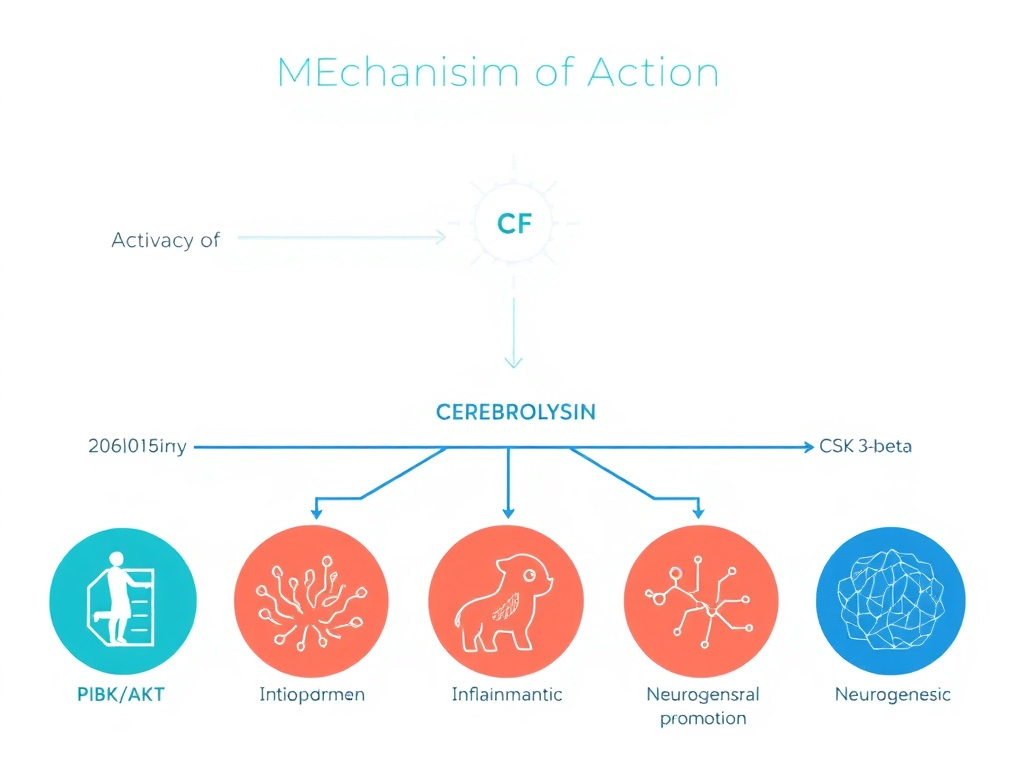
Cerebrolysin's therapeutic effects arise from its ability to simultaneously engage multiple neuroprotective and neurotrophic signaling pathways. Rather than acting through a single receptor or enzyme, it operates across a broad network of intracellular cascades, effectively mimicking what the brain does during its own natural repair processes.
Primary Signaling Pathways
PI3K/Akt Survival Pathway
The phosphoinositide 3-kinase (PI3K)/Akt pathway is one of the brain's most important pro-survival signaling cascades. When activated, Akt phosphorylates a range of downstream targets that collectively prevent apoptosis (programmed cell death), promote cellular growth, and support neuronal metabolism. Cerebrolysin is a potent activator of this pathway.
In experimental stroke models, Cerebrolysin treatment has been shown to increase Akt phosphorylation within hours of administration, leading to reduced infarct volume and decreased neuronal death in the penumbral zone (the area surrounding the core of a stroke that is at risk but potentially salvageable). This is particularly relevant in the acute phase of ischemic stroke, when neurons in the penumbra are dying through apoptotic pathways that can be interrupted by timely pro-survival signaling.
The PI3K/Akt pathway also intersects with neuroplasticity. Akt activation promotes the expression of synaptic proteins, supports long-term potentiation (the cellular basis of learning and memory), and facilitates axonal sprouting - the growth of new neuronal connections that can compensate for lost pathways after brain injury.
GSK-3beta Inhibition
Glycogen synthase kinase-3 beta (GSK-3beta) sits downstream of the PI3K/Akt pathway and plays a dual role in neurodegeneration. When GSK-3beta is overactive, it does two problematic things: it suppresses endogenous BDNF production, and it promotes hyperphosphorylation of tau protein, which leads to the neurofibrillary tangles that are a hallmark of Alzheimer's disease pathology.
Cerebrolysin inhibits GSK-3beta through Akt-mediated phosphorylation. This has downstream consequences that are relevant to both acute brain injury and chronic neurodegeneration. In the acute setting, GSK-3beta inhibition helps maintain BDNF levels during the critical post-injury recovery window. In the chronic setting, reduced GSK-3beta activity may slow the accumulation of pathological tau, though this remains more theoretical than clinically proven in humans.
The relationship between GSK-3beta, tau phosphorylation, and amyloid-beta is complex. GSK-3beta also influences amyloid precursor protein (APP) processing and may contribute to amyloid-beta production. By inhibiting GSK-3beta, Cerebrolysin potentially addresses both major pathological hallmarks of Alzheimer's disease, though the clinical significance of this dual action in established Alzheimer's remains a subject of active research.
Sonic Hedgehog (Shh) Pathway
The Sonic Hedgehog signaling pathway, while best known for its role in embryonic development, also plays a role in adult brain repair. Shh signaling promotes neurogenesis (the birth of new neurons) in the adult hippocampus and subventricular zone, supports oligodendrocyte precursor proliferation (relevant to remyelination), and has anti-inflammatory properties.
Cerebrolysin has been shown to activate the Shh pathway in experimental models of brain injury, potentially contributing to its observed effects on neurogenesis and white matter repair. This pathway activation also promotes the differentiation of neural progenitor cells toward a neuronal fate rather than a glial fate, a finding that has implications for functional recovery after stroke and TBI.
Anti-Inflammatory Actions
Neuroinflammation is a double-edged sword after brain injury. In the acute phase, inflammatory responses help clear cellular debris and initiate repair processes. But prolonged or excessive inflammation causes secondary damage that can extend well beyond the initial injury site. Cerebrolysin modulates neuroinflammation through several mechanisms:
- TLR/NF-kB pathway suppression: Cerebrolysin downregulates the Toll-like receptor/nuclear factor kappa-B signaling cascade, reducing the production of pro-inflammatory cytokines such as TNF-alpha, IL-1beta, and IL-6.
- Microglial polarization: In animal models, Cerebrolysin has been shown to shift microglial activation from the pro-inflammatory M1 phenotype toward the anti-inflammatory, reparative M2 phenotype. This shift promotes debris clearance while reducing ongoing inflammatory damage.
- Blood-brain barrier stabilization: Cerebrolysin helps maintain blood-brain barrier integrity after injury, reducing the infiltration of peripheral immune cells into the brain parenchyma and limiting vasogenic edema.
These anti-inflammatory properties complement the neurotrophic effects and may partly explain why Cerebrolysin shows benefits even when administered several hours after the onset of stroke or injury. For those interested in peptides with anti-inflammatory properties, BPC-157 offers another perspective on peptide-mediated tissue repair, though it acts primarily in peripheral tissues rather than the central nervous system.
Excitotoxicity Protection
Glutamate excitotoxicity is a major driver of neuronal death after stroke and TBI. When blood flow is interrupted (stroke) or brain tissue is mechanically damaged (TBI), dying neurons release massive amounts of glutamate. This overstimulates NMDA and AMPA receptors on neighboring neurons, causing calcium overload and triggering cell death cascades that spread the injury beyond the initial damage zone.
Cerebrolysin reduces excitotoxic damage through several mechanisms. It modulates NMDA receptor activity (without completely blocking it, which would impair normal synaptic function), supports calcium homeostasis in neurons under stress, and upregulates glutamate transporters that clear excess glutamate from the synaptic cleft. These effects are particularly relevant in the first 24-72 hours after acute brain injury.
Oxidative Stress Reduction
Ischemia-reperfusion injury (when blood flow returns to previously ischemic tissue) generates a burst of reactive oxygen species (ROS) that can damage neuronal membranes, proteins, and DNA. Cerebrolysin has antioxidant properties that help mitigate this damage. It increases the expression of endogenous antioxidant enzymes (superoxide dismutase, catalase) and directly scavenges some free radical species through its amino acid content (particularly cysteine and methionine residues).
VEGF and Angiogenesis
Beyond direct neuronal effects, Cerebrolysin also influences the vascular component of brain recovery. Research has shown that Cerebrolysin upregulates vascular endothelial growth factor (VEGF) expression in injured brain tissue. VEGF promotes the growth of new blood vessels (angiogenesis) in the perilesional area, improving blood supply to recovering tissue. This is particularly relevant after stroke, where the restoration of blood flow to the penumbral zone is critical for tissue salvage.
The vascular effects of Cerebrolysin may also contribute to its observed reduction in hemorrhagic transformation after stroke. By supporting vascular integrity and promoting orderly angiogenesis (rather than the disorganized vascular sprouting that can lead to leaky blood vessels), Cerebrolysin may help maintain the structural integrity of blood vessels in the recovering brain.
Epigenetic Modulation
An emerging area of Cerebrolysin research involves its effects on epigenetic regulation. Epigenetic modifications (changes in gene expression that don't alter the DNA sequence itself) play an important role in both brain development and the response to injury. Histone acetylation, DNA methylation, and microRNA expression all influence which genes are active in neurons at any given time.
The 2024 CADASIL mouse study found that Cerebrolysin treatment reduced epigenetic aging markers, suggesting that it may influence the epigenetic clock, the set of methylation patterns that correlate with biological aging. Other studies have shown that Cerebrolysin modulates histone deacetylase (HDAC) activity and alters the expression of specific microRNAs involved in neuroprotection and neuroplasticity.
These epigenetic effects could explain some of Cerebrolysin's longer-term benefits. If the drug can shift gene expression patterns toward a more neuroprotective and neuroplastic profile, these changes could persist even after the drug itself has been cleared from the system. This is consistent with the clinical observation that benefits from Cerebrolysin treatment courses often extend well beyond the treatment period.
Cholinergic System Support
The cholinergic system, which uses acetylcholine as its neurotransmitter, is particularly vulnerable in Alzheimer's disease and also affected by stroke and TBI. Cholinergic neurons in the basal forebrain project to the hippocampus and cortex, where they play essential roles in attention, learning, and memory. The loss of these neurons is a central feature of Alzheimer's pathology and contributes to the cognitive deficits seen in other neurological conditions.
Cerebrolysin provides cholinergic support through multiple mechanisms. Its NGF-mimetic peptide fragments activate TrkA receptors on cholinergic neurons, promoting their survival and maintaining their function. Cerebrolysin also enhances the activity of choline acetyltransferase (ChAT), the enzyme responsible for synthesizing acetylcholine, and may increase the expression of vesicular acetylcholine transporters. These effects provide a mechanistic basis for the combined benefit observed when Cerebrolysin is combined with cholinesterase inhibitors in Alzheimer's disease treatment.
GABAergic and Glutamatergic Balance
The balance between excitatory (glutamatergic) and inhibitory (GABAergic) neurotransmission is disrupted after brain injury, with excessive glutamate release causing excitotoxicity while GABAergic inhibition may be impaired. Cerebrolysin helps restore this balance through several mechanisms. It modulates NMDA receptor sensitivity (reducing excitotoxic vulnerability without blocking normal transmission), supports GABA receptor function, and promotes the survival of GABAergic interneurons that are particularly vulnerable to ischemic and traumatic injury.
The restoration of excitatory-inhibitory balance is particularly relevant for the late-stage recovery after brain injury. While the acute phase is dominated by excitotoxicity (requiring glutamate reduction), the later recovery phase requires functional glutamatergic signaling for neuroplasticity and learning. Cerebrolysin's balanced approach, reducing pathological glutamate excess while preserving physiological signaling, may make it more suitable for extended treatment courses than drugs that simply block glutamate receptors.
Neurogenesis and Synaptogenesis
Perhaps the most intriguing aspect of Cerebrolysin's mechanism of action is its ability to promote the birth of new neurons (neurogenesis) and the formation of new synaptic connections (synaptogenesis) in the adult brain. For many years, it was thought that the adult brain could not produce new neurons. We now know that neurogenesis continues throughout life in at least two brain regions: the subgranular zone of the hippocampal dentate gyrus and the subventricular zone lining the lateral ventricles. These neurogenic niches produce neural progenitor cells that can differentiate into new neurons, and this process can be upregulated or downregulated by various factors including exercise, stress, and, as it turns out, neurotrophic peptides.
In animal models of both stroke and Alzheimer's disease, Cerebrolysin treatment has been associated with:
- Increased proliferation of neural progenitor cells in the hippocampal dentate gyrus and subventricular zone
- Enhanced differentiation of progenitor cells into mature neurons (rather than glia)
- Increased expression of synaptic markers such as synaptophysin and PSD-95
- Enhanced dendritic branching and spine density in surviving neurons
- Upregulation of synaptic plasticity genes involved in long-term potentiation
These neurogenesis and synaptogenesis effects provide a potential mechanism for the longer-term cognitive improvements observed in clinical trials, particularly those showing sustained benefits even after the treatment course has ended. The process is somewhat analogous to what P21 aims to achieve through its CNTF-mimetic approach to enhancing neurogenesis, though the pathways involved differ in their specifics.
Clinical Relevance of the Multi-Target Mechanism
The multi-pathway mechanism of Cerebrolysin has important clinical implications. Single-target neuroprotective drugs have repeatedly failed in stroke trials (over 1,000 compounds tested, virtually all unsuccessful). The prevailing theory for these failures is that blocking one pathway isn't enough when brain injury engages dozens of destructive cascades simultaneously. Cerebrolysin's multi-target approach may sidestep this problem by addressing neuroprotection, anti-inflammation, anti-excitotoxicity, and neuroregeneration in parallel. This doesn't guarantee clinical efficacy, but it offers a theoretical advantage over single-mechanism approaches.
Preclinical Evidence Foundation
The clinical trials of Cerebrolysin are supported by an extensive body of preclinical research in cell culture systems and animal models. Understanding this foundation helps explain why certain clinical applications have been pursued and provides context for interpreting clinical trial results.
In Vitro Studies: Cell Culture Evidence
Cell culture studies have been instrumental in characterizing Cerebrolysin's mechanisms at the cellular level. Key findings from in vitro research include:
Neuroprotection Against Multiple Insults
Cerebrolysin has demonstrated neuroprotective effects in cultured neurons exposed to a wide range of damaging stimuli. In oxygen-glucose deprivation models (which simulate ischemia), Cerebrolysin reduces neuronal death by 40-60% at clinically relevant concentrations. Protection has also been demonstrated against glutamate excitotoxicity, oxidative stress (hydrogen peroxide exposure), beta-amyloid toxicity, and staurosporine-induced apoptosis. The consistency of neuroprotection across multiple insult types supports the multi-mechanism hypothesis and suggests that Cerebrolysin engages fundamental survival pathways rather than blocking specific toxins.
Anti-Apoptotic Effects
Detailed mechanistic studies in cultured embryonic chick cortical neurons showed that Cerebrolysin prevents apoptotic cell death through several pathways. It upregulates the anti-apoptotic protein Bcl-2 while downregulating the pro-apoptotic protein Bax, shifting the Bcl-2/Bax ratio toward cell survival. It also inhibits caspase-3 activation, the final executioner enzyme in the apoptotic cascade, and preserves mitochondrial membrane potential, which is critical for preventing the release of cytochrome c and other pro-apoptotic factors from mitochondria.
Neurite Outgrowth and Synapse Formation
In neuronal cell cultures, Cerebrolysin promotes neurite outgrowth (the extension of axons and dendrites from neuronal cell bodies) and increases the formation of synaptic contacts between cultured neurons. These effects are dose-dependent and are mediated through the same signaling pathways (PI3K/Akt, MAPK/ERK) that endogenous neurotrophic factors use. The magnitude of neurite outgrowth stimulation is comparable to that produced by recombinant BDNF or NGF, confirming that Cerebrolysin's peptide fragments retain biologically meaningful neurotrophic activity.
Neural Stem Cell Effects
Studies in neural stem cell and progenitor cell cultures have shown that Cerebrolysin promotes the proliferation of neural progenitor cells and, critically, directs their differentiation toward a neuronal rather than glial fate. This is significant because after brain injury, the default differentiation pathway for neural progenitors tends to favor glia (astrocytes) over neurons. By shifting this balance toward neurons, Cerebrolysin could potentially increase the number of new functional neurons generated in response to injury.
Animal Model Evidence
Stroke Models
Cerebrolysin has been extensively studied in rodent models of ischemic stroke, including both permanent and transient middle cerebral artery occlusion (MCAO) models. Consistent findings across multiple laboratories include:
- Reduced infarct volume: Cerebrolysin treatment reduces the size of the ischemic infarct by 20-40% in most studies, depending on dose, timing, and model parameters.
- Decreased brain edema: Treatment reduces vasogenic edema (swelling caused by BBB breakdown) in the perilesional zone.
- Improved sensorimotor function: Behavioral testing shows faster recovery of motor coordination, balance, and sensory function in Cerebrolysin-treated animals.
- Enhanced neurogenesis: Post-stroke neurogenesis in the subventricular zone and hippocampus is increased, with newly born neurons showing evidence of migration toward the injured area.
- Increased angiogenesis: New blood vessel formation in the perilesional zone is enhanced, improving blood supply to recovering tissue.
Time-course studies in animal stroke models have shown that Cerebrolysin is effective when administered up to 24 hours after stroke onset, with greater benefit from earlier administration. This therapeutic window is consistent with the timing used in most clinical trials.
Traumatic Brain Injury Models
In controlled cortical impact (CCI) and fluid percussion injury (FPI) models of TBI, Cerebrolysin has shown neuroprotective effects including reduced contusion volume, decreased perilesional cell death, improved BBB integrity, reduced neuroinflammation (measured by microglial activation markers), and improved cognitive and motor outcomes on behavioral tests such as the Morris water maze and rotarod.
A particularly important finding from animal TBI studies is the effect on diffuse axonal injury (DAI). DAI, the shearing of axons due to rotational forces during impact, is one of the most common pathologies in human TBI but is difficult to treat because the damage is spread throughout the brain rather than concentrated in one area. Cerebrolysin's systemic delivery and broad brain distribution make it potentially well-suited for addressing diffuse pathology, and animal studies have shown that it promotes axonal repair and reduces axonal degeneration markers after experimental DAI.
Alzheimer's Disease Models
Cerebrolysin has been studied in several transgenic mouse models of Alzheimer's disease, including APP transgenic mice and APP/tau double transgenic models. Findings from these studies include:
- Reduced amyloid pathology: Some studies have shown decreased amyloid-beta deposition in treated animals, potentially through enhanced amyloid clearance mechanisms rather than reduced production.
- Reduced tau phosphorylation: Consistent with the GSK-3beta inhibition mechanism, treated animals show reduced levels of phosphorylated tau, the precursor to neurofibrillary tangles.
- Preserved synaptic density: Treated animals maintain higher levels of synaptic markers (synaptophysin, PSD-95) in the hippocampus and cortex compared to untreated controls.
- Improved cognitive function: Behavioral tests of spatial memory (Morris water maze) and novel object recognition show improved performance in Cerebrolysin-treated animals.
- Enhanced neurogenesis: Hippocampal neurogenesis is increased, with new neurons showing mature neuronal markers and evidence of functional integration.
Aging Models
Studies in aged mice and rats (the equivalent of elderly humans) have shown that Cerebrolysin can improve age-related cognitive decline, increase hippocampal neurogenesis (which normally declines dramatically with aging), and restore some measures of synaptic plasticity. The CADASIL mouse study mentioned earlier extends these findings by showing effects on epigenetic aging markers and lifespan, raising the intriguing possibility that neurotrophic factor support could slow biological aging in the brain.
Translational Considerations
Preclinical evidence is valuable for understanding mechanisms but has well-known limitations when translating to clinical practice. Animal models of stroke, TBI, and AD are imperfect representations of human disease. The species differences in brain anatomy, physiology, and pharmacology mean that effects observed in rodents don't always translate to humans. Additionally, preclinical studies tend to use young, healthy animals with standardized injuries, while clinical patients are older, have comorbidities, and experience heterogeneous injuries.
That said, the consistency of Cerebrolysin's preclinical effects across multiple species (mice, rats, rabbits), multiple laboratories, multiple injury models, and multiple outcome measures provides a strong foundation for clinical investigation. The concordance between preclinical mechanisms and clinical observations (for example, the greater benefit with earlier treatment seen in both animal models and clinical trials) adds confidence that the preclinical findings are at least partially translatable.
Stroke Recovery Trials
Acute ischemic stroke is the clinical area where Cerebrolysin has accumulated its strongest evidence base. Multiple randomized controlled trials and several meta-analyses have evaluated its effects on neurological recovery, functional outcomes, and safety in post-stroke patients.
The Evolution of Clinical Evidence
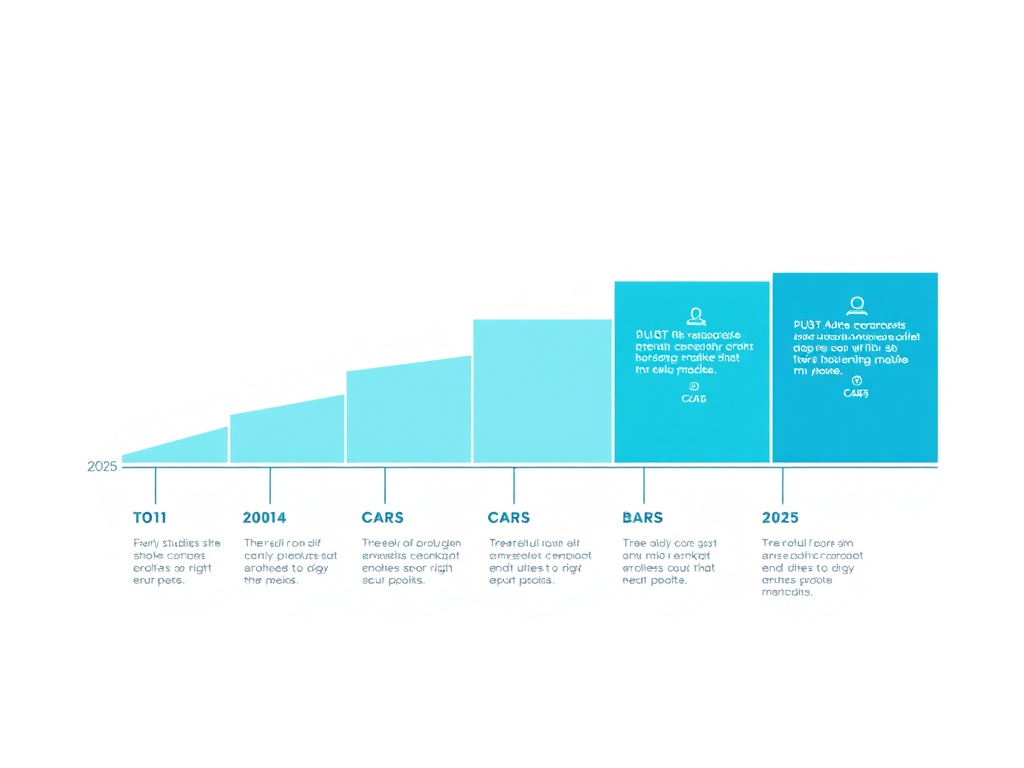
Cerebrolysin's journey through stroke clinical trials spans over two decades. Early small-scale studies in the 1990s and 2000s provided preliminary signals of benefit, leading to progressively larger and better-designed trials. The evidence has been synthesized through several meta-analyses, each incorporating additional trials and providing increasingly precise estimates of effect size.
CASTA Trial (2012)
The Cerebrolysin Acute Stroke Treatment in Asia (CASTA) trial was one of the largest early RCTs, enrolling 1,070 patients with acute ischemic stroke across multiple centers in Asia. Patients received either 30 mL Cerebrolysin or placebo intravenously daily for 10 days, starting within 12 hours of stroke onset. The primary endpoint (NIHSS change at day 90) showed a numerical advantage for Cerebrolysin, though the difference did not reach statistical significance in the intention-to-treat analysis. However, post-hoc analyses of more severely affected subgroups (baseline NIHSS greater than 12) did show significant improvements, suggesting that Cerebrolysin may be most beneficial in moderate-to-severe strokes.
CARS Trials (2016-2020)
The Cerebrolysin and Recovery after Stroke (CARS) series of trials further refined the clinical picture. CARS-1 and CARS-2 examined Cerebrolysin combined with early rehabilitation, finding that the combination of Cerebrolysin plus structured rehabilitation produced better motor recovery than rehabilitation alone. These trials were important because they positioned Cerebrolysin not as a standalone treatment but as an adjunct that enhances the brain's response to rehabilitation training.
ESCAS Trial (2025)
The ESCAS randomized pilot study published in Stroke (the journal of the American Heart Association) examined speech therapy combined with Cerebrolysin for nonfluent aphasia recovery after acute ischemic stroke. This trial represented a new direction in Cerebrolysin research, focusing on language recovery rather than just motor or global outcomes. Results suggested enhanced aphasia recovery when Cerebrolysin was combined with targeted speech therapy, supporting the concept that Cerebrolysin enhances activity-dependent neuroplasticity.
Meta-Analysis Evidence
2025 Systematic Review and Meta-Analysis (14 RCTs, 2,884 patients)
The most comprehensive meta-analysis to date, published in 2025, pooled data from fourteen randomized controlled trials involving 2,884 patients with acute ischemic stroke. The key findings were compelling:
- Neurological recovery: Cerebrolysin-treated patients showed significantly greater improvement in NIHSS scores compared to controls, with a mean difference of 1.39 points (95% CI: 0.53-2.25; p = 0.020). This translates to measurably better neurological outcomes.
- Hemorrhagic transformation: Cerebrolysin-treated patients had a significantly lower risk of hemorrhagic transformation (RR = 0.55; 95% CI: 0.32-0.92), an unexpected safety benefit suggesting possible vascular protective effects.
- Functional independence: Trends toward improved functional independence (modified Rankin Scale) were observed, though not all individual trials reached statistical significance on this endpoint.
NIHSS Score Improvement: Cerebrolysin vs. Control
Figure 4: Mean NIHSS score change at 90 days post-stroke. Greater negative values indicate more neurological improvement. Data compiled from meta-analysis of randomized controlled trials.
Safety Meta-Analysis (12 RCTs, 2,202 patients)
A dedicated safety meta-analysis pooling 2,202 patients from twelve RCTs found no statistically significant differences in adverse event rates between Cerebrolysin and placebo groups across all main and subgroup analyses. The highest dose studied (50 mL) actually showed the lowest rate of serious adverse events compared to placebo (RR = 0.6), with a tendency of superiority regarding serious adverse events in high-dose treatment courses for moderate-to-severe ischemic stroke.
Mechanical Thrombectomy Combination
A 2025 prospective study examined an emerging approach: combining Cerebrolysin with mechanical thrombectomy for large vessel occlusion strokes. Fifty patients received 30 mL Cerebrolysin intravenously within 8 hours of stroke onset, continuing daily through day 21, while 50 historical controls received thrombectomy alone. Three-month follow-up data showed promising results for the combination approach, suggesting that Cerebrolysin may enhance recovery even when the gold standard intervention (clot removal) has already been performed.
This makes biological sense. Thrombectomy restores blood flow, but the brain tissue that has been ischemic still needs neurotrophic support to recover. Cerebrolysin may provide that support by reducing reperfusion injury, promoting neuroplasticity, and supporting the survival of neurons in the penumbral zone that survived the initial ischemic insult.
Intracerebral Hemorrhage: A New Frontier
Most Cerebrolysin stroke research has focused on ischemic stroke, but a 2025 pilot trial (CLINCH) evaluated Cerebrolysin in primary intracerebral hemorrhage (ICH). This prospective, randomized, open-label, blinded endpoint trial found that Cerebrolysin was safe and feasible in ICH patients, opening the door for larger efficacy trials. ICH is a devastating condition with limited treatment options, so any potential neuroprotective therapy warrants further investigation.
Enhancing Rehabilitation: The Activity-Dependent Plasticity Connection
One of the most promising developments in Cerebrolysin stroke research is the concept that it enhances activity-dependent neuroplasticity, essentially making rehabilitation training more effective. This idea is supported by both preclinical data and clinical trial results.
The biological basis is straightforward. After stroke, the brain undergoes a period of enhanced plasticity during which surviving neural circuits can reorganize to compensate for lost functions. This reorganization is driven by experience and training (activity-dependent plasticity), which is why rehabilitation is the cornerstone of stroke recovery. However, the extent of this plasticity is limited by the available neurotrophic support. BDNF, in particular, is known to be essential for activity-dependent synaptic strengthening, and BDNF levels in the perilesional cortex determine how effectively rehabilitation-induced plasticity can occur.
Cerebrolysin, by boosting BDNF and other neurotrophic factor levels, may expand the window and extent of activity-dependent plasticity. This means that the same amount of rehabilitation training could produce greater functional gains when combined with Cerebrolysin than when done alone. The CARS trials directly tested this hypothesis and found supporting evidence: patients who received Cerebrolysin plus early rehabilitation showed better motor recovery than those who received rehabilitation alone.
This has practical implications for stroke rehabilitation programs. If confirmed in larger trials, it could lead to Cerebrolysin being used not as a standalone neuroprotective agent but as a "plasticity enhancer" that is deliberately paired with intensive rehabilitation. The timing of Cerebrolysin administration relative to rehabilitation sessions could also be optimized, with some researchers suggesting that infusion should occur shortly before rehabilitation to maximize the neuroplastic response to training.
Subgroup Analysis: Who Benefits Most?
Not all stroke patients appear to benefit equally from Cerebrolysin. Several factors have been identified that predict better or worse treatment response:
- Stroke severity: Post-hoc analyses consistently show that patients with moderate-to-severe strokes (baseline NIHSS greater than 12) derive more benefit from Cerebrolysin than those with mild strokes. This makes intuitive sense: patients with mild strokes often recover well on their own, while those with more severe strokes have more neurological deficit to recover and more penumbral tissue that could potentially be salvaged.
- Time to treatment: Earlier administration (within 12 hours) appears to produce better outcomes than later initiation (24-72 hours), consistent with the time-dependent nature of secondary injury cascades.
- Stroke location: Some data suggest that anterior circulation strokes (affecting the territory of the middle cerebral artery) may respond better than posterior circulation strokes, though this has not been systematically evaluated.
- Age: While Cerebrolysin has been studied across a wide age range, there is limited evidence that younger patients may show greater treatment response, potentially due to greater baseline neuroplasticity.
- Concomitant rehabilitation: The combination of Cerebrolysin with structured rehabilitation produces consistently better results than either intervention alone.
Optimal Timing and Dosing for Stroke
A consistent theme across the stroke trials is that earlier administration tends to produce better outcomes. Most trials initiated Cerebrolysin within 12-24 hours of stroke onset, with some protocols starting within 6-8 hours. The standard dosing for stroke has evolved toward 30-50 mL per day via intravenous infusion, administered over 15-60 minutes, for 10-21 consecutive days.
The question of optimal treatment duration remains somewhat unresolved. The original CASTA trial used a 10-day course, while the CARS trials extended to 21 days. Some neurologists in countries where Cerebrolysin is approved advocate for even longer courses (up to 30 days) in severe strokes, though this practice is not supported by randomized trial data. The balance between extended neurotrophic support and practical considerations (cost, IV access, patient convenience) influences treatment duration decisions in clinical practice.
Dose-response data suggest that higher doses (50 mL vs. 30 mL vs. 10 mL) tend to produce greater benefit, particularly in more severe strokes. The safety meta-analysis finding that 50 mL doses had the lowest serious adverse event rate provides reassurance that higher dosing is safe. However, direct head-to-head dose comparison trials are limited, and most of the efficacy data comes from the 30 mL dose, which has become the de facto standard in most treatment protocols.
| Trial/Analysis | Patients (n) | Dose | Duration | Primary Outcome | Result |
|---|---|---|---|---|---|
| CASTA (2012) | 1,070 | 30 mL IV daily | 10 days | NIHSS at day 90 | Trend toward benefit; significant in severe subgroup |
| CARS-1/2 | ~200 | 30 mL IV daily | 21 days | Motor recovery | Significant improvement with rehabilitation |
| ESCAS (2025) | Pilot | 30 mL IV daily | 21 days | Aphasia recovery | Enhanced language recovery with speech therapy |
| Thrombectomy add-on (2025) | 50 + 50 controls | 30 mL IV daily | 21 days | 3-month outcomes | Promising combination results |
| 2025 Meta-analysis | 2,884 | Various (10-50 mL) | 10-21 days | NIHSS change | MD: +1.39, p = 0.020 |
Clinical Significance of NIHSS Improvement
A mean NIHSS improvement of 1.39 points may sound modest, but in stroke neurology, this represents clinically meaningful recovery. Each NIHSS point corresponds to measurable neurological function, such as the ability to follow a command, move a limb against gravity, or articulate speech. In context, many approved stroke therapies show similar effect sizes. The reduction in hemorrhagic transformation (RR = 0.55) adds a notable safety advantage, as hemorrhagic conversion is one of the most feared complications of acute stroke management.
Traumatic Brain Injury
Traumatic brain injury (TBI) represents Cerebrolysin's second major clinical application, with a growing evidence base supporting its use across mild to severe injury classifications. The pathophysiology of TBI shares many features with ischemic stroke - excitotoxicity, oxidative stress, inflammation, blood-brain barrier disruption - making neurotrophic peptide therapy a logical therapeutic approach.
Understanding TBI and the Treatment Gap
TBI affects an estimated 69 million people worldwide each year, and despite decades of research, there are no FDA-approved neuroprotective drugs for TBI. Every candidate that showed promise in preclinical studies has failed in Phase III clinical trials. This dismal track record has led researchers to reconsider their approach, and multi-target agents like Cerebrolysin have attracted renewed interest precisely because they don't rely on blocking a single pathway.
TBI unfolds in two phases. The primary injury is the mechanical damage at the moment of impact - torn axons, contused brain tissue, ruptured blood vessels. This damage is essentially irreversible at the moment it occurs. The secondary injury cascade, however, develops over hours to weeks after impact and includes excitotoxicity, mitochondrial dysfunction, neuroinflammation, oxidative stress, and apoptosis. It's this secondary cascade that represents the therapeutic window for Cerebrolysin.
Systematic Review and Meta-Analysis Evidence
2023 Meta-Analysis (10 Studies, 8,749 Patients)
A comprehensive 2023 systematic review and meta-analysis published in Brain Sciences pooled data from ten clinical studies including 8,749 patients with TBI. The analysis found that Cerebrolysin treatment was associated with statistically significant improvements in both the Glasgow Coma Scale (GCS) and Glasgow Outcome Scale (GOS) scores. Several key findings emerged:
- GCS improvement: Patients receiving Cerebrolysin showed more rapid improvement in consciousness levels, with particularly strong effects in moderate-to-severe TBI (GCS 3-12 at admission).
- Functional outcomes: GOS scores at discharge and follow-up were significantly better in Cerebrolysin-treated groups, indicating improved overall functional recovery.
- Hospital stay: Several studies reported shorter average hospital stays in Cerebrolysin-treated patients, suggesting faster stabilization and recovery.
- Mortality: While individual studies showed trends toward reduced mortality, the meta-analysis was not adequately powered to draw definitive conclusions about survival benefit.
Multicenter Retrospective Cohort (2022)
A large multicenter retrospective cohort study examined the effects of Cerebrolysin in severe TBI patients. Results showed that all Cerebrolysin-treated patients with cerebral contusion and diffuse axonal injury demonstrated favorable GCS scores by Day 21 of treatment. The study also found improvements in motor skills, cognitive abilities, and overall functional outcomes, consistent with the meta-analysis findings.
Cerebrolysin Plus rTMS: A Combination Approach
A three-arm randomized trial published in Frontiers in Neuroscience (2023) compared Cerebrolysin alone, repetitive transcranial magnetic stimulation (rTMS) alone, and the combination of both in TBI patients. The combination group showed the greatest improvements in cognitive function and overall recovery, suggesting that Cerebrolysin may enhance the brain's responsiveness to neuromodulation techniques. This parallels the stroke findings where Cerebrolysin enhanced the effects of rehabilitation training.
The Timing Question
Animal studies have consistently shown that earlier Cerebrolysin administration after TBI produces better outcomes. In experimental models, treatment initiated within 1-2 hours of injury showed the greatest reductions in brain edema, blood-brain barrier leakage, and sensorimotor deficits. Clinical studies have generally started treatment within 6-24 hours of injury, with some protocols extending to 72 hours.
The mechanism behind this timing sensitivity is straightforward: secondary injury cascades begin immediately after the primary insult and accelerate over the first 24-72 hours. Cerebrolysin's neuroprotective effects - anti-excitotoxic, anti-inflammatory, anti-apoptotic - are most valuable during this window when neurons in the perilesional zone are actively dying through potentially reversible mechanisms.
Pediatric TBI
Cerebrolysin has also been studied in pediatric TBI, though the evidence base is smaller. Several clinical reports from Eastern European and Asian centers have described favorable outcomes in children with moderate-to-severe TBI treated with weight-adjusted doses of Cerebrolysin. The developing brain's greater neuroplasticity may make it particularly responsive to neurotrophic support, though larger controlled trials are needed to confirm this hypothesis.
Mild TBI and Concussion
While most Cerebrolysin TBI research has focused on moderate-to-severe injury, there is growing interest in its potential for mild TBI (concussion). Concussion is far more common than severe TBI, affecting millions of people annually through sports injuries, falls, and motor vehicle accidents. Most concussions resolve spontaneously within days to weeks, but a significant minority of patients develop post-concussion syndrome (PCS), with persistent headaches, cognitive difficulties, mood changes, and fatigue lasting months or even years.
The pathophysiology of PCS involves ongoing neuroinflammation, subtle synaptic dysfunction, and possibly subclinical axonal injury that isn't visible on standard imaging. These processes are precisely the types of pathology that Cerebrolysin's multi-target mechanism is designed to address. A double-blind, placebo-controlled study by Chen and colleagues examined Cerebrolysin in patients with mild TBI and found significant improvements in cognitive recovery compared to placebo. The treated group showed faster normalization of neuropsychological test scores and fewer persistent symptoms at follow-up.
However, the mild TBI literature for Cerebrolysin is much thinner than for moderate-severe TBI. The practical barrier is also significant: most mild TBI patients wouldn't typically receive IV infusion therapy, and the self-resolving nature of most concussions makes it difficult to demonstrate benefit against a backdrop of natural recovery. Some clinicians in countries where Cerebrolysin is available use IM injections (5 mL doses) for mild TBI, particularly in patients with risk factors for prolonged recovery, but this practice is based on clinical experience rather than randomized trial data.
Chronic TBI and Post-Traumatic Encephalopathy
An area of increasing clinical and public interest is the long-term consequences of TBI, including chronic traumatic encephalopathy (CTE) associated with repeated head impacts in athletes, and the chronic cognitive and behavioral changes that can follow even a single moderate-severe TBI. These chronic conditions involve ongoing neurodegeneration, persistent neuroinflammation, and progressive synaptic loss, processes that overlap with those targeted by Cerebrolysin.
Limited clinical data exists for Cerebrolysin in chronic TBI, but the mechanistic rationale is strong. Cerebrolysin's ability to promote neurogenesis, support synaptic maintenance, reduce neuroinflammation, and inhibit tau phosphorylation (through GSK-3beta inhibition) addresses several of the pathological processes thought to drive chronic post-traumatic neurodegeneration. Some clinicians have reported using periodic Cerebrolysin treatment courses (similar to the cyclical protocols used for Alzheimer's disease) in patients with chronic post-TBI cognitive decline, though this application remains speculative.
Neuromonitoring-Guided Treatment
A 2024 interventional pilot study published in the journal Brain Sciences explored an innovative approach: using neuromonitoring data to guide Cerebrolysin administration in TBI patients. Rather than following a fixed dosing schedule, the researchers adjusted treatment based on real-time monitoring of intracranial pressure, cerebral oxygenation, and metabolic parameters. This individualized approach showed promising results, with neuromonitoring-guided Cerebrolysin administration associated with better outcomes than either standard Cerebrolysin dosing or standard care alone.
This study represents a broader trend toward precision medicine in TBI treatment. If validated in larger trials, neuromonitoring-guided Cerebrolysin dosing could optimize the timing and intensity of neurotrophic support to match each patient's evolving physiological needs during the critical early recovery period.
Cost-Effectiveness Analysis
A 2025 study published in a health economics journal examined the cost-effectiveness of Cerebrolysin as add-on treatment for TBI neurorecovery. The analysis found that despite the medication cost, Cerebrolysin-treated patients had shorter ICU stays, shorter overall hospitalizations, and required fewer rehabilitation resources at discharge, making the treatment potentially cost-effective when total healthcare expenditures were considered. The analysis modeled various scenarios and found that the cost-effectiveness improved with injury severity, meaning that Cerebrolysin was most economically justified in patients with moderate-to-severe TBI who face prolonged hospitalization and rehabilitation needs.
This economic argument is significant because healthcare payer decisions increasingly consider total cost of care rather than just drug acquisition cost. If Cerebrolysin can shorten the ICU stay by even one day, the savings from reduced ICU bed costs, nursing care, and monitoring can substantially offset the drug cost. Similarly, improved functional outcomes at discharge can reduce the need for expensive inpatient rehabilitation or long-term care placement.
| Outcome Measure | Cerebrolysin Group | Control Group | Statistical Significance |
|---|---|---|---|
| GCS improvement (Day 21) | Significantly higher | Baseline comparison | p < 0.05 |
| GOS at discharge | Favorable shift | Standard distribution | p < 0.05 (meta-analysis) |
| Hospital stay duration | Reduced | Standard | Varies by study |
| Cognitive outcomes (3 months) | Improved | Standard recovery | p < 0.05 (some studies) |
| Motor recovery | Enhanced | Standard recovery | p < 0.05 (some studies) |
Research Limitations
While the TBI evidence is encouraging, several important limitations should be noted. Many of the individual studies were conducted in Eastern Europe and Asia, potentially limiting generalizability. Some studies used retrospective designs or lacked proper blinding. The heterogeneity of TBI (ranging from mild concussion to severe penetrating injury) makes it difficult to draw conclusions about specific patient subgroups. Larger, well-designed, multinational RCTs are still needed to establish definitive evidence of benefit.
For those exploring peptide-based approaches to brain injury recovery, the Peptide Hub provides a broader overview of neuroprotective compounds. Peptides like Selank address the anxiety and emotional dysregulation that often accompany TBI recovery, while Semax targets cognitive enhancement through complementary BDNF-upregulating mechanisms.
The Future of Cerebrolysin in TBI Research
Several ongoing and planned clinical trials aim to address the current evidence gaps in Cerebrolysin TBI research. These include large multinational RCTs with standardized outcome measures, trials specifically targeting mild TBI/concussion, studies examining ultra-early administration (within 1-2 hours of injury using pre-hospital protocols), and combination studies pairing Cerebrolysin with neurorehabilitation technologies such as brain-computer interfaces and functional electrical stimulation.
The growing recognition that TBI is not a single disease but a spectrum of conditions, from concussion to severe penetrating injury, with different pathophysiological profiles and recovery trajectories, is also driving more nuanced research designs. Future trials will likely stratify patients by injury severity, mechanism, location, and biomarker profiles to identify the subgroups most likely to benefit from neurotrophic peptide therapy.
Military TBI Applications
Military personnel are disproportionately affected by TBI, both from blast exposure (which produces a unique form of brain injury involving shockwave-mediated damage) and from conventional concussive and penetrating injuries. The US Department of Defense has funded extensive TBI research, and the search for effective neuroprotective therapies for military TBI remains a priority.
Cerebrolysin has attracted attention in this context for several reasons. Blast TBI involves diffuse axonal injury and neuroinflammation, both of which are targets of Cerebrolysin's mechanism. The drug's stability and relatively simple storage requirements (refrigeration) make it potentially deployable in forward military medical facilities. And its multi-target mechanism addresses the complex pathophysiology of blast injury more comprehensively than single-mechanism agents.
However, the lack of FDA approval limits Cerebrolysin's availability for US military personnel. Some allied nations where Cerebrolysin is approved may include it in their military TBI treatment protocols, but published data on military-specific applications is extremely limited. The establishment of a military-focused clinical trial program for Cerebrolysin would require either FDA approval or special military research exemptions.
Sports-Related Concussion
The growing awareness of long-term consequences from sports-related concussions, particularly in contact sports like American football, rugby, boxing, and soccer, has created urgent demand for treatments that can support brain recovery after repeated mild TBI. Current concussion management consists primarily of physical and cognitive rest followed by graduated return to activity, with no pharmacological treatment that has been convincingly shown to accelerate recovery.
Cerebrolysin's neurotrophic and anti-inflammatory properties make it a plausible candidate for post-concussion treatment, though several barriers exist. The need for IV or IM administration limits its appeal for athletic populations who might prefer oral or intranasal treatments. The lack of FDA approval prevents its use in US sports medicine. And the self-resolving nature of most concussions makes it difficult to design clinical trials that can demonstrate benefit against a background of natural recovery.
Despite these barriers, some sports medicine physicians in countries where Cerebrolysin is available have incorporated it into concussion management protocols, typically using IM injections (5 mL daily for 5-10 days) starting within 24-48 hours of the concussive event. Anecdotal reports describe faster symptom resolution and return to cognitive baseline, but controlled trials in sports concussion populations have not been conducted.
Biomarker-guided treatment is another promising direction. Blood-based biomarkers such as neurofilament light chain (NfL), glial fibrillary acidic protein (GFAP), and ubiquitin C-terminal hydrolase-L1 (UCH-L1) can provide objective measures of brain injury severity and ongoing neurodegeneration. These biomarkers could be used to select patients most likely to benefit from Cerebrolysin and to monitor treatment response objectively. Some researchers have proposed using serial biomarker measurements to guide treatment duration, continuing Cerebrolysin until biomarker levels normalize rather than following a fixed treatment schedule.
The intersection of biomarker technology and neurotrophic therapy represents one of the most exciting frontiers in TBI research. Blood-based biomarkers are becoming increasingly sensitive and specific, with some now detectable using point-of-care devices that could be deployed in emergency departments, military forward operating bases, or sports medicine facilities. If a rapid biomarker test could identify TBI patients most likely to benefit from Cerebrolysin within hours of injury, treatment could be initiated during the optimal therapeutic window rather than after the delays inherent in current diagnostic approaches.
The potential for pharmacogenomic personalization also deserves mention. Genetic variations in neurotrophic factor receptors (TrkA, TrkB, p75NTR), in enzymes involved in peptide metabolism, and in the PI3K/Akt signaling pathway could all influence individual responses to Cerebrolysin. While pharmacogenomic profiling is not yet part of routine Cerebrolysin prescribing, future research may identify genetic markers that predict treatment response, allowing clinicians to select patients most likely to benefit and avoid unnecessary treatment in those unlikely to respond.
Advanced neuroimaging techniques, including diffusion tensor imaging (DTI) for white matter integrity, functional MRI for brain network connectivity, and PET imaging for neuroinflammation and neuroregeneration, could also serve as treatment response biomarkers. Some research centers have begun using serial DTI to track white matter recovery in TBI patients receiving Cerebrolysin, with preliminary results suggesting measurable improvements in fractional anisotropy (a measure of white matter integrity) in treated patients. These imaging biomarkers provide objective, anatomically specific evidence of treatment effects that complement clinical outcome measures.
Alzheimer's Disease Research
Cerebrolysin's effects in Alzheimer's disease (AD) and vascular dementia (VaD) have been studied for over 30 years. The evidence presents a complex picture: consistent signals of cognitive benefit across multiple trials, but persistent questions about effect size, clinical meaningfulness, and long-term durability.
Rationale for Use in Alzheimer's Disease
The theoretical basis for using Cerebrolysin in Alzheimer's disease is strong. AD is characterized by three major pathological processes that Cerebrolysin's mechanism of action directly addresses:
- Neurotrophic factor deficiency: BDNF and NGF levels are reduced in the AD brain, particularly in the hippocampus and basal forebrain. Cerebrolysin both delivers neurotrophic factor-mimetic peptides and stimulates endogenous production.
- Tau hyperphosphorylation: Neurofibrillary tangles formed by hyperphosphorylated tau protein are a hallmark of AD. Cerebrolysin inhibits GSK-3beta, the primary kinase responsible for pathological tau phosphorylation.
- Synaptic loss: Synapse density declines early in AD and correlates more closely with cognitive decline than either amyloid plaques or tau tangles. Cerebrolysin promotes synaptogenesis and upregulates synaptic protein expression.
Clinical Trial Evidence in Alzheimer's Disease
Randomized Controlled Trials
Multiple double-blind, placebo-controlled RCTs have evaluated Cerebrolysin in patients with mild-to-moderate Alzheimer's disease. The typical trial design involved intravenous Cerebrolysin (30 mL daily) for 4-6 weeks, with cognitive assessments at baseline, end of treatment, and follow-up periods extending to 6 months.
Key individual trial findings include:
- A 2002 multicenter trial found significant improvement on the CIBIC+ (clinician's impression of change) at week 12 (p = 0.033) in favor of Cerebrolysin. The treatment was described as safe and efficacious, with potential to enhance and prolong the efficacy of cholinergic drugs.
- Several trials showed significant improvements on the ADAS-cog (Alzheimer's Disease Assessment Scale - cognitive subscale), the standard cognitive outcome measure in AD trials, at both 4 weeks and 6 months after treatment initiation.
- Global clinical impression scales consistently favored Cerebrolysin over placebo, suggesting observable clinical improvement visible to both patients and clinicians.
Meta-Analysis (6 RCTs)
A meta-analysis of six eligible randomized controlled trials comparing Cerebrolysin with placebo in mild-to-moderate AD concluded that Cerebrolysin has an overall beneficial effect and a favorable benefit-risk ratio. The analysis found that Cerebrolysin was significantly more effective than placebo at 4 weeks for cognitive function and at both 4 weeks and 6 months for global clinical change and combined efficacy criteria.
30 Years of Clinical Experience
A 2021 review in Medicinal Research Reviews summarized 30 years of Cerebrolysin use in mild cognitive impairment (MCI) and Alzheimer's dementia. The review noted consistent evidence of cognitive benefit across trials, a favorable safety profile comparable to placebo, and potential additive benefit with cholinesterase inhibitors (the standard-of-care medications for AD). However, the review also acknowledged that the magnitude of cognitive improvement is modest and that evidence for slowing disease progression (as opposed to symptomatic improvement) remains limited.
Vascular Dementia
Vascular dementia (VaD) results from impaired blood flow to the brain, often due to small vessel disease or recurrent strokes. Cerebrolysin has been evaluated in VaD through several clinical trials, with results synthesized in a Cochrane systematic review.
Cochrane Review Findings
The Cochrane review (updated in 2019) examined the available evidence for Cerebrolysin in vascular dementia. Combining MMSE and ADAS-cog+ data from three studies involving 420 patients, the review found a beneficial effect of Cerebrolysin (SMD 0.36, 95% CI 0.13 to 0.58), along with improvement on clinical global impression measures (two studies, 379 participants, RR 2.69, 95% CI 1.82 to 3.98).
However, the Cochrane reviewers offered a cautious interpretation: even if there are benefits, the effects may be too small to be clinically meaningful. The analyses were limited by heterogeneity between studies, and the included papers had a high risk of bias. No new studies of Cerebrolysin in vascular dementia have been published since this Cochrane review.
qEEG Studies
A 2025 exploratory study examined the effects of a porcine brain-derived peptide mixture on quantitative electroencephalography (qEEG) changes in Alzheimer's disease. qEEG provides an objective, neurophysiological measure of brain activity that can detect changes in cortical function independent of cognitive testing bias. The study found measurable changes in brain electrical activity patterns following treatment, providing neurophysiological evidence that Cerebrolysin affects brain function at a measurable biological level, not just on subjective cognitive scales.
Combination with Cholinesterase Inhibitors
Several studies have examined Cerebrolysin in combination with standard AD medications (donepezil, rivastigmine, galantamine). The rationale is that Cerebrolysin supports neuronal survival and synaptogenesis while cholinesterase inhibitors boost cholinergic neurotransmission. Some studies have found that the combination produces greater cognitive improvement than either treatment alone, and that Cerebrolysin may extend the duration of benefit from cholinesterase inhibitor treatment.
This combination approach is particularly relevant because AD is a chronic, progressive disease where single-agent treatments inevitably lose efficacy as neurodegeneration continues. If Cerebrolysin can preserve neuronal viability and maintain synaptic connections, it might extend the therapeutic window during which cholinergic drugs can provide symptomatic relief.
A specific study examining Cerebrolysin combined with donepezil found that patients receiving both treatments showed greater improvement on the ADAS-cog at 28 weeks compared to either treatment alone. The combination was well tolerated, with no increase in adverse events compared to monotherapy with either drug. These findings suggest that the two drugs work through genuinely independent mechanisms and that their benefits are additive rather than simply overlapping.
The Amyloid vs. Neurotrophin Debate
The Alzheimer's research field has been dominated for decades by the "amyloid hypothesis," which posits that the accumulation of amyloid-beta protein plaques in the brain is the primary driver of the disease. This hypothesis led to the development of anti-amyloid antibodies like lecanemab and donanemab, which have recently received FDA approval based on their ability to clear amyloid plaques and modestly slow cognitive decline.
Cerebrolysin represents a fundamentally different therapeutic approach. Rather than targeting the presumed cause of the disease (amyloid accumulation), it addresses the downstream consequences: neuronal death, synaptic loss, neurotrophic factor depletion, and impaired neuroplasticity. This "neuronal resilience" approach has several advantages and disadvantages compared to anti-amyloid therapy:
- Safety: Cerebrolysin's safety profile is dramatically better than anti-amyloid antibodies, which carry significant risks of amyloid-related imaging abnormalities (ARIA), including brain swelling and microbleeds that can be clinically serious.
- Cost: Cerebrolysin treatment courses are substantially less expensive than anti-amyloid antibody therapy, which costs approximately $26,500 per year in the US.
- Effect size: Anti-amyloid antibodies slow decline by 25-35% over 18 months. Cerebrolysin's effects on cognitive scores appear comparable in magnitude, though direct head-to-head comparisons don't exist.
- Disease modification: Anti-amyloid antibodies remove a pathological protein (amyloid) and may therefore modify disease progression. Cerebrolysin's effects are primarily symptomatic and neuroprotective; whether it slows actual disease progression is unproven.
- Accessibility: Anti-amyloid antibodies require PET scanning or CSF biomarkers for patient selection, IV infusion facilities, and regular MRI monitoring. Cerebrolysin requires only standard IV access.
Some researchers have proposed combining anti-amyloid therapy with neurotrophic support. The logic is compelling: removing amyloid plaques addresses one pathological process, while neurotrophic support addresses another. Whether this combination would produce additive or combined benefit remains untested but theoretically attractive.
Mild Cognitive Impairment: Treating Before Dementia
Mild cognitive impairment (MCI) represents the transitional stage between normal aging and dementia. Patients with MCI have measurable cognitive decline that exceeds normal aging but doesn't yet meet criteria for dementia. Approximately 10-15% of patients with MCI convert to Alzheimer's dementia annually, making MCI a crucial target for early intervention.
Cerebrolysin has been studied in MCI with encouraging results. The neurotrophic support provided by Cerebrolysin may be particularly valuable at this stage, when neuronal loss is still limited and the brain's compensatory capacity is relatively preserved. By supporting neuronal survival and synaptic maintenance during the MCI stage, Cerebrolysin could theoretically delay or prevent the progression to dementia, though this disease-modifying claim has not been proven in long-term clinical trials.
The 2021 review of 30 years of clinical data noted that Cerebrolysin's effects appeared most pronounced in patients with milder disease, consistent with the idea that neurotrophic support is most effective when there are still enough viable neurons to respond to it. Once neurodegeneration has progressed to the moderate-to-severe dementia stage, the remaining neuronal substrate may be insufficient to generate clinically meaningful improvement in response to neurotrophic stimulation.
The Alzheimer's Context
It's important to evaluate Cerebrolysin's AD evidence in the broader context of Alzheimer's therapeutics. The recently approved anti-amyloid antibodies (lecanemab, donanemab) slow cognitive decline by roughly 25-35% but come with significant risks including brain swelling and microbleeds. Cerebrolysin's effects are more modest but its safety profile is considerably better. For patients who aren't candidates for anti-amyloid therapy or who are looking for adjunctive neurotrophic support, Cerebrolysin represents a different category of intervention, one focused on neuronal resilience rather than pathology removal. For researchers exploring alternative neurotrophic approaches to neurodegeneration, Dihexa research offers another perspective on small-molecule neurotrophic mimetics.
Pediatric Brain Injury
Cerebrolysin has been used off-label in pediatric neurology for conditions ranging from cerebral palsy to autism spectrum disorders. While the evidence base is smaller than for adult stroke and TBI, the results are compelling enough to warrant serious consideration and further research.
Cerebral Palsy
Cerebral palsy (CP) is the most common motor disability in childhood, affecting approximately 2-3 per 1,000 live births worldwide. It results from non-progressive damage to the developing brain, most often occurring before or during birth. While the primary brain lesion is static, the functional consequences are dynamic and potentially modifiable through appropriate intervention during the critical windows of brain development.
Several clinical trials have examined Cerebrolysin for spasticity management and motor function improvement in children with CP. A clinical trial published in the Iranian Journal of Pediatrics evaluated the efficacy of Cerebrolysin in improving spasticity in children with cerebral palsy. Results showed significant improvement in spasticity scores, with the effect attributed to Cerebrolysin's neurotrophic support of surviving motor pathways and its promotion of neuroplasticity in the developing brain.
Another study examining gross motor function in children with CP found measurable improvements in the Gross Motor Function Measure (GMFM) following Cerebrolysin treatment courses. The improvements were observed across multiple motor domains, including lying and rolling, sitting, crawling and kneeling, standing, and walking/running/jumping.
Autism Spectrum Disorders
The application of Cerebrolysin in autism spectrum disorders (ASD) is more speculative but has attracted research interest, particularly in countries where Cerebrolysin is readily available. The rationale connects to emerging evidence that neurotrophic factor signaling may be disrupted in ASD, with some studies showing altered BDNF levels in children with autism.
Clinical Trial Evidence
A study of 43 children aged 4-6 years with ASD found that 27 children (62.8%) showed improvement in autism signs following Cerebrolysin treatment. The improvement rate differed between subtypes: 56.5% of children with endogenous autism and 70% of children with organic (secondary) autism showed improvement. Behavioral assessments showed favorable reductions in autism rating scores, with the total Childhood Autism Rating Scale (CARS) score decreasing from 40.6 to 36.1, representing an 11.1% improvement.
A separate clinical trial evaluating safety and efficiency found that all evaluated behavioral items except level and consistency of intellectual response showed favorable reduction in autism rating scores. The study also confirmed that Cerebrolysin was generally safe and well-tolerated in children.
Perinatal Brain Injury
A randomized controlled clinical trial examined Cerebrolysin's safety and efficacy in infants with communication deficits due to severe perinatal brain insult. This study targeted one of the most vulnerable patient populations - infants whose brains suffered damage during the period around birth. The results suggested that Cerebrolysin treatment was associated with improved communication development in these infants, though the study size was limited and larger confirmatory trials are needed.
Other Pediatric Conditions
Clinical reports describe Cerebrolysin use in a range of other pediatric neurological conditions, including:
- Brain atrophy: Various etiologies of pediatric brain atrophy have been treated with Cerebrolysin in clinical practice
- Kernicterus: Bilirubin-induced brain damage in neonates
- Agenesis of the corpus callosum: A congenital condition where the connection between brain hemispheres is partially or completely absent
- Juvenile spinal muscular atrophy: A genetic condition affecting motor neurons
- Rett syndrome: A neurodevelopmental disorder primarily affecting girls
- Myelomeningocele: The most severe form of spina bifida
For most of these conditions, the evidence consists of case series and small uncontrolled studies rather than RCTs. The therapeutic rationale is consistent across conditions: Cerebrolysin's neurotrophic support may enhance the developing brain's inherent neuroplasticity, potentially improving functional outcomes beyond what natural development and standard therapies can achieve alone.
The Developing Brain: Special Considerations
The developing brain differs fundamentally from the adult brain in ways that affect how it responds to neurotrophic factor manipulation. In children, particularly those under age 5, the brain is undergoing rapid myelination, synaptic pruning, and circuit refinement. Neurotrophic factors play central roles in all of these processes, guiding which neurons survive, which synapses are strengthened, and which connections are eliminated.
This creates both an opportunity and a concern. The opportunity is that the developing brain's heightened neuroplasticity may make it more responsive to neurotrophic support than the adult brain. Children's neurons are actively seeking neurotrophic guidance, and providing additional neurotrophic signals could enhance developmental processes that would otherwise be limited by endogenous factor availability. This may explain why some pediatric studies report quite substantial improvements, particularly in conditions like cerebral palsy where the brain has the structural potential for better function but lacks the neurotrophic drive to realize it.
The concern is that exogenous neurotrophic manipulation during critical developmental periods could disrupt the finely balanced processes of synaptic pruning and circuit refinement. While there's no clinical evidence that Cerebrolysin has caused such disruption, the long-term effects of repeated neurotrophic factor supplementation during brain development have not been systematically studied. This uncertainty is a reasonable basis for caution, though it should be weighed against the severity of the conditions being treated. For a child with severe cerebral palsy or autism whose developmental trajectory is already significantly impaired, the potential benefits of neurotrophic support may outweigh theoretical developmental concerns.
Practical Aspects of Pediatric Treatment
Administering Cerebrolysin to children presents practical challenges that differ from adult treatment. Young children may be distressed by IV insertion, and maintaining IV access for daily infusions over 10-20 day treatment courses can be difficult. Intramuscular injection is often preferred for pediatric patients, though the volume limitation (5 mL maximum) means that weight-based dosing may require multiple injection sites for larger children.
Some pediatric clinicians use a graduated introduction approach: starting with lower doses and shorter treatment courses to assess tolerance before proceeding to full treatment protocols. This is particularly important for children with autism, who may be more sensitive to sensory experiences and medical procedures, and for whom the treatment environment itself can be a source of distress.
Monitoring during pediatric treatment should include not only standard safety parameters (injection site assessment, vital signs) but also age-appropriate developmental assessments before, during, and after treatment. Video recording of the child's spontaneous behavior, play, and communication before and after treatment courses can provide valuable qualitative data alongside formal assessment scores.
Important Considerations for Pediatric Use
Cerebrolysin's use in pediatric populations raises several important considerations. First, pediatric dosing is typically calculated on a body weight basis and differs substantially from adult protocols. Second, the developing brain responds differently to neurotrophic factor modulation than the adult brain, and long-term effects of exogenous neurotrophic supplementation during development are not fully characterized. Third, many pediatric applications remain off-label even in countries where Cerebrolysin is approved. Parents and clinicians considering Cerebrolysin for pediatric conditions should carefully weigh the limited evidence against potential risks and discuss expectations openly. Fourth, treatment should be supervised by a pediatric neurologist experienced with the specific condition being treated and ideally should include formal pre- and post-treatment developmental assessments to objectively measure any benefit.
Dosing & Administration
Cerebrolysin's dosing protocols vary by indication, severity, and route of administration. The drug is available in multiple formulations, and proper administration technique is important for both efficacy and safety.
Routes of Administration
Intravenous Infusion (Primary Route for Acute Conditions)
For acute stroke, TBI, and dementia treatment courses, intravenous infusion is the preferred administration route. Doses between 10-50 mL are diluted in 100 mL of a compatible infusion solution and administered over 15-60 minutes. Compatible diluents include:
- 0.9% sodium chloride (normal saline)
- Ringer's solution
- 5% glucose (dextrose) solution
Doses up to 10 mL may be administered as a direct intravenous injection (without dilution), given slowly over at least 3 minutes.
Intramuscular Injection
For lower-dose maintenance therapy or when IV access is impractical, Cerebrolysin may be administered intramuscularly. The maximum IM dose is 5 mL, injected slowly over 3 minutes. IM administration is more commonly used for chronic neurological conditions, maintenance courses, and pediatric applications where lower doses are appropriate.
Indication-Specific Dosing Protocols
| Indication | Recommended Dose | Route | Frequency | Duration |
|---|---|---|---|---|
| Acute ischemic stroke | 30-50 mL | IV infusion | Once daily | 10-21 days |
| Traumatic brain injury (severe) | 30-50 mL | IV infusion | Once daily | 10-21 days |
| Traumatic brain injury (moderate) | 10-30 mL | IV infusion | Once daily | 10-21 days |
| Alzheimer's disease | 30 mL | IV infusion | Once daily (5 days/week) | 4-6 weeks (repeated courses) |
| Vascular dementia | 20-30 mL | IV infusion | Once daily (5 days/week) | 4-6 weeks (repeated courses) |
| Pediatric conditions | 0.1-0.2 mL/kg | IM or IV | Once daily | 10-20 days |
| Maintenance/cognitive support | 5-10 mL | IM or IV | Once daily | 10-20 days per course |
Treatment Cycles
For chronic conditions like Alzheimer's disease and vascular dementia, Cerebrolysin is typically administered in repeated treatment courses rather than continuously. A common protocol involves:
- Initial course: 20-30 daily infusions over 4-6 weeks
- Rest period: 2-3 months without treatment
- Maintenance courses: Repeated 20-30 day courses, 2-4 times per year
This cyclical approach is based on the observation that Cerebrolysin's neurotrophic effects persist beyond the treatment period, with benefits often maintained for weeks to months after the infusion course ends. Repeated courses may have cumulative benefits, though this has not been rigorously established in controlled trials.
Administration Precautions
Important Safety Notes
- Do not mix with other drugs: Cerebrolysin should not be combined with other medications in the same infusion solution, particularly vitamins, cardiovascular drugs, or balanced amino acid solutions.
- Infusion rate matters: Rapid IV administration can cause transient side effects including increased heart rate, blood pressure fluctuations, and cardiac arrhythmia. The infusion should be administered over the recommended 15-60 minute timeframe.
- Monitor renal function: Patients with kidney disease require careful monitoring, as the amino acid and peptide load may stress renal function.
- Store properly: Cerebrolysin should be stored at 2-8 degrees Celsius (refrigerated). Do not use if the solution is cloudy or contains particulate matter.
- Use immediately after opening: Each ampule or vial should be used immediately after opening. Do not store partially used containers.
Available Formulations
Cerebrolysin is available in several formulations worldwide:
- 1 mL ampules (215.2 mg Cerebrolysin concentrate) - for IM injection
- 5 mL ampules (1,076 mg) - for IM injection or direct IV injection
- 10 mL ampules (2,152 mg) - for direct IV injection or diluted infusion
- 30 mL vials (6,456 mg) - for IV infusion
- 50 mL vials (10,760 mg) - for IV infusion
The concentration is standardized at 215.2 mg/mL across all formulations. Product availability varies by country, with not all formulation sizes available in all markets.
Practical Administration Tips
For clinicians administering Cerebrolysin, several practical considerations can improve the patient experience and treatment outcomes:
- Infusion rate management: Side effects like headache, dizziness, and cardiovascular fluctuations are frequently rate-dependent. Starting with a slower infusion rate and gradually increasing it over the first few treatments can help patients acclimate. For the initial infusion, a 60-minute duration may be preferable to the standard 15 minutes, particularly in elderly or cardiovascularly compromised patients.
- Timing of administration: Some patients report insomnia or agitation if Cerebrolysin is administered late in the day. Morning or early afternoon administration is generally preferred, especially for outpatient treatment courses.
- Hydration: Adequate hydration before and after infusion can help minimize headache and support renal clearance of the amino acid load.
- Monitoring during initial treatments: Blood pressure and heart rate monitoring during the first 2-3 infusions is prudent, particularly in patients with cardiovascular disease. Most cardiovascular effects are transient and resolve within 30 minutes of completing the infusion.
- Patient education: Explaining the treatment rationale, expected timeline for improvement, and potential side effects helps set realistic expectations and improve compliance with multi-week treatment courses.
- Documentation: Because Cerebrolysin's benefits may accumulate over multiple treatment courses, documenting baseline and post-treatment cognitive and functional assessments helps track response over time and justify continued treatment.
Off-Label Dosing Variations
Clinical practice reveals dosing variations that extend beyond the standard protocols listed in the product literature. Some clinicians report using:
- Loading dose protocols: Higher initial doses (50 mL) for the first 3-5 days, followed by maintenance doses (30 mL) for the remainder of the treatment course, particularly in severe acute conditions.
- Twice-daily dosing: Some intensive protocols use twice-daily infusions (morning and afternoon) for the first week, tapering to once daily. This approach is not well-supported by clinical trial data but is used in some clinical centers, particularly in Russia and China.
- Extended maintenance: After the initial treatment course, some clinicians prescribe weekly or biweekly IM injections (5 mL) as maintenance therapy between treatment courses, aiming to maintain neurotrophic support during the inter-cycle rest period.
- Micro-dosing for cognitive enhancement: In some wellness and longevity medicine contexts, low-dose Cerebrolysin (1-5 mL IM) is used for general cognitive enhancement in neurologically healthy individuals. This application is not supported by clinical trial evidence and remains highly experimental.
For those interested in calculating peptide dosing for various research applications, the FormBlends Dosing Calculator provides a useful reference tool, though it's designed for individual peptides rather than complex preparations like Cerebrolysin.
Safety & Regulatory Status
Cerebrolysin's safety profile has been evaluated across thousands of patients in randomized controlled trials, with meta-analyses consistently finding adverse event rates comparable to placebo. However, its regulatory status varies dramatically around the world, reflecting different approaches to pharmaceutical regulation rather than safety concerns.
Adverse Effects
Common Adverse Effects (5-15% of patients)
- Injection site reactions: Pain, redness, and swelling at the injection site occur in 5-15% of patients, particularly with intramuscular administration. These reactions are typically mild to moderate and resolve within 24-48 hours.
- Headache: Reported in 10-15% of patients, typically mild to moderate in intensity, usually occurring during or within 1-2 hours of IV infusion. This may be related to the infusion rate and often resolves with slower administration.
- Dizziness: Transient dizziness or light-headedness occurs in approximately 5-10% of patients, usually related to the infusion itself.
Uncommon Adverse Effects (1-5% of patients)
- Gastrointestinal symptoms: Nausea, decreased appetite, and occasional vomiting
- Cardiovascular effects: Transient increases in heart rate or blood pressure, particularly with rapid administration
- Flu-like symptoms: Low-grade fever, fatigue, and malaise, typically resolving within 24 hours
- Agitation or insomnia: Some patients report transient sleep disturbances or restlessness
Rare Adverse Effects (less than 1%)
- Allergic reactions: As a porcine-derived biological product, allergic reactions are possible though rare. Patients with known allergies to pork products should exercise caution.
- Seizures: Rare reports exist, primarily in patients with pre-existing epilepsy or acute brain injury where seizure risk is already elevated.
- Cardiac arrhythmia: Isolated reports, generally associated with inappropriately rapid IV administration.
Meta-Analysis Safety Data
The most rigorous assessment of Cerebrolysin safety comes from the meta-analysis of twelve randomized controlled trials involving 2,202 patients. This analysis found:
- No statistically significant differences in overall adverse event rates between Cerebrolysin and placebo
- No statistically significant differences in serious adverse event rates
- The highest dose studied (50 mL) showed the lowest rate of serious adverse events compared to placebo (RR = 0.6), suggesting a potentially protective effect at higher doses
- No treatment-related deaths attributable to Cerebrolysin
The EMA (European Medicines Agency) classification categorizes Cerebrolysin as having a SAFE safety profile, consistent with the clinical trial data.
Contraindications
- Hypersensitivity: Known allergy to Cerebrolysin components or porcine-derived products
- Severe renal impairment: The amino acid and peptide load may stress compromised kidneys
- Status epilepticus: Active uncontrolled seizures (though Cerebrolysin is used in post-seizure recovery in some protocols)
- Pregnancy and lactation: Insufficient safety data; use is not recommended
Drug Interactions
Cerebrolysin has relatively few documented drug interactions, which is consistent with its mechanism of action as a neurotrophic support agent rather than a receptor blocker or enzyme inhibitor. Key considerations include:
- MAO inhibitors: Theoretical concern due to amino acid content, though clinical interactions have not been documented
- Antidepressants: Cerebrolysin's effects on serotonergic and catecholaminergic systems are generally considered complementary rather than antagonistic, but caution is warranted
- Antiepileptic drugs: No significant interactions reported; may be used concurrently in patients with post-stroke or post-TBI seizures
- Cholinesterase inhibitors: Used in combination for Alzheimer's disease with evidence of combined benefit and no increased adverse effects
Regulatory Status Worldwide
| Region/Country | Status | Approved Indications |
|---|---|---|
| European Union (select countries) | Approved | Stroke, TBI, dementia |
| Russia | Approved | Stroke, TBI, dementia, pediatric neurology |
| China | Approved | Stroke, TBI, dementia |
| South Korea | Approved | Stroke, dementia |
| Philippines | Approved | Stroke, TBI, dementia, peripheral neuropathy |
| Latin America (multiple) | Approved | Stroke, TBI, dementia |
| United States | Not approved | N/A |
| United Kingdom | Not approved | N/A |
| Canada | Not approved | N/A |
| Australia | Not approved | N/A |
Why Not FDA Approved?
The absence of FDA approval for Cerebrolysin is a frequent question. Several factors contribute to this:
- Biological complexity: As a mixture of thousands of peptides, Cerebrolysin doesn't fit neatly into the FDA's traditional drug approval framework, which typically evaluates single-molecule drugs with defined pharmacokinetic profiles. The FDA would likely require comprehensive characterization of each active component.
- Manufacturing standards: While EVER Neuro Pharma maintains rigorous quality control, the inherent variability of biological products derived from animal tissue presents challenges for FDA's Current Good Manufacturing Practice (cGMP) requirements.
- Trial design expectations: FDA approval would require large, well-designed Phase III trials conducted under FDA oversight, with clear primary endpoints and pre-specified statistical analysis plans. Many existing Cerebrolysin trials were conducted outside FDA regulatory oversight.
- Commercial considerations: The cost of pursuing FDA approval (estimated at $1-2 billion for a full new drug application) may not be justified for a product that is already available in most of the world's markets.
Regulatory Context
The lack of FDA approval does not equate to a judgment that Cerebrolysin is unsafe or ineffective. It reflects the specific requirements of the US regulatory system, which are among the most stringent in the world. Many effective medications used globally lack FDA approval simply because their manufacturers haven't pursued it. Researchers and clinicians outside the US routinely prescribe Cerebrolysin based on the available clinical evidence and their national regulatory approvals.
Long-Term Safety Data
While most controlled trial data covers treatment periods of 10 days to 6 weeks, longer-term safety data is available from several sources. Open-label extension studies following RCTs have tracked patients for 6-12 months after treatment, finding no delayed adverse effects or safety signals. Post-marketing surveillance data from countries where Cerebrolysin has been available for decades (particularly Austria, Germany, and Russia) provides additional long-term safety information, though this data is less rigorous than controlled trial data.
In the Alzheimer's disease population, where repeated treatment courses over years are common practice in some countries, cumulative safety data suggests that multiple treatment courses do not increase the risk of adverse events compared to a single course. The absence of tolerance (requiring progressively higher doses) or sensitization (increasing adverse effects with repeated exposure) is reassuring for long-term use patterns.
Special Population Safety Considerations
Elderly Patients
Most stroke and dementia patients are elderly, making age-related safety considerations particularly relevant. Elderly patients may have reduced renal function (affecting amino acid clearance), altered pharmacokinetics due to changes in body composition and plasma protein binding, and increased sensitivity to cardiovascular effects. Clinical trial data in elderly populations (mean ages typically 65-75 years) has not shown increased adverse event rates compared to younger populations, but individual dose adjustment and monitoring may be warranted, particularly in patients over 80 years of age.
Patients with Epilepsy
Post-stroke and post-TBI seizures are common, and many patients receiving Cerebrolysin have concomitant seizure disorders. The clinical trial data does not show increased seizure risk with Cerebrolysin treatment, and some animal data suggests potential anticonvulsant properties through GABAergic modulation. However, caution is advised in patients with active, poorly controlled epilepsy, and monitoring of antiepileptic drug levels is recommended during Cerebrolysin treatment courses.
Patients with Diabetes
The amino acid content of Cerebrolysin could theoretically affect blood glucose levels through gluconeogenic amino acid metabolism. In practice, clinically significant effects on blood glucose have not been reported, but glucose monitoring during treatment is a reasonable precaution in diabetic patients, particularly those on insulin therapy.
Immunocompromised Patients
As a porcine-derived biological product, Cerebrolysin could theoretically elicit immune responses in sensitized individuals. While serious allergic reactions are extremely rare, immunocompromised patients present a different consideration: their impaired immune surveillance could theoretically affect how they respond to biological products. No specific safety concerns have been identified in this population, but the data is limited.
Prion and TSE Safety
Any product derived from animal brain tissue raises theoretical concerns about transmissible spongiform encephalopathies (TSEs), including variant Creutzfeldt-Jakob disease (vCJD) associated with bovine spongiform encephalopathy (BSE). While these concerns are more relevant to bovine-derived products, porcine-derived products have been subject to similar scrutiny.
EVER Neuro Pharma addresses TSE safety through several measures: sourcing porcine brain tissue from countries certified as free of major animal TSEs, implementing a controlled supply chain with full traceability, and applying manufacturing steps (including enzymatic proteolysis and ultrafiltration) that would be expected to reduce any hypothetical TSE infectivity. No cases of TSE transmission have ever been reported in association with Cerebrolysin use over its more than 50 years of clinical history.
Pharmacovigilance and Post-Marketing Safety
EVER Neuro Pharma maintains an active pharmacovigilance program that collects and analyzes adverse event reports from all countries where Cerebrolysin is marketed. This post-marketing surveillance provides a broader safety picture than clinical trials alone, as it captures data from the full range of patients treated in routine clinical practice, including those with comorbidities and concomitant medications that might have excluded them from controlled trials.
The pharmacovigilance data is consistent with the clinical trial safety profile: adverse events are generally mild, transient, and manageable. No previously unrecognized serious adverse events have emerged from post-marketing surveillance. This level of post-marketing safety monitoring, combined with over 50 years of clinical use, provides a degree of safety confidence that few neuroprotective agents can match.
For those exploring the world of research peptides and their regulatory status, the Free Assessment at FormBlends provides personalized guidance on available options.
Comparison with Other Neuroprotective Peptides
Cerebrolysin exists within a growing family of neuroprotective and neurotrophic peptides. Understanding how it compares with related compounds helps clinicians and researchers identify the most appropriate agent for specific applications.
Cerebrolysin vs. Semax
Semax is a synthetic heptapeptide based on a fragment of adrenocorticotropic hormone (ACTH 4-10) with an added tripeptide sequence. Originally developed in Russia, it's available as a nasal spray and has been widely studied for cognitive enhancement and neuroprotection.
| Feature | Cerebrolysin | Semax |
|---|---|---|
| Origin | Porcine brain tissue (biological) | Synthetic (ACTH fragment analog) |
| Composition | 14,000+ peptides, multi-factor | Single heptapeptide |
| Administration | IV infusion or IM injection | Intranasal spray |
| Primary mechanism | Multi-neurotrophic factor mimicry | BDNF upregulation, melanocortin pathway |
| Ease of use | Requires clinical setting (IV) or injection | Self-administered nasal spray |
| Clinical evidence | Extensive (thousands of patients in RCTs) | Moderate (primarily Russian/Eastern European studies) |
| Best for | Acute brain injury recovery (stroke, TBI) | Cognitive enhancement, focus, learning |
| FDA status | Not approved | Not approved (available as research peptide) |
The key practical difference is accessibility. Semax can be self-administered intranasally, making it suitable for ongoing cognitive support, while Cerebrolysin requires IV or IM administration, making it more appropriate for clinical treatment courses. Their mechanisms are complementary rather than redundant: Cerebrolysin provides broad neurotrophic support while Semax primarily targets the BDNF pathway with additional effects on attention and focus through the melanocortin system.
Cerebrolysin vs. Dihexa
Dihexa is a synthetic hexapeptide derivative of angiotensin IV that was designed to enhance hepatocyte growth factor (HGF) signaling through the c-Met receptor. It's been described as potentially millions of times more potent than BDNF in promoting synaptic connectivity in laboratory settings.
| Feature | Cerebrolysin | Dihexa |
|---|---|---|
| Origin | Porcine brain extract | Synthetic angiotensin IV derivative |
| Mechanism | Multiple neurotrophic pathways | HGF/c-Met receptor augmentation |
| Clinical trials | Numerous large RCTs | Preclinical only (no human trials) |
| Evidence level | High (multiple meta-analyses) | Low (animal studies, in vitro data) |
| Administration | IV/IM | Oral, subcutaneous (research context) |
| Safety data | Extensive (thousands of patients) | Limited (animal studies only) |
The fundamental difference here is evidence level. Cerebrolysin has decades of clinical trial data while Dihexa remains a preclinical compound. However, Dihexa's mechanism is distinct and potentially complementary. Where Cerebrolysin mimics multiple neurotrophic factors, Dihexa specifically augments HGF/c-Met signaling, a pathway that's particularly important for synaptic connectivity and memory formation.
Cerebrolysin vs. P21
P21 is a synthetic tetrapeptide derived from CNTF (ciliary neurotrophic factor), one of the neurotrophic factors found in Cerebrolysin itself. P21 was specifically designed to cross the blood-brain barrier and promote neurogenesis in the hippocampus without the immunogenic properties of full-length CNTF.
| Feature | Cerebrolysin | P21 |
|---|---|---|
| Origin | Porcine brain extract (contains CNTF fragments) | Synthetic CNTF-derived tetrapeptide |
| Mechanism | Multi-factor neurotrophic support | CNTF-mimetic neurogenesis promoter |
| Target pathway | PI3K/Akt, Shh, multiple | CNTF/STAT3 neurogenesis pathway |
| Administration | IV/IM (clinical setting) | Intranasal, subcutaneous (research context) |
| Clinical data | Extensive human trials | Preclinical (animal models) |
| Best for | Acute brain injury, dementia | Research into hippocampal neurogenesis |
P21 can be thought of as a refined, single-target version of one component of Cerebrolysin's activity. It's designed specifically to promote hippocampal neurogenesis, while Cerebrolysin's effects on neurogenesis are part of a broader neurotrophic response that also includes neuroprotection, anti-inflammation, and synaptic support.
Cerebrolysin vs. Selank
Selank is a synthetic peptide analog of the immunomodulatory peptide tuftsin. While it has some neurotrophic properties, its primary applications are anxiolytic (anti-anxiety) and nootropic. Selank research has focused on GABA modulation, serotonin metabolism, and BDNF expression.
Selank complements Cerebrolysin rather than competing with it. In clinical scenarios like TBI recovery, where patients often experience both cognitive deficits and emotional dysregulation (anxiety, depression, irritability), a combined approach addressing both neurotrophic support (Cerebrolysin) and emotional regulation (Selank) has theoretical appeal, though controlled clinical trials of this specific combination are lacking.
Cerebrolysin vs. Other Neuroprotective Compounds
Several other compounds in the biohacking and neuroprotection space warrant brief comparison:
- NAD+: Targets cellular energy metabolism and DNA repair rather than neurotrophic signaling. Complementary mechanism that addresses different aspects of neuronal health.
- GHK-Cu: A copper-binding tripeptide with tissue repair, anti-inflammatory, and gene expression modulating properties. While primarily known for skin and tissue repair, it has some evidence for neuronal protection through gene expression changes.
- Pinealon: A short peptide bioregulator targeting central nervous system function, particularly in the pineal gland and associated with sleep regulation and neuroprotection.
- Epithalon: Targets telomerase activation and cellular aging. While not a direct neuroprotective agent, its effects on cellular longevity may have indirect benefits for neuronal survival.
Detailed Mechanism Comparison: Why Different Peptides for Different Goals
Understanding the mechanistic differences between Cerebrolysin and other neuroprotective peptides helps clarify when each might be most appropriate:
For Acute Brain Injury Recovery (Stroke/TBI)
Cerebrolysin's multi-target mechanism makes it the most suitable choice for acute brain injury, where multiple destructive cascades are operating simultaneously. Its anti-excitotoxic, anti-inflammatory, anti-apoptotic, and pro-survival effects address the full spectrum of secondary injury pathways. No single-peptide therapy currently matches this breadth of neuroprotective coverage for acute conditions.
Semax, while it has some evidence for acute stroke treatment (it's approved for this indication in Russia), primarily works through BDNF upregulation and melanocortin pathway activation. This gives it a narrower neuroprotective profile compared to Cerebrolysin, though its ease of intranasal administration is a practical advantage in settings where IV access is not immediately available.
For Chronic Cognitive Enhancement
For ongoing cognitive support in non-acute settings, single-peptide approaches may be more practical and reproducible than Cerebrolysin. Semax is widely used for this purpose due to its well-characterized BDNF-enhancing effects, convenient intranasal administration, and rapid onset of cognitive benefits. Dihexa, while still in the preclinical stage, offers potentially powerful synaptogenic effects through the HGF/c-Met pathway that could complement BDNF-based approaches.
Pinealon and Epithalon address different aspects of brain health, targeting circadian regulation and cellular aging respectively, rather than neurotrophic signaling per se. These compounds might be most valuable as part of a comprehensive brain health strategy that includes neurotrophic support as one component alongside sleep optimization, anti-aging interventions, and metabolic support through compounds like NAD+.
For Neurodegeneration
In neurodegenerative conditions like Alzheimer's disease, the choice between Cerebrolysin and single-peptide approaches depends partly on the stage of disease and the available delivery infrastructure. Cerebrolysin's multi-factor approach addresses multiple aspects of neurodegeneration simultaneously (tau phosphorylation, synaptic loss, neurotrophic factor deficiency, neuroinflammation), but requires IV or IM administration in treatment courses. P21's focused approach to CNTF-mediated neurogenesis might be more suitable as an ongoing maintenance therapy, while Cerebrolysin treatment courses could serve as periodic "boosts" of intensive neurotrophic support.
For Tissue Repair Beyond the Brain
Cerebrolysin is specific to neural tissue repair. For those interested in broader tissue repair and systemic anti-inflammatory effects, BPC-157 offers a complementary approach with evidence for gastrointestinal healing, musculoskeletal repair, and peripheral nerve regeneration. GHK-Cu addresses tissue repair through gene expression modulation and copper delivery, with effects on skin, connective tissue, and potentially neural tissue through its gene regulatory properties.
Practical Considerations for Choosing a Neuroprotective Strategy
For clinicians and patients considering neuroprotective peptide therapy, several practical factors influence the choice:
| Factor | Cerebrolysin | Single Peptides (Semax, Selank, etc.) |
|---|---|---|
| Administration convenience | Low (requires IV/IM, clinical setting) | High (nasal spray, subcutaneous) |
| Breadth of mechanism | Very broad (multi-factor) | Focused (single pathway) |
| Clinical evidence strength | Strong (large RCTs, meta-analyses) | Moderate to limited (varies by peptide) |
| Regulatory availability | 50+ countries (not US/UK) | Varies (some available as research peptides) |
| Cost per treatment course | Moderate to high | Low to moderate |
| Best suited for | Acute injury recovery, periodic neurotrophic support | Ongoing cognitive enhancement, maintenance |
| Reproducibility | Variable (biological product) | High (synthetic, defined composition) |
The Multi-Peptide Perspective
An emerging concept in neuroprotection research is that optimal brain support may require addressing multiple pathways simultaneously. Cerebrolysin does this internally through its thousands of peptide components. But some researchers and clinicians are exploring whether strategic combinations of well-characterized single peptides (like Semax + Selank, or P21 + NAD+) might achieve similar multi-pathway coverage with greater precision and reproducibility. This remains an active area of investigation with limited clinical evidence to guide specific combination protocols. The Biohacking Hub at FormBlends provides further context on building personalized nootropic strategies.
Emerging Research Directions
Beyond its established indications, Cerebrolysin is being investigated for several novel applications that could expand its clinical utility. These emerging research areas are largely preclinical or early clinical, but they reveal the breadth of neurotrophic peptide therapy's potential.
Psychiatric Applications
A 2025 scoping review explored Cerebrolysin's potential in psychiatry, identifying preliminary evidence across several psychiatric conditions:
- Schizophrenia: Cerebrolysin has been studied as an adjunct to antipsychotic medication, with some reports suggesting improvement in negative symptoms (apathy, social withdrawal, cognitive deficits) that are poorly addressed by standard antipsychotics. The neurotrophic hypothesis of schizophrenia posits that reduced BDNF and NGF signaling contributes to the cortical thinning and synaptic loss observed in the disorder.
- Depression: Given the well-established link between BDNF levels and depression (the neurotrophin hypothesis of depression), Cerebrolysin's BDNF-enhancing properties have attracted interest as a potential augmentation strategy for treatment-resistant depression.
- Cognitive deficits in psychiatric illness: Cognitive impairment is a common feature across psychiatric diagnoses and is often the best predictor of functional outcomes. Cerebrolysin's procognitive effects could address this transdiagnostic target.
CADASIL and Genetic Vascular Diseases
A 2024 preclinical study examined Cerebrolysin in a mouse model of CADASIL (Cerebral Autosomal Dominant Arteriopathy with Subcortical Infarcts and Leukoencephalopathy), a genetic condition that causes recurrent strokes and progressive cognitive decline. The results were striking: Cerebrolysin improved spatial memory, reduced epigenetic aging markers, and extended lifespan in the treated mice. While these findings need to be replicated and extended to human studies, they suggest that Cerebrolysin might benefit genetic vascular conditions beyond typical stroke and dementia.
Diabetic Neuropathy
Given its neurotrophic factor content (particularly NGF and IGF fragments), Cerebrolysin has been explored for diabetic peripheral neuropathy, a common and debilitating complication of diabetes. NGF deficiency has been implicated in diabetic neuropathy pathogenesis, and restoring neurotrophic support could theoretically protect peripheral nerves from ongoing damage. Early clinical reports from Asian and Eastern European centers have described improvements in nerve conduction velocity and symptom scores, but controlled trials are needed.
Post-COVID Neurological Sequelae
The COVID-19 pandemic revealed a significant burden of neurological complications, including cognitive impairment ("brain fog"), fatigue, and mood disorders. The neuroinflammatory mechanisms underlying post-COVID neurological symptoms overlap with pathways that Cerebrolysin modulates. Some clinicians in countries where Cerebrolysin is available have reported its use for post-COVID cognitive recovery, though published evidence remains limited to case series and observational reports.
Epigenetic and Anti-Aging Effects
The CADASIL mouse study's finding that Cerebrolysin reduced epigenetic aging markers opens a new and intriguing research direction. If neurotrophic factor support can slow or reverse biological aging at the epigenetic level, this has implications far beyond specific neurological diseases. The intersection of neurotrophic signaling and biological aging is an active area of investigation, with potential connections to longevity research and healthy brain aging.
For researchers tracking the intersection of peptide therapy and longevity, Epithalon represents another approach to age-related cellular changes through its effects on telomerase activity.
Spinal Cord Injury
While Cerebrolysin is primarily known for its brain-targeted effects, there is emerging interest in its potential for spinal cord injury (SCI). SCI shares many pathological mechanisms with TBI, including excitotoxicity, oxidative stress, neuroinflammation, and secondary neuronal death. The spinal cord also contains neural progenitor cells that could potentially be stimulated by neurotrophic factor support.
Preclinical studies have shown that Cerebrolysin can reduce secondary injury after experimental SCI, promote axonal regeneration, and improve functional outcomes in animal models. Limited clinical data from case series and small trials have described improvements in motor and sensory function in SCI patients treated with Cerebrolysin, though controlled trials are lacking. The combination of Cerebrolysin with physical rehabilitation and neuromodulation techniques (such as epidural electrical stimulation) is a particularly interesting research direction for SCI.
Peripheral Neuropathy
Cerebrolysin's neurotrophic factor content includes NGF and IGF fragments that are relevant to peripheral nerve health. In some countries, particularly the Philippines, Cerebrolysin is approved for the treatment of peripheral neuropathy. The rationale is that NGF deficiency contributes to peripheral nerve degeneration in conditions like diabetic neuropathy, and restoring NGF-like signaling through Cerebrolysin may slow or reverse this process.
Clinical data for this application is limited but includes reports of improved nerve conduction velocity, reduced neuropathic pain scores, and improved sensory function in treated patients. Larger controlled trials are needed, but the mechanistic basis is solid, and the unmet need in peripheral neuropathy treatment (especially diabetic neuropathy) is substantial.
Depression and the Neurotrophin Hypothesis
The neurotrophin hypothesis of depression posits that reduced BDNF levels in the hippocampus and prefrontal cortex contribute to the pathophysiology of major depressive disorder. This hypothesis is supported by multiple lines of evidence: BDNF levels are reduced in depressed patients, antidepressant treatments (SSRIs, exercise, electroconvulsive therapy) all increase BDNF levels, and BDNF infusion into the hippocampus has antidepressant-like effects in animal models.
Cerebrolysin, as a potent BDNF enhancer, has theoretical potential as an antidepressant augmentation strategy. Preliminary clinical reports from psychiatric centers in Russia and Eastern Europe have described improvements in depressive symptoms when Cerebrolysin was added to standard antidepressant therapy, particularly in patients with treatment-resistant depression. The rapidity of onset (days rather than the weeks typical of standard antidepressants) is a particularly interesting feature, potentially related to Cerebrolysin's direct neurotrophic effects versus the indirect BDNF-enhancing effects of SSRIs.
However, rigorous controlled trials of Cerebrolysin for depression are essentially nonexistent in the Western psychiatric literature, and this application should be considered highly experimental at present.
Stroke Prevention and Vascular Health
Most Cerebrolysin research has focused on treatment after neurological events, but some emerging work explores whether periodic Cerebrolysin treatment could play a preventive role. In patients with high vascular risk (diabetes, hypertension, history of transient ischemic attacks), periodic Cerebrolysin courses might support neurovascular health and build "cognitive reserve" that provides resilience against future events.
The 2024 CADASIL mouse study provides some support for this concept, showing that Cerebrolysin improved outcomes even when administered before the full manifestation of vascular disease. If neurotrophic support can enhance neuronal and vascular resilience preemptively, it could shift the treatment paradigm from reactive (treating after damage occurs) to proactive (building resistance to future damage).
Global Clinical Perspective & Controversies
Cerebrolysin's position in global neurology is unique: widely prescribed in some of the world's largest healthcare systems, yet virtually unknown in others. Understanding this disparity requires examining both the clinical evidence and the broader medical, regulatory, and cultural factors that shape prescribing patterns.
Usage Patterns Around the World
Cerebrolysin's global usage patterns reflect a complex interplay of regulatory history, medical tradition, and evidence interpretation. In Russia and the former Soviet states, Cerebrolysin has been a standard neurological treatment for decades. Russian neurologists frequently prescribe it for stroke, TBI, dementia, and a range of other neurological conditions. Annual sales in Russia alone have historically been in the hundreds of millions of dollars.
In China, Cerebrolysin is widely used in stroke units and neurology departments, often as part of multi-drug neuroprotective regimens that also include edaravone, piracetam, and traditional Chinese medicine preparations. The Chinese clinical trial literature on Cerebrolysin is substantial, though language barriers and methodological differences have limited its integration into Western medical reviews.
In Western Europe, usage is more variable. Austria (the country of manufacture), Germany, and several Southeastern European countries have maintained steady Cerebrolysin prescribing, while the UK, France, and Scandinavian countries have been more reserved. The EMA has not issued a centralized marketing authorization for Cerebrolysin, meaning each EU member state makes its own approval decision.
In Latin America, Cerebrolysin is available in most countries and is particularly widely used in Mexico, Brazil, and Argentina for stroke and TBI. The Middle East and Southeast Asia represent growing markets, with increasing clinical trial activity in these regions.
The Western Skepticism Question
The absence of Cerebrolysin from US, UK, and Canadian medical practice warrants examination. Several factors contribute to this skepticism:
- Evidence quality concerns: Western evidence-based medicine places the highest value on large, well-designed RCTs with pre-specified primary endpoints. While such trials exist for Cerebrolysin (particularly CASTA), the overall evidence base includes many smaller trials, some with methodological limitations. The Cochrane reviews for both stroke and vascular dementia have noted evidence quality concerns.
- Biological product skepticism: The scientific community in the US and UK tends to be skeptical of complex biological mixtures with incompletely characterized compositions. The preference is for single-molecule drugs with defined mechanisms, pharmacokinetics, and dose-response relationships.
- Cultural and historical factors: The concentration of early Cerebrolysin research in Austria, Germany, and Russia placed it outside the English-language medical mainstream. Many US and UK neurologists completed their training without ever encountering Cerebrolysin in their curricula or clinical rotations.
- The "neuroprotection graveyard": Over 1,000 neuroprotective compounds have failed in stroke clinical trials, creating deep skepticism about any claimed neuroprotective benefit. This skepticism is not specific to Cerebrolysin but creates a high bar for any new neuroprotective therapy to clear.
- Publication patterns: Much of the Cerebrolysin literature appears in journals that are not widely read by US and UK neurologists, such as Journal of Neural Transmission, Neurological Sciences, and regional medical journals published in Russian, Chinese, or Spanish.
The Cochrane Controversy
Cochrane reviews occupy a privileged position in evidence-based medicine, and the Cochrane assessments of Cerebrolysin have been cautious. The Cochrane review of Cerebrolysin for acute ischemic stroke concluded that there was insufficient evidence to recommend routine use, while the vascular dementia review found that even if benefits exist, they may be too small to be clinically meaningful.
Proponents of Cerebrolysin argue that the Cochrane reviews applied overly conservative criteria and excluded relevant studies. They also point out that the Cochrane conclusions were based on earlier data and don't reflect the most recent meta-analyses (including the 2025 analysis of 14 RCTs) that show more clearly significant results. Critics counter that the positive meta-analyses include heterogeneous studies of varying quality and that the effect sizes, while statistically significant, may not translate to meaningful clinical benefit for individual patients.
This debate highlights a fundamental tension in evidence-based medicine: the difference between statistical significance and clinical significance, and the challenge of evaluating complex interventions within frameworks designed for simple drug evaluations. Cerebrolysin's multi-target mechanism, biological complexity, and variable composition make it an awkward fit for the standard drug evaluation paradigm, regardless of its actual clinical effects.
Industry Influence and Funding Bias
A significant portion of Cerebrolysin clinical research has been funded or supported by EVER Neuro Pharma, the drug's manufacturer. Industry funding of pharmaceutical research is standard practice worldwide, but it raises legitimate concerns about bias. Industry-funded trials are more likely to report positive results than independently funded trials, and the influence of industry on trial design, data analysis, and publication decisions is well documented.
To their credit, many Cerebrolysin trials have been conducted at independent academic centers with investigator-led designs, and several independent meta-analyses have confirmed the drug's efficacy signals. However, truly independent, large-scale trials funded by government research agencies (like the NIH in the US or the MRC in the UK) would substantially strengthen the evidence base and address concerns about industry influence.
Patient Access and Equity Issues
The uneven global availability of Cerebrolysin raises important equity questions. Patients in countries where Cerebrolysin is approved and affordable have access to a neurotrophic therapy with decades of clinical experience. Patients in the US and UK don't. If Cerebrolysin genuinely helps stroke and TBI recovery, patients in non-approving countries are being denied a potentially beneficial treatment due to regulatory differences rather than safety concerns.
Some patients have sought to bridge this gap through medical tourism (traveling to countries where Cerebrolysin is available for treatment), personal importation (ordering Cerebrolysin from international pharmacies), or through clinicians who obtain it through research supply channels. These approaches exist in legal and regulatory gray areas and don't have the safeguards of supervised clinical use.
The broader issue extends beyond Cerebrolysin to the fundamental question of how regulatory differences between countries affect patient access to medicines. As global communication makes patients increasingly aware of treatments available in other countries, this tension is likely to intensify.
The Future of Cerebrolysin Research
Looking forward, several developments could clarify Cerebrolysin's role in global neurology:
- Larger, more definitive trials: An NIH-funded or MRC-funded Phase III trial of Cerebrolysin for stroke or TBI would carry enormous weight in the Western medical community. Whether such a trial will be funded depends on the priorities of government research agencies and the willingness of EVER Neuro Pharma to participate in regulatory-grade trials without controlling the process.
- Biomarker-enriched study designs: Modern clinical trial designs that use biomarkers (like NfL, GFAP, or amyloid PET) to select patients and measure biological response could provide stronger evidence than traditional clinical outcome studies.
- Head-to-head comparisons: Trials comparing Cerebrolysin directly with other neuroprotective strategies (like hypothermia for stroke, or progesterone for TBI) would help clinicians understand its relative value.
- Combination therapy trials: Rigorous studies of Cerebrolysin combined with anti-amyloid antibodies for AD, or with thrombolysis/thrombectomy for stroke, could demonstrate additive or combined benefit.
- Mechanism characterization: Continued proteomic and pharmacological characterization of Cerebrolysin's active components could eventually identify specific peptides responsible for specific effects, potentially leading to more defined, synthetic alternatives.
- Real-world evidence studies: Large observational databases and patient registries from countries where Cerebrolysin is widely used could provide valuable real-world evidence about long-term outcomes, optimal patient selection, and comparative effectiveness that would complement the RCT data.
The Role of Patient Advocacy
Patient advocacy groups have played an increasingly visible role in Cerebrolysin awareness, particularly in countries where it's not available. Online communities of stroke survivors, TBI patients, and Alzheimer's caregivers share information about Cerebrolysin and other neuroprotective therapies that may not be available through their local healthcare systems. This grassroots information sharing has both positive effects (raising awareness of potential treatments) and risks (potential for misinformation, self-medication, and unrealistic expectations).
Some patient advocates have lobbied for expanded access programs, compassionate use provisions, or right-to-try legislation that would allow access to Cerebrolysin in countries where it's not approved. These efforts reflect the frustration felt by patients and families facing devastating neurological conditions with limited treatment options. Clinicians and regulators face the challenge of balancing access to potentially beneficial treatments with the need for adequate safety and efficacy evidence.
The right-to-try pathway, which exists in US law since 2018, could theoretically apply to Cerebrolysin, though the law was primarily designed for patients with life-threatening conditions seeking access to drugs that have completed Phase I clinical trials in the US. Since Cerebrolysin has not undergone formal FDA-supervised clinical trials, the applicability of right-to-try legislation is uncertain. Some legal scholars have argued that the extensive international clinical trial data and decades of clinical use should satisfy the intent of the law, but this interpretation has not been tested in practice.
Compassionate use or expanded access programs represent another potential pathway. Under FDA regulations, physicians can request access to unapproved drugs for individual patients when no comparable or satisfactory alternative therapy exists. The application requires demonstrating that the expected benefit justifies the potential risk. Given Cerebrolysin's extensive safety record and the severity of conditions like severe TBI and advanced dementia, compassionate use applications could be viable in individual cases, though the administrative burden may discourage many physicians from pursuing this route.
Medical tourism for Cerebrolysin treatment has become a small but growing phenomenon. Mexico, Thailand, and several Eastern European countries have emerged as destinations where patients from non-approving countries can receive Cerebrolysin treatment under medical supervision. Some medical tourism providers offer comprehensive packages that include neurological evaluation, treatment courses, rehabilitation services, and follow-up care. While this provides access for patients who can afford it, it raises concerns about equity, continuity of care, and the potential for exploitation of vulnerable patients desperate for treatment.
Economic Considerations
The economics of Cerebrolysin treatment vary dramatically by country. In markets where it's been available for decades, competition from generic versions and established supply chains has made it relatively affordable. A full treatment course (20 days of 30 mL IV infusions) might cost several hundred dollars in some markets, making it accessible to middle-income patients, particularly when partially covered by insurance or national health systems.
In contrast, patients accessing Cerebrolysin through importation or medical tourism may pay substantially more, with costs including the drug itself, medical supervision, travel, and accommodation. For a US-based patient traveling to Mexico or Eastern Europe for Cerebrolysin treatment, total costs including travel could reach several thousand dollars per treatment course.
Health economic analyses need to consider not just the drug acquisition cost but the total economic impact of improved neurological outcomes. If Cerebrolysin treatment reduces the need for long-term nursing care (average annual cost: $80,000-$100,000 in the US), prevents disability-related productivity loss, or reduces subsequent healthcare utilization, the cost-effectiveness calculation changes substantially. The 2025 TBI cost-effectiveness analysis that showed net savings when total care costs were considered illustrates this point.
From a payer perspective, the challenge is that Cerebrolysin's benefits accrue over time (reduced long-term disability) while costs are incurred upfront (acute treatment course). Healthcare systems with short-term budget horizons may not capture the long-term economic benefits, creating a misalignment between the clinical and economic timelines that can discourage adoption even when treatment is cost-effective in the long run.
Clinical Practice Patterns and Real-World Use
The way Cerebrolysin is used in daily clinical practice often differs from the controlled conditions of clinical trials. Understanding these real-world patterns provides a more complete picture of the drug's role in contemporary neurology.
Hospital-Based Acute Treatment
In countries where Cerebrolysin is approved for stroke and TBI, it's typically administered in the hospital setting during the acute phase of treatment. In many stroke units across Eastern Europe and Asia, Cerebrolysin is started alongside standard acute stroke care (thrombolysis and/or thrombectomy when indicated, antiplatelet therapy, statin therapy, blood pressure management) within the first 24 hours of admission.
The typical hospital protocol involves daily IV infusions of 30 mL Cerebrolysin diluted in 100 mL normal saline, administered over 20-30 minutes, for the duration of the hospital stay (usually 10-14 days). In some centers, treatment continues on an outpatient basis for an additional 7-10 days after discharge, either through daily visits to the hospital day unit or through home nursing services that administer the infusions at the patient's residence.
In the TBI setting, Cerebrolysin is typically initiated once the patient is hemodynamically stable and any surgical interventions (hematoma evacuation, decompressive craniectomy) have been completed. In neurocritical care units, it's administered alongside standard neuroprotective measures including temperature management, intracranial pressure monitoring, and seizure prophylaxis.
Outpatient Treatment Courses for Chronic Conditions
For Alzheimer's disease and vascular dementia, Cerebrolysin is administered in outpatient infusion centers, similar to how chemotherapy or biological therapy for autoimmune diseases is given in other medical specialties. Patients typically attend the infusion center 5 days per week for 4-6 weeks, receiving their daily Cerebrolysin infusion in a comfortable chair while being monitored by nursing staff.
The cyclical nature of treatment for chronic conditions (treatment course, rest period, repeat) creates a rhythm that patients and caregivers learn to anticipate and plan around. Many families in countries where this treatment pattern is common report that they can observe improvements during and shortly after treatment courses, with gradual decline during rest periods, creating a sawtooth pattern of cognitive function that generally trends above what would be expected without treatment.
Some physicians adjust the frequency of treatment courses based on the patient's response. Patients who show clear improvement may receive courses every 4-6 months, while those with more aggressive disease may receive courses every 2-3 months. This individualized approach to treatment frequency is based on clinical experience rather than controlled trial data, and there is no consensus on optimal inter-course intervals.
Rehabilitation Integration
Perhaps the most sophisticated use of Cerebrolysin in clinical practice is its deliberate integration with rehabilitation programs. In some stroke rehabilitation centers, Cerebrolysin infusions are scheduled to precede rehabilitation sessions by 1-2 hours, with the reasoning that neurotrophic factor-primed neurons may be more responsive to the activity-dependent plasticity stimulated by rehabilitation exercises.
This approach requires coordination between the infusion service and the rehabilitation team (physical therapists, occupational therapists, speech-language pathologists). Some centers have developed integrated treatment schedules where the patient receives their Cerebrolysin infusion first thing in the morning, followed by intensive rehabilitation sessions in the late morning and afternoon, maximizing the overlap between peak brain neurotrophic factor levels and the activity-dependent plasticity demands of rehabilitation.
The CARS trials provided formal evidence supporting this integrated approach, and it has been adopted in varying degrees across rehabilitation centers in Europe and Asia. The concept of "pharmacological rehabilitation enhancement," using drugs to boost the brain's response to rehabilitation training, is gaining traction beyond Cerebrolysin and may represent a broader shift in how neurorehabilitation is approached.
Patient Selection in Clinical Practice
In routine clinical practice, the decision to use Cerebrolysin involves weighing several factors that are more nuanced than the simple inclusion/exclusion criteria of clinical trials:
- Injury severity and prognosis: Patients with moderate-to-severe neurological deficits who have reasonable potential for recovery (neither too mild to need treatment nor too severe to benefit) are typically considered the best candidates.
- Timing: For acute conditions, earlier treatment is preferred, but clinical realities (transfer between facilities, diagnostic workup, surgical stabilization) often delay treatment initiation beyond the ideal window.
- Patient preferences and goals: Some patients and families are eager to pursue any treatment that might improve outcomes, while others prefer a more conservative approach. Informed discussion about the evidence level and expected benefits helps align treatment decisions with patient values.
- Insurance and cost: In many countries, Cerebrolysin is partially or fully covered by health insurance or national health systems for approved indications. In others, it's an out-of-pocket expense that may be prohibitive for some families.
- Access to infusion facilities: Particularly for outpatient treatment courses, proximity to an infusion center or availability of home nursing services can determine whether treatment is practically feasible.
Monitoring Treatment Response
Assessing whether Cerebrolysin is working in an individual patient requires appropriate outcome measures, and the choice of measures depends on the indication:
| Indication | Primary Assessment | Frequency | Secondary Assessments |
|---|---|---|---|
| Stroke | NIHSS, modified Rankin Scale | Baseline, weekly, at discharge, 90 days | Barthel Index, motor assessments |
| TBI | GCS, GOS | Daily (acute), weekly (subacute) | Cognitive screening, functional independence measure |
| Alzheimer's | MMSE, ADAS-cog | Baseline, end of course, 3 and 6 months | CIBIC+, ADL scales, caregiver burden |
| Pediatric | Condition-specific scales (GMFM for CP, CARS for autism) | Baseline, end of course, 3 months | Developmental milestones, parent questionnaires |
In clinical practice, subjective observations from the patient, family members, and treating clinicians are often as valuable as formal scores. A stroke patient who can now button their shirt, a TBI patient who begins recognizing family members, or an Alzheimer's patient whose conversational coherence improves may all represent meaningful treatment responses that formal scales don't fully capture.
When to Discontinue or Repeat Treatment
Decisions about continuing or discontinuing Cerebrolysin treatment are made on an individual basis. For acute conditions (stroke, TBI), treatment typically follows the protocol duration (10-21 days) unless adverse effects necessitate earlier discontinuation. For chronic conditions, the decision to repeat treatment courses is based on the patient's response to prior courses, the trajectory of their condition, and practical considerations.
If a patient shows no measurable improvement after two full treatment courses (spanning approximately 4-6 months including rest periods), many clinicians would consider discontinuing Cerebrolysin and pursuing alternative approaches. However, the absence of formal stopping rules in clinical guidelines means that this decision relies heavily on clinical judgment and patient preferences.
Patient Perspectives and Expectations
Understanding what patients and caregivers can realistically expect from Cerebrolysin treatment helps set appropriate expectations and improves treatment satisfaction. The clinical trial data tells one story; the patient experience adds another dimension.
Setting Realistic Expectations
Cerebrolysin is not a cure for stroke, TBI, or Alzheimer's disease. It is a supportive therapy that enhances the brain's natural recovery and repair processes. In stroke and TBI, it can improve the degree of neurological recovery but cannot reverse established damage to brain tissue. In Alzheimer's disease, it can modestly improve cognitive function and may slow decline, but it doesn't stop or reverse the underlying neurodegenerative process.
Patients and families should understand that improvements, when they occur, are often gradual and may be subtle. In stroke recovery, improvement might mean being able to move a previously paralyzed limb against gravity, or recovering enough speech to communicate basic needs. In Alzheimer's, improvement might mean maintaining conversational ability for a few months longer, or being able to perform daily activities with less assistance. These improvements, while modest in absolute terms, can have meaningful impacts on quality of life and independence.
It's also important to understand that not all patients respond to Cerebrolysin. In clinical trials, there are always patients in the treatment group who don't improve, just as there are patients in the placebo group who improve without treatment. The meta-analysis data shows average improvements across groups, but individual responses vary widely. Factors influencing individual response likely include injury severity, time to treatment, genetic factors affecting neurotrophic factor signaling, and the extent of remaining neuroplastic potential.
The Treatment Experience
For patients undergoing Cerebrolysin treatment, the practical experience depends heavily on the setting and indication. In the acute hospital setting (stroke or TBI), Cerebrolysin is one of several medications being administered, and the treatment experience is dominated by the overall hospitalization rather than by the Cerebrolysin infusion itself. Patients may not be fully aware of receiving Cerebrolysin during the acute phase, particularly in TBI where consciousness may be impaired.
For outpatient treatment courses (dementia, post-acute stroke), the experience is more deliberate. Patients typically visit an infusion center daily for 4-6 weeks, spending 30-60 minutes per visit for the actual infusion plus waiting and monitoring time. This can be disruptive to daily routines, particularly for elderly patients who may need transportation assistance. However, many patients and caregivers report that the routine of daily visits provides a sense of actively doing something to address their condition, which has psychological value beyond the pharmacological effects.
Common patient-reported experiences during treatment courses include mild headache during or after infusions (usually manageable with over-the-counter analgesics), a sense of increased mental clarity or alertness (reported by some but not all patients), improved sleep quality (reported by some patients, while others report initial insomnia), injection site discomfort with IM administration, and a general sense of well-being that may reflect both pharmacological effects and the psychological impact of receiving active treatment.
Caregiver Perspectives
For Alzheimer's and severe TBI patients, the primary observers of treatment effects are often caregivers rather than patients themselves. Caregivers frequently report noticing improvements that formal cognitive tests may not fully capture: better eye contact, more appropriate emotional responses, improved ability to follow conversations, better recognition of family members, or reduced agitation and wandering.
These caregiver observations are valuable but also subject to bias. Caregivers who are aware that their loved one is receiving treatment (as opposed to placebo) may be more likely to notice and report improvements. This is why double-blind, placebo-controlled trial designs are essential for establishing genuine efficacy. However, in clinical practice, caregiver observations are often the most meaningful outcome measure, as they reflect the aspects of function that matter most to families.
The decision to pursue repeated Cerebrolysin treatment courses often involves the entire family. The time commitment, cost (particularly when not fully covered by insurance), and emotional investment of hope and expectation all factor into the family decision-making process. Honest communication from clinicians about the evidence level, expected benefit size, and uncertainty is essential for supporting informed decision-making.
Quality of Life Considerations
Quality of life measures are increasingly recognized as important endpoints in neurological treatment evaluation, alongside traditional neurological scales. While most Cerebrolysin trials have focused on neurological outcomes (NIHSS, GCS, ADAS-cog), some have included quality of life assessments. The available data suggests that neurological improvements translate, at least partly, into quality of life gains, though the relationship is not always straightforward.
For stroke patients, even small improvements in neurological function can have disproportionate effects on quality of life. The difference between needing full assistance for dressing versus being able to dress independently, or between being unable to communicate versus being able to express basic needs, represents a qualitative shift in lived experience that goes far beyond what a few points on a neurological scale might suggest.
For those interested in exploring personalized peptide protocols for cognitive health, the Free Assessment at FormBlends can help identify relevant options based on individual needs and goals.
Frequently Asked Questions
References
- Bornstein NM, Guekht A, Vester J, et al. Safety and efficacy of Cerebrolysin in early post-stroke recovery: a meta-analysis of nine randomized clinical trials. Neurol Sci. 2018;39(4):629-640. doi:10.1007/s10072-017-3214-0
- Guekht A, Heiss D, Gusev E, et al. Cerebrolysin and Recovery after Stroke (CARS): a randomized, placebo-controlled, double-blind, multicenter trial. Stroke. 2017;48(7):1762-1769. doi:10.1161/STROKEAHA.116.014606
- Chen CC, Wei ST, Tsaia SC, Chen XX, Cho DY. Cerebrolysin enhances cognitive recovery of mild traumatic brain injury patients: double-blind, placebo-controlled, randomized study. Br J Neurosurg. 2013;27(6):803-807. doi:10.3109/02688697.2013.793287
- Muresanu DF, Heiss WD, Hoemberg V, et al. Cerebrolysin and recovery after stroke (CARS 2): a randomized, multicenter, double-blind, placebo-controlled trial. Int J Stroke. 2021;16(6):713-722. doi:10.1177/1747493020952835
- Gavrilova SI, Alvarez A. Cerebrolysin in the therapy of mild cognitive impairment and dementia due to Alzheimer's disease: 30 years of clinical use. Med Res Rev. 2021;41(5):2775-2803. doi:10.1002/med.21722
- Plosker GL, Gauthier S. Cerebrolysin: a review of its use in dementia. Drugs Aging. 2009;26(11):893-915. doi:10.2165/11203320-000000000-00000
- Alvarez XA, Cacabelos R, Sampedro C, et al. Efficacy and safety of Cerebrolysin in moderate to moderately severe Alzheimer's disease: results of a randomized, double-blind, controlled trial investigating three dosages of Cerebrolysin. Eur J Neurol. 2011;18(1):59-68. doi:10.1111/j.1468-1331.2010.03092.x
- Cui S, Chen N, Yang M, et al. Cerebrolysin for vascular dementia. Cochrane Database Syst Rev. 2019;11(11):CD008900. doi:10.1002/14651858.CD008900.pub3
- Sharma HS, Muresanu DF, Sharma A. Novel therapeutic strategies using nanowired delivery of cerebrolysin together with antibodies and nanoparticles for neuroprotection in brain pathology. Int Rev Neurobiol. 2023;171:1-44. doi:10.1016/bs.irn.2023.07.001
- Ziganshina LE, Abakumova T, Hoyle CH. Cerebrolysin for acute ischaemic stroke. Cochrane Database Syst Rev. 2017;4(4):CD007026. doi:10.1002/14651858.CD007026.pub5
- Gharagozli K, Harandi AA, Houshmand S, et al. Efficacy of Cerebrolysin in improvement of spasticity in children with cerebral palsy: a clinical trial. Iran J Pediatr. 2017;27(1):e8604. doi:10.5812/ijp.8604
- Alizadeh A, Dyck SM, Karimi-Abdolrezaee S. Traumatic spinal cord injury: an overview of pathophysiology, models and acute injury mechanisms. Front Neurol. 2019;10:282. doi:10.3389/fneur.2019.00282
- Khatri N, Thakur M, Pareek V, et al. Oxidative stress: major threat in traumatic brain injury. CNS Neurol Disord Drug Targets. 2018;17(9):689-695. doi:10.2174/1871527317666180627120501
- Amiri-Nikpour MR, Nazarbaghi S, Hamdi-Holasou M, Rezaei Y. An open-label evaluator-blinded clinical study of Cerebrolysin plus tPA vs tPA alone in acute ischemic stroke. J Stroke Cerebrovasc Dis. 2014;23(5):1002-1007. doi:10.1016/j.jstrokecerebrovasdis.2013.08.013
- Lang W, Stadler CH, Poljakovic Z, Fleet D. A prospective, randomized, placebo-controlled, double-blind trial about safety and efficacy of combined treatment with alteplase and Cerebrolysin in acute ischaemic hemispheric stroke. Int J Stroke. 2013;8(2):95-104. doi:10.1111/j.1747-4949.2012.00901.x
- Masliah E, Diez-Tejedor E. The pharmacology of neurotrophic treatment with Cerebrolysin: brain protection and repair to counteract pathologies of acute and chronic neurological disorders. Drugs Today. 2012;48 Suppl A:3-24. doi:10.1358/dot.2012.48(Suppl.A).1739721
- Zhang Y, Chopp M, Meng Y, et al. Cerebrolysin enhances neurogenesis in the ischemic brain and improves functional outcome after stroke. J Neurosci Res. 2010;88(15):3275-3281. doi:10.1002/jnr.22495
- Rockenstein E, Ubhi K, Doppler E, et al. Regional comparison of the neurogenic effects of CNTF-derived peptides and cerebrolysin in AβPP transgenic mice. J Alzheimers Dis. 2011;27(4):743-752. doi:10.3233/JAD-2011-110914
- Heiss WD, Brainin M, Bornstein NM, et al. Cerebrolysin in patients with acute ischemic stroke in Asia: results of a double-blind, placebo-controlled randomized trial. Stroke. 2012;43(3):630-636. doi:10.1161/STROKEAHA.111.628537
- Muresanu DF, Buzoianu A, Florian SI, von Wild T. Towards a roadmap in brain protection and recovery. J Cell Mol Med. 2012;16(12):2861-2871. doi:10.1111/j.1582-4934.2012.01605.x
- Khalili H, Niakan A, Ghaffarpasand F. Effects of cerebrolysin on functional outcome of patients with traumatic brain injury: a systematic review and meta-analysis. Neuropsychiatr Dis Treat. 2017;13:1773-1780. doi:10.2147/NDT.S137686
- Stan AD, Ghose S, Gao XM, et al. Human postmortem tissue: what quality markers matter? Brain Res. 2006;1123(1):1-11. doi:10.1016/j.brainres.2006.09.025
- Allegri RF, Guekht A. Cerebrolysin improves symptoms and delays progression in patients with Alzheimer's disease and vascular dementia. Drugs Today. 2012;48 Suppl A:25-41. doi:10.1358/dot.2012.48(Suppl.A).1739722
- Bae CY, Cho CY, Cho K, et al. A double-blinded, placebo-controlled, multicenter study of Cerebrolysin for Alzheimer's disease. J Am Geriatr Soc. 2000;48(12):1566-1571. doi:10.1111/j.1532-5415.2000.tb03864.x
- Ladurner G, Kalvach P, Moessler H. Neuroprotective treatment with Cerebrolysin in patients with acute stroke: a randomised controlled trial. J Neural Transm. 2005;112(3):415-428. doi:10.1007/s00702-004-0248-2
- Panisset M, Gauthier S, Moessler H, Windisch M. Cerebrolysin in Alzheimer's disease: a randomized, double-blind, placebo-controlled trial with a neurotrophic agent. J Neural Transm. 2002;109(7-8):1089-1104. doi:10.1007/s007020200092
- Wei ZH, He QB, Wang H, Su BH, Chen HZ. Meta-analysis: the efficacy of nootropic agent Cerebrolysin in the treatment of Alzheimer's disease. J Neural Transm. 2007;114(5):629-634. doi:10.1007/s00702-007-0630-y
- Alvarez XA, Cacabelos R, Laredo M, et al. A 24-week, double-blind, placebo-controlled study of three dosages of Cerebrolysin in patients with mild to moderate Alzheimer's disease. Eur J Neurol. 2006;13(1):43-54. doi:10.1111/j.1468-1331.2006.01222.x
- Onose G, Mureseanu DF, Ciurea AV, et al. Neuroprotective and consequent neurorehabilitative clinical outcomes in patients treated with the pleiotropic drug Cerebrolysin. J Med Life. 2009;2(4):350-360. PMID:20108749
- Hartbauer M, Hutter-Paier B, Skofitsch G, Windisch M. Antiapoptotic effects of the peptidergic drug Cerebrolysin on primary cultures of embryonic chick cortical neurons. J Neural Transm. 2001;108(4):459-473. doi:10.1007/s007020170067
- Ubhi K, Rockenstein E, Doppler E, et al. Neurofibrillary and neurodegenerative pathology in APP-transgenic mice injected with AAV2-mutant TAU: neuroprotective effects of Cerebrolysin. Acta Neuropathol. 2009;117(6):699-712. doi:10.1007/s00401-009-0505-4
- Formichi P, Battisti C, Radi E, Federico A. Cerebrolysin administration reduces oxidative stress-induced apoptosis in lymphocytes from healthy individuals. J Cell Mol Med. 2012;16(11):2840-2847. doi:10.1111/j.1582-4934.2012.01615.x
- Muresanu DF, Florian S, Hoemberg V, et al. Efficacy and safety of Cerebrolysin in neurorecovery after moderate-severe traumatic brain injury: results from the CAPTAIN II trial. Neurol Sci. 2020;41(5):1171-1181. doi:10.1007/s10072-019-04181-y
- Ruether E, Husmann R, Kinzler E, et al. A 28-week, double-blind, placebo-controlled study with Cerebrolysin in patients with mild to moderate Alzheimer's disease. Int Clin Psychopharmacol. 2001;16(5):253-263. doi:10.1097/00004850-200109000-00002
- Wong GK, Zhu XL, Poon WS. Beneficial effect of Cerebrolysin on moderate and severe head injury patients: result of a cohort study. Acta Neurochir Suppl. 2005;95:59-60. doi:10.1007/3-211-32318-X_13
- Gharagozli K, Harandi AA, Ghorbani A, et al. A clinical trial evaluating the safety and efficiency of Cerebrolysin in children with autism spectrum disorders. Iran J Pediatr. 2019;29(6):e80991. doi:10.5812/ijp.80991
- Vester JC, Buzoianu AD, Enghusen Poulsen H, et al. Safety of Cerebrolysin for neurorecovery after acute ischemic stroke: a systematic review and meta-analysis of twelve randomized-controlled trials. Pharmaceuticals. 2021;14(12):1297. doi:10.3390/ph14121297
- Chen N, Yang M, Guo J, et al. Cerebrolysin for vascular dementia. Cochrane Database Syst Rev. 2013;(1):CD008900. doi:10.1002/14651858.CD008900.pub2
- Guekht AB, Moessler H, Novak PH, Gusev EI. Cerebrolysin in vascular dementia: improvement of clinical outcome in a randomized, double-blind, placebo-controlled multicenter trial. J Stroke Cerebrovasc Dis. 2011;20(4):310-318. doi:10.1016/j.jstrokecerebrovasdis.2010.01.012
- Poon W, Matula C, Vos PE, et al. Safety and efficacy of Cerebrolysin in acute brain injury and neurorecovery: CAPTAIN I trial results. Neurol Res. 2020;42(4):346-355. doi:10.1080/01616412.2020.1726588