
Deep research
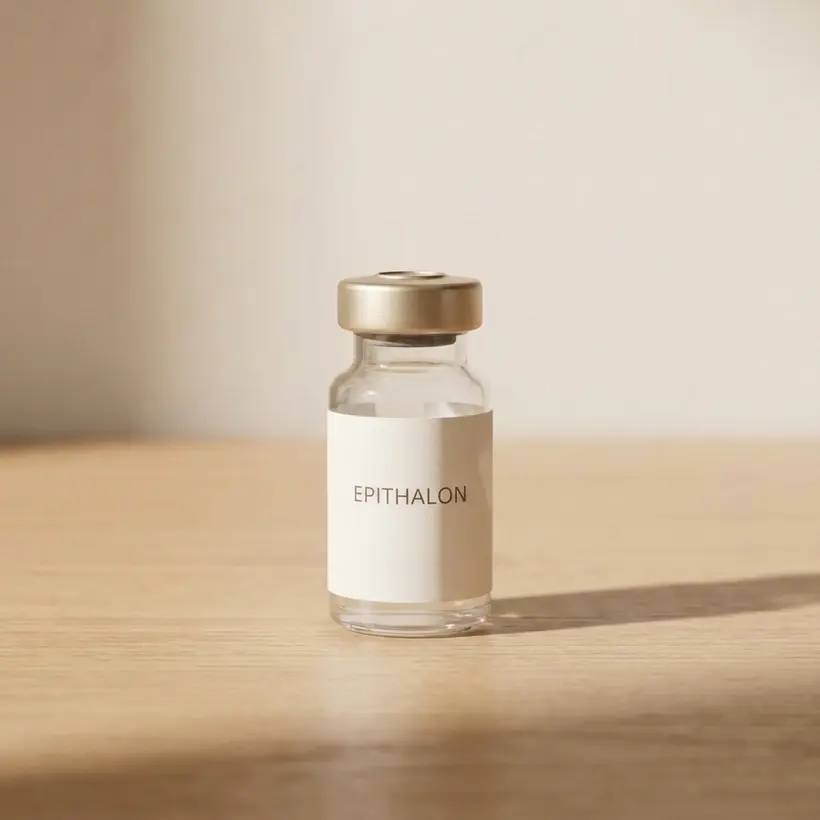
About Epithalon (Epitalon)
Epithalon (also written Epitalon) is a synthetic tetrapeptide with the sequence Ala-Glu-Asp-Gly and a molecular weight of approximately 390.35 Da. It was designed to replicate the biological activity of Epithalamin, a polypeptide extract isolated from the bovine pineal gland by Professor Vladimir Khavinson at the Saint Petersburg Institute of Bioregulation and Gerontology. The peptide's four-residue structure makes it one of the smallest bioactive peptides studied in longevity research, and its compact size contributes to favorable pharmacokinetic properties including rapid absorption from subcutaneous injection sites.
The primary mechanism of action centers on telomerase activation. Telomerase is the ribonucleoprotein enzyme responsible for adding TTAGGG repeats to chromosome ends (telomeres), counteracting the progressive shortening that occurs with each cell division. Epithalon upregulates the expression of the catalytic subunit hTERT (human telomerase reverse transcriptase), leading to measurable telomerase activation. In a study published in the Bulletin of Experimental Biology and Medicine (2003), Epithalon increased telomerase activity by 2.4-fold in human pulmonary fibroblasts and extended the replicative lifespan of these cells beyond the Hayflick limit (passage 44 vs. control passage 34).
The most cited longevity study involved chronic Epithalon administration in female CBA mice, where the peptide extended median lifespan by 13.3% compared to untreated controls. This work, published by Anisimov et al. in Biogerontology (2003), also reported a 1.6-fold reduction in spontaneous tumor incidence. Parallel studies in Drosophila melanogaster showed an 11-16% extension of mean lifespan across multiple dosage groups.
Clinical research on Epithalon and Epithalamin spans over 15 published trials. A key 6-year follow-up study (N=266, elderly patients aged 60-89) published in Bulletin of Experimental Biology and Medicine demonstrated that Epithalamin treatment normalized melatonin production, improved T-cell immunity markers (CD3+, CD4+, CD4/CD8 ratio), and reduced cardiovascular mortality by 28% compared to the control group. Participants also showed improved cortisol circadian rhythmicity, indicating restored hypothalamic-pituitary-adrenal axis regulation.
Epithalon has a relatively short plasma half-life, estimated at several minutes following subcutaneous injection. Despite this, its biological effects on gene expression and telomerase activation persist for extended periods, suggesting a hit-and-run mechanism where transient peptide exposure triggers sustained downstream signaling. The typical research protocol involves subcutaneous injection of 5-10 mg daily for 10-20 consecutive days, repeated in 4-6 month cycles. Intranasal and intravenous routes have also been studied.
For storage and handling, lyophilized Epithalon should be stored at -20C and is stable for 24+ months under these conditions. Once reconstituted with bacteriostatic water, the solution should be refrigerated at 2-8C and used within 30 days. The peptide is stable in solution at physiological pH (7.2-7.6) but degrades in strongly acidic conditions. Reconstitution is straightforward due to the peptide's high aqueous solubility.
Beyond telomere biology, Epithalon has demonstrated antioxidant properties by upregulating superoxide dismutase (SOD) and glutathione peroxidase expression. It also modulates retinal health, with studies showing normalized electroretinogram responses in aged rats (Bulletin of Experimental Biology and Medicine, 2002). The peptide's effects on pineal gland function and melatonin secretion have implications for circadian rhythm restoration, sleep architecture improvement, and the downstream antioxidant benefits of normalized melatonin cycling.
Published safety data from clinical trials report no significant adverse effects across all studied doses and durations. The 6-year follow-up study showed no increased incidence of neoplasia, autoimmune events, or endocrine disruption. Injection site reactions were minimal and transient. Epithalon does not appear to affect telomerase in transformed (cancer) cells, which already express constitutive telomerase activity, though this observation requires further investigation.