Executive Summary
The quality of research peptides varies enormously across the global supply chain. Without standardized federal oversight for research-use-only compounds, the burden of quality verification falls squarely on the buyer. This guide equips researchers, clinicians, and informed consumers with the analytical knowledge needed to separate legitimate suppliers from unreliable ones.
Key Takeaways
- Always request lot-specific COAs with HPLC chromatograms and mass spectrometry data before purchasing research peptides
- Research-grade peptides should have HPLC purity of 95% minimum, with 98%+ strongly preferred for in vivo work
- Mass spectrometry confirmation is essential - HPLC purity alone cannot verify you have the correct peptide
- Net peptide content (typically 60-80%) differs from HPLC purity and must be factored into dosing calculations
- Third-party testing from ISO 17025-accredited labs provides the highest level of independent verification
Peptide research has expanded rapidly over the past decade. Compounds like BPC-157, semaglutide, tirzepatide, and epithalon have attracted significant scientific interest, driving demand for high-purity synthetic peptides. But the market's rapid growth has also attracted low-quality manufacturers, counterfeit products, and suppliers who cut corners on analytical testing. Industry analyses suggest that up to 25% of peptide-based products available from unregulated sources fail basic quality checks, including incorrect identity, substandard purity, or bacterial endotoxin contamination.
This report covers every aspect of peptide quality assessment in detail. You'll learn how peptides are synthesized through solid-phase (SPPS) and liquid-phase (LPPS) methods, and how synthesis quality directly impacts the final product. We break down the key quality markers that matter most: HPLC purity, mass spectrometry identity confirmation, net peptide content, endotoxin levels, and sterility. A dedicated section walks through reading a Certificate of Analysis (COA) line by line, explaining what each data point means and how to spot fabricated or templated documents.
We also examine the analytical techniques themselves. Reversed-phase HPLC separates peptide-related impurities by hydrophobicity, while electrospray ionization mass spectrometry (ESI-MS) confirms that the synthesized molecule matches its theoretical molecular weight. Understanding these methods helps researchers evaluate whether a supplier's claims are scientifically credible. Third-party testing services provide an additional layer of verification, and we profile the major independent laboratories that offer peptide analysis.
The guide includes a practical supplier evaluation checklist, a catalog of red flags that signal unreliable vendors, and a comparison of compounding pharmacy peptides versus research chemical suppliers. Regulatory context covers FDA oversight through 503A and 503B pharmacy designations, the distinction between GMP and non-GMP manufacturing, and the current status of peptide compounding rules. Whether you're sourcing peptides for bench research, animal studies, or evaluating suppliers for a clinical practice that uses compounded formulations, this report provides the framework for making informed decisions.
Key Takeaways
- Always request lot-specific COAs with HPLC chromatograms and mass spectrometry data before purchasing research peptides
- Research-grade peptides should have HPLC purity of 95% minimum, with 98%+ strongly preferred for in vivo work
- Mass spectrometry confirmation is essential - HPLC purity alone cannot verify you have the correct peptide
- Net peptide content (typically 60-80%) differs from HPLC purity and must be factored into dosing calculations
- Third-party testing from ISO 17025-accredited labs provides the highest level of independent verification
- Compounding pharmacy peptides (503A/503B) operate under FDA oversight, while research chemical suppliers do not
Quality Benchmarks
Understanding What "Quality" Means for Research Peptides
Quality in the context of research peptides encompasses several distinct dimensions, each measured by different analytical methods. Confusing these dimensions is one of the most common mistakes researchers make when evaluating suppliers. A peptide can score well on one quality metric while failing another, so a thorough assessment requires examining multiple parameters together.
The four primary quality dimensions are chemical purity, identity confirmation, quantitative content, and biological safety. Chemical purity, measured by HPLC, tells you what percentage of the peptide-related material in the sample is actually the target compound versus synthesis byproducts. Identity confirmation, performed through mass spectrometry, verifies that you have the correct molecule. Quantitative content, assessed through amino acid analysis, reveals how much of the total powder weight is peptide versus water, salts, and counterions. Biological safety, evaluated through endotoxin and sterility testing, determines whether the sample is safe for use in biological systems.
HPLC Purity Standards
Reversed-phase high-performance liquid chromatography (RP-HPLC) is the gold standard for assessing peptide purity. The technique separates molecules based on their hydrophobic interactions with a stationary phase (typically a C18-bonded silica column) while a mobile phase gradient of increasing organic solvent concentration elutes the components sequentially. Each separated component produces a peak on the chromatogram, and the relative area of each peak indicates the proportion of that component in the mixture.
For research-grade peptides, the target compound should produce the dominant peak, and its area percentage relative to all detected peaks gives the HPLC purity value. Industry benchmarks for purity grades are well established:
| Purity Grade | HPLC Purity | Typical Application | Relative Cost |
|---|---|---|---|
| Crude | <70% | Preliminary screening only | Lowest |
| Desalted | 70-85% | ELISA standards, preliminary assays | Low |
| Standard Research | 85-95% | Cell culture, binding assays | Moderate |
| High Purity Research | 95-98% | In vitro studies, antibody production | High |
| Ultra-High Purity | >98% | In vivo research, quantitative assays | Very High |
| Pharmaceutical/GMP | >99% | Clinical use (compounding/pharma) | Highest |
The choice of purity grade depends on the research application. For cell-based assays where impurities could produce confounding biological effects, purities of 95% or higher are strongly recommended. For in vivo animal studies, 98%+ purity minimizes the risk that observed effects stem from contaminants rather than the target peptide. Researchers working with peptides like CJC-1295/Ipamorelin or NAD+ in quantitative dose-response studies should prioritize ultra-high purity to ensure reproducible results.
A critical nuance that many buyers overlook is the HPLC method parameters. Two suppliers can report different purity values for the same peptide simply because they used different column types, gradient conditions, or detection wavelengths. Standardized conditions use a C18 column (4.6 x 150 mm, 5 um particle size), a linear gradient of acetonitrile in water with 0.1% TFA over 20-30 minutes, and UV detection at 214 nm or 220 nm. When comparing purity values across suppliers, check whether the HPLC conditions are reported - if they aren't, the numbers may not be directly comparable.
Mass Spectrometry Identity Standards
HPLC purity alone is insufficient for quality assessment because it only measures relative peak areas without confirming what molecule those peaks represent. A peptide could be 99% pure by HPLC but be the wrong sequence entirely. Mass spectrometry provides the identity confirmation that HPLC cannot.
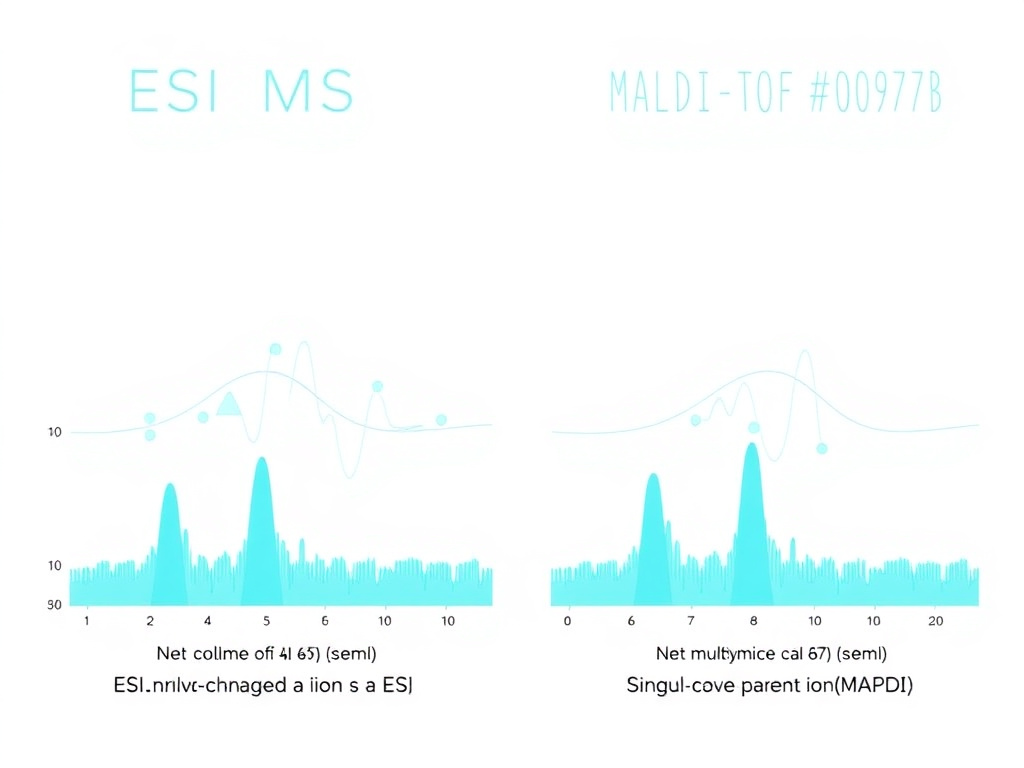
Electrospray ionization mass spectrometry (ESI-MS) is the most commonly used technique for peptide identity verification. The method ionizes peptide molecules by adding protons, creating multiply-charged species that can be detected by the mass analyzer. For a peptide with a theoretical molecular weight of 1,000 Da, you might observe ions at m/z 501 [M+2H]2+, m/z 334 [M+3H]3+, and so on. Deconvolution algorithms calculate the actual molecular weight from these multiply-charged peaks.
The acceptance criterion for identity confirmation is straightforward: the observed molecular weight should match the theoretical molecular weight within 0.1% or +/- 1 Dalton, whichever is larger. For a 1,500 Da peptide, this means the observed mass should fall between 1,499 and 1,501 Da. Deviations beyond this range suggest synthesis errors such as amino acid deletions, insertions, substitutions, or unintended chemical modifications like oxidation or deamidation.
MALDI-TOF (Matrix-Assisted Laser Desorption Ionization Time-of-Flight) is an alternative mass spectrometry technique that produces primarily singly-charged ions, giving a simpler spectral readout. It's particularly useful for rapid quality checks during synthesis and for analyzing complex peptide mixtures. However, ESI-MS generally provides higher mass accuracy and is preferred for formal identity confirmation on COAs.
Net Peptide Content
One of the most misunderstood quality parameters is net peptide content (NPC), which differs fundamentally from HPLC purity. While HPLC purity measures the target peptide as a proportion of all peptide-related species, NPC measures the actual peptide mass as a proportion of total powder weight. The difference arises because lyophilized peptide powders contain significant amounts of non-peptide material.
A typical lyophilized peptide contains:
- Target peptide: 60-80% of total weight
- Water (residual moisture): 3-10% of total weight
- Counterions (TFA or acetate salts): 10-25% of total weight
- Residual solvents: 0-2% of total weight
Counterions deserve special attention. During HPLC purification, trifluoroacetic acid (TFA) is used as an ion-pairing agent, and TFA anions associate with positively charged amino acid residues (Lys, Arg, His, and the N-terminus) to form salt pairs. A peptide with three basic residues plus the N-terminus will carry four TFA counterions, each weighing 114 Da. For a 1,500 Da peptide, those four TFA molecules add 456 Da, reducing the net peptide content to roughly 77% even before accounting for water.
Some suppliers offer acetate salt forms, where TFA is exchanged for acetate (MW 59 Da) through additional processing. Acetate salts have lower counterion mass and are preferred for biological applications because TFA can be cytotoxic at higher concentrations. The tradeoff is that TFA-to-acetate exchange adds cost and an additional processing step.
NPC is determined through amino acid analysis (AAA), where the peptide is hydrolyzed into its constituent amino acids, which are then quantified. Alternatively, elemental analysis (EA) measures the carbon, hydrogen, nitrogen, and fluorine content to calculate peptide versus counterion proportions. Both methods have their advantages, but AAA is considered the reference standard for peptide quantification.
Why Net Peptide Content Matters for Dosing
If a researcher needs to prepare a 1 mg/mL solution of a peptide and the vial contains 5 mg of powder with 70% NPC, only 3.5 mg is actual peptide. Using the gross weight of 5 mg would result in a 30% overdose relative to the intended concentration. For peptides with narrow therapeutic or experimental windows, this discrepancy can significantly affect results. Always use NPC-adjusted calculations when preparing peptide solutions for quantitative research. The FormBlends dosing calculator accounts for NPC when available.
Endotoxin and Sterility Standards
Bacterial endotoxins are lipopolysaccharide (LPS) molecules shed from the outer membrane of gram-negative bacteria. Even nanogram quantities can trigger potent inflammatory responses in biological systems, making endotoxin contamination a serious concern for any peptide used in cell culture or animal research. The USP Chapter 85 bacterial endotoxins test, performed using the Limulus Amebocyte Lysate (LAL) assay, is the standard method for detection and quantification.
For injectable pharmaceutical products, the FDA sets endotoxin limits at 5 EU/kg/hour for most parenteral drugs and 0.2 EU/kg/hour for intrathecal applications. While research peptides don't fall under pharmaceutical regulations, these thresholds provide useful benchmarks. A well-manufactured research peptide should test below 1 EU/mg, and premium suppliers often achieve levels below 0.1 EU/mg.
Sterility testing follows USP Chapter 71 guidelines and determines whether viable bacteria or fungi are present in the sample. This is distinct from endotoxin testing - a product can be sterile (no living organisms) while still containing endotoxins from organisms that were present during manufacturing. Both tests are necessary for peptides intended for in vivo use.
Not all research peptide suppliers perform endotoxin or sterility testing. The absence of these tests on a COA should be a consideration factor when selecting a supplier, particularly for researchers working with animal models or primary cell cultures where endotoxin contamination can dramatically alter experimental outcomes.
Reading a Certificate of Analysis
The Certificate of Analysis (COA) is the single most important document a peptide supplier provides. Learning to read one properly - and spot fakes - is the most valuable skill a peptide buyer can develop.
A COA is a formal document issued by a manufacturer or testing laboratory that reports the results of quality control testing performed on a specific batch or lot of product. For research peptides, the COA should provide enough information to confirm the identity, purity, and quality of the compound without requiring the buyer to perform their own testing. However, the value of a COA depends entirely on its completeness, accuracy, and authenticity. Many suppliers issue COAs that range from informative and thorough to vague, templated, or outright fabricated.
Essential COA Components
A complete peptide COA should contain all of the following elements. The absence of any major component should raise questions about the supplier's analytical capabilities or transparency.
1. Product Identification
The top section of the COA should clearly identify the product. This includes the peptide name (common name and/or systematic name), the amino acid sequence written in standard one-letter or three-letter code, the molecular formula, the theoretical molecular weight calculated from the sequence, and the CAS registry number where applicable. For well-known research peptides like BPC-157 (pentadecapeptide with the sequence Gly-Glu-Pro-Pro-Pro-Gly-Lys-Pro-Ala-Asp-Asp-Ala-Gly-Leu-Val), these identifiers are standardized and easily verifiable. Any discrepancy between the stated sequence and known reference sequences is an immediate disqualifier.
2. Lot/Batch Information
Every COA must be lot-specific. This means it should include a unique lot number or batch number, the manufacturing date, and ideally an expiration or retest date. Lot-specific COAs demonstrate that the supplier actually tested the specific batch you're purchasing rather than recycling a generic document. This is one of the easiest ways to distinguish genuine from fabricated COAs - a supplier that uses the same COA for all batches of a given peptide is not performing individual lot testing.
The lot number format itself can be informative. Many manufacturers encode information in their lot numbers, such as the synthesis date, equipment used, or sequential batch count. While the encoding varies by supplier, a consistent and logical lot numbering system suggests organized manufacturing practices. Random or obviously made-up lot numbers (like "LOT001" on every product) suggest less rigorous quality control.
3. Physical Description
The appearance section describes the physical characteristics of the peptide as received. A properly lyophilized peptide should appear as a white to off-white powder or fluffy cake. Some peptides with aromatic residues (Trp, Tyr) or those containing methionine may have a slightly yellowish tint, which is acceptable. However, brown or dark yellow coloration typically indicates degradation, oxidation, or contamination. The COA should state the observed appearance and confirm it meets the specification.
4. HPLC Purity Data
This is the core analytical section. A thorough HPLC report includes the purity percentage (area percent of the main peak), the HPLC method parameters (column type, mobile phase composition, gradient conditions, flow rate, detection wavelength, and injection volume), the retention time of the main peak, and ideally an image of the chromatogram itself showing the peak profile.
The chromatogram image is particularly valuable. A clean peptide preparation shows one dominant peak with minimal secondary peaks. The main peak should be sharp and symmetrical - broad, tailing, or split peaks can indicate sample degradation, column issues, or the presence of closely-related impurities that aren't fully resolved. Secondary peaks representing impurities should be individually identified where possible, with their retention times and area percentages listed in a peak table.
When reviewing HPLC data, pay attention to the detection wavelength. Peptide bonds absorb UV light at 214 nm, making this the most sensitive and universal detection wavelength for peptide HPLC. Some suppliers report purity at 254 nm or 280 nm, which only detects peptides containing aromatic amino acids (Trp, Tyr, Phe). Using a less sensitive wavelength can make purity appear higher because non-aromatic impurities won't be detected. If the COA reports purity at 280 nm for a peptide without aromatic residues, the data is essentially meaningless.
5. Mass Spectrometry Data
The identity confirmation section should report the mass spectrometry method used (ESI-MS, MALDI-TOF, or LC-MS), the theoretical molecular weight, the observed molecular weight, and the mass accuracy (expressed as the difference in Daltons or as a percentage). As discussed in the quality benchmarks section, the observed mass should match the theoretical value within 0.1% or +/- 1 Da.
Better COAs include the actual mass spectrum image, showing the ion peaks and their m/z values. For ESI-MS data, you should see a series of multiply-charged peaks that, when deconvoluted, produce a single molecular weight value. For MALDI-TOF, you should see a dominant [M+H]+ peak at the expected molecular weight plus one proton mass (approximately +1 Da).
6. Additional Testing Results
Premium COAs may include additional test results beyond basic purity and identity:
| Test | Method | What It Measures | Typical Specification |
|---|---|---|---|
| Net Peptide Content | Amino Acid Analysis (AAA) | Actual peptide weight percentage | Report value (typically 60-80%) |
| Water Content | Karl Fischer Titration | Residual moisture | <10% |
| Counterion Content | Ion Chromatography / ELSD | TFA or acetate salt content | Report value |
| Endotoxin | LAL Assay (USP 85) | Bacterial endotoxin level | <1 EU/mg |
| Sterility | USP 71 | Microbial contamination | No growth detected |
| Residual Solvents | Gas Chromatography | Leftover organic solvents | Within ICH Q3C limits |
| Amino Acid Composition | AAA post-hydrolysis | Correct amino acid ratios | Within 10% of theoretical |
How to Spot a Fake or Low-Quality COA
Fabricated COAs are unfortunately common in the research peptide market. Several telltale signs can help you distinguish genuine analytical documents from forgeries.
Templated Numbers
When a supplier shows identical purity values (such as 99.2%) across multiple lots of the same peptide, or worse, across different peptides entirely, it's a strong indication that the COA is templated rather than based on actual testing. Real analytical measurements show natural variation between batches. Two consecutive lots of the same peptide might show purities of 98.7% and 99.1%, or retention times of 14.32 and 14.35 minutes. Perfect consistency across lots is statistically implausible.
Missing Chromatograms
A COA that reports HPLC purity as a number without including the actual chromatogram image is incomplete at best. The chromatogram provides essential context - the shape, symmetry, and baseline of the peaks tell an experienced analyst far more than the purity number alone. Suppliers who omit chromatograms may be doing so because the actual data doesn't support their claimed purity values. Some legitimate suppliers may provide chromatograms upon request even if they don't include them on the standard COA, but any supplier who refuses to provide chromatographic data should be viewed with suspicion.
No Method Details
Reporting "HPLC Purity: 99%" without specifying the column, gradient, or detection wavelength is like reporting a distance without specifying the units. The purity value is meaningless without the method context. Different HPLC conditions can yield different purity values for the same sample. A COA that omits method details suggests either a lack of analytical expertise or a deliberate attempt to make unverifiable claims.
Unrealistic Values
While high purity is desirable, claims of 99.9% or higher for complex peptides should be viewed skeptically. Most synthetic peptides, even well-made ones, contain trace levels of deletion sequences, truncated peptides, or oxidized variants that prevent achieving such extreme purities through standard HPLC purification. Consistent claims of near-perfect purity across all products suggest inflated numbers rather than exceptional manufacturing.
Generic Laboratory Information
A legitimate COA should identify the testing laboratory, including its name, address, accreditation status, and the analyst who performed or approved the testing. Documents that lack laboratory identification, use generic names like "Quality Lab" without contact information, or fail to include an analyst signature or approval stamp are less trustworthy. For third-party COAs, the testing laboratory should be independently verifiable - you should be able to contact the lab directly and confirm they performed the testing.
Date Inconsistencies
Check that the testing date falls after the manufacturing date and before the ship date. COAs dated years in the past for recently manufactured lots, or documents with formatting inconsistencies that suggest dates were altered, are red flags. Some suppliers reuse old COAs by changing the lot number while keeping the same test data - comparing multiple COAs from the same supplier can reveal this pattern.
Verification Tip
When you receive a COA, try to verify it independently. Contact the testing laboratory listed on the document and ask them to confirm the lot number and results. Request the raw data files (chromatogram files, mass spectra files) if possible. Many legitimate labs are willing to provide raw data to end users. If the supplier cannot provide contact information for their testing laboratory, or if the lab denies having tested the product, you have your answer about the COA's authenticity.
Comparing Supplier-Issued vs. Third-Party COAs
COAs come in two flavors: supplier-issued (in-house testing) and third-party (independent laboratory testing). Both have their place, but they carry different weight in quality assessment.
Supplier-issued COAs are generated by the peptide manufacturer's own quality control laboratory. They're the most common type and are included with most peptide purchases. The advantage is that the manufacturer has intimate knowledge of their synthesis process and can perform testing quickly and efficiently. The disadvantage is the inherent conflict of interest - the same organization that profits from selling the peptide is also certifying its quality. This doesn't mean in-house COAs are unreliable, but it does mean they should be evaluated with appropriate skepticism.
Third-party COAs are generated by independent analytical laboratories with no financial relationship to the peptide supplier. These carry significantly more weight because the testing organization has no incentive to inflate results. ISO 17025-accredited laboratories follow internationally recognized standards for testing competence, including documented procedures, equipment calibration, proficiency testing, and quality management systems. When evaluating a supplier, the availability of third-party COAs - either provided routinely or available upon request - is a strong positive indicator.
The gold standard is a supplier that provides both: an in-house COA for routine lot release and third-party verification testing performed periodically or on a per-lot basis. This dual approach demonstrates commitment to quality that goes beyond self-certification. For researchers sourcing peptides for publication-quality research or in vivo studies, requesting third-party verification is well worth the additional cost and time.
HPLC Purity Analysis
Reversed-phase high-performance liquid chromatography (RP-HPLC) is the workhorse analytical technique for peptide purity assessment. Understanding how it works, what its results mean, and where its limitations lie makes you a more informed peptide buyer.
How RP-HPLC Works for Peptides
At its core, RP-HPLC is a separation technique. The sample is injected onto a chromatographic column packed with silica particles coated with hydrophobic C18 (octadecylsilane) chains. A mobile phase consisting of water and an organic solvent (typically acetonitrile) flows through the column, carrying the dissolved peptide mixture with it. The key to separation is differential affinity: more hydrophobic molecules interact more strongly with the C18 stationary phase and take longer to elute, while more hydrophilic molecules pass through more quickly.
For peptide analysis, a gradient elution method is used. The mobile phase starts with a high proportion of water (aqueous) and progressively increases the organic solvent concentration over a defined time period. This gradient coaxes increasingly hydrophobic species off the column in sequence. An ion-pairing agent, almost always 0.1% trifluoroacetic acid (TFA), is added to both the aqueous and organic mobile phases. TFA serves dual purposes: it protonates peptide amino groups and carboxyl groups to reduce peak broadening, and it acts as a counterion that improves peak shape by minimizing silanol interactions with the column.
As separated components elute from the column, they pass through a UV detector. The peptide bond absorbs UV light at approximately 214 nm due to the n to pi-star electronic transition of the amide carbonyl. This absorption is highly consistent across peptides regardless of their amino acid composition, making 214 nm the universal detection wavelength for peptide HPLC. The detector generates a signal proportional to the concentration of absorbing material, producing the chromatogram - a plot of absorbance versus time.
Interpreting the Chromatogram
A peptide HPLC chromatogram contains several information-rich features that experienced analysts use to assess quality beyond the simple purity percentage.
The Main Peak
The target peptide should produce the largest peak on the chromatogram. Its retention time (the time at which it elutes) is characteristic of the peptide's hydrophobicity and can serve as a rough identity check - the same peptide analyzed under the same conditions should elute at approximately the same retention time (+/- 0.5 minutes) across different injections. The main peak should be sharp and approximately Gaussian (bell-shaped) in profile. A symmetry factor close to 1.0 (typically acceptable between 0.8 and 1.5) indicates good peak shape.
Peak broadening (wider-than-expected peaks) can indicate sample degradation, column deterioration, or method issues. Peak tailing (asymmetric peaks with a trailing edge) often results from secondary interactions between basic amino acid residues and residual silanol groups on the column. Peak splitting (a peak that appears to have two apexes) can indicate either a co-eluting impurity or a conformational equilibrium in the peptide, where two folded states elute at slightly different times.
Impurity Peaks
Secondary peaks represent impurities in the sample. For synthetic peptides, the most common impurities are:
- Deletion peptides: Sequences missing one or more amino acids due to incomplete coupling reactions during synthesis. These are typically slightly more hydrophilic than the target (shorter chain = less hydrophobic surface area) and elute earlier. They're the most common synthesis-related impurity and difficult to remove completely because their properties are similar to the target.
- Truncated peptides: Sequences that were not completed during synthesis due to chain termination. These can elute either before or after the main peak depending on where the truncation occurred and the hydrophobicity of the missing residues.
- Oxidized peptides: Variants where methionine residues have been oxidized to methionine sulfoxide, or where cysteine residues have formed disulfide bonds. Methionine oxidation produces a more hydrophilic species that elutes earlier than the parent peptide. These peaks are particularly concerning because oxidation can significantly affect biological activity.
- Racemized peptides: Variants containing D-amino acids instead of the natural L-configuration due to base-catalyzed racemization during synthesis. These are particularly insidious because they have nearly identical physical properties to the target peptide and can be extremely difficult to separate by HPLC. Their biological activity may differ dramatically from the all-L isomer.
- Deamidated peptides: Variants where asparagine or glutamine residues have converted to aspartic acid or glutamic acid through deamidation. This introduces an additional negative charge that usually makes the deamidated peptide elute slightly earlier. Deamidation can occur during synthesis, purification, or storage.
- TFA-adducts and capping byproducts: Chemical modifications introduced during the synthesis process, particularly from incomplete deprotection or capping steps.
Baseline Quality
The baseline of the chromatogram - the signal level when no analyte is eluting - should be flat and stable. A drifting baseline can indicate column bleed, mobile phase issues, or detector problems, all of which compromise the accuracy of purity calculations. Baseline noise (small random fluctuations) is normal but should be minimal relative to the peak heights. A noisy baseline can obscure small impurity peaks, making the sample appear purer than it actually is.
Integration Parameters
The purity percentage is calculated by integrating the area under each peak and expressing the main peak area as a percentage of the total. The integration parameters - how the software determines where peaks begin and end - can significantly affect the result. Overly aggressive integration thresholds can exclude real impurity peaks by treating them as baseline noise, inflating the apparent purity. The chromatogram image should show the integration marks (vertical lines indicating peak start and end points) so you can verify that the integration is reasonable.
Method Parameters That Affect Results
Several method parameters can influence the reported purity value, which is why comparing purity numbers across suppliers requires caution when methods differ.
| Parameter | Typical Condition | Impact of Variation |
|---|---|---|
| Column | C18, 4.6 x 150 mm, 5 um | Different selectivity can change peak resolution and apparent purity |
| Gradient Rate | 1% ACN/min (e.g., 5-65% over 60 min) | Steeper gradients reduce resolution, potentially co-eluting impurities with the main peak |
| Flow Rate | 1.0 mL/min | Higher flow rates reduce resolution but increase throughput |
| Detection Wavelength | 214 nm | 220 nm is less sensitive; 254 nm or 280 nm miss non-aromatic impurities |
| Column Temperature | 25-40 degrees C | Higher temperatures improve peak shape but can alter selectivity |
| Ion-Pairing Agent | 0.1% TFA | Formic acid gives different selectivity; no ion-pairing gives broader peaks |
| Sample Load | 10-50 ug | Overloading produces broad, distorted peaks that inflate apparent purity |
The gradient rate is particularly impactful. A shallow gradient (e.g., 0.5% ACN per minute) provides excellent separation of closely-related impurities but requires more analysis time. A steep gradient (e.g., 2-3% ACN per minute) runs faster but may not resolve impurities from the main peak, causing them to co-elute and artificially inflate the purity percentage. When a supplier reports unusually high purity for a complex peptide, checking the gradient rate in the HPLC method can reveal whether adequate separation was achieved.
Advanced HPLC Considerations
UPLC vs. HPLC
Ultra-performance liquid chromatography (UPLC) uses smaller particle sizes (sub-2 um) and higher pressures to achieve faster separations with better resolution. UPLC can resolve impurities that conventional HPLC cannot, which means a peptide that appears 99% pure by HPLC might show only 97% purity when analyzed by UPLC. This isn't a deficiency in the sample - it's a difference in analytical capability. As UPLC becomes more common in peptide quality control, buyers should be aware that UPLC and HPLC purity values for the same sample may not be directly comparable.
Two-Dimensional HPLC
For challenging separations where single-dimension HPLC cannot fully resolve all impurities, two-dimensional HPLC (2D-HPLC) uses two different separation mechanisms in sequence. The first dimension might use a reversed-phase C18 column with TFA, while the second dimension uses a different stationary phase (such as C8 or phenyl) with a phosphate buffer. Impurities that co-elute in the first dimension may separate in the second, providing a more accurate purity assessment. This technique is primarily used in pharmaceutical development rather than routine research peptide analysis, but it demonstrates that standard one-dimensional HPLC has inherent limitations in detecting all impurities.
Chiral Purity
Standard RP-HPLC cannot distinguish between L- and D-amino acid-containing peptides because they have identical hydrophobicity. Chiral analysis requires specialized methods such as Marfey's reagent derivatization (where the peptide is hydrolyzed, derivatized with a chiral reagent, and the resulting diastereomers are separated by HPLC) or chiral stationary phase chromatography. Racemization during SPPS is a recognized quality concern, particularly at histidine, cysteine, and aspartic acid residues, and at the C-terminal residue attached to the resin. A COA that reports only RP-HPLC purity without addressing chiral purity may be missing this class of impurity entirely.
Peptide Purity Distribution Across Suppliers
Data compiled from published third-party testing results and supplier-reported purity values across multiple peptide compounds.
Practical Recommendation
When comparing purity values across suppliers, always check whether the HPLC methods are comparable. A purity of 96% measured with a shallow gradient at 214 nm detection may actually represent a cleaner sample than a purity of 99% measured with a steep gradient at 280 nm detection. If you're sourcing peptides like semaglutide or tirzepatide for sensitive research applications, request the full HPLC method details along with the chromatogram image. The FormBlends science page provides additional resources on interpreting analytical data for specific peptide compounds.
Mass Spectrometry Verification
While HPLC tells you how pure your peptide is, mass spectrometry tells you what it actually is. Identity confirmation through MS analysis is the second pillar of peptide quality assessment and should never be skipped.
Electrospray Ionization Mass Spectrometry (ESI-MS)
ESI-MS is the most widely used mass spectrometry technique for peptide identity verification. The process begins with the peptide dissolved in a volatile solvent (typically a water/acetonitrile mixture with 0.1% formic acid). This solution is pumped through a narrow capillary held at high voltage (2-5 kV), producing a fine spray of charged droplets at atmospheric pressure. As the solvent evaporates, the droplets shrink until the charge density exceeds the Rayleigh limit, causing them to fragment into smaller droplets. This process repeats until individual multiply-charged peptide ions are released into the gas phase.
The key feature of ESI is that it produces multiply-charged ions. A peptide with a molecular weight of 3,000 Da might acquire two, three, four, or more protons, producing a series of ions at m/z values of 1501 [M+2H]2+, 1001 [M+3H]3+, 751 [M+4H]4+, and so on. This charge state distribution is actually advantageous because most mass analyzers have an m/z range of approximately 100-2000, meaning that even very large peptides (with molecular weights well above 2000 Da) can be detected after acquiring sufficient charge to bring their m/z values into range.
The deconvolution process converts the multiply-charged ion series back into a single molecular weight value. Modern mass spectrometry software performs this automatically, but understanding the principle helps when reviewing spectra. Each pair of adjacent charge states allows calculation of the molecular weight using simultaneous equations. Agreement between multiple charge state pairs provides high confidence in the assigned molecular weight, typically achieving mass accuracy of 0.01-0.05% for peptides in the 1-10 kDa range.
MALDI-TOF Mass Spectrometry
Matrix-Assisted Laser Desorption Ionization Time-of-Flight (MALDI-TOF) mass spectrometry takes a fundamentally different approach to ionization. The peptide is mixed with a UV-absorbing matrix compound (such as alpha-cyano-4-hydroxycinnamic acid for peptides) and deposited on a metal target plate. A pulsed UV laser beam strikes the matrix/analyte mixture, causing rapid heating and desorption. The matrix absorbs most of the laser energy and transfers it to the analyte molecules, promoting ionization while minimizing fragmentation.
Unlike ESI, MALDI predominantly produces singly-charged ions [M+H]+, giving a simpler spectral readout where the observed m/z value directly corresponds to the molecular weight plus one proton mass (approximately 1.008 Da). This simplicity makes MALDI spectra easier to interpret at a glance, and the technique is well-suited for rapid quality checks and screening applications. MALDI-TOF instruments can analyze samples very quickly - a full analysis takes seconds rather than the minutes required for LC-MS - making them efficient for high-throughput quality control.
However, MALDI has lower mass accuracy than ESI-MS (typically 0.01-0.1% or 100-500 ppm compared to ESI's 5-50 ppm on high-resolution instruments). It's also less quantitative and more susceptible to matrix-related artifacts. For definitive identity confirmation on a COA, ESI-MS is generally preferred, while MALDI-TOF serves well for rapid in-process testing during synthesis.
LC-MS: Combining Separation and Identification
Liquid chromatography-mass spectrometry (LC-MS) couples an HPLC separation with mass spectrometric detection, providing both purity and identity information in a single analysis. After the HPLC column separates the peptide mixture by hydrophobicity, the eluent flows directly into the ESI source of the mass spectrometer. Each peak in the chromatogram can be individually identified by its mass spectrum, revealing not just how many impurities are present but exactly what they are.
LC-MS is particularly powerful for identifying deletion peptides. If the target sequence is ABCDEFG (using single-letter amino acid codes), a deletion peptide missing the third residue (C) would be ABDEFG, with a molecular weight exactly reduced by the mass of the missing amino acid. The HPLC separation places this impurity in a peak separate from the target, and the mass spectrum of that peak immediately reveals the nature of the impurity. This level of detail is invaluable for troubleshooting synthesis issues and assessing whether impurities are likely to have biological activity.
For research peptide buyers, LC-MS data on a COA represents the highest level of analytical detail available. If a supplier provides LC-MS characterization showing the mass spectra of both the main peak and significant impurity peaks, it demonstrates thorough analytical capability and transparency.
Interpreting Mass Spectrometry Data on a COA
When reviewing mass spectrometry data on a COA, focus on these key elements:
Molecular Weight Agreement
The observed molecular weight should match the theoretical value within the specified tolerance. Calculate the theoretical molecular weight independently using the stated amino acid sequence - online tools and molecular weight calculators are freely available for this purpose. If the COA reports a sequence of GERAGDAPGCCFLPP but the observed molecular weight matches a different sequence, something is wrong.
Charge State Distribution
For ESI-MS spectra, the charge state distribution should be consistent with the peptide's size and basicity. Small peptides (under 1500 Da) typically show +1 and +2 charge states. Medium peptides (1500-4000 Da) show +2 to +4 charge states. Larger peptides show higher charge states. An unexpected charge state distribution might indicate a different molecule or a mixture of species.
Adduct Peaks
In addition to protonated ions [M+nH]n+, mass spectra may show sodium adducts [M+Na]+, potassium adducts [M+K]+, or TFA adducts [M+TFA]. These are generally not concerning - they're artifacts of the ionization process. However, consistent observation of sodium adducts at unusually high intensity might indicate sodium contamination in the sample, which could affect biological assays that are sensitive to ionic strength.
Fragment Ions
Some fragmentation may occur during ionization, producing ions at lower m/z values than expected. Minor fragmentation is normal, but extensive fragmentation could indicate that the source conditions were too harsh (excessive voltage or temperature) or that the peptide is thermally labile. Fragment ions should not be confused with impurities - they originate from the target peptide and do not indicate reduced purity.
Online Verification Tools
Several free online tools allow you to verify mass spectrometry data independently. The ExPASy PeptideMass tool calculates theoretical molecular weights from amino acid sequences. The Proteomics Toolkit from the Institute for Systems Biology can simulate ESI charge state distributions. Using these tools to cross-check the molecular weight reported on a COA takes only minutes and provides an independent verification of the supplier's claims. Researchers working with specific peptides from the FormBlends peptide research hub can find sequence information and expected molecular weights for common research compounds.
Endotoxin and Sterility Testing
Endotoxin and sterility testing occupy a unique position in peptide quality assessment. While purity and identity testing verify the chemistry, endotoxin and sterility testing address biological safety - a dimension that can make or break experimental outcomes in cell-based and animal research.
The Biology of Endotoxin Contamination
Bacterial endotoxins, also known as lipopolysaccharides (LPS), are structural components of the outer membrane of gram-negative bacteria. These large molecules consist of three regions: lipid A (the biologically active component responsible for toxicity), a core oligosaccharide, and an O-specific polysaccharide chain. When gram-negative bacteria die and lyse, LPS is released into the surrounding environment. Endotoxins are remarkably stable - they resist autoclaving, dry heat sterilization, and most chemical treatments, meaning they can persist in laboratory reagents, water supplies, and manufacturing equipment long after the bacteria themselves have been eliminated.
The biological effects of endotoxin exposure are profound, even at trace concentrations. In mammalian systems, LPS is recognized by Toll-like receptor 4 (TLR4) on macrophages and other immune cells, triggering a signaling cascade through MyD88 and TRIF adapter proteins that activates NF-kB and produces pro-inflammatory cytokines including TNF-alpha, IL-1beta, IL-6, and IL-8. In animal models, endotoxin doses as low as 5 ng/kg can produce measurable fever responses, while higher doses cause septic shock, disseminated intravascular coagulation, and death.
For researchers using peptides in cell culture, endotoxin contamination can activate immune signaling pathways that confound experimental results. A cell culture experiment designed to test a peptide's effect on a particular signaling pathway could produce misleading results if endotoxin contamination is simultaneously activating NF-kB-dependent responses. This is particularly problematic for studies involving macrophages, dendritic cells, or any cell type that expresses TLR4. Peptides used in metabolic research, including compounds like semaglutide and tirzepatide analogs, can produce misleading inflammatory readouts if endotoxin levels are not controlled.
The LAL Assay: Gold Standard for Endotoxin Detection
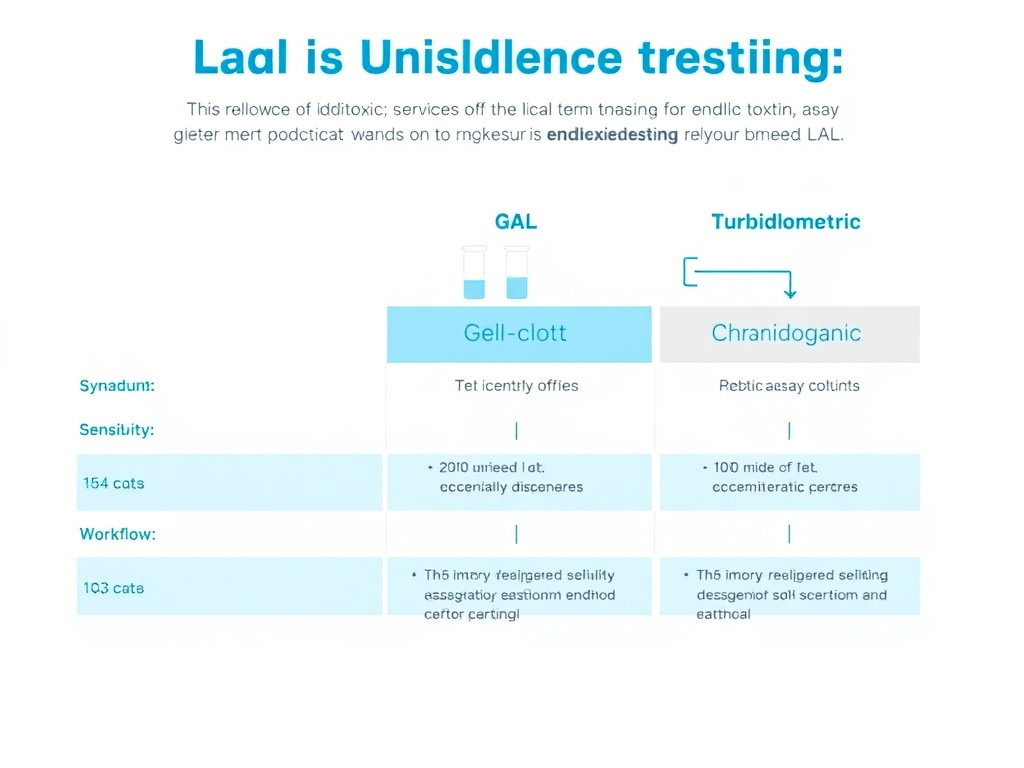
The Limulus Amebocyte Lysate (LAL) assay exploits a unique feature of horseshoe crab blood to detect endotoxins with extraordinary sensitivity. The blood cells (amebocytes) of the horseshoe crab Limulus polyphemus contain a clotting cascade that is triggered by endotoxin. When amebocyte lysate encounters LPS, a serine protease cascade is activated, ultimately producing a clot. This natural defense mechanism has been adapted into three standardized assay formats, each governed by USP Chapter 85.
Gel-Clot Method
The simplest LAL method, the gel-clot technique, mixes the sample with LAL reagent in a test tube. After incubation at 37 degrees C for one hour, the tube is inverted. If a firm gel has formed that remains intact upon inversion, the test is positive - endotoxin is present above the labeled sensitivity of the LAL reagent (typically 0.03 to 0.5 EU/mL). The gel-clot method is qualitative or semi-quantitative (through serial dilution), simple to perform, and inexpensive, but it provides limited precision and requires subjective interpretation of gel firmness.
Turbidimetric Method
The turbidimetric LAL method measures the increase in turbidity (optical density) that occurs as the LAL clotting reaction produces an insoluble coagulin protein. In the kinetic turbidimetric format, the reaction is monitored continuously in a specialized plate reader, and the time required to reach a threshold turbidity value (the onset time) is inversely proportional to the endotoxin concentration. This method is quantitative, providing actual endotoxin concentrations (in EU/mL) rather than just positive/negative results. It's more precise than the gel-clot method and can detect endotoxin levels as low as 0.001 EU/mL.
Chromogenic Method
The chromogenic LAL method replaces the natural clotting substrate with a synthetic chromogenic peptide. When the endotoxin-activated protease cleaves this substrate, a colored chromophore (para-nitroaniline, pNA) is released. The intensity of the yellow color, measured spectrophotometrically at 405 nm, is proportional to the endotoxin concentration. Like the turbidimetric method, the chromogenic assay is quantitative and can be performed in endpoint or kinetic formats. It's widely used in pharmaceutical quality control and offers excellent sensitivity (detection limits around 0.005 EU/mL).
Recombinant Methods
Newer recombinant methods use cloned Factor C - the endotoxin-sensitive protease from the horseshoe crab clotting cascade - produced in insect cells or E. coli rather than harvested from horseshoe crab blood. The recombinant Factor C (rFC) assay offers comparable sensitivity to traditional LAL methods while eliminating the need for horseshoe crab harvesting, a significant sustainability advantage. USP Chapter 86 now recognizes these recombinant methods as acceptable alternatives to traditional LAL testing.
Interpreting Endotoxin Test Results
Endotoxin levels are reported in Endotoxin Units (EU). One EU is defined as the biological activity contained in 0.1 to 0.2 ng of Reference Standard Endotoxin (RSE), though the exact mass-to-activity relationship varies depending on the bacterial source. For pharmaceutical products, the FDA establishes Maximum Valid Dilution (MVD) calculations and specific limits based on the route of administration and dosing.
For research peptides, which aren't subject to pharmaceutical regulations, practical quality benchmarks have emerged from industry experience:
| Endotoxin Level | Quality Assessment | Suitable Applications |
|---|---|---|
| <0.1 EU/mg | Excellent - pharmaceutical-comparable | In vivo studies, sensitive cell assays, immunology research |
| 0.1-1.0 EU/mg | Good - acceptable for most research | Standard cell culture, in vivo studies with monitoring |
| 1.0-5.0 EU/mg | Moderate - use with caution | Non-immune cell culture, biochemical assays |
| >5.0 EU/mg | Poor - risk of confounding biological results | Chemical assays only; not suitable for biological systems |
Sterility Testing
Sterility testing, performed according to USP Chapter 71, determines whether viable microorganisms (bacteria, fungi, or yeasts) are present in the sample. The test involves inoculating the peptide solution into two types of growth media: fluid thioglycolate medium (FTM) for detecting aerobic and anaerobic bacteria, and soybean-casein digest medium (SCDM, also known as tryptic soy broth or TSB) for detecting aerobic bacteria and fungi.
The inoculated media are incubated for 14 days - FTM at 30-35 degrees C and SCDM at 20-25 degrees C - and examined periodically for evidence of microbial growth (turbidity, pellicle formation, sediment, or color change). If no growth is detected in either medium after 14 days, the sample passes the sterility test. Positive controls (media inoculated with known organisms) and negative controls (uninoculated media) must be included to validate the test system.
The membrane filtration method is preferred for peptide samples because it allows the product to be physically separated from the growth medium, reducing the potential for product-induced inhibition of microbial growth. The sample is filtered through a 0.45 um membrane, the membrane is transferred to growth medium, and the incubation proceeds as described above.
A critical point: sterility and endotoxin contamination are independent. A sample can be sterile (no living organisms) while containing high endotoxin levels from organisms that were present earlier in the manufacturing process. Conversely, a sample can pass the endotoxin test while harboring viable organisms that haven't yet lysed and released their LPS. Both tests are necessary for complete biological safety assessment.
Why Many Suppliers Skip These Tests
Endotoxin and sterility testing adds significant cost and time to the manufacturing process. LAL assays require validated reagents and equipment, trained personnel, and rigorous documentation. Sterility testing requires 14 days of incubation, which delays lot release. Many research peptide suppliers, particularly smaller operations and overseas manufacturers, skip these tests entirely to reduce costs and speed up production. When evaluating a supplier, the presence or absence of endotoxin and sterility data on the COA is a meaningful indicator of their quality standards. Suppliers who provide this data - especially when the results are from an accredited testing laboratory - are investing in quality at a level above the market minimum. For researchers working with compounds from the compounding pharmacy peptides guide, endotoxin and sterility testing are regulatory requirements rather than optional extras.
Third-Party Testing Services
Independent third-party testing provides the highest level of confidence in peptide quality. When an organization with no financial relationship to the supplier verifies the product, conflicts of interest are eliminated and the results carry substantially more credibility.
Why Third-Party Testing Matters
The peptide research chemical market operates with minimal regulatory oversight. Unlike pharmaceutical manufacturers, who must follow current Good Manufacturing Practices (cGMP) and submit to regular FDA inspections, research chemical suppliers are largely self-regulating. Their in-house COAs, while useful, represent self-certification - the same organization that profits from the sale is attesting to the product's quality. This creates an inherent conflict of interest that even well-intentioned suppliers cannot fully escape.
Third-party testing resolves this conflict by inserting an independent evaluator between the supplier and the buyer. An ISO 17025-accredited testing laboratory operates under a formal quality management system that includes documented procedures, calibrated equipment, proficiency testing, regular audits, and traceability to international measurement standards. Their reputation depends on providing accurate results regardless of who submitted the sample, and they have no financial incentive to report favorable outcomes.
Several scenarios particularly warrant third-party testing:
- New supplier evaluation: Before committing to a new supplier for ongoing peptide needs, sending samples to an independent lab for verification provides a baseline assessment of the supplier's claims
- High-stakes research: Peptides used in publishable research, grant-funded studies, or regulatory submissions should be independently verified to ensure reproducibility and data integrity
- In vivo applications: Peptides intended for animal studies carry additional safety considerations that justify the cost of independent verification, particularly for endotoxin and sterility testing
- Discrepant results: When experimental results don't match expectations, independent testing of the peptide can either confirm or rule out product quality as a contributing factor
- Bulk purchases: When investing in large quantities of a peptide, the cost of third-party testing is small relative to the purchase price and the potential cost of unusable material
Major Third-Party Testing Providers
Several organizations have established themselves as specialized providers of independent peptide testing services. Each offers a somewhat different scope and focus.
Analytical Chemistry Services (ACS Lab Test)
ACS Lab Test provides comprehensive third-party peptide analysis, including HPLC purity testing, mass spectrometry identity confirmation, and quantitative content analysis. Their services are ISO-certified, and they offer relatively fast turnaround times for the US market. They specialize specifically in peptide and research chemical testing, which provides focused expertise compared to general-purpose analytical labs.
Vanguard Laboratory
In January 2026, Vanguard Laboratory launched their "Verified by Vanguard" program, a structured peptide verification service that includes HPLC purity analysis, UV-Vis spectrum analysis for identity screening, and visual inspection of physical characteristics. The program is designed to provide standardized, comparable results across different suppliers' products, making it easier for buyers to evaluate quality objectively. Their approach emphasizes transparency and public reporting of results.
Ethos Analytics
Ethos Analytics specializes in peptide purity and quantitation testing using validated methodologies and state-of-the-art instrumentation. They offer detailed analytical reports that include full method descriptions, chromatogram images, and mass spectra. Their focus on quantitation makes them particularly useful for researchers who need to know the exact peptide content in their samples for dosing calculations.
Finnrick
Finnrick operates as an independent testing platform for registered peptide vendors. Their model is somewhat different from traditional contract testing labs - they work to improve market transparency by testing samples from registered suppliers and publishing results openly. This crowd-sourced verification approach creates accountability across the market rather than serving individual buyer-supplier relationships.
GenScript AccuPep+ QC
GenScript, one of the world's largest peptide manufacturers, offers their AccuPep+ quality control service that includes HPLC purity analysis, mass spectrometry confirmation, and optional amino acid analysis. While GenScript is primarily a manufacturer rather than an independent testing lab, their analytical capabilities are well-established and their AccuPep+ results carry weight in the research community.
What to Expect from a Third-Party Test
A comprehensive third-party peptide analysis typically includes the following tests, turnaround times, and approximate costs:
| Test | Method | Turnaround | Approximate Cost (USD) |
|---|---|---|---|
| HPLC Purity | RP-HPLC with UV detection at 214 nm | 3-5 business days | $75-150 |
| Mass Spectrometry ID | ESI-MS or MALDI-TOF | 3-5 business days | $75-150 |
| Amino Acid Analysis | AAA post-hydrolysis | 5-7 business days | $150-300 |
| Endotoxin (LAL) | Kinetic turbidimetric or chromogenic | 2-3 business days | $100-200 |
| Sterility Testing | USP 71 membrane filtration | 14-21 days | $200-400 |
| Water Content | Karl Fischer titration | 2-3 business days | $50-100 |
| Full Panel | All of the above | 14-21 days | $500-1200 |
When submitting samples for third-party testing, provide the testing laboratory with the peptide sequence, expected molecular weight, and the supplier's COA so they can perform a targeted comparison. Ship samples on ice or dry ice to prevent degradation during transit, and ensure adequate sample quantity - typically at least 1-2 mg for a full analytical panel.
Interpreting Third-Party Results
When third-party results come back, compare them systematically against the supplier's COA claims. Minor discrepancies are normal and expected - HPLC purity values may differ by 1-2% due to method differences, and mass spectrometry measurements may differ by a fraction of a Dalton. These small variations reflect the inherent variability of analytical measurements and are not cause for concern.
Significant discrepancies, however, are red flags. If the supplier claims 99% purity but the third-party lab measures 93%, the supplier is either using substandard methods, inflating their numbers, or both. If the mass spectrometry data shows a different molecular weight than expected, the product may be the wrong peptide entirely. And if the endotoxin level is dramatically higher than the supplier reports (or if the supplier doesn't report it at all), the manufacturing process may have contamination issues.
Document discrepancies and communicate them to the supplier. A reputable supplier will investigate and address the findings - they may rettest the batch, adjust their methods, or replace the product. A supplier who dismisses independent testing results without investigation is not one you want to continue purchasing from.
Cost-Benefit Analysis of Third-Party Testing
A full third-party analytical panel costs $500-1200 per sample. For a researcher purchasing $200 worth of peptide for a preliminary assay, this may not be justifiable. But for a laboratory spending $5,000-10,000 on peptides for a funded research project, the $500-1200 testing cost is a small insurance premium against wasted reagents, failed experiments, and unreproducible results. Consider third-party testing as part of your experimental budget rather than an afterthought. Researchers using peptides from trusted sources like FormBlends benefit from established quality documentation, but independent verification still adds value for critical applications.
Supplier Evaluation Checklist
Evaluating a peptide supplier requires systematic assessment across multiple dimensions. This checklist distills the analytical and operational criteria covered in this report into a practical framework you can apply to any potential supplier.
Tier 1: Non-Negotiable Requirements
These are minimum requirements that any reputable peptide supplier should meet. Failure on any of these points should disqualify the supplier from consideration.
| Criterion | What to Verify | Red Flag if Missing |
|---|---|---|
| Lot-Specific COA | Every product ships with a COA tied to its specific lot number, not a generic document | Generic COAs, no COA provided, or "available upon request" without follow-through |
| HPLC Purity Data | Purity percentage with chromatogram image and method description | Purity number without supporting chromatogram or method details |
| Mass Spectrometry ID | Observed MW matching theoretical MW within 0.1% tolerance | No mass spec data or MW discrepancy beyond acceptable tolerance |
| Proper Labeling | "For Research Use Only" designation, peptide name, sequence, lot number, quantity, storage conditions | Health claims, dosing instructions for human use, missing sequence information |
| Business Legitimacy | Verifiable business registration, physical address, phone number, professional website | No physical address, social media-only presence, unregistered business |
| Proper Storage/Shipping | Shipped with appropriate cold chain (ice packs or dry ice), sealed under inert gas or vacuum | Room temperature shipping, unsealed vials, no desiccant |
Tier 2: Quality Indicators
These criteria differentiate good suppliers from average ones. Meeting most or all of these indicates a supplier that takes quality seriously and invests in analytical capability beyond the minimum.
| Criterion | What to Verify | Quality Signal |
|---|---|---|
| Third-Party Testing | Independent lab verification available or routinely performed | Demonstrates willingness to have claims independently verified |
| Endotoxin Testing | LAL assay results reported on COA | Indicates manufacturing controls for biological safety |
| Sterility Testing | USP 71 testing performed and documented | Shows commitment to product suitability for biological research |
| Net Peptide Content | AAA or elemental analysis providing quantitative content | Enables accurate dosing calculations for quantitative research |
| Batch Consistency | Natural variation between lots (slightly different purities, retention times) | Indicates genuine lot-by-lot testing rather than templated documents |
| Technical Support | Knowledgeable staff who can discuss analytical data and synthesis methods | Suggests in-house expertise and genuine understanding of peptide quality |
| Stability Data | Storage condition recommendations based on stability studies | Shows understanding of peptide degradation and commitment to product longevity |
Tier 3: Premium Quality Markers
These criteria represent the highest level of quality commitment. Suppliers meeting these standards are typically serving pharmaceutical or advanced research customers and command premium pricing accordingly.
| Criterion | What to Verify | Premium Signal |
|---|---|---|
| GMP or GMP-Equivalent Manufacturing | Manufacturing facilities following cGMP or equivalent quality systems | Highest manufacturing standards with documented quality management |
| ISO 17025-Accredited Testing | In-house or contracted testing laboratory with ISO 17025 accreditation | Internationally recognized analytical competence standard |
| Full Impurity Characterization | LC-MS identification of impurity peaks, not just area percentages | Deep analytical capability that identifies the nature of each impurity |
| Residual Solvent Testing | GC analysis for residual synthesis solvents per ICH Q3C guidelines | Addresses chemical safety beyond peptide-related impurities |
| Chiral Purity Assessment | Testing for D-amino acid content via Marfey's analysis or equivalent | Identifies racemization - an impurity class invisible to standard HPLC |
| Stability Program | Ongoing stability monitoring with documented storage and expiration data | Evidence-based shelf life rather than arbitrary expiration dates |
| Regulatory Documentation Package | Drug Master File (DMF), Certificate of Suitability (CEP), or equivalent regulatory filings | Suitable for pharmaceutical or clinical applications |
Practical Scoring Framework
To make supplier evaluation more systematic, consider scoring each criterion and comparing total scores across potential suppliers. A simple three-level scoring system works well:
- Score 2: Criterion fully met with documentation
- Score 1: Criterion partially met or met without documentation
- Score 0: Criterion not met
A perfect score on all Tier 1 criteria (12 points) is the minimum threshold. Add Tier 2 scores (up to 14 points) for quality differentiation, and Tier 3 scores (up to 14 points) for premium applications. A total score above 30 out of 40 indicates an excellent supplier. Scores between 20 and 30 are acceptable for standard research. Scores below 20 warrant caution and additional verification measures.
Apply this framework systematically and document your evaluations. Over time, you'll build a reliable supplier database that reduces the time and uncertainty involved in peptide procurement. Share your findings with colleagues - collective experience accelerates the identification of reliable sources and helps the research community as a whole.
Peptide Synthesis Methods and Their Quality Implications
Understanding how peptides are made helps explain why quality varies and what to look for when evaluating a supplier's manufacturing claims.
Solid Phase Peptide Synthesis (SPPS)
SPPS, pioneered by Robert Bruce Merrifield in 1963 (for which he received the Nobel Prize in Chemistry in 1984), remains the dominant manufacturing method for research peptides. The technique builds the peptide chain on an insoluble polymer resin support, adding amino acids one at a time from the C-terminus toward the N-terminus.
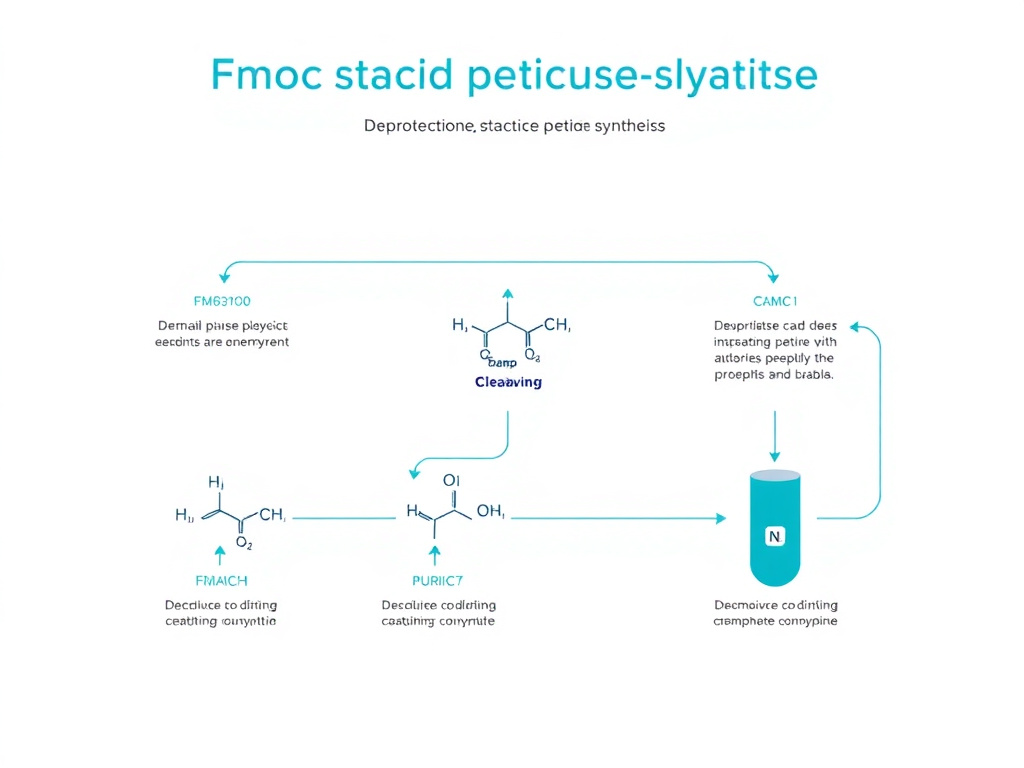
The modern Fmoc/tBu strategy (fluorenylmethyloxycarbonyl for N-alpha protection, tert-butyl-based groups for side-chain protection) has largely replaced the original Boc/Bzl chemistry. Each synthesis cycle involves four steps:
- Deprotection: The Fmoc group is removed from the N-terminus of the growing chain using 20% piperidine in DMF, exposing a free amino group for the next coupling
- Washing: Excess piperidine and the Fmoc-piperidine adduct are washed away with DMF
- Coupling: The next Fmoc-protected amino acid is activated (typically with HBTU, HATU, or DIC/Oxyma) and added to the resin, where it reacts with the free amino group to form a new peptide bond
- Washing: Excess reagents are removed by washing
After the complete sequence is assembled, a global deprotection/cleavage step using a TFA-based cocktail (typically 95% TFA with scavengers such as triisopropylsilane, water, and/or ethanedithiol) simultaneously removes all side-chain protecting groups and cleaves the peptide from the resin. The crude peptide is then precipitated in cold diethyl ether, dissolved, and purified by preparative HPLC.
Quality in SPPS depends heavily on coupling efficiency. Each coupling step must proceed to near-completion (ideally >99.5%) to avoid accumulating deletion peptides. For a 15-residue peptide with 99.5% coupling efficiency per step, the theoretical crude yield of the target sequence is (0.995)^14 = 93.2%. If coupling efficiency drops to 99%, yield falls to (0.99)^14 = 86.9%. At 98% efficiency, yield plummets to (0.98)^14 = 75.5%. These calculations explain why crude peptide purities vary significantly between manufacturers - small differences in synthesis chemistry, reagent quality, and process control compound across multiple coupling steps.
Monitoring coupling completion during synthesis is a mark of quality manufacturing. The Kaiser test (ninhydrin test) detects free amino groups that indicate incomplete coupling. Absorbance monitoring at 301 nm tracks the release of the Fmoc-piperidine adduct during deprotection, providing real-time feedback on deprotection efficiency. Advanced automated synthesizers can perform these checks automatically and trigger repeat coupling steps when necessary. Suppliers who describe their in-process monitoring practices demonstrate attention to synthesis quality control.
Liquid Phase Peptide Synthesis (LPPS)
LPPS, also called solution-phase peptide synthesis, performs the same chemistry as SPPS but in homogeneous solution rather than on a solid support. The growing peptide chain is dissolved in organic solvents throughout the synthesis, and intermediate products must be isolated and purified after each step or set of steps.
LPPS offers several advantages for certain applications. Since intermediates can be purified at each stage, side products are caught early, producing higher crude purities than SPPS for long or difficult sequences. The fragment condensation approach - where shorter peptide segments are synthesized separately and then joined together - enables the production of longer peptides that would be impractical by linear SPPS. LPPS also scales more easily to kilogram quantities for commercial peptide production.
However, LPPS is more labor-intensive than SPPS, requires more organic solvents, generates more waste, and is harder to automate. For these reasons, SPPS dominates the research peptide market. LPPS is primarily used for manufacturing established pharmaceutical peptides where the higher per-step purification justifies the additional effort. Some modern hybrid approaches combine SPPS for segment synthesis with solution-phase coupling for fragment condensation, combining the strengths of both methods.
Recombinant Peptide Production
For longer peptides and small proteins (approximately 50+ amino acids), recombinant expression in bacterial, yeast, or mammalian cells may be more practical than chemical synthesis. The target sequence is encoded in a DNA construct, expressed in a host organism, and purified from the cell lysate using affinity chromatography and other biophysical methods.
Recombinant peptides have different quality considerations than synthetic ones. Instead of deletion sequences and racemization, the impurity profile includes host cell proteins, host cell DNA, endotoxin from bacterial expression, and potential post-translational modifications introduced by the host. Recombinant peptides are generally not relevant for the typical research peptide market discussed in this guide but become important for larger research proteins and biopharmaceuticals.
How Synthesis Method Affects What You Buy
The vast majority of research peptides on the market - including popular compounds like BPC-157, epithalon, CJC-1295/Ipamorelin, and NAD+ precursor peptides - are manufactured by Fmoc SPPS. The synthesis method itself is not usually a differentiator between suppliers. What matters is the execution: the quality of starting materials (Fmoc amino acids), the precision of the automated synthesizer, the rigor of in-process monitoring, and the thoroughness of final purification. These factors determine whether you receive a high-purity product or one contaminated with deletion sequences, oxidized variants, and other synthesis byproducts. The peptide reconstitution guide covers proper handling after purchase to maintain the quality that manufacturing established.
Red Flags in Peptide Purchasing
The research peptide market includes suppliers ranging from highly reputable manufacturers to outright fraudulent operations. Learning to recognize warning signs early saves money, protects research integrity, and prevents potential safety issues.
Documentation Red Flags
Missing or Inaccessible COAs
Any supplier that does not provide a COA with every product, or that makes COAs difficult to access, is operating below acceptable standards. Some suppliers claim COAs are "available upon request" but then fail to provide them when asked, or provide generic documents that aren't tied to specific lots. A legitimate manufacturer generates COA data as part of their standard quality control process - providing it to customers adds negligible cost. If a supplier treats COA access as an inconvenience or a premium service, it suggests either that they don't perform adequate testing or that they don't want customers scrutinizing their results.
Identical Data Across Lots or Products
When a supplier publishes COAs showing identical purity percentages (e.g., exactly 99.2%), identical retention times, and identical mass spectrometry values across multiple lots of the same peptide - or worse, across different peptides - the documents are almost certainly templated or fabricated. Real analytical measurements produce natural variation. Two batches of the same peptide synthesized a month apart will not have exactly the same purity, retention time, and spectral characteristics. Even replicate injections of the same sample on the same day produce small measurement variations. Perfect consistency across documents is a statistical impossibility that points to data fabrication.
Missing Raw Data
A purity number without a chromatogram is an unsupported claim. A molecular weight without a mass spectrum is an unsupported claim. Legitimate analytical data comes with the raw instrument output that supports the reported values. When suppliers report only numbers without the underlying chromatograms, spectra, or test reports, there's no way to verify that testing was actually performed or that the data was correctly interpreted. Always request raw data if it's not included in the standard COA.
Pricing Red Flags
Dramatically Below-Market Pricing
Peptide synthesis, purification, and quality testing have real costs that create a price floor for legitimate products. The cost of Fmoc amino acids alone establishes a minimum raw material cost per milligram of peptide produced. Preparative HPLC purification adds significant expense from solvent consumption, column wear, and analyst time. Quality testing (HPLC, MS, endotoxin) adds further cost. When a supplier offers peptides at prices dramatically below what other reputable suppliers charge, the savings are coming from somewhere - typically from reduced purity, skipped testing, or counterfeit products.
This doesn't mean the most expensive supplier is always the best. But when a 10 mg vial of a research peptide costs $150-250 from established suppliers and a new vendor offers the same product for $20-30, the price difference should trigger serious scrutiny. Calculate the cost per milligram and compare it against multiple established suppliers to establish a reasonable range. Prices more than 50% below the market median warrant extra due diligence.
Suspicious Payment Methods
Legitimate suppliers accept standard business payment methods: credit cards, purchase orders, wire transfers to verified business accounts, and PayPal. Suppliers who exclusively accept cryptocurrency, prepaid gift cards, or peer-to-peer payment apps are operating outside normal commercial channels, often because these methods provide no buyer protection and make it difficult to dispute charges or trace transactions. While some legitimate suppliers may accept cryptocurrency as an additional option, exclusive reliance on untraceable payment methods is a significant warning sign.
Marketing Red Flags
Human Use Claims and Health Marketing
Research peptides are, by definition, sold for research use only. A supplier that markets peptides with dosing instructions for humans, testimonials about personal health effects, or claims that their products will "boost energy," "build muscle," "reverse aging," or treat specific medical conditions is violating FDA guidelines for research chemical marketing. Beyond the regulatory issue, this type of marketing suggests a supplier more focused on consumer appeal than scientific rigor. Legitimate research peptide suppliers market to researchers and reference scientific literature rather than making health claims.
"Proprietary Blends" or Unnamed Peptides
Some suppliers sell peptide products described only as "anti-aging blend," "recovery complex," or similarly vague terms without disclosing the specific peptide sequences, concentrations, or identities. In the research chemical context, this practice is inexcusable. A researcher cannot design valid experiments without knowing exactly what compound they're using. Legitimate suppliers identify every peptide by name, sequence, and CAS number. Any supplier hiding behind "proprietary" formulation language for individual peptide products is prioritizing marketing over scientific transparency.
Operational Red Flags
No Physical Address or Business Registration
A legitimate peptide supplier has a physical business address, registered business entity (LLC, corporation, etc.), and verifiable contact information including a phone number with a human answering. Operations that exist solely as a website, Instagram account, or TikTok page without any verifiable physical presence are operating without accountability. If something goes wrong with your order - wrong product, contamination, shipping damage - there's no recourse when the supplier has no traceable physical presence.
No Response to Technical Questions
When you contact a supplier with questions about their analytical methods, synthesis approach, or quality control procedures, the response (or lack thereof) is informative. A supplier with genuine analytical capability can discuss HPLC conditions, explain their mass spectrometry approach, and address questions about endotoxin testing procedures. A supplier who cannot answer basic technical questions about their own products, who deflects with marketing language, or who simply doesn't respond to technical inquiries may not have the expertise they claim.
Inconsistent Shipping and Storage Practices
Peptides are generally sensitive to heat, moisture, and light. Proper shipping involves cold chain maintenance (ice packs or dry ice), protection from moisture (desiccants and sealed containers), and light protection (amber vials or opaque packaging). Receiving peptides shipped at room temperature in a padded envelope with no cold chain maintenance suggests a supplier who doesn't understand or doesn't care about product stability. As the peptide storage and stability guide explains in detail, improper handling during shipping can degrade peptides before they ever reach the laboratory.
Excessive Minimum Orders or Unusual Vial Sizes
Research peptides are typically sold in standard quantities: 1 mg, 2 mg, 5 mg, 10 mg, 25 mg, and so on. Suppliers who only sell in unusual large minimum quantities, or who offer non-standard vial sizes that don't match any reasonable research protocol, may be operating outside the legitimate research market. Similarly, pre-mixed liquid peptide solutions (as opposed to lyophilized powder) raise concerns about sterility, stability, and accurate concentration - lyophilized powder with reconstitution at point of use is the standard format for research peptides.
The "Too Good to Be True" Test
If a supplier offers pharmaceutical-quality purity at research-grade prices, with instant shipping, no minimum order, and glowing reviews on their own website, apply healthy skepticism. Quality manufacturing, thorough testing, proper storage, and responsive technical support all cost money. A supplier who appears to provide all of these at the lowest price in the market is either operating unsustainably (which means they'll disappear or cut quality), or they're cutting corners that aren't visible until you test the product or encounter a problem. The old adage applies: if the deal seems too good to be true, it usually is.
Counterfeit Peptide Indicators
Outright counterfeit peptides - vials containing something other than the labeled compound - represent the most egregious quality failure. Physical inspection can sometimes reveal counterfeits before analytical testing:
- Color changes: Most lyophilized peptides are white to off-white. Yellow, brown, or gray coloration indicates degradation, contamination, or substitution with a different substance. Some peptides containing tryptophan may have a slight off-white color, but any strong coloration is abnormal.
- Texture and appearance: Properly lyophilized peptide should be a dry, fluffy powder or a compact cake that crumbles easily. Sticky, gummy, wet-looking, or crystalline material is not consistent with lyophilized peptide and suggests either improper lyophilization or substitution.
- Unusual volume: The amount of powder in the vial should be consistent with the labeled quantity. Peptides are light, so 5 mg or 10 mg of lyophilized powder occupies a small volume at the bottom of the vial. A vial packed full of powder for a 5 mg product likely contains a bulking agent or excipient rather than pure peptide.
- Reconstitution behavior: Lyophilized peptides generally dissolve readily in bacteriostatic water or other appropriate solvents. Material that doesn't dissolve, forms visible particles, produces a cloudy solution, or leaves residue may not be what it claims.
- Odor: Pure peptides are generally odorless. A chemical odor, sulfurous smell, or any strong scent from the vial contents is unexpected and warrants investigation.
None of these physical indicators are definitive - they're screening tools that suggest further investigation through analytical testing. The only way to confirm peptide identity and purity with certainty is through HPLC and mass spectrometry analysis, either performed in-house or through a third-party testing service.
Compounding Pharmacy Peptides vs. Research Chemical Suppliers
The distinction between compounding pharmacy peptides and research chemical suppliers is fundamental to understanding the peptide quality spectrum. These two categories operate under entirely different regulatory frameworks, quality standards, and legal obligations.
The Regulatory Framework
503A Compounding Pharmacies
Section 503A of the Federal Food, Drug, and Cosmetic Act (FDCA) authorizes state-licensed pharmacies and physicians to compound drug products for individually identified patients based on valid prescriptions. These patient-specific preparations are exempt from FDA new drug approval requirements provided they meet several conditions: the compounding is performed by a licensed pharmacist or physician, the product is based on a valid patient-specific prescription, the pharmacy doesn't compound in anticipation of receiving prescriptions (no speculative bulk production), and the bulk drug substances used comply with USP or NF monographs, are components of FDA-approved drugs, or appear on the FDA's 503A bulk drug substances list.
For peptides, the 503A pathway has been the subject of considerable regulatory attention. The FDA maintains a multi-category evaluation list for bulk drug substances used in compounding. Substances in Category 1 may be used for compounding when all other conditions are met. Substances in Category 2 have been identified as posing safety risks and may not be compounded. Category 3 substances are under evaluation. Several popular research peptides have been placed on the FDA's evaluation lists, and their compounding status can change as the evaluation process progresses.
503B Outsourcing Facilities
Section 503B, created by the Drug Quality and Security Act of 2013, established a new category of compounder called outsourcing facilities. These facilities may compound larger batches of drugs - with or without patient-specific prescriptions - for distribution to healthcare facilities for office use. In exchange for this broader compounding authority, outsourcing facilities must register with the FDA, submit to regular inspections, follow current Good Manufacturing Practices (cGMP), and report adverse events.
503B outsourcing facilities may compound from bulk drug substances only if the ingredient appears on the FDA's 503B Bulks List or if the final product addresses a drug shortage. The quality standards for 503B facilities are substantially higher than for 503A pharmacies, approaching pharmaceutical manufacturing levels. Their products must meet USP standards for sterility, endotoxin content, potency, and stability.
Research Chemical Suppliers
Research chemical suppliers operate outside the pharmaceutical regulatory framework entirely. Their products are labeled "For Research Use Only" (RUO) and are not intended, approved, or regulated for human or animal therapeutic use. The FDA does not regulate the manufacturing quality of research chemicals per se, though it can take enforcement action against companies that market research chemicals for human use (which would constitute an unapproved drug).
This regulatory distinction has profound quality implications. Research chemical suppliers are not required to follow GMP, are not inspected by the FDA, and are not required to meet USP standards for purity, sterility, or potency. While many reputable research peptide suppliers voluntarily adopt high quality standards, there is no regulatory floor - the minimum legally required quality standard for a research chemical is essentially whatever the supplier chooses to implement.
Quality Comparison
| Quality Dimension | 503A Pharmacy | 503B Outsourcing Facility | Research Chemical Supplier |
|---|---|---|---|
| Regulatory Oversight | State pharmacy boards + limited FDA | FDA registration, inspection, cGMP | None for product quality |
| Manufacturing Standards | USP 795/797/800 | cGMP (21 CFR Parts 210/211) | Voluntary/variable |
| Ingredient Sourcing | Registered API manufacturers with COAs | Registered API manufacturers with COAs | Variable - may or may not be registered |
| Sterility Testing | Required per USP 797 | Required per cGMP | Optional - often not performed |
| Endotoxin Testing | Required for injectables | Required for injectables | Optional - sometimes performed |
| Potency Testing | Required | Required | Optional - typically HPLC purity only |
| Beyond-Use Dating | Based on USP 795 guidelines | Based on stability data | Variable - often arbitrary |
| Adverse Event Reporting | State-level requirements | Required to report to FDA | Not required |
| Typical Purity | >98% with potency verification | >99% with potency verification | Variable - claimed 95-99% |
| Price Range (per mg) | $5-25 | $5-20 | $1-15 |
The Current Regulatory Environment
The regulatory environment for compounded peptides has been evolving rapidly. Several developments are shaping the current landscape:
The FDA has been evaluating numerous peptide compounds for inclusion on the 503A and 503B bulk drug substances lists. Substances that receive Category 1 designation may be legally compounded, while those placed in Category 2 face restrictions. This evaluation process has created uncertainty for both compounding pharmacies and their patients, as popular peptides can move between categories as the FDA completes its safety reviews.
Political and policy developments have also influenced the trajectory. There has been significant public and political pressure to maintain access to compounded peptides, particularly for metabolic and weight management applications. The interplay between FDA enforcement priorities, congressional action, and public health considerations continues to shape the availability and regulation of compounded peptide products.
For researchers and clinicians, the practical implication is clear: compounding pharmacy peptides come with regulatory assurances that research chemicals do not. When the intended application involves human patients, there is no legitimate substitute for properly compounded pharmaceutical preparations. Research chemicals, regardless of their analytical quality, are not legally or ethically appropriate for human therapeutic use. The compounding pharmacy peptides guide provides detailed information on navigating the compounding landscape for clinical applications.
When to Use Each Source
The appropriate source depends entirely on the intended application:
- Basic research (cell culture, binding assays, structural studies): Research chemical suppliers with strong quality documentation are appropriate. Third-party verification adds confidence for critical experiments.
- Animal research (in vivo studies): High-quality research peptides from reputable suppliers, preferably with endotoxin and sterility testing. Consider third-party verification for studies supporting regulatory submissions or publications.
- Clinical/patient use: Only compounding pharmacy peptides from licensed 503A or 503B facilities, obtained through valid prescriptions and proper medical oversight. Research chemicals are never appropriate for human therapeutic use.
- Pharmaceutical development: GMP-grade peptides from registered API manufacturers with full regulatory documentation packages (DMF, certificates of suitability, etc.).
Regulatory Landscape for Peptide Quality
The regulatory framework governing peptide quality spans multiple agencies, standards bodies, and jurisdictions. Understanding this landscape helps researchers evaluate supplier claims about manufacturing standards and compliance.
FDA Oversight of Peptide Products
The FDA regulates peptide products differently depending on their intended use. Approved pharmaceutical peptides (such as branded semaglutide, tirzepatide, and other GLP-1 receptor agonists) fall under the full New Drug Application (NDA) or Biologics License Application (BLA) regulatory pathway, requiring extensive preclinical testing, clinical trials, and manufacturing validation before market approval. These products are manufactured under strict cGMP conditions with continuous FDA oversight.
Compounded peptides, as discussed in the previous section, fall under 503A or 503B regulatory frameworks with varying degrees of FDA oversight. The FDA's role in compounding regulation focuses on ensuring that compounded products meet appropriate quality standards while preserving patient access to necessary preparations that aren't commercially available.
Research chemicals labeled "For Research Use Only" occupy a regulatory gray area. The FDA does not actively regulate the manufacturing quality of research chemicals that are genuinely sold only for research purposes. However, the agency monitors the market for products marketed as research chemicals that are actually intended for human use - a practice known as "sham research chemical" marketing. Companies that label products as research chemicals while clearly marketing them for human consumption (through dosing instructions, testimonials, health claims, or packaging that suggests human use) can face FDA enforcement actions including warning letters, import alerts, and seizures.
USP Standards Relevant to Peptide Quality
The United States Pharmacopeia (USP) establishes quality standards that serve as benchmarks across the pharmaceutical and compounding industries. Several USP chapters are particularly relevant to peptide quality assessment:
| USP Chapter | Title | Relevance to Peptides |
|---|---|---|
| USP <85> | Bacterial Endotoxins Test | Standardized LAL assay methods for endotoxin detection and quantification |
| USP <86> | Bacterial Endotoxins Test - Recombinant Reagents | Alternative endotoxin testing using recombinant Factor C |
| USP <71> | Sterility Tests | Methods for determining the absence of viable microorganisms |
| USP <621> | Chromatography | General requirements for HPLC method validation and system suitability |
| USP <731> | Loss on Drying | Water content determination for lyophilized peptides |
| USP <736> | Mass Spectrometry | General chapter on mass spectrometric techniques for identity confirmation |
| USP <795> | Pharmaceutical Compounding - Nonsterile | Standards for non-sterile compounding operations |
| USP <797> | Pharmaceutical Compounding - Sterile | Standards for sterile compounding, directly applicable to injectable peptide preparations |
| USP <1058> | Analytical Instrument Qualification | Requirements for qualifying HPLC and MS instruments used in quality testing |
While USP standards are legally binding only for pharmaceutical and compounding applications, they provide a useful quality benchmark for evaluating research peptide suppliers. A supplier who claims to follow USP testing methods (such as performing endotoxin testing "per USP 85") should be able to demonstrate that their testing procedures actually conform to the chapter's requirements, including proper controls, validated reagents, and acceptance criteria.
ISO Standards for Testing Laboratories
ISO 17025:2017 (General requirements for the competence of testing and calibration laboratories) is the international standard for laboratory quality. Accreditation to this standard, granted by recognized accreditation bodies such as A2LA (American Association for Laboratory Accreditation) or ILAC (International Laboratory Accreditation Cooperation) member organizations, demonstrates that a laboratory has:
- Documented quality management system covering all testing operations
- Validated analytical methods with demonstrated performance characteristics (accuracy, precision, linearity, sensitivity, specificity)
- Calibrated and maintained instrumentation with documented calibration traceability to national or international standards
- Trained and competent personnel with documented qualifications and ongoing proficiency assessments
- Participation in interlaboratory proficiency testing programs to demonstrate ongoing measurement accuracy
- Internal audit and management review processes to identify and correct quality issues
When evaluating a COA, whether from a supplier's in-house laboratory or a third-party testing service, ISO 17025 accreditation of the testing laboratory provides the highest level of confidence in the analytical results. Not all peptide testing laboratories are ISO 17025-accredited, and accreditation is not required for research chemical testing. But when available, it represents a meaningful quality differentiator.
International Regulatory Perspectives
Peptide regulation varies significantly across jurisdictions, which is relevant for researchers who source peptides internationally or collaborate across borders.
In the European Union, the European Medicines Agency (EMA) regulates pharmaceutical peptides, while research chemicals fall under the REACH (Registration, Evaluation, Authorization, and Restriction of Chemicals) framework for chemical safety. The European Pharmacopoeia (Ph. Eur.) maintains monographs and general chapters equivalent to the USP, providing harmonized quality standards across EU member states.
In China, which is a major source of synthetic peptide manufacturing, the National Medical Products Administration (NMPA, formerly CFDA) regulates pharmaceutical products while research chemicals are subject to more limited oversight. Chinese peptide manufacturers range from world-class GMP facilities supplying the global pharmaceutical industry to small-scale operations with minimal quality controls. The manufacturer's regulatory status in China (whether they hold GMP certificates and drug production licenses) can be a useful indicator of their quality capabilities.
In Australia, the Therapeutic Goods Administration (TGA) regulates pharmaceuticals and has taken an active approach to monitoring peptide products marketed outside the pharmaceutical framework. The TGA has issued multiple warnings about unapproved peptide products and has taken enforcement action against suppliers marketing research peptides for human use.
The ICH Quality Guidelines
The International Council for Harmonisation (ICH) establishes quality guidelines that are adopted globally for pharmaceutical development and manufacturing. Several ICH guidelines are directly relevant to understanding peptide quality specifications:
- ICH Q3A/Q3B: Impurities in new drug substances and products - establishes identification and qualification thresholds for impurities
- ICH Q3C: Residual solvents - sets limits for residual organic solvents that may remain from the synthesis and purification process
- ICH Q6B: Specifications for biotechnological/biological products - applicable to peptides and proteins, establishing the types of tests required for quality specifications
- ICH Q1A: Stability testing - guidelines for establishing shelf life and storage conditions through formal stability studies
While research chemical suppliers are not required to follow ICH guidelines, those who reference ICH standards in their quality documentation (such as reporting residual solvents per ICH Q3C limits) are demonstrating alignment with pharmaceutical quality expectations. This voluntary alignment is a positive quality signal, though claims of ICH compliance should be verified through documentation rather than taken at face value.
Regulatory Resources
Researchers can stay current on peptide regulation through several public resources. The FDA's bulk drug substances evaluation page lists the current status of substances under review for compounding use. The USP website provides access to general chapter summaries and monograph information. The FDA's warning letters database reveals enforcement actions taken against peptide suppliers and compounders who violate regulatory requirements. These public records can help researchers assess whether a supplier has faced regulatory scrutiny and how they responded.
Advanced Quality Considerations
Beyond the standard purity, identity, and safety tests, several advanced quality considerations can affect research outcomes. These topics are most relevant for researchers working with sensitive biological systems or pursuing publication-quality data.
Peptide Stability and Degradation Pathways
Peptide quality is not static - it changes over time depending on storage conditions, formulation, and the specific amino acid composition of the peptide. Understanding degradation pathways helps researchers evaluate whether observed quality issues originated during manufacturing or occurred during storage and handling.
Chemical Degradation
The most common chemical degradation pathways for peptides include:
Oxidation: Methionine, cysteine, tryptophan, and histidine residues are susceptible to oxidation. Methionine oxidation to methionine sulfoxide is the most common, producing a more hydrophilic degradant that elutes earlier on RP-HPLC. Oxidation is promoted by exposure to air, light, metal ions, and peroxide contaminants. Proper storage under inert atmosphere (nitrogen or argon) with protection from light minimizes oxidation. The peptide storage and stability guide provides detailed protocols for preventing oxidative degradation.
Deamidation: Asparagine and glutamine residues can undergo deamidation, converting to aspartic acid and glutamic acid, respectively. This reaction introduces an additional negative charge and reduces the peptide's molecular weight by approximately 1 Da (or increases it by 1 Da when the deamidation proceeds through a succinimide intermediate to the iso-aspartate form). Deamidation is accelerated by elevated temperature, alkaline pH, and the presence of neighboring glycine residues (particularly the -Asn-Gly- motif, which is exceptionally prone to deamidation). Deamidation rates can be significant even at refrigerated storage temperatures for susceptible sequences.
Hydrolysis: Peptide bonds can undergo hydrolysis (cleavage) under acidic or basic conditions, though the rates are generally slow at neutral pH and moderate temperatures. The Asp-Pro bond is particularly susceptible to acid-catalyzed hydrolysis. Hydrolysis during storage typically indicates improper pH conditions or contamination with proteolytic enzymes.
Disulfide scrambling: Peptides containing multiple cysteine residues can undergo disulfide bond rearrangement, where the native disulfide connectivity changes to non-native patterns. This is particularly problematic for peptides with specific disulfide bonding patterns essential for biological activity. Disulfide scrambling is promoted by thiol-disulfide exchange reactions catalyzed by free thiol groups or reducing conditions.
Physical Degradation
Aggregation: Peptides can self-associate to form dimers, oligomers, or larger aggregates, particularly at high concentrations or under conditions that promote hydrophobic interactions. Aggregation reduces the effective concentration of monomeric peptide and can introduce confounding biological effects, as aggregated peptides may interact with cellular receptors differently than monomers. Size-exclusion chromatography (SEC) or dynamic light scattering (DLS) can detect aggregation.
Adsorption: Peptides can adsorb to container surfaces, particularly hydrophobic plastics and untreated glass. This reduces the actual peptide concentration in solution below the expected value. Using low-binding tubes and vials, adding carrier proteins (such as BSA) or surfactants (such as Tween-20) to the solution, or using siliconized glassware can minimize adsorption losses. For very hydrophobic peptides, adsorption losses can exceed 50% of the total peptide content, dramatically affecting experimental results.
Counterion Effects on Biological Activity
The counterion associated with a peptide salt form can influence biological activity beyond simply affecting solubility and mass calculations. TFA, the most common counterion in research peptides, has documented biological effects at concentrations that can be achieved in cell culture media when using TFA-salt peptides at typical experimental concentrations.
TFA has been shown to affect cellular metabolism, interfere with certain enzymatic assays, and produce cytotoxic effects at higher concentrations (typically above 0.1-0.5 mM in cell culture). For experiments where TFA could confound results, acetate or hydrochloride salt forms are preferred. Researchers should calculate the expected TFA concentration in their experimental system based on the peptide concentration and the number of TFA counterions per molecule, and assess whether this concentration falls within the range where TFA effects have been reported.
Some suppliers offer TFA-free peptides that have undergone counterion exchange to acetate or chloride salts. This additional processing step adds cost but eliminates TFA-related confounding in sensitive biological assays. When ordering peptides for cell-based studies, particularly those investigating inflammatory pathways, metabolic activity, or cell viability, specifying acetate salt form is worth considering.
Peptide Sequence Verification Beyond Mass Spectrometry
While mass spectrometry confirms the overall molecular weight of a peptide, it does not unambiguously confirm the amino acid sequence. Two peptides with different sequences but the same amino acid composition (and therefore the same molecular weight) would be indistinguishable by simple molecular weight measurement. For critical applications, additional sequence verification methods may be warranted.
Tandem mass spectrometry (MS/MS): In this technique, the parent ion is fragmented by collision-induced dissociation (CID), and the resulting fragment ions are analyzed. Peptide fragmentation follows predictable patterns, producing a series of b-ions (N-terminal fragments) and y-ions (C-terminal fragments) that can be assembled into a sequence reading. MS/MS provides direct sequence confirmation and can identify the position of any amino acid substitutions or modifications.
Edman degradation: This classical technique sequentially removes and identifies amino acids from the N-terminus of the peptide. While largely superseded by MS/MS for routine analysis, Edman degradation provides unambiguous sequence information for the first 20-30 residues and remains useful for confirming the N-terminal sequence of longer peptides.
Amino acid analysis (AAA): Post-hydrolysis amino acid analysis confirms the amino acid composition (but not the sequence) of the peptide. If the theoretical composition is Gly2-Leu1-Pro3-Ala1 and the AAA shows this ratio, it provides supporting evidence for the correct sequence. AAA is particularly useful for detecting amino acid substitutions that might not change the molecular weight significantly (such as Leu/Ile interchange, which is isobaric and undetectable by standard MS).
Residual Solvent Considerations
Peptide synthesis and purification involve multiple organic solvents, and trace amounts of these solvents may remain in the lyophilized product. ICH Q3C classifies residual solvents into three categories based on their toxicity:
- Class 1 (avoid): Known carcinogens or environmental hazards - includes benzene, carbon tetrachloride, and 1,2-dichloroethane. These should not be present in peptide products at any detectable level.
- Class 2 (limit): Non-genotoxic toxicants with defined exposure limits - includes DMF (dimethylformamide, used extensively in SPPS, limit 880 ppm), dichloromethane (DCM, limit 600 ppm), and acetonitrile (limit 410 ppm).
- Class 3 (low toxicity): Solvents with low toxicity and limited daily exposure - includes ethanol, acetone, and ethyl acetate, with a general limit of 5000 ppm.
DMF is the solvent most likely to be found as a residual in peptides synthesized by Fmoc SPPS, as it's the primary synthesis solvent. Proper lyophilization should remove the vast majority of residual solvents, but incomplete lyophilization or insufficient drying time can leave measurable levels. Residual solvent testing by gas chromatography (GC) is part of comprehensive quality testing but is often omitted by research chemical suppliers. For peptides used in cell culture or animal studies, awareness of potential residual solvent contamination is relevant to experimental design and data interpretation.
Practical Guide to Supplier Selection
With the analytical knowledge from the previous sections in hand, here's a step-by-step practical guide for selecting and working with peptide suppliers in real-world research settings.
Step 1: Define Your Requirements
Before evaluating any supplier, clearly define what you need. Your requirements should specify:
- Peptide identity: The specific compound, sequence, and any modifications (acetylation, amidation, disulfide bonds, etc.)
- Purity requirements: Minimum HPLC purity based on your application (95% for in vitro screening, 98%+ for in vivo work)
- Quantity needed: Total milligrams required, including enough for analytical verification and optimization
- Salt form preference: TFA salt (standard) or acetate/HCl salt (for sensitive biological assays)
- Additional testing: Whether you need endotoxin testing, sterility testing, or amino acid analysis
- Timeline: When you need the product - custom synthesis takes 2-4 weeks while catalog products may ship immediately
- Budget constraints: Your maximum cost per milligram or per project, factoring in potential third-party testing costs
Step 2: Identify Candidate Suppliers
Start with multiple candidate suppliers rather than evaluating just one. Good sources for identifying candidates include:
- Recommendations from colleagues and collaborators who have direct experience with specific suppliers
- Published literature - many research papers acknowledge their peptide sources in the Materials and Methods section
- Supplier directories from organizations like AAPS (American Association of Pharmaceutical Scientists) or ACS (American Chemical Society)
- Independent review platforms that aggregate user experiences and third-party testing data
Avoid relying solely on paid advertising, sponsored search results, or social media marketing to identify suppliers. While legitimate suppliers advertise, the lowest barriers to entry for advertising mean that unreliable suppliers can easily appear alongside reputable ones in search results.
Step 3: Request and Evaluate Documentation
Before placing any order, request a sample COA from each candidate supplier. Many suppliers post representative COAs on their websites; if they don't, request one directly. Evaluate each COA using the criteria described in the "Reading a Certificate of Analysis" section of this report. Key questions to answer:
- Is the COA lot-specific with a unique batch number?
- Does it include an HPLC chromatogram with method details?
- Does it include mass spectrometry identity confirmation?
- Are additional tests (endotoxin, sterility, AAA) included?
- Is the testing laboratory identified and verifiable?
- Does the data appear genuine (natural variation) or templated?
Step 4: Place a Trial Order
Before committing to a large purchase, place a small trial order (the minimum available quantity). When you receive the product, perform your own quality checks:
- Visual inspection: Check the appearance of the lyophilized powder (should be white to off-white, dry, and fluffy or cake-like)
- COA verification: Compare the COA that ships with the product against any sample COAs you reviewed earlier - the lot number should be different but the format and quality should be consistent
- Reconstitution test: Reconstitute a small amount in the recommended solvent and verify complete dissolution without visible particles
- If possible, independent analytical check: If you have access to an HPLC instrument, run a quick purity check. If not, consider sending a portion to a third-party testing service for verification
Step 5: Establish Ongoing Quality Monitoring
Once you've selected a supplier, establish a routine for ongoing quality monitoring rather than assuming consistent quality across all future orders:
- Review the COA for every lot you receive - don't assume subsequent batches match earlier ones
- Perform periodic third-party verification (perhaps annually or with every new catalog lot number)
- Document any quality issues and communicate them to the supplier promptly
- Maintain a quality log that tracks lot numbers, purity values, and any experimental issues that might relate to peptide quality
- Periodically re-evaluate alternative suppliers to ensure your current supplier remains competitive in quality and pricing
Working with Multiple Suppliers
For research groups with ongoing peptide needs, maintaining relationships with two or three qualified suppliers offers several advantages. Supply chain redundancy protects against stockouts, manufacturing delays, or quality issues at a single supplier. Cross-supplier verification - comparing products from different sources against each other - provides an informal quality check. And competitive pressure keeps pricing and service levels honest.
When switching between suppliers for the same peptide, be aware that differences in synthesis method, purification conditions, counterion form, and net peptide content can affect experimental results. Even if both suppliers provide 98%+ purity peptide, differences in the 2% impurity profile, counterion content, or residual solvent levels may produce detectable differences in sensitive biological assays. When changing suppliers mid-project, bridging studies that compare the old and new products under your specific experimental conditions are recommended.
Custom Synthesis Considerations
When a needed peptide isn't available as a catalog product, custom synthesis may be required. Custom synthesis projects involve additional considerations beyond standard catalog purchases:
- Sequence feasibility: Some sequences are more difficult to synthesize than others. Sequences containing multiple consecutive prolines, sequences with aggregation-prone segments, and very long peptides (>40 residues) present synthesis challenges that may affect crude purity, yield, and cost. Discuss feasibility with the supplier before ordering.
- Modifications: Post-translational modifications (phosphorylation, glycosylation), unnatural amino acids, and terminal modifications (acetylation, amidation) add complexity and cost. Verify that the supplier has experience with the specific modification you need.
- Scale: Custom synthesis pricing typically decreases on a per-milligram basis as quantity increases. Getting quotes for multiple scales (e.g., 5 mg, 25 mg, 100 mg) helps you optimize the cost-quantity tradeoff.
- Quality agreement: Establish written quality specifications before synthesis begins, including minimum purity, identity confirmation method, and any additional testing requirements. This prevents disputes about whether the delivered product meets expectations.
Building Long-Term Supplier Relationships
The most successful peptide procurement strategies involve developing stable relationships with a small number of qualified suppliers. Regular customers often receive benefits including priority synthesis scheduling, volume discounts, extended technical support, and advance notice of product changes or discontinuations. Treating suppliers as research partners rather than interchangeable commodity vendors produces better outcomes for both parties. Reliable sources like FormBlends prioritize long-term customer relationships with consistent quality documentation and responsive support.
Quality Failures: Lessons from Real-World Cases
Examining actual quality failures illustrates why rigorous supplier evaluation matters and how inadequate quality control can derail research programs.
Case Study 1: The Incorrect Peptide
A research group studying the effects of a specific growth hormone-releasing peptide ordered product from a new supplier offering significantly lower prices than established sources. The supplier's COA listed the correct sequence, molecular weight, and claimed 98% HPLC purity. Initial experiments produced unexpected dose-response curves that differed dramatically from published literature.
When the group sent a sample to an independent testing laboratory, mass spectrometry revealed that the observed molecular weight was 127 Da higher than the theoretical value for the stated peptide. The product was a different peptide entirely - likely a stock compound relabeled as the ordered product. The supplier had either shipped the wrong product (manufacturing error) or deliberately substituted a cheaper compound (fraud). Either way, months of experimental data were invalidated.
Lesson: Mass spectrometry identity verification is essential, not optional. HPLC purity alone cannot confirm you have the correct molecule. Always verify molecular weight against the theoretical value, especially when working with a new supplier.
Case Study 2: Endotoxin Contamination
A laboratory conducting in vivo metabolic studies with a peptide observed unexpected inflammatory responses in their animal model. The peptide had been verified as the correct compound with acceptable HPLC purity (97%), and the experimental protocol followed established literature. However, the supplier's COA did not include endotoxin testing results.
Third-party LAL testing revealed endotoxin levels of 45 EU/mg - far exceeding the practical threshold for in vivo research. At the peptide concentrations used in the study, the animals were receiving substantial endotoxin doses along with the test compound, producing inflammatory responses that had nothing to do with the peptide itself. The entire study had to be repeated with endotoxin-tested peptide from a different supplier.
Lesson: For any in vivo application, endotoxin testing is non-negotiable. Don't assume that HPLC-pure peptide is safe for biological systems - purity and biological safety are independent quality dimensions.
Case Study 3: The Templated COA
A purchasing manager noticed that three different peptides ordered from the same supplier all arrived with COAs showing identical HPLC purity (99.1%), identical retention times (12.34 minutes), and identical mass spectrometry observations - even though the three peptides had completely different sequences, molecular weights, and physical properties. The COAs were clearly templated documents with only the product names changed between versions.
When confronted, the supplier claimed the documents were "representative" and that actual lot-specific testing had been performed but wasn't provided as standard. Requests for the actual lot-specific data were met with delays and eventually silence. The institution added the supplier to its disqualified vendor list.
Lesson: Compare COAs across different products from the same supplier. Identical data across different compounds is a near-certain indicator of fabricated documents. A supplier who can't produce genuine lot-specific analytical data should not be trusted.
Case Study 4: Degradation During Shipping
A researcher ordered a methionine-containing peptide during summer months. The product was shipped via standard ground service (5-day transit) without cold packs or temperature monitoring. Upon receipt, HPLC analysis showed only 89% purity, with a significant peak eluting earlier than the main peak. Mass spectrometry of this early-eluting peak showed a molecular weight 16 Da higher than the parent peptide - consistent with methionine oxidation to methionine sulfoxide.
The supplier's original COA (generated at the time of manufacture) showed 97% purity. The degradation occurred entirely during transit due to heat exposure. While the supplier offered a replacement, the researcher had already begun experiments with the degraded material, producing confounded results.
Lesson: Shipping conditions matter as much as manufacturing quality. Insist on cold-chain shipping (overnight with ice packs or dry ice) for all peptide orders, particularly during warm months and for peptides containing oxidation-sensitive residues (Met, Cys, Trp). Verify product quality upon receipt rather than relying solely on the pre-shipping COA.
Quality Considerations for Specific Peptide Classes
Different peptide classes present unique quality challenges based on their chemistry, length, and structural features. Knowing what to watch for in your specific compound class helps you ask the right questions when evaluating suppliers.
GLP-1 Receptor Agonists
GLP-1 receptor agonists like semaglutide and tirzepatide are among the most sought-after research peptides. These compounds present specific quality challenges due to their modifications and complexity.
Semaglutide incorporates several non-standard features: an aminoisobutyric acid (Aib) substitution at position 8, an acylated lysine at position 26 bearing a C18 fatty diacid spacer, and an Aib substitution at position 34. The fatty acid modification is critical for albumin binding and extended half-life, and its correct installation and purity must be verified through mass spectrometry. HPLC separation of the acylated peptide from des-acyl impurities (peptide lacking the fatty acid chain) requires careful method optimization, and not all suppliers may achieve adequate separation.
Tirzepatide is even more complex, incorporating a C20 fatty diacid modification and dual GIP/GLP-1 agonist activity derived from its unique hybrid sequence. Quality verification should confirm both the correct molecular weight (including the lipid modification) and the absence of des-acyl impurities that would lack the pharmacologically critical fatty acid chain.
For GLP-1 agonist research peptides, additional quality considerations include:
- Verification of fatty acid modification by mass spectrometry (molecular weight should include the lipid chain)
- HPLC method optimized to separate acylated from des-acylated species
- Stability monitoring - lipopeptides can be susceptible to aggregation at higher concentrations
- Bioactivity testing where possible - GLP-1 receptor activation assays can confirm functional quality
BPC-157 and Body Protection Compounds
BPC-157 (pentadecapeptide Gly-Glu-Pro-Pro-Pro-Gly-Lys-Pro-Ala-Asp-Asp-Ala-Gly-Leu-Val) is one of the most widely studied regenerative peptides. Quality considerations for BPC-157 include:
The sequence contains no cysteine or methionine, making it relatively resistant to oxidation. However, the multiple aspartate residues make it susceptible to deamidation and iso-aspartate formation, particularly at Asp-Ala and Asp-Gly motifs. HPLC purity values that decrease over time may reflect deamidation rather than other degradation pathways. Mass spectrometry can detect deamidation as a +1 Da shift in molecular weight, though distinguishing this small mass change from measurement uncertainty requires high mass accuracy.
The multiple proline residues create opportunities for cis-trans isomerization, where the proline peptide bond can adopt either the cis or trans configuration. This can produce chromatographic peak broadening or multiple peaks that may be misinterpreted as impurities. Experienced analysts recognize this feature and can distinguish conformational isomers from true chemical impurities.
Growth Hormone-Releasing Peptides and Secretagogues
Peptides like CJC-1295 and Ipamorelin are commonly used in growth hormone research. CJC-1295 with DAC (Drug Affinity Complex) presents unique quality challenges because it incorporates a maleimide-functionalized lysine that forms a covalent bond with albumin in vivo. The DAC modification must be properly installed and should be verified by mass spectrometry.
CJC-1295 without DAC (also called Modified GRF 1-29) is a simpler molecule but still requires careful quality assessment. The sequence contains methionine, making it susceptible to oxidation. HPLC analysis should demonstrate adequate separation of the oxidized form, and storage under inert atmosphere is essential for maintaining quality.
Ipamorelin (Aib-His-D-2-Nal-D-Phe-Lys-NH2) contains multiple non-standard features: an aminoisobutyric acid N-terminus, D-2-naphthylalanine, D-phenylalanine, and a C-terminal amide. Mass spectrometry identity confirmation is particularly important for this peptide because the D-amino acid residues are invisible to standard molecular weight measurement - a supplier could substitute L-amino acids without affecting the molecular weight, but with significant impact on biological activity. Chiral analysis provides the definitive confirmation of correct stereochemistry.
Telomere and Longevity Peptides
Epithalon (Ala-Glu-Asp-Gly, also spelled Epitalon) is a short tetrapeptide studied for its effects on telomerase activity. Its small size (molecular weight approximately 390 Da) presents unique analytical considerations. Very short peptides can be more difficult to retain on standard C18 HPLC columns because they lack the hydrophobic surface area needed for strong interaction with the stationary phase. This can result in early elution near the void volume where separation from hydrophilic impurities (salts, amino acids, coupling reagents) may be inadequate.
For tetrapeptides like Epithalon, confirming purity may require alternative or complementary analytical methods such as HILIC (hydrophilic interaction liquid chromatography), which provides better retention and separation of small, hydrophilic peptides. Suppliers claiming high HPLC purity for very short peptides should demonstrate adequate retention and resolution in their chromatographic method.
NAD+ Precursors and Metabolic Peptides
NAD+ precursors and related metabolic peptides have gained significant research interest for their roles in cellular energy metabolism and aging. Quality considerations for these compounds often involve verifying not just purity and identity but also the correct molecular form - for example, distinguishing between NAD+ (oxidized) and NADH (reduced) forms, or verifying the correct stereochemistry of nicotinamide riboside.
These compounds can be hygroscopic (readily absorbing moisture from the air), which means net peptide content can decrease over time if storage conditions aren't properly controlled. Karl Fischer water content testing and proper storage with desiccants are particularly important for maintaining the quality of hygroscopic peptide products.
Building an In-House Quality Assessment Program
Laboratories that routinely use research peptides benefit from establishing standardized procedures for incoming quality assessment. Even basic in-house testing significantly reduces the risk of quality-related experimental failures.
Minimum In-House Testing: Visual Inspection and Reconstitution
Even without analytical instruments, every laboratory can perform basic quality checks upon receiving peptides:
- Package integrity: Verify that the shipping container maintained cold chain (ice packs still cold), the vial seal is intact, and the product packaging matches the order
- Visual inspection: Examine the lyophilized powder through the vial. It should be white to off-white, dry, and either fluffy powder or a compact cake. Yellow or brown coloration, wet appearance, or crystalline material suggests degradation or contamination
- COA review: Review the COA using the criteria described in this report. Verify the lot number matches the vial label, check for chromatogram images and mass spectrometry data, and confirm the purity meets your specifications
- Reconstitution test: Dissolve a small portion in the recommended solvent. The solution should be clear and colorless. Visible particles, cloudiness, or coloration indicate potential quality issues
- Documentation: Record the lot number, receipt date, supplier, visual inspection results, and COA review findings in a laboratory quality log
Intermediate Testing: HPLC Verification
Laboratories with access to an HPLC system can perform in-house purity verification. A basic verification protocol includes:
- Prepare a standard HPLC method: C18 column, linear gradient of 5-65% acetonitrile with 0.1% TFA over 30 minutes, 1.0 mL/min flow rate, UV detection at 214 nm
- Prepare a peptide solution at approximately 0.5-1.0 mg/mL in mobile phase A (water with 0.1% TFA)
- Inject 10-20 uL and record the chromatogram
- Calculate purity from peak area percentages
- Compare the result with the supplier's claimed purity - agreement within 2-3% suggests consistent quality
- Archive the chromatogram data file for future reference
This procedure takes approximately 45 minutes per sample (including preparation and run time) and costs minimal additional materials beyond the HPLC solvent consumption. For laboratories routinely purchasing peptides, this modest investment in verification testing can prevent costly experimental failures.
Advanced Testing: Mass Spectrometry and Beyond
Laboratories with access to mass spectrometry equipment can perform identity verification in addition to purity testing. Direct infusion ESI-MS or MALDI-TOF analysis of the reconstituted peptide provides molecular weight confirmation in minutes. LC-MS analysis, which combines HPLC separation with mass spectrometric detection, provides both purity and identity information in a single run.
For laboratories without mass spectrometry capability, academic core facilities, contract research organizations, and independent testing labs can provide this analysis on a fee-for-service basis. The cost is typically $75-150 per sample, and turnaround times range from same-day (for core facilities with available capacity) to 1-2 weeks (for commercial laboratories).
Quality Records and Trending
Maintaining quality records over time enables detection of gradual quality changes that might not be apparent from a single lot evaluation. Track the following parameters for each supplier over time:
- HPLC purity values (both supplier-reported and in-house measured)
- Mass accuracy of molecular weight determination
- Visual appearance consistency
- Any experimental anomalies that might correlate with specific lots
- Response time and quality of technical support interactions
A supplier showing gradually declining purity over multiple lots, or one whose reported values diverge increasingly from in-house measurements, may be experiencing manufacturing quality drift that warrants attention. Conversely, a supplier with consistent results over time demonstrates reliable quality control.
Cost-Effectiveness of Quality Assessment
A single failed experiment due to peptide quality issues typically costs far more than proactive quality testing. Consider the cost of researcher time, consumables, animal models, and lost opportunity when an experiment must be repeated. For a typical in vivo study costing $5,000-20,000 in direct expenses, the $200-500 cost of incoming peptide verification is excellent insurance. Building quality assessment into your standard operating procedures protects both your research budget and your scientific credibility.
Peptide Purification Methods and Their Impact on Quality
The purification step is arguably the most critical determinant of final peptide quality. Even a well-executed synthesis produces crude peptide that requires extensive purification to reach research-grade specifications. Understanding how purification works - and what can go wrong - helps researchers evaluate supplier capabilities more effectively.
Preparative RP-HPLC: The Primary Purification Method
Preparative reversed-phase HPLC is the universal purification method for synthetic peptides. The principles are identical to analytical HPLC (separation by hydrophobicity on a C18 column), but the scale is dramatically different. While analytical HPLC analyzes microgram quantities on columns with 4.6 mm internal diameter, preparative HPLC purifies milligram to gram quantities on columns with 20-50 mm internal diameter. Flow rates increase proportionally, from 1 mL/min for analytical to 20-100 mL/min for preparative work.
The purification process begins by dissolving the crude peptide in an aqueous solvent (typically water with 0.1% TFA) and injecting it onto the preparative column. A gradient of increasing acetonitrile concentration elutes the components in order of hydrophobicity. The operator monitors the column eluent using UV detection at 214 nm and collects fractions across the target peak. Fractions from the leading and trailing edges of the peak - which contain more impurities due to overlap with neighboring peaks - are often discarded or recycled, while fractions from the peak center contain the highest-purity target peptide.
The collected fractions are analyzed by analytical HPLC to verify purity, pooled if they meet the purity specification, and lyophilized to remove solvent and produce the final dried peptide product. The lyophilization process itself requires careful control: inadequate freezing, inappropriate chamber pressure, or premature termination can result in incomplete drying, collapsed cakes, or degradation from heat exposure during the secondary drying phase.
Factors Affecting Preparative HPLC Performance
Several factors determine how effectively preparative HPLC purifies a crude peptide mixture:
Column selectivity: The choice of stationary phase chemistry affects how well specific impurities separate from the target peptide. While C18 is standard, some separations benefit from alternative phases such as C8 (less hydrophobic retention, better for very hydrophobic peptides), C4 (used for larger peptides and small proteins), or phenyl (providing pi-pi interactions that can resolve aromatic-containing impurities). An experienced manufacturer will select the optimal stationary phase for each peptide based on its specific properties and impurity profile.
Gradient optimization: The gradient slope around the target peptide's retention time determines resolution. A shallow gradient provides better separation between closely-eluting species but extends the run time and dilutes the product into a larger solvent volume. A steep gradient is faster but risks co-eluting impurities with the target. The optimal gradient represents a balance between resolution, throughput, and yield. Multi-step gradients that use a shallow slope around the target peak and steeper slopes elsewhere maximize separation efficiency.
Sample loading: Overloading the column (injecting too much crude peptide) broadens peaks and reduces resolution, potentially allowing impurities to merge with the target peak. Underloading wastes column capacity and increases per-milligram purification costs. The maximum load depends on the column dimensions, particle size, and the specific separation at hand. Most preparative peptide purifications operate at 10-50 mg of crude per gram of stationary phase.
Fraction cutting strategy: The decision of where to start and stop fraction collection directly determines the tradeoff between purity and yield. Conservative fraction cutting (collecting only the peak center) produces higher purity but lower yield. Liberal fraction cutting (collecting the entire peak including shoulders) maximizes yield but may include impurities from the peak edges. Different suppliers may make different choices here, which explains why two suppliers purifying the same crude peptide might report different purity levels - the one reporting higher purity may have sacrificed more yield to achieve it.
Multi-Step Purification Strategies
For peptides where single-step HPLC purification cannot achieve the target purity, multi-step strategies are employed:
Re-purification: The simplest approach is to run the partially purified peptide through preparative HPLC a second time, often with modified gradient conditions designed to optimize separation of the remaining impurities. Each purification step reduces yield (typically 70-90% recovery per step), so re-purification increases cost and decreases final product quantity.
Orthogonal purification: Using two different separation mechanisms in sequence can resolve impurities that co-elute in a single mode. For example, an initial separation on C18 with TFA followed by a second separation on C18 with ammonium bicarbonate buffer provides different selectivity because the ion-pairing agent (TFA vs. ammonium bicarbonate) changes the relative retention of charged species. Alternatively, using a different column chemistry (C18 followed by phenyl, for example) exploits different molecular interactions for separation.
Ion exchange chromatography: For peptides with distinctive charge characteristics, ion exchange chromatography (either cation exchange for basic peptides or anion exchange for acidic peptides) can provide orthogonal separation to RP-HPLC. This is particularly useful for removing deletion peptides that have similar hydrophobicity to the target but different charge due to missing charged amino acids.
Size exclusion chromatography: SEC can remove aggregated forms and high-molecular-weight contaminants that might not separate well by RP-HPLC. This is more commonly used for larger peptides and proteins but can be valuable for purifying peptides prone to dimerization or aggregation.
Counter-Current Chromatography and Emerging Methods
Counter-current chromatography (CCC), including centrifugal partition chromatography (CPC), is an emerging purification technology for peptides. Instead of a solid stationary phase, CCC uses two immiscible liquid phases as the stationary and mobile phases. The technique offers several advantages: no sample loss to irreversible adsorption on solid supports, excellent scalability, and the ability to handle crude samples with high loading capacities. Several peptide manufacturers have begun adopting CCC for preliminary purification of crude peptides before final polish by RP-HPLC, reducing overall solvent consumption and improving process economics.
Simulated moving bed (SMB) chromatography is another technology gaining traction in peptide manufacturing. SMB uses multiple columns connected in series with continuous sample loading and product collection, dramatically improving the efficiency of binary separations (removing a single major impurity from the target peptide). While primarily used in large-scale pharmaceutical peptide manufacturing, SMB technology is beginning to appear in some research-scale suppliers' operations.
How Purification Quality Affects What You Receive
The purification process leaves its fingerprint on the final product in several ways that informed buyers can evaluate:
- Purity level achievable: A supplier's ability to consistently deliver high purity (98%+) reflects their purification expertise and equipment quality. Suppliers who routinely achieve 95% or lower may have suboptimal purification methods or may be sacrificing purity for yield.
- Counterion form: Standard RP-HPLC with TFA as the ion-pairing agent produces TFA-salt peptides. Suppliers offering acetate or HCl salt forms are performing an additional counterion exchange step, demonstrating extra purification capability. This exchange is typically done by dissolving the TFA-salt peptide in dilute acetic acid or HCl and re-lyophilizing, though more thorough methods involve an additional RP-HPLC step with the alternative acid.
- Residual solvent levels: Thorough lyophilization removes essentially all acetonitrile and TFA from the mobile phase. Elevated residual solvent levels suggest rushed or incomplete lyophilization. Residual DMF from the synthesis step should also be minimized through proper precipitation and washing procedures before purification.
- Consistency between lots: Consistent purity across multiple lots indicates a well-developed and controlled purification process. Wide lot-to-lot variation suggests an ad hoc approach to purification decisions (particularly fraction collection) that introduces unpredictable variability.
The Research Peptide Supplier Market Landscape
The global research peptide market encompasses thousands of suppliers ranging from multinational contract manufacturers to single-person operations. Understanding the market structure helps researchers calibrate their expectations and identify the right supplier tier for their needs.
Supplier Tiers
Tier 1: Contract Manufacturing Organizations (CMOs)
The top tier of the peptide supply chain consists of large contract manufacturing organizations that produce peptides for pharmaceutical companies, biotech firms, and major research institutions. Companies like Bachem, PolyPeptide Group, and AmbioPharm operate GMP-certified facilities, maintain regulatory filings (Drug Master Files), and have decades of manufacturing experience. Their products come with comprehensive documentation packages including full analytical reports, regulatory compliance certificates, and stability data.
Tier 1 suppliers primarily serve the pharmaceutical industry and may have minimum order quantities and pricing that place them out of reach for individual academic laboratories. However, some offer research-grade catalog products at accessible quantities and prices. When available, products from Tier 1 suppliers provide the highest level of quality assurance in the market.
Tier 2: Established Research Peptide Suppliers
Tier 2 includes dedicated research peptide companies with established reputations, in-house synthesis and analytical capabilities, and consistent quality track records. These suppliers typically have been in business for 5+ years, maintain professional websites with detailed product information, provide lot-specific COAs with chromatograms and mass spectra, and offer technical support from staff with peptide chemistry expertise.
This tier represents the best value for most research applications. Prices are lower than Tier 1 CMOs, while quality remains high and documentation is adequate for research purposes. Building long-term relationships with one or two Tier 2 suppliers provides reliable access to consistent-quality peptides. Suppliers like those listed on FormBlends operate in this space, providing research-grade peptides with strong analytical documentation and scientific support resources.
Tier 3: Smaller and Newer Suppliers
Tier 3 includes smaller operations, newer market entrants, and suppliers who source peptides from third-party manufacturers rather than synthesizing in-house. Quality in this tier is highly variable - some Tier 3 suppliers provide excellent products from reputable contract manufacturers, while others source from the lowest-cost producers with minimal quality oversight.
When evaluating Tier 3 suppliers, extra due diligence is warranted. Request and carefully review COAs, ask about their peptide source (in-house synthesis vs. contracted manufacturing), and consider third-party testing for initial purchases. A Tier 3 supplier who provides transparent information about their supply chain, offers genuine lot-specific analytical data, and responds knowledgeably to technical questions may be a perfectly acceptable choice for standard research applications.
Tier 4: Unverified and High-Risk Sources
The bottom tier consists of unverified suppliers with no discernible quality systems, suppliers operating exclusively through social media or marketplace platforms, and sources offering peptides at prices that cannot support legitimate manufacturing and testing costs. Products from this tier carry the highest risk of counterfeiting, contamination, or incorrect identity.
Researchers should generally avoid Tier 4 sources entirely. The cost savings are illusory when factored against the risk of failed experiments, wasted reagents, misleading data, and potential safety issues. No legitimate research application justifies the quality uncertainty associated with unverified peptide sources.
Geographic Considerations
The geographic location of peptide manufacturing can affect quality, cost, and regulatory status:
United States: US-based manufacturers operate in proximity to FDA oversight and US research institutions. Products manufactured in the US are subject to EPA environmental regulations for solvent handling and disposal, which indirectly promotes cleaner manufacturing processes. US suppliers generally have higher overhead costs, reflected in pricing, but offer regulatory proximity, shorter shipping times for domestic customers, and easier recourse in case of quality disputes.
Europe: European peptide manufacturers, particularly those in Switzerland, Germany, and the UK, have strong traditions of pharmaceutical-grade manufacturing. European suppliers often follow EMA guidelines and European Pharmacopoeia standards, which are harmonized with but not identical to US FDA/USP requirements. Quality levels are generally comparable to US suppliers.
China and India: These countries are major sources of synthetic peptide production, offering significant cost advantages due to lower labor and overhead costs. Quality varies enormously - the same country that hosts world-class GMP peptide facilities also has numerous small-scale operations with minimal quality infrastructure. When sourcing from Asian manufacturers, documentation verification and third-party testing become even more important. Legitimate Chinese and Indian manufacturers often supply US and European companies that add their own quality overlay, so buying through an established Western distributor can provide quality assurance while maintaining cost advantages.
The Role of Distributors
Many companies in the peptide market are distributors rather than manufacturers - they purchase peptides from contract manufacturers and resell them under their own brand with their own COAs. This model is not inherently problematic, as distributors can add value through quality screening, inventory management, customer service, and analytical verification of incoming materials.
However, the distributor model introduces a layer of opacity between the buyer and the actual manufacturer. When evaluating a distributor, ask whether they perform incoming quality testing on products they receive (and request evidence in the form of their own in-house COAs), inquire about their supplier qualification process, and determine whether they maintain traceability back to the original manufacturer and batch. A distributor who simply relabels products without performing any quality oversight provides no value beyond logistics - and introduces an additional point of potential quality failure.
Pricing Dynamics and What Drives Cost
Understanding peptide pricing helps researchers set realistic budgets and recognize when prices are suspiciously low or unnecessarily high. The major cost components in peptide pricing include:
| Cost Component | Approximate Share of Total Cost | Key Variables |
|---|---|---|
| Raw materials (Fmoc amino acids, resins, reagents) | 15-30% | Sequence length, non-standard amino acids, modifications |
| Synthesis labor and equipment | 15-25% | Sequence difficulty, scale, automation level |
| Purification (prep HPLC) | 20-35% | Crude purity, target purity, number of purification steps |
| Quality control testing | 10-20% | Testing scope (basic HPLC/MS vs. full panel including endotoxin) |
| Lyophilization and packaging | 5-10% | Vial format, fill/finish automation, cold chain shipping |
| Overhead and margin | 15-25% | Facility costs, regulatory compliance, business operations |
For a standard 15-residue peptide at 10 mg scale with 98% purity, the total manufacturing cost (including materials, labor, purification, and testing) typically falls between $80-200, depending on the specific sequence and geographic location of manufacturing. Retail pricing adds distribution costs, customer service, inventory holding costs, and profit margin, resulting in typical catalog prices of $150-400 for 10 mg at research grade.
When a supplier offers the same product for $20-40, the math simply doesn't work at legitimate quality levels. Either the purity is lower than claimed, the testing is incomplete or fabricated, the product is a different (cheaper) peptide than labeled, or the supplier is operating at an unsustainable loss to build market share (which typically leads to quality cuts or business closure). Conversely, prices substantially above the market range may reflect genuine quality premiums (GMP manufacturing, comprehensive testing panels, premium packaging) or may simply represent excessive markups. Comparing prices across 3-5 reputable suppliers provides a reasonable market benchmark for any given peptide.
Value-Based Purchasing
The cheapest peptide per milligram is rarely the most cost-effective peptide per successful experiment. A $100 peptide that produces unreliable results costs far more than a $300 peptide that works consistently, when total experimental costs (researcher time, consumables, animal costs, opportunity cost) are factored in. Frame peptide purchasing decisions in terms of total research value rather than unit price. The most cost-effective approach is typically to identify two or three reliable Tier 2 suppliers, verify their quality through documentation review and occasional third-party testing, and maintain consistent purchasing relationships that provide both quality assurance and volume-based pricing advantages.
Sample Handling and Pre-Analytical Considerations
Even the highest-quality peptide can produce poor results if mishandled between receipt and use. Pre-analytical factors - how you store, reconstitute, and prepare peptides for experiments - are as important as the initial product quality.
Receiving and Inspecting Peptide Shipments
When a peptide shipment arrives, time-sensitive inspection procedures should be followed. Begin by assessing the cold chain: check whether ice packs are still partially frozen or whether dry ice remains in the package. If the shipment was supposed to arrive with cold chain maintenance but the package is at ambient temperature, this represents a potential quality excursion that should be documented. Contact the supplier immediately to report the issue and discuss whether replacement is warranted.
Inspect the outer packaging for damage that might indicate rough handling, moisture exposure, or temperature extremes during transit. Open the package and verify the contents against your order: correct peptide identity, correct quantity, matching lot number between vial labels and COA, and intact vial seals. Pharmaceutical-grade suppliers use tamper-evident packaging (crimp-sealed vials with flip-off caps); research-grade suppliers may use screw-cap vials or snap-cap vials. Regardless of closure type, the seal should be intact with no evidence of prior opening.
Document the receipt with photographs of the outer package, inner packaging, vial labels, and COA. This documentation is valuable if quality disputes arise later and provides a traceable record for your laboratory quality files. Many laboratories use electronic lab notebooks (ELNs) or laboratory information management systems (LIMS) to record incoming materials; peptide receipts should be included in whichever system your laboratory uses.
Storage Conditions and Stability
Proper storage is essential for maintaining peptide quality over time. General guidelines apply to most research peptides, though specific compounds may have unique requirements. The FormBlends peptide storage and stability guide provides compound-specific recommendations.
Lyophilized (Dry) Peptides
Lyophilized peptides are the most stable form for long-term storage. Under proper conditions, most lyophilized peptides maintain their quality for 2-5 years or longer. Optimal storage conditions include:
- Temperature: -20 degrees C for routine storage, -80 degrees C for archival storage. Avoid repeated freeze-thaw cycling of the dry powder (though this is less damaging to lyophilized peptides than to solutions).
- Moisture protection: Store vials in sealed containers with desiccant to prevent moisture absorption. Many peptides are hygroscopic - they actively absorb water from the air - which can initiate degradation reactions and reduce net peptide content over time.
- Light protection: Store in the dark or in amber-colored containers. UV and visible light can promote oxidation of sensitive amino acid residues, particularly tryptophan and tyrosine. Even fluorescent room lighting can cause measurable degradation over extended exposure periods.
- Atmospheric protection: Ideally, store under inert gas (nitrogen or argon) to prevent oxidation. Some suppliers ship vials backfilled with nitrogen; for long-term storage, re-purging opened vials with nitrogen before resealing extends stability.
Reconstituted (Solution) Peptides
Once reconstituted, peptide stability decreases substantially. In solution, peptides are susceptible to hydrolysis, oxidation, deamidation, aggregation, and microbial contamination. The following practices maximize solution stability:
- Use appropriate solvents: Bacteriostatic water (containing 0.9% benzyl alcohol) is the standard reconstitution solvent for research peptides intended for repeated use. Sterile water for injection may be used if the solution will be consumed quickly (within 24-48 hours). Some peptides require acidic conditions for solubility (0.1% acetic acid) or basic conditions (dilute ammonium bicarbonate).
- Prepare aliquots: Rather than repeatedly drawing from a single reconstituted vial, divide the solution into single-use aliquots immediately after reconstitution. This minimizes freeze-thaw cycles, reduces contamination risk from repeated needle punctures, and preserves quality across the usage period.
- Store properly: Refrigerate (2-8 degrees C) for use within 1-4 weeks. Freeze (-20 degrees C) for longer storage. Aliquoting before freezing allows you to thaw only what you need for each experiment.
- Monitor for degradation: Before using a stored solution, brief visual inspection (clarity, color, absence of particulates) can catch gross degradation. For quantitative work, re-analyzing a stored solution by HPLC before use provides assurance that the peptide remains within specification. The peptide reconstitution guide provides step-by-step protocols for proper dissolution and aliquoting.
Reconstitution Best Practices
Proper reconstitution technique prevents common problems including incomplete dissolution, aggregation, and concentration errors:
- Allow the vial to reach room temperature before opening. Adding cold solvent to a cold vial creates condensation that introduces uncontrolled water into the sample.
- Add solvent gently down the inside wall of the vial rather than directly onto the lyophilized cake. Direct high-pressure injection can cause foaming, especially for hydrophobic peptides.
- Allow time for dissolution. Some peptides dissolve immediately upon contact with solvent, while others require several minutes of gentle swirling. Do not vortex aggressively, as this can cause mechanical aggregation and adsorption to the vial walls. Gentle rotation or rocking is preferred.
- Verify complete dissolution by visual inspection. The solution should be clear and colorless (or faintly colored for peptides containing aromatic residues at high concentration). Visible particles, haziness, or gel-like material indicates incomplete dissolution or aggregation. If the peptide doesn't dissolve, try a different solvent or add a small amount of organic co-solvent (such as DMSO or acetonitrile) to improve solubility before diluting with the aqueous solvent.
- Calculate the actual peptide concentration using the net peptide content from the COA, not the gross powder weight. If the vial contains 10 mg of powder with 75% NPC, you have 7.5 mg of actual peptide. Use the FormBlends reconstitution calculator for precise concentration calculations.
Preventing Adsorption Losses
Peptide adsorption to container surfaces is a significant but often overlooked source of concentration error, particularly for hydrophobic peptides at low concentrations. When a peptide solution contacts a plastic or glass surface, peptide molecules can bind to the surface through hydrophobic, electrostatic, or hydrogen bonding interactions. This removes peptide from solution, reducing the effective concentration below the calculated value.
Adsorption is most problematic at low peptide concentrations (below 100 ug/mL), where the surface-to-volume ratio is high relative to the total peptide mass. At these concentrations, adsorption losses can exceed 50% of the total peptide, dramatically affecting experimental results. Several strategies minimize adsorption:
- Use low-binding containers: Polypropylene tubes treated with surface coatings to reduce protein binding (marketed as "low-bind" or "LoBind") significantly reduce adsorption. Siliconized glass vials also help. Standard polystyrene or untreated glass surfaces should be avoided for dilute peptide solutions.
- Add carrier protein: Adding bovine serum albumin (BSA) at 0.1-1% to the solution provides competing protein that saturates binding sites on container surfaces, protecting the target peptide from adsorption. This is appropriate for biological assays where BSA doesn't interfere but not for analytical applications.
- Add surfactant: A small amount of non-ionic surfactant (such as 0.01-0.05% Tween-20) reduces surface adsorption by competing for hydrophobic binding sites. Like BSA, surfactant addition is appropriate only when it won't interfere with the downstream application.
- Prepare fresh dilutions: Rather than storing dilute solutions, store concentrated stock solutions (which have lower percentage adsorption losses) and prepare working dilutions fresh before each experiment.
- Pre-saturate surfaces: Rinsing containers with a dilute BSA or surfactant solution before adding the peptide solution can pre-block binding sites and reduce subsequent peptide adsorption.
Contamination Prevention
Contamination of peptide solutions can occur from several sources and can compromise both the peptide quality and the experimental results:
Microbial contamination: Non-sterile handling introduces bacteria and fungi that can degrade the peptide through proteolysis and produce endotoxins that confound biological assays. Use aseptic technique when reconstituting and aliquoting peptides: work in a laminar flow hood or biosafety cabinet, use sterile solvents and disposable syringes, and filter solutions through 0.22 um sterile filters if sterility is critical.
Chemical contamination: Cross-contamination from other laboratory chemicals, detergent residues on glassware, plasticizer leaching from container materials, or metal ion contamination from unlined metal spatulas can all affect peptide quality and experimental results. Use dedicated labware for peptide handling, avoid metal tools (use disposable plastic spatulas instead), and ensure all containers and implements are thoroughly rinsed with the reconstitution solvent before use.
Cross-contamination between peptides: When working with multiple peptides in the same session, cross-contamination between samples is a risk, particularly if the same syringes, needles, or weighing equipment are used without adequate cleaning between samples. Use disposable syringes and needles for each peptide, and clean weighing equipment thoroughly between weighings.
The Quality Chain Concept
Peptide quality is only as strong as the weakest link in the chain from manufacturer to experimental result. A manufacturer may produce a 99% pure peptide, but if it degrades during shipping due to heat exposure, loses purity during storage due to oxidation, suffers adsorption losses during reconstitution, or becomes contaminated during handling, the actual quality at the point of use may be far lower. Every step in the chain - manufacturing, testing, shipping, receiving, storage, reconstitution, dilution, and application - must maintain quality for the final experimental results to be valid. This is why a comprehensive quality approach encompasses not just supplier evaluation but also in-house handling protocols.
The Future of Peptide Quality Assessment
The peptide quality landscape is evolving with new technologies, regulatory developments, and market forces pushing toward higher standards and greater transparency.
Emerging Analytical Technologies
Several analytical advances are changing how peptide quality is assessed:
High-Resolution Mass Spectrometry (HRMS): Instruments like Orbitrap and Q-TOF mass spectrometers achieve mass accuracy below 5 ppm, enabling detection of subtle modifications (oxidation, deamidation, methylation) that lower-resolution instruments might miss. As HRMS instruments become more accessible and affordable, they're likely to become the standard for peptide identity confirmation, replacing nominal-mass ESI-MS instruments.
Ion Mobility Spectrometry (IMS): Coupled with mass spectrometry, IMS separates ions based on their three-dimensional shape in addition to their mass-to-charge ratio. This provides an additional separation dimension that can distinguish isomeric peptides (including L/D amino acid variants) that have identical molecular weights. IMS-MS may eventually provide a more accessible alternative to Marfey's analysis for chiral purity assessment.
Intact Mass Analysis with Top-Down Sequencing: Advances in mass spectrometry fragmentation techniques (ECD, ETD, UVPD) are enabling more complete sequence coverage from intact peptide analysis, reducing the need for separate HPLC and MS measurements. These techniques can confirm sequence, modifications, and purity in a single analytical run.
Microfluidic HPLC: Miniaturized chromatographic systems require smaller sample amounts and generate less solvent waste while maintaining or improving analytical performance. These systems are making peptide HPLC analysis faster, cheaper, and more environmentally sustainable.
Market and Regulatory Trends
Several market forces are pushing the peptide quality bar higher:
Transparency platforms: Organizations like Finnrick and the Verified by Vanguard program are creating publicly accessible quality databases where supplier testing results are published openly. This transparency creates market pressure on suppliers to maintain high quality, as poor results become visible to all potential customers rather than remaining hidden in individual transactions.
Regulatory evolution: The FDA's ongoing evaluation of bulk drug substances for compounding, combined with potential policy shifts around peptide access, is creating an evolving regulatory environment. Greater regulatory attention to the peptide market may eventually extend to research chemical suppliers, particularly those whose products are perceived as being diverted to human use.
Consumer sophistication: As peptide research expands beyond traditional academic laboratories into clinical practices and wellness applications, the buyer community is becoming more sophisticated about quality assessment. Suppliers who invest in transparent quality documentation are gaining competitive advantage over those who rely on marketing claims alone.
Standardization efforts: Industry groups and professional organizations are working toward standardized quality specifications for research peptides. While no consensus standard exists yet, the trend toward standardization would create common benchmarks that simplify supplier comparison and quality evaluation.
Recommendations for Researchers
Based on the current state and trajectory of the peptide quality landscape, researchers should:
- Invest time in learning to evaluate COAs and analytical data - this knowledge pays dividends throughout your research career
- Build quality assessment into your standard operating procedures rather than treating it as an optional extra
- Support transparency initiatives by sharing quality experiences with colleagues and through appropriate channels
- Budget for periodic third-party testing, especially for critical applications and new suppliers
- Stay current on regulatory developments that may affect peptide availability and quality standards
- Maintain quality records to track supplier performance over time
- Consider the total cost of quality (including failed experiments from poor-quality peptides) rather than focusing solely on purchase price
Frequently Asked Questions
References
- Behrendt R, White P, Offer J. Advances in Fmoc solid-phase peptide synthesis. Journal of Peptide Science. 2016;22(1):4-27. doi:10.1002/psc.2836
- Merrifield RB. Solid phase peptide synthesis. I. The synthesis of a tetrapeptide. Journal of the American Chemical Society. 1963;85(14):2149-2154. doi:10.1021/ja00897a025
- Fenn JB, Mann M, Meng CK, Wong SF, Whitehouse CM. Electrospray ionization for mass spectrometry of large biomolecules. Science. 1989;246(4926):64-71. doi:10.1126/science.2675315
- Karas M, Hillenkamp F. Laser desorption ionization of proteins with molecular masses exceeding 10,000 daltons. Analytical Chemistry. 1988;60(20):2299-2301. doi:10.1021/ac00171a028
- United States Pharmacopeia. General Chapter 85: Bacterial Endotoxins Test. USP-NF. 2023. doi:10.31003/USPNF_M99960_03_01
- United States Pharmacopeia. General Chapter 71: Sterility Tests. USP-NF. 2023. doi:10.31003/USPNF_M99790_02_01
- International Council for Harmonisation. Q3C(R8) Residual Solvents. ICH Harmonised Guideline. 2021. Available at: https://www.ich.org/page/quality-guidelines
- Barber M, Bordoli RS, Sedgwick RD, Tyler AN. Fast atom bombardment of solids as an ion source in mass spectrometry. Nature. 1981;293:270-275. doi:10.1038/293270a0
- Coin I, Beyermann M, Bienert M. Solid-phase peptide synthesis: from standard procedures to the synthesis of difficult sequences. Nature Protocols. 2007;2(12):3247-3256. doi:10.1038/nprot.2007.454
- Marfey P. Determination of D-amino acids. II. Use of a bifunctional reagent, 1,5-difluoro-2,4-dinitrobenzene. Carlsberg Research Communications. 1984;49:591-596. doi:10.1007/BF02908688
- El-Faham A, Albericio F. Peptide coupling reagents, more than a letter soup. Chemical Reviews. 2011;111(11):6557-6602. doi:10.1021/cr100048w
- Verlander M. Industrial applications of solid-phase peptide synthesis - a status report. International Journal of Peptide Research and Therapeutics. 2007;13:75-82. doi:10.1007/s10989-006-9059-7
- Dirksen A, Dawson PE. Rapid oxime and hydrazone ligations with aromatic aldehydes for biomolecular labeling. Bioconjugate Chemistry. 2008;19(12):2543-2548. doi:10.1021/bc800310p
- Amblard M, Fehrentz JA, Martinez J, Subra G. Methods and protocols of modern solid phase peptide synthesis. Molecular Biotechnology. 2006;33:239-254. doi:10.1385/MB:33:3:239
- Levin DS, Sheppard D, Engbert NJ. Getting more from mass spectrometry for peptides. LCGC North America. 2011;29(7):586-597.
- Robinson AB, Rudd CJ. Deamidation of glutaminyl and asparaginyl residues in peptides and proteins. Current Topics in Cellular Regulation. 1974;8:247-295. doi:10.1016/B978-0-12-152808-9.50013-4
- Moss CX, Matthews SP, Bhatt D. Beyond the LAL test: recombinant Factor C and alternative endotoxin detection methods. European Journal of Pharmaceutics and Biopharmaceutics. 2024;196:114193. doi:10.1016/j.ejpb.2024.114193
- Fujii N, Takata T, Fujii N, Aki K, Sakaue H. D-amino acids in protein: the mirror of life as a molecular index of aging. Biochimica et Biophysica Acta - Proteins and Proteomics. 2018;1866(7):840-847. doi:10.1016/j.bbapap.2018.03.001
- Wegmuller S, Schmid S. Recombinant peptide production in microbial cells. Current Organic Chemistry. 2014;18(8):1005-1019. doi:10.2174/138527281808140616160040
- Jiskoot W, Randolph TW, Volkin DB, et al. Protein instability and immunogenicity: roadblocks to clinical application of injectable protein delivery systems for sustained release. Journal of Pharmaceutical Sciences. 2012;101(3):946-954. doi:10.1002/jps.23018
- Glajch JL, Kirkland JJ, Squire KM, Minor JM. Optimization of solvent strength and selectivity for reversed-phase liquid chromatography using an interactive mixture-design statistical technique. Journal of Chromatography A. 1980;199:57-79. doi:10.1016/S0021-9673(01)91361-5
- Rabanal F, DeGrado WF. Non-standard amino acids in peptide design and protein engineering. Advances in Protein Chemistry and Structural Biology. 2021;126:1-51. doi:10.1016/bs.apcsb.2020.11.001
- ISO/IEC 17025:2017. General requirements for the competence of testing and calibration laboratories. International Organization for Standardization. 2017.
- FDA. Guidance for Industry: Interim Policy on Compounding Using Bulk Drug Substances Under Section 503A. U.S. Food and Drug Administration. 2023.
- FDA. Guidance for Industry: Interim Policy on Compounding Using Bulk Drug Substances Under Section 503B. U.S. Food and Drug Administration. 2023.
- Rietschel ET, Kirikae T, Schade FU, et al. Bacterial endotoxin: molecular relationships of structure to activity and function. FASEB Journal. 1994;8(2):217-225. doi:10.1096/fasebj.8.2.8119492
- Lax R. The future of peptide development in the pharmaceutical industry. PharManufacturing: The International Peptide Review. 2010:10-15.
- Dawson PE, Muir TW, Clark-Lewis I, Kent SBH. Synthesis of proteins by native chemical ligation. Science. 1994;266(5186):776-779. doi:10.1126/science.7973629
- Hyde C, Johnson T, Owen D, Quibell M, Sheppard RC. Some 'difficult sequences' made easy: a study of interchain association in solid-phase peptide synthesis. International Journal of Peptide and Protein Research. 1994;43(5):431-440. doi:10.1111/j.1399-3011.1994.tb00541.x
- Subirós-Funosas R, Prohens R, Barbas R, El-Faham A, Albericio F. Oxyma: an efficient reagent for peptide synthesis. Chemistry - A European Journal. 2009;15(37):9394-9403. doi:10.1002/chem.200900614
- Cabrera-Fuentes HA, Ruiz-Meana M, Simsekyilmaz S, et al. RNase1 prevents the damaging interplay between extracellular RNA and tumour necrosis factor-alpha in cardiac ischaemia/reperfusion injury. Thrombosis and Haemostasis. 2014;112(6):1110-1119. doi:10.1160/th14-08-0703
- Isidro-Llobet A, Kenworthy MN, Mukherjee S, et al. Sustainability challenges in peptide synthesis and purification: from R&D to production. Journal of Organic Chemistry. 2019;84(8):4615-4628. doi:10.1021/acs.joc.8b03001
- USP Expert Committee Approval. Endotoxin testing using non-animal derived reagents. United States Pharmacopeia. 2025.
- Santos GB, Ganesan A, Emery FS. Oral administration of peptide-based drugs: beyond Lipinski's Rule. ChemMedChem. 2016;11(20):2245-2251. doi:10.1002/cmdc.201600288
- Thayer AM. Making peptides at large scale. Chemical and Engineering News. 2011;89(22):21-25. doi:10.1021/cen-v089n022.p021
- Muttenthaler M, King GF, Adams DJ, Alewood PF. Trends in peptide drug discovery. Nature Reviews Drug Discovery. 2021;20(4):309-325. doi:10.1038/s41573-020-00135-8
- Bottger R, Hoffmann R, Knappe D. Differential stability of therapeutic peptides with different proteolytic cleavage sites in blood, plasma and serum. PLoS One. 2017;12(6):e0178943. doi:10.1371/journal.pone.0178943
- Olsen JV, Ong SE, Mann M. Trypsin cleaves exclusively C-terminal to arginine and lysine residues. Molecular and Cellular Proteomics. 2004;3(6):608-614. doi:10.1074/mcp.T400003-MCP200
- Agyei D, Pan S, Acquah C, Danquah MK. Bioactivities and applications of peptides. Current Topics in Peptide and Protein Research. 2017;18:1-14.
- Gentilucci L, De Marco R, Cerisoli L. Chemical modifications designed to improve peptide stability: incorporation of non-natural amino acids, pseudo-peptide bonds, and cyclization. Current Pharmaceutical Design. 2010;16(28):3185-3203. doi:10.2174/138161210793292555