All GLP-1 medications from licensed 503A compounding pharmacies Browse Products

Side Effect Management Protocol

Select your medication, dose, and symptoms to get a personalized, evidence-based management plan built from STEP and SURMOUNT clinical trial data.

Last reviewed: April 2026
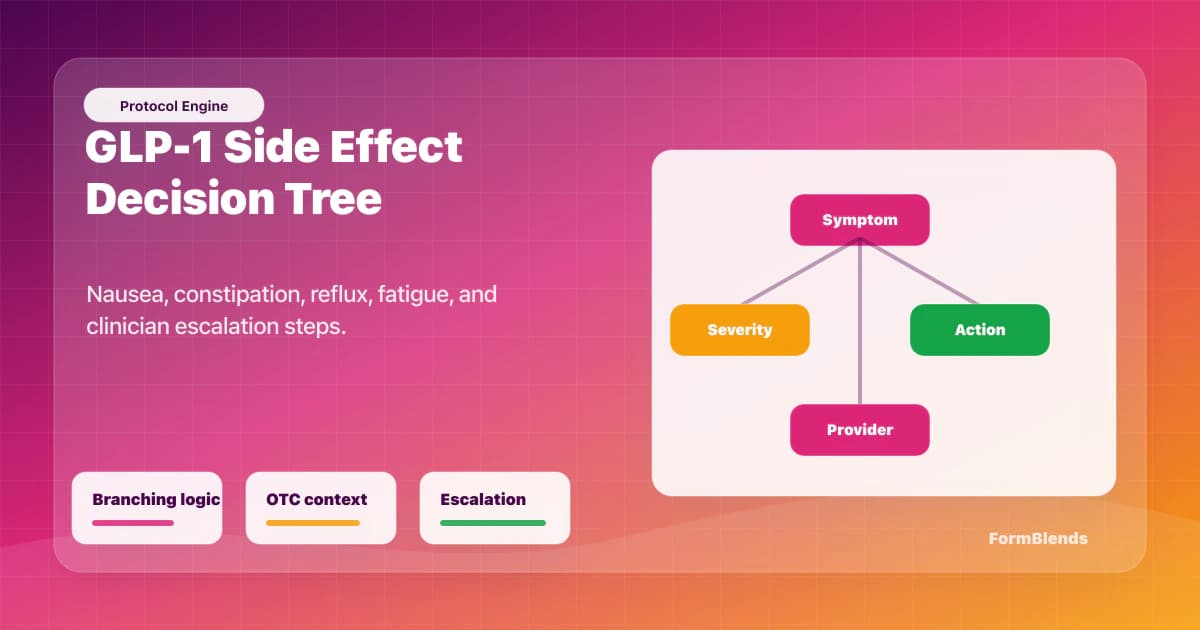
GLP-1 side effect protocol decision tree for nausea, constipation, reflux, fatigue, and clinician escalation
The protocol engine maps symptoms such as nausea, constipation, reflux, and fatigue to practical next steps and escalation points.

Page refresh

2026 page notes for Side Effect Protocol

Before you act on this topic, check eligibility, clinician oversight, pharmacy sourcing, pricing, follow-up, side effects, and what a realistic result would look like for your situation.

Side Effect Protocol includes more editorial detail for readers who want the useful facts, the quality signals, and the questions worth asking before choosing a provider, treatment, or next step.

Side Effect Protocol now adds practical 2026 context for Side Effect Protocol, Side Effect Protocol tool, GLP-1 planning, peptide therapy, dosing, cost, safety, patient tracking, and 2026 treatment decisions, and related searches such as side, effect, protocol, tool, glp-1, planning, peptide, therapy.

Side Effect Protocol Side Effect Protocol 2026 visual guide with side, effect, protocol, tool context

Side Effect Protocol: custom 2026 visual context for Side Effect Protocol, Side Effect Protocol tool, GLP-1 planning, peptide therapy, dosing, cost, safety, patient tracking, and 2026 treatment decisions, and practical decision-making.

Image description: Side Effect Protocol custom image metadata for Side Effect Protocol, Side Effect Protocol tool, GLP-1 planning, peptide therapy, dosing, cost, safety, patient tracking, and 2026 treatment decisions, side, effect, protocol, tool, glp-1, planning, peptide, therapy, and FormBlends patient decision support.
1
2
3
4
5

Which medication are you taking?

Select your current compound to get targeted side effect management.

Need help managing side effects?

FormBlends physicians specialize in GLP-1 titration and can customize your dosing schedule to minimize side effects while maximizing results.

Talk to a provider

Frequently asked questions

What are the most common side effects of semaglutide?+
According to the STEP clinical trials (Wilding et al., NEJM 2021), the most common side effects of semaglutide 2.4 mg are nausea (up to 44%), diarrhea (up to 30%), vomiting (up to 24%), and constipation (up to 24%). Most GI side effects are mild to moderate and decrease over time as the body adjusts to each dose tier.
How long do GLP-1 side effects typically last?+
Most GI side effects like nausea and diarrhea peak during the first 4-8 weeks of treatment and after each dose escalation. They typically improve within 2-4 weeks at each dose level. The STEP and SURMOUNT trial data showed that the majority of adverse events were transient and occurred during titration periods.
What helps with GLP-1-related nausea?+
Evidence-based strategies include eating smaller, more frequent meals (5-6 per day), avoiding high-fat and greasy foods, injecting in the evening so peak effects occur during sleep, and staying upright for 30 minutes after eating. OTC options include Dramamine (dimenhydrinate), Emetrol, ginger capsules, and vitamin B6. If nausea persists beyond 4 weeks at a stable dose, contact your provider.
Are tirzepatide side effects different from semaglutide?+
Tirzepatide and semaglutide share similar GI side effect profiles, but the rates differ. In SURMOUNT trials (Jastreboff et al., NEJM 2022), tirzepatide at 15 mg showed nausea in 33% of participants versus 44% for semaglutide 2.4 mg in STEP trials. Tirzepatide also reported higher rates of hair loss (up to 5-6%) and injection site reactions (up to 7%) compared to semaglutide.
When should I contact my doctor about GLP-1 side effects?+
Contact your provider immediately if you experience: severe abdominal pain radiating to the back (possible pancreatitis), inability to keep any fluids down for 12+ hours, blood in vomit or stool, signs of severe allergic reaction (face/throat swelling, difficulty breathing), or vision changes. For non-emergency concerns, reach out if side effects persist beyond 4 weeks at a stable dose or are severe enough to affect your daily life.
Does hair loss from GLP-1 medications grow back?+
Yes. Hair thinning associated with GLP-1 medications is telogen effluvium, triggered by rapid weight loss rather than the drug itself. It typically begins 2-4 months after starting treatment and is self-limiting. Shedding usually slows within 3-6 months, and regrowth occurs within 6-12 months. Ensuring adequate protein intake (80-100g daily) and avoiding very low-calorie diets can help minimize the severity.
Can I take OTC medications while on semaglutide or tirzepatide?+
Many OTC medications are safe to use alongside GLP-1 agonists. Common combinations include acetaminophen for headaches, Miralax for constipation, Imodium for diarrhea, and Pepcid AC for acid reflux. However, always check with your prescribing provider before starting any new medication, as GLP-1 agonists can delay the absorption of oral medications due to slowed gastric emptying.

Medical disclaimer: This tool provides general information and is not a substitute for medical advice, diagnosis, or treatment. Side effect incidence rates are from the STEP trials (Wilding et al., New England Journal of Medicine, 2021) for semaglutide and the SURMOUNT trials (Jastreboff et al., New England Journal of Medicine, 2022) for tirzepatide. BPC-157 data is based on preclinical studies and clinical practice observations, as no large-scale human RCTs have been published. Individual experiences vary. Always consult a licensed healthcare provider before making changes to your medication or treatment plan.