Key Takeaway
The science behind mitochondrial health supplements explained. How CoQ10, NAD+ precursors, and PQQ work at the cellular level to boost energy and slow aging.
Mitochondrial health supplements work by supporting the electron transport chain, replenishing critical coenzymes, stimulating the growth of new mitochondria, and protecting existing ones from oxidative damage. The science behind these supplements centers on four biological processes: oxidative phosphorylation, mitochondrial biogenesis, mitophagy, and antioxidant defense . Knowing how each supplement interacts with these processes helps you make informed decisions about which ones to use and why they matter for aging, energy, and disease prevention.
Mitochondria 101: How Energy Is Made
Every cell in your body (except mature red blood cells) contains mitochondria. These double-membrane organelles convert the calories you eat into ATP (adenosine triphosphate), the universal energy currency of life. The process happens through a series of biochemical reactions collectively called oxidative phosphorylation.
Here is a simplified version of what happens inside a mitochondrion:
- Step 1[1]: Glucose and fatty acids are broken down into acetyl-CoA through glycolysis and beta-oxidation.
- Step 2: Acetyl-CoA enters the citric acid cycle (Krebs cycle), producing electron carriers NADH and FADH2.
- Step 3: NADH and FADH2 donate electrons to the electron transport chain (ETC), a series of four protein complexes (I through IV) embedded in the inner mitochondrial membrane.
- Step 4: As electrons flow through the ETC, protons are pumped across the membrane, creating an electrochemical gradient.
- Step 5: Protons flow back through ATP synthase (Complex V), driving the production of ATP from ADP and phosphate.
This process generates approximately 36 ATP molecules per glucose molecule, making it vastly more efficient than anaerobic metabolism, which produces only 2 ATP.
Where Supplements Fit Into the Energy Chain
CoQ10 and the Electron Transport Chain
Coenzyme Q10 (ubiquinone/ubiquinol) serves as an electron shuttle between Complexes I, II, and III of the electron transport chain. Without adequate CoQ10, electron flow stalls, ATP production drops, and more electrons "leak" to form reactive oxygen species (ROS).
View data table
| Category | Evidence and Efficacy Score | Detail |
|---|---|---|
| Cold Exposure | 72 | Metabolic activation |
| Red Light | 65 | Mitochondrial support |
| CGM Tracking | 82 | Glucose optimization |
| Peptide Stacks | 70 | Targeted protocols |
| Nootropics | 55 | Cognitive enhancement |
This dual role is important. CoQ10 both enables energy production and reduces the oxidative damage that comes from impaired energy production. When CoQ10 levels decline (which happens naturally with age and is accelerated by statin medications), cells face an energy crisis compounded by increasing oxidative stress.
The supplement works by directly replenishing this critical cofactor. Ubiquinol (the reduced form) is preferred because it can immediately participate in electron transfer without requiring enzymatic conversion first.
NAD+ and Complex I
NAD+ (nicotinamide adenine dinucleotide) is the primary electron acceptor in the Krebs cycle and a critical substrate for Complex I of the ETC. When NADH delivers electrons to Complex I, NAD+ is regenerated. This cycling between NAD+ and NADH drives the entire upstream process of mitochondrial energy production NAD+ longevity science.
Beyond energy production, NAD+ activates sirtuins (SIRT1, SIRT3), which regulate mitochondrial function, DNA repair, and stress responses. SIRT3 operates exclusively within mitochondria, deacetylating proteins involved in fatty acid oxidation, the Krebs cycle, and the electron transport chain.
NAD+ precursors like NMN and NR work by providing the raw material cells need to synthesize fresh NAD+. NMN is converted to NAD+ by the enzyme NMNAT, while NR first converts to NMN via NR kinase, then to NAD+.
PQQ and Mitochondrial Biogenesis
Pyrroloquinoline quinone (PQQ) is unique among supplements because it doesn't just support existing mitochondria. It triggers the creation of entirely new ones. PQQ activates PGC-1 alpha (peroxisome proliferator-activated receptor gamma coactivator 1-alpha), which is the master regulator of mitochondrial biogenesis.
PGC-1 alpha orchestrates the transcription of nuclear genes that encode mitochondrial proteins, drives mitochondrial DNA replication, and coordinates the assembly of new mitochondria from scratch. This process is particularly important as we age because mitochondrial numbers naturally decline, reducing the total energy-producing capacity of tissues.
PQQ is also an exceptionally stable antioxidant. While most antioxidants are consumed after neutralizing a single free radical, PQQ can cycle through more than 20,000 catalytic reactions before being degraded . This makes it one of the most efficient antioxidant compounds known.
Alpha-Lipoic Acid and Antioxidant Recycling
Alpha-lipoic acid (ALA) operates as a cofactor for mitochondrial enzyme complexes (pyruvate dehydrogenase and alpha-ketoglutarate dehydrogenase) and as a universal antioxidant recycler. It regenerates spent forms of vitamins C and E, glutathione, and CoQ10, effectively extending the lifespan of every other antioxidant in the system.
Its amphiphilic nature (soluble in both water and fat) allows it to operate in every cellular compartment, including inside the mitochondrial matrix. The R-isomer is the biologically active form and is preferentially used by mitochondrial enzymes.
ALCAR and Fatty Acid Transport
Acetyl-L-carnitine (ALCAR) participates in the carnitine shuttle, a transport system that moves long-chain fatty acids across the inner mitochondrial membrane for beta-oxidation. Without sufficient carnitine, mitochondria can't efficiently burn fat for fuel, leading to both energy deficits and fat accumulation.
The acetyl group on ALCAR provides an additional benefit: it serves as a substrate for acetyl-how to read a COA, feeding directly into the Krebs cycle. This dual function, transporting fuel and providing it, makes ALCAR particularly valuable for tissues with high energy demands like the brain and heart.
Mitophagy: Why Clearing Damaged Mitochondria Matters
Not all mitochondria are healthy. Damaged mitochondria produce excessive ROS, leak pro-apoptotic signals, and consume resources without generating adequate ATP. The process of selectively clearing these dysfunctional organelles is called mitophagy.
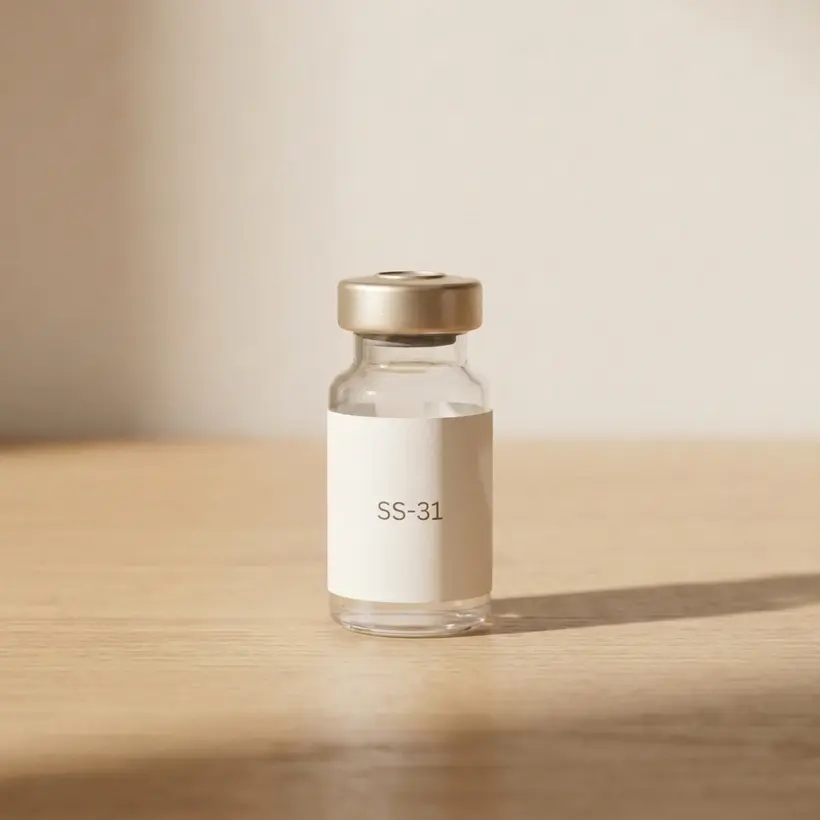
From the FormBlends catalog
SS-31 (Elamipretide)
Mitochondria-targeted peptide that restores cellular energy production · From $79/mo · compounded by a licensed 503A pharmacy, dispensed only after provider review.
Learn about SS-31 (Elamipretide) →Mitophagy is regulated primarily by the PINK1/Parkin pathway. When a mitochondrion loses its membrane potential (a sign of damage), PINK1 accumulates on its surface and recruits Parkin, an E3 ubiquitin ligase. Parkin tags the damaged mitochondrion for engulfment by autophagosomes, which then fuse with lysosomes for degradation.
Supplements like urolithin A have gained attention for their ability to activate mitophagy. In clinical trials, urolithin A supplementation improved mitochondrial function and muscle endurance in older adults by clearing damaged mitochondria and stimulating replacement with new, functional ones.
Fasting and exercise also activate mitophagy naturally, which is why lifestyle interventions remain the foundation of any mitochondrial health strategy autophagy protocols.
The Oxidative Stress Paradox
Mitochondria are the primary source of cellular ROS. This creates a paradox: the organelles that produce your energy also produce the byproducts that damage them. Approximately 0.2 to 2% of electrons passing through the ETC escape and react with oxygen to form superoxide radicals.
Small amounts of ROS serve important signaling functions. They activate adaptive stress responses, regulate immune function, and trigger the hormetic adaptations that make exercise beneficial. The problem arises when ROS production exceeds antioxidant defense capacity, a state called oxidative stress.
This is why blanket "mega-dose antioxidant" approaches can actually be counterproductive. Completely suppressing ROS eliminates beneficial signaling. The goal isn't to eliminate ROS but to maintain a healthy balance. Targeted mitochondrial antioxidants like CoQ10 and ALA achieve this by supporting the natural antioxidant systems within mitochondria rather than flooding cells with external antioxidants.
How These Supplements Work Together
The most effective mitochondrial supplement strategies use combined effects between compounds.
| Combination | combined effect Mechanism |
|---|---|
| CoQ10 + PQQ | CoQ10 optimizes existing mitochondria. PQQ creates new ones. Together they expand both capacity and efficiency. |
| NMN + CoQ10 | NMN replenishes NAD+ for Complex I. CoQ10 supports Complexes I-III. Full ETC coverage. |
| ALA + CoQ10 | ALA regenerates spent CoQ10, extending its effective lifespan in the cell. |
| ALCAR + NMN | ALCAR delivers fatty acid fuel. NMN ensures NAD+ is available to process it through the Krebs cycle. |
| Magnesium + all of the above | Every molecule of ATP requires magnesium to be biologically active. Without it, increased ATP production is meaningless. |
Current Research Frontiers
Mitochondrial science is advancing rapidly. Key areas of active research include:
- Mitochondrial-targeted antioxidants: Compounds like MitoQ and SkQ1 are designed to accumulate specifically inside mitochondria, providing protection exactly where oxidative damage occurs.
- NAD+ metabolism: Researchers are exploring CD38 inhibitors and NAMPT activators as complementary strategies to NAD+ precursor supplementation.
- Mitochondrial transfer: Early-stage research is investigating whether healthy mitochondria can be transferred between cells to rescue damaged tissues.
- Epigenetic regulation: The connection between mitochondrial metabolites (NAD+, acetyl-CoA, alpha-ketoglutarate) and epigenetic modifications that influence aging is an area of intense study.
The FormBlends Perspective
At FormBlends, we view mitochondrial health as inseparable from overall metabolic wellness. Our physician-supervised programs, including GLP-1 weight loss and peptide therapy, address the broader metabolic context in which mitochondria operate. Reducing excess body fat lowers the inflammatory burden on mitochondria. Peptide therapies can support cellular repair pathways that overlap with mitochondrial maintenance.
About the science helps you to make better decisions. We're here to help translate that science into a personalized, medically supervised plan FormBlends consultation.
Medical References
- Wilding JPH, Batterham RL, Calanna S, et al. Once-Weekly Semaglutide in Adults with Overweight or Obesity. N Engl J Med. 2021;384(11):989-1002. [PubMed | ClinicalTrials.gov | DOI]
- Davies M, Færch L, Jeppesen OK, et al. Semaglutide 2.4 mg once a week in adults with overweight or obesity, and type 2 diabetes (STEP 2). Lancet. 2021;397(10278):971-984. [PubMed | ClinicalTrials.gov | DOI]
- Wadden TA, Bailey TS, Billings LK, et al. Effect of Subcutaneous Semaglutide vs Placebo as an Adjunct to Intensive Behavioral Therapy on Body Weight in Adults With Overweight or Obesity (STEP 3). JAMA. 2021;325(14):1403-1413. [PubMed | ClinicalTrials.gov | DOI]
- Rubino D, Abrahamsson N, Davies M, et al. Effect of Continued Weekly Subcutaneous Semaglutide vs Placebo on Weight Loss Maintenance in Adults With Overweight or Obesity (STEP 4). JAMA. 2021;325(14):1414-1425. [PubMed | ClinicalTrials.gov | DOI]
- Garvey WT, Batterham RL, Bhatt DL, et al. Two-year effects of semaglutide in adults with overweight or obesity (STEP 5). Nat Med. 2022;28(10):2083-2091. [PubMed | ClinicalTrials.gov | DOI]
Frequently Asked Questions
Why do mitochondria have their own DNA?
Mitochondria evolved from ancient bacteria that were engulfed by a primitive cell roughly 2 billion years ago. They retained their own small circular genome (mtDNA), which encodes 13 proteins important for the electron transport chain. This bacterial origin also explains why mitochondria replicate independently within cells.
Can supplements repair mitochondrial DNA damage?
Supplements can't directly repair mtDNA. But NAD+ precursors support sirtuins (particularly SIRT3) that regulate mitochondrial repair mechanisms. PQQ and urolithin A promote mitophagy, clearing mitochondria with damaged DNA so they can be replaced with healthy copies.
Are mitochondrial supplements just expensive antioxidants?
No. While some have antioxidant properties, their primary value lies in supporting specific steps of energy production (CoQ10, NAD+ precursors), building new mitochondria (PQQ), or transporting fuel (ALCAR). Their mechanisms go far beyond simple free radical scavenging.
How do I know if my mitochondria are unhealthy?
Common signs of mitochondrial dysfunction include persistent fatigue, exercise intolerance, brain fog, slow recovery from physical activity, and sensitivity to temperature extremes. An organic acids test (OAT) can provide biochemical evidence of mitochondrial stress Contact provider for current pricing.
Do mitochondrial supplements interact with prescription medications?
CoQ10 may reduce the effectiveness of warfarin (a blood thinner). Alpha-lipoic acid can potentiate blood sugar-lowering medications. Magnesium can affect absorption of certain antibiotics. Always inform your physician about supplements you're taking.
Ready when you are
SS-31 (Elamipretide)
Mitochondria-targeted peptide that restores cellular energy production · From $79/mo · compounded by a licensed 503A pharmacy, dispensed only after provider review.
Learn about SS-31 (Elamipretide) →