Key Takeaway
The 2026 red light therapy protocol. Updated dosing guidelines, treatment schedules, combination strategies with cold and heat, and new research on transcranial photobiomodulation.
The 2026 red light therapy protocol incorporates updated dosing research, refined treatment schedules based on tissue-specific absorption data, combination protocols with cold and heat exposure, and expanded transcranial photobiomodulation guidelines. This year's protocol recommends 10 to 15 minutes of dual-wavelength exposure (660 nm + 850 nm) at 6 to 12 inches, 5 days per week, with targeted sessions for recovery, skin, and cognitive goals on specific days.
What Changed in 2026
- Dosing precision improved: Research published in 2025 refined optimal energy density targets for different tissues. Skin responds best to 3 to 6 J/cm2, while deeper tissues (muscle, joint) benefit from 6 to 12 J/cm2. This guides treatment distance and duration more precisely.
- Transcranial PBM expanded: New controlled trials confirmed cognitive benefits of transcranial near-infrared light in healthy adults, not just TBI or neurological patients. Protocols have been standardized around 810 to 850 nm at the forehead and temporal regions.
- Combination therapy data: Studies examining red light + cold exposure and red light + sauna sequencing showed that pre-treatment with red light before cold plunge enhanced brown fat activation.
- Pulsed vs continuous wave clarity: Pulsed modes (10 Hz, 40 Hz) showed advantages for neurological applications, while continuous wave remains optimal for skin and musculoskeletal targets.
The 2026 Weekly Protocol
| Day | Session Focus | Duration | Details |
|---|---|---|---|
| Monday | Full body + post-workout recovery | 15 min | Front and back exposure, 6-12" distance |
| Tuesday | Skin + face | 10 min | Face at 8-12", neck/decolletage |
| Wednesday | Full body + post-workout recovery | 15 min | Front and back exposure, 6-12" distance |
| Thursday | Transcranial + targeted pain areas | 15 min | Forehead 3-6", then affected joints/areas |
| Friday | Full body + post-workout recovery | 15 min | Front and back exposure, 6-12" distance |
| Saturday | Skin + face | 10 min | Face at 8-12", neck/decolletage |
| Sunday | Rest or light session | 0-10 min | Optional recovery-focused session |
Full-Body Protocol (Monday, Wednesday, Friday)
Use a full-body panel (36 to 72 inches tall) providing both 660 nm and 850 nm wavelengths.
Check your GLP-1 eligibility
Use our free BMI Calculator to see if you may qualify for provider-reviewed GLP-1 therapy.
Try the BMI Calculator →View data table
| Category | Evidence and Efficacy Score | Detail |
|---|---|---|
| Cold Exposure | 72 | Metabolic activation |
| Red Light | 65 | Mitochondrial support |
| CGM Tracking | 82 | Glucose optimization |
| Peptide Stacks | 70 | Targeted protocols |
| Nootropics | 55 | Cognitive enhancement |
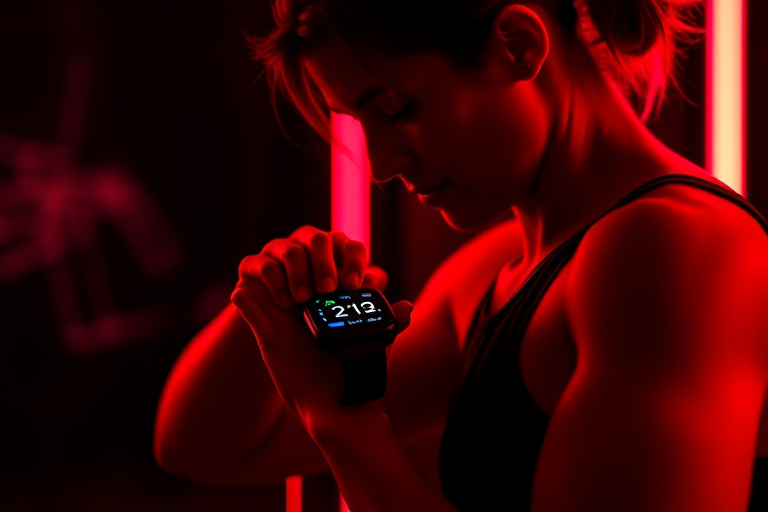
- Front exposure (7 to 8 minutes): Stand 6 to 12 inches from the panel. Expose your face, chest, abdomen, and anterior thighs. Close your eyes or wear provided eye protection.
- Back exposure (7 to 8 minutes): Turn around. Expose your upper back, lower back, glutes, and posterior thighs.
- Total time: 14 to 16 minutes.
Post-Workout Timing
On training days, perform the red light session within 30 minutes of completing exercise. This timing maximizes the recovery benefit by flooding exercised muscles with enhanced ATP production and anti-inflammatory signaling during the critical post-workout window.
Unlike cold water immersion, red light therapy doesn't blunt the hypertrophic response to resistance training. It can be safely used immediately post-workout without concern about interfering with muscle adaptation.
Skin and Face Protocol (Tuesday, Saturday)
Focus on 660 nm (red) wavelength for skin-specific benefits. NIR (850 nm) is acceptable but provides deeper penetration than needed for surface skin treatment.
- Face (5 minutes): Position 8 to 12 inches from the panel. Cover the entire face evenly. Close your eyes.
- Neck and decolletage (3 minutes): These areas show aging early and respond well to red light.
- Hands (2 minutes): Optional. Hands are another area prone to visible aging signs.
Target energy density: 3 to 6 J/cm2 for skin. At typical panel irradiance (50 to 100 mW/cm2 at treatment distance), 5 to 10 minutes achieves this range.
Transcranial Protocol (Thursday)
Use 810 to 850 nm near-infrared light. Red light (660 nm) doesn't penetrate the skull sufficiently for transcranial effects.
- Forehead exposure (5 minutes): Position the device 3 to 6 inches from the forehead, covering the prefrontal cortex area.
- Temporal regions (2 to 3 minutes each side): Expose the temples, targeting the temporal lobes.
- Crown (3 minutes): Optional. Target the vertex of the skull.
If your device supports pulsed mode, use 40 Hz pulsing for transcranial sessions. The 40 Hz frequency corresponds to gamma brain wave oscillations and has shown enhanced cognitive benefits in research.
Transcranial Safety Notes
- Start with 5 minutes total and increase gradually over 2 weeks.
- Discontinue if you experience headaches, visual disturbances, or increased anxiety.
- Don't use transcranial PBM if you have epilepsy or a history of seizures (especially with pulsed modes).
Combination Protocols
Red Light + Cold Plunge
Apply red light for 10 minutes before cold plunging. The pre-treatment enhances mitochondrial priming in brown adipose tissue, potentially amplifying the thermogenic response to cold exposure. Perform cold plunge immediately after the red light session. cold plunge benefits weight loss
Red Light + Sauna
Red light therapy can be used before or after sauna sessions. Avoid during sauna, as most LED panels aren't designed for high-temperature environments and may be damaged. Post-sauna red light may enhance recovery through complementary mechanisms: sauna provides systemic heat stress (HSPs, GH), while red light provides targeted mitochondrial support. sauna protocol fat loss
Red Light + Sleep
Red light exposure in the evening doesn't suppress melatonin (unlike blue light). Some users perform a 10-minute red light session 30 to 60 minutes before bed as part of their wind-down routine. The red wavelength creates a relaxing ambient light environment while delivering therapeutic photons.
2026 Recommended Devices
- Full-body panel (best for thorough protocol): Dual-wavelength (660/850 nm), 36 to 72 inches, irradiance of 80+ mW/cm2 at 6 inches. Budget: $500 to $1,500. Contact provider for current pricing
- Mid-size panel (good balance of coverage and cost): 24 to 36 inches, same wavelength requirements. Budget: $300 to $700. Contact provider for current pricing
- Targeted device with pulsed mode (for transcranial): Smaller unit with adjustable frequency settings. Budget: $200 to $500. Contact provider for current pricing
Tracking Results
- Skin: Take photos under consistent lighting (same angle, same time of day, same location) every 2 weeks. Changes are subtle and hard to notice daily but visible in comparison photos.
- Recovery: Track HRV trends, resting heart rate, and subjective recovery scores (soreness ratings). Improvements should appear within 2 to 4 weeks.
- Pain: Use a 0 to 10 pain scale daily for affected areas. Track trends over 4 to 8 weeks.
- Cognitive: Subjective measures (focus, mental clarity, mood) tracked via daily journaling. Consider cognitive testing apps for more objective measurement.
Common Mistakes
- Standing too far from the panel: Irradiance drops with the square of the distance. At 24 inches, you receive roughly one-quarter the dose compared to 12 inches.
- Inconsistency: Red light therapy requires regular use for results. Sporadic sessions produce minimal benefit.
- Using the wrong wavelengths: Devices emitting wavelengths outside the 630-660 and 810-850 nm windows aren't performing photobiomodulation. Beware of cheap products that don't specify exact wavelengths.
- Overdosing: The biphasic dose-response means excessive treatment can inhibit rather than enhance cellular function. Follow time and distance guidelines.
Frequently Asked Questions
- What is the most important change in the 2026 red light protocol?
- The expansion and standardization of transcranial photobiomodulation protocols for healthy adults. Previously, transcranial use was primarily studied in neurological patients. New 2025 data supports cognitive benefits in healthy individuals using 810-850 nm light with 40 Hz pulsing at the forehead and temporal regions.
- Can I combine red light therapy with my existing biohacking stack?
- Yes. Red light therapy complements virtually every other biohacking practice. It pairs well with exercise (post-workout recovery), cold plunge (pre-treatment enhances BAT activation), sauna (complementary recovery mechanisms), and sleep improvement (evening red light doesn't disrupt melatonin). biohacking beginners guide protocol 2026
- How much should I spend on a red light therapy device?
- A quality mid-size panel (24 to 36 inches) with verified dual-wavelength output costs $300 to $700 and covers most needs. Full-body panels run $500 to $1,500. Avoid devices under $100, as they typically lack adequate irradiance or proper wavelengths.
- Is red light therapy safe for long-term daily use?
- Yes. Red light therapy has been used clinically for decades with an excellent safety profile. There are no known cumulative toxicity effects. The main risk is overdosing individual sessions, which can reduce effectiveness but doesn't cause lasting harm.
- Do I need both red and near-infrared wavelengths?
- For the most thorough benefits, yes. Red (660 nm) excels at surface-level targets (skin, superficial wounds), while NIR (850 nm) penetrates deeper for muscle, joint, bone, brain, and organ benefits. A dual-wavelength panel covers both applications with a single device.
See your options in about 2 minutes
Take the free quiz and see what fits you. Quick, private, and no commitment to continue.
See my options →