Key Takeaway
How to start sleep improvement biohacking. Five simple changes you can make tonight to improve sleep quality, boost recovery, and wake up with more energy.
Starting sleep improvement biohacking requires just five changes: get morning sunlight within an hour of waking, stop caffeine after noon, make your bedroom completely dark and cool, take magnesium before bed, and set a consistent sleep schedule seven days a week. These five adjustments cost little to nothing and can improve your sleep quality within the first week . Here is how to implement each one today.
Change 1: Morning Sunlight (Free, 10 Minutes)
This is the single highest-impact change you can make. Your circadian clock needs bright light in the morning to properly calibrate. Without it, melatonin release at night is delayed, sleep onset is pushed later, and overall sleep quality suffers.
What to Do
- Step outside within 30 to 60 minutes of waking.
- Spend 10 to 15 minutes in natural daylight. You don't need to stare at the sun. Just be outside with your face oriented toward the sky.
- Don't wear sunglasses during this exposure. Regular prescription glasses are fine.
- On cloudy or rainy days, you still benefit. Outdoor light on an overcast day is significantly brighter than any indoor lighting.
- Combine this with a short walk, stretching, or your morning coffee for efficiency.
Within 3 to 5 days of consistent morning light exposure, most people notice they feel more alert in the morning and drowsier at their target bedtime. Your circadian rhythm is recalibrating .
Change 2: Caffeine Cutoff at Noon (Free, Immediate)
Caffeine has a half-life of 5 to 7 hours. That means if you drink a cup of coffee at 3 PM, roughly half the caffeine is still active in your system at 10 PM. Even if you can fall asleep after late caffeine, studies show it significantly reduces deep sleep duration and quality .
View data table
| Category | Evidence and Efficacy Score | Detail |
|---|---|---|
| Cold Exposure | 72 | Metabolic activation |
| Red Light | 65 | Mitochondrial support |
| CGM Tracking | 82 | Glucose optimization |
| Peptide Stacks | 70 | Targeted protocols |
| Nootropics | 55 | Cognitive enhancement |

What to Do
- Set a hard caffeine cutoff at noon (or 1 PM at the latest).
- This includes coffee, tea, energy drinks, pre-workout supplements, and chocolate.
- If you currently drink caffeine in the afternoon, taper gradually over one week rather than stopping abruptly. Replace afternoon coffee with decaf, herbal tea, or water.
- Afternoon energy dips are better addressed with a 10-minute walk, cold water on the face, or a 20-minute nap than with more caffeine.
Many people are surprised by how much their sleep improves from this single change. It's the easiest biohack with the highest return on effort.
Change 3: Improve Your Bedroom (Under $50)
Your bedroom environment directly determines how well you sleep. Three factors matter most: darkness, temperature, and noise.
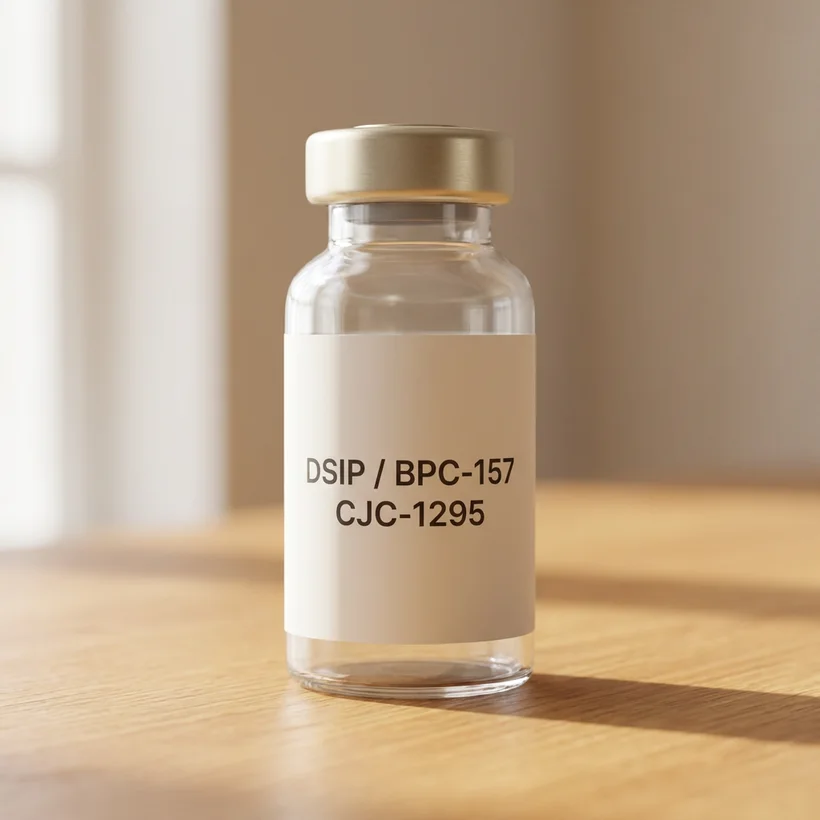
From the FormBlends catalog
Sleep + Recovery Stack
Sleep and repair support with DSIP, BPC-157, and CJC · From $299/mo · compounded by a licensed 503A pharmacy, dispensed only after provider review.
View Sleep + Recovery Stack →Darkness
- Cover windows with blackout curtains or a temporary blackout solution (even a dark sheet pinned over the window works initially) Contact provider for current pricing.
- Alternatively, use a comfortable sleep mask. Look for one with a contoured design that doesn't press on your eyes.
- Cover or unplug all LED lights in the room: chargers, standby indicators, alarm clocks. Use tape or remove them from the room entirely.
Temperature
- Set your thermostat to 65 to 68 degrees Fahrenheit before bed.
- Use breathable bedding (cotton or linen sheets rather than synthetic materials).
- If you share a bed with a partner who prefers warmth, a dual-zone blanket or separate bedding can solve the conflict.
Noise
- If your environment is noisy (traffic, neighbors, apartment living), use a white noise machine or fan. Consistent sound masks variable disruptions Contact provider for current pricing.
- Earplugs are also effective for noise-sensitive sleepers. Silicone or foam options are inexpensive and widely available.
Change 4: Magnesium Before Bed (Under $15/Month)
Magnesium is involved in over 300 enzymatic reactions, including neurotransmitter regulation and muscle relaxation. An estimated 50% of adults don't get enough from their diet . Supplementing magnesium before bed improves sleep quality through several mechanisms.
- It activates GABA receptors, promoting calm and reducing neural excitability.
- It helps regulate melatonin production.
- It relaxes skeletal muscles, reducing restless legs and nighttime cramps.
What to Buy
- Best form: Magnesium glycinate (also called magnesium bisglycinate). Well-absorbed and gentle on the stomach. The glycine component itself has sleep-promoting properties.
- Alternative: Magnesium threonate (L-threonate). Crosses the blood-brain barrier more effectively. may be particularly useful for cognitive health and racing thoughts at bedtime.
- Avoid: Magnesium oxide (poor absorption) and magnesium citrate (can cause loose stools at higher doses).
- Dose: 300 to 400 mg of elemental magnesium, taken 30 to 60 minutes before bed.
- Cost: $10 to $15 per month for quality brands Contact provider for current pricing.
Most people notice an improvement in sleep quality within the first 3 to 5 nights of magnesium supplementation .
Change 5: Consistent Sleep Schedule (Free, Critical)
Your circadian rhythm thrives on regularity. Going to bed at 10 PM on weekdays and 1 AM on weekends creates "social jet lag," a measurable disruption in circadian timing that impairs sleep quality, metabolism, and mood for days after the shift .
What to Do
- Choose a bedtime and wake time that you can maintain seven days a week.
- Allow for a maximum of 30 to 60 minutes of variation on weekends. More than that creates circadian disruption.
- Set a "bedtime alarm" on your phone to remind you to start winding down 30 minutes before your target bedtime.
- If you currently have an irregular schedule, shift your bedtime by 15 minutes every 2 to 3 days until you reach your target, rather than forcing a drastic change.
Within two weeks of consistent timing, you should find that you start to feel naturally drowsy near your chosen bedtime and wake more easily near your target wake time, often before your alarm sounds.
Your First Week Checklist
| Day | Actions |
|---|---|
| Day 1 | Get morning sunlight. Set caffeine cutoff at noon. Take 300 mg magnesium glycinate before bed. Set consistent bedtime. |
| Day 2 | Same as Day 1. Make bedroom darker (tape over LEDs, install blackout solution). |
| Day 3 | Same routine. Lower thermostat to 67 degrees F. Note any changes in how quickly you fall asleep. |
| Day 4 to 7 | Maintain all five changes. Start noticing patterns: when do you feel most alert? When does drowsiness naturally arrive? |
What to Add Next (After Week 1)
Once the five foundational changes are in place, consider these second-tier optimizations:
- L-theanine (200 mg): Add to your evening magnesium for enhanced calm. Promotes alpha brain waves without sedation Contact provider for current pricing.
- Screen reduction: Avoid all screens during the last 60 minutes before bed. If screens are unavoidable, wear blue-light-blocking glasses with amber lenses.
- Evening wind-down routine: Create a 20 to 30 minute pre-bed ritual: dim lights, gentle stretching, reading a physical book, or a warm shower.
- Sleep tracking: A basic sleep tracker (even your phone placed on your nightstand with a free app) can provide useful data about your sleep patterns sleep improvement biohacking complete guide.
How Better Sleep Supports Your Health Goals
If you're working toward weight loss, better sleep is one of the most powerful accelerators available. Sleep-deprived individuals eat an average of 300 to 500 more calories per day due to hormonal disruptions in ghrelin and leptin . Improving sleep effectively removes a hidden obstacle to weight management.
At FormBlends, we incorporate sleep assessment into our physician-supervised GLP-1 weight loss programs. Patients who improve sleep alongside their medical treatment consistently achieve better outcomes. Our peptide therapy programs also work more effectively when the body has adequate recovery time through quality sleep.
Frequently Asked Questions
I have tried "sleep hygiene" before and it did not work. How is this different?
Many sleep hygiene lists are vague ("relax before bed"). This protocol is specific and actionable. Morning light exposure, in particular, is often missing from generic advice but is the most physiologically impactful change you can make. If previous attempts failed, start with just morning sunlight and the caffeine cutoff for one week before adding the other changes.
What if I work night shifts?
Night shift workers need to adapt these principles to their schedule. Use blackout solutions during daytime sleep, get bright light exposure at the start of your "day" (even if it's 6 PM), and take melatonin (0.5 to 1 mg) before your shifted sleep time. Consistency in your shifted schedule matters just as much .
Is magnesium safe to take every night?
Yes. Magnesium glycinate is safe for daily long-term use at 300 to 400 mg in healthy adults. It addresses a common nutritional deficiency rather than acting as a drug. People with kidney disease should consult their doctor before supplementing .
My partner snores loudly. What can I do?
Snoring may indicate sleep apnea, which requires medical evaluation. In the meantime, earplugs and white noise can help. Consider separate blankets or a sleep apnea screening for your partner .
How do I know when I am sleeping enough?
You're sleeping enough when you wake naturally within a few minutes of your alarm (or before it), feel alert within 30 minutes of rising, and maintain steady energy throughout the day without relying on caffeine. If you consistently need an alarm to wake up, you're either not sleeping enough or your sleep quality needs improvement.
Can sleep improvement help with anxiety?
Significantly. Poor sleep and anxiety form a bidirectional cycle: anxiety disrupts sleep, and poor sleep increases anxiety. Breaking the cycle with consistent sleep habits, magnesium supplementation, and evening wind-down routines can produce meaningful reductions in daytime anxiety for many people .
Ready when you are
Sleep + Recovery Stack
Sleep and repair support with DSIP, BPC-157, and CJC · From $299/mo · compounded by a licensed 503A pharmacy, dispensed only after provider review.
View Sleep + Recovery Stack →