Key Takeaway
Complete guide to sleep improvement biohacking. Evidence-based strategies for improving sleep quality, duration, and architecture for better health and longevity.
Sleep improvement biohacking uses targeted environmental, behavioral, and supplement-based interventions to improve sleep quality, increase deep sleep and REM duration, and align your circadian rhythm for maximum recovery and cognitive performance. Poor sleep accelerates biological aging, impairs immune function, disrupts hormone balance, and increases the risk of metabolic disease, cardiovascular events, and neurodegeneration . This guide covers every major strategy backed by science.
Why Sleep Is the Foundation of Every Biohack
No supplement, diet, or exercise protocol can compensate for consistently poor sleep. During sleep, your body performs functions that simply can't happen while you're awake:. diet: foods that raise and lower t levels.
- Glymphatic clearance: The brain's waste removal system (the glymphatic system) is 60% more active during sleep, clearing metabolic waste including amyloid-beta, a protein linked to Alzheimer's disease.
- Growth hormone release: Up to 75% of daily growth hormone secretion occurs during deep sleep (slow-wave sleep), driving tissue repair, muscle recovery, and fat metabolism.
- Memory consolidation: Both deep sleep and REM sleep are required for converting short-term memories into long-term storage.
- Immune regulation: T-cell production, cytokine release, and immune surveillance are all sleep-dependent processes.
- Hormonal balance: Cortisol, insulin, leptin, ghrelin, testosterone, and thyroid hormones all follow circadian patterns that depend on quality sleep.
When we say sleep is the foundation, we mean it literally. Every other improvement strategy we discuss at FormBlends, from peptide therapy to autophagy protocols to mitochondrial support, works better when sleep is improved first.
How Sleep Architecture
Sleep isn't a uniform state. It cycles through distinct stages roughly every 90 minutes.
View data table
| Category | Evidence and Efficacy Score | Detail |
|---|---|---|
| Cold Exposure | 72 | Metabolic activation |
| Red Light | 65 | Mitochondrial support |
| CGM Tracking | 82 | Glucose optimization |
| Peptide Stacks | 70 | Targeted protocols |
| Nootropics | 55 | Cognitive enhancement |
| Stage | Duration per Cycle | Key Functions |
|---|---|---|
| N1 (Light Sleep) | 5 to 10 minutes | Transition from wakefulness. easy to wake |
| N2 (Intermediate Sleep) | 20 to 25 minutes | Sleep spindles and K-complexes. memory processing begins |
| N3 (Deep/Slow-Wave Sleep) | 20 to 40 minutes (early cycles) | Physical recovery, growth hormone release, glymphatic clearance, immune support |
| REM Sleep | 10 to 60 minutes (increases in later cycles) | Emotional processing, memory consolidation, cognitive restoration |
Deep sleep dominates the first half of the night, while REM sleep dominates the second half. This is why cutting sleep short in the morning disproportionately reduces REM, and going to bed late disproportionately reduces deep sleep.
Effective sleep biohacking targets specific stages. Most people are deficient in deep sleep, making N3 improvement a priority.
The Environment: Your Bedroom Setup
Temperature
Your core body temperature needs to drop by approximately 2 to 3 degrees Fahrenheit to initiate and maintain sleep. The ideal bedroom temperature is 65 to 68 degrees Fahrenheit (18 to 20 degrees Celsius).
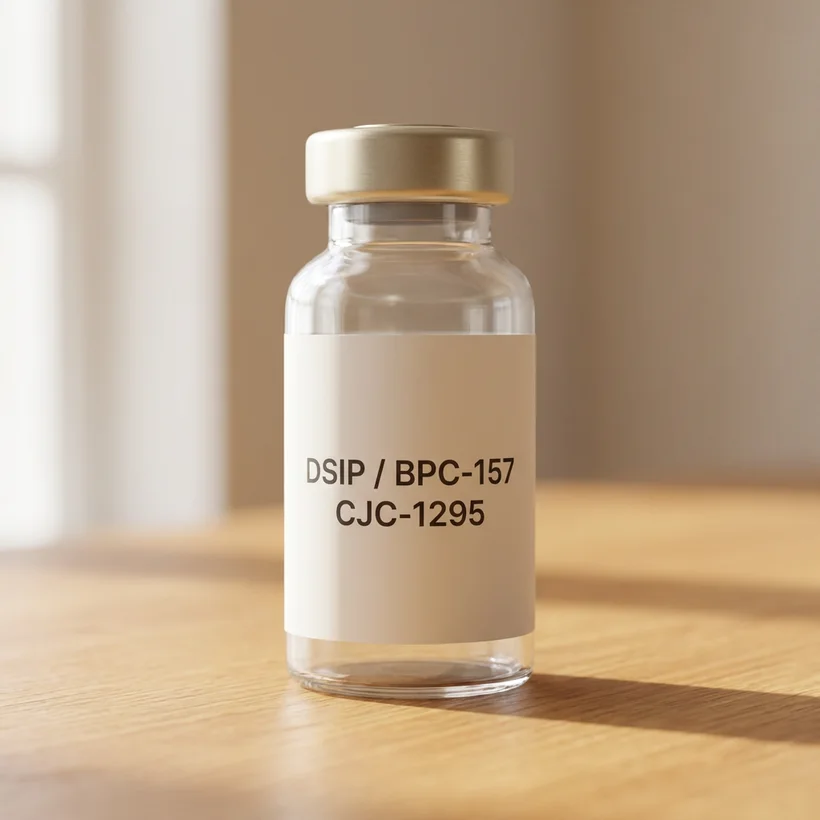
From the FormBlends catalog
Sleep + Recovery Stack
Sleep and repair support with DSIP, BPC-157, and CJC · From $299/mo · compounded by a licensed 503A pharmacy, dispensed only after provider review.
View Sleep + Recovery Stack →Advanced options include cooling mattress pads (like the Eight Sleep or ChiliPad) that regulate bed temperature throughout the night, warming slightly before your wake time to support natural cortisol rise Contact provider for current pricing.
Light
Complete darkness is non-negotiable. Even dim light exposure during sleep suppresses melatonin production and disrupts circadian signaling. A 2022 study found that sleeping with even a modest light (equivalent to a TV screen in a dark room) increased next-day insulin resistance and heart rate.
- Use blackout curtains or a quality sleep mask.
- Cover or remove all electronic light sources (standby LEDs, charger lights).
- If you need a nightlight for safety, use a dim red or amber light, which has minimal impact on melatonin.
Sound
Consistent background noise (white noise, pink noise, or a fan) can mask disruptive environmental sounds. Pink noise, which emphasizes lower frequencies, has been shown in some studies to enhance slow-wave sleep.
Air Quality
CO2 levels in a closed bedroom can rise significantly overnight, impairing sleep quality. Keep a window cracked if possible, or use an air purifier with a HEPA filter. Optimal bedroom CO2 should stay below 1,000 ppm.
Light Exposure: The Circadian Driver
Your circadian rhythm is primarily set by light exposure, not by when you eat or exercise. Getting light timing right is the single most impactful behavioral change for sleep quality.
Morning Light
- Get 10 to 30 minutes of bright light exposure within 1 hour of waking.
- Natural sunlight is best (even on a cloudy day, outdoor light is 10 to 100 times brighter than indoor lighting).
- This sets your circadian clock, triggers cortisol awakening response, and starts the 14 to 16 hour countdown to melatonin release.
- If you wake before sunrise, a 10,000-lux light therapy lamp for 20 minutes is an effective substitute Contact provider for current pricing.
Evening Light Restriction
- Dim household lights 2 to 3 hours before bedtime.
- Avoid screens (phone, tablet, TV, computer) during the last hour before bed, or use blue-light-blocking glasses with amber lenses.
- Switch to warm, dim lighting (salt lamps, candles, dimmed overhead lights with warm-tone bulbs).
Nutrition and Timing
- Caffeine cutoff: No caffeine after noon (or at least 8 to 10 hours before bedtime). Caffeine has a half-life of 5 to 7 hours, meaning half of your afternoon coffee is still circulating at bedtime.
- Alcohol: Even moderate alcohol consumption reduces REM sleep and increases sleep fragmentation. If you drink, stop at least 3 to 4 hours before bed.
- Meal timing: Finish your last meal 2 to 3 hours before sleep. Late, heavy meals improve core temperature and activate digestion, both of which impair sleep onset.
- Sleep-supportive foods: Tart cherry juice (natural melatonin source), kiwi (serotonin precursors), fatty fish (omega-3s and vitamin D), and nuts (magnesium) have all shown sleep-improving properties in studies.
Supplements for Sleep Improvement
| Supplement | Dose | Timing | Mechanism |
|---|---|---|---|
| Magnesium glycinate or threonate | 300 to 400 mg | 30 to 60 min before bed | GABA receptor activation, muscle relaxation, nervous system calming |
| L-theanine | 200 to 400 mg | 30 to 60 min before bed | Promotes alpha brain waves, reduces anxiety without sedation |
| Glycine | 3 grams | Before bed | Lowers core body temperature, improves sleep onset and deep sleep quality |
| Apigenin | 50 mg | Before bed | Mild anxiolytic through GABA modulation. found in chamomile |
| Melatonin | 0.3 to 1 mg (low dose) | 30 to 60 min before bed | Circadian signal, not a sedative. Lower doses are more physiological and often more effective than high doses |
We recommend starting with magnesium and L-theanine. Add glycine if you need additional support. Use melatonin strategically (for jet lag or circadian shifts) rather than nightly Contact provider for current pricing.
Advanced Biohacking Tools
- Sleep trackers: Devices like the Oura Ring, WHOOP, or Apple Watch provide data on sleep stages, heart rate variability (HRV), and respiratory rate. Use data to identify patterns, not to obsess over single nights Contact provider for current pricing.
- Cooling mattress systems: Programmable bed cooling provides significant deep sleep improvements for many users.
- Mouth taping: Encourages nasal breathing during sleep, improving oxygenation and reducing snoring. Use purpose-made mouth tape, not standard tape.
- Red light therapy: Evening exposure to red/near-infrared light may support melatonin production without disrupting circadian rhythms.
The Connection to Weight and Metabolic Health
Sleep deprivation directly promotes weight gain through multiple mechanisms: increased ghrelin (hunger hormone), decreased leptin (satiety hormone), impaired insulin sensitivity, and increased cortisol, which drives visceral fat storage.
At FormBlends, we find that patients on our GLP-1 weight loss programs achieve better results when sleep is improved. GLP-1 medications work partly through appetite regulation, and poor sleep undermines appetite control at the hormonal level. Fixing sleep amplifies the effectiveness of every other metabolic intervention.
Frequently Asked Questions
How many hours of sleep do I actually need?
Most adults need 7 to 9 hours. The right amount is the one that allows you to wake without an alarm, feel alert within 30 minutes of rising, and maintain energy throughout the day without caffeine dependence. Genetic variation exists, but fewer than 1% of people genuinely function well on less than 6 hours.
Is it better to go to bed early or wake up late?
Consistency matters more than the specific time. But aligning your sleep window with darkness (sleeping by 10 to 11 PM and waking by 6 to 7 AM) matches the natural cortisol and melatonin rhythms of most people. Deep sleep is concentrated in early sleep cycles, so going to bed too late can reduce total deep sleep time.
Do sleep supplements cause dependency?
Magnesium, L-theanine, glycine, and apigenin aren't habit-forming. Melatonin doesn't create physiological dependency, but some people develop a psychological reliance on it. Keep melatonin doses low (0.3 to 1 mg) and use it strategically rather than nightly.
Can naps replace lost nighttime sleep?
Short naps (20 to 30 minutes) can restore alertness and performance, but they can't replace the deep sleep and REM cycles lost from shortened nighttime sleep. Avoid napping after 2 PM, as late naps can interfere with nighttime sleep onset.
How does sleep affect testosterone?
Testosterone production peaks during deep sleep. Studies show that sleeping only 5 hours per night for one week reduces testosterone levels by 10 to 15% in young men, equivalent to 10 to 15 years of aging hormone improvement men over 40.
What if I have a diagnosed sleep disorder?
If you suspect sleep apnea, restless leg syndrome, or another sleep disorder, seek evaluation from a sleep medicine specialist. Biohacking strategies complement but don't replace medical treatment for diagnosed conditions.
Ready when you are
Sleep + Recovery Stack
Sleep and repair support with DSIP, BPC-157, and CJC · From $299/mo · compounded by a licensed 503A pharmacy, dispensed only after provider review.
View Sleep + Recovery Stack →