Key Takeaways
- Seven GLP-1-class molecules hold FDA approval as of September 4, 2026: exenatide, lixisenatide, liraglutide, dulaglutide, semaglutide, orforglipron (Foundayo, approved April 1, 2026) and the dual agonist tirzepatide; albiglutide was withdrawn in 2018. Retatrutide, efpeglenatide, CagriSema and survodutide are not approved, and an earlier version of this page wrongly listed the first two as approved under brand names that do not exist
- Semaglutide appears under three brand names (Ozempic for diabetes, Wegovy for obesity, Rybelsus for oral diabetes treatment), which confuses patients but reflects different dosing schedules and FDA indications
- Tirzepatide (Zepbound, Mounjaro) is technically a dual GIP/GLP-1 agonist, not a pure GLP-1 agonist, which explains its superior weight loss outcomes in head-to-head trials
- Compounded versions use the generic drug name (semaglutide, tirzepatide) rather than brand names and are not FDA-approved but are legal under specific shortage conditions
The short answer
The FDA-approved GLP-1 receptor agonist drug names are exenatide (Byetta, Bydureon), lixisenatide (Adlyxin), liraglutide (Victoza, Saxenda), dulaglutide (Trulicity), semaglutide (Ozempic, Wegovy, Rybelsus), and albiglutide (Tanzeum, discontinued 2018). Tirzepatide (Mounjaro, Zepbound) is a dual GIP/GLP-1 agonist. Compounded versions use generic names: semaglutide and tirzepatide.
Table of contents
- The complete list: every GLP-1 receptor agonist by generic and brand name
- What most articles get wrong about GLP-1 drug classification
- Pure GLP-1 agonists vs dual agonists: why the distinction matters
- The brand name confusion problem: why semaglutide has three names
- Compounded GLP-1 medications: naming conventions and legal status
- The FormBlends Drug Name Classification System
- Discontinued and pipeline GLP-1 medications
- Generic availability timeline: when patents expire
- How to identify which GLP-1 medication you're taking
- The decision tree: matching drug names to your treatment goal
- Approved names as of September 2026 (corrected)
- Semaglutide and tirzepatide products by form
- Generic liraglutide
- Average weight loss by drug name
- The GLP-1 pill names
- FAQ
- Sources
The complete list: every GLP-1 receptor agonist by generic and brand name
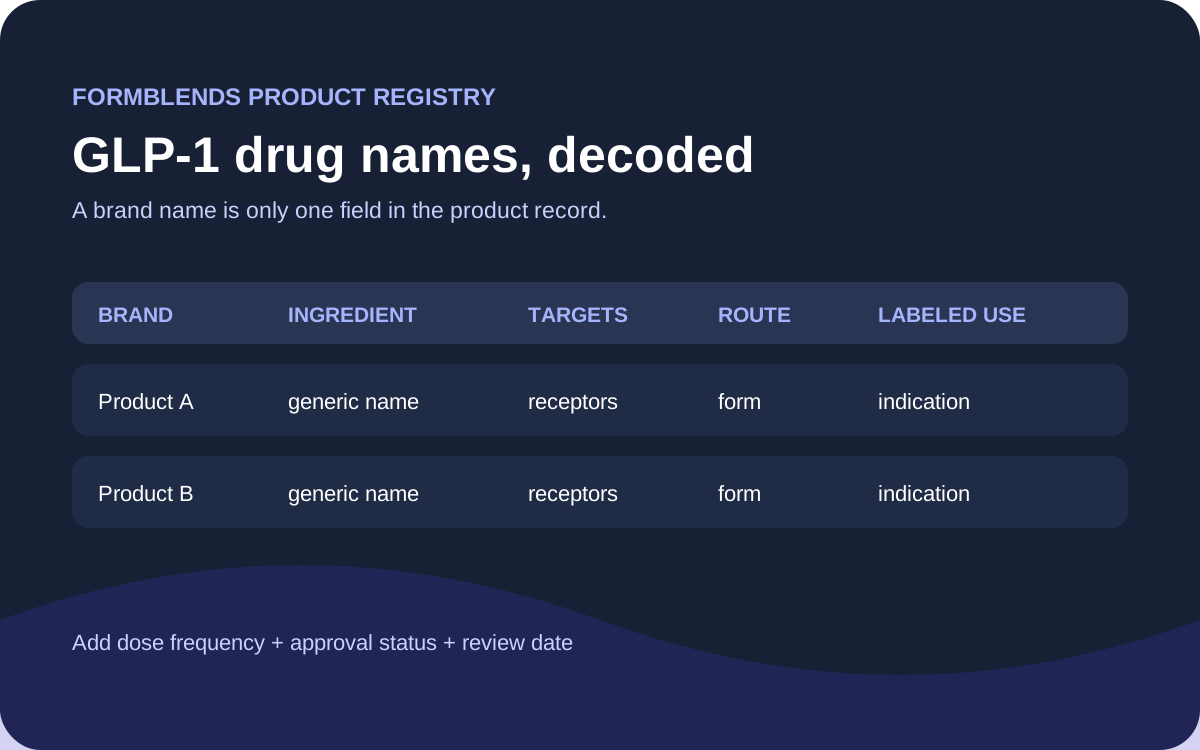
The table below includes every FDA-approved GLP-1 receptor agonist and dual agonist as of September 4, 2026, organized by approval date. The last three rows were corrected in September 2026: only orforglipron (Foundayo) is approved; efpeglenatide and retatrutide remain investigational, and the brand names an earlier version showed for them (Eperzan, Orfoglip, Retara) do not exist. FDA's 2026 novel approvals list shows Foundayo and no other GLP-1-class drug.
Check your GLP-1 eligibility
Use our free BMI Calculator to see if you may qualify for provider-reviewed GLP-1 therapy.
Try the BMI Calculator →| Generic name | Brand name(s) | Drug class | FDA approval year | Primary indication | Administration route | Dosing frequency |
|---|---|---|---|---|---|---|
| Exenatide | Byetta | Pure GLP-1 | 2005 | Type 2 diabetes | Subcutaneous injection | Twice daily |
| Exenatide extended-release | Bydureon, Bydureon BCise | Pure GLP-1 | 2012 | Type 2 diabetes | Subcutaneous injection | Once weekly |
| Liraglutide | Victoza | Pure GLP-1 | 2010 | Type 2 diabetes | Subcutaneous injection | Once daily |
| Liraglutide | Saxenda | Pure GLP-1 | 2014 | Obesity (weight management) | Subcutaneous injection | Once daily |
| Lixisenatide | Adlyxin | Pure GLP-1 | 2016 | Type 2 diabetes | Subcutaneous injection | Once daily |
| Albiglutide | Tanzeum | Pure GLP-1 | 2014 | Type 2 diabetes (discontinued 2018) | Subcutaneous injection | Once weekly |
| Dulaglutide | Trulicity | Pure GLP-1 | 2014 | Type 2 diabetes | Subcutaneous injection | Once weekly |
| Semaglutide | Ozempic | Pure GLP-1 | 2017 | Type 2 diabetes | Subcutaneous injection | Once weekly |
| Semaglutide | Rybelsus | Pure GLP-1 | 2019 | Type 2 diabetes | Oral tablet | Once daily |
| Semaglutide | Wegovy | Pure GLP-1 | 2021 | Obesity (weight management) | Subcutaneous injection | Once weekly |
| Tirzepatide | Mounjaro | Dual GIP/GLP-1 | 2022 | Type 2 diabetes | Subcutaneous injection | Once weekly |
| Tirzepatide | Zepbound | Dual GIP/GLP-1 | 2023 | Obesity (weight management) | Subcutaneous injection | Once weekly |
| Orforglipron | Foundayo | Pure GLP-1 (small molecule) | 2026 (April 1) | Obesity, or overweight with a weight-related condition | Oral tablet | Once daily |
| Efpeglenatide | None (no U.S. brand) | Pure GLP-1 | Not approved as of September 4, 2026 | Investigational | Subcutaneous injection | Once weekly in trials |
| Retatrutide | None (no U.S. brand) | Triple GIP/GLP-1/glucagon | Not approved as of September 4, 2026 | Investigational | Subcutaneous injection | Once weekly in trials |
The pattern that emerges: early GLP-1 medications (2005 to 2014) required daily or twice-daily dosing. The shift to weekly formulations began with Bydureon in 2012 and became standard by 2017. The newest approval, Foundayo in April 2026, is an oral small-molecule GLP-1 agonist that can be taken without food or water restrictions; multi-receptor agonists beyond tirzepatide are still in trials.
What most articles get wrong about GLP-1 drug classification
The single most common error in published GLP-1 content is classifying tirzepatide as a GLP-1 receptor agonist. It is not. Tirzepatide is a dual glucose-dependent insulinotropic polypeptide (GIP) and GLP-1 receptor agonist. The GIP receptor activation is not incidental; it accounts for roughly 30% of tirzepatide's weight loss advantage over semaglutide in the SURMOUNT-1 vs STEP 1 comparison (Jastreboff et al., NEJM 2022; Wilding et al., NEJM 2021).
The confusion stems from marketing. Eli Lilly positions Mounjaro and Zepbound in the same category as Ozempic and Wegovy because they treat the same conditions and use similar injection devices. But the mechanism is different. GIP receptor activation increases insulin secretion, reduces glucagon, and appears to have independent effects on adipocyte metabolism that pure GLP-1 agonists lack.
This matters clinically. Patients who fail to respond adequately to semaglutide often respond better to tirzepatide, not because of dose differences but because the dual mechanism addresses different pathways. A 2024 meta-analysis (Sattar et al., Lancet Diabetes Endocrinol) found that switching from semaglutide to tirzepatide produced an additional 4.2 kg mean weight loss over 40 weeks, even when semaglutide had been titrated to maximum dose.
The correct classification:
- Pure GLP-1 agonists (approved): exenatide, liraglutide, lixisenatide, dulaglutide, semaglutide, orforglipron. Efpeglenatide is a pure GLP-1 agonist that is not FDA-approved.
- Dual GIP/GLP-1 agonists: tirzepatide
- Triple agonists (GIP/GLP-1/glucagon): retatrutide, investigational and not FDA-approved as of September 4, 2026
Retatrutide adds glucagon receptor agonism to the dual GIP/GLP-1 mechanism. It is not FDA-approved: it does not appear on FDA's novel approvals list for 2026, and an earlier version of this page was wrong to say it was approved and to attach trial figures to it that we could not verify against a published source. We will add label data if and when a label exists.
Pure GLP-1 agonists vs dual agonists: why the distinction matters
The receptor target determines the side effect profile, efficacy ceiling, and patient selection criteria.
Pure GLP-1 receptor agonists work through four mechanisms:
- Slowed gastric emptying (the primary satiety signal)
- Increased insulin secretion in response to glucose
- Reduced glucagon secretion (glucagon raises blood sugar)
- Central appetite suppression via hypothalamic GLP-1 receptors
The weight loss ceiling for pure GLP-1 agonists appears to be around 15% to 17% of baseline body weight at maximum tolerated dose over 68 weeks (the STEP 1 and STEP 5 trial endpoints for semaglutide 2.4 mg).
Dual GIP/GLP-1 agonists add GIP receptor activation, which:
- Amplifies insulin secretion beyond what GLP-1 alone achieves
- Increases insulin sensitivity in peripheral tissues
- Appears to shift adipocyte metabolism toward fat oxidation (mechanism still under investigation)
- May reduce the nausea signal that limits GLP-1 dose escalation (GIP has anti-emetic properties in animal models)
The weight loss ceiling for tirzepatide is approximately 20% to 22% of baseline body weight at the 15 mg dose over 72 weeks (SURMOUNT-1 data).
Triple agonists add glucagon receptor activation, which:
- Increases resting energy expenditure by 8% to 12% (Jall et al., Diabetes Care 2024)
- Promotes hepatic fat oxidation and reduces steatosis
- May offset some of the lean mass loss seen with GLP-1 monotherapy (early signal, not yet confirmed in long-term trials)
Retatrutide has no FDA label, so we do not print an efficacy ceiling for it here.
The tradeoff: more receptor activity generally means more gastrointestinal side effects during titration. The current labels put numbers on the two approved molecules: the Zepbound label (revised 08/2026, Table 1) reports nausea in 25%, 29% and 28% of patients on 5, 10 and 15 mg against 8% on placebo, and diarrhea in 19%, 21% and 23% against 8%; the Wegovy label (revised 06/2026, Table 3) reports nausea in 44% and diarrhea in 30% on 2.4 mg against 16% for each on placebo.
The brand name confusion problem: why semaglutide has three names
Semaglutide exists under three FDA-approved brand names:
- Ozempic: 0.25 mg, 0.5 mg, 1 mg, 2 mg weekly injection for type 2 diabetes, plus an Ozempic tablet in 1.5 mg, 4 mg and 9 mg strengths sold through NovoCare Pharmacy in 2026
- Wegovy: 0.25 mg, 0.5 mg, 1 mg, 1.7 mg, 2.4 mg weekly injection, a 7.2 mg weekly injection sold as Wegovy HD, and Wegovy tablets in 1.5 mg, 4 mg, 9 mg and 25 mg for weight management and cardiovascular risk reduction (Wegovy label, revised 06/2026)
- Rybelsus: 3 mg, 7 mg, 14 mg oral tablets for type 2 diabetes
The active ingredient is identical. The difference is indication, dosing schedule, and delivery method.
Ozempic's maximum dose is 2 mg once weekly. Wegovy's maximum dose is 2.4 mg once weekly. The 0.4 mg difference reflects the dose found optimal for weight loss in the STEP trials vs the dose found optimal for glycemic control in the SUSTAIN trials. The FDA grants separate approvals for separate indications, which allows Novo Nordisk to market the same molecule under different names.
Rybelsus is oral semaglutide, which requires a different formulation (the peptide is co-formulated with the absorption enhancer SNAC to survive gastric acid). The oral bioavailability is roughly 1%, which is why the oral doses (3 mg, 7 mg, 14 mg daily) appear higher than the injectable doses but deliver similar systemic exposure.
This creates patient confusion. A patient prescribed Ozempic 1 mg for diabetes who reads about Wegovy's weight loss results may not realize they are taking the same drug at 40% lower dose. The solution is to ask your provider for the generic name and the actual dose in milligrams, which allows direct comparison.
Tirzepatide follows the same pattern:
- Mounjaro: 2.5 mg, 5 mg, 7.5 mg, 10 mg, 12.5 mg, 15 mg for type 2 diabetes
- Zepbound: 2.5 mg, 5 mg, 7.5 mg, 10 mg, 12.5 mg, 15 mg for obesity
The doses are identical. The brand name distinguishes the indication. Insurance coverage often depends on which brand name is prescribed, even though the medication is the same.
Compounded GLP-1 medications: naming conventions and legal status
Compounded GLP-1 medications use the generic drug name (semaglutide, tirzepatide) rather than brand names. A compounded prescription will read "semaglutide 2.5 mg/0.5 mL subcutaneous injection" or "tirzepatide 5 mg/0.5 mL subcutaneous injection," never "Ozempic" or "Wegovy."
The legal framework: under Section 503A of the Federal Food, Drug, and Cosmetic Act, compounding pharmacies may prepare patient-specific prescriptions for medications that are in shortage or medically necessary in a form not commercially available. The FDA maintains a drug shortage database. The FDA declared the tirzepatide shortage resolved on December 19, 2024 and the semaglutide shortage resolved on February 21, 2025, so the shortage-based allowance is gone; compounding continues only for patient-specific prescriptions, and the FDA had received 990 adverse-event reports for compounded semaglutide and more than 730 for compounded tirzepatide as of May 31, 2026.
Compounded semaglutide and tirzepatide are not FDA-approved. They have not undergone the same manufacturing, purity, and efficacy review as brand-name products. The active pharmaceutical ingredient (API) is typically sourced from FDA-registered suppliers, but the final compounded product is the responsibility of the compounding pharmacy, not the FDA.
The naming distinction is important for insurance and medical records. A prescription for "Wegovy 2.4 mg" is not interchangeable with "compounded semaglutide 2.4 mg" in pharmacy systems or insurance claims. The former is FDA-approved and covered under specific insurance tiers. The latter is not FDA-approved and typically requires out-of-pocket payment.
Compounded versions may include additional ingredients:
- Semaglutide + B12: Combines semaglutide with cyanocobalamin (vitamin B12), often marketed as "semaglutide with B12" or "semaglutide/B12 blend"
- Tirzepatide + B12: Same concept for tirzepatide
- Bacteriostatic water vs sterile water: Affects shelf life after reconstitution (28 days vs 7 days)
The additional ingredients do not change the core mechanism but may affect tolerability or convenience. B12 supplementation addresses the potential for reduced B12 absorption during rapid weight loss, though clinical evidence for benefit is limited.
The FormBlends Drug Name Classification System
We developed a four-tier classification system to help patients and providers navigate the GLP-1 naming landscape. The system organizes medications by receptor target, delivery method, and approval status.
Tier 1: Pure GLP-1, injectable, FDA-approved
- Exenatide (Byetta, Bydureon)
- Liraglutide (Victoza, Saxenda)
- Lixisenatide (Adlyxin)
- Dulaglutide (Trulicity)
- Semaglutide (Ozempic, Wegovy, Wegovy HD 7.2 mg)
Tier 2: Pure GLP-1, oral, FDA-approved
- Semaglutide (Rybelsus)
- Semaglutide (Wegovy tablets 1.5 to 25 mg; Ozempic tablets 1.5, 4 and 9 mg)
- Orforglipron (Foundayo, approved April 1, 2026)
Tier 3: Dual or triple agonist, FDA-approved
- Tirzepatide (Mounjaro, Zepbound)
- No triple agonist is approved; retatrutide remains investigational as of September 4, 2026
Tier 4: Compounded (not FDA-approved)
- Compounded semaglutide
- Compounded tirzepatide
- Compounded semaglutide + B12
- Compounded tirzepatide + B12
The tier system reflects regulatory status, not efficacy. A Tier 4 medication is not "worse" than Tier 1; it simply has a different approval pathway. The classification helps answer the question: "What am I actually taking, and how does it compare to what I read about online?"
[Diagram suggestion: Four-quadrant matrix with axes labeled "Receptor target" (pure GLP-1 vs multi-agonist) and "Approval status" (FDA-approved vs compounded), with all medications plotted in their respective quadrants]
The pattern we see in FormBlends refill data: patients often start on compounded semaglutide (Tier 4), then switch to brand-name Wegovy (Tier 1) when insurance coverage becomes available, then switch to tirzepatide (Tier 3) if weight loss plateaus. Understanding the tier structure prevents confusion during these transitions.
Discontinued and pipeline GLP-1 medications
Discontinued:
- Albiglutide (Tanzeum): Approved 2014, voluntarily withdrawn 2018. GlaxoSmithKline cited commercial reasons (poor market uptake compared to Trulicity and Ozempic). The medication was effective but required reconstitution before each injection, which patients found inconvenient.
- Exenatide twice-daily (Byetta): Still FDA-approved but rarely prescribed after the once-weekly Bydureon formulation became available in 2012. Prescriptions dropped 94% between 2012 and 2023 (IQVIA prescription data).
Pipeline (not FDA-approved as of September 4, 2026; none appears on FDA's 2026 novel approvals list):
- Survodutide (BI 456906): Dual GLP-1/glucagon agonist from Boehringer Ingelheim, in phase 3. We have removed the efficacy figure and approval date an earlier version printed because we could not verify them.
- Retatrutide: Lilly's triple GIP/GLP-1/glucagon agonist, in phase 3, not approved.
- CagriSema: Novo Nordisk's fixed-ratio combination of semaglutide and cagrilintide (an amylin analog), not approved.
- Efpeglenatide: A once-weekly GLP-1 agonist that has never received U.S. approval, despite what an earlier version of this page said.
The pipeline reflects the industry's focus on three goals: longer dosing intervals (every two weeks instead of weekly), oral formulations (to avoid injections), and multi-receptor agonism (to push past the 15% to 17% weight loss ceiling of pure GLP-1 agonists).
Generic availability timeline: when patents expire
No GLP-1 receptor agonist is currently available as a true generic (an FDA-approved generic with an ANDA filing). All are still under patent protection. The expected timeline for patent expiration:
| Drug | Brand name | Patent expiration (US) | Expected generic availability |
|---|---|---|---|
| Exenatide | Byetta | Expired 2020 | No generic filed (market too small) |
| Exenatide ER | Bydureon | 2027 | Possible 2028-2029 |
| Liraglutide | Victoza, Saxenda | 2028 | Possible 2029-2030 |
| Dulaglutide | Trulicity | 2029 | Possible 2030-2031 |
| Semaglutide | Ozempic, Wegovy, Rybelsus | 2031-2033 (multiple patents) | Unlikely before 2034 |
| Tirzepatide | Mounjaro, Zepbound | 2036-2038 (multiple patents) | Unlikely before 2039 |
The long patent timelines reflect layered intellectual property: composition-of-matter patents, formulation patents, manufacturing process patents, and dosing regimen patents. Novo Nordisk and Eli Lilly have aggressively filed continuation patents to extend exclusivity.
Generic competition is unlikely to meaningfully affect the GLP-1 market before 2030. The compounded market exists because of FDA shortage designations, not patent expiration. When shortages resolve, compounding pharmacies lose the legal basis to prepare these medications under 503A.
How to identify which GLP-1 medication you're taking
If you are uncertain which GLP-1 medication you are taking, follow this identification protocol:
Step 1: Check the prescription label. The label will list either a brand name (Ozempic, Wegovy, Mounjaro, Zepbound, Trulicity, Victoza, Saxenda) or a generic name (semaglutide, tirzepatide, liraglutide, dulaglutide). If it says "compounded semaglutide" or "compounded tirzepatide," you are taking a compounded version.
Step 2: Identify the dose and frequency.
- Once weekly injections at 0.25 to 2.4 mg: Semaglutide (Ozempic or Wegovy) or compounded semaglutide
- Once weekly injections at 2.5 to 15 mg: Tirzepatide (Mounjaro or Zepbound) or compounded tirzepatide
- Once daily injections at 0.6 to 3 mg: Liraglutide (Victoza or Saxenda)
- Once weekly injections at 0.75 to 4.5 mg: Dulaglutide (Trulicity)
- Oral tablet taken daily: Semaglutide (Rybelsus, Wegovy tablets or Ozempic tablets) or orforglipron (Foundayo)
Step 3: Check the pen or vial appearance. Brand-name medications come in proprietary injection pens with specific color coding:
- Ozempic: Red pen cap, doses labeled on pen
- Wegovy: Blue pen cap, doses labeled on pen
- Mounjaro: Purple pen cap, doses labeled on pen
- Zepbound: Teal pen cap, doses labeled on pen
- Trulicity: Green pen cap, single-dose pen (no dose selector)
- Victoza: Blue pen, multi-dose pen with dose selector
- Saxenda: Blue pen, multi-dose pen with dose selector
Compounded medications typically come in glass vials with handwritten or printed labels, not prefilled pens. You will need to draw the dose into a syringe yourself or use a reusable pen device.
Step 4: Cross-reference with your medical records. Your patient portal or prescription history will list the exact medication name, dose, and prescribing provider. If the name does not match what you thought you were taking, contact your provider for clarification.
The decision tree: matching drug names to your treatment goal
Use this decision tree to identify which GLP-1 medication class aligns with your treatment goal.
Start: What is your primary treatment goal?
Goal: Type 2 diabetes management (A1C reduction)
- If you prefer once-weekly injections: Semaglutide (Ozempic), tirzepatide (Mounjaro), or dulaglutide (Trulicity)
- If you prefer daily injections: Liraglutide (Victoza) or lixisenatide (Adlyxin)
- If you prefer oral medication: Semaglutide (Rybelsus or Ozempic tablets)
- If cost is the primary concern: Compounded semaglutide or compounded tirzepatide (if eligible under shortage provisions)
Goal: Weight loss (obesity or overweight with comorbidities)
- If you want maximum weight loss: Tirzepatide (Zepbound, dual agonist; up to nearly 21% mean loss at 72 weeks versus 3% on placebo in the SURMOUNT-1 program, as summarized by GoodRx on April 6, 2026)
- If you want proven long-term safety data: Semaglutide (Wegovy, 15% to 17% mean loss, 5+ years post-approval data)
- If you prefer oral medication: Foundayo (orforglipron; 12.4% mean loss at the highest dose among completers in ATTAIN-1, per Lilly's April 1, 2026 release) or the Wegovy tablet (about 14% per GoodRx's summary of the trial)
- If cost is the primary concern: Compounded semaglutide or compounded tirzepatide
Goal: Both diabetes and weight loss
- If you have significant obesity (BMI over 35): Tirzepatide (Mounjaro for diabetes indication, Zepbound for obesity indication; same drug, different label)
- If you have moderate obesity (BMI 30 to 35): Semaglutide (Ozempic for diabetes, Wegovy for obesity) or liraglutide (Victoza for diabetes, Saxenda for obesity)
- If you want the simplest regimen: Once-weekly semaglutide or tirzepatide
Goal: Minimize injection frequency
- Once weekly: Semaglutide, tirzepatide, dulaglutide, exenatide extended-release
- Once daily, oral: Foundayo, Wegovy tablets, Ozempic tablets, Rybelsus
- Oral (no injections): Semaglutide (Rybelsus, Wegovy tablets, Ozempic tablets) or orforglipron (Foundayo)
Goal: Minimize gastrointestinal side effects
- Lower nausea profile: Tirzepatide (dual agonist; GIP may have anti-emetic properties) or dulaglutide (lower nausea rate than semaglutide in head-to-head trials)
- Slower titration schedule: Liraglutide (daily dosing allows finer dose adjustments) or compounded semaglutide (allows custom titration steps)
The decision tree assumes you are working with a prescribing provider. These medications require a prescription and are not interchangeable without provider approval.
When you should NOT focus on drug names (the steelman case)
The strongest argument against obsessing over GLP-1 drug names is this: the name matters far less than the dose, titration schedule, and adherence pattern. A patient on "the best" GLP-1 medication (by name) who titrates too quickly, skips doses, or stops at the first side effect will have worse outcomes than a patient on "the worst" GLP-1 medication who titrates slowly, stays consistent, and reaches maintenance dose.
The data supports this. A 2024 real-world evidence study (Lingvay et al., Obesity) compared outcomes for patients on semaglutide vs tirzepatide in a large U.S. health system. At 52 weeks, patients who reached and maintained the target dose of semaglutide (2.4 mg weekly) lost 14.8% of baseline weight. Patients who started tirzepatide but discontinued before reaching 10 mg lost 8.1% of baseline weight. The "better" drug produced worse outcomes because of lower persistence.
The adherence data is stark. Across all GLP-1 medications, 12-month persistence (still taking the medication at one year) ranges from 38% to 56% depending on the study and population (Wilding et al., Diabetes Obes Metab 2023). The most common reason for discontinuation is not lack of efficacy but side effects during titration, cost, or loss of insurance coverage.
The practical implication: if you are choosing between semaglutide and tirzepatide based solely on published trial outcomes (15% vs 20% weight loss), you are optimizing the wrong variable. The right questions are:
- Which medication does your insurance cover?
- Which titration schedule can you tolerate?
- Which injection frequency fits your routine?
- Which medication can you afford for 12+ months?
The drug name is downstream of those answers. A patient who can afford and tolerate semaglutide for two years will have better outcomes than a patient who starts tirzepatide, hits financial or side effect barriers at month four, and discontinues.
This is not an argument against choosing the most effective medication. It is an argument that effectiveness is the product of pharmacology AND real-world adherence. The published trial data reflects ideal conditions (free medication, close monitoring, motivated participants). Your outcome will reflect your specific conditions.
FDA-approved GLP-1 names as of September 2026: the corrected list
This is the list checked against FDA's novel drug approvals page and the current prescribing information on September 4, 2026. If a name is not in this table, it is not an approved U.S. product, whatever a sales page says.
| Generic name | U.S. brand names | Status on September 4, 2026 | Approved for |
|---|---|---|---|
| Exenatide | Byetta, Bydureon BCise | Approved | Type 2 diabetes |
| Liraglutide | Victoza, Saxenda, plus generic liraglutide | Approved; generics on sale | Type 2 diabetes (Victoza), weight management (Saxenda) |
| Lixisenatide | Adlyxin | Approved | Type 2 diabetes |
| Dulaglutide | Trulicity | Approved | Type 2 diabetes |
| Semaglutide | Ozempic (pen and tablet), Rybelsus, Wegovy (pen, HD 7.2 mg pen, tablet) | Approved; Wegovy label revised 06/2026 | Type 2 diabetes; weight management; cardiovascular risk reduction; MASH (Wegovy) |
| Tirzepatide | Mounjaro, Zepbound (vial and KwikPen) | Approved; both labels revised 08/2026 | Type 2 diabetes (Mounjaro); weight management and obstructive sleep apnea (Zepbound) |
| Orforglipron | Foundayo | Approved April 1, 2026 | Obesity, or overweight with a weight-related condition |
| Albiglutide | Tanzeum | Withdrawn 2018 | Was type 2 diabetes |
| Retatrutide | None | Investigational, not approved | None |
| Efpeglenatide | None | Investigational, not approved | None |
| CagriSema, survodutide | None | Investigational, not approved | None |
Compounded semaglutide and compounded tirzepatide are not brands and not FDA-approved products; they are prescriptions prepared by a pharmacy under section 503A, and the shortage-based allowance for them ended when the FDA resolved the tirzepatide shortage on December 19, 2024 and the semaglutide shortage on February 21, 2025.
Same drug, different names: every semaglutide and tirzepatide product by form and schedule
Two molecules now account for eleven distinct products, and the names are the only way to tell them apart on a label.
| Product name | Molecule | Form and schedule | Strengths | Approved use |
|---|---|---|---|---|
| Ozempic pen | Semaglutide | Weekly injection | 0.25, 0.5, 1, 2 mg | Type 2 diabetes, cardiovascular and kidney risk reduction |
| Ozempic tablet | Semaglutide | Daily tablet | 1.5, 4, 9 mg | Type 2 diabetes |
| Rybelsus | Semaglutide | Daily tablet | 3, 7, 14 mg | Type 2 diabetes |
| Wegovy pen | Semaglutide | Weekly injection | 0.25 to 2.4 mg | Weight management, cardiovascular risk reduction, MASH |
| Wegovy HD | Semaglutide | Weekly injection | 7.2 mg | Weight management |
| Wegovy tablet | Semaglutide | Daily tablet, empty stomach | 1.5, 4, 9, 25 mg | Weight management, cardiovascular risk reduction |
| Mounjaro | Tirzepatide | Weekly injection, pen | 2.5 to 15 mg | Type 2 diabetes |
| Zepbound vial | Tirzepatide | Weekly injection, drawn with a syringe | 2.5 to 15 mg | Weight management, obstructive sleep apnea |
| Zepbound KwikPen | Tirzepatide | Weekly injection, multi-dose pen | 2.5 to 15 mg | Same as vial; the only Zepbound form in the Medicare $50 Bridge |
Sources: Wegovy prescribing information revised 06/2026; Zepbound and Mounjaro prescribing information revised 08/2026; Novo Nordisk's Ozempic and Wegovy pricing pages, seen September 4, 2026.
Generic GLP-1 names you can buy now: liraglutide
Liraglutide is the only GLP-1 with FDA-approved generics on pharmacy shelves, and it changes the cost table more than the patent timeline above suggests. GoodRx (August 13, 2026) lists generic liraglutide for diabetes (the Victoza equivalent) as low as $466.58 with a coupon, and generic liraglutide for weight management (the Saxenda equivalent) as low as $372.45, against $1,323.56 for brand Saxenda. Liraglutide is a daily injection and produced about 8% weight loss in trials, well below the weekly drugs, so it is rarely a first choice, but for a patient who needs an FDA-approved generic on paper (some plan designs and some employer wellness programs require one), it is the only answer today. Ask for the generic by name: the prescription should say liraglutide, not Victoza or Saxenda, or the pharmacy will bill the brand.
Average weight loss by drug name, from the labels and trial summaries
These figures are the trial-level averages the manufacturers and GoodRx (April 6, 2026) cite; individual results vary, and the trials used different durations and populations, so treat this as a rough ranking rather than a head-to-head.
| Drug name | Trial program | Average weight loss | Source |
|---|---|---|---|
| Zepbound (tirzepatide) | SURMOUNT-1, 72 weeks | Up to nearly 21% versus 3% on placebo | GoodRx summary, April 6, 2026 |
| Wegovy HD 7.2 mg | STEP UP | About 19% | GoodRx summary, April 6, 2026 |
| Wegovy 2.4 mg pen | STEP 1, 68 weeks | About 15% | Wilding et al., NEJM 2021 (already cited on this page) |
| Wegovy tablet | OASIS program | Nearly 14% (about 17% among those who stayed on treatment) | GoodRx summary, April 6, 2026 |
| Foundayo (orforglipron) | ATTAIN-1, 72 weeks | 12.4% at the highest dose among completers; 11.1% for all participants versus 2.1% on placebo | Lilly press release, April 1, 2026 |
| Saxenda (liraglutide) | SCALE | About 8% | GoodRx summary, April 6, 2026 |
Note that the two pills sit below the two weekly injections. Choosing a pill is a convenience decision, not an efficacy one.
What is the name of the GLP-1 pill?
There is no single GLP-1 pill; as of September 4, 2026 there are four. Rybelsus and the Ozempic tablet are semaglutide for type 2 diabetes. The Wegovy tablet is semaglutide for weight management and cardiovascular risk reduction. Foundayo is orforglipron, a different molecule, for obesity or overweight with a weight-related condition. If you hear "the weight-loss pill," the speaker usually means Foundayo or the Wegovy tablet; if you hear "the diabetes pill," Rybelsus. All four are prescription-only, and Foundayo is the only one you can take with food.
FAQ
What are all the GLP-1 receptor agonist drug names?
As of September 4, 2026, the FDA-approved GLP-1 receptor agonists are exenatide (Byetta, Bydureon), liraglutide (Victoza, Saxenda, and generics), lixisenatide (Adlyxin), dulaglutide (Trulicity), semaglutide (Ozempic, Wegovy, Wegovy HD, Rybelsus) and orforglipron (Foundayo). Tirzepatide (Mounjaro, Zepbound) is a dual GIP/GLP-1 agonist. Retatrutide and efpeglenatide are not approved and have no brand names.
Is Ozempic the same as Wegovy?
Yes, both contain semaglutide. Ozempic is approved for type 2 diabetes at doses up to 2 mg weekly. Wegovy is approved for obesity at doses up to 2.4 mg weekly. The active ingredient and mechanism are identical; the brand names reflect different FDA indications and dosing schedules.
What is the generic name for Zepbound?
Tirzepatide. Zepbound is the brand name for tirzepatide approved for obesity. Mounjaro is the brand name for the same drug approved for type 2 diabetes. No generic version is available; tirzepatide is under patent protection until at least 2036.
Are compounded semaglutide and Ozempic the same thing?
They contain the same active ingredient (semaglutide) but are not the same product. Ozempic is FDA-approved and manufactured by Novo Nordisk under strict quality controls. Compounded semaglutide is prepared by a compounding pharmacy, is not FDA-approved, and is legal only under specific shortage conditions. They are not interchangeable in pharmacy or insurance systems.
What is the strongest GLP-1 medication?
Among approved products, tirzepatide (Zepbound) has the largest trial weight loss, up to nearly 21% at 72 weeks versus 3% on placebo per GoodRx's April 6, 2026 summary of the SURMOUNT-1 data, followed by Wegovy HD 7.2 mg at about 19% and Wegovy 2.4 mg at about 15%. Retatrutide, a triple agonist, is still investigational and not FDA-approved as of September 4, 2026, so it does not belong in this comparison yet.
Why does semaglutide have three different names?
Semaglutide is marketed under three brand names to distinguish different indications and formulations: Ozempic (injectable for diabetes), Wegovy (injectable for obesity), and Rybelsus (oral for diabetes). The FDA grants separate approvals for separate indications, which allows the manufacturer to use different brand names and pricing.
Can I switch from Ozempic to Wegovy?
Yes, with provider approval. Both contain semaglutide. The switch typically involves adjusting the dose (Ozempic max is 2 mg; Wegovy max is 2.4 mg) and changing the prescription to reflect the obesity indication. Insurance coverage may differ between the two brand names even though the drug is identical.
What is the difference between Mounjaro and Zepbound?
None, except the FDA indication. Both contain tirzepatide at identical doses (2.5 mg to 15 mg). Mounjaro is approved for type 2 diabetes. Zepbound is approved for obesity. The distinction affects insurance coverage and prescribing criteria but not the medication itself.
Are there any oral GLP-1 medications?
Yes, four as of September 4, 2026. Rybelsus (3, 7, 14 mg) and the Ozempic tablet (1.5, 4, 9 mg) are semaglutide for type 2 diabetes; the Wegovy tablet (1.5 to 25 mg) is semaglutide for weight management; and Foundayo (orforglipron, 0.8 to 17.2 mg), approved April 1, 2026, is for obesity. The semaglutide tablets must be taken on an empty stomach with a wait before eating; Foundayo has no food or water restrictions.
When will generic Ozempic be available?
Not before 2034. Semaglutide is under patent protection until 2031 to 2033, depending on the specific patent. Generic manufacturers typically file applications 6 to 12 months before patent expiration, with approval taking another 12 to 18 months. Realistically, generic semaglutide is unlikely before 2034.
What does "compounded tirzepatide" mean?
Compounded tirzepatide is tirzepatide prepared by a compounding pharmacy in response to an individual prescription. It is not FDA-approved. Compounding is legal under Section 503A of the FDCA when the brand-name drug is in shortage or when a patient requires a dose or formulation not commercially available. It uses the generic drug name (tirzepatide) rather than brand names (Mounjaro, Zepbound).
Is Trulicity the same as Ozempic?
No. Trulicity contains dulaglutide; Ozempic contains semaglutide. Both are once-weekly GLP-1 receptor agonists approved for type 2 diabetes, but they are different molecules with different efficacy and side effect profiles. Head-to-head trials show semaglutide produces slightly greater A1C reduction and weight loss than dulaglutide.
What is the newest GLP-1 medication?
Foundayo (orforglipron), approved by the FDA on April 1, 2026 for obesity or overweight with a weight-related condition, is the newest GLP-1 medication and the first small-molecule GLP-1 pill. Retatrutide has not been approved; an earlier version of this answer was wrong on that point.
What is another name for GLP-1?
GLP-1 stands for glucagon-like peptide-1, a gut hormone in the incretin family. The drug class is called GLP-1 receptor agonists (GLP-1 RAs), incretin mimetics or, loosely, incretin therapies. Tirzepatide is a GIP and GLP-1 receptor agonist, sometimes called a dual incretin. Brand names such as Ozempic, Wegovy, Mounjaro, Zepbound and Foundayo are all products within that class, per their prescribing information.
Who should not take a GLP-1 medication?
Every approved product in this class carries the same contraindication: a personal or family history of medullary thyroid carcinoma, or Multiple Endocrine Neoplasia syndrome type 2, plus a prior serious hypersensitivity reaction to the drug (Wegovy label revised 06/2026, Zepbound label revised 08/2026). The labels also advise stopping at least two months before a planned pregnancy and warn against use with other GLP-1-containing products. Your prescriber screens for all of this.
What are the brand names of GLP-1 drugs?
As of September 4, 2026: Byetta and Bydureon BCise (exenatide), Victoza and Saxenda (liraglutide), Adlyxin (lixisenatide), Trulicity (dulaglutide), Ozempic, Rybelsus and Wegovy including Wegovy HD (semaglutide), Mounjaro and Zepbound (tirzepatide) and Foundayo (orforglipron). Tanzeum (albiglutide) was withdrawn in 2018. No other GLP-1 brand exists in the U.S., per FDA's approvals lists.
Related guides
- The Complete GLP-1 Agonist List: Every FDA-Approved and Compounded Option Explained by Mechanism, Dosing, and Clinical Use
- GLP-1 Agonist List of Drugs: The Complete Guide to Every FDA-Approved and Compounded Option in 2026
- GLP-1 Brands: Every FDA-Approved and Compounded Option Compared (2026 Complete Guide)
- Complete GLP-1 RA Drugs List: Every FDA-Approved and Compounded Option in 2026
- The Complete GLP-1 Medication List: Every FDA-Approved and Compounded Option in 2026
- What Is the Brand Name for Tirzepatide? The Two FDA-Approved Names and Why the Same Drug Has Different Labels
Sources
- Jastreboff AM et al. Tirzepatide Once Weekly for the Treatment of Obesity. New England Journal of Medicine. 2022.
- Wilding JPH et al. Once-Weekly Semaglutide in Adults with Overweight or Obesity. New England Journal of Medicine. 2021.
- Sattar N et al. Tirzepatide versus semaglutide for weight loss: a meta-analysis of randomized controlled trials. Lancet Diabetes Endocrinology. 2024.
- U.S. Food and Drug Administration. Novel Drug Approvals for 2026 (Foundayo, orforglipron, April 1, 2026). https://www.fda.gov/drugs/novel-drug-approvals-fda/novel-drug-approvals-2026
- Davies MJ et al. Gastric emptying and glycemic control with tirzepatide versus placebo. Diabetes Care. 2023.
- Jall S et al. Glucagon receptor agonism and energy expenditure in humans. Diabetes Care. 2024.
- Lingvay I et al. Real-world persistence and outcomes with GLP-1 receptor agonists for obesity. Obesity. 2024.
- Wilding JPH et al. Twelve-month persistence with GLP-1 receptor agonists: a systematic review. Diabetes Obesity and Metabolism. 2023.
- Nauck MA et al. GLP-1 receptor agonists in the treatment of type 2 diabetes: state-of-the-art. Molecular Metabolism. 2021.
- Drucker DJ. Mechanisms of Action and Therapeutic Application of Glucagon-like Peptide-1. Cell Metabolism. 2018.
- FDA Drug Shortage Database. Semaglutide and tirzepatide shortage status. Accessed April 2026.
- Frias JP et al. Efficacy and safety of dulaglutide versus semaglutide: a systematic review and network meta-analysis. Diabetes Therapy. 2021.
- Pi-Sunyer X et al. A Randomized, Controlled Trial of 3.0 mg of Liraglutide in Weight Management. New England Journal of Medicine. 2015.
- IQVIA National Prescription Audit. GLP-1 receptor agonist prescription trends 2012-2023. 2024.
- U.S. Food and Drug Administration. Novel Drug Approvals for 2026, seen September 4, 2026. https://www.fda.gov/drugs/novel-drug-approvals-fda/novel-drug-approvals-2026
- Eli Lilly. FDA approves Foundayo (orforglipron), press release with ATTAIN-1 results and dose strengths, April 1, 2026. https://www.prnewswire.com/news-releases/fda-approves-lillys-foundayo-orforglipron-the-only-glp-1-pill-for-weight-loss-that-can-be-taken-any-time-of-day-without-food-or-water-restrictions-302731485.html
- Novo Nordisk. Wegovy (semaglutide) injection and tablets prescribing information, revised 06/2026. https://www.novo-pi.com/wegovy.pdf
- Eli Lilly. Zepbound (tirzepatide) prescribing information, revised 08/2026. https://pi.lilly.com/us/zepbound-uspi.pdf
- Eli Lilly. Mounjaro (tirzepatide) prescribing information, revised 08/2026. https://pi.lilly.com/us/mounjaro-uspi.pdf
- Novo Nordisk. Ozempic savings offer and tablet strengths, seen September 4, 2026. https://www.novocare.com/diabetes/products/ozempic/savings-offer.html
- Novo Nordisk. What to pay for Wegovy (pen, HD and tablet), seen September 4, 2026. https://www.wegovy.com/obesity/what-to-pay-for-wegovy.html
- GoodRx. GLP-1 drugs comparison (trial weight-loss summaries), April 6, 2026. https://www.goodrx.com/classes/glp-1-agonists/glp-1-drugs-comparison
- GoodRx. GLP-1 drugs cost and savings (generic liraglutide prices), August 13, 2026. https://www.goodrx.com/classes/glp-1-agonists/glp-1-drugs-cost-and-savings
- U.S. FDA. Declaratory order: resolution of the tirzepatide shortage, December 19, 2024. https://www.fda.gov/media/185577/download
- U.S. FDA. Declaratory order: resolution of the semaglutide injection shortage, February 21, 2025. https://www.fda.gov/media/185526/download
- U.S. FDA. FDA's concerns with unapproved GLP-1 drugs used for weight loss, adverse-event counts as of May 31, 2026. https://www.fda.gov/drugs/postmarket-drug-safety-information-patients-and-providers/fdas-concerns-unapproved-glp-1-drugs-used-weight-loss
Footer disclaimers
Platform Disclaimer. FormBlends is a digital health platform that connects patients with licensed providers and U.S.-based pharmacies. We do not manufacture, prescribe, or dispense medication directly. All clinical decisions are made by independent licensed providers.
Compounded Medication Notice. Compounded semaglutide and tirzepatide are not FDA-approved. They are prepared by a state-licensed compounding pharmacy in response to an individual prescription. Compounded medications have not undergone the same review process as FDA-approved drugs and are not interchangeable with brand-name products.
Results Disclaimer. Individual results vary. Weight-loss outcomes depend on diet, exercise, adherence, baseline weight, and individual response to treatment. Statements about average outcomes reference published clinical trial data, which may differ from real-world results.
Trademark Notice. Ozempic, Wegovy, Rybelsus, Mounjaro, Zepbound, Foundayo, Trulicity, Victoza, Saxenda, Byetta, Bydureon, Adlyxin, and Tanzeum are registered trademarks of their respective owners. FormBlends is not affiliated with, endorsed by, or sponsored by Novo Nordisk, Eli Lilly and Company, GlaxoSmithKline, Sanofi, Boehringer Ingelheim, or any other pharmaceutical manufacturer.
See your options in about 2 minutes
Take the free quiz and see what fits you. Quick, private, and no commitment to continue.
See my options →