All GLP-1 medications from licensed 503A compounding pharmacies Browse Products
Macro Tracking Glp1 Calorie Protein Targets
GLP-1 medications reduce your appetite. This macro tracking GLP-1 resource covers the essential information you need to make informed decisions. That...
See your GLP-1 options in about 2 minutes. Free and private.See my options →
GLP-1 medications reduce your appetite. This macro tracking GLP-1 resource covers the important information you need to make informed decisions. That's the whole point. But a smaller appetite doesn't automatically mean better nutrition.
GLP-1 medications reduce your appetite. This macro tracking GLP-1 resource covers the important information you need to make informed decisions. That's the whole point. But a smaller appetite doesn't automatically mean better nutrition. In fact, macro tracking on GLP-1 is one of the most important habits you can build during treatment. Without it, you risk losing muscle, missing key nutrients, and slowing your metabolism) even while the scale goes down.
Key Takeaways:
- Discover why macros matter more on glp-1
- Calorie Targets by Body Weight
- Protein: The Non-Negotiable Macro
- Fiber and Fat: The Supporting Players
- Tracking Tools That Actually Work
This guide breaks down the calorie ranges, protein minimums, fiber targets, and tracking tools that help GLP-1 users get the most out of treatment.
Why Macros Matter More on GLP-1
When you eat less, every calorie has to work harder. On a standard diet of 2,000+ calories, missing a few grams of protein here and there doesn't matter much. But when your appetite drops to 1,000-1,400 calories a day (which is common on compounded semaglutide or tirzepatide) nutritional gaps add up fast.
Research on GLP-1 medications shows that up to 40% of weight lost can come from lean muscle mass if protein intake is inadequate. That's a problem. Muscle loss slows your metabolism, weakens your body, and makes it harder to maintain weight loss long-term.
Tracking your macros gives you a clear picture of what you're actually eating. Not guessing. Not estimating. Real numbers that help you protect your muscle, fuel your body, and get better results from treatment.
If you're new to GLP-1 treatment, our covers everything from how the medication works to what to expect in your first weeks.
Calorie Targets by Body Weight
"We now have cardiovascular outcomes data showing semaglutide reduces MACE events by 20% in people with obesity, independent of diabetes status. The SELECT trial[1] changed how we think about these medications.", Dr. A. Michael Lincoff, MD, Cleveland Clinic, lead author of SELECT
GLP-1 Weight Loss Results by Medication. Based on published STEP and SURMOUNT trial data.
View data table
Bar chart showing glp-1 weight loss results by medication: Tirzepatide (22), Semaglutide (15), Liraglutide (8), Retatrutide (24)
Category
Mean Body Weight Loss (%)
Detail
Tirzepatide
22
~22% body weight at 72 wks
Semaglutide
15
~15% body weight at 68 wks
Liraglutide
8
~8% body weight at 56 wks
Retatrutide
24
~24% in Phase 2 trial
There's no single calorie number that works for everyone on GLP-1 treatment. Your ideal range depends on your current weight, activity level, and how much your appetite has decreased.
Here is a general framework based on clinical nutrition guidelines:
Under 150 lbs: 1,000-1,200 calories per day minimum
150-200 lbs: 1,200-1,500 calories per day
200-250 lbs: 1,400-1,700 calories per day
Over 250 lbs: 1,500-1,800 calories per day
These are minimums, not targets to hit exactly. Going below these ranges regularly can trigger metabolic slowdown, nutrient deficiencies, and increased muscle loss.
the key point: If you're consistently eating under 1,000 calories per day, talk to your provider. That level of restriction (even if your appetite allows it) may be too aggressive for long-term health.
Free Download: 7-Day High-Protein GLP-1 Meal Plan
A complete week of meals designed around the calorie and protein targets in this article. Includes macros for every meal and a grocery list. Get yours free (we'll email it to you instantly.
[Download the Meal Plan]
Patient Perspective:"The meal plan was a major shift. Before, I'd skip meals because I wasn't hungry and then wonder why I felt terrible. Learning to eat small, protein-rich meals even without appetite made the whole experience smoother.") Karen W., 48, FormBlends patient (name changed for privacy)
Protein: The Non-Negotiable Macro
If you only track one macro on GLP-1, make it protein. Protein is what stands between healthy weight loss and muscle-wasting weight loss.
Check your GLP-1 eligibility
Use our free BMI Calculator to see if you may qualify for provider-reviewed GLP-1 therapy.
How much do you need? Most clinical guidelines recommend 0.7 to 1.0 grams of protein per pound of body weight for people actively losing weight. For a 180-pound person, that means 126 to 180 grams of protein per day.
That sounds like a lot, especially when your appetite is small. Here is how to hit those numbers:
Front-load protein at breakfast. Eggs, Greek yogurt, or a protein shake can give you 30-40 grams before lunch.
Choose protein-dense foods. Chicken breast, fish, lean ground turkey, cottage cheese, and whey protein deliver the most protein per calorie.
Use protein shakes strategically. A 30-gram protein shake is only about 150 calories. When solid food feels like too much, a shake keeps you on track.
Spread intake across meals. Your body absorbs protein best in doses of 25-40 grams at a time. Three to four protein-focused meals or snacks per day is ideal.
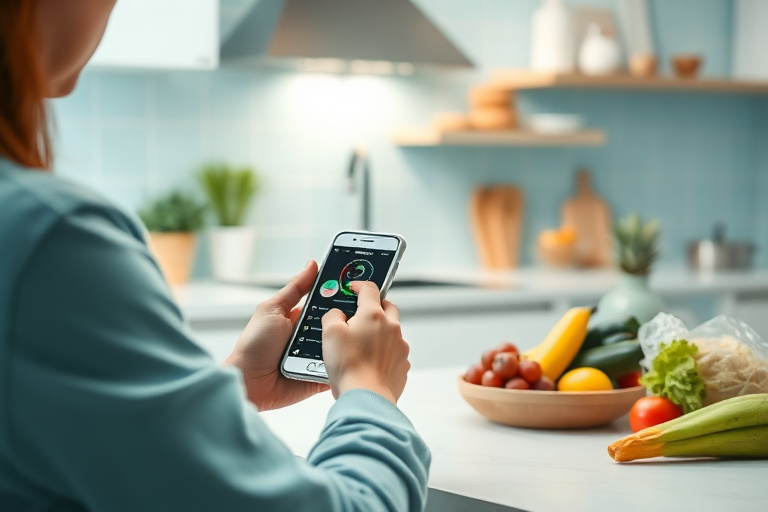
Tracking your protein intake in the takes the guesswork out of this process. You can log meals, see your running protein total, and adjust your next meal based on what you still need.
Fiber and Fat: The Supporting Players
Protein gets the spotlight, but fiber and fat play important roles too.
Fiber keeps your digestion moving. GLP-1 medications slow gastric emptying, which can lead to constipation. Aim for 20-30 grams of fiber per day from vegetables, fruits, and whole grains. Add fiber gradually (too much too fast can worsen bloating and GI discomfort.
Good fiber sources for GLP-1 users include:
- Broccoli, Brussels sprouts, and spinach
- Berries (low sugar, high fiber)
- Chia seeds and flaxseeds
- Lentils and beans (in small portions)
Fat supports hormone production and helps your body absorb fat-soluble vitamins (A, D, E, K). Aim for 30-50 grams of healthy fats per day from sources like avocado, olive oil, nuts, and fatty fish.
Keep in mind that high-fat meals can trigger nausea on GLP-1 medications. Spread your fat intake across the day rather than eating it all in one sitting.
For help managing digestive side effects, check out our .
Tracking Tools That Actually Work
The best tracking method is the one you'll actually use. Here are practical options:
The FormBlends App. Built specifically for GLP-1 and peptide users. Log meals, track macros, monitor your medication protocol, and see how your nutrition connects to your overall progress. .
Food scale. A $15 kitchen scale is the most accurate way to measure portions. Weigh your proteins and grains for the first few weeks until you can eyeball portions confidently.
Simple visual guides. If counting grams feels overwhelming, use hand-based estimates. One palm = one serving of protein (about 25-30 grams). One fist = one serving of vegetables. One cupped hand = one serving of carbs.
Weekly check-ins over daily obsession. Look at your weekly averages rather than stressing about hitting perfect numbers every day. Consistency over the week matters more than perfection at each meal.
If you're comparing GLP-1 medication options and want to understand the differences, our breaks down how each medication works.
Frequently Asked Questions
How many calories should I eat on semaglutide or tirzepatide?
Most GLP-1 users naturally eat between 1,000 and 1,600 calories per day. The right number depends on your body weight and activity level. As a general rule, don't go below 1,000 calories consistently. If your appetite is that low, focus on calorie-dense protein sources like shakes, nut butters, and cheese to meet minimums.
Can I lose muscle on GLP-1 medications?
Yes. In the STEP 1[2] (Wilding et al., NEJM, 2021) supplementary data, approximately 39% of total weight lost with semaglutide was lean body mass) consistent with typical caloric restriction (Wilding et al., NEJM, 2021 Supplementary Appendix). This 40% figure on GLP-1 medications can come from lean muscle if protein intake is insufficient. Eating adequate protein (0.7-1.0 grams per pound of body weight) and doing resistance training can significantly reduce muscle loss during treatment.
Do I need to track macros forever on GLP-1?
Not necessarily. Most people benefit from tracking closely for the first 8-12 weeks to build awareness of their eating patterns. After that, you develop a sense of what adequate protein and calories look like. Many users switch to periodic check-ins rather than daily logging once their habits are established.
What if I can't eat enough protein because of low appetite?
Liquid calories are your friend. Protein shakes, smoothies with protein powder, and bone broth are easier to consume when solid food feels impossible. Greek yogurt and cottage cheese are also high-protein but easy on a reduced appetite. The key isn't forcing large meals, but finding protein-rich foods you can tolerate.
Start your progress Today
Every transformation starts with a single step. Talk to a licensed FormBlends provider about whether this approach is right for you, consultations are free and confidential.
Medical References
Lincoff AM, Brown-Frandsen K, Colhoun HM, et al. Semaglutide and Cardiovascular Outcomes in Obesity without Diabetes. N Engl J Med. 2023;389(24):2221-2232. [PubMed | ClinicalTrials.gov | DOI]
Wilding JPH, Batterham RL, Calanna S, et al. Once-Weekly Semaglutide in Adults with Overweight or Obesity. N Engl J Med. 2021;384(11):989-1002. [PubMed | ClinicalTrials.gov | DOI]
Davies M, Færch L, Jeppesen OK, et al. Semaglutide 2.4 mg once a week in adults with overweight or obesity, and type 2 diabetes (STEP 2). Lancet. 2021;397(10278):971-984. [PubMed | ClinicalTrials.gov | DOI]
Wadden TA, Bailey TS, Billings LK, et al. Effect of Subcutaneous Semaglutide vs Placebo as an Adjunct to Intensive Behavioral Therapy on Body Weight in Adults With Overweight or Obesity (STEP 3). JAMA. 2021;325(14):1403-1413. [PubMed | ClinicalTrials.gov | DOI]
Garvey WT, Batterham RL, Bhatt DL, et al. Two-year effects of semaglutide in adults with overweight or obesity (STEP 5). Nat Med. 2022;28(10):2083-2091. [PubMed | ClinicalTrials.gov | DOI]
Sources &. References
Wilding JPH, Batterham RL, Calanna S, et al. Once-Weekly Semaglutide in Adults with Overweight or Obesity. N Engl J Med. 2021;384(11):989-1002. Doi:10.1056/NEJMoa2032183
Davies M, Færch L, Jeppesen OK, et al. Semaglutide 2.4 mg once a week in adults with overweight or obesity, and type 2 diabetes (STEP 2 (Davies et al., Lancet, 2021)). Lancet. 2021;397(10278):971-984. Doi:10.1016/S0140-6736(21)00213-0
Wadden TA, Bailey TS, Billings LK, et al. Effect of Subcutaneous Semaglutide vs Placebo as an Adjunct to Intensive Behavioral Therapy on Body Weight in Adults With Overweight or Obesity (STEP 3 (Wadden et al., JAMA, 2021)). JAMA. 2021;325(14):1403-1413. Doi:10.1001/jama.2021.1831
Garvey WT, Batterham RL, Bhatt DL, et al. Two-Year Effects of Semaglutide in Adults with Overweight or Obesity (STEP 5 (Garvey et al., Nat Med, 2022)). Nat Med. 2022;28:2083-2091. Doi:10.1038/s41591-022-02026-4
Lincoff AM, Brown-Frandsen K, Colhoun HM, et al. Semaglutide and Cardiovascular Outcomes in Obesity without Diabetes. N Engl J Med. 2023;389(24):2221-2232. Doi:10.1056/NEJMoa2307563
Wilding JPH, et al. STEP 1 Supplementary Appendix. Body composition analysis via DXA. N Engl J Med. 2021;384(11). Doi:10.1056/NEJMoa2032183
Stierman B, Afful J, Carroll MD, et al. National Health and Nutrition Examination Survey 2017-March 2020 Prepandemic Data Files. NCHS Data Brief. No. 492. CDC/NCHS. 2023.
Sumithran P, Prendergast LA, Delbridge E, et al. Long-Term Persistence of Hormonal Adaptations to Weight Loss. N Engl J Med. 2011;365(17):1597-1604. Doi:10.1056/NEJMoa1105816
This content is provided for informational and educational purposes only. It isn't a substitute for professional medical advice, diagnosis, or treatment. Always seek the advice of a licensed healthcare provider with any questions about a medical condition or treatment plan.
Last updated: 2026-03-24
See your options in about 2 minutes
Take the free quiz and see what fits you. Quick, private, and no commitment to continue.
Check the current prescribing information, regulatory status, and trial source before treating an investigational or newly approved medication as interchangeable with an established therapy.
Check before ordering
Regulatory status, labels, trial records, and sponsor updates can change quickly for obesity-drug pipeline pages. This snapshot is designed to make verification easier, not to replace checking the official source before making a medical or purchase decision. Page updated: 2026-04-01.
Continue with decision-grade research
Compare the options behind this question
These pages separate verified facts, commercial terms, and unresolved claims so you can check the evidence before choosing a provider.
Use this page to decide if a provider review is the right next step
Related treatment context
Macro Tracking Glp1 Calorie Protein Targets research is most useful when it helps you compare eligibility, expected results, side effects, cost, and the supervision needed before treatment.
Medical Disclaimer: This content is for informational purposes only and does not constitute medical advice. Always consult a qualified healthcare provider before starting, stopping, or changing any medication or treatment. FormBlends articles are source-checked against medical and regulatory references, but they are not a substitute for a personal medical consultation.
Written by FormBlends Editorial Research
Prepared by FormBlends Editorial Research.
Ready to get started?
Provider-reviewed GLP-1 and peptide therapy, delivered to your door.