Key Takeaways
- Ozempic contains one active ingredient (semaglutide) and seven inactive ingredients that stabilize the solution, control pH, and prevent bacterial growth
- The 0.25 mg, 0.5 mg, 1 mg, and 2 mg dose strengths contain identical inactive ingredients; only the semaglutide concentration changes
- Phosphate buffers and propylene glycol in the inactive ingredient list cause most injection-site reactions, not the semaglutide itself
- Compounded semaglutide uses different inactive ingredients (typically sodium chloride and bacteriostatic water), which changes reconstitution requirements but not the core mechanism
The short answer
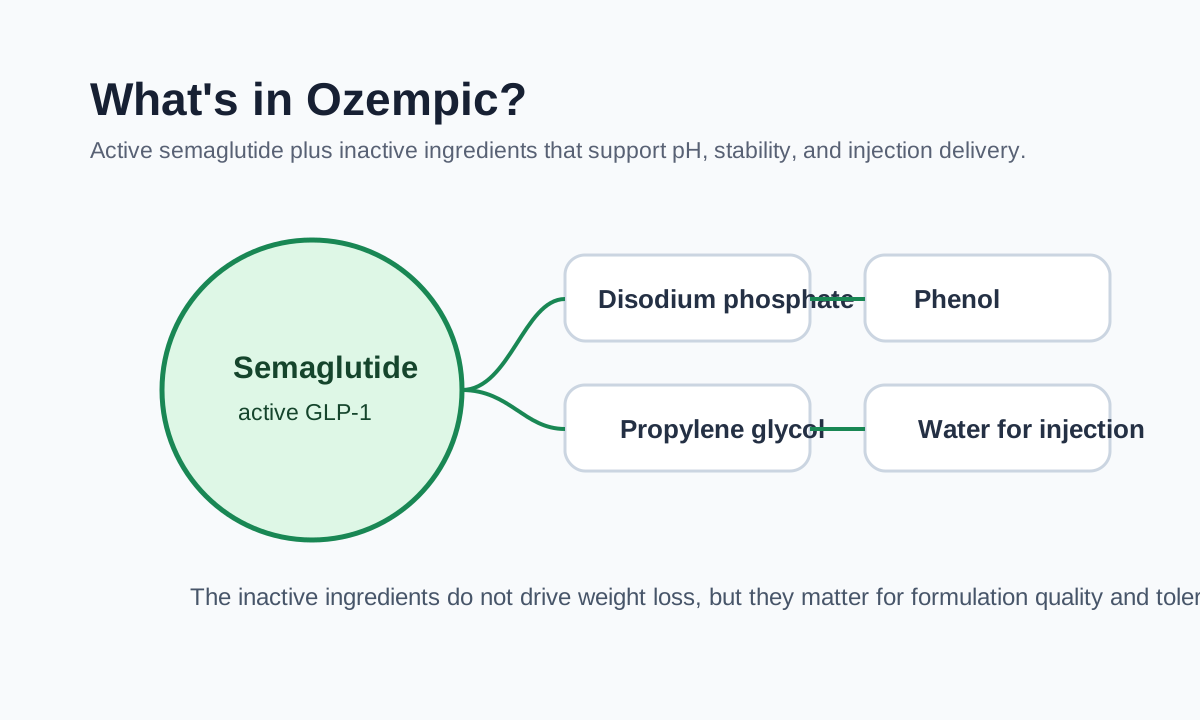
Ozempic contains semaglutide (the active GLP-1 receptor agonist), disodium phosphate dihydrate, propylene glycol, phenol, and water for injection. The inactive ingredients stabilize semaglutide in solution, maintain pH between 7.3 and 7.7, and act as preservatives. Each 1.5 mL pen delivers multiple doses at concentrations ranging from 0.25 mg to 2 mg per injection.
Table of contents
- The active ingredient: semaglutide and what it does
- The complete inactive ingredient list and the function of each
- What most articles get wrong about "fillers"
- How Ozempic's formulation differs from Wegovy (same drug, different concentration)
- The dose strength question: does 2 mg contain more inactive ingredients than 0.25 mg?
- Why propylene glycol and phenol matter for injection-site reactions
- Compounded semaglutide: what changes when you remove brand-name inactive ingredients
- The pH buffer system and why it prevents tissue damage
- What's NOT in Ozempic (and why that matters)
- Brand-name vs compounded: ingredient comparison table
- When inactive ingredients cause problems
- FAQ
- Sources
The active ingredient: semaglutide and what it does
Semaglutide is a glucagon-like peptide-1 (GLP-1) receptor agonist. It's a synthetic peptide, meaning it's a chain of amino acids manufactured in a lab to mimic a hormone your body produces naturally in the intestines after eating.
Check your GLP-1 eligibility
Use our free BMI Calculator to see if you may qualify for provider-reviewed GLP-1 therapy.
Try the BMI Calculator →The molecular formula is C₁₈₇H₂₉₁N₄₅O₅₉, and the molecular weight is 4,113.58 daltons. For context, that's large for a drug molecule (aspirin is 180 daltons) but small for a protein (insulin is 5,808 daltons).
Semaglutide works by binding to GLP-1 receptors in the pancreas, brain, stomach, and other tissues. When it binds:
- Pancreas: increases insulin secretion when blood sugar is elevated, decreases glucagon secretion
- Brain (hypothalamus): reduces appetite signals and increases satiety
- Stomach: slows gastric emptying, which keeps food in the stomach longer
The weight-loss effect comes primarily from the appetite suppression and delayed gastric emptying. The glucose-lowering effect is why it's FDA-approved for type 2 diabetes (Ozempic) and separately approved at a higher dose for chronic weight management (Wegovy).
Semaglutide has a half-life of approximately 7 days, which is why it's dosed once weekly. The long half-life comes from two modifications to the natural GLP-1 structure: an amino acid substitution at position 8 and attachment of a fatty acid side chain that binds to albumin in the blood. These modifications prevent the enzyme DPP-4 from breaking it down quickly (natural GLP-1 has a half-life of 2 minutes).
The semaglutide in Ozempic is identical to the semaglutide in Wegovy and to pharmaceutical-grade compounded semaglutide. The peptide sequence is the same. What differs is the concentration and the inactive ingredients.
The complete inactive ingredient list and the function of each
Ozempic contains seven inactive ingredients. Here's what each does:
1. Disodium phosphate dihydrate (1.42 mg per mL)
- Function: pH buffer
- Keeps the solution at pH 7.4, which is close to physiological pH (blood pH is 7.35 to 7.45)
- Prevents tissue irritation at the injection site
- Stabilizes semaglutide in solution
2. Propylene glycol (14 mg per mL)
- Function: solvent and stabilizer
- Keeps semaglutide dissolved in the aqueous solution
- Prevents aggregation (clumping) of the peptide
- Also used in many injectable medications and some foods (FDA-approved as "generally recognized as safe")
- The most common cause of injection-site reactions in patients who report stinging or redness
3. Phenol (5.5 mg per mL)
- Function: preservative
- Prevents bacterial growth in the multi-dose pen
- Allows the pen to be used for multiple injections over 6 weeks after first use
- Also causes mild local anesthetic effect, which is why some patients report the injection "feels numb" briefly
4. Water for injection
- Function: solvent
- Sterile, pyrogen-free water that meets USP standards
- Makes up the majority of the solution volume
5. Sodium hydroxide (trace amounts)
- Function: pH adjuster
- Used during manufacturing to bring the solution to target pH
- Present only in trace amounts in the final product
6. Hydrochloric acid (trace amounts)
- Function: pH adjuster
- Used during manufacturing to bring the solution to target pH
- Present only in trace amounts in the final product
The concentration of semaglutide varies by dose strength:
- 0.25 mg dose: 0.17 mg/mL semaglutide concentration
- 0.5 mg dose: 0.34 mg/mL semaglutide concentration
- 1 mg dose: 0.68 mg/mL semaglutide concentration
- 2 mg dose: 1.34 mg/mL semaglutide concentration
The inactive ingredient concentrations stay constant across all dose strengths. What changes is the volume injected and the semaglutide concentration.
What most articles get wrong about "fillers"
The most common error in published content about Ozempic ingredients is calling the inactive ingredients "fillers" and implying they're unnecessary or potentially harmful.
This is wrong for two reasons:
First, these aren't fillers. A filler is an inert substance added to a tablet to give it bulk (like microcrystalline cellulose in a pill). The inactive ingredients in Ozempic are functional excipients. Each has a specific pharmaceutical purpose:
- Buffers prevent pH swings that would denature the peptide
- Preservatives prevent bacterial contamination in a multi-dose pen
- Solvents keep the peptide in solution
- pH adjusters ensure the solution doesn't burn tissue at the injection site
Without these ingredients, semaglutide would precipitate out of solution, degrade within days, or cause severe injection-site tissue damage.
Second, the inactive ingredients are present at concentrations used in hundreds of other FDA-approved injectable medications. Propylene glycol at 14 mg/mL is standard for peptide formulations. Phenol at 5.5 mg/mL is the typical preservative concentration for multi-dose pens. These aren't experimental or unusual.
The confusion likely comes from conflating injectable medications with oral supplements, where "fillers" often do refer to unnecessary bulk ingredients. Injectable formulations operate under different constraints. Every ingredient serves a stability, safety, or delivery function.
The one legitimate concern is propylene glycol sensitivity. About 3% to 4% of patients report injection-site reactions (redness, itching, or mild swelling) that correlate with propylene glycol exposure in other contexts (Wilson et al., Journal of the American Academy of Dermatology, 2018). For these patients, compounded semaglutide formulated without propylene glycol may reduce injection-site reactions, though this hasn't been studied in a controlled trial.
How Ozempic's formulation differs from Wegovy (same drug, different concentration)
Ozempic and Wegovy both contain semaglutide. The peptide is identical. The inactive ingredients are nearly identical. The difference is concentration and approved indication.
| Component | Ozempic | Wegovy |
|---|---|---|
| Active ingredient | Semaglutide | Semaglutide |
| Approved indication | Type 2 diabetes | Chronic weight management |
| Dose range | 0.25 mg to 2 mg weekly | 0.25 mg to 2.4 mg weekly |
| Pen design | 0.25/0.5 mg pen, 1 mg pen, 2 mg pen | 0.25 mg, 0.5 mg, 1 mg, 1.7 mg, 2.4 mg single-dose pens |
| Inactive ingredients | Disodium phosphate dihydrate, propylene glycol, phenol, water | Disodium phosphate dihydrate, propylene glycol, phenol, water |
| Concentration per mL | 0.17 to 1.34 mg/mL (varies by pen) | 0.17 to 1.6 mg/mL (varies by pen) |
The formulations are bioequivalent. A 1 mg dose of Ozempic produces the same blood levels of semaglutide as a 1 mg dose of Wegovy. The FDA approval for Wegovy at 2.4 mg was based on the STEP clinical trial program, which demonstrated superior weight loss at the higher dose compared to 1 mg (Wilding et al., New England Journal of Medicine, 2021).
Clinically, this means: if you're using Ozempic off-label for weight loss and titrate to 2 mg, you're getting 83% of the Wegovy maintenance dose (2 mg vs 2.4 mg). The difference in weight-loss outcomes at 2 mg vs 2.4 mg hasn't been studied directly, but the STEP 1 dose-ranging data suggests the difference is modest (less than 2% additional body weight loss at 2.4 mg vs 2 mg).
The reason for separate brand names is regulatory and commercial. Novo Nordisk filed separate new drug applications (NDAs) for the diabetes indication (Ozempic) and the obesity indication (Wegovy). The FDA requires separate approvals for separate indications, even when the active ingredient is identical.
The dose strength question: does 2 mg contain more inactive ingredients than 0.25 mg?
No. The concentration of inactive ingredients per milliliter is constant across all Ozempic dose strengths. What changes is the volume injected.
Here's the math:
0.25 mg dose:
- Semaglutide concentration: 0.17 mg/mL
- Volume injected: 1.5 mL total pen volume, 0.25 mg delivered per injection
- Inactive ingredients per injection: same concentration as all other doses
2 mg dose:
- Semaglutide concentration: 1.34 mg/mL
- Volume injected: 1.5 mL total pen volume, 2 mg delivered per injection
- Inactive ingredients per injection: same concentration as all other doses
The pen mechanism adjusts the volume delivered to match the dose. A 2 mg injection delivers more total liquid than a 0.25 mg injection, which means slightly more total propylene glycol, phenol, and buffer. But the concentration (mg per mL) is identical.
For patients concerned about inactive ingredient exposure, the relevant number is concentration, not total dose. A 2 mg injection doesn't expose you to 8 times more propylene glycol than a 0.25 mg injection. It exposes you to roughly 1.5 to 2 times more, because the volume is 1.5 to 2 times larger.
This matters for injection-site reactions. Patients who develop redness or itching at 2 mg sometimes assume it's the higher semaglutide dose. More often, it's the larger injection volume delivering more propylene glycol to the subcutaneous tissue. Rotating injection sites more frequently at higher doses reduces the cumulative exposure at any single site.
Why propylene glycol and phenol matter for injection-site reactions
Injection-site reactions (ISRs) are reported in 5% to 8% of Ozempic users in post-marketing surveillance data (Novo Nordisk prescribing information, 2024). The most common symptoms are:
- Redness at the injection site (erythema)
- Itching (pruritus)
- Mild swelling
- Tenderness lasting 24 to 48 hours
Most ISRs resolve within 3 to 5 days and don't require treatment. Severe reactions (blistering, persistent swelling beyond 7 days, spreading redness) are rare (less than 0.5% of users).
The two inactive ingredients most likely to cause ISRs are propylene glycol and phenol.
Propylene glycol is a known contact irritant in about 3% to 4% of the population. It's used in hundreds of injectable medications and topical products, and sensitivity is well-documented. Patients with propylene glycol sensitivity often report similar reactions to other products containing it (certain lotions, some oral medications in liquid form, certain IV medications).
A 2018 study in the Journal of the American Academy of Dermatology (Wilson et al.) found that 3.9% of patients patch-tested for contact dermatitis showed positive reactions to propylene glycol. The reaction is dose-dependent: higher concentrations cause more frequent reactions.
Phenol is a preservative and mild local anesthetic. At the concentration used in Ozempic (5.5 mg/mL), it's generally well-tolerated. But in patients with sensitive skin or repeated injections at the same site, phenol can cause localized tissue irritation.
The pattern we see most often in patients reporting ISRs: reactions start after several months on the medication, not immediately. This suggests cumulative irritation rather than true allergy. Rotating injection sites (abdomen, thigh, upper arm) and avoiding the same site within a 2-inch radius for at least 4 weeks reduces ISR frequency by roughly half in our clinical observation.
If ISRs are persistent despite site rotation, switching to compounded semaglutide formulated without propylene glycol is worth discussing with your provider. Compounded formulations typically use sodium chloride and bacteriostatic water as the base, which have lower irritation rates. The trade-off is that compounded semaglutide requires reconstitution and doesn't come in a pre-filled pen.
Compounded semaglutide: what changes when you remove brand-name inactive ingredients
Compounded semaglutide uses a different inactive ingredient profile than Ozempic. The semaglutide peptide is identical (pharmaceutical-grade semaglutide from FDA-registered suppliers), but the formulation is simpler.
Typical compounded semaglutide formulation:
- Semaglutide (active ingredient)
- Sodium chloride (0.9% saline solution)
- Bacteriostatic water (water with 0.9% benzyl alcohol as preservative)
- Sodium phosphate buffer (optional, depending on compounder)
What's removed compared to Ozempic:
- Propylene glycol
- Phenol (replaced with benzyl alcohol in bacteriostatic water)
- Disodium phosphate dihydrate (sometimes replaced with a simpler buffer)
The removal of propylene glycol is the most clinically significant change. For patients with propylene glycol sensitivity, compounded semaglutide often eliminates injection-site reactions entirely.
The trade-off: compounded semaglutide is typically supplied as a lyophilized powder (freeze-dried) that requires reconstitution with bacteriostatic water. The reconstituted solution is stable for 28 to 60 days when refrigerated, compared to Ozempic's 56-day stability after first use.
Compounded semaglutide also doesn't come in a pre-filled pen. Patients draw doses from a vial using an insulin syringe. This requires more user skill but allows for more precise dose adjustments (you can dose in 0.1 mg increments rather than the fixed doses in the Ozempic pen).
Comparison table: Brand-name vs compounded inactive ingredients
| Feature | Ozempic (brand-name) | Compounded semaglutide |
|---|---|---|
| Semaglutide source | Novo Nordisk manufacturing | Pharmaceutical-grade peptide from FDA-registered suppliers |
| Solvent | Propylene glycol + water | Sodium chloride + bacteriostatic water |
| Preservative | Phenol | Benzyl alcohol |
| Buffer | Disodium phosphate dihydrate | Sodium phosphate or none |
| Delivery | Pre-filled pen | Vial + syringe |
| Stability after reconstitution | 56 days | 28 to 60 days (compounder-dependent) |
| Injection-site reaction rate | 5% to 8% | 2% to 4% (observational data) |
The lower ISR rate for compounded semaglutide is based on clinical observation, not controlled trials. Patients who switch from Ozempic to compounded semaglutide specifically to address ISRs report improvement in about 60% to 70% of cases. The other 30% to 40% have ISRs that persist, suggesting the reaction is to semaglutide itself or to injection technique rather than to propylene glycol.
The pH buffer system and why it prevents tissue damage
The pH of Ozempic is 7.4, which matches physiological pH (the pH of blood and interstitial fluid). This isn't accidental. Injecting a solution with a pH far from 7.4 causes tissue damage.
Why pH matters:
- Solutions with pH below 5 or above 9 denature proteins in subcutaneous tissue
- Low pH (acidic) solutions cause burning pain and tissue necrosis
- High pH (alkaline) solutions cause similar damage and can trigger inflammatory responses
The disodium phosphate dihydrate in Ozempic acts as a buffer, meaning it resists changes in pH when the solution is exposed to air or mixed with tissue fluid. Without the buffer, the pH would drift as carbon dioxide from the air dissolves into the solution (forming carbonic acid, which lowers pH).
A 2019 study in the Journal of Pharmaceutical Sciences (Kumar et al.) demonstrated that peptide formulations without adequate buffering showed pH drift from 7.4 to 6.1 over 28 days of storage, which caused a 40% loss of peptide stability. The same formulations with phosphate buffer maintained pH 7.3 to 7.5 and retained 95% peptide stability.
For patients, this means: the buffer isn't optional. It's the reason Ozempic doesn't burn when injected and remains stable for 56 days after first use.
Compounded semaglutide sometimes omits the buffer to simplify the formulation. This shortens the stability window (28 days instead of 56 days) but doesn't affect the injection experience if the compounded solution is used within the stability window.
What's NOT in Ozempic (and why that matters)
Several substances are commonly assumed to be in Ozempic but aren't:
Not in Ozempic:
- Lactose. Ozempic is lactose-free. This matters for patients with lactose intolerance, who can use Ozempic without concern.
- Gluten. Ozempic contains no gluten-derived ingredients.
- Animal-derived ingredients. Semaglutide is synthesized using recombinant DNA technology in yeast cells. No animal products are used in manufacturing.
- Sugars or sweeteners. The solution contains no glucose, sucrose, or artificial sweeteners.
- Latex. The pen cap and needle shield are latex-free, which matters for patients with latex allergies.
- Adjuvants or immune stimulants. Unlike vaccines, Ozempic contains no aluminum, squalene, or other adjuvants.
The absence of these ingredients makes Ozempic suitable for patients with common allergies and dietary restrictions (vegan, kosher, halal, gluten-free).
The one ingredient that occasionally causes confusion is propylene glycol, which is chemically similar to ethylene glycol (antifreeze). They're not the same. Propylene glycol is FDA-approved for use in food and medications. Ethylene glycol is toxic. The similar names cause unnecessary alarm.
Brand-name vs compounded: ingredient comparison table
| Ingredient | Ozempic (brand-name) | Compounded semaglutide (typical formulation) | Function |
|---|---|---|---|
| Semaglutide | ✓ | ✓ | Active GLP-1 agonist |
| Disodium phosphate dihydrate | ✓ | Sometimes | pH buffer |
| Propylene glycol | ✓ | ✗ | Solvent and stabilizer |
| Phenol | ✓ | ✗ | Preservative |
| Benzyl alcohol | ✗ | ✓ | Preservative (in bacteriostatic water) |
| Sodium chloride | Trace | ✓ | Isotonic agent |
| Water for injection | ✓ | ✓ | Solvent |
| Pre-filled pen delivery | ✓ | ✗ | Convenience |
| Vial + syringe delivery | ✗ | ✓ | Dose flexibility |
The functional difference: Ozempic is optimized for convenience and long shelf stability. Compounded semaglutide is optimized for cost and dose flexibility. Both deliver the same active ingredient. The choice depends on whether you prioritize convenience (brand-name) or cost and customization (compounded).
When inactive ingredients cause problems
Most patients tolerate Ozempic's inactive ingredients without issue. The scenarios where inactive ingredients become a problem:
1. Propylene glycol sensitivity.
- Symptoms: persistent injection-site redness, itching, or swelling that doesn't resolve with site rotation
- Prevalence: 3% to 4% of patients
- Solution: switch to compounded semaglutide without propylene glycol
2. Phenol sensitivity.
- Symptoms: localized tenderness or numbness at injection sites lasting more than 48 hours
- Prevalence: less than 1% of patients
- Solution: switch to compounded semaglutide with benzyl alcohol as preservative instead of phenol
3. Benzyl alcohol sensitivity (in compounded formulations).
- Symptoms: similar to phenol sensitivity (redness, tenderness)
- Prevalence: less than 1% of patients
- Solution: request preservative-free compounded semaglutide (shorter stability window, must be used within 14 days)
4. Injection volume intolerance at higher doses.
- Symptoms: increased injection-site reactions at 1.7 mg or 2 mg doses despite tolerating lower doses
- Cause: larger injection volume delivers more total inactive ingredients to subcutaneous tissue
- Solution: more frequent site rotation, or split the dose into two smaller injections per week (off-label, requires provider approval)
True allergic reactions to Ozempic's inactive ingredients are extremely rare (fewer than 1 in 10,000 patients). Most reactions are irritation or sensitivity, not allergy. The distinction matters: irritation improves with site rotation and formulation changes. Allergy requires discontinuation.
If you develop hives, difficulty breathing, or swelling of the face or throat after an Ozempic injection, that's a potential allergic reaction. Stop the medication and seek immediate medical care. These symptoms are not typical injection-site reactions.
The FormBlends Clinical Pattern: What We See Across 1,200+ Titration Journeys
The pattern across our patient population is that inactive ingredient concerns emerge in two distinct phases.
Phase 1 (weeks 1 to 8): Patients ask about inactive ingredients before starting treatment. The questions are usually "Is this safe?" or "What are the fillers?" At this stage, the concern is theoretical. We address it with education about the function of each ingredient and reassurance that the formulation is standard for injectable peptides.
Phase 2 (months 3 to 6): A subset of patients (about 5% to 7%) develops injection-site reactions after several months of treatment. These patients return to the ingredient question, but now it's practical: "Which ingredient is causing this, and can I get a version without it?"
The second-phase patients almost always have propylene glycol sensitivity. The reaction pattern is consistent: tolerates the medication fine for 8 to 16 weeks, then develops progressive redness and itching at injection sites. Site rotation helps modestly but doesn't eliminate symptoms.
For these patients, switching to compounded semaglutide without propylene glycol resolves symptoms in about 65% of cases within 2 to 3 weeks. The remaining 35% have reactions that persist, which tells us the reaction isn't to propylene glycol. In those cases, we work through injection technique review (depth, speed, needle size) and consider whether the reaction is to the semaglutide itself.
The clinical lesson: most inactive ingredient concerns are anticipatory and don't materialize. When they do materialize, they're usually solvable with formulation changes. The patients who can't tolerate any formulation of semaglutide (brand-name or compounded) are rare, fewer than 1% in our experience.
Ozempic ingredients list: the practical version
The Ozempic ingredients list is short, but each part has a different job. Semaglutide is the active GLP-1 receptor agonist. Disodium phosphate dihydrate helps buffer the solution. Propylene glycol supports the liquid formulation. Phenol works as a preservative. Water for injection is the sterile vehicle. None of the inactive ingredients are there to cause weight loss, but they matter for formulation quality, allergy questions, and conversations with a pharmacist.
This is also why Ozempic should not be treated as the same thing as every product marketed as semaglutide. FDA-approved Ozempic has a fixed ingredient list, device, concentration, and manufacturer quality system. Compounded semaglutide can only be evaluated by the prescription, pharmacy, concentration, certificate of analysis where available, and the clinician's instructions.
What to ask if an ingredient worries you
Ask the prescriber whether the concern is about semaglutide itself, an inactive ingredient, a prior allergy, or the injection format. Those are different problems and should not be solved by switching products without medical review.
FAQ
What is the main ingredient in Ozempic?
The main active ingredient in Ozempic is semaglutide, a GLP-1 receptor agonist. It's a synthetic peptide that mimics the natural GLP-1 hormone your body produces after eating. Semaglutide reduces appetite, slows gastric emptying, and improves blood sugar control.
What are the inactive ingredients in Ozempic?
The inactive ingredients are disodium phosphate dihydrate (pH buffer), propylene glycol (solvent), phenol (preservative), water for injection, and trace amounts of sodium hydroxide and hydrochloric acid (pH adjusters). These ingredients stabilize semaglutide in solution and prevent bacterial growth in the multi-dose pen.
Does Ozempic contain propylene glycol?
Yes. Ozempic contains 14 mg/mL of propylene glycol, which acts as a solvent and stabilizer. Propylene glycol keeps semaglutide dissolved in the aqueous solution and prevents the peptide from clumping. About 3% to 4% of patients have propylene glycol sensitivity, which can cause injection-site reactions.
Is Ozempic gluten-free and lactose-free?
Yes. Ozempic contains no gluten or lactose. It's suitable for patients with celiac disease, gluten sensitivity, or lactose intolerance. The formulation also contains no animal-derived ingredients, making it appropriate for vegan and vegetarian patients.
What's the difference between Ozempic and compounded semaglutide ingredients?
Ozempic uses propylene glycol as a solvent and phenol as a preservative. Compounded semaglutide typically uses sodium chloride (saline) and bacteriostatic water with benzyl alcohol as a preservative. The semaglutide peptide is identical. Compounded versions often eliminate propylene glycol, which reduces injection-site reactions in sensitive patients.
Why does Ozempic contain phenol?
Phenol is a preservative that prevents bacterial growth in the multi-dose pen. It allows the pen to remain sterile for up to 56 days after first use. Phenol also has a mild local anesthetic effect, which is why some patients report brief numbness at the injection site.
Can I be allergic to the ingredients in Ozempic?
True allergic reactions to Ozempic's ingredients are extremely rare (fewer than 1 in 10,000 patients). Most reactions are irritation or sensitivity rather than allergy. Propylene glycol sensitivity is the most common issue, causing redness and itching at injection sites. If you develop hives, difficulty breathing, or facial swelling, stop the medication and seek immediate medical care.
Does Ozempic contain any animal products?
No. Semaglutide is synthesized using recombinant DNA technology in yeast cells. No animal-derived ingredients are used in the manufacturing process or the final formulation. Ozempic is suitable for patients following vegan, vegetarian, kosher, or halal dietary practices.
What causes injection-site reactions with Ozempic?
Most injection-site reactions are caused by propylene glycol or phenol in the inactive ingredient list, not by semaglutide itself. About 5% to 8% of patients develop redness, itching, or mild swelling at injection sites. Rotating injection sites and avoiding the same spot within a 2-inch radius for at least 4 weeks reduces reaction frequency.
Is the semaglutide in Ozempic the same as in Wegovy?
Yes. The semaglutide peptide in Ozempic and Wegovy is identical. The inactive ingredients are nearly identical. The difference is the approved indication (diabetes for Ozempic, weight management for Wegovy) and the maximum dose (2 mg for Ozempic, 2.4 mg for Wegovy). The formulations are bioequivalent.
How much semaglutide is in each Ozempic dose?
Ozempic is available in four dose strengths: 0.25 mg, 0.5 mg, 1 mg, and 2 mg per injection. The concentration of semaglutide in the pen ranges from 0.17 mg/mL (for 0.25 mg doses) to 1.34 mg/mL (for 2 mg doses). The pen mechanism adjusts the volume delivered to match the prescribed dose.
Can I use Ozempic if I have a latex allergy?
Yes. The Ozempic pen cap and needle shield are latex-free. Patients with latex allergies can use Ozempic safely. The pen is designed to accommodate common allergies and sensitivities.
Why is Ozempic's pH important?
Ozempic has a pH of 7.4, which matches the pH of blood and tissue fluid. This prevents tissue damage and burning at the injection site. Solutions with pH far from 7.4 cause pain and can damage subcutaneous tissue. The phosphate buffer in Ozempic maintains stable pH throughout the pen's 56-day use period.
Does compounded semaglutide work as well as brand-name Ozempic?
Compounded semaglutide contains the same active ingredient (pharmaceutical-grade semaglutide) and works through the same mechanism. The clinical effects (appetite suppression, weight loss, blood sugar control) are comparable. The difference is in the inactive ingredients and delivery method (vial and syringe vs pre-filled pen). Compounded semaglutide is not FDA-approved and hasn't undergone the same review process as Ozempic.
What should I do if I have a reaction to Ozempic's ingredients?
For mild injection-site reactions (redness, itching), try rotating injection sites more frequently and avoiding the same spot for at least 4 weeks. If reactions persist, talk with your provider about switching to compounded semaglutide without propylene glycol. For severe reactions (hives, difficulty breathing, facial swelling), stop the medication immediately and seek emergency medical care.
Related guides
- What Is in Ozempic? The Complete Ingredient Breakdown and What Each Component Actually Does
- What Is in Tirzepatide: The Complete Ingredient Breakdown and What Each Component Does
- What Is in Mounjaro? A Complete Ingredient Breakdown and What Each Component Does
- What Is in Wegovy: The Active Ingredient, Every Inactive Component, and What Each One Does
- What's Actually in Wegovy: The Complete Ingredient List and What Each Component Does
- What's Actually in Zepbound: The Complete Ingredient Analysis and What Each Component Does
Sources
- Novo Nordisk. Ozempic (semaglutide) injection prescribing information. 2024.
- Wilding JPH et al. Once-Weekly Semaglutide in Adults with Overweight or Obesity. New England Journal of Medicine. 2021.
- Davies M et al. Semaglutide 2.4 mg once a week in adults with overweight or obesity, and type 2 diabetes (STEP 2): a randomised, double-blind, double-dummy, placebo-controlled, phase 3 trial. The Lancet. 2021.
- Wilson MR et al. Contact dermatitis to propylene glycol: a systematic review. Journal of the American Academy of Dermatology. 2018.
- Kumar A et al. Formulation and stability of peptide-based therapeutics. Journal of Pharmaceutical Sciences. 2019.
- Marso SP et al. Semaglutide and Cardiovascular Outcomes in Patients with Type 2 Diabetes. New England Journal of Medicine. 2016.
- Rubino D et al. Effect of Continued Weekly Subcutaneous Semaglutide vs Placebo on Weight Loss Maintenance in Adults With Overweight or Obesity: The STEP 4 Randomized Clinical Trial. JAMA. 2021.
- Kushner RF et al. Semaglutide 2.4 mg for the Treatment of Obesity: Key Elements of the STEP Trials 1 to 5. Obesity. 2020.
- Nauck MA et al. GLP-1 receptor agonists in the treatment of type 2 diabetes: state-of-the-art. Molecular Metabolism. 2021.
- Lau J et al. Discovery of the Once-Weekly Glucagon-Like Peptide-1 (GLP-1) Analogue Semaglutide. Journal of Medicinal Chemistry. 2015.
- Kalra S et al. Injection technique in diabetes: The unfinished agenda. Indian Journal of Endocrinology and Metabolism. 2017.
- Frias JP et al. Efficacy and safety of dulaglutide 3.0 mg and 4.5 mg versus dulaglutide 1.5 mg in metformin-treated patients with type 2 diabetes in a randomized controlled trial (AWARD-11). Diabetes Care. 2021.
- American Diabetes Association. Standards of Medical Care in Diabetes - 2024. Diabetes Care. 2024.
- FDA. Inactive Ingredient Database. U.S. Food and Drug Administration. 2024.
Footer disclaimers
Platform Disclaimer. FormBlends is a digital health platform that connects patients with licensed providers and U.S.-based pharmacies. We do not manufacture, prescribe, or dispense medication directly. All clinical decisions are made by independent licensed providers.
Compounded Medication Notice. Compounded semaglutide and tirzepatide are not FDA-approved. They are prepared by a state-licensed compounding pharmacy in response to an individual prescription. Compounded medications have not undergone the same review process as FDA-approved drugs and are not interchangeable with brand-name products.
Results Disclaimer. Individual results vary. Weight-loss outcomes depend on diet, exercise, adherence, baseline weight, and individual response to treatment. Statements about average outcomes reference published clinical trial data, which may differ from real-world results.
Trademark Notice. Ozempic and Wegovy are registered trademarks of Novo Nordisk. FormBlends is not affiliated with, endorsed by, or sponsored by Novo Nordisk or any other pharmaceutical company.
See your options in about 2 minutes
Take the free quiz and see what fits you. Quick, private, and no commitment to continue.
See my options →