Key Takeaway
Can you take CJC-1295 and GLP-1 receptor agonists together? Learn about compatibility, safety considerations, and what the research says about combining these peptides.
Yes, CJC-1295 and GLP-1 receptor agonists can be taken together under medical supervision, as they operate through entirely different biological pathways with no known direct pharmacological conflict. CJC-1295 stimulates growth hormone release through the GHRH receptor, while GLP-1 agonists work through incretin receptors to regulate blood sugar and appetite. But combining any two bioactive compounds requires careful planning and professional oversight.
How These Compounds Work Differently
Knowing why these two peptides can coexist in the body starts with their distinct mechanisms of action.
CJC-1295: Growth Hormone Pathway
CJC-1295 is a synthetic analog of growth hormone-releasing hormone (GHRH). It binds to GHRH receptors on the anterior pituitary gland, stimulating the release of growth hormone (GH) into the bloodstream. This improved GH then triggers the liver to produce insulin-like growth factor 1 (IGF-1), which mediates many of the downstream effects including tissue repair, fat metabolism, and muscle protein synthesis.
CJC-1295 comes in two forms:
- With DAC: Longer half-life (6 to 8 days), sustained GH elevation
- Without DAC (Mod GRF 1-29): Shorter half-life (about 30 minutes), pulsatile GH release
GLP-1 Receptor Agonists: Incretin Pathway
GLP-1 receptor agonists mimic the action of glucagon-like peptide-1, an incretin hormone naturally produced in the gut after eating. These medications activate GLP-1 receptors in the pancreas, brain, and gut to:
- Stimulate insulin secretion in a glucose-dependent manner
- Suppress glucagon release
- Slow gastric emptying
- Reduce appetite through hypothalamic signaling
Common GLP-1 receptor agonists include semaglutide (Ozempic, Wegovy), liraglutide (Saxenda, Victoza), and tirzepatide (Mounjaro, Zepbound), though tirzepatide also activates GIP receptors. GLP-1 agonists
Why There Is No Direct Conflict
CJC-1295 and GLP-1 agonists target completely separate receptor systems. CJC-1295 acts on the GHRH receptor in the pituitary. GLP-1 agonists act on incretin receptors primarily in the pancreas and central nervous system. There's no receptor overlap, no competitive binding, and no known direct drug-drug interaction between these two classes.

This lack of direct conflict is why many integrative medicine practitioners and peptide therapy clinics offer combination protocols that include both compounds. peptide therapy clinics
Indirect Interactions to Consider
While there's no direct pharmacological clash, indirect interactions are worth noting:
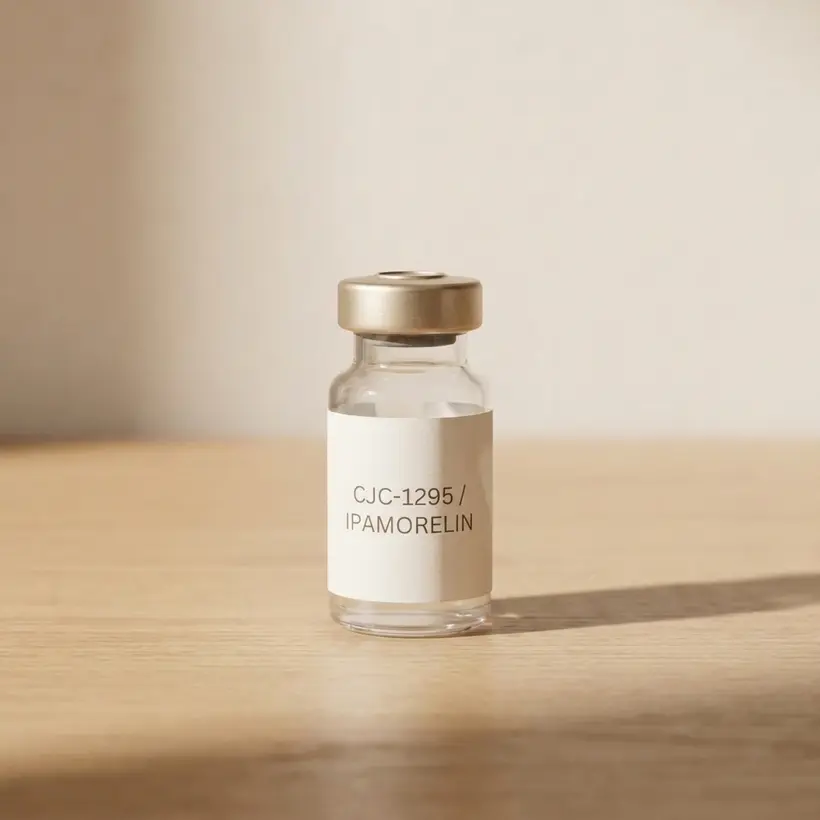
From the FormBlends catalog
CJC-1295 / Ipamorelin Blend
The gold standard growth hormone secretagogue stack · From $69/mo · compounded by a licensed 503A pharmacy, dispensed only after provider review.
Learn about CJC-1295 / Ipamorelin Blend →Blood Sugar Effects
GLP-1 agonists lower blood glucose through enhanced insulin secretion and glucagon suppression. Growth hormone, improved by CJC-1295, has an insulin-antagonistic effect and can raise blood glucose. These opposing effects on glucose regulation require monitoring, particularly in individuals with insulin resistance or type 2 diabetes.
In practical terms, the blood sugar impact of GLP-1 agonists typically outweighs the mild glucose-raising effect of CJC-1295-induced GH elevation, but this balance should be confirmed through regular glucose monitoring. blood sugar monitoring
Appetite and Caloric Intake
GLP-1 agonists suppress appetite significantly. CJC-1295 can increase appetite in some users due to improved GH and ghrelin interactions. These opposing appetite effects may partially offset each other, which some patients find beneficial as it prevents the extreme appetite suppression that can lead to inadequate protein intake.
Gastric Motility
GLP-1 agonists slow gastric emptying, which is part of how they reduce appetite and smooth out blood sugar spikes. CJC-1295 doesn't directly affect gastric motility, but the timing of CJC-1295 injections matters because GH release is blunted by food intake and improved insulin. With slowed gastric emptying from GLP-1 agonists, the fasting window before CJC-1295 injection may need to be longer.
What Clinicians Say
Many practitioners in the peptide therapy space report using CJC-1295 alongside GLP-1 agonists in clinical practice. The combination is typically recommended for patients who want to:
- Lose body fat while preserving lean muscle mass
- Address age-related declines in both metabolic function and growth hormone levels
- Improve body composition beyond what a single compound achieves
- Support recovery and sleep quality during a weight loss phase
Practical Considerations for Taking Both
If your physician approves this combination, several practical points apply:
Timing
- Administer GLP-1 agonists according to their prescribed schedule (usually once weekly for semaglutide or tirzepatide).
- Take CJC-1295 (without DAC) before bed, at least 2 to 3 hours after your last meal. Because GLP-1 agonists slow digestion, consider extending this fasting window.
- On days when both injections fall on the same day, separate them by several hours and use different injection sites.
Injection Sites
- Rotate between abdomen, thigh, and upper arm.
- Don't inject both compounds at the same site on the same day.
Monitoring
- Fasting glucose and HbA1c (every 8 to 12 weeks)
- IGF-1 levels (to assess GH axis response)
- thorough metabolic panel
- Body composition measurements
Peptide therapy monitoring
What the Research Shows
No large-scale clinical trials have studied the specific combination of CJC-1295 with GLP-1 agonists. The evidence supporting this combination is based on:
- Individual studies of CJC-1295 showing its GH-improving effects and safety profile
- Extensive clinical trial data for GLP-1 agonists demonstrating metabolic benefits
- The absence of shared receptor pathways, suggesting low interaction risk
- Clinical experience from peptide therapy practices
The lack of dedicated combination studies means the evidence is largely inferential. This is common with peptide combinations and underscores the importance of physician oversight.
Who Should Be Cautious
Certain populations should approach this combination with extra caution or avoid it entirely:
- Type 1 diabetics: The opposing glucose effects add complexity to insulin management.
- Active cancer patients: improved GH/IGF-1 may promote tumor growth.
- Individuals with gastroparesis: GLP-1 agonists further slow gastric emptying, which can worsen this condition.
- Pregnant or breastfeeding women: Neither compound is approved for use during pregnancy.
Frequently Asked Questions
- Is it safe to take CJC-1295 and a GLP-1 agonist at the same time?
-
There's no known direct pharmacological conflict between CJC-1295 and GLP-1 receptor agonists, as they work through entirely different receptor systems. But indirect effects on blood sugar and gastric motility require monitoring. Always combine these compounds under the supervision of a qualified healthcare provider.
- Will CJC-1295 interfere with the weight loss effects of my GLP-1 medication?
-
CJC-1295 is unlikely to interfere with GLP-1-mediated weight loss. In fact, the growth hormone elevation from CJC-1295 may support fat mobilization and lean mass preservation, potentially enhancing body composition outcomes during GLP-1-driven weight loss.
- Can CJC-1295 raise my blood sugar while on a GLP-1 agonist?
-
Growth hormone has mild insulin-antagonistic properties, so CJC-1295 could slightly improve blood glucose. But the glucose-lowering effect of GLP-1 agonists is typically stronger. Regular blood sugar monitoring will help ensure both compounds are working together safely.
- Do I need to fast longer before CJC-1295 if I am on a GLP-1 agonist?
-
Potentially yes. GLP-1 agonists slow gastric emptying, meaning food stays in your stomach longer. Since insulin and blood sugar spikes from food blunt growth hormone release, you may want to extend your pre-injection fasting window to 3 hours or more when taking CJC-1295 before bed.
- Which GLP-1 agonist works best with CJC-1295?
-
There's no definitive answer, as no head-to-head studies compare GLP-1 agonists specifically in combination with CJC-1295. Semaglutide and tirzepatide are the most commonly used options. The best choice depends on your individual health profile, insurance coverage, and physician recommendation. semaglutide vs tirzepatide
Ready when you are
CJC-1295 / Ipamorelin Blend
The gold standard growth hormone secretagogue stack · From $69/mo · compounded by a licensed 503A pharmacy, dispensed only after provider review.
Learn about CJC-1295 / Ipamorelin Blend →