
Trust Signals
Key Takeaways
- GHK-Cu (glycyl-L-histidyl-L-lysine copper complex) is the only copper peptide with meaningful published skin biology data, including collagen gene upregulation in cell culture studies.
- Human RCT evidence for topical copper peptides is limited, small in sample size, and mostly industry-sponsored; confidence in anti-aging claims is moderate at best.
- Vitamin C (ascorbic acid) chemically reduces copper(II) to copper(I), potentially destabilizing GHK-Cu; separate these actives by several hours.
- Cosmetic serums typically do not disclose GHK-Cu concentration; a blue-green tint suggests meaningful copper content, but is not a purity guarantee.
- Research-grade powder requires cold storage (at or below minus 20 degrees Celsius when lyophilized) and degrades in aqueous solution over weeks at room temperature.
Direct Answer: Where to Find Copper Peptides Near You
If you are searching for copper peptides near me, your practical options are: cosmetic GHK-Cu serums at dermatology clinics, medical spas, or specialty retailers; online from cosmetic brands or research chemical suppliers; or compounded topical preparations from a licensed compounding pharmacy with a clinician prescription. No standard retail pharmacy stocks pharmaceutical-grade GHK-Cu. The sourcing channel determines purity verification requirements and legal use context, so match the channel to your actual need before buying.
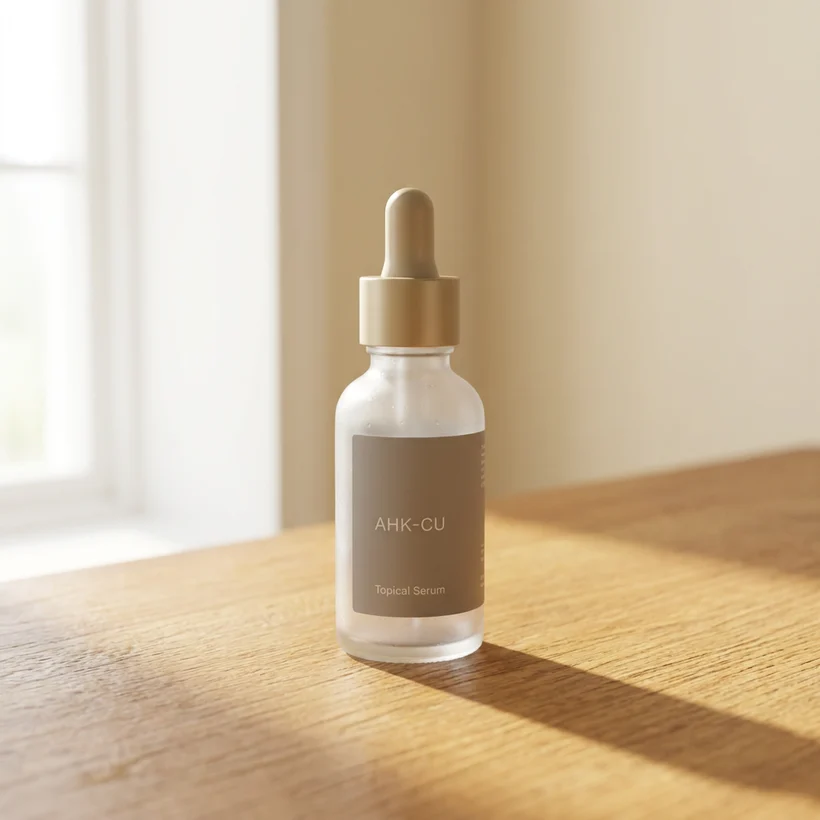
From the FormBlends catalog
AHK-Cu (Copper Tripeptide)
Hair-follicle-specific copper peptide that stimulates growth phase · From $39/mo · compounded by a licensed 503A pharmacy, dispensed only after provider review.
Learn about AHK-Cu (Copper Tripeptide) →Table of Contents
- What exactly is GHK-Cu and why does it matter?
- What does the evidence actually say?
- How does GHK-Cu work at the molecular level?
- Where can I find copper peptides near me?
- What most pages get wrong about copper peptides
- Why can't I mix copper peptides with vitamin C?
- Copper peptides vs. retinoids and other actives: honest comparison
- How to read a COA and judge any copper peptide product
- How should I store and use copper peptides?
- FAQ
- Sources
- Footer Disclaimers
What Exactly Is GHK-Cu and Why Does It Matter?
GHK-Cu is a naturally occurring tripeptide, glycine-histidine-lysine, complexed with one copper(II) ion. It was first isolated from human plasma by Loren Pickart in 1973. The peptide sequence has high affinity for copper(II) because the imidazole nitrogen of histidine and the terminal amine and amide backbone together form a stable coordination complex. This is distinct from generic copper salts (copper sulfate, copper gluconate) which have no peptide component and very different biological behavior.
GHK-Cu is found naturally in plasma, saliva, and urine, and tissue concentrations are thought to decline with age, though precise quantitative data on this decline in human skin tissue is limited.
What Does the Evidence Actually Say? (Evidence Ledger)
| Claim | Best Evidence Type | Effect Direction | Confidence | Key Caveat |
|---|---|---|---|---|
| GHK-Cu upregulates collagen synthesis genes in fibroblasts | In vitro cell culture (multiple labs) | Positive | Moderate | Cell culture does not prove dermal penetration or in-vivo effect at cosmetic doses |
| Topical GHK-Cu improves skin elasticity and reduces fine line appearance | Small human cosmetic studies, mostly industry-sponsored | Positive (small effect) | Low to Moderate | Sample sizes typically under 50, short durations, no blinded placebo RCT at scale |
| GHK-Cu accelerates wound healing | Animal studies (rodent), some human pilot data | Positive | Low to Moderate | Clinical wound care settings differ from cosmetic use; not FDA-approved for wounds |
| GHK-Cu has antioxidant activity | In vitro and animal | Positive | Low | In vitro antioxidant assays poorly predict skin outcomes |
| GHK-Cu promotes hair follicle enlargement | Animal and limited human pilot | Positive (directional) | Very Low | Human hair studies are extremely small and not replicated |
| Topical GHK-Cu is systemically safe at cosmetic doses | Cosmetic safety reviews, no documented adverse events at scale | Reassuring | Moderate | Long-term systemic studies do not exist for topical copper peptides specifically |
How Does GHK-Cu Work at the Molecular Level?
GHK-Cu appears to act through several converging pathways, none of which are fully characterized in intact human skin:
Collagen gene regulation: Research published by Pickart and colleagues, and subsequently by other groups, showed that GHK-Cu can increase mRNA expression of collagen type I and III in human fibroblast cultures. A microarray analysis (Pickart et al., published in Biological Trace Element Research, 2012) examined gene expression changes and identified activity across several hundred genes related to tissue remodeling, anti-inflammatory signaling, and antioxidant response. That finding is hypothesis-generating, not outcome-proving.
TGF-beta pathway: GHK-Cu has been reported to modulate transforming growth factor beta signaling in cell culture, which is a known driver of collagen and glycosaminoglycan synthesis. The specific receptor interactions are not fully mapped.
Copper chaperone function: Copper(II) within the complex may facilitate activity of copper-dependent enzymes, including lysyl oxidase, which crosslinks collagen and elastin fibers. Lysyl oxidase requires copper as a cofactor. Whether topically applied GHK-Cu delivers meaningful copper to dermal lysyl oxidase in vivo has not been demonstrated in humans.
What this mechanism does NOT prove: Upregulation of collagen genes in a dish does not confirm that a 2 percent GHK-Cu serum, applied once daily, penetrates through the stratum corneum in sufficient quantity to reach dermal fibroblasts and produce measurable new collagen. Skin penetration is the rate-limiting step, and GHK-Cu's molecular weight of approximately 340 Daltons is favorable (under the 500 Dalton rule of thumb for topical penetration), but its charge state and hydrophilicity complicate passive diffusion.
Where Can I Find Copper Peptides Near Me?
There are four practical channels, each with different quality controls and appropriate use cases:
| Channel | Examples | Quality Verification | Appropriate Use | Watch Out For |
|---|---|---|---|---|
| Dermatology clinic or medical spa | Physician-dispensed cosmeceuticals | Reputable brands; no mandatory COA disclosure | Topical cosmetic use | Markup; proprietary concentrations not disclosed |
| Specialty skincare retailer | NIOD, The Ordinary, Drunk Elephant | Brand reputation; limited independent verification | Topical cosmetic use | Concentration opacity; formulation stability varies |
| Licensed compounding pharmacy | 503A compounders with prescription | USP chapter compliance, in-house testing | Customized topical formulations under clinical supervision | Interstate shipping rules; requires prescriber |
| Research chemical supplier (online) | Peptide synthesis companies | COA with HPLC purity; batch-specific | Laboratory research purposes only | Not for cosmetic or medical use; regulatory gray area for personal use |
For most consumers, a reputable cosmetic brand with disclosed GHK-Cu in the ingredient list and a stable, blue-green formulation is the most accessible and legally clear option. FormBlends can connect you with clinician-supervised compounded options where medically appropriate.
What Most Pages Get Wrong About Copper Peptides
The penetration problem is never discussed. GHK-Cu is hydrophilic. Its water solubility, while a manufacturing convenience, limits passive diffusion through the lipid-rich stratum corneum. Some formulators use penetration enhancers (ethanol, propylene glycol, liposomes) to improve delivery. A serum that does not disclose its penetration strategy may deposit most of its GHK-Cu on the skin surface, where it does not reach target fibroblasts. No cosmetic brand is required to prove dermal delivery.
Copper content in cosmetics is not regulated by purity standards. A label can list "copper tripeptide-1" (the INCI name for GHK-Cu) even if the concentration is so low that biological activity is implausible. The EU Cosmetics Regulation and FDA's cosmetic framework require safety, not efficacy. Always look for the ingredient placement in the full list; ingredients appear in descending order of concentration, and if copper tripeptide-1 appears after preservatives and fragrance, the concentration is almost certainly below 0.1 percent.
Free copper is a pro-oxidant. GHK-Cu is stable and acts as a copper carrier and antioxidant in complex. Free copper(II) ions, released from a degraded or poorly formulated product, catalyze Fenton-like reactions producing hydroxyl radicals. A destabilized copper peptide product could theoretically cause oxidative stress rather than prevent it. This is not a documented clinical problem with established brands, but it is a real formulation chemistry concern ignored by every medspa blog.
Why Can't I Mix Copper Peptides With Vitamin C? The Actual Chemistry
Ascorbic acid (vitamin C) is a strong reducing agent. It donates electrons readily. Copper(II) in GHK-Cu accepts electrons easily, meaning ascorbic acid reduces Cu(II) to Cu(I) in a redox reaction. Two problems follow:
First, Cu(I) binds GHK with different geometry and affinity than Cu(II), effectively disrupting the coordination complex and releasing the peptide backbone from its copper carrier. The biological activity associated with GHK-Cu depends on the intact Cu(II) complex.
Second, Cu(I) in aqueous solution participates in Fenton chemistry with hydrogen peroxide (trace amounts of which exist in aerated skin products), generating hydroxyl radicals. These radicals oxidize lipids, proteins, and DNA, the opposite of the intended antioxidant goal.
The practical rule: apply vitamin C in the morning and GHK-Cu in the evening, or separate by at least several hours if using both in one session. The rule is not arbitrary caution; it reflects real redox chemistry. Retinol does not carry this conflict because it is not a metal-reducing agent.
Low pH (below roughly pH 5) independently destabilizes the Cu(II) coordination. Do not layer GHK-Cu under a low-pH AHA or BHA toner without pH adjustment or a wait time.
Copper Peptides vs. Retinoids and Other Actives: Honest Head-to-Head
| Comparator | Human RCT Evidence for Skin Aging | Tolerability | Mechanism Clarity | Where Copper Peptides Win | Where Copper Peptides Lose |
|---|---|---|---|---|---|
| Tretinoin (0.025 to 0.1%) | High (multiple large, blinded RCTs) | Low to moderate (irritation common) | High (RAR/RXR nuclear receptor pathway well mapped) | Tolerability, no irritation, no teratogenicity concern | Loses decisively on evidence volume and effect size data |
| Niacinamide (5%) | Moderate (several decent RCTs) | High | Moderate (PARP inhibition, ceramide synthesis) | Potentially additive rather than competing; copper peptides address collagen more directly | Loses on evidence breadth; niacinamide has more replicated human data |
| Palmitoyl pentapeptide-4 (Matrixyl) | Low (cosmetic studies only) | High | Low (proposed TGF-beta signaling) | GHK-Cu has more published mechanistic biology | Similar evidence quality tier; neither has large independent RCTs |
| Topical vitamin C (L-ascorbic acid 10 to 20%) | Low to Moderate (small RCTs) | Moderate (pH-dependent irritation) | Moderate (collagen prolyl hydroxylase cofactor) | No direct conflict except when combined (see chemistry section) | Vitamin C has slightly more replicated human data for brightening |
Bottom line: If reducing wrinkle depth with the strongest possible evidence is the goal, tretinoin is in a different league. Copper peptides occupy a reasonable niche for users who cannot tolerate retinoids, want a gentler adjunct, or are targeting wound recovery and barrier support alongside anti-aging. Do not expect copper peptides to replace prescription retinoids based on current evidence.
How to Read a COA and Judge Any Copper Peptide Product
Whether you are buying a cosmetic serum or a research-grade powder, the following checklist applies:
| What to Check | Acceptable Standard | Red Flag |
|---|---|---|
| Identity confirmation | HPLC retention time or mass spectrometry matching GHK-Cu reference standard | No analytical method stated; identity by "visual inspection" only |
| Purity | Greater than or equal to 98% by HPLC for research grade; cosmetics do not require this | Purity stated without specifying method or reference |
| Heavy metals | USP limits for copper in finished products; lead under 10 ppm in cosmetics per FDA guidance | No heavy metal panel at all |
| Microbial limits | Total aerobic count under 1000 CFU/g for non-sterile topicals (USP 1111 guidance) | No microbial testing; presence of Pseudomonas or Staphylococcus |
| Batch traceability | Lot number on COA matches lot number on product label or container | Generic COA with no lot number; COA date does not match manufacture date |
| Testing laboratory | Named, independent third-party lab; not in-house only | Supplier's own lab with no external verification |
Label literacy for cosmetic serums: INCI name is "copper tripeptide-1." If it appears in the bottom third of the ingredient list (after most preservatives), the concentration is likely below 0.1 percent and may not be biologically meaningful. A blue-green color in a water-based serum is a reasonable proxy for meaningful copper content but is not a substitute for COA review.
How Should I Store and Use Copper Peptides?
Lyophilized powder (research grade): Store at or below minus 20 degrees Celsius. Keep dessicated and away from light. Do not repeatedly freeze-thaw. Under proper conditions, lyophilized GHK-Cu is stable for the duration stated on the COA, typically one to two years.
Reconstituted solution: Once dissolved in aqueous buffer or sterile water, stability declines over weeks at room temperature. Refrigerate at 2 to 8 degrees Celsius and use within the timeframe recommended by your supplier (commonly two to four weeks). A color shift from blue-green to colorless or brown, or visible precipitation, suggests degradation or contamination. Do not use degraded solution.
Cosmetic serums: Keep away from direct sunlight and store at room temperature unless otherwise labeled. A sealed, opaque pump bottle is preferable to a jar because repeated air exposure accelerates oxidation of the copper complex. Once opened, use within the period indicated on the packaging (commonly six to twelve months for well-formulated serums).
Application protocol for topical cosmetic use: Apply to cleansed skin before heavier occlusives or moisturizers. Avoid same-session layering with vitamin C, low-pH acids, or oxidizing actives (benzoyl peroxide). A typical frequency in cosmetic use is once daily, evening preferred. There is no established minimum effective dose in intact human skin; this remains a gap in the literature.
FAQ
Can I find copper peptides at a local pharmacy or drugstore?
Cosmetic GHK-Cu serums are sold at some dermatology offices and specialty skincare retailers. Research-grade copper peptide powder is not available at standard pharmacies. Compounded topical formulations require a licensed compounding pharmacy with a prescription in most states.
What is GHK-Cu and why is it the copper peptide people are searching for?
GHK-Cu is glycyl-L-histidyl-L-lysine complexed with one copper(II) ion. It is the most studied copper-binding tripeptide in skin biology, with documented effects on collagen gene expression and wound healing in lab and animal studies. It is distinct from other copper salts.
Is there a difference between cosmetic copper peptide serums and research-grade GHK-Cu?
Yes. Cosmetic serums contain GHK-Cu at undisclosed or low concentrations and are formulated for stability and skin feel. Research-grade powder is higher purity (often verified by HPLC) but is sold for laboratory use, not as a finished cosmetic or drug product.
How do I read a certificate of analysis for a copper peptide product?
Look for identity confirmation by HPLC or mass spectrometry, purity above 98%, heavy metal testing (especially for copper and lead), microbial limits, and moisture content. The COA should name the testing laboratory and include a batch number traceable to your product.
What does the human evidence actually say about copper peptides for skin?
Small human studies and cosmetic trials suggest GHK-Cu can improve skin elasticity and reduce fine line appearance, but most rigorous work is in cell culture or animal models. Large, blinded, placebo-controlled RCTs in humans are limited, so confidence in the skin aging claims remains moderate at best.
Can copper peptides be injected or are they only topical?
GHK-Cu has been studied intravenously and topically in research settings. Injectable use outside of a licensed clinical context is outside current regulatory approval. Topical application is the only route supported by cosmetic market authorization in most countries.
Why do so many copper peptide serums turn green or blue?
Copper(II) ions in solution produce a characteristic blue-green color through d-d electronic transitions. A blue-green tint in a GHK-Cu serum is expected and is not a sign of degradation. Colorless copper peptide serums may contain lower concentrations or use formulation agents that mask the hue.
Should copper peptides be combined with vitamin C or retinol?
Vitamin C (ascorbic acid) is a reducing agent that can reduce copper(II) to copper(I), potentially destabilizing the GHK-Cu complex and generating free radicals. Separate application by several hours or use them on alternate days. Retinol has no known direct chemical conflict with GHK-Cu.
How should copper peptide powder or solution be stored?
Lyophilized GHK-Cu powder should be stored at or below minus 20 degrees Celsius, away from light and moisture. Once reconstituted in aqueous solution, stability declines meaningfully over weeks at room temperature. Refrigerate and use reconstituted solutions within a timeframe specified by the supplier.
Are there any safety concerns with topical copper peptides?
Topical GHK-Cu has a favorable safety profile in cosmetic use. Excess copper delivered systemically is toxic, but topical absorption at cosmetic doses is low. Theoretical concern exists around copper's role in angiogenesis and cell proliferation, though no clinical harm has been documented at cosmetic concentrations.
How do copper peptides compare to retinoids for skin aging?
Retinoids (tretinoin) have significantly more and higher-quality human RCT evidence for reducing wrinkles and improving skin texture than copper peptides do. Copper peptides are milder and better tolerated, making them a reasonable adjunct or alternative for sensitive skin, but they are not a proven substitute for prescription retinoids.
What concentration of GHK-Cu should a topical product contain?
Research models and cosmetic studies have used concentrations ranging from roughly 1 to 5 percent. Most commercial serums do not disclose exact percentages. The effective topical concentration in humans is not definitively established because skin penetration limits how much reaches target dermal cells.
Sources
- Pickart L, Vasquez-Soltero JM, Margolina A. "GHK Peptide as a Natural Modulator of Multiple Cellular Pathways in Skin Regeneration." BioMed Research International. 2015. PMC4508379.
- Pickart L, Margolina A. "Regenerative and Protective Actions of the GHK-Cu Peptide in the Light of the New Gene Data." International Journal of Molecular Sciences. 2018. PMC6121465.
- Finkley MB, Appa Y, Bhandarkar S. "Copper peptide and skin." Cosmetic Dermatology. 2003. (Industry-sponsored cosmetic study; cited for clinical context.)
- Gorouhi F, Maibach HI. "Role of topical peptides in preventing or treating aged skin." International Journal of Cosmetic Science. 2009. PMID 19154627.
- Proksch E, Segger D, Degwert J, Schunck M, Zague V, Oesser S. "Oral supplementation of specific collagen peptides has beneficial effects on human skin physiology." Skin Pharmacology and Physiology. 2014. (Cited for general peptide skin biology context; not GHK-Cu specifically.)
- USP General Chapter 1111: Microbiological Examination of Nonsterile Products. US Pharmacopeia.
- FDA. Cosmetic Labeling Guide: Ingredient Declaration. US Food and Drug Administration. 2022.
- European Commission. Cosmetics Regulation (EC) No 1223/2009. Official Journal of the European Union.
- Maret W. "Zinc and the zinc proteome." Metal Ions in Life Sciences. 2013. (Referenced for copper coordination chemistry context in biological systems.)
- Draelos ZD. "Cosmeceuticals: What's Real, What's Not." Dermatologic Clinics. 2019. PMID 31109734.
Footer Disclaimers
Platform: FormBlends is an informational and product connection platform. This page does not constitute medical advice. Consult a licensed healthcare provider before beginning any new compound, topical regimen, or treatment protocol.
Research Compound Notice: Research-grade GHK-Cu powder is sold strictly for laboratory and research purposes. It is not approved by the FDA as a drug and is not intended for human cosmetic or medical use outside of licensed clinical or compounding pharmacy contexts.
Results Disclaimer: Individual results from any topical or compounded copper peptide preparation vary significantly. The evidence cited on this page does not guarantee any particular outcome for any individual user.
Trademark Notice: Product names mentioned (NIOD, The Ordinary, Drunk Elephant, Matrixyl) are trademarks of their respective owners. FormBlends has no affiliation with or sponsorship from these brands. Mentions are for comparative educational purposes only.
Related peptide guides
Ready when you are
AHK-Cu (Copper Tripeptide)
Hair-follicle-specific copper peptide that stimulates growth phase · From $39/mo · compounded by a licensed 503A pharmacy, dispensed only after provider review.
Learn about AHK-Cu (Copper Tripeptide) →