
Trust Signals
Key Takeaways
- Most published peptide bioregulator research comes from a single Russian research group (Khavinson et al.) with limited independent replication in Western RCTs, putting confidence at Low to Very Low for most longevity claims.
- Epithalon (Ala-Glu-Asp-Gly), the most studied bioregulator, has shown telomerase activation in cell and animal models, but no large randomized controlled human trial has confirmed this translates to meaningful clinical outcomes.
- The most serious practical risk is not pharmacology but product quality: injectable peptides from gray-market research suppliers are not held to USP standards and may contain incorrect sequences, endotoxins, or wrong concentrations.
- No peptide bioregulator is FDA-approved as a drug; injectable forms legally require a prescription through a licensed US compounding pharmacy.
- Telehealth providers partnered with 503A compounding pharmacies are now the most accessible legal route for most US patients, but the prescribing physician must hold a license in your state and complete a real medical evaluation.
What Is Peptide Bioregulator Therapy and Where Can I Find It Near Me?
- What is peptide bioregulator therapy and how is it different from regular peptide therapy?
- Evidence ledger: what the research actually shows
- Mechanism with numbers: how bioregulators are proposed to work
- What most pages get wrong about peptide bioregulators
- How to find a legitimate peptide bioregulator provider near you
- Honest head-to-head: bioregulators vs. alternatives
- Operational label literacy: how to evaluate a product or protocol
- Real costs and what drives them
- FAQ
- Sources
What Is Peptide Bioregulator Therapy and How Is It Different from Regular Peptide Therapy?
Peptide bioregulators are tissue-specific short-chain peptides, most 2 to 4 amino acids long, first isolated and studied by Vladimir Khavinson and colleagues at the St. Petersburg Institute of Bioregulation and Gerontology starting in the 1970s. The original research context was Soviet military and cosmonaut health optimization under extreme environmental stress.
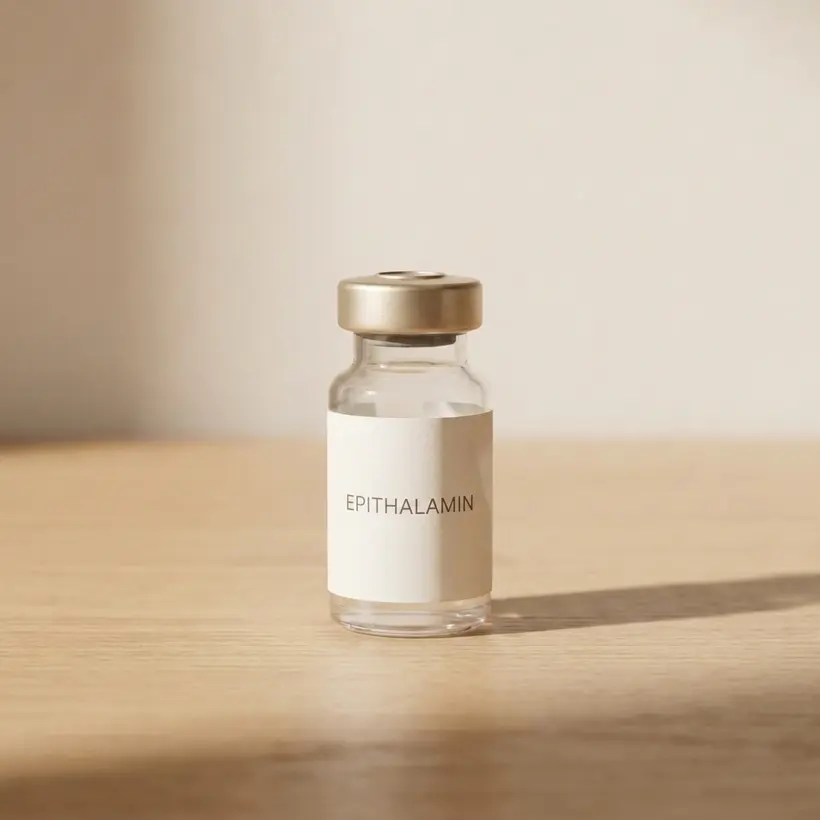
From the FormBlends catalog
Epithalamin (Epithalon Bioregulator)
Pineal gland peptide bioregulator that activates telomerase · From $39/mo · compounded by a licensed 503A pharmacy, dispensed only after provider review.
Learn about Epithalamin (Epithalon Bioregulator) →The key structural difference from longer therapeutic peptides: bioregulators are di- to tetrapeptides. Epithalon is a tetrapeptide (Ala-Glu-Asp-Gly). Vilon is a dipeptide (Lys-Glu). Thymalin is a polypeptide fraction extracted from thymus tissue. By contrast, BPC-157 is 15 amino acids and Sermorelin is 29. Size matters for mechanism: shorter peptides are proposed to cross cell membranes and interact directly with chromatin, while longer peptides generally act at cell-surface receptors.
The proposed mechanism class is "gene expression modulation" rather than "receptor agonism." This is a meaningful mechanistic distinction, though Western replication of the intranuclear mechanism is limited.
Evidence Ledger: What the Research Actually Shows
| Claim | Best Evidence Type | Effect Direction | Confidence (GRADE) | Key Caveat |
|---|---|---|---|---|
| Epithalon activates telomerase in human somatic cells | Cell culture / lab (Khavinson et al., published in Neuro Endocrinol Lett and Bulletin of Experimental Biology and Medicine) | Positive | Low | Cell-culture telomerase activation does not confirm longevity benefit in humans; no mechanism-to-outcome RCT exists |
| Thymalin restores immune parameters in elderly humans | Small human observational studies and non-randomized trials (Khavinson group, Russian-language literature) | Positive | Low | No blinded placebo-controlled Western trial; publication bias likely |
| Epithalon extends lifespan in aged rats and fruit flies | Animal model (multiple Khavinson et al. publications) | Positive | Very Low for human translation | Rodent and Drosophila data do not reliably predict human aging outcomes |
| Vilon (Lys-Glu) modulates immune cell activity | Animal model and in vitro | Positive | Very Low | Human pharmacokinetic data absent |
| Oral Cytomax-formulated bioregulators are bioavailable | Mechanism claim only; no published human pharmacokinetic study confirmed in Western literature | Uncertain | Very Low | First-pass hepatic metabolism and GI proteolysis are significant barriers for di- to tetrapeptides |
| Epithalon reduces oxidative stress markers | Animal model | Positive | Very Low for human translation | Surrogate biomarker reduction in animals does not establish clinical benefit |
Mechanism with Numbers: How Bioregulators Are Proposed to Work
The dominant proposed mechanism is chromatin interaction. Khavinson and colleagues published work, notably in the Bulletin of Experimental Biology and Medicine, proposing that short peptides of 2 to 4 residues can penetrate the nuclear membrane and bind to specific DNA promoter regions through complementary electrostatic interactions, altering histone acetylation states and thus gene transcription. Their molecular modeling work suggests these short peptides are structurally compact enough to interact with a limited span of nucleotide bases in promoter regions, though the precise geometry of this interaction has not been independently validated by a separate crystallographic or structural biology group.
For Epithalon specifically, cell-culture studies published by Khavinson's group reported increased telomerase activity in human fetal fibroblasts. The proposed pathway is activation of the hTERT (human telomerase reverse transcriptase) gene promoter. These findings have not been independently replicated in a blinded setting by a separate research group to this author's knowledge.
What the mechanism does NOT prove: even if Epithalon reliably activates telomerase in cultured cells, telomere length maintenance does not linearly translate to longevity or disease prevention in humans. Telomere biology is substantially more complex; Werner syndrome and dyskeratosis congenita illustrate that telomere dysfunction causes disease, but healthy humans with longer telomeres do not uniformly live longer in prospective data.
Half-life: no published human pharmacokinetic half-life data for Epithalon in peer-reviewed Western journals is known to this author. Given the di- to tetrapeptide size, enzymatic degradation by serum peptidases would be expected to be rapid, likely on the order of minutes in circulation, which is why injection protocols favor repeated short courses rather than infrequent dosing. This is a reasoned inference from peptide biochemistry, not a sourced number.
What Most Pages Get Wrong About Peptide Bioregulators
1. Oral bioavailability is nearly unproven. Many supplement retailers sell oral encapsulated bioregulators (marketed as Cytomaxes and Cytogens) and imply clinical-grade efficacy. The enteric coating is meant to survive gastric acid, but intestinal peptidases and first-pass hepatic metabolism pose additional barriers for 2 to 4 amino acid peptides. No peer-reviewed human pharmacokinetic study for oral Epithalon or Vilon in Western literature has been confirmed. Buyers should understand they may be purchasing a product with undemonstrated absorption.
2. Nearly all positive human data originates from one research group. Khavinson's institute has published extensively. That body of work is real. But science requires independent replication. The absence of independent Western replication does not disprove the findings, but it prevents elevation above Low confidence. A provider who presents this data as established fact is overclaiming.
3. The gray-market sourcing problem is severe. A large fraction of patients seeking peptide bioregulator therapy purchase injectable products from research chemical websites. These products are not manufactured under current Good Manufacturing Practice (cGMP) standards. Common problems include: incorrect peptide sequence, endotoxin contamination, incorrect stated concentration, and presence of synthetic impurities. Independent analyses of research-grade peptide products sold through unregulated channels have repeatedly identified purity and identity failures, though the extent varies across product categories and suppliers. Any patient using gray-market injectables should understand that quality is not guaranteed and that the supply chain overlap with sports-performance research chemical markets brings the same documented quality concerns to bioregulator products.
4. Regulatory status is frequently misrepresented. Bioregulators are not dietary supplement ingredients with GRAS status in the US. They are not approved drugs. When sold as dietary supplements, they operate in a regulatory gray area. When sold for injection, they require a prescription. Clinics or websites that describe them as "natural peptides" to imply supplement-level regulatory safety are eliding a meaningful legal and safety distinction.
How to Find a Legitimate Peptide Bioregulator Provider Near You
The most reliable local routes are integrative medicine physicians, anti-aging or longevity clinic MDs or DOs, and naturopathic doctors in states where NDs have prescribing authority. National directories include the American Academy of Anti-Aging Medicine (A4M), the Institute for Functional Medicine (IFM), and the Age Management Medicine Group.
Telehealth is often the fastest legal access point. Several platforms now work with 503A compounding pharmacies (licensed by state boards of pharmacy and compliant with USP Chapter 797 sterile compounding standards) to provide physician consultation and ship peptides to your home. The prescribing physician must be licensed in the patient's state. This is a firm legal requirement, not a technicality.
Questions to ask any provider before starting:
- What compounding pharmacy do you use, and is it 503A or 503B licensed?
- Can you provide a Certificate of Analysis (COA) for the specific lot of peptide I will receive?
- What purity threshold does the COA show, and was it tested by HPLC?
- What is the monitoring protocol if I experience an adverse reaction?
- What published studies are you basing the protocol on, and can you share them?
A provider who cannot answer these questions confidently, or who sources from overseas wholesale suppliers without pharmacy licensing, should be avoided.
Honest Head-to-Head: Bioregulators vs. Alternatives
| Intervention | Mechanism Class | Strongest Evidence Level | FDA Status | Bioregulator Wins When... | Bioregulator Loses When... |
|---|---|---|---|---|---|
| Peptide bioregulators (Epithalon, Thymalin) | Proposed intranuclear gene modulation | Animal model, small human observational | Not approved; compounded prescription or supplement | Organ-specific targeting is desired with investigational intent | Patient wants established clinical evidence or FDA-approved safety profile |
| Sermorelin (GHRH analog, 29 AA) | GHRH receptor agonism | Human RCTs for GH secretion (FDA-approved previously for pediatric GHD; now compounded) | Withdrawn from market; compounded | Head-to-head: Sermorelin has more robust human pharmacokinetic data | Organ-specific targeting beyond GH axis is not needed |
| BPC-157 (15 AA) | Receptor-level angiogenic and cytoprotective signaling | Animal model (primarily rat); no human RCT published | Not approved; compounded or gray market | Tissue repair context; somewhat more independent replication than bioregulators | Longevity or gene-modulation outcomes are the goal |
| Metformin (longevity repurposing) | AMPK activation, mTOR modulation | Large human RCTs (diabetes); TAME longevity trial ongoing | FDA-approved for T2DM; off-label for longevity | Bioregulators win on tissue specificity hypothesis; lose on every evidence metric | Any comparison requiring human RCT evidence |
| Rapamycin (mTOR inhibitor) | mTORC1 inhibition | Strong animal longevity data; human trials ongoing | FDA-approved for transplant; off-label longevity use | Bioregulators: no immunosuppressive risk, tissue-targeted hypothesis | Rapamycin has more independent replication and a clearer mechanistic pathway |
Operational Label Literacy: How to Evaluate a Product or Protocol
Reading a Certificate of Analysis (COA): A legitimate COA for an injectable peptide should show identity confirmation (mass spectrometry or HPLC with retention time matching), purity greater than 98% by HPLC, and endotoxin testing below USP limits (typically below 5 EU/kg body weight per hour for injectable products per USP standards). The COA should name the testing laboratory and include a lot number matching the vial you receive. A COA that shows only a single HPLC purity number without identity confirmation is insufficient.
What a degraded peptide looks like: Reconstituted peptide solutions that have degraded may appear cloudy or develop visible particulates. Color change (yellowing) in a solution that should be clear is a warning sign. Lyophilized (freeze-dried) powder that has clumped into a hard cake rather than a loose powder may indicate moisture exposure during storage. These are not guarantees of degradation but warrant rejection of the vial.
Storage chemistry explained: Lyophilized peptide powders should be stored at or below 4 degrees Celsius before reconstitution and kept away from light. The reason: peptide bonds are vulnerable to hydrolysis in the presence of water and heat, and aromatic amino acid residues (tyrosine, tryptophan, phenylalanine) undergo photo-oxidation with UV exposure. Once reconstituted in bacteriostatic water, solutions should be used within the timeframe specified by the compounding pharmacy, typically within a few weeks when refrigerated. This is not a product-specific number but a general peptide chemistry principle.
Reconstitution math example: If a vial contains 10 mg of lyophilized Epithalon and you add 2 mL of bacteriostatic water, the concentration is 5 mg per mL (5000 mcg per mL). A 5 mg dose would require 1 mL drawn. Always confirm the stated vial content with your provider and pharmacy documentation before drawing a dose.
Injection-site practice: Subcutaneous injections of peptide bioregulators are typically administered in the abdomen or thigh, rotating sites to prevent lipodystrophy. Subcutaneous injection with a 27 to 31 gauge insulin syringe is standard compounding pharmacy guidance. Any provider prescribing intravenous Epithalon at home without nursing supervision should be questioned carefully.
Real Costs and What Drives Them
Cost components for a supervised peptide bioregulator protocol in the US include: physician consultation (initial and follow-up), compounding pharmacy preparation, and shipping under cold-chain conditions. A 10-day Epithalon course (commonly 10 mg total at 1 mg per day injection) through a licensed US compounding pharmacy has been reported to cost in the range of several hundred to over one thousand dollars depending on the clinic and pharmacy, though specific pricing changes and patients should request itemized quotes.
Oral supplement forms (Cytomaxes) from international retailers are substantially lower in cost. The cost difference does not reflect proven efficacy differences because no comparative human bioavailability study exists. It reflects manufacturing standard differences and regulatory pathway differences.
Gray-market injectable products from research chemical suppliers will typically appear cheaper. The cost savings are not worth the purity and legal risks described above.
FAQ
What is peptide bioregulator therapy and how is it different from regular peptide therapy?
Peptide bioregulators are short di- to tetrapeptides, typically 2 to 4 amino acids, derived from specific organ tissues. Unlike longer signaling peptides such as BPC-157 or TB-500, bioregulators are proposed to work by entering the cell nucleus and modulating gene expression in a tissue-specific way. Most research originates from Soviet-era and Russian science, with limited Western RCT replication.
Where can I find peptide bioregulator therapy near me?
Peptide bioregulator therapy is offered by integrative medicine clinics, longevity centers, naturopathic physicians, and some compounding-pharmacy-affiliated practices. Use directories like A4M, the Institute for Functional Medicine, or telehealth platforms that work with licensed compounding pharmacies. Always verify the provider holds a valid prescribing license in your state.
Are peptide bioregulators FDA approved?
No peptide bioregulator is currently FDA-approved as a drug in the United States. Some are available as over-the-counter dietary supplements (marketed as Cytomaxes or Cytogens), while others require a prescription from a compounding pharmacy. Regulatory status varies significantly by country.
What does the evidence actually say about peptide bioregulators?
The strongest published evidence is from Russian researchers, primarily Vladimir Khavinson and colleagues, showing longevity and tissue-restoration signals in animal models and small human observational studies. Western peer-reviewed RCTs are scarce. Confidence in most claims is Low to Very Low by GRADE standards due to small sample sizes, limited blinding, and single-group replication.
What are the most studied peptide bioregulators?
The most studied include Epithalon (tetrapeptide Ala-Glu-Asp-Gly, pineal gland derived), Thymalin and Thymogen (thymus derived), Vilon (dipeptide Lys-Glu), Cardiogen (heart derived), and Bronchogen (lung derived). Epithalon has the most published mechanistic data, particularly on telomerase activation, though most data comes from one research group.
How are peptide bioregulators typically administered?
Administration routes depend on the specific peptide. Epithalon is most commonly given by subcutaneous or intravenous injection, typically in courses of 10 to 20 days repeated one to two times per year. Some bioregulators are available in oral enteric-coated capsule form, though oral bioavailability for peptides is generally low and absorption data for most bioregulators is not well established in Western literature.
What should I ask a peptide bioregulator provider before starting?
Ask for the peptide source (USP-grade compounding pharmacy vs. research chemical supplier), a Certificate of Analysis showing purity above 98% by HPLC, the provider's prescribing license, their protocol rationale citing specific studies, and how adverse events will be monitored. Avoid any provider who cannot produce a COA on request.
What are the real risks and side effects of peptide bioregulator therapy?
Published adverse event data is sparse. Known potential risks include injection-site reactions, allergic responses, and theoretical concerns about uncontrolled cell proliferation given proposed effects on gene expression. The primary practical risk is product quality: peptides sourced from unregulated suppliers may contain impurities, incorrect sequences, or incorrect concentrations.
How much does peptide bioregulator therapy cost?
Costs vary widely. A 10-day Epithalon injection course through a US compounding pharmacy typically ranges from several hundred to over one thousand dollars depending on dose and clinic overhead. Oral supplement forms are lower cost but have unverified bioavailability. Telehealth consultations add an additional fee.
Can I get peptide bioregulators without a prescription?
Some bioregulators are sold as dietary supplements online without a prescription. However, injectable-grade peptides legally require a prescription in the US. Buying injectable peptides from gray-market research chemical websites bypasses pharmacy quality controls and carries real purity and legal risks. This is the most common and most serious risk patients face.
How do peptide bioregulators differ from synthetic peptides like BPC-157 or Sermorelin?
BPC-157 and Sermorelin are longer synthetic peptides (15 and 29 amino acids respectively) that work primarily through receptor-level signaling. Peptide bioregulators are shorter (2 to 4 amino acids) and are proposed to act intranuclearly on chromatin and gene promoter regions. The mechanisms are distinct and the evidence bases are separate, with Sermorelin having the most robust clinical trial data of the group.
Is telehealth an option for peptide bioregulator therapy?
Yes. Several US telehealth platforms now partner with licensed 503A compounding pharmacies to prescribe peptide bioregulators. This is often the most accessible route. The key requirement is that the prescribing physician must be licensed in your state and must conduct a proper medical evaluation before prescribing.
Sources
- Khavinson VKh, Morozov VG. Peptides of pineal gland and thymus prolong human life. Neuro Endocrinol Lett. 2003;24(3-4):233-240. PMID 14523363.
- Khavinson V, Diomede F, Mironova E, et al. AEDG Peptide (Epitalon) Stimulates Gene Expression and Protein Synthesis during Neurogenesis: Possible Epigenetic Mechanism. Molecules. 2020;25(3):609. PMC7037223.
- Khavinson VKh, Bondarev IE, Butyugov AA. Epithalon peptide induces telomerase activity and telomere elongation in human somatic cells. Bull Exp Biol Med. 2003;135(6):590-592. PMID 12949504.
- United States Pharmacopeia. USP Chapter 797: Pharmaceutical Compounding - Sterile Preparations. USP-NF. Rockville, MD: USP; 2023 revision.
- Lopez-Otin C, Blasco MA, Partridge L, Serrano M, Kroemer G. The hallmarks of aging. Cell. 2013;153(6):1194-1217. PMID 23746838. (Context for telomere biology and longevity mechanisms.)
- American Academy of Anti-Aging Medicine (A4M). Physician Directory. a4m.com. Accessed May 2026.
- Institute for Functional Medicine. Find a Practitioner Directory. ifm.org. Accessed May 2026.
- FDA. Human Drug Compounding. FDA.gov/drugs/guidance-compliance-regulatory-information/compounding. Accessed May 2026.
- Blackburn EH, Epel ES, Lin J. Human telomere biology: a contributory and interactive factor in aging, disease risks, and protection. Science. 2015;350(6265):1193-1198. PMID 26785477. (Context for telomerase biology caveats.)
Related peptide guides
Ready when you are
Epithalamin (Epithalon Bioregulator)
Pineal gland peptide bioregulator that activates telomerase · From $39/mo · compounded by a licensed 503A pharmacy, dispensed only after provider review.
Learn about Epithalamin (Epithalon Bioregulator) →