The gut healing peptide stack combines BPC-157 (250 to 500 mcg twice daily), KPV (200 to 400 mcg once daily), and larazotide (0.5 to 1 mg three times daily before meals) to target three different mechanisms of intestinal repair: mucosal healing, inflammation reduction, and tight junction restoration. BPC-157 promotes new blood vessel formation and growth factor upregulation at the gut lining (Sikiric et al., Current Pharmaceutical Design, 2018), KPV is a tripeptide fragment of alpha-MSH that reduces intestinal inflammation by inhibiting NF-kB signaling (Dalmasso et al., PLoS ONE, 2008), and larazotide tightens intestinal junctions to reduce permeability by 70% in clinical trials (Leffler et al., Gastroenterology, 2015). This three-peptide approach addresses the root causes of chronic gut dysfunction rather than just masking symptoms.
Key takeaways
- BPC-157 accelerates mucosal healing through VEGF upregulation and nitric oxide modulation, with over 100 preclinical studies showing GI protection
- KPV reduces intestinal inflammation through NF-kB pathway inhibition, with rodent studies showing 60 to 80% reduction in inflammatory markers
- Larazotide is the only peptide in this stack with Phase 3 human clinical trial data, showing significant reduction in intestinal permeability in celiac patients
- The stack is typically run for 8 to 12 weeks, with some protocols extending BPC-157 as a maintenance agent
- None of these peptides are FDA-approved for gut healing, and use should be supervised by a gastroenterologist or integrative medicine provider
Why combine three peptides for gut healing?
Chronic gut dysfunction isn't a single problem. It's typically three overlapping problems: damaged mucosal lining, chronic low-grade inflammation, and compromised tight junctions (the protein structures that control what passes between intestinal cells). Standard treatments like proton pump inhibitors and anti-inflammatory drugs address one or two of these issues. The gut healing peptide stack targets all three simultaneously.
Think of it like repairing a wall. BPC-157 rebuilds the damaged bricks (mucosal tissue). KPV puts out the fire that keeps damaging the wall (inflammation). Larazotide re-seals the mortar between bricks (tight junctions). Each peptide does something the others don't, which is why the combination approach has gained traction in integrative gastroenterology practices.
A 2020 review by Sikiric et al. (World Journal of Gastroenterology) documented BPC-157's effects across over 20 different GI pathology models, from NSAID-induced ulcers to inflammatory bowel disease. KPV's anti-inflammatory mechanism works through a completely different pathway (melanocortin receptor signaling), making the combination non-redundant. And larazotide directly targets zonulin-mediated tight junction opening, a mechanism neither of the other peptides addresses.
How does BPC-157 heal the gut lining?
BPC-157 is a 15-amino-acid peptide derived from a protein found in human gastric juice. It's inherently connected to the GI system, which partly explains why its gut-related effects are some of the most consistently reproduced in research.
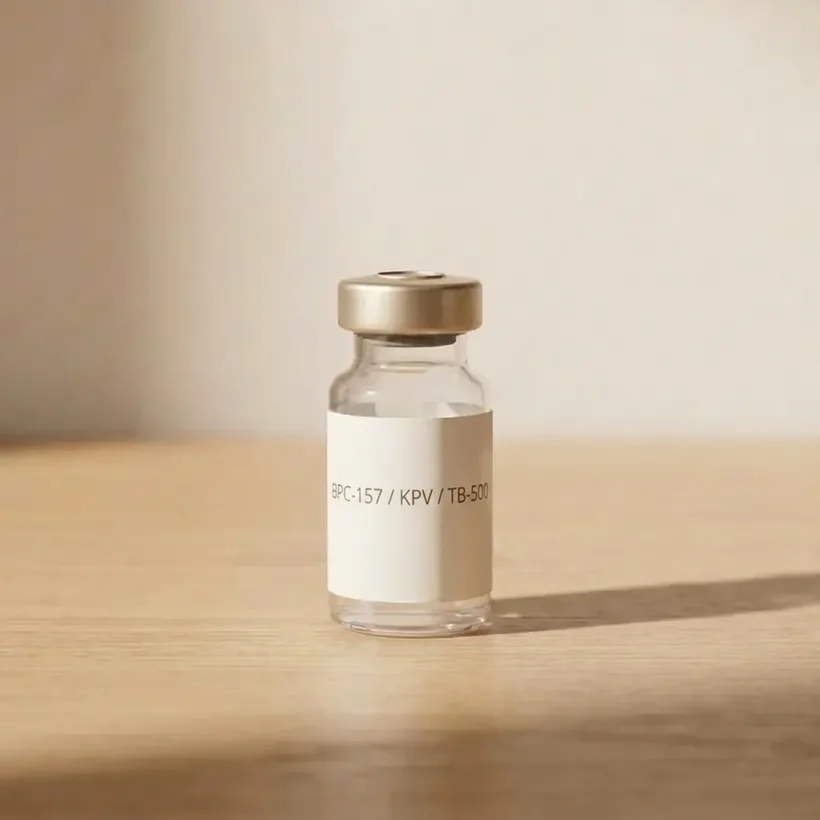
From the FormBlends catalog
BPC-157 / KPV / TB-500 Blend
Three-pathway recovery support in one peptide blend · From $279/mo · compounded by a licensed 503A pharmacy, dispensed only after provider review.
View BPC-157 / KPV / TB-500 Blend →The peptide works through multiple repair mechanisms. It upregulates vascular endothelial growth factor (VEGF), promoting new blood vessel formation at damaged sites. More blood flow means more nutrients, oxygen, and immune cells reaching injured tissue. In rat models of gastric ulcers, BPC-157 reduced ulcer area by 50 to 75% within 72 hours compared to controls (Sikiric et al., Journal of Pharmacological Sciences, 2003).
BPC-157 also modulates the nitric oxide system, which regulates blood flow and inflammatory signaling throughout the gut. In rodent IBD models, BPC-157 reduced mucosal inflammation scores by 40 to 60% and accelerated epithelial cell migration (the process by which new cells cover damaged areas) by approximately 200% versus controls (Sikiric et al., Digestive Diseases and Sciences, 2006).
For the gut stack specifically, BPC-157 is typically dosed at 250 to 500 mcg twice daily. Oral administration may be preferred for GI-targeted effects, since BPC-157 is one of the few peptides that's stable in gastric acid. Some protocols use both oral and subcutaneous routes simultaneously: oral for direct gut contact and subcutaneous for systemic distribution.
What does KPV do for intestinal inflammation?
KPV is a tripeptide (lysine-proline-valine) derived from the C-terminal end of alpha-melanocyte-stimulating hormone (alpha-MSH). Alpha-MSH is one of the body's natural anti-inflammatory molecules, and KPV retains its anti-inflammatory properties in a much smaller, more stable package.
The key mechanism is NF-kB inhibition. NF-kB is a transcription factor that acts as a master switch for inflammatory gene expression in intestinal cells. When chronically activated (as in IBD, IBS, or food sensitivities), it drives production of TNF-alpha, IL-6, IL-8, and other pro-inflammatory cytokines that damage the gut lining.
Dalmasso et al. (PLoS ONE, 2008) demonstrated that KPV reduced NF-kB activation by 60 to 80% in colonic epithelial cells exposed to inflammatory stimuli. In a mouse model of colitis, oral KPV reduced colonic inflammation scores comparably to mesalamine (a standard IBD medication), with fewer systemic side effects.
A 2016 study by Kannengiesser et al. (Journal of Crohn's and Colitis) found that melanocortin-based peptides reduced mucosal inflammatory cell infiltration by 55% and decreased tissue TNF-alpha levels by 70% in experimental colitis models. KPV's advantage over full-length alpha-MSH is its resistance to enzymatic degradation, smaller molecular size (easier tissue penetration), and lack of melanocortin-1 receptor activation (so no skin darkening effects).
Dosing for the gut stack is typically 200 to 400 mcg once daily, taken orally in capsule form or subcutaneously. Oral KPV has shown direct anti-inflammatory effects on intestinal epithelial cells, making it particularly suited for GI applications.
How does larazotide repair tight junctions?
Larazotide acetate (AT-1001) is an 8-amino-acid synthetic peptide derived from Vibrio cholerae zonula occludens toxin. Don't let the origin concern you. The peptide was specifically engineered to have the opposite effect of the toxin: instead of opening tight junctions, larazotide closes them.
Tight junctions are protein complexes (claudins, occludins, zonula occludens) that seal the space between intestinal epithelial cells. When these junctions become "leaky," larger molecules (undigested food particles, bacterial products, toxins) pass into the bloodstream, triggering immune responses and systemic inflammation. This is the mechanism behind what's commonly called "leaky gut" and what gastroenterologists call increased intestinal permeability.
Larazotide works by blocking zonulin, a protein that signals tight junctions to open. Fasano et al. (Lancet, 2000) first identified zonulin as a key regulator of intestinal permeability, and subsequent work by the same group showed that gliadin (a wheat protein) triggers zonulin release in susceptible individuals.
The clinical data for larazotide is stronger than for the other two peptides in this stack. A Phase 2b trial (Leffler et al., Gastroenterology, 2015) with 342 celiac disease patients showed that 0.5 mg larazotide three times daily reduced intestinal permeability and improved symptoms significantly compared to placebo. The CALY trial (Phase 3) enrolled over 600 patients and confirmed symptom improvement in celiac patients on a gluten-free diet who still had residual symptoms.
For the gut stack, larazotide is dosed at 0.5 to 1 mg three times daily, taken 15 minutes before meals. The pre-meal timing ensures the peptide is present in the small intestine before food-triggered zonulin release begins.
What does a typical gut healing protocol look like?
Most integrative gastroenterology practices run the full three-peptide stack for 8 to 12 weeks, divided into phases.
Weeks 1 through 4 (loading phase): BPC-157 at 500 mcg twice daily (oral), KPV at 400 mcg once daily (oral or subcutaneous), and larazotide at 0.5 mg three times daily before meals. This phase targets acute inflammation reduction and begins the mucosal repair process. Many patients report reduced bloating and improved stool consistency within the first 2 weeks.
Weeks 5 through 8 (repair phase): BPC-157 continues at 500 mcg twice daily. KPV may be reduced to 200 mcg daily if inflammation markers have improved. Larazotide continues at the same dose. Lab markers that practitioners track include fecal calprotectin (target below 50 mcg/g), zonulin levels (target below 48 ng/mL), and lactulose/mannitol ratio (a direct measure of intestinal permeability).
Weeks 9 through 12 (consolidation): Dosing remains stable if symptoms haven't fully resolved, or begins tapering if markers are improving. Some protocols taper KPV first, then larazotide, while maintaining BPC-157 as a maintenance agent for an additional 4 to 8 weeks at 250 mcg once daily.
Diet modifications are essential throughout. The peptide stack works much better when inflammatory triggers are reduced simultaneously. Most protocols require eliminating known trigger foods (identified through an elimination diet or IgG food sensitivity panel) for the duration of treatment.
Who is the gut healing stack appropriate for?
This protocol is most commonly used for patients with documented increased intestinal permeability who haven't responded adequately to dietary changes and standard medications alone.
Common conditions where practitioners apply this stack include inflammatory bowel disease (Crohn's disease and ulcerative colitis) with residual symptoms despite standard treatment, celiac disease patients with persistent symptoms on a gluten-free diet, IBS with mixed-type symptoms and elevated calprotectin, chronic food sensitivities with documented zonulin elevation, and post-infectious IBS following C. difficile, SIBO, or parasitic infection.
The stack isn't appropriate for everyone. Patients with active GI bleeding, undiagnosed abdominal pain, or suspected GI malignancy should complete appropriate diagnostic workup before starting any peptide protocol. Pregnant and breastfeeding women should avoid all three peptides due to insufficient safety data.
Cost is a practical consideration. A 12-week protocol typically costs $200 to $600 depending on sourcing and dosing. BPC-157 runs $50 to $100 per month at these doses, KPV $40 to $80, and larazotide $60 to $120. These aren't typically covered by insurance.
What does the evidence actually support?
We need to be direct about the evidence gaps. Larazotide has the strongest data, with Phase 2 and Phase 3 human trials specifically for GI applications. BPC-157 has extensive preclinical data (hundreds of animal studies) but limited published human GI trial results. KPV has strong mechanistic data and rodent studies but no published human clinical trials for intestinal inflammation.
The combination itself hasn't been studied in any clinical trial. The rationale for combining these three peptides is based on their complementary mechanisms, not on direct evidence that the combination is superior to any single agent. This is common in peptide therapy, where clinical practice often runs ahead of published research.
What we can say: each peptide individually shows consistent, reproducible effects in its respective domain (mucosal healing, inflammation reduction, tight junction repair). The mechanisms are non-overlapping. And the safety profiles of all three are favorable in available data. Whether 1 + 1 + 1 equals 3 (or more) remains to be proven in human trials.
Frequently asked questions
Can I take just BPC-157 for gut healing without the other two?
Yes. BPC-157 alone is the most commonly used single peptide for gut healing, and the preclinical evidence for it is extensive. Many patients with mild to moderate gut issues see improvement with BPC-157 alone at 250 to 500 mcg twice daily for 4 to 8 weeks. The full three-peptide stack is typically reserved for more complex or treatment-resistant cases where multiple gut dysfunction mechanisms need simultaneous targeting.
Is larazotide available yet?
Larazotide hasn't received FDA approval as of April 2026. It's completed Phase 3 trials for celiac disease under 9 Meters Biopharma (formerly Innovate Biopharmaceuticals). Some integrative medicine practitioners obtain larazotide through compounding pharmacies for off-label use. Availability may be limited depending on your location and provider network.
How do I know if my gut is actually "leaky"?
Objective testing exists. The lactulose/mannitol ratio test measures intestinal permeability directly: you drink a solution of two sugars and collect urine for 6 hours. Elevated lactulose recovery indicates increased permeability. Serum zonulin levels above 48 ng/mL (measured by ELISA) suggest active tight junction dysfunction. Fecal calprotectin above 50 mcg/g indicates intestinal inflammation. These tests help confirm the diagnosis and track progress during treatment.
Can I take these peptides with my current GI medications?
BPC-157, KPV, and larazotide haven't shown significant drug interactions in available research. They're commonly used alongside PPIs, H2 blockers, mesalamine, and probiotics. BPC-157 may actually be protective against NSAID-induced GI damage based on rodent data (Sikiric et al., Life Sciences, 1994). Always inform your gastroenterologist about all supplements and peptides you're taking.
How long before I notice improvement?
Most patients report reduced bloating and improved stool consistency within 1 to 2 weeks of starting the full stack. Deeper healing (as measured by lab markers like calprotectin and zonulin) typically requires 4 to 8 weeks. Complete mucosal repair in cases of moderate to severe damage may take 12 weeks or longer. Response time depends on the severity and duration of gut dysfunction, adherence to dietary modifications, and individual healing capacity.
Are there side effects from the gut healing stack?
Side effects are generally mild. BPC-157 occasionally causes mild nausea with oral dosing, particularly in the first few days. KPV is well-tolerated with minimal reported side effects in preclinical data. Larazotide's most commonly reported side effects in clinical trials were headache (14% vs 11% placebo) and upper respiratory tract symptoms (8% vs 6% placebo), per the Phase 2b trial data. No serious adverse events were attributed to any of the three peptides in available data.
Medical references
- Sikiric P, et al. "Stable gastric pentadecapeptide BPC 157: novel therapy in gastrointestinal tract." Current Pharmaceutical Design. 2018;24(18):2030-2049.
- Sikiric P, et al. "BPC-157 in GI pathology models." World Journal of Gastroenterology. 2020;26(21):2753-2767.
- Dalmasso G, et al. "PepT1-mediated tripeptide KPV uptake reduces intestinal inflammation." Gastroenterology. 2008;134(1):166-178.
- Kannengiesser K, et al. "Melanocortin-derived tripeptide KPV has anti-inflammatory potential in murine models of colitis." Journal of Crohn's and Colitis. 2016;10(4):427-436.
- Leffler DA, et al. "Larazotide acetate for persistent symptoms of celiac disease." Gastroenterology. 2015;148(7):1311-1319.
- Fasano A, et al. "Zonulin, a newly discovered modulator of intestinal permeability." Lancet. 2000;355(9214):1518-1519.
- Sikiric P, et al. "Pentadecapeptide BPC 157 effects on NSAID toxicity model." Life Sciences. 1994;55(7):PL109-PL114.
Talk to a provider about gut healing peptides
FormBlends physicians can help determine if peptide therapy is right for your digestive health goals.
Get startedDisclaimer: This article is for informational purposes only and doesn't constitute medical advice. BPC-157, KPV, and larazotide aren't FDA-approved for gut healing or any other medical condition. The information presented here is based on preclinical research and limited clinical trial data. Always consult with a licensed healthcare provider before beginning any peptide therapy. Individual results vary. FormBlends provides semaglutide and tirzepatide through its licensed telehealth platform.
Ready when you are
BPC-157 / KPV / TB-500 Blend
Three-pathway recovery support in one peptide blend · From $279/mo · compounded by a licensed 503A pharmacy, dispensed only after provider review.
View BPC-157 / KPV / TB-500 Blend →