Key Takeaway
Complete stacking guide for Ipamorelin with GLP-1 medications. Build, improve, and manage your peptide stack for weight loss and body composition.
This Ipamorelin and GLP-1 stacking guide walks you through every aspect of building this peptide combination: which GLP-1 agent to pair with Ipamorelin, how to structure your dosing, when to start each compound, cycling strategies, lifestyle improvement, and troubleshooting common issues. The goal is a physician-supervised stack that maximizes fat loss while preserving the lean muscle, energy, and vitality that matter for long-term health .
Why Stack Ipamorelin with a GLP-1 Medication?
GLP-1 receptor agonists have changed weight management. They produce sustained, significant weight loss by reducing appetite and improving metabolic function. But they create a caloric deficit, and caloric deficits don't only burn fat. Without intervention, a meaningful chunk of your weight loss will come from lean body mass .
Ipamorelin is the intervention. By stimulating your pituitary gland to release growth hormone naturally, it provides the metabolic signals your body needs to burn fat preferentially while holding onto muscle tissue. It also supports sleep, recovery, collagen production, and cellular repair, all of which tend to suffer during extended periods of reduced caloric intake why add Ipamorelin.
This stack isn't about making your GLP-1 medication work harder. It's about making your weight loss work smarter.
Selecting Your GLP-1 Agent
The Ipamorelin component of this stack remains consistent. The variable is which GLP-1 medication you use. Here is a quick comparison to help you and your physician decide:

Semaglutide (Wegovy, Ozempic)
- Frequency: Once weekly
- Mechanism: GLP-1 only
- Average weight loss: 15 to 17 percent of body weight
- Best for: Patients who want a proven, widely-used GLP-1 agent
Tirzepatide (Zepbound, Mounjaro)
- Frequency: Once weekly
- Mechanism: Dual GLP-1 and GIP
- Average weight loss: 15 to 22.5 percent of body weight
- Best for: Patients seeking maximum weight loss or who haven't responded adequately to GLP-1-only agents
Liraglutide (Saxenda)
- Frequency: Daily
- Mechanism: GLP-1 only
- Average weight loss: 5 to 10 percent of body weight
- Best for: Patients who prefer a more moderate approach or can't tolerate longer-acting agents
From $299 From $349
Stack Setup: Week-by-Week Guide
Weeks 1 to 3: GLP-1 Only
Start your chosen GLP-1 medication at its lowest dose. This allows your body to adjust and gives you a clean baseline to evaluate side effects. Most patients experience some nausea during this phase, which is normal and typically improves.
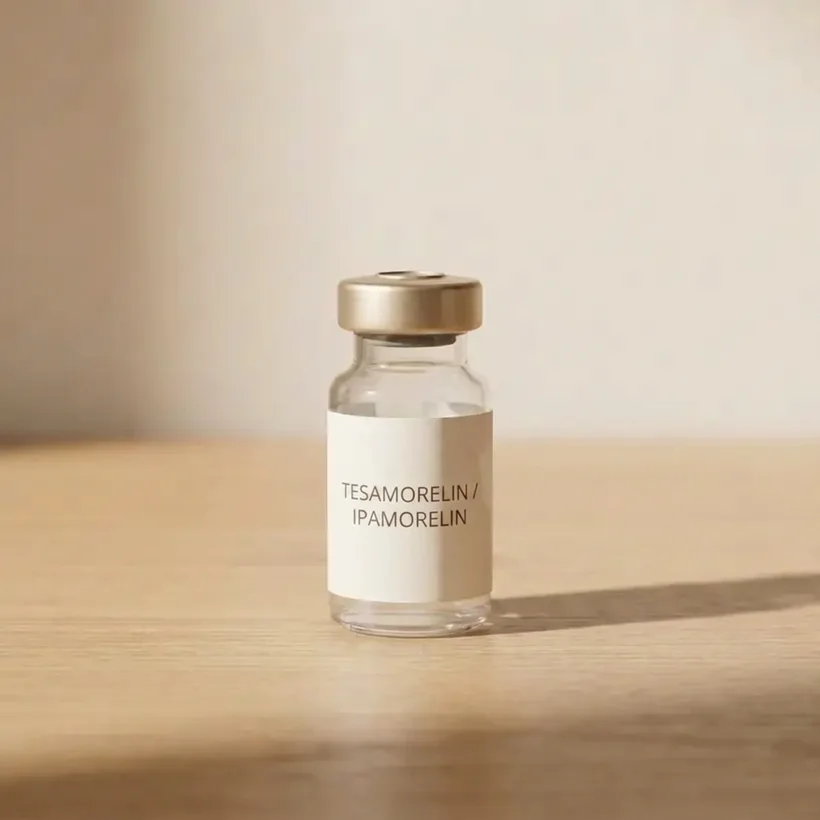
From the FormBlends catalog
Tesamorelin / Ipamorelin Blend
Growth-hormone pathway support in one blend · From $299/mo · compounded by a licensed 503A pharmacy, dispensed only after provider review.
View Tesamorelin / Ipamorelin Blend →Weeks 3 to 5: Add Ipamorelin
Once your GLP-1 side effects have stabilized, introduce Ipamorelin at 100 to 200 mcg daily, injected subcutaneously 30 minutes before bedtime on an empty stomach. Note any changes in sleep quality, energy, or new symptoms and communicate them to your physician.
Weeks 5 to 8: Initial Titration
Your GLP-1 medication continues its standard titration schedule. Ipamorelin may be increased to 200 to 300 mcg if well-tolerated. A morning dose (fasted) can be added for more strong GH support if your physician recommends it. Schedule lab work at week 6 to 8.
Weeks 8 to 16: Full Improvement
Both compounds are at or near their optimal doses. This is the window of greatest visible change. Focus on body composition tracking (measurements, photos, body fat percentage) rather than scale weight alone. Continue regular physician check-ins.
Weeks 16 to 24: Sustained or Maintenance Phase
Patients approaching their goals may begin transitioning. Options include maintaining both compounds, cycling Ipamorelin, reducing GLP-1 dosing, or shifting to a maintenance-only protocol. Your physician will guide this transition .
Cycling Ipamorelin in the Stack
Continuous use of any GH secretagogue can potentially lead to receptor desensitization over time, meaning your pituitary becomes less responsive to the stimulus. Cycling helps prevent this. Popular cycling approaches for Ipamorelin within this stack include:
- Weekly mini-cycle: Five days on, two days off. Simple, sustainable, and effective for most patients.
- Monthly cycle: Three weeks on, one week off. Provides a longer recovery window for pituitary receptors.
- Block cycle: Ten to twelve weeks on, four to six weeks off. Used for patients who prefer longer continuous periods.
Your GLP-1 medication isn't cycled. It works through sustained receptor activation and should be taken continuously as prescribed .
Maximizing Stack Results with Lifestyle
Protein Is Non-Negotiable
GLP-1 medications reduce appetite, which is their purpose. But reduced appetite often leads to reduced protein intake, and that's where muscle loss accelerates. Set a daily protein target of 0.7 to 1.0 grams per pound of body weight. Use tracking tools, plan meals around protein sources, and supplement with protein shakes if needed. This is the single highest-impact lifestyle factor for this stack protein and peptide therapy.
Resistance Training Is important
Ipamorelin's GH support gives your body the hormonal environment to preserve muscle. But your muscles need mechanical stimulation to signal that they should be preserved. Resistance training 2 to 4 times per week provides that signal. Focus on compound movements (squats, deadlifts, presses, rows) and progressively increase the challenge over time.
Sleep Improvement
Ipamorelin's most powerful GH pulse comes during deep sleep. To maximize this benefit:
- Keep a consistent bedtime
- Make your bedroom cool, dark, and quiet
- Avoid screens for 30 to 60 minutes before bed
- Limit caffeine after noon
- Take Ipamorelin 30 minutes before your target bedtime
Hydration
Both reduced food intake and growth hormone's mild fluid-shifting effects make hydration important. Aim for at least half your body weight in ounces of water daily. Add electrolytes if needed, especially during the early weeks when GI side effects from your GLP-1 may cause fluid loss.
Troubleshooting Common Stack Issues
Issue: Persistent nausea from GLP-1
Solution: Slow the titration schedule. Eat smaller, blander meals. Stay hydrated. If nausea persists beyond four weeks at a given dose, discuss a dose adjustment or switching to a different GLP-1 agent with your physician.
Issue: Water retention from Ipamorelin
Solution: Mild retention is normal and usually temporary. If it persists or becomes uncomfortable, reduce the Ipamorelin dose. Increase water intake and monitor sodium consumption.
Issue: Not seeing body composition changes
Solution: Check protein intake (most common culprit). Ensure resistance training is in your routine. Confirm Ipamorelin timing and fasting compliance. Review IGF-1 lab results to verify GH response. Consider adding a morning Ipamorelin dose if only taking it at bedtime.
Issue: Fatigue during the day
Solution: Evaluate total caloric intake (may be too low). Check sleep duration and quality. Review hydration. Ensure you aren't over-exercising relative to your food intake.
Frequently Asked Questions
Can I add other peptides to this stack later?
Yes. Some physicians add CJC-1295 (without DAC) alongside Ipamorelin for a combined GH boost. Others add BPC-157 for gut and tissue healing support. But start with the Ipamorelin and GLP-1 foundation and build from there under physician guidance advanced peptide stacks.
What if I switch from one GLP-1 medication to another?
You can typically continue Ipamorelin without interruption when switching GLP-1 agents. Your physician will manage the GLP-1 transition, which may involve a brief washout period or direct switch depending on the medications involved.
Is this stack appropriate for someone just starting their weight loss process?
Yes. In fact, starting Ipamorelin early alongside your GLP-1 medication gives you the best chance of preserving lean mass from the beginning. It's easier to prevent muscle loss than to rebuild it later.
Start Your Stack with FormBlends
Building an effective peptide stack requires medical expertise, lab monitoring, and individualized dosing. Our physician-supervised telehealth platform at FormBlends handles all of this. We will evaluate your candidacy, prescribe the right combination, and support you through every phase of your protocol. schedule consultation
Ready when you are
Tesamorelin / Ipamorelin Blend
Growth-hormone pathway support in one blend · From $299/mo · compounded by a licensed 503A pharmacy, dispensed only after provider review.
View Tesamorelin / Ipamorelin Blend →