Key Takeaway
Is it safe to use Ipamorelin and tirzepatide together? Review the interaction safety profile, contraindications, and monitoring guidelines for this peptide stack.
Ipamorelin and tirzepatide have no known direct drug interaction. They act on completely different receptor systems, are metabolized through separate pathways, and don't alter each other's pharmacokinetics in any documented way. When used under physician supervision with appropriate monitoring, this combination has a favorable safety profile .
Ipamorelin Safety: What the Research Shows
Ipamorelin has been studied in multiple clinical settings, including post-surgical recovery trials where patient populations were already medically complex . It consistently demonstrated a clean safety profile compared to other growth hormone releasing peptides.
The key safety advantage of Ipamorelin is its selectivity. It stimulates growth hormone release without significantly raising cortisol, aldosterone, or prolactin. This matters because improved cortisol promotes fat storage and muscle breakdown, while improved prolactin can cause hormonal disruption. Ipamorelin avoids both of these issues .
Reported side effects of Ipamorelin are generally mild:
- Transient headache during the first one to two weeks
- Mild water retention, particularly in the hands and feet
- Tingling or numbness in extremities (a normal GH-related effect)
- Occasional lightheadedness after injection
- Injection site irritation
Tirzepatide Safety: Clinical Evidence
Tirzepatide has one of the largest clinical evidence bases of any newer weight loss medication. The SURMOUNT and SURPASS trial programs enrolled thousands of patients and established a well-characterized safety profile . For a complete cost breakdown, see our cheapest tirzepatide options.
View data table
| Category | Clinical Interest Score | Detail |
|---|---|---|
| BPC-157 | 88 | Tissue repair and gut healing |
| TB-500 | 82 | Injury recovery |
| Sermorelin | 78 | Growth hormone support |
| Ipamorelin | 75 | Anti-aging and recovery |
| GHK-Cu | 70 | Skin and tissue repair |

The most common side effects are gastrointestinal and are typically dose-related:
- Nausea (most frequent, usually improves over time)
- Diarrhea
- Constipation
- Reduced appetite
- Abdominal discomfort or bloating
More serious but rare adverse events include pancreatitis, gallbladder disease (particularly gallstones in patients losing weight rapidly), and allergic reactions. Tirzepatide carries a boxed warning regarding thyroid C-cell tumors based on animal studies, though this risk hasn't been confirmed in humans $1,000-$1,200/mo (brand).
Why These Peptides Are Safe to Use Together
The fundamental reason this combination is considered safe is that the two peptides don't share any biological targets. Consider the specifics:
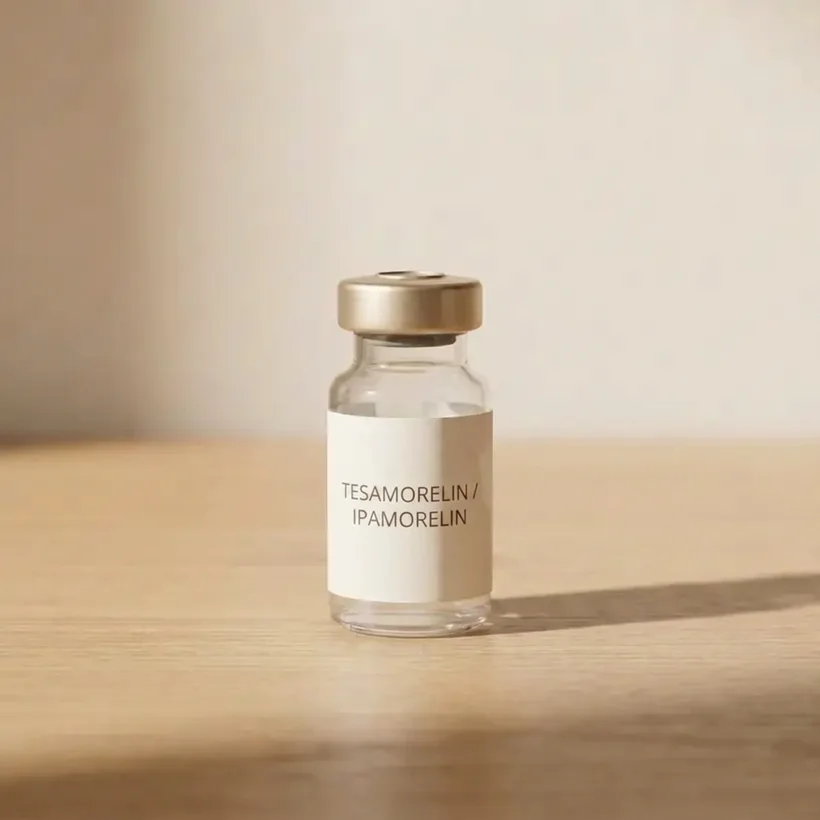
From the FormBlends catalog
Tesamorelin / Ipamorelin Blend
Growth-hormone pathway support in one blend · From $299/mo · compounded by a licensed 503A pharmacy, dispensed only after provider review.
View Tesamorelin / Ipamorelin Blend →- Receptor systems: Ipamorelin binds ghrelin receptors (GHS-R) in the pituitary. Tirzepatide binds GLP-1 and GIP receptors in the brain, gut, and pancreas. Zero overlap.
- Metabolism: Ipamorelin is a small peptide cleared primarily through proteolytic degradation. Tirzepatide is metabolized through peptide backbone cleavage and fatty acid oxidation. They don't compete for the same metabolic enzymes.
- Absorption: Both are subcutaneous injections, but they're administered at different times and can be injected at different sites. Neither one affects the absorption rate of the other.
Areas That Warrant Monitoring
While there's no direct interaction, several indirect considerations are worth tracking:
Blood Glucose Management
Tirzepatide lowers blood sugar through improved insulin sensitivity and enhanced incretin signaling. Growth hormone, at improved levels, can have a mild insulin-antagonizing effect by promoting fatty acid release into the bloodstream . At the physiological GH levels produced by Ipamorelin, this effect is typically minimal. But diabetic or pre-diabetic patients should have their fasting glucose and HbA1c monitored at regular intervals .
Gastrointestinal Tolerance
Tirzepatide commonly causes nausea, especially during dose escalation. Ipamorelin isn't known to cause significant GI side effects, but any patient experiencing persistent nausea should work with their physician to identify the cause. Slow titration of tirzepatide remains the most effective way to minimize GI discomfort regardless of other peptides in the protocol.
Fluid Retention
Growth hormone can cause mild fluid retention, which occasionally manifests as puffiness in the hands, feet, or face. This is a normal physiological response and typically resolves as the body adjusts. If fluid retention becomes uncomfortable or persistent, your physician may reduce the Ipamorelin dose .
IGF-1 Levels
Ipamorelin increases growth hormone, which in turn raises insulin-like growth factor 1 (IGF-1) levels. While improved IGF-1 supports fat metabolism and tissue repair, excessively high levels aren't desirable. Regular IGF-1 testing ensures your GH stimulation stays within a healthy and therapeutic range.
Contraindications
Don't use this combination if you have:
- A personal or family history of medullary thyroid carcinoma
- Multiple Endocrine Neoplasia syndrome type 2 (MEN 2)
- Active or recent pancreatitis
- Active cancer or a history of cancer where GH stimulation could be contraindicated
- Severe kidney or liver impairment
- Known allergy to either peptide or its excipients
- Pregnancy or breastfeeding
Recommended Monitoring Schedule
At FormBlends, we follow a structured monitoring protocol for patients on this combination:
- Before starting: thorough metabolic panel, HbA1c, IGF-1, lipid panel, thyroid function, CBC
- 6 to 8 weeks in: Repeat metabolic panel, IGF-1, fasting glucose. Review symptoms and adjust dosing.
- Every 3 to 4 months: Full lab panel repeat. Body composition assessment. Physician consultation to reassess goals and protocol.
Lab monitoring
What to Report to Your Physician
Contact your physician promptly if you experience any of the following while on this combination:
- Persistent or severe nausea, vomiting, or abdominal pain
- Signs of low blood sugar (shakiness, confusion, excessive sweating)
- Significant or sudden swelling in hands, feet, or face
- Rapid or irregular heartbeat
- A lump or swelling in the neck
- Any new or unusual symptom that concerns you
Frequently Asked Questions
Does Ipamorelin increase the side effects of tirzepatide?
No. Ipamorelin doesn't amplify tirzepatide's side effects. The GI side effects of tirzepatide are related to its GLP-1/GIP activity and are independent of GH stimulation. Patients using both peptides don't report higher rates of nausea or other GI symptoms compared to tirzepatide alone .
Can I inject them in the same spot?
We recommend using different injection sites. For example, tirzepatide in the abdomen and Ipamorelin in the thigh, or vice versa. This ensures optimal absorption of both peptides and reduces the risk of injection site reactions.
Is this combination safe for diabetic patients?
It can be, with careful monitoring. Tirzepatide is FDA-approved for type 2 diabetes, and Ipamorelin's GH-raising effect is typically modest enough not to significantly disrupt blood sugar control. But glucose levels should be monitored more frequently in diabetic patients using this combination .
Safety Starts with Physician Supervision
The safest way to use any peptide combination is under the guidance of a qualified physician who understands both compounds. At FormBlends, our medical team reviews your complete health picture before recommending this stack and monitors you throughout treatment. schedule consultation
Ready when you are
Tesamorelin / Ipamorelin Blend
Growth-hormone pathway support in one blend · From $299/mo · compounded by a licensed 503A pharmacy, dispensed only after provider review.
View Tesamorelin / Ipamorelin Blend →