Key Takeaway
Explore how sermorelin and growth hormone improvement may support healthy aging. Evidence-based insights on body composition, skin health, cognition, and longevity.
Quick Answer: Sermorelin stimulates the body's natural growth hormone production, addressing the age-related GH decline (somatopause) that contributes to changes in body composition, skin quality, sleep, energy, and cognitive function. While it isn't a fountain of youth, GH improvement through sermorelin may support healthier aging by maintaining the biological processes that slow down as GH levels fall.
What Is Sermorelin?
Sermorelin acetate is a synthetic peptide that mirrors the first 29 amino acids of growth hormone-releasing hormone (GHRH). It acts on the anterior pituitary gland, stimulating it to produce and release growth hormone (GH) through the body's own signaling pathways. This approach preserves the natural pulsatile secretion pattern and somatostatin feedback mechanisms that regulate GH levels, distinguishing sermorelin from direct growth hormone injection.
In the context of aging, this distinction matters. The goal of anti-aging peptide therapy isn't to override the body's systems but to restore more youthful function within those systems. Sermorelin does precisely this: it supports the pituitary in producing GH at levels closer to what the body produced in earlier decades.
The Somatopause: Why Growth Hormone Declines with Age
Growth hormone production peaks during adolescence, when it drives the growth and development of virtually every tissue in the body. After the mid-20s, GH output begins a steady decline of approximately 14% per decade. By age 60, most adults produce a fraction of the GH they had at 25. This progressive decline is called the somatopause.
The somatopause isn't a single event but a gradual erosion of hormonal support. As GH and its downstream mediator IGF-1 decline, the body's capacity for tissue maintenance, repair, and metabolic regulation diminishes. Many of the changes commonly attributed to "normal aging" are, at least in part, consequences of this hormonal decline:
- Increased body fat, especially visceral (abdominal) fat
- Loss of lean muscle mass (sarcopenia)
- Thinning, less elastic skin
- Reduced bone density
- Poorer sleep quality
- Slower recovery from illness, injury, or exercise
- Cognitive decline and reduced mental sharpness
- Decreased energy and vitality
- Weakened immune function
The question that drives interest in sermorelin for anti-aging is straightforward: if many signs of aging correlate with GH decline, can restoring more physiologic GH levels slow or partially reverse those changes?
What the Research Tells Us
The Landmark Rudman Study
The scientific conversation about GH and aging was catalyzed by Dr. Daniel Rudman's 1990 study published in The New England Journal of Medicine. Rudman administered synthetic GH to men over 60 and observed significant increases in lean body mass, decreases in adipose tissue, and improvements in skin thickness over a 6-month period. The study's findings were striking but came with important caveats: the sample was small, the intervention was exogenous GH (not sermorelin), and side effects were notable.
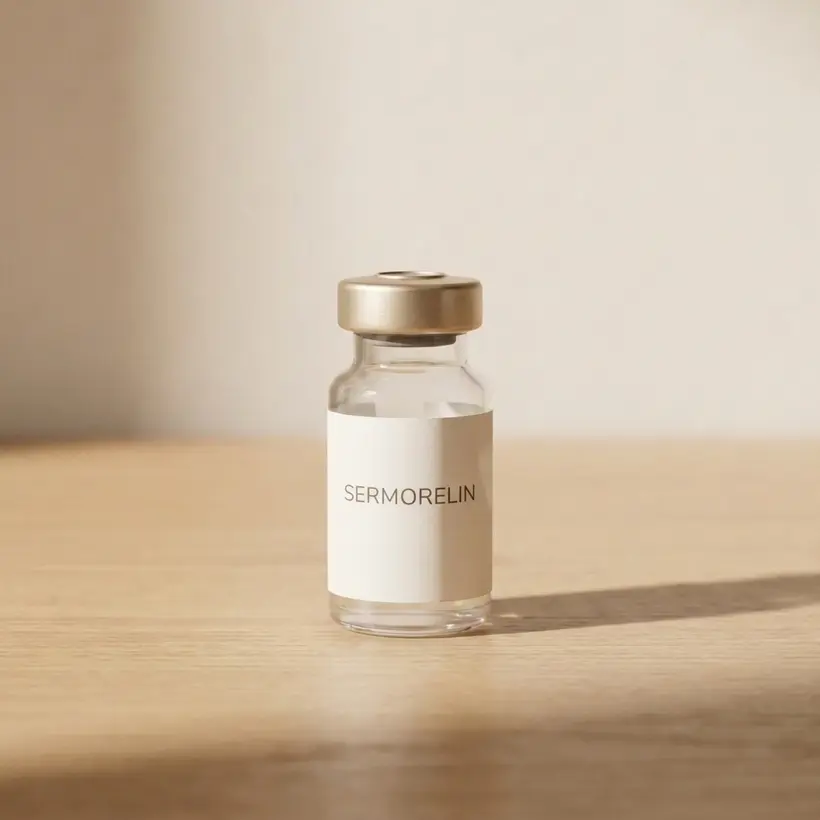
From the FormBlends catalog
Sermorelin
Bioidentical GHRH analog for natural growth hormone pulsatility · From $175/mo · compounded by a licensed 503A pharmacy, dispensed only after provider review.
View Sermorelin →GHRH Analog Research in Older Adults
Subsequent research has examined GHRH analogs (the class of compounds to which sermorelin belongs) in older adults. Studies published in The Journal of Clinical Endocrinology &. Metabolism and Annals of Internal Medicine have demonstrated that GHRH analog administration in adults over 60 can:
- Increase IGF-1 levels to more youthful ranges
- Improve body composition (reduced fat mass, increased lean mass)
- Enhance markers of cardiovascular health, including lipid profiles
- Improve measures of physical function and aerobic capacity
- Support bone mineral density
These studies found that GHRH analogs were better tolerated than exogenous GH, with fewer and milder side effects, because the pituitary's regulatory feedback remained intact.
Cognitive and Neurological Effects
GH receptors are present throughout the brain, and IGF-1 has documented neuroprotective properties. It supports neuronal survival, synaptic plasticity, and cerebral blood flow. While the cognitive benefits of GH improvement haven't been studied as extensively as the metabolic effects, preliminary research and clinical observations suggest that restoring GH levels may support mental clarity, memory, and mood stability in aging adults.
How Sermorelin Addresses Key Aspects of Aging
Body Composition
The shift from lean tissue to fat tissue is one of the most visible and metabolically significant changes of aging. GH promotes lipolysis (fat breakdown) and supports protein synthesis in muscle. By restoring GH levels, sermorelin therapy may help shift the balance back toward a leaner, more metabolically favorable body composition. Studies on GHRH analogs in older adults have shown measurable reductions in visceral fat and increases in lean mass over 6 to 12 months.
Skin Health
Collagen production is GH-dependent, and collagen is the primary structural protein in skin. As GH declines, collagen synthesis slows, contributing to thinner, less elastic skin and the formation of wrinkles. Sermorelin therapy supports collagen turnover, and patients commonly report improvements in skin firmness, hydration, and overall texture after 3 to 6 months of therapy.
Sleep Quality
Deep sleep diminishes significantly with age, and this decline parallels the drop in GH production. Because GH secretion peaks during slow-wave sleep, and GHRH itself has sleep-promoting properties, sermorelin therapy often produces noticeable improvements in sleep depth and quality within the first 2 to 4 weeks. Better sleep, in turn, supports virtually every other aspect of healthy aging.
Bone Density
GH and IGF-1 stimulate osteoblast activity and bone remodeling. Age-related GH decline contributes to the gradual loss of bone mineral density that increases fracture risk. While bone density changes are slow (requiring 6 to 12 months or more to measure), sermorelin therapy may support skeletal health as part of a thorough approach to aging.
Immune Function
The thymus gland, which produces T-cells important for adaptive immunity, shrinks significantly with age (a process called thymic involution). GH has been shown to support thymic function and T-cell production. While sermorelin isn't an immune therapy, restoring more youthful GH levels may contribute to better immune resilience as the immune system ages.
Cardiovascular Health
Adults with GH deficiency have increased cardiovascular risk markers, including unfavorable lipid profiles and impaired endothelial function. Research on GHRH analogs has shown improvements in LDL cholesterol, triglycerides, and markers of vascular health. These findings suggest that GH improvement may support cardiovascular health as part of an aging management strategy.
Energy and Vitality
Reduced energy, decreased motivation, and a general sense of diminished vitality are among the most common complaints of adults in their 40s, 50s, and beyond. While these symptoms are multifactorial, GH decline is a contributing factor. Patients on sermorelin therapy frequently report improved energy levels, greater motivation, and an enhanced sense of overall well-being, typically becoming noticeable within the first 4 to 8 weeks.
What Sermorelin Can't Do
Honest expectations are important. Sermorelin isn't a cure for aging, and no peptide or hormone therapy can stop the aging process entirely. What it can do is address one significant, modifiable factor (GH decline) that contributes to many of aging's unwanted effects.
Sermorelin won't:
- Reverse decades of aging overnight
- Replace the need for exercise, good nutrition, and sleep
- Treat or prevent specific diseases
- Produce results without consistent, long-term use
- Work identically for every patient
The most successful outcomes come from patients who view sermorelin as one component of a broader strategy for aging well, alongside regular physical activity, nutritional improvement, stress management, and appropriate medical care.
Safety Considerations
Sermorelin's safety profile is well established and compares favorably to exogenous GH. Because it works through the pituitary's natural regulatory mechanisms, the risk of GH excess is inherently lower. Common side effects are mild: injection site reactions, facial flushing, and headache, most of which diminish during the first weeks of therapy.
Sermorelin is contraindicated in patients with active malignancies (GH can stimulate cell proliferation), certain pituitary conditions, and known hypersensitivity to sermorelin. The question of GH therapy and cancer risk has been studied extensively, with current evidence suggesting that physiologic GH restoration (as opposed to supraphysiologic doses) doesn't increase cancer risk. But patients with a personal history of cancer should discuss this thoroughly with their oncologist and prescribing clinician.
Long-term safety data on GHRH analogs in older adults is reassuring, with studies extending to 2 years and beyond showing consistent tolerability and sustained benefit without significant adverse events.
How FormBlends Can Help
FormBlends provides physician-supervised sermorelin therapy through our telehealth platform. Our approach to anti-aging peptide therapy is evidence-based and individually tailored. We start with a thorough evaluation and baseline labs to determine whether GH improvement is appropriate for you, then design a protocol aligned with your health profile and goals.
Aging well isn't about chasing youth. It's about maintaining the biological function that supports quality of life. FormBlends provides the clinical expertise, pharmaceutical-grade peptides, and ongoing support to help you pursue that goal safely and effectively.
Frequently Asked Questions
At what age should I consider sermorelin for anti-aging?
Most patients begin exploring GH improvement therapy in their late 30s to 50s, when the effects of GH decline become noticeable. But suitability depends on individual factors, including symptoms, baseline lab values, and overall health. Your clinician will help determine the right timing for you.
Is sermorelin safer than HGH for anti-aging?
Generally, yes. Sermorelin works through the body's own regulatory mechanisms, which prevents the GH excess that can occur with exogenous HGH. This built-in safety margin is one of the primary reasons clinicians prefer GHRH analogs like sermorelin for age-related GH improvement.
How long do I need to use sermorelin to see anti-aging benefits?
Some benefits (improved sleep, energy) may be noticed within weeks. Body composition changes, skin improvements, and deeper tissue-level benefits typically develop over 3 to 6 months. Many patients continue on long-term maintenance protocols to sustain their results.
Can sermorelin extend lifespan?
There's no evidence that sermorelin extends human lifespan. Its value in the aging context lies in improving healthspan, the number of years lived in good health with high functional capacity. The goal isn't necessarily to live longer but to live better during the years you have.
Do I still need to exercise and eat well on sermorelin?
Absolutely. Sermorelin optimizes one factor (GH levels) that influences how you age, but exercise, nutrition, sleep, and stress management remain foundational. Patients who combine sermorelin with a healthy lifestyle consistently see the best results.
Age on Your Terms with FormBlends
GH decline doesn't have to dictate how you age. FormBlends offers physician-supervised sermorelin therapy with thorough evaluations, individualized protocols, and ongoing clinical support through our telehealth platform.
Disclaimer: This article is for informational purposes only and doesn't constitute medical advice. Sermorelin is a prescription medication that should only be used under the supervision of a licensed healthcare provider. It isn't a cure for aging or an approved anti-aging treatment. Individual results vary. The statements in this article haven't been evaluated by the FDA. This product isn't intended to diagnose, treat, cure, or prevent any disease.
Ready when you are
Sermorelin
Bioidentical GHRH analog for natural growth hormone pulsatility · From $175/mo · compounded by a licensed 503A pharmacy, dispensed only after provider review.
View Sermorelin →