Deep research
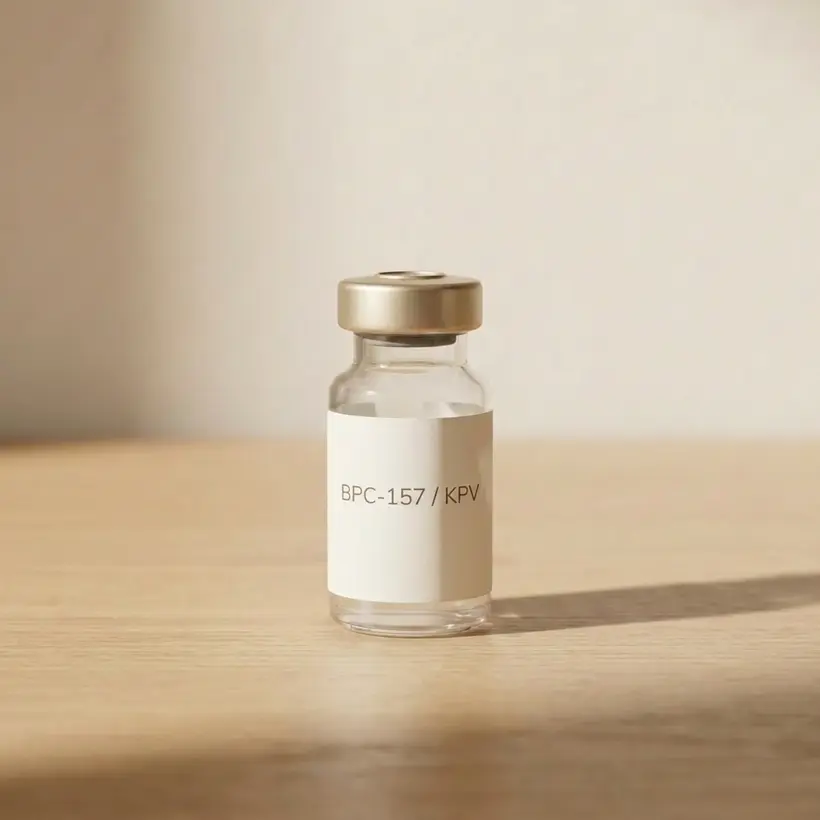
About Gut Repair Blend (BPC-157 + KPV)
The Gut Repair Blend combines two peptides with complementary and combined mechanisms for intestinal health: BPC-157 Arginate and KPV. BPC-157 (Body Protection Compound-157) is a pentadecapeptide (15 amino acids) with the sequence Gly-Glu-Pro-Pro-Pro-Gly-Lys-Pro-Ala-Asp-Asp-Ala-Gly-Leu-Val and a molecular weight of approximately 1419 Da, originally isolated from human gastric juice. The Arginate salt form used in this blend replaces the standard acetate counterion with arginine, which significantly improves acid stability and oral bioavailability, critical for a peptide that must survive the stomach environment. KPV is the C-terminal tripeptide (Lys-Pro-Val) of alpha-melanocyte stimulating hormone (alpha-MSH), with a molecular weight of approximately 342 Da and potent anti-inflammatory activity that concentrates in intestinal tissue.
BPC-157 addresses the structural repair component of gut healing through multiple converging mechanisms. It upregulates the expression of growth factor receptors including VEGFR2 (vascular endothelial growth factor receptor), FGFR1 (fibroblast growth factor receptor), and EGFR (epidermal growth factor receptor), accelerating mucosal healing by promoting angiogenesis and epithelial cell proliferation. It directly increases expression of tight junction proteins including occludin, ZO-1, and claudin-1, restoring the integrity of the paracellular barrier. In over 100 peer-reviewed publications (predominantly from the laboratory of Dr. Predrag Sikiric at the University of Zagreb), BPC-157 has demonstrated healing of gastric ulcers, duodenal ulcers, esophageal lesions, and intestinal anastomosis injuries. The effective oral dose in animal models (ED50) is remarkably low, approximately 10 ng/kg, reflecting the peptide's high potency at its target pathways. BPC-157 also counteracts NSAID-induced gastrointestinal damage, which is significant given that NSAID gastropathy is one of the most common causes of intestinal permeability issues.
KPV addresses the inflammatory component that perpetuates gut damage. Despite being only three amino acids, KPV retains the full anti-inflammatory potency of the parent alpha-MSH molecule. Its primary mechanism is inhibition of NF-kB nuclear translocation in colonocytes, macrophages, and dendritic cells. NF-kB is the master transcription factor driving production of pro-inflammatory cytokines (TNF-alpha, IL-1beta, IL-6, IL-8) and adhesion molecules that recruit inflammatory cells to the gut wall. By blocking NF-kB, KPV suppresses the inflammatory cascade at its source. In experimental colitis models (both DSS-induced and TNBS-induced), KPV reduced colitis severity scores by approximately 60%, an effect comparable to mesalamine (5-ASA), the standard first-line treatment for ulcerative colitis. This was published by Dalmasso et al. in PLoS ONE.
A key pharmacokinetic advantage of KPV is its transport mechanism. KPV is actively transported into intestinal epithelial cells by PepT1 (SLC15A1), the proton-coupled oligopeptide transporter that is responsible for absorbing di- and tripeptides from digested food. PepT1 is highly expressed on the apical (luminal) surface of enterocytes throughout the small intestine and colon, ensuring reliable and efficient uptake of orally administered KPV directly into the cells where it exerts its anti-inflammatory effects. This transporter-mediated uptake means KPV does not rely on passive diffusion and achieves intracellular concentrations sufficient for NF-kB inhibition even at low oral doses.
The rationale for combining BPC-157 and KPV in a single formulation is that intestinal dysfunction typically involves both structural damage (epithelial erosion, tight junction breakdown, impaired blood supply) and chronic inflammation (cytokine overproduction, immune cell infiltration, NF-kB activation). Addressing only one component produces incomplete results: healing tissue without resolving inflammation leads to re-injury, while suppressing inflammation without repairing tissue leaves the barrier compromised. The Gut Repair Blend addresses both simultaneously, with KPV calming the inflammatory environment to create conditions favorable for healing while BPC-157 rebuilds the mucosal architecture.
For storage and handling, the oral capsules should be stored at room temperature (20-25 degrees C) in the original sealed container. No refrigeration or reconstitution is required. The acid-stable BPC-157 Arginate formulation and the small size of KPV ensure both peptides survive gastric transit and reach the intestinal epithelium intact. Each capsule contains 500 mcg BPC-157 Arginate and 500 mcg KPV. Take on an empty stomach for optimal absorption via PepT1, as competition with dietary peptides can reduce KPV uptake.
Both component peptides have favorable safety profiles in published research. BPC-157 has shown no toxicity at doses up to 10 mg/kg in acute toxicity studies (approximately 1,000,000 times the effective dose), no mutagenicity in Ames testing, and no organ toxicity in subchronic administration studies. As a peptide naturally present in human gastric juice, it is recognized by the body as endogenous. KPV, as a fragment of the naturally occurring hormone alpha-MSH, similarly shows no toxicity at therapeutic doses. In the colitis studies, KPV-treated animals showed improved histological scores with no adverse effects. Neither peptide has shown drug interactions or systemic immunosuppression.