Key Takeaway
How TB-500 supports muscle recovery through tissue repair, inflammation reduction, and enhanced blood flow. Research evidence, dosing, and physician-supervised protocols.
Quick Answer: TB-500 may support muscle recovery by promoting cell migration to damaged tissue, reducing inflammatory markers, and enhancing blood vessel formation. Animal research shows accelerated muscle repair following injury. TB-500 isn't a performance enhancer or steroid. it works by supporting the body's natural repair processes. Human clinical data for muscle recovery is limited.
What Is TB-500?
TB-500 is a synthetic peptide based on the biologically active region of Thymosin Beta-4 (TB4), a naturally occurring protein present in nearly all human cells. TB4 regulates actin, a fundamental structural protein involved in cell movement, division, and tissue repair. By promoting cell migration and reducing inflammation, Thymosin Beta-4 plays a role in the body's healing response across multiple tissue types, including skeletal muscle.
TB-500 isn't an anabolic steroid and doesn't directly stimulate muscle protein synthesis in the way testosterone or growth hormone does. Its value for muscle recovery lies in supporting the repair phase that follows muscle damage, whether from exercise, injury, or surgery.
How Muscles Recover: The Biology
Knowing how TB-500 supports muscle recovery requires a brief look at how muscle repair actually works.
When muscle fibers are damaged (through intense exercise, strain, or trauma), the body initiates a multi-phase repair process:
- Inflammation phase (0 to 3 days): Immune cells flood the damaged area, clearing debris and releasing inflammatory cytokines. This is necessary but must be resolved for healing to progress.
- Repair phase (3 to 14 days): Satellite cells (muscle stem cells) activate, proliferate, and fuse with damaged fibers to rebuild the tissue. New blood vessels form to supply the healing area.
- Remodeling phase (14+ days): The repaired muscle matures, reorganizes its structure, and regains strength. Excessive fibrosis (scar tissue) during this phase can impair function.
TB-500's mechanisms are relevant to all three phases, making it a logical candidate for recovery support.
How TB-500 Supports Muscle Recovery
1. Accelerating Cell Migration to Damaged Muscle
The rate at which satellite cells and other repair cells reach damaged muscle fibers is a key determinant of recovery speed. TB-500 promotes cell migration by upregulating actin dynamics, effectively helping cells move faster and more efficiently to sites of damage.
From the FormBlends catalog
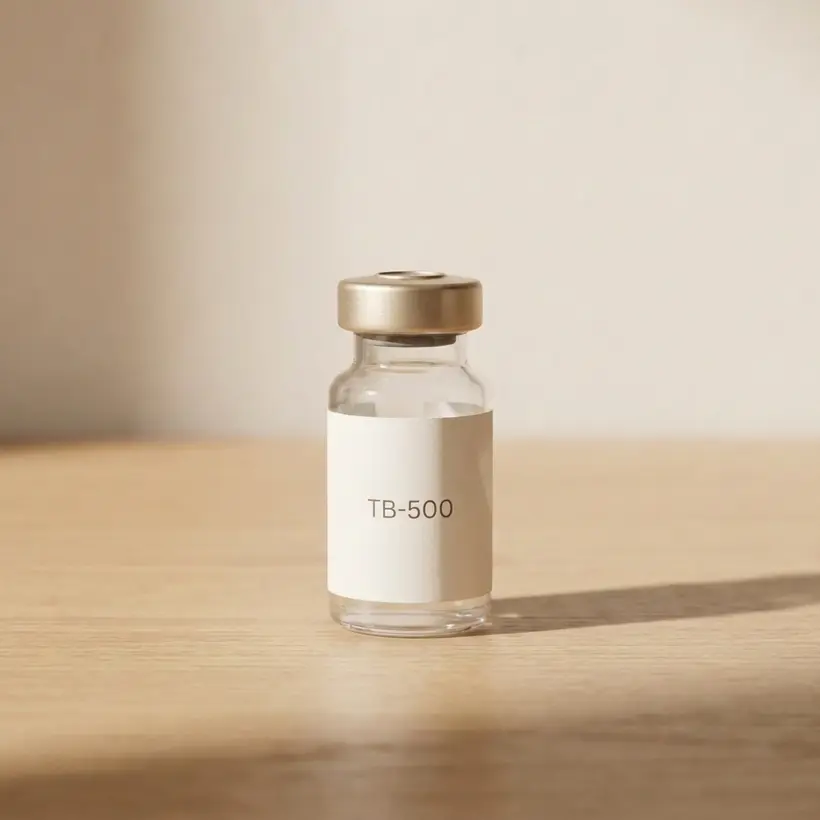
TB-500 (Thymosin Beta-4)
Universal repair peptide for tissue regeneration · From $49/mo · compounded by a licensed 503A pharmacy, dispensed only after provider review.
Learn about TB-500 (Thymosin Beta-4) →Malinda et al. (1999, Journal of Investigative Dermatology) demonstrated that Thymosin Beta-4 significantly enhanced the migration of multiple cell types in controlled experiments. While this study focused on dermal cells, the same actin-dependent migration mechanisms operate in muscle satellite cells.
2. Reducing Post-Exercise and Post-Injury Inflammation
While the initial inflammatory response to muscle damage is necessary, prolonged or excessive inflammation delays recovery and can cause additional tissue damage. TB-500 has been shown in animal studies to downregulate inflammatory cytokines including IL-1 beta and TNF-alpha (Sosne et al., 2007).
For athletes and active individuals, this translates to the potential for faster transition from the inflammatory phase to the repair phase, reducing downtime between training sessions or after injury.
3. Promoting Angiogenesis
Damaged muscle needs increased blood flow to deliver oxygen, nutrients, and growth factors to the repair site. TB-500's well-documented ability to stimulate new blood vessel formation (Grant et al., 1999, Journal of Cell Science) supports this critical aspect of recovery.
Enhanced blood supply to healing muscle not only speeds repair but may also improve the quality of the regenerated tissue by ensuring adequate nutrient delivery throughout the remodeling phase.
4. Reducing Fibrosis in Healing Muscle
One of the challenges of muscle injury recovery is the formation of fibrotic scar tissue. While some fibrosis is necessary for structural integrity during healing, excessive scar tissue reduces muscle elasticity and increases the risk of re-injury.
TB4 has been shown to reduce fibrotic scarring in cardiac tissue following heart attacks in mice (Bock-Marquette et al., 2004, Nature). Although cardiac and skeletal muscle differ in some respects, both are striated muscle types that share fundamental repair mechanisms. The anti-fibrotic properties observed in cardiac studies may extend to skeletal muscle recovery.
5. Supporting Muscle Flexibility
Through the combined effects of reduced inflammation, decreased fibrosis, and improved tissue quality, TB-500 may contribute to better muscle flexibility during and after recovery. Clinical practitioners who prescribe TB-500 frequently report that patients notice improved flexibility and reduced stiffness as early benefits.
What the Research Shows
Animal Studies on Muscle Repair
- Skeletal muscle injury: Studies in rodents with induced muscle damage have shown faster recovery of muscle function and structure with TB4 treatment compared to untreated controls.
- Cardiac muscle: The most solid data comes from cardiac repair models, where TB4 demonstrated profound improvements in cell survival, reduced scarring, and improved function (Bock-Marquette et al., 2004. Smart et al., 2007).
- Tendon and musculotendinous junction: Because muscles connect to bone through tendons, the improved tendon healing observed with TB4 (Xu et al., 2016) is directly relevant to functional muscle recovery.
Human Evidence
No large-scale human clinical trials have been published examining TB-500 specifically for muscle recovery. The human evidence base consists of:
- Clinical observation by physicians prescribing TB-500 for musculoskeletal conditions
- Patient-reported outcomes describing faster recovery between training sessions and improved recovery from muscle injuries
- Human clinical data on TB4 for other tissue types (ocular, dermal), which confirms the peptide's repair-promoting activity in human biology
Equine and Veterinary Data
TB-500 has been widely used in equine sports medicine for muscle and soft tissue recovery in racehorses. While veterinary data doesn't directly translate to human outcomes, it provides additional support for the peptide's efficacy in musculoskeletal tissue repair in large mammals.
TB-500 for Different Recovery Scenarios
Post-Exercise Recovery (DOMS)
Delayed onset muscle soreness (DOMS) results from micro-tears in muscle fibers following intense or unfamiliar exercise. TB-500's anti-inflammatory and tissue-repair properties may help accelerate the resolution of DOMS, though this specific application hasn't been studied in controlled human trials.
Muscle Strains and Tears
Acute muscle injuries involve more significant tissue disruption. TB-500's ability to promote satellite cell migration, reduce excessive inflammation, and minimize fibrotic scarring is most relevant in this context. Animal data supports faster structural recovery with TB4 treatment.
Post-Surgical Muscle Recovery
Surgical procedures that involve muscle dissection or repair (rotator cuff surgery, ACL reconstruction with hamstring graft) require extended recovery periods. TB-500 may support the healing of surgically repaired muscle tissue, though its use in post-surgical protocols should be coordinated between your surgeon and peptide provider.
Age-Related Recovery Decline
Recovery from muscle damage slows with age, partly due to reduced satellite cell activity and increased inflammatory signaling. TB-500's mechanisms directly address both of these age-related changes, making it of particular interest for older active adults. But age-specific human data isn't available.
Dosing for Muscle Recovery
Standard TB-500 dosing protocols apply for muscle recovery applications:
- Loading phase: 2.0 to 2.5 mg twice weekly for 4 to 6 weeks
- Maintenance phase: 2.0 to 2.5 mg once weekly or biweekly for 4 to 8 additional weeks
Some practitioners adjust timing around training cycles, initiating TB-500 protocols during periods of heavy training load or immediately following an injury. All dosing should be determined by your physician.
Important Distinctions
TB-500 Is Not a Performance Enhancer
TB-500 doesn't increase muscle mass, boost strength directly, or enhance athletic performance in the way anabolic compounds do. It supports recovery, which is a different biological process. Better recovery can indirectly support training consistency and long-term fitness progress, but TB-500 shouldn't be viewed as an ergogenic aid.
WADA Status
TB-500 is prohibited by the World Anti-Doping Agency (WADA) under the category of peptide hormones and growth factors. Competitive athletes subject to drug testing shouldn't use TB-500.
Safety Considerations
- TB-500 has a generally favorable safety profile. Common side effects include temporary fatigue, mild headache, and injection-site reactions.
- It isn't FDA-approved for muscle recovery or any other condition.
- Individuals with active cancer should avoid TB-500 due to its pro-angiogenic properties.
- Pregnant or breastfeeding individuals shouldn't use TB-500.
- Long-term safety data in humans is limited.
- Unregulated peptide sources carry risks of contamination, misdosing, and degradation. Use only pharmacy-grade compounds.
How FormBlends Can Help
If you're recovering from a specific injury, looking to improve your training recovery, or managing age-related recovery challenges, FormBlends provides physician-supervised peptide protocols designed for your situation.
- Individualized assessment: Your provider evaluates your training history, injury profile, recovery patterns, and health status.
- Custom protocols: Dosing and cycle timing are matched to your recovery needs and goals.
- Pharmacy-grade TB-500: Sourced from licensed compounding pharmacies with verified quality.
- Ongoing support: Track your recovery markers with your provider and adjust as needed.
- Evidence-based approach: FormBlends physicians are transparent about what the research supports and where the evidence is still developing.
Frequently Asked Questions
Will TB-500 help me build more muscle?
TB-500 isn't a muscle-building compound. It doesn't stimulate anabolic pathways like testosterone or growth hormone. But by supporting faster and more complete recovery from muscle damage, it may allow for more consistent training, which can contribute to long-term muscle development indirectly.
How soon will I recover faster with TB-500?
Most clinical practitioners and users report noticeable improvements in recovery time within two to four weeks. The degree of improvement depends on the type and severity of muscle damage, your overall health, and your dosing protocol.
Can I use TB-500 during a training cycle?
Yes, many practitioners prescribe TB-500 during periods of heavy training to support recovery. But competitive athletes subject to WADA testing should be aware that TB-500 is a prohibited substance.
Is TB-500 better than BPC-157 for muscle recovery?
Both peptides support tissue repair through different mechanisms. TB-500 excels in systemic anti-inflammatory activity and cell migration, while BPC-157 has been studied more for localized tissue protection and GI healing. Some protocols combine both. Your physician can help determine the best approach for your recovery needs.
Should I stop training while using TB-500?
Not necessarily. For routine training recovery, TB-500 is typically used alongside continued training. For acute injuries, your physician and physical therapist will advise on appropriate activity levels. TB-500 supports but doesn't replace proper rest and rehabilitation.
Medical References
- Goldstein AL, Hannappel E, Sosne G, Kleinman HK. Thymosin beta4: a multi-functional regenerative peptide. Basic properties and clinical applications. Expert Opin Biol Ther. 2012;12(1):37-51. [PubMed | DOI]
Recover Smarter with Physician-Supervised Peptide Therapy
FormBlends helps active individuals and those recovering from injury access evidence-based peptide protocols. Start your consultation at FormBlends.com.
Disclaimer: This article is for informational purposes only and doesn't constitute medical advice. TB-500 isn't FDA-approved for muscle recovery or any other medical condition. It's prohibited by WADA for competitive athletes. The information presented here is based on published preclinical research and clinical observation. Individual results vary. Always consult a qualified healthcare provider before starting any new therapy. FormBlends provides physician-supervised telehealth services. all treatment decisions are made by licensed medical providers.
Ready when you are
TB-500 (Thymosin Beta-4)
Universal repair peptide for tissue regeneration · From $49/mo · compounded by a licensed 503A pharmacy, dispensed only after provider review.
Learn about TB-500 (Thymosin Beta-4) →