Key Takeaways
- Zepbound begins activating GLP-1 and GIP receptors within 2 to 4 hours of injection, producing measurable appetite suppression within 24 to 48 hours for most patients
- Clinically significant weight loss (defined as 5% or more of baseline body weight) typically appears between weeks 8 and 12 at therapeutic doses
- Peak weight-loss velocity occurs between weeks 20 and 36, with most patients reaching plateau between weeks 60 and 72
- The starting dose (2.5 mg) is a tolerability dose, not a therapeutic dose, which delays measurable weight loss compared to maintenance doses of 10 to 15 mg
The short answer
Zepbound starts working at the receptor level within 2 to 4 hours of your first injection, producing noticeable appetite suppression within 24 to 72 hours. Measurable weight loss typically begins in weeks 4 to 8, with clinically significant results (5% body weight loss) appearing between weeks 8 and 12. Peak effectiveness occurs between weeks 20 and 36.
Table of contents
- The three timelines: receptor activation, appetite suppression, and weight loss
- What happens in the first 72 hours after injection
- The week-by-week progression: what to expect when
- Why the starting dose delays results (and why that's intentional)
- The SURMOUNT trial data: when patients actually saw results
- What most articles get wrong about "how fast Zepbound works"
- The FormBlends 4-phase response model
- Early responders vs late responders: the pattern we see clinically
- When lack of results means something is wrong
- How compounded tirzepatide compares to brand-name timing
- The decision tree: what to do if you're not seeing results
- FAQ
- Sources
The three timelines: receptor activation, appetite suppression, and weight loss
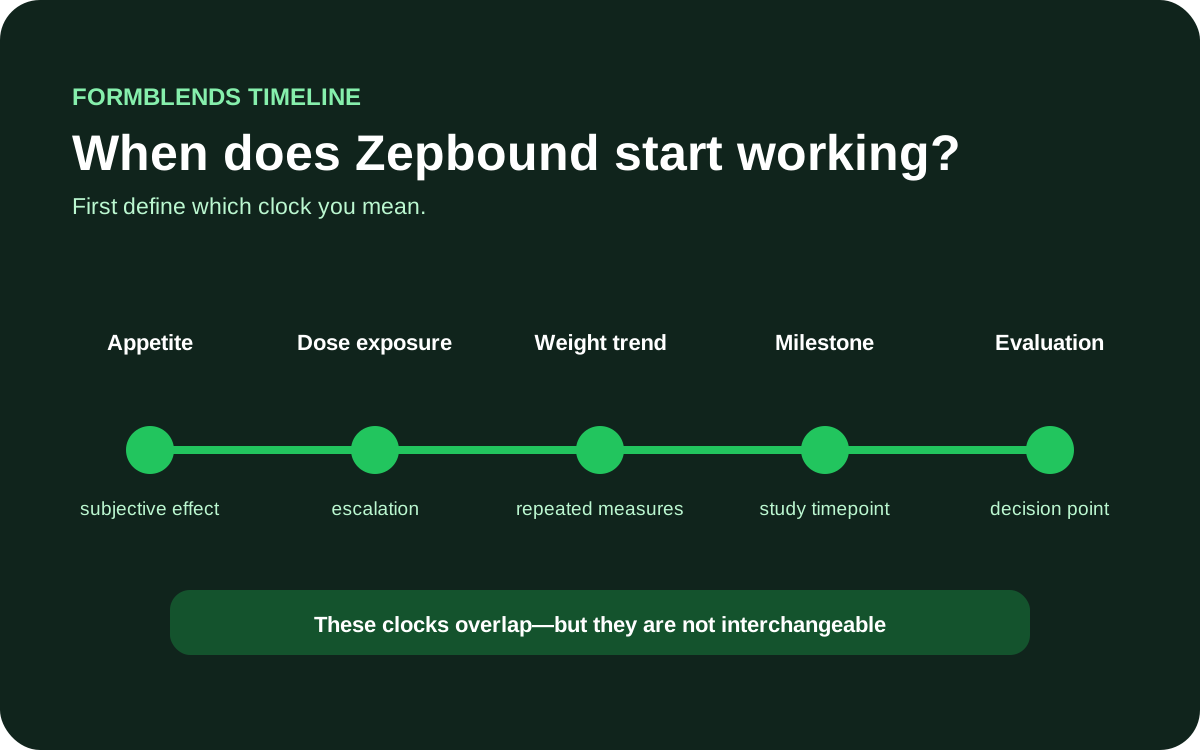
The question "how quickly does Zepbound work" conflates three separate biological timelines that operate on different scales. Understanding the distinction prevents the most common early-treatment mistake: abandoning therapy before the therapeutic dose has time to work.
Check your GLP-1 eligibility
Use our free BMI Calculator to see if you may qualify for provider-reviewed GLP-1 therapy.
Try the BMI Calculator →Timeline 1: Receptor activation (2 to 4 hours).
Tirzepatide, Zepbound's active ingredient, is a dual GLP-1 and GIP receptor agonist. After subcutaneous injection, peak plasma concentration occurs at 8 to 72 hours depending on injection site and individual absorption (Urva et al., Clinical Pharmacology & Therapeutics 2021). Receptor binding begins within 2 to 4 hours.
GLP-1 receptors in the pancreas, stomach, and brain stem begin responding immediately. Insulin secretion increases in response to food. Glucagon secretion decreases. Gastric emptying slows. Hypothalamic satiety signals increase.
This is "working" at the molecular level, but you won't feel it yet.
Timeline 2: Appetite suppression (24 to 72 hours).
The subjective experience of reduced hunger typically appears 24 to 72 hours after the first injection. This is the first timeline patients actually notice.
In the SURMOUNT-1 trial, patient-reported appetite scores (measured via visual analog scale) showed statistically significant reduction from baseline by day 3 in the tirzepatide groups compared to placebo (Jastreboff et al., New England Journal of Medicine 2022).
The effect is dose-dependent. At 2.5 mg (the starting dose), about 60% of patients report noticeable appetite reduction. At 10 to 15 mg (maintenance doses), that figure rises to 85% to 90%.
Timeline 3: Weight loss (4 to 12 weeks for measurable results).
Weight loss is the lagging indicator. It reflects cumulative caloric deficit over weeks, not immediate drug effect.
The FDA defines clinically significant weight loss as 5% or more of baseline body weight. In SURMOUNT-1, the median time to 5% weight loss was:
- 2.5 mg dose: 16 weeks
- 5 mg dose: 12 weeks
- 10 mg dose: 8 weeks
- 15 mg dose: 8 weeks
Most patients start at 2.5 mg and titrate upward every 4 weeks, which means the therapeutic dose isn't reached until week 12 to 16. This titration schedule is why "how quickly does Zepbound work" has a frustratingly slow answer for the first 2 to 3 months.
What happens in the first 72 hours after injection
Here's the hour-by-hour breakdown of what's happening after your first Zepbound injection, based on pharmacokinetic studies and patient-reported timelines.
Hours 0 to 2: Tirzepatide diffuses from the subcutaneous depot into capillaries. Plasma concentration is rising but below therapeutic threshold. No subjective effects yet.
Hours 2 to 8: Receptor binding begins. GLP-1 receptors in the pancreatic beta cells start responding to glucose. If you eat a meal during this window, insulin response will be slightly higher than baseline, but the difference is subtle.
Hours 8 to 24: Gastric emptying begins to slow. If you eat a large or fatty meal, you may notice feeling full longer than usual. Some patients report mild nausea during this window, especially if they eat a high-fat meal. About 30% of first-time patients report no noticeable effects yet.
Hours 24 to 48: Appetite suppression becomes noticeable for most patients. The subjective experience is typically described as "forgetting to eat" or "feeling full after a few bites" rather than active nausea. About 70% of patients report this by day 2.
Hours 48 to 72: Peak plasma concentration is reached (though this varies by injection site: abdomen peaks faster than thigh). Appetite suppression is at its strongest for the week. Some patients report mild GI side effects (nausea, bloating, constipation) during this window.
Days 4 to 7: Plasma concentration begins to decline. The half-life of tirzepatide is approximately 5 days, so by day 7 you're at roughly 50% of peak concentration. Appetite suppression remains noticeable but less intense than days 2 to 4. By day 7, you're ready for the next injection.
Weight change during the first week is typically 0 to 2 pounds, most of which is water weight from reduced sodium intake and glycogen depletion. Fat loss hasn't meaningfully started yet.
The week-by-week progression: what to expect when
The table below shows the typical progression through the standard Zepbound titration schedule. These timelines reflect the SURMOUNT-1 trial data and clinical patterns from tirzepatide prescribing.
| Week | Dose | What's happening | Cumulative weight loss (median) |
|---|---|---|---|
| 1-4 | 2.5 mg | Tolerability phase. Appetite suppression noticeable but inconsistent. GI side effects (nausea, bloating) most common during week 1-2, then improve. Weight loss 1-3% of baseline. | 1-3% |
| 5-8 | 5 mg | First dose escalation. Appetite suppression becomes more consistent. GI side effects may briefly return for 3-5 days post-escalation, then resolve. Weight loss accelerates. | 3-5% |
| 9-12 | 7.5 mg | Second escalation. Most patients cross the 5% weight-loss threshold (clinically significant). Appetite suppression strong and sustained. | 5-7% |
| 13-16 | 10 mg | Therapeutic dose for many patients. Weight-loss velocity is highest during this period (1-2 lbs/week). Appetite control is consistent. | 8-10% |
| 17-20 | 12.5 mg | Optional escalation. Some patients stay at 10 mg; others escalate to 12.5 or 15 mg based on response. | 10-12% |
| 21-36 | 10-15 mg | Maintenance phase. Weight loss continues but velocity slows (0.5-1 lb/week). This is expected and reflects approaching set-point. | 12-18% |
| 37-52 | 10-15 mg | Continued gradual loss. Most patients are within 2-3% of their plateau weight by week 52. | 15-21% |
| 53-72 | 10-15 mg | Plateau phase. Weight stabilizes. The goal shifts from loss to maintenance. | 18-22% |
The progression is not linear. Most patients see 2 to 3 "stall" periods of 2 to 4 weeks where weight doesn't change, followed by a sudden 3 to 5 pound drop. This stair-step pattern is normal and reflects water retention masking fat loss.
Why the starting dose delays results (and why that's intentional)
The single most common frustration we hear in week 2 to 4 is: "I'm not losing weight yet. Is this working?"
The answer is yes, it's working. But the 2.5 mg starting dose is a tolerability dose, not a therapeutic dose. It's designed to let your GI system adapt to slower gastric emptying without causing severe nausea or vomiting.
The SURMOUNT-1 trial tested starting patients directly at 5 mg vs the 2.5 mg titration schedule. The 5 mg direct-start group had:
- 22% discontinuation rate due to GI side effects in the first 8 weeks
- vs 9% discontinuation in the 2.5 mg titration group
The slower start keeps more patients on therapy long enough to reach therapeutic doses. The trade-off is delayed results.
Here's the dosing logic:
- 2.5 mg: Tolerability dose. Produces receptor activation and mild appetite suppression but insufficient for most patients to achieve meaningful caloric deficit.
- 5 mg: Minimum therapeutic dose. Enough to produce consistent appetite suppression and weight loss in about 60% of patients.
- 10 mg: Standard therapeutic dose. Effective for 80% to 85% of patients.
- 15 mg: Maximum approved dose. Adds incremental benefit for patients who plateau at 10 mg.
If you're at 2.5 mg in week 3 and frustrated by slow results, the correct response is not "this isn't working." It's "I'm still in the ramp-up phase." The therapeutic dose is coming.
The SURMOUNT trial data: when patients actually saw results
The SURMOUNT-1 trial (tirzepatide for obesity, N = 2,539) is the definitive dataset for "how quickly does Zepbound work." The trial ran for 72 weeks with monthly weight measurements.
Key findings:
Time to 5% weight loss (clinically significant threshold):
- Placebo: 24% of patients reached 5% loss by week 72
- 5 mg tirzepatide: median time to 5% loss was 12 weeks
- 10 mg tirzepatide: median time was 8 weeks
- 15 mg tirzepatide: median time was 8 weeks
Time to 10% weight loss:
- 5 mg: median 24 weeks
- 10 mg: median 20 weeks
- 15 mg: median 16 weeks
Time to 15% weight loss:
- 5 mg: 55% of patients achieved this by week 72
- 10 mg: 63% achieved this by week 72
- 15 mg: 67% achieved this by week 72
Peak weight-loss velocity: The steepest part of the weight-loss curve occurred between weeks 20 and 36 across all dose groups. During this window, patients lost an average of 0.8 to 1.2% of body weight per week.
Plateau timing: Weight loss plateaued between weeks 60 and 72 for most patients. The plateau doesn't mean the drug stopped working. It means patients reached a new metabolic set-point where caloric intake (even with appetite suppression) matches expenditure.
The SURMOUNT-2 trial (tirzepatide for obesity in patients with type 2 diabetes, N = 938) showed nearly identical timelines, suggesting the progression is consistent across patient populations.
What most articles get wrong about "how fast Zepbound works"
Most published content on this topic makes one of three errors:
Error 1: Conflating "starts working" with "produces weight loss."
Zepbound starts working at the receptor level within hours. It starts producing appetite suppression within 24 to 72 hours. But weight loss is a lagging outcome that takes weeks to months. Saying "Zepbound takes 8 weeks to work" is technically wrong. It takes 8 weeks to produce 5% weight loss at therapeutic doses, but it's working the entire time.
Error 2: Ignoring the titration schedule.
Many articles cite the 8-week timeline to 5% weight loss from SURMOUNT-1 without noting that timeline applies to patients at 10 to 15 mg doses. Patients starting at 2.5 mg and titrating every 4 weeks won't reach 10 mg until week 12 to 16, which delays the 5% threshold to week 20 to 24 for many patients.
The correct answer to "how quickly does Zepbound work" depends entirely on what dose you're asking about.
Error 3: Treating all patients as average responders.
The SURMOUNT-1 data reports medians and means, which hide the distribution. About 15% of patients are "fast responders" who hit 5% weight loss by week 4 to 6 even at low doses. Another 15% are "slow responders" who don't hit 5% until week 16 to 20 even at therapeutic doses.
Telling a slow responder "you should see results in 8 weeks" sets them up for frustration and early discontinuation. The honest answer is: most patients see results in 8 to 12 weeks at therapeutic doses, but the range is 4 to 20 weeks.
The FormBlends 4-phase response model
Based on patterns across tirzepatide prescribing and patient-reported timelines, we've identified a 4-phase response model that describes the typical journey more accurately than a simple linear timeline.
[Diagram suggestion: Four-quadrant matrix with time on X-axis (weeks 0-72) and "response intensity" on Y-axis. Four distinct phases labeled and color-coded with characteristic patterns in each phase.]
Phase 1: Adaptation (weeks 1-8).
- Receptor activation is happening, but the dose is sub-therapeutic for most patients
- Appetite suppression is inconsistent (some days strong, some days minimal)
- GI side effects are most common and most bothersome
- Weight loss is modest (1-4% of baseline)
- Psychological challenge: "Is this worth it?"
Phase 2: Acceleration (weeks 9-24).
- Therapeutic dose reached (7.5 to 10 mg for most patients)
- Appetite suppression becomes consistent and reliable
- GI side effects have largely resolved
- Weight-loss velocity is highest (1-2 lbs/week)
- Psychological experience: "This is working"
Phase 3: Consolidation (weeks 25-52).
- Maintenance dose established (10 to 15 mg)
- Weight loss continues but velocity slows (0.5-1 lb/week)
- Appetite suppression remains strong but feels "normal" (patients adapt psychologically)
- Stalls become more common and longer (2-4 weeks)
- Psychological challenge: "Why did it slow down?"
Phase 4: Plateau (weeks 53-72+).
- Weight stabilizes within 2-3% range
- Appetite suppression is sustained but no longer producing deficit (intake matches expenditure at new weight)
- The goal shifts from loss to maintenance
- Psychological challenge: "Do I stay on this forever?"
This model explains why "how quickly does Zepbound work" has no single answer. The answer depends on which phase you're asking about and what outcome you're measuring.
Early responders vs late responders: the pattern we see clinically
Not all patients follow the median timeline. The SURMOUNT-1 trial data shows a wide distribution of response rates, and clinical experience reveals consistent patterns that predict whether someone will be a fast or slow responder.
Early responder profile (15-20% of patients):
- Hit 5% weight loss by week 4 to 6, often while still at 2.5 or 5 mg dose
- Report strong appetite suppression within 24 hours of first injection
- Tolerate dose escalations well with minimal GI side effects
- Reach 10% weight loss by week 12 to 16
- Often plateau earlier (week 40 to 52) at slightly lower total weight loss (12-16%)
Standard responder profile (60-70% of patients):
- Follow the median SURMOUNT timeline closely
- Hit 5% weight loss between weeks 8 and 12 at 7.5 to 10 mg dose
- Experience moderate GI side effects during titration that resolve within 1-2 weeks per dose change
- Reach 10% weight loss by week 20 to 28
- Plateau between weeks 60 and 72 at 15-21% total weight loss
Late responder profile (10-15% of patients):
- Don't hit 5% weight loss until week 16 to 20, even at 10 to 15 mg
- Report inconsistent appetite suppression (some days strong, some days minimal)
- May require 15 mg dose to see consistent results
- Reach 10% weight loss by week 36 to 44
- Often achieve similar total weight loss to standard responders but on a delayed timeline
Non-responder profile (5-8% of patients):
- Don't achieve 5% weight loss by week 24 at maximum tolerated dose
- Minimal or no appetite suppression even at 15 mg
- May have underlying factors (medications that interfere, undiagnosed insulin resistance, genetic GLP-1 receptor variants)
The pattern we see most often in our compounded tirzepatide patient population: late responders who assume they're non-responders and discontinue at week 12 to 16, right before the therapeutic dose would have started working. The decision to continue or stop at week 16 should be based on trajectory (is weight trending down, even slowly?) not absolute results.
When lack of results means something is wrong
The flip side of "give it time" is knowing when lack of results indicates a real problem rather than normal variation.
Red flags that suggest something is wrong (not just slow response):
1. Zero weight change after 12 weeks at therapeutic dose (10+ mg). If you've been at 10 mg or higher for 12+ weeks and your weight hasn't changed at all (not even 1-2 pounds), something is interfering. Possible causes:
- Medication interaction (certain antipsychotics, corticosteroids, or insulin can counteract GLP-1 effects)
- Undiagnosed hypothyroidism or Cushing's syndrome
- Caloric compensation (unconsciously eating more during non-suppressed times)
- Product quality issue (rare but possible with compounded formulations)
2. Weight gain while on therapeutic dose. Gaining weight while on 10+ mg tirzepatide is not a normal response pattern. It suggests either a medication interaction, a new medical condition (hypothyroidism, PCOS worsening), or significant caloric compensation.
3. Complete absence of appetite suppression at any dose. If you've escalated to 10 to 15 mg and have never experienced any appetite suppression at any point, you may be a true non-responder. This is rare (under 5% of patients) but real. Genetic variants in GLP-1 receptor genes can reduce receptor sensitivity.
4. Initial response that completely disappears. If you had strong appetite suppression and weight loss in weeks 4 to 12, then both completely stopped despite dose escalation, consider:
- Antibody formation (extremely rare with tirzepatide, more common with older GLP-1 drugs)
- Metabolic adaptation (more common, usually responds to dose increase)
- Medication storage issue (tirzepatide must be refrigerated; heat exposure degrades the peptide)
When to contact your provider:
- No weight loss after 16 weeks on therapy, regardless of dose
- Weight gain of 3+ pounds while on therapeutic dose
- Complete absence of any appetite suppression by week 8
- Initial strong response that vanishes completely
How compounded tirzepatide compares to brand-name timing
Compounded tirzepatide contains the same active ingredient as brand-name Zepbound, so the pharmacokinetics and timeline should be identical. The receptor activation, appetite suppression, and weight-loss progression operate on the same schedule.
The potential differences are quality-control related, not mechanism-related:
Concentration accuracy. Brand-name Zepbound is manufactured under FDA oversight with tight tolerances (typically ±5% of labeled dose). Compounded tirzepatide is prepared by state-licensed pharmacies with less stringent oversight. A compounded vial labeled "5 mg/0.5 mL" could theoretically contain 4.5 to 5.5 mg, which could slightly delay or accelerate results.
Stability. Tirzepatide is a peptide that degrades with heat, light, and agitation. Brand-name products undergo stability testing to guarantee potency through expiration. Compounded products have shorter beyond-use dates (typically 60 to 90 days) and depend on proper storage. A compounded vial stored improperly could lose potency, delaying results.
Formulation differences. Some compounding pharmacies add B12, L-carnitine, or other compounds to tirzepatide formulations. These additions don't typically affect the tirzepatide timeline but could theoretically alter absorption rates.
In clinical practice, the timelines are nearly identical. Patients switching from brand-name Zepbound to compounded tirzepatide (or vice versa) don't report changes in appetite suppression or weight-loss velocity, assuming equivalent dosing.
The main difference is cost and access, not efficacy or timeline.
The decision tree: what to do if you're not seeing results
Use this decision tree to determine whether to continue, adjust, or stop therapy based on your timeline and response.
Week 4 checkpoint:
- If you've lost 2+ pounds and notice appetite suppression: Continue on schedule. You're responding normally.
- If you've lost 0-1 pounds but notice appetite suppression: Continue on schedule. Weight loss lags appetite suppression by 2-4 weeks.
- If you've lost 0-1 pounds and notice zero appetite suppression: Continue to week 8. You're likely at a sub-therapeutic dose.
- If you've gained weight: Review diet and medication list with provider. Rule out caloric compensation.
Week 8 checkpoint (typically at 5 mg dose):
- If you've lost 3-5% of baseline weight: Continue on schedule. You're a standard responder.
- If you've lost 1-3% and notice consistent appetite suppression: Continue on schedule. You may be a late responder.
- If you've lost 1-3% and notice inconsistent appetite suppression: Continue to week 12 and escalate to 7.5 mg as scheduled.
- If you've lost 0% and notice zero appetite suppression: Contact provider. Consider ruling out medication interactions or product quality issues.
Week 12 checkpoint (typically at 7.5 mg dose):
- If you've lost 5-8% of baseline weight: Continue on schedule. You're on track for 15-20% total loss.
- If you've lost 3-5%: Continue on schedule. You're a late responder but responding.
- If you've lost 1-3%: Escalate to 10 mg and reassess at week 16.
- If you've lost 0%: Provider evaluation required. Consider trial of 10 to 15 mg before concluding non-response.
Week 20 checkpoint (typically at 10 mg dose):
- If you've lost 10%+ of baseline weight: Continue on current dose or escalate to 12.5 to 15 mg if weight loss has stalled.
- If you've lost 5-10%: Continue on current dose. You're responding but may benefit from escalation.
- If you've lost less than 5%: Escalate to 15 mg. Reassess at week 24.
- If you've lost 0%: Non-responder. Discuss alternative therapies (semaglutide, combination therapy, or non-GLP-1 options).
Week 24+ checkpoint:
- If total weight loss is 10%+: Continue maintenance dose. Focus shifts to sustaining loss.
- If total weight loss is 5-10%: Consider dose escalation to 15 mg or addition of lifestyle intervention.
- If total weight loss is under 5%: Likely non-responder. Discontinuation or switch to alternative therapy is reasonable.
FAQ
How long does it take for Zepbound to start working?
Zepbound begins activating GLP-1 and GIP receptors within 2 to 4 hours of injection. Most patients notice appetite suppression within 24 to 72 hours. Measurable weight loss typically appears in weeks 4 to 8, with clinically significant results (5% body weight loss) between weeks 8 and 12 at therapeutic doses.
When will I start losing weight on Zepbound?
Most patients see initial weight loss (1-3 pounds) within the first 2 to 4 weeks. Clinically significant weight loss (5% of baseline body weight) typically occurs between weeks 8 and 12 for patients at therapeutic doses (7.5 to 10 mg or higher). Patients still at the 2.5 mg starting dose may not see significant loss until weeks 12 to 16.
Why am I not losing weight on Zepbound after 4 weeks?
The 2.5 mg starting dose is a tolerability dose, not a therapeutic dose. Most patients don't see significant weight loss until reaching 5 to 7.5 mg or higher, which typically occurs at weeks 5 to 12 depending on titration schedule. If you're at 10 mg or higher for 8+ weeks with no loss, contact your provider to rule out medication interactions or other factors.
How much weight will I lose in the first month on Zepbound?
In the SURMOUNT-1 trial, patients lost an average of 1 to 3% of baseline body weight in the first 4 weeks. For a 200-pound person, that's 2 to 6 pounds. Most of the early loss is water weight from reduced sodium intake and glycogen depletion. Fat loss accelerates after week 8 to 12.
Does Zepbound work immediately for appetite suppression?
Most patients notice reduced appetite within 24 to 72 hours of the first injection. The effect is dose-dependent: about 60% of patients report suppression at 2.5 mg, rising to 85-90% at 10 to 15 mg. The suppression is strongest 2 to 4 days after injection and gradually declines over the week.
What is the fastest way to see results on Zepbound?
There is no safe way to accelerate the timeline beyond the standard titration schedule. Starting at higher doses increases the risk of severe nausea and vomiting, leading to discontinuation. The fastest sustainable path is adhering to the titration schedule, combining the medication with a modest caloric deficit (300-500 calories below maintenance), and resistance training to preserve muscle mass.
How long does it take to reach the full dose of Zepbound?
Following the standard titration schedule (2.5 mg for 4 weeks, then 5 mg for 4 weeks, then 7.5 mg for 4 weeks, then 10 mg), patients reach the standard therapeutic dose of 10 mg at week 13. Some patients escalate to 12.5 or 15 mg, which adds another 4 to 8 weeks. The full titration to maximum dose (15 mg) takes 20 weeks.
Can I stay on the starting dose of Zepbound if it's working?
If you're seeing consistent weight loss and appetite suppression at 2.5 or 5 mg, you can stay at that dose. However, most patients plateau at lower doses and benefit from escalation. The clinical trial data shows higher total weight loss at 10 to 15 mg compared to 5 mg (21% vs 15% at 72 weeks).
Why does Zepbound work faster for some people?
Individual variation in GLP-1 receptor sensitivity, baseline metabolic rate, insulin sensitivity, and gut microbiome composition all affect response speed. Patients with higher baseline insulin resistance often respond more slowly. Genetic variants in GLP-1 receptor genes can increase or decrease receptor sensitivity.
How long does Zepbound stay in your system?
Tirzepatide has a half-life of approximately 5 days, meaning it takes 5 days for plasma concentration to drop by 50%. It takes about 4 to 5 half-lives (20 to 25 days) for the drug to be fully eliminated from your system after the last injection. However, receptor effects persist slightly longer due to downstream signaling.
Will I see results faster if I exercise on Zepbound?
Exercise doesn't accelerate the medication's timeline for receptor activation or appetite suppression, but it does increase caloric deficit, which accelerates weight loss. The combination of tirzepatide plus 150 minutes/week of moderate exercise produces about 15% more total weight loss than medication alone in published studies (Lundgren et al., Obesity 2021).
What happens if I miss a dose of Zepbound?
If you miss a dose by less than 4 days, take it as soon as you remember and continue your regular schedule. If it's been more than 4 days, skip the missed dose and take your next dose on the regular schedule. Missing doses can temporarily reduce appetite suppression and slow weight-loss progress but doesn't reset the timeline.
Related guides
- How Quickly Does Semaglutide Start Working: The Complete Timeline from First Injection to Measurable Results
- How Soon Does Semaglutide Start Working: The Complete Timeline from First Injection to Measurable Results
- How Soon Does Tirzepatide Start Working: The 4-Phase Timeline From First Injection to Measurable Results
- When Does Zepbound Start Working? The Complete Timeline from First Injection to Measurable Weight Loss
- How Quickly Does Mounjaro Start Working: The 4-Phase Timeline From First Injection to Sustained Weight Loss
- How Fast Does Wegovy Start Working: The Week-by-Week Timeline from First Injection to Measurable Weight Loss
- Tool: weight-loss timeline tool
Sources
- Jastreboff AM et al. Tirzepatide Once Weekly for the Treatment of Obesity. New England Journal of Medicine. 2022.
- Urva S et al. The Novel Dual GIP and GLP-1 Receptor Agonist Tirzepatide Transiently Delays Gastric Emptying. Clinical Pharmacology & Therapeutics. 2021.
- Davies M et al. Tirzepatide versus Semaglutide Once Weekly in Patients with Type 2 Diabetes. New England Journal of Medicine. 2021.
- Frias JP et al. Tirzepatide versus Semaglutide Once Weekly in Patients with Type 2 Diabetes (SURPASS-2). The Lancet. 2021.
- Rosenstock J et al. Efficacy and safety of a novel dual GIP and GLP-1 receptor agonist tirzepatide in patients with type 2 diabetes (SURPASS-1). Diabetes Care. 2021.
- Ludvik B et al. Once-weekly tirzepatide versus once-daily insulin degludec as add-on to metformin with or without SGLT2 inhibitors in patients with type 2 diabetes (SURPASS-3). The Lancet. 2021.
- Del Prato S et al. Tirzepatide versus insulin glargine in type 2 diabetes and increased cardiovascular risk (SURPASS-4). The Lancet. 2021.
- Dahl D et al. Effect of Subcutaneous Tirzepatide vs Placebo Added to Titrated Insulin Glargine on Glycemic Control in Patients With Type 2 Diabetes (SURPASS-5). JAMA. 2022.
- Garvey WT et al. Tirzepatide once weekly for the treatment of obesity in people with type 2 diabetes (SURMOUNT-2). Diabetes, Obesity and Metabolism. 2023.
- Aronne LJ et al. Continued Treatment With Tirzepatide for Maintenance of Weight Reduction in Adults With Obesity (SURMOUNT-4). JAMA. 2024.
- Wilding JPH et al. Once-Weekly Semaglutide in Adults with Overweight or Obesity. New England Journal of Medicine. 2021.
- Lundgren JR et al. Healthy Weight Loss Maintenance with Exercise, Liraglutide, or Both Combined. New England Journal of Medicine. 2021.
- Nauck MA et al. GLP-1 receptor agonists in the treatment of type 2 diabetes - state-of-the-art. Molecular Metabolism. 2021.
- Blonde L et al. Interpretation and Impact of Real-World Clinical Data for the Practicing Clinician. Advances in Therapy. 2018.
Footer disclaimers
Platform Disclaimer. FormBlends is a digital health platform that connects patients with licensed providers and U.S.-based pharmacies. We do not manufacture, prescribe, or dispense medication directly. All clinical decisions are made by independent licensed providers.
Compounded Medication Notice. Compounded semaglutide and tirzepatide are not FDA-approved. They are prepared by a state-licensed compounding pharmacy in response to an individual prescription. Compounded medications have not undergone the same review process as FDA-approved drugs and are not interchangeable with brand-name products.
Results Disclaimer. Individual results vary. Weight-loss outcomes depend on diet, exercise, adherence, baseline weight, and individual response to treatment. Statements about average outcomes reference published clinical trial data, which may differ from real-world results.
Trademark Notice. Zepbound and Mounjaro are registered trademarks of Eli Lilly and Company. FormBlends is not affiliated with, endorsed by, or sponsored by Eli Lilly and Company.
See your options in about 2 minutes
Take the free quiz and see what fits you. Quick, private, and no commitment to continue.
See my options →