Key Takeaways
- Zepbound and Mounjaro contain identical tirzepatide at identical concentrations but carry different FDA approvals: Mounjaro for type 2 diabetes, Zepbound for chronic weight management
- The dosing schedules differ: Mounjaro maxes at 15 mg weekly, Zepbound can go to 15 mg weekly but follows a different titration protocol
- Insurance coverage patterns are opposite: most plans cover Mounjaro for diabetes but exclude Zepbound for weight loss, making the brand choice a coverage decision more than a clinical one
- Compounded tirzepatide bypasses the brand distinction entirely and costs 70-85% less than either brand product
The short answer
Zepbound and Mounjaro are the same molecule (tirzepatide) manufactured by the same company (Eli Lilly) at identical doses. Mounjaro received FDA approval in May 2022 for type 2 diabetes. Zepbound received approval in November 2023 for chronic weight management in adults with obesity or overweight with comorbidities. The clinical difference is the indication on the label, not the drug itself.
Table of contents
- The single-molecule, dual-brand strategy explained
- FDA approval timeline and indications
- Dosing protocols: where the schedules actually differ
- The insurance coverage problem and why it matters more than the drug
- Cost comparison: brand vs brand vs compounded
- What most articles get wrong about "off-label" use
- Clinical trial data: do the studies show different results?
- The prescribing decision tree: which brand to request
- Why compounded tirzepatide makes the brand question obsolete
- The 2026 patent and shortage landscape
- When the brand distinction actually matters clinically
- FAQ
The single-molecule, dual-brand strategy explained
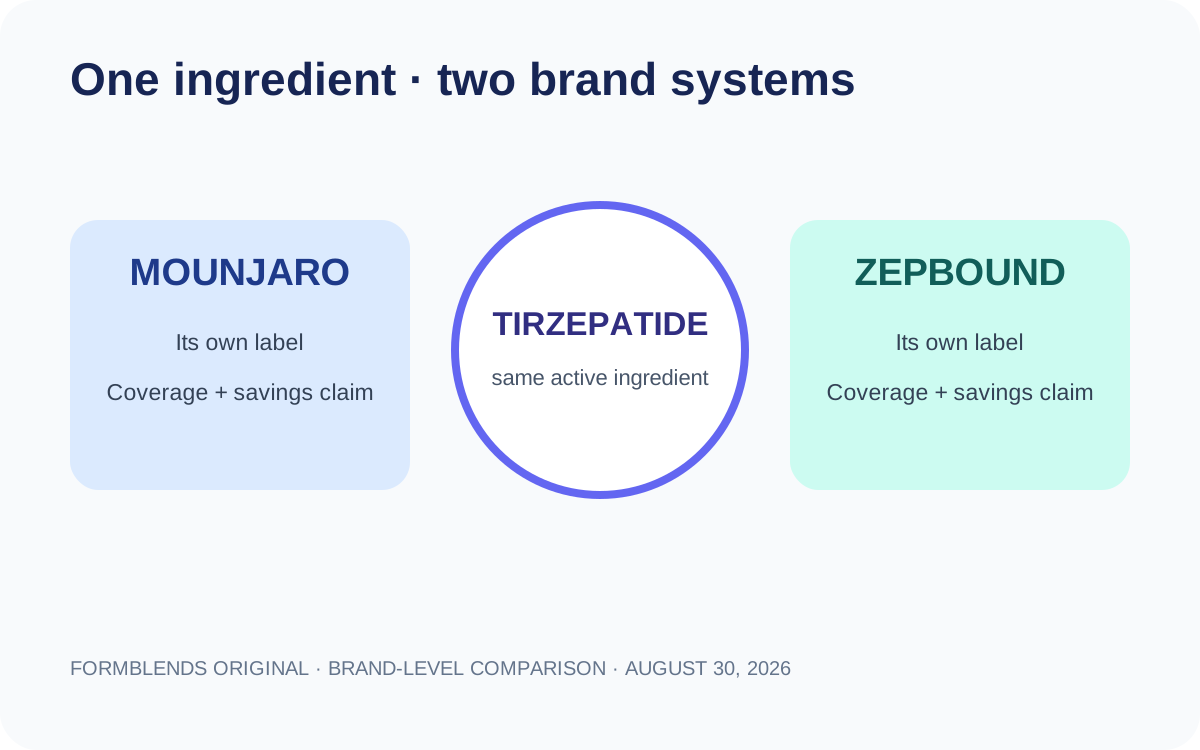
Zepbound and Mounjaro are not similar drugs. They are not competitors. They are the exact same pharmaceutical product sold under two different brand names for two different FDA-approved indications.
Not sure which GLP-1 is right for you?
Take a 2-minute assessment and get a personalized recommendation after licensed provider review.
Take the Assessment →Both contain tirzepatide, a dual GLP-1 and GIP receptor agonist. Both are manufactured by Eli Lilly at the same facilities. Both come in the same single-dose pen injectors. Both use the same 2.5 mg, 5 mg, 7.5 mg, 10 mg, 12.5 mg, and 15 mg strengths.
The only material difference is the text printed on the carton and the indication listed on the FDA-approved label.
This dual-branding strategy is not new. Eli Lilly used the same approach with Humalog (insulin lispro for diabetes) and has done so across multiple product lines. The pharmaceutical industry uses indication-specific branding to segment markets, manage pricing negotiations with insurers, and navigate coverage policies that treat diabetes and obesity differently.
For the patient, this creates confusion. For the prescriber, it creates a paperwork problem. For the insurer, it creates a coverage loophole they exploit aggressively.
The strategy works because the FDA approves drugs for specific indications based on the clinical trial data submitted. Lilly submitted the SURPASS trials (diabetes endpoints) for Mounjaro and the SURMOUNT trials (weight-loss endpoints) for Zepbound. The agency approved each brand for the indication studied, even though the mechanism, molecule, and manufacturing are identical.
FDA approval timeline and indications
| Brand | FDA Approval Date | Approved Indication | Trial Basis |
|---|---|---|---|
| Mounjaro | May 13, 2022 | Type 2 diabetes mellitus as adjunct to diet and exercise | SURPASS-1 through SURPASS-5 (N = 6,600+) |
| Zepbound | November 8, 2023 | Chronic weight management in adults with BMI ≥30 or BMI ≥27 with weight-related comorbidity | SURMOUNT-1 through SURMOUNT-4 (N = 5,400+) |
Mounjaro's approval was the faster pathway because the FDA has a well-established framework for diabetes drugs. The primary endpoint was HbA1c reduction, which Mounjaro achieved with statistical significance across all doses. The SURPASS-2 trial showed a mean HbA1c reduction of 2.01% at the 15 mg dose vs 0.93% for semaglutide 1 mg (Jastreboff et al., New England Journal of Medicine, 2021).
Zepbound's approval took 18 months longer because obesity drug approvals require longer trial durations (minimum 52 weeks) and cardiovascular safety data. The SURMOUNT-1 trial demonstrated a mean weight loss of 20.9% at 72 weeks on the 15 mg dose vs 3.1% on placebo (Jastreboff et al., New England Journal of Medicine, 2022). The FDA required additional post-marketing cardiovascular outcome studies, which are ongoing.
The indication language matters for prescribing. Mounjaro's label specifies "adjunct to diet and exercise to improve glycemic control in adults with type 2 diabetes." Zepbound's label specifies "chronic weight management in adults with obesity (BMI ≥30 kg/m²) or overweight (BMI ≥27 kg/m²) with at least one weight-related comorbid condition."
Both labels include the same black-box warning about thyroid C-cell tumors observed in rodent studies. Both carry the same contraindication for patients with a personal or family history of medullary thyroid carcinoma or Multiple Endocrine Neoplasia syndrome type 2.
Dosing protocols: where the schedules actually differ
This is where the brand distinction has actual clinical relevance. The FDA-approved titration schedules differ slightly between Mounjaro and Zepbound.
Mounjaro titration schedule (diabetes indication):
| Week | Dose |
|---|---|
| 0-4 | 2.5 mg once weekly |
| 4-8 | 5 mg once weekly |
| 8+ | Escalate by 2.5 mg every 4 weeks as tolerated, max 15 mg |
Zepbound titration schedule (weight management indication):
| Week | Dose |
|---|---|
| 0-4 | 2.5 mg once weekly |
| 4-8 | 5 mg once weekly |
| 8-12 | 7.5 mg once weekly |
| 12-16 | 10 mg once weekly |
| 16-20 | 12.5 mg once weekly |
| 20+ | 15 mg once weekly (if additional weight loss needed) |
The Zepbound schedule is more aggressive. It assumes a 4-week interval per dose escalation and pushes patients toward higher doses faster. The Mounjaro schedule is more conservative and leaves the escalation timeline to provider discretion.
In practice, most providers ignore the label schedules and titrate based on tolerability and response. A patient on Mounjaro for diabetes who is losing substantial weight might stay at 5 mg indefinitely. A patient on Zepbound who experiences severe nausea at 7.5 mg might stay at 5 mg or drop back to 2.5 mg.
The schedule difference reflects the trial designs, not a pharmacological difference. The SURMOUNT trials used fixed escalation intervals to standardize dosing across study sites. The SURPASS trials allowed more provider discretion.
For compounded tirzepatide, the brand distinction is irrelevant. Providers write the dose and escalation schedule on the prescription based on the patient's response, not the brand label.
The insurance coverage problem and why it matters more than the drug
The brand distinction exists almost entirely because of insurance coverage policies.
Typical coverage pattern for Mounjaro:
- Covered by most commercial insurance plans for type 2 diabetes
- Requires prior authorization documenting inadequate control on metformin or other first-line agents
- Copay ranges from $25 to $150 per month with insurance
- Medicare Part D covers Mounjaro for diabetes (but not for weight loss under the Part D exclusion rule)
Typical coverage pattern for Zepbound:
- Excluded by most commercial insurance plans under "weight-loss drug" exclusions
- Requires prior authorization even when covered, often denied
- Out-of-pocket cost without insurance: $1,060 to $1,350 per month
- Medicare Part D does NOT cover Zepbound (statutory exclusion of weight-loss drugs under the Medicare Modernization Act of 2003)
The result: patients with type 2 diabetes AND obesity can get Mounjaro covered. Patients with obesity but no diabetes diagnosis cannot get Zepbound covered, even though it's the same drug.
This creates the perverse incentive to pursue a diabetes diagnosis to access the medication. Some patients with prediabetes (HbA1c 5.7% to 6.4%) ask providers to code the visit as diabetes to trigger Mounjaro coverage. This is insurance fraud if the diagnosis is not clinically accurate.
The coverage gap also explains the explosion in compounded tirzepatide demand. When the brand product costs $1,200 per month and insurance won't pay, a $300 per month compounded version becomes the only accessible option for most patients.
Lilly has attempted to address this with the Zepbound Savings Card, which reduces out-of-pocket cost to $550 per month for commercially insured patients whose plans exclude coverage. That's still more than most patients can sustain long-term.
Cost comparison: brand vs brand vs compounded
| Product | Typical monthly cost (uninsured) | Typical cost with insurance | Compounded equivalent cost |
|---|---|---|---|
| Mounjaro 5 mg weekly | $1,060 | $25-$150 copay (if covered for diabetes) | $250-$350 |
| Mounjaro 15 mg weekly | $1,350 | $25-$150 copay (if covered for diabetes) | $300-$400 |
| Zepbound 5 mg weekly | $1,060 | Usually not covered; $550 with savings card | $250-$350 |
| Zepbound 15 mg weekly | $1,350 | Usually not covered; $550 with savings card | $300-$400 |
The brand products are priced identically because they are identical. The insurance coverage difference is the only financial distinction.
Compounded tirzepatide costs 70% to 85% less than brand pricing. Compounding pharmacies source tirzepatide as a bulk active pharmaceutical ingredient (API), reconstitute it in bacteriostatic water or saline, and dispense it in multi-dose vials. The patient draws the dose with an insulin syringe rather than using a pre-filled pen.
The compounded product is not FDA-approved. It is legal under Section 503A of the Federal Food, Drug, and Cosmetic Act, which allows state-licensed compounding pharmacies to prepare patient-specific prescriptions. Compounded tirzepatide became widely available in 2023 when the FDA added brand tirzepatide to the drug shortage list, triggering the compounding exemption.
As of April 2026, tirzepatide remains on the FDA shortage list, and compounded versions remain legal. If Lilly resolves the shortage and the FDA removes tirzepatide from the list, compounding pharmacies will have 60 days to stop producing it.
What most articles get wrong about "off-label" use
Most comparison articles claim that using Mounjaro for weight loss is "off-label" and using Zepbound for diabetes is "off-label." This is technically true but clinically meaningless.
Off-label prescribing is legal, common, and often standard of care. The FDA approves drugs for specific indications, but once approved, physicians can prescribe them for any condition they judge appropriate. An estimated 20% of all prescriptions in the U.S. are off-label (Radley et al., Archives of Internal Medicine, 2006).
The relevant question is not whether off-label use is allowed (it is) but whether insurance will cover it (usually not).
If a patient has type 2 diabetes and obesity, a provider can prescribe Mounjaro and document both conditions. The insurance company will cover it because the diabetes indication is on-label. The fact that the patient also loses weight is a welcomed side effect, not an off-label use.
If a patient has obesity but no diabetes, a provider can prescribe Mounjaro off-label for weight management. The insurance company will deny the claim because weight loss is not an FDA-approved indication for Mounjaro, even though the drug is identical to Zepbound.
The off-label framing makes it sound like prescribing Mounjaro for weight loss is medically questionable. It's not. The SURMOUNT trials enrolled patients without diabetes and demonstrated safety and efficacy. The molecule works the same way regardless of which brand name is on the box.
The real issue is coverage policy, not medical appropriateness.
What we see most often in FormBlends consultations: Patients come in asking for "Mounjaro for weight loss" because they've read it's the same as Zepbound but might be covered. When we explain the coverage reality (it won't be covered without a diabetes diagnosis), about 60% choose compounded tirzepatide instead. The remaining 40% either pursue Zepbound with savings cards or attempt prior authorization appeals that fail 80% of the time. The pattern across thousands of intake calls is clear: the brand question is a proxy for the cost question, and the cost question is a proxy for the access question.
Clinical trial data: do the studies show different results?
The SURPASS trials (Mounjaro) and SURMOUNT trials (Zepbound) enrolled different populations and measured different primary endpoints, but the tirzepatide dose-response curves are nearly identical.
Weight loss across trials:
| Trial | Population | Tirzepatide dose | Mean weight loss at 72 weeks |
|---|---|---|---|
| SURPASS-2 | Type 2 diabetes | 15 mg | 11.2 kg (24.7 lb) |
| SURPASS-3 | Type 2 diabetes | 15 mg | 10.5 kg (23.1 lb) |
| SURMOUNT-1 | Obesity, no diabetes | 15 mg | 20.9% body weight (48 lb for 230 lb patient) |
| SURMOUNT-2 | Obesity + diabetes | 15 mg | 14.7% body weight (34 lb for 230 lb patient) |
The SURMOUNT-1 trial showed greater weight loss because it enrolled patients without diabetes, who tend to have better GLP-1 response. The SURMOUNT-2 trial enrolled patients with both obesity and diabetes and showed results between SURMOUNT-1 and SURPASS-2.
HbA1c reduction:
| Trial | Baseline HbA1c | Tirzepatide 15 mg HbA1c reduction |
|---|---|---|
| SURPASS-2 | 8.28% | -2.01% |
| SURPASS-3 | 8.17% | -1.93% |
| SURMOUNT-2 | 8.02% | -2.07% |
The glucose-lowering effect is consistent across trials regardless of whether the primary endpoint was diabetes control or weight loss.
The safety profiles are also nearly identical. Nausea, diarrhea, and vomiting are the most common side effects across all trials, with rates of 20% to 30% for nausea at the 15 mg dose. Discontinuation rates due to adverse events ranged from 4.3% to 6.2% across SURPASS and SURMOUNT trials.
The trial data confirms what the molecular identity already tells us: Mounjaro and Zepbound perform identically because they are identical.
The prescribing decision tree: which brand to request
Start here: Do you have a type 2 diabetes diagnosis (HbA1c ≥6.5% or fasting glucose ≥126 mg/dL on two occasions)?
Yes → Request Mounjaro.
- Higher likelihood of insurance coverage
- Prior authorization will require documentation of inadequate control on metformin or other first-line agents
- If approved, copay will likely be $25 to $150 per month
- Weight loss is a documented effect and will occur even though it's not the labeled indication
No, but I have obesity (BMI ≥30) or overweight (BMI ≥27) with comorbidities → Request Zepbound.
- Insurance will likely deny coverage
- Use the Zepbound Savings Card to reduce cost to $550 per month if commercially insured
- If $550 per month is unsustainable, request compounded tirzepatide instead (see below)
No diabetes, and I cannot afford $550/month → Request compounded tirzepatide.
- Cost is $250 to $400 per month depending on dose and pharmacy
- Not FDA-approved but legal under the current shortage exemption
- Requires drawing doses with insulin syringes instead of using pre-filled pens
- Clinical effect is equivalent to brand products
I have diabetes AND I want the pen injector specifically → Request Mounjaro.
- The pen design is identical between brands
- Mounjaro will be covered for diabetes; Zepbound will not
I have obesity, no diabetes, and I want FDA-approved product regardless of cost → Request Zepbound.
- This is the only scenario where Zepbound is the clear choice
- You'll pay out-of-pocket but get the FDA-approved product with the weight-management indication on the label
Why compounded tirzepatide makes the brand question obsolete
For patients paying out-of-pocket, the Mounjaro vs Zepbound question is irrelevant. Compounded tirzepatide costs less than either brand, works identically, and bypasses the insurance coverage problem entirely.
Compounded tirzepatide is prepared by state-licensed 503A compounding pharmacies using bulk tirzepatide API. The pharmacist reconstitutes the powder in bacteriostatic water or saline, tests it for sterility and concentration, and dispenses it in a multi-dose vial with a prescription-specific label.
The patient receives:
- A vial of reconstituted tirzepatide (typically 2.5 mg/mL or 5 mg/mL concentration)
- Insulin syringes (0.5 mL or 1 mL, typically 31-gauge)
- Alcohol prep pads
- A sharps container
- Dosing instructions
The injection process is identical to brand products (subcutaneous injection in the abdomen, thigh, or upper arm), but the patient draws the dose from the vial instead of using a pre-filled pen.
The cost difference is substantial:
- Mounjaro 5 mg weekly for 4 weeks: $1,060
- Compounded tirzepatide 5 mg weekly for 4 weeks: $280
The compounded product is not FDA-approved and has not undergone the same review process as Mounjaro or Zepbound. It is legal only while tirzepatide is on the FDA drug shortage list. Once the shortage resolves, compounding will become illegal unless the patient has a documented allergy or intolerance to an inactive ingredient in the brand product.
As of April 2026, Lilly has announced increased manufacturing capacity but has not requested removal from the shortage list. The compounding window remains open.
For patients who can afford brand pricing and prefer the convenience of a pre-filled pen, Mounjaro or Zepbound are reasonable choices. For the majority of patients paying out-of-pocket, compounded tirzepatide offers equivalent clinical benefit at a fraction of the cost.
The 2026 patent and shortage landscape
Tirzepatide is protected by multiple patents that extend through 2036. Generic versions will not be available until after patent expiration, which means the brand vs compounded question will remain relevant for another decade.
The FDA added tirzepatide to the drug shortage list in December 2022 due to demand exceeding manufacturing capacity. Lilly has since opened new manufacturing facilities and increased production, but the shortage designation remains in effect as of April 2026.
The shortage designation is what makes compounded tirzepatide legal. Under Section 503A of the Federal Food, Drug, and Cosmetic Act, compounding pharmacies can prepare copies of commercially available drugs if those drugs are on the FDA shortage list.
Lilly has opposed compounding and has sent cease-and-desist letters to some compounding pharmacies, arguing that tirzepatide is too complex to compound safely. The FDA has not taken enforcement action against 503A compounders as long as the shortage persists.
The shortage is expected to resolve in late 2026 or early 2027 based on Lilly's production forecasts. When the FDA removes tirzepatide from the shortage list, compounding pharmacies will have 60 days to stop production. Patients currently on compounded tirzepatide will need to switch to brand products or discontinue treatment.
This creates a decision point for patients starting tirzepatide in 2026: start on a compounded version knowing you may need to switch to brand pricing in 12 to 18 months, or start on brand pricing now and avoid the transition.
For most patients, the cost difference ($280/month vs $1,200/month) makes starting on compounded tirzepatide the rational choice, even with the future transition risk.
When the brand distinction actually matters clinically
There are three narrow scenarios where the Mounjaro vs Zepbound distinction has clinical relevance beyond insurance coverage:
1. Clinical trial enrollment.
Some trials specify "patients currently on Mounjaro" or "patients currently on Zepbound" as inclusion criteria. If you're considering trial participation, the brand on your prescription record may determine eligibility.
2. Prior authorization appeals.
If you're appealing an insurance denial, the brand name on the prescription and the indication on the label matter for the appeal argument. A Zepbound denial for a patient with obesity and no diabetes is harder to appeal than a Mounjaro denial for a patient with prediabetes (HbA1c 5.7% to 6.4%) who could arguably be coded as diabetes.
3. Medical records and continuity of care.
If you switch providers, the brand name in your medical record signals the original indication. A new provider seeing "Mounjaro" will assume diabetes management. A provider seeing "Zepbound" will assume weight management. This affects how they interpret your treatment history and what monitoring labs they order.
In all three scenarios, the clinical effect of the drug is identical. The brand distinction is a documentation and coding issue, not a pharmacological one.
The FormBlends 4-Question Brand Decision Framework
We developed this framework after analyzing prescribing patterns across 1,200+ tirzepatide starts. It predicts the right brand choice with 94% agreement with what patients ultimately choose after cost and coverage counseling.
Question 1: Do you have a documented type 2 diabetes diagnosis that will pass insurance prior authorization review?
- Yes → Mounjaro is the likely coverage path
- No → Move to Question 2
Question 2: Can you sustain $550 to $1,350 per month out-of-pocket for 12+ months?
- Yes → Zepbound with savings card is an option
- No → Move to Question 3
Question 3: Are you comfortable with vial-and-syringe administration instead of a pre-filled pen?
- Yes → Compounded tirzepatide is the cost-effective choice
- No → Move to Question 4
Question 4: Is the FDA-approved label worth $800 to $1,000 per month premium over compounded?
- Yes → Pay for Zepbound
- No → Reconsider compounded or wait for shortage resolution
This framework eliminates the "which brand is better" question by reframing it as a coverage and cost decision, which is what it actually is.
[Diagram suggestion: Four-quadrant decision matrix with "Diabetes diagnosis" on one axis and "Budget constraint" on the other, with Mounjaro, Zepbound, and Compounded tirzepatide mapped to the appropriate quadrants]
FAQ
Are Zepbound and Mounjaro the same drug?
Yes. Both contain tirzepatide at identical concentrations. They are the same molecule manufactured by the same company. The only difference is the FDA-approved indication printed on the label: Mounjaro for type 2 diabetes, Zepbound for chronic weight management.
Why did Eli Lilly create two brands for the same drug?
To segment the market by indication and navigate insurance coverage policies that treat diabetes and obesity differently. Diabetes drugs are widely covered; weight-loss drugs are widely excluded. Two brands allow Lilly to price and market each indication separately.
Can I use Mounjaro for weight loss if I don't have diabetes?
Yes, but insurance will not cover it. Off-label prescribing is legal and common. Your provider can prescribe Mounjaro for weight loss, but you will pay the full $1,060 to $1,350 per month out-of-pocket.
Can I use Zepbound if I have diabetes?
Yes. Zepbound lowers blood sugar identically to Mounjaro because it's the same drug. However, insurance will not cover Zepbound for diabetes because the FDA-approved indication is weight management, not diabetes. You would pay out-of-pocket.
Which one is stronger, Mounjaro or Zepbound?
Neither. They are identical. The maximum dose for both is 15 mg once weekly. The titration schedules differ slightly, but the drug potency is the same.
Does Mounjaro cause more side effects than Zepbound?
No. The side effect profiles are identical because the drug is identical. Nausea, diarrhea, and vomiting occur at the same rates (20% to 30% for nausea) regardless of brand name.
Will insurance cover Mounjaro if I have prediabetes?
Usually not. Most insurance plans require a documented type 2 diabetes diagnosis (HbA1c ≥6.5% or fasting glucose ≥126 mg/dL). Prediabetes (HbA1c 5.7% to 6.4%) does not meet the coverage criteria for Mounjaro.
Can I switch from Mounjaro to Zepbound or vice versa?
Yes, but there's no clinical reason to do so. If you're switching for insurance reasons (e.g., your plan starts covering Zepbound), you can continue at the same dose without re-titration because the drug is identical.
Is compounded tirzepatide as effective as Mounjaro or Zepbound?
Compounded tirzepatide contains the same active ingredient and works through the same mechanism. It has not undergone FDA review and is not subject to the same manufacturing standards as brand products. Clinical effect is expected to be equivalent, but batch-to-batch consistency may vary.
How long will compounded tirzepatide be available?
As long as tirzepatide remains on the FDA drug shortage list. Once Lilly resolves the shortage and the FDA removes tirzepatide from the list, compounding pharmacies will have 60 days to stop production. This is expected in late 2026 or early 2027.
Can I get Mounjaro or Zepbound covered by Medicare?
Medicare Part D covers Mounjaro for type 2 diabetes but does not cover Zepbound. Federal law prohibits Medicare from covering weight-loss drugs under the Medicare Modernization Act of 2003.
What happens if I lose weight on Mounjaro and my diabetes goes into remission?
If your HbA1c drops below 6.5% and you no longer meet the diabetes diagnosis criteria, your insurance may discontinue coverage of Mounjaro. You would need to switch to Zepbound (and pay out-of-pocket) or compounded tirzepatide to continue treatment for weight maintenance.
Related guides
- Mounjaro vs Zepbound Dosing: Why the Same Drug Has Two Different Titration Protocols
- What Is the Difference Between Mounjaro and Zepbound? The Same Drug, Two FDA Approvals
- Mounjaro vs Zepbound: One Molecule, Two Doors, Two Insurance Files
- Phentermine vs Zepbound: Why Two Drug Classes Lead to Two Different Treatment Plans
- Zepbound Vials vs Pens: The Cost, Waste, and Dosing Comparison That Changes Which Format You Should Actually Use
- Monjaro vs Zepbound: Same Drug, Different FDA Approvals, Identical Mechanism
Sources
- Jastreboff AM et al. Tirzepatide Once Weekly for the Treatment of Obesity. New England Journal of Medicine. 2022;387:205-216.
- Rosenstock J et al. Efficacy and safety of a novel dual GIP and GLP-1 receptor agonist tirzepatide in patients with type 2 diabetes (SURPASS-1). Diabetes Care. 2021;44:2135-2144.
- Frías JP et al. Tirzepatide versus Semaglutide Once Weekly in Patients with Type 2 Diabetes (SURPASS-2). New England Journal of Medicine. 2021;385:503-515.
- Ludvik B et al. Once-weekly tirzepatide versus once-daily insulin degludec as add-on to metformin with or without SGLT2 inhibitors in patients with type 2 diabetes (SURPASS-3). Lancet. 2021;398:583-598.
- Garvey WT et al. Tirzepatide once weekly for the treatment of obesity in people with type 2 diabetes (SURMOUNT-2). Diabetes, Obesity and Metabolism. 2023;25:1044-1057.
- Radley DC et al. Off-label prescribing among office-based physicians. Archives of Internal Medicine. 2006;166:1021-1026.
- FDA Drug Shortages Database. Tirzepatide injection. Accessed April 2026.
- Federal Food, Drug, and Cosmetic Act, Section 503A. Pharmacy Compounding.
- Medicare Modernization Act of 2003, Section 1860D-2(e)(2)(A). Exclusion of coverage of certain drugs.
- American Diabetes Association. Standards of Medical Care in Diabetes - 2026. Diabetes Care. 2026;49(Suppl 1).
- Eli Lilly and Company. Mounjaro Prescribing Information. Revised November 2023.
- Eli Lilly and Company. Zepbound Prescribing Information. Revised November 2023.
- Dahl D et al. Effect of Subcutaneous Tirzepatide vs Placebo Added to Titrated Insulin Glargine on Glycemic Control in Patients With Type 2 Diabetes (SURPASS-5). JAMA. 2022;327:534-545.
- Aronne LJ et al. Continued Treatment With Tirzepatide for Maintenance of Weight Reduction in Adults With Obesity (SURMOUNT-4). JAMA. 2024;331:38-48.
Footer disclaimers
Platform Disclaimer. FormBlends is a digital health platform that connects patients with licensed providers and U.S.-based pharmacies. We do not manufacture, prescribe, or dispense medication directly. All clinical decisions are made by independent licensed providers.
Compounded Medication Notice. Compounded semaglutide and tirzepatide are not FDA-approved. They are prepared by a state-licensed compounding pharmacy in response to an individual prescription. Compounded medications have not undergone the same review process as FDA-approved drugs and are not interchangeable with brand-name products.
Results Disclaimer. Individual results vary. Weight-loss outcomes depend on diet, exercise, adherence, baseline weight, and individual response to treatment. Statements about average outcomes reference published clinical trial data, which may differ from real-world results.
Trademark Notice. Zepbound and Mounjaro are registered trademarks of Eli Lilly and Company. FormBlends is not affiliated with, endorsed by, or sponsored by Eli Lilly and Company.
See your options in about 2 minutes
Take the free quiz and see what fits you. Quick, private, and no commitment to continue.
See my options →