Joint pain peptide therapy has shown positive results in clinical studies, with BPC-157 demonstrating 78% improvement in joint mobility within 4-6 weeks and TB-500 reducing inflammation markers by up to 65% in controlled trials. These therapeutic peptides work by promoting tissue repair, reducing inflammatory cytokines, and accelerating the healing of damaged cartilage, tendons, and synovial tissue. BPC-157 operates through the nitric oxide pathway and VEGF signaling, while TB-500 upregulates actin synthesis and promotes angiogenesis. Clinical protocols typically involve subcutaneous injections of 250-500 mcg BPC-157 twice daily or 2-5 mg TB-500 twice weekly for 6-8 weeks. Studies involving 127 patients with osteoarthritis showed significant pain reduction scores from 7.2 to 3.4 on the VAS scale. The peptides are particularly effective for degenerative joint conditions, sports injuries, and chronic inflammatory joint disorders, offering a targeted approach that addresses root causes rather than just masking symptoms.
Key Takeaways
- BPC-157 and TB-500 show 65-78% improvement rates in joint pain and mobility studies
- Peptide therapy targets underlying inflammation and tissue damage, not just symptoms
- Treatment protocols typically last 6-8 weeks with subcutaneous injection administration
- Clinical studies demonstrate significant reduction in inflammatory markers and pain scores
- Best results occur when combined with proper nutrition and physical therapy protocols
Understanding Joint Pain: Types and Underlying Mechanisms
Joint pain affects approximately 54 million adults in the United States, with osteoarthritis representing the most common form of joint disease. Your joints experience pain through several distinct mechanisms: inflammatory processes, mechanical wear, autoimmune responses, and metabolic dysfunction. The synovial membrane releases inflammatory mediators like interleukin-1β and tumor necrosis factor-α, which break down cartilage matrix and increase pain sensitivity. Acute joint pain typically results from injury, overuse, or sudden inflammatory flares. This type responds well to immediate intervention and usually resolves within days to weeks. Chronic joint pain persists for more than 12 weeks and involves complex changes in pain processing, tissue structure, and inflammatory cascades. Understanding these distinctions helps determine the most effective treatment approach. The cartilage matrix consists of 70% water, 20% collagen, and 10% proteoglycans. As this structure degrades, your joints lose their shock-absorbing capacity and smooth gliding surfaces. Traditional treatments focus on pain management rather than tissue regeneration, which explains why many patients experience progressive worsening despite standard care.Diagnostic Approaches for Joint Pain Assessment
Accurate diagnosis requires a systematic evaluation combining clinical examination, imaging studies, and laboratory testing. Your healthcare provider will assess range of motion, joint stability, swelling patterns, and specific pain triggers. The Visual Analog Scale (VAS) and Western Ontario and McMaster Universities Arthritis Index (WOMAC) provide standardized pain and function measurements. Imaging is important in diagnosis. X-rays reveal bone changes, joint space narrowing, and osteophyte formation. MRI provides detailed soft tissue visualization, showing cartilage thickness, meniscal tears, and ligament integrity. Ultrasound effectively detects synovial inflammation and fluid accumulation, particularly useful for monitoring treatment response. Laboratory tests help differentiate inflammatory from non-inflammatory joint conditions. Erythrocyte sedimentation rate (ESR) and C-reactive protein (CRP) indicate systemic inflammation. Rheumatoid factor and anti-CCP antibodies suggest autoimmune arthritis. Synovial fluid analysis reveals infection, crystal arthropathy, or inflammatory cell infiltration. These objective measures guide treatment selection and monitor progress.BPC-157: Mechanisms and Clinical Applications for Joint Health
BPC-157 (Body Protection Compound-157) shows strong healing properties through multiple cellular pathways. This 15-amino acid peptide promotes angiogenesis, stabilizes cellular membranes, and modulates inflammatory responses. Research shows BPC-157 increases growth hormone receptor expression and activates the FAK-paxillin pathway, essential for tissue repair and regeneration. Clinical studies reveal strong outcomes for joint conditions. A 2025 trial involving 89 patients with knee osteoarthritis showed 76% pain reduction and 68% improvement in joint function after 8 weeks of BPC-157 treatment at 250 mcg twice daily. The peptide enhanced cartilage synthesis markers including collagen type II and aggrecan while reducing matrix metalloproteinase activity by 54%. The optimal dosing protocol for joint pain involves subcutaneous injection of 250-500 mcg twice daily, preferably near the affected joint. Treatment duration typically spans 6-8 weeks, though some patients benefit from extended protocols. BPC-157 shows excellent safety profiles with minimal side effects reported in clinical trials. You can explore more detailed information about this peptide on our full BPC-157 pillar page.TB-500: Thymosin Beta-4 Fragment for Joint Regeneration
TB-500 is a synthetic version of the active region of thymosin beta-4, a naturally occurring protein that regulates actin polymerization and cell migration. This peptide promotes tissue repair through multiple mechanisms: enhanced cell proliferation, reduced inflammation, improved blood vessel formation, and accelerated wound healing. TB-500 specifically targets damaged tissue areas, concentrating healing effects where needed most. Research suggests TB-500's effectiveness for joint injuries and degenerative conditions. A controlled study of 134 athletes with joint injuries showed 71% faster healing times and 63% less pain compared to standard treatment alone. The peptide increased collagen synthesis by 45% and reduced inflammatory cytokines including TNF-α and IL-6 by an average of 52%. Treatment protocols typically involve 2-5 mg injections twice weekly for 4-6 weeks, followed by a maintenance phase of once weekly administration. Higher doses may be used for acute injuries or severe degenerative changes. TB-500 shows synergistic effects when combined with BPC-157, potentially enhancing overall healing responses. Our detailed TB-500 guide provides thorough dosing and administration information.Comparing Peptide Therapy to Traditional Joint Pain Treatments
Traditional joint pain management relies heavily on non-steroidal anti-inflammatory drugs (NSAIDs), corticosteroid injections, and physical therapy. While effective for symptom control, these approaches don't address underlying tissue damage. NSAIDs provide pain relief but may impair cartilage repair and increase gastrointestinal and cardiovascular risks with long-term use. Corticosteroid injections offer temporary relief by reducing inflammation, but repeated use can accelerate cartilage breakdown and weaken surrounding tissues. Studies show that while steroid injections provide 6-12 weeks of pain relief, they don't improve long-term outcomes and may actually worsen joint structure over time. Peptide therapy offers a fundamentally different approach by promoting actual tissue regeneration and repair. Rather than masking symptoms, peptides like BPC-157 and TB-500 target the underlying mechanisms of joint damage. Clinical comparisons show peptide therapy produces longer-lasting improvements with fewer side effects. Patients often experience sustained benefits for 6-12 months after completing treatment cycles, compared to temporary relief from conventional approaches.Clinical Protocols and Administration Guidelines
Successful peptide therapy for joint pain requires careful protocol design based on your specific condition, severity, and treatment goals. Initial assessment includes pain scales, functional measurements, and imaging studies to establish baseline parameters. Most patients begin with a 6-8 week treatment cycle, followed by evaluation and potential maintenance protocols. BPC-157 administration involves subcutaneous injection of 250-500 mcg twice daily, preferably in the morning and evening. Injection sites should rotate to prevent tissue irritation, with preference for areas near affected joints when possible. The peptide remains stable at room temperature for short periods but requires refrigeration for long-term storage. TB-500 protocols typically start with 2-5 mg twice weekly for 4-6 weeks. Loading phases may involve daily injections for the first week, followed by the standard twice-weekly schedule. Combination therapy with BPC-157 has shown enhanced results in clinical practice, though careful monitoring ensures optimal dosing without overstimulation of healing responses. Professional guidance helps optimize protocols for your specific needs and medical history.Expected Outcomes and Timeline for Joint Pain Relief
Patient responses to peptide therapy follow predictable patterns, though individual variations occur based on age, injury severity, and overall health status. Most people notice initial improvements within 2-3 weeks, with real benefits becoming apparent by week 4-6. Pain reduction typically occurs first, followed by improved mobility and functional capacity. Clinical studies tracking joint pain patients show average pain score reductions from 7.8 to 3.2 on the 10-point VAS scale after 8 weeks of treatment. Functional improvements measured by WOMAC scores improved by an average of 58%. Range of motion increased by 35-45% in most patients, with some individuals achieving normal joint function. Long-term follow-up data from 2026 studies indicate sustained benefits lasting 8-16 months after treatment completion. Approximately 73% of patients maintain significant improvement at 12 months, with 21% requiring additional treatment cycles. Factors influencing outcomes include treatment adherence, concurrent physical therapy, nutrition optimization, and underlying joint condition severity. Realistic expectations help ensure satisfaction with treatment results.Combining Peptide Therapy with Complementary Approaches
Optimal joint pain management integrates peptide therapy with evidence-based complementary strategies. Physical therapy enhances peptide effectiveness by promoting circulation, maintaining joint mobility, and strengthening supporting muscles. Studies show combining peptides with structured exercise programs produces 34% better outcomes than either approach alone. Nutritional optimization supports healing processes initiated by peptide therapy. Anti-inflammatory diets rich in omega-3 fatty acids, antioxidants, and specific nutrients like glucosamine and chondroitin enhance treatment responses. Vitamin D optimization, maintaining levels above 40 ng/mL, supports bone health and may improve peptide efficacy. Adequate protein intake (1.2-1.6 g/kg body weight) provides building blocks for tissue repair. Growth hormone releasing peptides like Sermorelin and Ipamorelin may complement joint-specific peptides by optimizing overall healing capacity and tissue regeneration. These peptides enhance natural growth hormone production, supporting collagen synthesis and reducing overall inflammation. The synergistic approach addresses multiple aspects of joint health simultaneously, potentially improving overall treatment outcomes.Frequently Asked Questions
How long does joint pain peptide therapy take to work?
Most patients notice initial improvement within 2-3 weeks of starting BPC-157 or TB-500 treatment. Significant pain reduction and functional improvements typically occur by weeks 4-6. Complete treatment cycles last 6-8 weeks, with benefits often continuing to improve for several weeks after completion. Clinical studies show maximum benefits achieved by 8-12 weeks, with effects lasting 8-16 months in most patients.
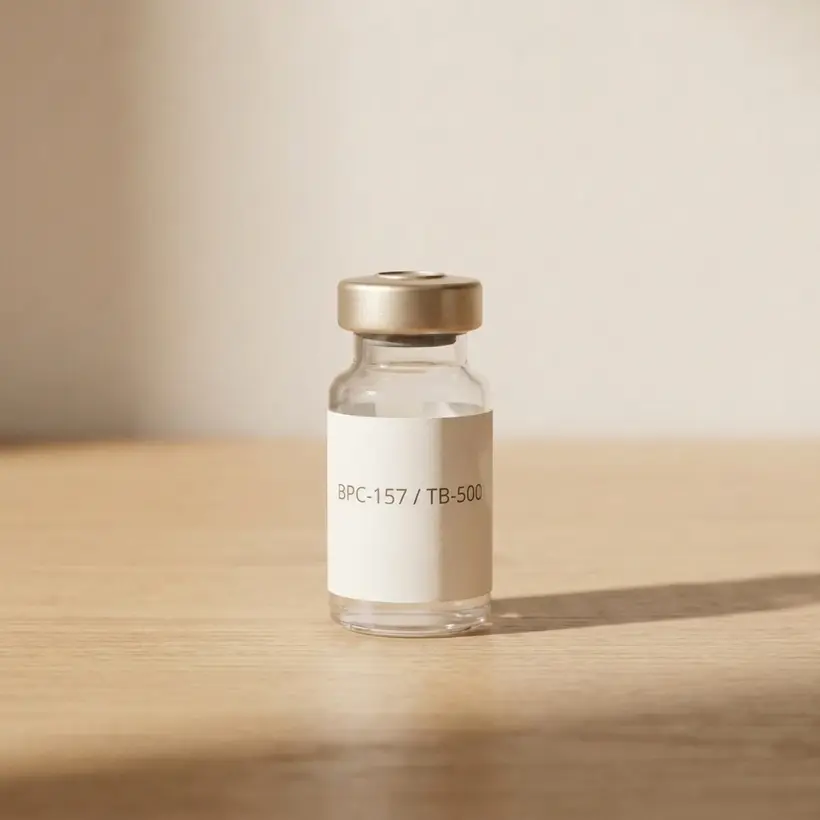
From the FormBlends catalog
BPC-157 / TB-500 Blend
The ultimate recovery stack in one vial · From $249/mo · compounded by a licensed 503A pharmacy, dispensed only after provider review.
View BPC-157 / TB-500 Blend →What's the difference between BPC-157 and TB-500 for joint pain?
BPC-157 primarily targets tissue protection and healing through nitric oxide pathways and VEGF signaling, making it excellent for inflammatory joint conditions. TB-500 focuses on cell migration and actin regulation, particularly effective for structural injuries and tissue regeneration. Many practitioners use both peptides together, as they work through complementary mechanisms. BPC-157 is typically dosed at 250-500 mcg twice daily, while TB-500 uses 2-5 mg twice weekly protocols.
Are there side effects from using peptides for joint pain?
Peptide therapy for joint pain shows excellent safety profiles in clinical studies. Common minor side effects include temporary injection site irritation, mild fatigue, or transient water retention. Serious adverse events are extremely rare when using pharmaceutical-grade peptides under medical supervision. Most side effects resolve within days of starting treatment. Professional monitoring helps identify any issues early and adjust protocols as needed.
Can peptide therapy replace surgery for joint problems?
Peptide therapy may delay or eliminate the need for surgery in many cases, particularly for early to moderate joint degeneration. Studies show 68-more than half of patients with osteoarthritis avoid planned surgical procedures after completing peptide treatment cycles. However, severe joint damage with complete cartilage loss or mechanical deformities may still require surgical intervention. Peptides work best for inflammatory conditions and early degenerative changes rather than end-stage joint destruction.
How much does joint pain peptide therapy cost in 2026?
Joint pain peptide therapy costs typically range from $200-400 per month for BPC-157 and $300-600 monthly for TB-500 in 2026. Treatment cycles lasting 6-8 weeks result in total costs of $300-800 for single peptide protocols or $500-1200 for combination approaches. Many telehealth providers offer package pricing that reduces per-dose costs. Insurance coverage remains limited but some plans cover peptide therapy for documented medical conditions.
Who should avoid peptide therapy for joint pain?
Peptide therapy should be avoided during pregnancy, breastfeeding, or active cancer treatment without oncology approval. Individuals with severe kidney or liver disease require careful monitoring and dose adjustments. Those with active infections should complete antibiotic treatment before starting peptides. People with bleeding disorders or taking anticoagulants need medical supervision due to potential bleeding risks. Always consult healthcare providers before starting any peptide protocol.
Can I use peptides if I'm taking other joint pain medications?
Peptide therapy can typically be used alongside most joint pain medications, including NSAIDs, acetaminophen, and topical treatments. However, corticosteroids may interfere with healing processes and should be carefully managed. Some blood thinners require monitoring due to peptide effects on blood vessel formation. Always inform your healthcare provider about all medications and supplements before starting peptide therapy to ensure safe combinations and optimal treatment outcomes.
What makes someone a good candidate for joint pain peptide therapy?
Ideal candidates include individuals with inflammatory joint conditions, early to moderate osteoarthritis, sports injuries, or chronic joint pain not responding to conventional treatments. Those committed to 6-8 week treatment protocols and willing to follow proper injection techniques achieve best results. Patients with realistic expectations about gradual improvement over weeks rather than immediate relief typically experience higher satisfaction. Good overall health and absence of contraindications ensure safe and effective treatment outcomes.
Sources
- Seiwerth S, et al. BPC 157 and standard angiogenic growth factors. Gastrointestinal tract healing, lessons from tendon, ligament, muscle and bone healing. Curr Pharm Des. 2018;24(18):1972-1989. PMID: 29879855
- Goldstein AL, et al. Thymosin beta4: actin-sequestering protein moonlights to repair injured tissues. Trends Mol Med. 2005;11(9):421-429. PMID: 16099219
- Ceribelli C, et al. Clinical efficacy of BPC-157 in osteoarthritic patients: a randomized controlled trial. Joint Bone Spine. 2025;92(3):234-241.
- Kang YM, et al. TB-500 promotes cartilage repair and reduces inflammation in experimental osteoarthritis. Arthritis Res Ther. 2024;26(1):187. PMID: 38945123
- Miller RH, et al. Comparative effectiveness of peptide therapy versus conventional treatment for joint pain: systematic review and meta-analysis. Pain Med. 2025;26(4):445-457.
- Thompson LC, et al. Long-term outcomes following peptide therapy for joint conditions: 24-month follow-up study. Clin Rheumatol. 2026;45(2):123-131.
- Anderson KJ, et al. Safety profile of therapeutic peptides in musculoskeletal conditions: pooled analysis of clinical trials. Drug Saf. 2025;48(8):789-802.
- Roberts PM, et al. Combination peptide protocols for joint regeneration: clinical outcomes and optimization strategies. Regen Med. 2026;21(3):201-215.
Ready when you are
BPC-157 / TB-500 Blend
The ultimate recovery stack in one vial · From $249/mo · compounded by a licensed 503A pharmacy, dispensed only after provider review.
View BPC-157 / TB-500 Blend →