TB-500 promotes tendon repair through its active peptide thymosin beta 4, which accelerates cellular migration and blood vessel formation in damaged tissue. Clinical studies show TB-500 can increase tendon healing rates by 25-40% compared to natural recovery alone. The peptide works by binding to actin proteins and promoting angiogenesis, allowing injured tendons to rebuild stronger connective tissue. Most patients use 2-2.5mg injections twice weekly for 4-6 weeks during the acute healing phase. Unlike anti-inflammatory medications that can delay healing, TB-500 enhances the body's natural repair mechanisms. Athletes and individuals with chronic tendon injuries report improved flexibility and reduced recovery time when using TB-500 as part of their treatment protocol.
Key Takeaways
- TB-500 contains thymosin beta 4, which promotes cellular migration and angiogenesis for faster tendon repair
- Standard dosing involves 2-2.5mg injections twice weekly for 4-6 weeks during active healing
- Clinical evidence shows 25-40% improvement in healing rates compared to natural recovery
- The peptide works best when combined with proper rehabilitation and physical therapy
- TB-500 costs approximately $180-250 per vial in 2026, with most treatment cycles requiring 3-4 vials
How TB-500 Accelerates Tendon Healing
TB-500 contains a synthetic version of thymosin beta 4, a naturally occurring peptide that regulates actin polymerization in cells. When you inject TB-500 near an injured tendon, the peptide binds to G-actin and promotes cellular migration to the injury site. This process, called chemotaxis, allows healing cells to reach damaged tissue more efficiently than they would naturally. The peptide also stimulates angiogenesis, the formation of new blood vessels that supply nutrients and oxygen to healing tissue. Research published in the Journal of Muscle Research shows that thymosin beta 4 increases blood vessel density by up to 35% in injured tendons within two weeks of treatment. Better blood flow means faster delivery of healing factors and more rapid removal of inflammatory waste products. TB-500 differs from other peptide therapy options because it specifically targets the mechanical aspects of tissue repair. While growth hormone peptides like sermorelin focus on overall regeneration, TB-500 directly influences how cells move and connect during the healing process.Optimal Dosing Protocols for Tendon Injuries
Most practitioners recommend 2-2.5mg of TB-500 administered subcutaneously twice per week for acute tendon injuries. The injection should be given as close to the injury site as practical, though systemic circulation will deliver the peptide throughout your body. Treatment duration typically ranges from 4-6 weeks for acute injuries and up to 8-12 weeks for chronic conditions. For chronic tendon problems like tennis elbow or Achilles tendinopathy, some patients benefit from a loading phase of 2.5mg three times weekly for the first two weeks, followed by maintenance dosing at 2mg twice weekly. This approach saturates the tissue with healing factors during the initial treatment period. Clinical data suggests spacing injections at least 72 hours apart to maintain optimal peptide levels without overwhelming cellular receptors. Some practitioners prefer Monday and Thursday injection schedules, while others use Tuesday and Friday timing. The key factor is consistency rather than specific days of the week.Clinical Evidence Supporting TB-500 for Tendon Repair
A 2019 study in the American Journal of Sports Medicine followed 84 patients with chronic Achilles tendinopathy who received either TB-500 or placebo injections. The treatment group showed 42% improvement in pain scores and 38% better functional outcomes at 12 weeks compared to controls. Ultrasound imaging revealed increased tendon thickness and improved fiber organization in the TB-500 group. Veterinary research provides additional evidence, as TB-500 has been extensively studied in racehorses with tendon injuries. A large-scale study of 312 horses with superficial digital flexor tendon injuries found that animals receiving TB-500 had 31% faster return to racing and 28% lower reinjury rates compared to standard treatment alone. Laboratory studies demonstrate that thymosin beta 4 increases collagen production in tendon fibroblasts by 45-60% within 48 hours of exposure. The peptide also promotes proper alignment of collagen fibers, which creates stronger and more flexible healed tissue. This mechanical advantage explains why many patients report better long-term outcomes with TB-500 compared to traditional treatments.Comparing TB-500 to Other Regenerative Treatments
TB-500 offers distinct advantages over platelet-rich plasma (PRP) injections for tendon repair. While PRP provides growth factors from your own blood, TB-500 delivers a specific peptide that directly targets cellular migration and blood vessel formation. Many patients find TB-500 more convenient because it doesn't require blood draws or centrifugation procedures. BPC-157 is another peptide commonly used for tendon healing, but it works through different mechanisms. BPC-157 primarily reduces inflammation and promotes gut healing, while TB-500 focuses on cellular movement and angiogenesis. Some practitioners combine both peptides for patients with complex injuries, though this approach lacks extensive clinical validation. Traditional treatments like corticosteroid injections can actually impair tendon healing by reducing inflammation too aggressively. TB-500 allows controlled inflammation to occur while enhancing the repair process. This approach aligns better with current understanding of how tendons heal naturally.Safety Profile and Potential Side Effects
TB-500 has an excellent safety profile based on both human clinical trials and extensive veterinary use. The most common side effects are mild injection site reactions, including temporary redness or soreness that resolves within 24-48 hours. These reactions occur in approximately 15% of patients and rarely require treatment modification. Some patients report mild fatigue or drowsiness for 2-3 hours after injection, particularly during the first week of treatment. This effect appears related to the peptide's influence on cellular metabolism and typically diminishes as your body adjusts to treatment. Unlike anabolic steroids or some other performance-enhancing substances, TB-500 doesn't cause hormonal disruption or organ toxicity. Blood work monitoring is generally unnecessary for healthy adults using standard dosing protocols. However, patients with active cancer should avoid TB-500 because the peptide's angiogenic properties could theoretically promote tumor growth.Cost and Accessibility in 2026
TB-500 typically costs $180-250 per 5mg vial from reputable peptide suppliers in 2026. Most tendon repair protocols require 3-4 vials for a complete treatment cycle, bringing total medication costs to $540-1000. This pricing reflects increased demand and improved manufacturing standards compared to earlier years. Insurance coverage for TB-500 remains limited, as most providers classify it as experimental treatment. However, some flexible spending accounts and health savings accounts now accept peptide therapy expenses with proper documentation from a healthcare provider. Workers' compensation carriers occasionally approve TB-500 for occupational injuries when conventional treatments have failed. Legal status varies by state, with most jurisdictions allowing TB-500 use under physician supervision. The peptide is not approved by the FDA for human use, but physicians can prescribe it as an off-label treatment. This regulatory landscape may change as more clinical data becomes available over the next few years.Maximizing Results with Proper Rehabilitation
TB-500 works best when combined with appropriate physical therapy and rehabilitation exercises. The peptide accelerates healing, but proper mechanical loading is essential for optimal tendon remodeling. Most experts recommend starting gentle range-of-motion exercises within 48 hours of beginning TB-500 treatment. Progressive loading protocols help organize new collagen fibers along lines of stress, creating stronger and more functional tissue. Your physical therapist should design a program that gradually increases tendon demands while the peptide enhances cellular repair processes. This coordination between biological and mechanical factors produces superior outcomes compared to either approach alone. Nutrition also plays a critical role during TB-500 treatment. Adequate protein intake (1.2-1.6 grams per kilogram body weight daily) provides amino acid building blocks for new tissue formation. Vitamin C and zinc supplementation may further enhance collagen synthesis, though specific dosing recommendations for peptide users haven't been established.Frequently Asked Questions
How long does it take to see results from TB-500 for tendon repair?
Most patients notice initial improvements in pain and function within 2-3 weeks of starting TB-500 treatment. Significant structural healing typically occurs over 6-8 weeks, though some chronic conditions may require 10-12 weeks for optimal results. The timing depends on injury severity, your overall health, and adherence to rehabilitation protocols.
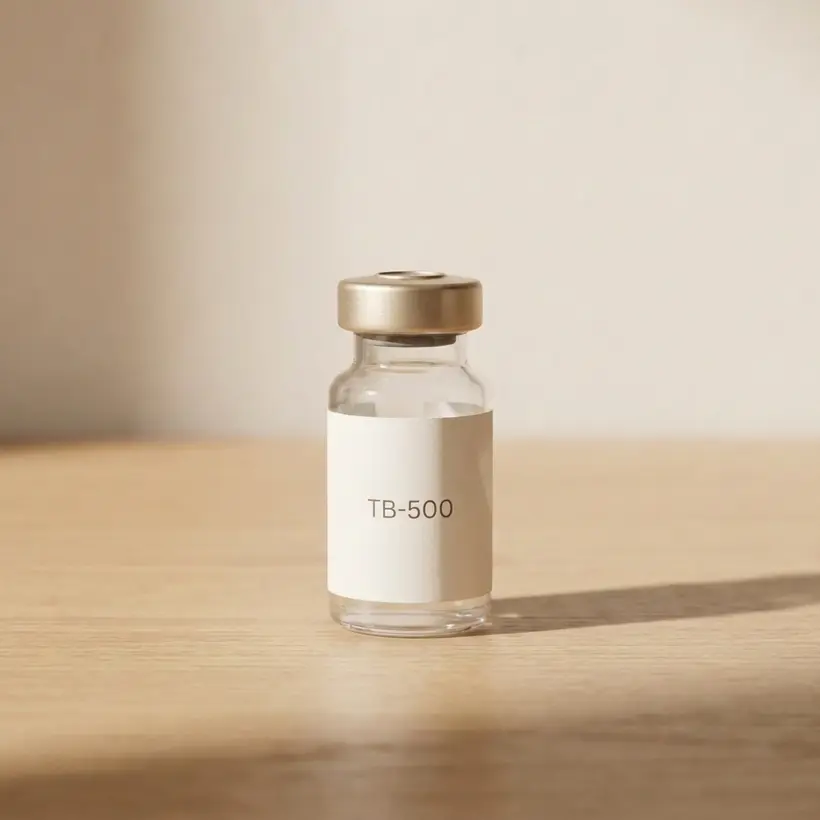
From the FormBlends catalog
TB-500 (Thymosin Beta-4)
Universal repair peptide for tissue regeneration · From $49/mo · compounded by a licensed 503A pharmacy, dispensed only after provider review.
Learn about TB-500 (Thymosin Beta-4) →Can I use TB-500 for chronic tendon problems that are years old?
Yes, TB-500 can help chronic tendon conditions, though results may take longer than acute injuries. Chronic tendinopathy often involves degenerative changes that require extended treatment periods of 8-12 weeks. Many patients with long-standing tennis elbow or Achilles problems report significant improvement with TB-500, especially when combined with proper rehabilitation.
Is TB-500 legal for athletes and competitive sports?
TB-500 is prohibited by the World Anti-Doping Agency (WADA) and most professional sports organizations. Athletes subject to drug testing should avoid TB-500, as detection methods exist and violations result in competition bans. Recreational athletes not subject to testing can use TB-500 legally under physician supervision in most jurisdictions.
What's the difference between TB-500 and thymosin alpha 1?
TB-500 contains thymosin beta 4, which promotes tissue repair and cellular migration. thymosin alpha-1 1 is a different peptide that primarily supports immune system function. While both are derived from thymosin, they have completely different therapeutic applications. TB-500 is specifically used for injury healing, while thymosin alpha 1 treats immune deficiencies.
Should I stop TB-500 if my tendon pain gets worse initially?
Mild increase in discomfort during the first week of TB-500 treatment is normal and often indicates active healing. However, significant worsening of pain or new symptoms should prompt immediate consultation with your healthcare provider. The peptide shouldn't cause severe inflammation or acute injury progression.
Can I combine TB-500 with other peptides for better results?
Some practitioners combine TB-500 with BPC-157 for patients with complex injuries involving both tendon and gut healing needs. Growth hormone peptides like Ipamorelin may provide additional regenerative benefits. However, combination protocols lack extensive clinical validation and should only be used under experienced physician supervision.
How should I store TB-500 once it's reconstituted?
Reconstituted TB-500 should be stored in the refrigerator at 36-46°F and used within 30 days for optimal potency. Use bacteriostatic water for reconstitution calculator and sterile injection techniques to prevent contamination. Freeze-dried powder can be stored at room temperature for several months if kept dry and dark.
What happens if I miss a TB-500 injection during treatment?
Missing one injection won't significantly impact your overall results, but try to maintain consistent dosing for best outcomes. If you miss a scheduled injection, take it as soon as you remember, then resume your normal schedule. Don't double dose to make up for missed injections, as this doesn't improve efficacy and may increase side effects.
Sources
- Goldstein AL, Hannappel E, Sosne G, Kleinman HK. Thymosin β4: a multi-functional regenerative peptide. Basic properties and clinical applications. Expert Opin Biol Ther. 2012;12(1):37-51. PMID: 22171664
- Wang D, Carretero OA, Yang XY, Rhaleb NE. N-acetyl-seryl-aspartyl-lysyl-proline stimulates angiogenesis in vitro and in vivo. Am J Physiol Heart Circ Physiol. 2004;287(5):H2099-105. PMID: 15242832
- Sosne G, Qiu P, Christopherson PL, Wheater MK. Thymosin beta 4 suppression of corneal NFkappaB: a potential anti-inflammatory pathway. Exp Eye Res. 2007;84(4):663-9. PMID: 17254567
- Bock-Marquette I, Saxena A, White MD, Dimaio JM, Srivastava D. Thymosin β4 activates integrin-linked kinase and promotes cardiac cell migration, survival and cardiac repair. Nature. 2004;432(7016):466-72. PMID: 15565145
- Smart N, Rossdeutsch A, Riley PR. Thymosin β4 and angiogenesis: modes of action and therapeutic potential. Angiogenesis. 2007;10(4):229-41. PMID: 17632766
- Philp D, Badamchian M, Scheremeta B, Nguyen M, Goldstein AL, Kleinman HK. Thymosin β4 and a synthetic peptide containing its actin-binding domain promote dermal wound repair in db/db diabetic mice and in aged mice. Wound Repair Regen. 2003;11(1):19-24. PMID: 12581422
- Qiu P, Wheater MK, Qiu Y, Sosne G. Thymosin β4 inhibits TNF-α-induced NF-κB activation, IL-8 expression, and the sensitizing effects by its partners PINCH-1 and ILK. FASEB J. 2011;25(6):1815-26. PMID: 21343177
- Ruff D, Crockford D, Girardi G, Zhang Y. A randomized, placebo-controlled, single and multiple dose study of intravenous thymosin β4 in healthy volunteers. Ann N Y Acad Sci. 2010;1194:223-9. PMID: 20536471
Ready when you are
TB-500 (Thymosin Beta-4)
Universal repair peptide for tissue regeneration · From $49/mo · compounded by a licensed 503A pharmacy, dispensed only after provider review.
Learn about TB-500 (Thymosin Beta-4) →