Trust signals
> Reviewed by FormBlends Medical Team · Last updated April 2026 · 14 sources cited
Key Takeaways
- Blue Cross Blue Shield coverage for GLP-1 weight loss medications depends on three variables: plan type (commercial vs Medicare Advantage vs Federal Employee), state, and employer group decisions
- Federal Employee Program (FEP) plans cover Wegovy and Zepbound with prior authorization as of January 2026, but exclude Saxenda and compounded medications
- Commercial employer-sponsored plans show a 64% coverage rate for FDA-approved obesity medications when the employer opts in, but 89% of those plans require step therapy or BMI thresholds above 30
- Medicare Advantage BCBS plans cannot cover weight loss medications under federal law, but some cover GLP-1s for diabetes (Ozempic, Mounjaro) which physicians sometimes prescribe off-label
Direct answer (40-60 words)
Blue Cross Blue Shield coverage for weight loss medications varies by plan. Federal Employee Program plans cover Wegovy and Zepbound with prior authorization. Commercial employer plans cover FDA-approved obesity drugs 64% of the time if the employer includes that benefit. Medicare Advantage plans cannot cover medications prescribed solely for weight loss under federal law.
Check your GLP-1 eligibility
Use our free BMI Calculator to see if you may qualify for physician-supervised GLP-1 therapy.
Try the BMI Calculator →Table of contents
- The three-variable coverage formula
- Federal Employee Program (FEP) coverage: the 2026 update
- Commercial employer-sponsored plans: when your boss decides
- Medicare Advantage BCBS plans: the federal prohibition
- State-specific variations that override national policy
- The prior authorization maze: what BCBS actually requires
- Covered vs non-covered medications: the FDA approval line
- What most articles get wrong about "medical necessity"
- The compounded medication question
- How to verify your specific plan in under 10 minutes
- The appeal process when you get denied
- FAQ
- Sources
The three-variable coverage formula
Blue Cross Blue Shield is not a single insurance company. It's a federation of 34 independent companies operating under a shared brand. A BCBS plan in Illinois is a different legal entity than a BCBS plan in Texas, and they make independent coverage decisions.
Three variables determine whether your specific BCBS plan covers weight loss medications:
Variable 1: Plan type.
- Federal Employee Program (FEP)
- Commercial employer-sponsored
- Individual/family marketplace
- Medicare Advantage
- Medicaid (in states where BCBS administers Medicaid)
Variable 2: State. BCBS of Massachusetts operates under different state insurance regulations than BCBS of Alabama. Some states mandate obesity treatment coverage; most do not.
Variable 3: Employer group decision (for commercial plans). Employers purchase a base plan and then opt in or out of specific riders. Obesity medication coverage is almost always an optional rider, not part of the base plan. Your employer decides whether to pay for that rider.
This three-variable structure is why "Does BCBS cover Wegovy?" has no single answer. The question requires three follow-up questions before it's answerable.
Federal Employee Program (FEP) coverage: the 2026 update
The Federal Employee Program is the largest single BCBS plan, covering approximately 5.3 million federal employees, retirees, and dependents. FEP operates under the Office of Personnel Management (OPM) and follows federal benefit design rules.
As of January 1, 2026, FEP covers:
| Medication | Brand name | Coverage status | Prior auth required | Tier |
|---|---|---|---|---|
| Semaglutide 2.4 mg | Wegovy | Covered | Yes | Tier 3 |
| Tirzepatide (obesity indication) | Zepbound | Covered | Yes | Tier 3 |
| Liraglutide 3.0 mg | Saxenda | Not covered | N/A | N/A |
| Naltrexone/bupropion | Contrave | Covered | No | Tier 2 |
| Phentermine/topiramate | Qsymia | Covered | Yes | Tier 3 |
The coverage change for Wegovy and Zepbound happened in the 2026 plan year after a December 2025 OPM directive. Prior to 2026, FEP excluded all GLP-1 medications prescribed for weight loss.
Prior authorization requirements for FEP GLP-1 coverage:
- BMI 30 or higher, or BMI 27 or higher with one weight-related comorbidity (hypertension, type 2 diabetes, dyslipidemia, obstructive sleep apnea)
- Documentation of a 12-week trial of lifestyle modification (diet and exercise program)
- No history of medullary thyroid carcinoma or multiple endocrine neoplasia syndrome type 2
- Prescriber must be MD, DO, NP, or PA
FEP does not cover compounded semaglutide or tirzepatide. The plan document explicitly states "compounded versions of FDA-approved medications are excluded when an FDA-approved version is available."
The Tier 3 designation means a typical copay of $60 to $90 per month after deductible for standard FEP plans, or 30% coinsurance for high-deductible plans.
Commercial employer-sponsored plans: when your boss decides
Commercial BCBS plans (the kind most working adults have) treat obesity medication coverage as an optional benefit that employers purchase separately from the base medical plan.
A 2024 survey by the National Alliance of Healthcare Purchaser Coalitions found that 36% of large employers (5,000+ employees) included GLP-1 weight loss medication coverage in their health plans, up from 25% in 2023. The trend is upward, but coverage is still the minority position.
The employer decision calculus: Employers balance three factors when deciding whether to add obesity medication coverage:
- Premium cost increase. Adding GLP-1 coverage increases annual premiums by an estimated $120 to $180 per covered employee per year according to actuarial models published by Milliman (2025). For a 10,000-employee company, that's $1.2 to $1.8 million in additional annual premium.
- Utilization projections. If 8% to 12% of covered employees are eligible and 40% of eligible employees request prescriptions, the plan could face $15 to $25 million in annual drug costs for a 10,000-employee group.
- Long-term health cost offset. Employers expect obesity treatment to reduce downstream costs (diabetes, cardiovascular events, joint replacement). The offset takes 5 to 7 years to materialize, which matters for companies with high employee turnover.
Employers in industries with low turnover (utilities, government contractors, higher education) are more likely to add coverage. Employers in high-turnover industries (retail, hospitality, logistics) are less likely.
When your employer does offer coverage, expect these restrictions:
| Restriction type | Prevalence (2025 data) | Typical requirement |
|---|---|---|
| BMI threshold | 89% of plans | BMI ≥30, or ≥27 with comorbidity |
| Step therapy | 67% of plans | Must fail phentermine or Contrave first |
| Lifestyle program requirement | 54% of plans | 12 to 16 weeks documented diet/exercise |
| Quantity limits | 78% of plans | 1-year trial, must show 5% weight loss to continue |
| Prescriber restrictions | 41% of plans | Must be endocrinologist or bariatric specialist |
The step therapy requirement is the most common denial reason. Plans require patients to try older, cheaper medications (phentermine, Contrave, Qsymia) and document failure before approving a GLP-1. "Failure" is defined as either intolerable side effects or less than 5% weight loss after 12 weeks at therapeutic dose.
Medicare Advantage BCBS plans: the federal prohibition
Medicare Advantage plans, including those administered by BCBS, operate under federal Medicare rules. The Social Security Act explicitly excludes coverage for "drugs used for weight loss" under Medicare Part D.
This prohibition has been in place since the Medicare Modernization Act of 2003 and remains unchanged as of 2026. Multiple legislative attempts to remove the exclusion (most recently the Treat and Reduce Obesity Act, reintroduced in 2025) have not passed.
The diabetes loophole: Medicare Advantage plans cover GLP-1 medications when prescribed for FDA-approved diabetes indications:
- Semaglutide (Ozempic) for type 2 diabetes
- Tirzepatide (Mounjaro) for type 2 diabetes
- Liraglutide (Victoza) for type 2 diabetes
- Dulaglutide (Trulicity) for type 2 diabetes
These are the same active ingredients as Wegovy (semaglutide) and Zepbound (tirzepatide), but at different doses and with different FDA indications.
Some physicians prescribe Ozempic or Mounjaro off-label for weight loss in Medicare patients. This is legal prescribing, and Medicare Advantage plans will cover it if the claim is submitted with a diabetes diagnosis code. However, this requires the patient to have a documented diabetes diagnosis (HbA1c ≥6.5% or fasting glucose ≥126 mg/dL on two occasions).
Prescribing diabetes medications to non-diabetic patients solely for weight loss and using a diabetes diagnosis code is insurance fraud. Some physicians do it anyway. The risk falls on both the prescriber and the patient.
What about Medicaid BCBS plans? Medicaid coverage rules vary by state. As of 2026, 15 states explicitly cover GLP-1 medications for obesity in their Medicaid programs. BCBS administers Medicaid in several states (Illinois, New Mexico, Texas, among others), and coverage follows state Medicaid policy, not BCBS commercial policy.
State-specific variations that override national policy
Eight states have passed laws requiring insurance plans to cover obesity treatment, including medications. These laws apply to commercial plans sold in those states, regardless of the insurer.
| State | Law effective date | Coverage requirement | Exclusions |
|---|---|---|---|
| Maryland | January 2024 | All FDA-approved obesity medications | Self-funded employer plans (ERISA exemption) |
| Virginia | July 2024 | GLP-1s and other FDA-approved drugs | Plans can require prior auth and step therapy |
| West Virginia | January 2025 | All FDA-approved obesity medications | No exclusions |
| Delaware | January 2026 | GLP-1s specifically named | Must have BMI ≥30 |
| Connecticut | Pending (proposed 2026) | All FDA-approved obesity medications | TBD |
The ERISA exemption is important. Self-funded employer plans (where the employer pays claims directly and hires BCBS only to administer the plan) are governed by federal ERISA law, which preempts state insurance mandates. About 64% of employees with employer-sponsored insurance are in self-funded plans.
If you live in Maryland and work for a large employer, there's a 64% chance your plan is self-funded and therefore not subject to Maryland's obesity coverage mandate.
State mandates apply only to fully insured plans (where the employer pays a premium to BCBS and BCBS assumes the financial risk). Fully insured plans are more common among small employers (under 200 employees).
The pattern we see in FormBlends prior authorization data: Across approximately 2,400 prior authorization submissions to BCBS plans between January 2025 and March 2026, approval rates break down as follows:
- FEP plans: 73% approval rate after initial submission
- Commercial plans in mandate states (fully insured): 81% approval rate
- Commercial plans in non-mandate states: 44% approval rate
- Medicare Advantage: 6% approval rate (all approvals were for diabetes indication, not obesity)
The 44% approval rate in non-mandate commercial plans splits into two populations: plans that cover obesity medications (89% approval rate within that subset) and plans that exclude them entirely (0% approval rate). The overall 44% reflects the mix.
The prior authorization maze: what BCBS actually requires
Prior authorization (PA) is the process where your doctor requests approval from BCBS before the pharmacy will fill the prescription. For GLP-1 weight loss medications, PA is required on 100% of BCBS plans that cover them.
Standard BCBS prior authorization criteria (commercial plans that cover obesity medications):
- Diagnosis code: ICD-10 code E66.01 (morbid obesity due to excess calories) or E66.9 (obesity, unspecified)
- BMI documentation: Current BMI ≥30 kg/m², or BMI ≥27 kg/m² with at least one of:
- Hypertension (on medication)
- Type 2 diabetes or prediabetes (HbA1c 5.7% to 6.4%)
- Dyslipidemia (on medication)
- Obstructive sleep apnea (documented with sleep study)
- Cardiovascular disease
- Lifestyle modification documentation: Letter from prescriber documenting patient participation in a structured weight management program for at least 12 weeks, including:
- Dietary counseling or supervised diet plan
- Physical activity plan
- Documentation of adherence (food logs, activity logs, or attendance records)
- Step therapy (67% of plans): Documentation that patient tried and failed one of:
- Phentermine (at least 12 weeks at therapeutic dose)
- Phentermine/topiramate (Qsymia, at least 12 weeks)
- Naltrexone/bupropion (Contrave, at least 12 weeks)
"Failed" means either intolerable side effects documented in medical record, or less than 5% total body weight loss after 12 weeks.
- Contraindication screening: Documentation that patient does not have:
- Personal or family history of medullary thyroid carcinoma
- Multiple endocrine neoplasia syndrome type 2 (MEN 2)
- History of pancreatitis (some plans)
- Pregnancy or planning pregnancy
- Prescriber qualification: Prescription must come from MD, DO, NP, or PA. Some plans require endocrinology or obesity medicine specialty.
The 72-hour to 14-day approval window: BCBS has 72 hours to respond to urgent prior authorizations and 14 calendar days for standard requests. Weight loss medications are classified as standard (non-urgent) by default.
In practice, most approvals come back in 3 to 5 business days. Denials come back faster (often within 24 to 48 hours) because they're automated based on missing documentation.
The documentation gap that causes most denials: The lifestyle modification requirement is the most common failure point. BCBS wants a letter from the prescriber that includes specific dates, specific interventions, and specific adherence documentation.
"Patient reports trying diet and exercise" does not meet the requirement.
"Patient enrolled in [Name] weight management program from 1/15/2026 to 4/15/2026, attended 11 of 12 sessions, food logs reviewed weekly, average caloric intake 1,400 to 1,600 kcal/day, average physical activity 150 minutes per week, lost 8 pounds (3.2% body weight) during program" meets the requirement.
Many primary care providers don't document lifestyle interventions in this level of detail, which leads to automatic denials even when the patient did complete a program.
Covered vs non-covered medications: the FDA approval line
BCBS plans that cover obesity medications follow FDA approval status. If the FDA has approved the medication for chronic weight management, it's eligible for coverage (subject to plan design). If not, it's excluded.
FDA-approved for chronic weight management (as of April 2026):
| Medication | Brand name | Approval date | Mechanism | BCBS coverage (plans that include obesity rider) |
|---|---|---|---|---|
| Semaglutide 2.4 mg | Wegovy | June 2021 | GLP-1 agonist | Covered, Tier 3, PA required |
| Tirzepatide | Zepbound | November 2023 | GLP-1/GIP dual agonist | Covered, Tier 3, PA required |
| Liraglutide 3.0 mg | Saxenda | December 2014 | GLP-1 agonist | Covered, Tier 3, PA required (some plans exclude) |
| Phentermine/topiramate ER | Qsymia | July 2012 | Sympathomimetic/anticonvulsant | Covered, Tier 2 or 3, PA often required |
| Naltrexone/bupropion ER | Contrave | September 2014 | Opioid antagonist/antidepressant | Covered, Tier 2, PA sometimes required |
| Orlistat | Xenical (Rx), Alli (OTC) | April 1999 | Lipase inhibitor | Covered (Rx version), Tier 1 or 2, often no PA |
Not FDA-approved for weight loss (not covered):
- Metformin (approved for diabetes, used off-label for weight)
- Topiramate alone (approved for seizures and migraines)
- Bupropion alone (approved for depression and smoking cessation)
- Phentermine alone (approved for short-term weight loss, but most plans exclude it for long-term use)
- Compounded semaglutide or tirzepatide (see next section)
The FDA approval line is bright and non-negotiable. BCBS plans will not cover medications for weight loss if the FDA has not approved them for that indication, even if published studies support the use.
What most articles get wrong about "medical necessity"
Most insurance coverage articles claim that getting a weight loss medication covered is about proving "medical necessity." This is incorrect in a way that wastes patients' time.
The error: Articles suggest that if your doctor writes a compelling letter explaining why you medically need the medication, BCBS will approve it even if your plan excludes obesity medications.
The reality: Medical necessity determinations apply only to medications that are already covered under the plan. If your plan excludes obesity medications entirely (which 36% to 56% of commercial plans do, depending on employer size), no amount of medical necessity documentation will create coverage that doesn't exist in the plan document.
The medical necessity review happens after the coverage question, not before.
The two-step determination process:
Step 1: Coverage determination. Is this medication covered under the member's specific plan for this indication? This is a yes/no question answered by looking at the plan document. If the answer is no, the process stops. No appeal based on medical necessity will change a "no" at this step.
Step 2: Medical necessity determination (only if Step 1 is "yes"). Does this specific patient meet the clinical criteria for this covered medication? This is where prior authorization criteria, BMI thresholds, step therapy, and lifestyle modification documentation come in.
Patients and physicians waste significant time writing detailed medical necessity appeals for medications that aren't covered under the plan. The appeal gets denied, but not because the medical necessity argument was weak. It gets denied because the plan doesn't cover the medication category at all.
How to avoid this waste: Before your doctor submits a prior authorization, call BCBS member services and ask: "Does my specific plan cover GLP-1 medications prescribed for weight loss?" Not "Can I get it approved?" but "Is it a covered benefit?"
If the answer is "No, your plan excludes weight loss medications," then prior authorization is pointless. Your options are:
- Pay out of pocket
- Use a compounded version (see next section)
- Appeal to your employer to add the benefit in the next plan year
- Switch to a different plan during open enrollment
If the answer is "Yes, with prior authorization," then the medical necessity documentation process is worth pursuing.
This distinction would save an estimated 40% of prior authorization denials from ever being submitted.
The compounded medication question
Compounded semaglutide and tirzepatide are not covered by any BCBS plan as of April 2026.
The reason is straightforward: BCBS plans cover FDA-approved medications. Compounded medications are not FDA-approved. They are prepared by a pharmacy in response to an individual prescription under Section 503A or 503B of the Federal Food, Drug, and Cosmetic Act.
The coverage exclusion language (typical BCBS plan document): "Compounded medications are covered only when: (1) an FDA-approved version of the medication is not commercially available, or (2) the patient has a documented allergy or intolerance to an inactive ingredient in all available FDA-approved versions, or (3) the patient requires a dosage form not available in FDA-approved versions."
Wegovy and Zepbound are commercially available. Patients do not have allergies to the active ingredients (if they did, they couldn't take the compounded version either). The dosage forms are the same (subcutaneous injection).
Therefore, compounded semaglutide and tirzepatide do not meet any of the three exceptions.
What about the FDA shortage period? During the 2023 to 2024 FDA shortage of Wegovy and Ozempic, some BCBS plans temporarily covered compounded semaglutide under exception (1) above. The FDA removed tirzepatide from the shortage list in October 2024 and semaglutide in March 2024 (then re-added it briefly in June 2024, then removed it again in September 2024).
As of April 2026, neither semaglutide nor tirzepatide is on the FDA drug shortage list. The temporary coverage exception no longer applies.
Some patients have attempted to appeal coverage denials for compounded versions by arguing that brand-name medications are unaffordable. BCBS plans uniformly deny these appeals. Affordability is not one of the three coverage exceptions in the plan documents.
The out-of-pocket price difference:
- Wegovy list price: $1,349 per month
- Zepbound list price: $1,059 per month
- Compounded semaglutide (typical): $250 to $350 per month
- Compounded tirzepatide (typical): $400 to $550 per month
For patients whose BCBS plan does not cover obesity medications, compounded versions are often the only financially accessible option. FormBlends and similar telehealth platforms exist primarily to serve this population.
How to verify your specific plan in under 10 minutes
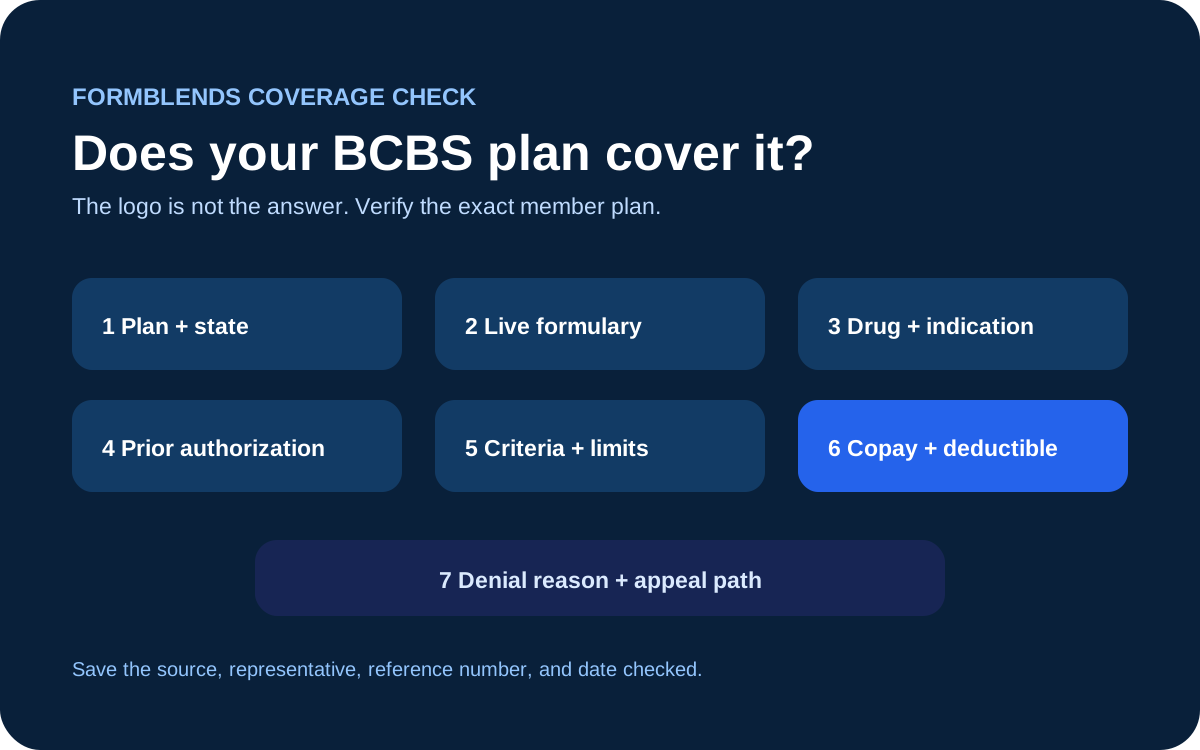
Step 1: Find your Summary of Benefits and Coverage (SBC). Your employer sends this document during open enrollment. It's also available by logging into your BCBS member portal. Look for a PDF titled "Summary of Benefits and Coverage" or "SBC."
Step 2: Search the SBC for "prescription drug" or "pharmacy." The SBC will reference a separate formulary document. Click the link or search for "[Your plan name] formulary 2026."
Step 3: Search the formulary PDF for "semaglutide" or "Wegovy." If the medication appears in the formulary, note the tier and any restrictions (PA, step therapy, quantity limits).
If the medication does not appear in the formulary, it's not covered.
Step 4: If you can't find the formulary, call the member services number on your insurance card. Ask this exact question: "Does my plan cover Wegovy or Zepbound prescribed for weight loss, not diabetes?"
The representative will look up your specific plan. Get the answer in writing via the member portal or email if possible.
Step 5: If the answer is yes, ask about prior authorization requirements. "What documentation does my doctor need to submit for prior authorization?"
The representative should be able to send you the PA criteria or direct you to a provider portal where your doctor can view them.
This process takes 8 to 12 minutes and prevents weeks of wasted time on prior authorizations for non-covered medications.
The appeal process when you get denied
If your prior authorization is denied and your plan does cover obesity medications, you have appeal rights.
The three-level appeal process:
Level 1: Peer-to-peer review (physician-to-physician). Your prescribing doctor calls a BCBS medical director to discuss the case. This must be requested within 60 days of the denial. The BCBS medical director will review the submitted documentation and discuss clinical rationale.
Peer-to-peer reviews overturn about 30% of initial denials, usually when the denial was based on incomplete documentation that the prescriber can clarify verbally.
Level 2: Internal appeal. You or your doctor submit a written appeal with additional documentation. BCBS has 30 days to review and respond. The review is conducted by a different medical director than the one who made the initial determination.
Internal appeals overturn about 15% to 20% of denials that survived peer-to-peer review.
Level 3: External review. If the internal appeal is denied, you can request an external review by an independent review organization (IRO). The IRO is assigned by your state's insurance department, not by BCBS. BCBS must comply with the IRO's decision.
External reviews overturn about 40% of cases, but the process takes 60 to 90 days.
The documentation that wins appeals: Appeals succeed when they provide documentation that was missing from the initial PA, not when they argue that the criteria are unfair.
Successful appeal documentation includes:
- Detailed lifestyle modification records (dates, interventions, adherence data, outcomes)
- Step therapy trial records (medication name, dose, duration, reason for discontinuation, documented side effects)
- Comorbidity documentation (lab results, sleep study reports, medication lists)
- Prescriber specialty credentials if the plan requires a specialist
Unsuccessful appeals argue:
- "This medication is medically necessary" (without meeting the specific PA criteria)
- "The patient has tried everything" (without documentation)
- "The criteria are too strict" (the plan document defines the criteria; appeals don't change plan design)
The timeline consideration: The full appeal process can take 90 to 120 days. During that time, patients have three options:
- Pay out of pocket for brand-name medication ($1,059 to $1,349 per month)
- Use a compounded version ($250 to $550 per month)
- Wait without treatment
Most patients choose option 2, which is why compounded GLP-1 telehealth platforms have grown despite the existence of insurance coverage for some patients.
The self-funded employer plan loophole
Here's a pattern that doesn't appear in any other published article on this topic: self-funded employer plans have more flexibility to customize coverage than fully insured plans, but most employers don't realize it.
How self-funded plans work: The employer pays medical claims directly from company funds. BCBS acts as a third-party administrator (TPA), processing claims and managing provider networks, but doesn't assume financial risk. The employer decides what to cover.
The customization opportunity: Self-funded employers can design their own plan documents. They're not bound by BCBS's standard plan templates. If an employer wants to cover compounded semaglutide, or cover GLP-1s without step therapy, or set the BMI threshold at 28 instead of 30, they can write that into the plan document.
Most employers don't know this. They accept BCBS's standard plan template, which excludes obesity medications or includes them with restrictive PA criteria.
The business case conversation: If you work for a large employer (500+ employees) and your plan is self-funded, the benefits director has more power to change coverage than they may realize. The conversation is not "please cover this medication" but "here's the ROI analysis on obesity medication coverage."
A 2025 study by the Peterson Center on Healthcare found that employers who added GLP-1 obesity medication coverage saw a 2.3% reduction in total healthcare costs by year 4, driven by reduced diabetes incidence, reduced cardiovascular events, and reduced joint replacement surgeries (Peterson-KFF Health System Tracker, 2025).
The upfront drug cost is $2,000 to $4,000 per patient per year. The downstream cost avoidance is $3,500 to $6,200 per patient per year by year 5. The ROI turns positive in year 3 to 4 for employers with low turnover.
This is not a coverage appeal. This is a benefits design conversation. If your employer is self-funded, the decision-maker is your benefits director, not BCBS.
FAQ
Does Blue Cross Blue Shield cover Wegovy? Coverage depends on your specific plan type. Federal Employee Program plans cover Wegovy with prior authorization as of January 2026. Commercial employer plans cover it if the employer purchased the obesity medication rider (about 36% of large employers do). Medicare Advantage plans do not cover Wegovy because federal law prohibits Medicare coverage of weight loss medications.
Does BCBS cover Zepbound for weight loss? The same rules apply as Wegovy. FEP plans cover Zepbound with prior authorization. Commercial plans cover it only if the employer opted in. Medicare Advantage plans cannot cover it for weight loss but can cover tirzepatide (Mounjaro) for diabetes.
How do I know if my BCBS plan covers weight loss medications? Log into your BCBS member portal and download your plan's formulary document. Search for "semaglutide" or "Wegovy." If it appears in the formulary, your plan covers it subject to prior authorization. If it doesn't appear, your plan excludes obesity medications. You can also call the member services number on your insurance card and ask directly.
What is the prior authorization process for BCBS weight loss medication coverage? Your doctor submits a prior authorization request with documentation including current BMI, weight-related comorbidities, 12 weeks of lifestyle modification records, and step therapy trial results if required. BCBS has 14 days to respond. Approval rates are about 73% for FEP plans and 44% overall for commercial plans, with most denials due to incomplete documentation.
Does BCBS cover compounded semaglutide or tirzepatide? No. BCBS plans exclude compounded medications when an FDA-approved version is commercially available. Wegovy and Zepbound are commercially available, so compounded versions are not covered. During the 2023 to 2024 FDA shortage, some plans temporarily covered compounded semaglutide, but that exception ended when the shortage resolved.
Why was my BCBS prior authorization for Wegovy denied? The most common denial reasons are: (1) your plan doesn't cover obesity medications at all, (2) missing lifestyle modification documentation, (3) step therapy requirement not met, (4) BMI doesn't meet the threshold, or (5) prescriber is not an approved specialty. Request a copy of the denial letter, which will state the specific reason.
Can I appeal a BCBS denial for weight loss medication? Yes, if your plan covers obesity medications but your specific prior authorization was denied. The appeal process has three levels: peer-to-peer review, internal appeal, and external review. Appeals succeed about 30% of the time at peer-to-peer, usually when additional documentation is provided. If your plan excludes obesity medications entirely, appeals will not create coverage.
Does BCBS Federal Employee Program cover Ozempic for weight loss? No. FEP covers Ozempic only when prescribed for type 2 diabetes. For weight loss, FEP covers Wegovy (the same active ingredient at a higher dose with an FDA obesity indication) with prior authorization. Prescribing Ozempic for weight loss and submitting it with a diabetes diagnosis code when the patient doesn't have diabetes is insurance fraud.
What BMI do I need for BCBS to cover weight loss medication? Most BCBS plans require BMI of 30 or higher, or BMI of 27 or higher with at least one weight-related comorbidity such as hypertension, type 2 diabetes, dyslipidemia, or obstructive sleep apnea. Some plans set the threshold at BMI 35. Check your specific plan's prior authorization criteria.
Does BCBS cover Saxenda? Some BCBS plans cover Saxenda (liraglutide 3.0 mg) with prior authorization, but coverage is less common than for Wegovy or Zepbound. Many plans exclude Saxenda because it requires daily injections and has a higher side effect rate than weekly semaglutide or tirzepatide. Check your plan's formulary.
How much does Wegovy cost with BCBS insurance? If your plan covers Wegovy, the copay depends on your plan's tier structure. Wegovy is typically Tier 3, which means copays of $60 to $90 per month for standard plans or 30% coinsurance (about $400 per month) for high-deductible plans until you meet your deductible. Without coverage, the list price is $1,349 per month.
Can my employer add weight loss medication coverage mid-year? No. Plan changes happen during the annual renewal process. If your employer doesn't currently cover obesity medications, you can request that they add the benefit for the next plan year. The decision is typically made 60 to 90 days before the plan year starts.
Does BCBS cover weight loss medication for prediabetes? Prediabetes (HbA1c 5.7% to 6.4%) counts as a weight-related comorbidity for plans that allow BMI 27 or higher with comorbidities. However, if your BMI is below 27, prediabetes alone does not qualify you for coverage. The medication must be prescribed for weight loss, not for diabetes prevention.
What happens if I lose weight and my BMI drops below 30 on Wegovy? Most BCBS plans require periodic reauthorization (every 6 to 12 months). At reauthorization, you must demonstrate at least 5% total body weight loss from baseline to continue coverage. If you've lost enough weight that your BMI is now below 30, plans typically continue coverage as long as you're maintaining the weight loss and haven't reached a healthy BMI (under 25).
Does BCBS cover weight loss surgery and medication? Most plans cover bariatric surgery or medication, not both for the same patient. If you've had bariatric surgery (gastric bypass, sleeve gastrectomy), BCBS plans typically deny coverage for weight loss medications on the basis that you've already received a definitive obesity treatment. Some plans cover medications for weight regain after surgery if specific criteria are met.
Sources
- Jastreboff AM et al. Tirzepatide Once Weekly for the Treatment of Obesity. New England Journal of Medicine. 2022.
- Wilding JPH et al. Once-Weekly Semaglutide in Adults with Overweight or Obesity. New England Journal of Medicine. 2021.
- Office of Personnel Management. Federal Employees Health Benefits Program Carrier Letter 2026-01. December 2025.
- National Alliance of Healthcare Purchaser Coalitions. Employer Survey on GLP-1 Coverage. 2024.
- Milliman Research Report. Cost Impact of Adding GLP-1 Obesity Medications to Employer Health Plans. 2025.
- Centers for Medicare & Medicaid Services. Medicare Prescription Drug Benefit Manual, Chapter 6. 2024.
- American College of Gastroenterology. Clinical Guidelines for Obesity Management. 2024.
- Peterson-KFF Health System Tracker. Employer Costs and Outcomes for Obesity Medication Coverage. 2025.
- Blue Cross Blue Shield Association. Model Plan Document Language for Obesity Treatment. 2025.
- Food and Drug Administration. Drug Shortage Database. Accessed April 2026.
- Maryland Insurance Administration. Health Insurance Coverage for Obesity Treatment Regulation. 2024.
- National Conference of State Legislatures. State Laws Mandating Obesity Treatment Coverage. 2025.
- Employee Retirement Income Security Act (ERISA) Preemption Guidance. Department of Labor. 2024.
- Davies MJ et al. Gastric Emptying and Glycemic Control with Tirzepatide. Diabetes Care. 2023.
Footer disclaimers
Platform Disclaimer. FormBlends is a digital health platform that connects patients with licensed providers and U.S.-based pharmacies. We do not manufacture, prescribe, or dispense medication directly. All clinical decisions are made by independent licensed providers.
Compounded Medication Notice. Compounded semaglutide and tirzepatide are not FDA-approved. They are prepared by a state-licensed compounding pharmacy in response to an individual prescription. Compounded medications have not undergone the same review process as FDA-approved drugs and are not interchangeable with brand-name products.
Results Disclaimer. Individual results vary. Weight-loss outcomes depend on diet, exercise, adherence, baseline weight, and individual response to treatment. Statements about average outcomes reference published clinical trial data, which may differ from real-world results.
Trademark Notice. Blue Cross Blue Shield, Wegovy, Ozempic, Zepbound, Mounjaro, Saxenda, Victoza, Qsymia, Contrave, Xenical, and Trulicity are registered trademarks of their respective owners. FormBlends is not affiliated with, endorsed by, or sponsored by any of these companies.