Key Takeaway
If you're using an insulin syringe for peptide or GLP-1 injections, understanding the relationship between insulin syringe units and mL is important. The markings on your syringe can be confusing at first) but the conversion is actually straightforward once you learn the system.
If you're using an insulin syringe for peptide or GLP-1 injections, understanding the relationship between insulin syringe units and mL is important. The markings on your syringe can be confusing at first) but the conversion is actually straightforward once you learn the system.
Key Takeaways: - Learn how insulin syringe units relate to milliliters - Choosing the Right Syringe Size - Learn how to read syringe markings accurately - When Units Don't Equal What You Think
This guide explains everything you need to know about syringe measurements, with clear charts and practical tips for accurate dosing every time.
How Insulin Syringe Units Relate to Milliliters
The most common insulin syringe is the U-100 syringe. The "U-100" means it's calibrated for a solution with 100 units per milliliter. This is the standard for insulin and is also the syringe most commonly used for subcutaneous peptide injections.
Here's the key conversion:
100 units = 1 mL
That means:
| Units | mL |
|---|---|
| 1 | 0.01 |
| 5 | 0.05 |
| 10 | 0.10 |
| 20 | 0.20 |
| 25 | 0.25 |
| 50 | 0.50 |
| 75 | 0.75 |
| 100 | 1.00 |
"The key to successful GLP-1 therapy is setting realistic expectations and supporting patients through the titration phase. The side effects are manageable for most people, but they need to know what to expect.", Dr. Caroline Apovian, MD, Harvard Medical School
This conversion stays the same regardless of what medication you're injecting. When your provider or the tells you to draw "10 units," they mean 0.1 mL of liquid.
One common point of confusion: the "units" on an insulin syringe are volume units, not medication units. They tell you how much liquid you're drawing, not how much medication is in that liquid. The actual medication dose depends on the concentration of your solution.
Choosing the Right Syringe Size
Insulin syringes come in three standard sizes. Each has different markings and is suited for different injection volumes.
View data table
| Category | Mean Body Weight Loss (%) | Detail |
|---|---|---|
| Tirzepatide | 22 | ~22% body weight at 72 wks |
| Semaglutide | 15 | ~15% body weight at 68 wks |
| Liraglutide | 8 | ~8% body weight at 56 wks |
| Retatrutide | 24 | ~24% in Phase 2 trial |
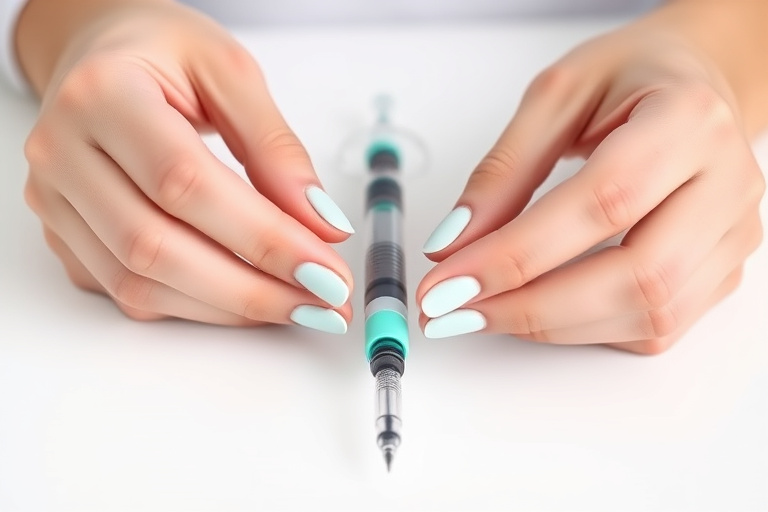
0.3 mL syringe (30 units maximum): Best for small doses. Each marking typically represents 0.5 or 1 unit. This gives you the most precise measurements for peptide doses under 30 units. If your calculated dose is 5-15 units, this syringe offers the clearest readings.
0.5 mL syringe (50 units maximum): A good middle ground. Each marking typically represents 1 unit. Works well for doses between 10 and 50 units.
Free Download: Universal Peptide Dose Conversion Table A quick-reference card showing units-to-mL conversions, common peptide doses by syringe size, and tips for reading your syringe accurately. Get yours free (we'll email it to you instantly.
[Download CTA Button]
1 mL syringe (100 units maximum): Best for larger injection volumes. Each marking represents 1 or 2 units depending on the manufacturer. Use this for doses above 50 units or when your reconstitution calculator results in larger volumes.
How to choose: Match your syringe size to your typical dose volume. If your dose is 10 units, a 0.3 mL syringe gives you the best accuracy. If your dose is 75 units, you need a 1 mL syringe.
Your pharmacy typically provides the appropriate syringe size with your prescription. If you feel the syringe markings are hard to read for your specific dose, ask about a different size.
How to Read Syringe Markings Accurately
Reading a syringe correctly takes a bit of practice. Here's how to do it right.
Check your GLP-1 eligibility
Use our free BMI Calculator to see if you may qualify for provider-reviewed GLP-1 therapy.
Try the BMI Calculator →Hold the syringe at eye level. Looking down or up at the syringe creates an angle that can make you misread the marking by 1-2 units.
Read the flat surface of the liquid. The liquid in a syringe forms a slight curve called a meniscus. The edges curve up slightly. Read the measurement at the flat bottom of the curve, not the raised edges.
Count the lines. Before drawing your dose, count the individual lines between the numbered markings. This tells you what each small line represents. On a 0.3 mL syringe, each line might be 0.5 units. On a 1 mL syringe, each line might be 2 units.
Draw past your target, then push back. Some people find it easier to draw slightly past their target dose, then gently push the plunger forward to the exact marking. This can give you finer control.
If syringe reading feels challenging, the includes visual dose guides and logging features that help you confirm you've drawn the right amount.
When Units Don't Equal What You Think
Here's where things can get confusing for people new to injectable medications.
If your provider says "take 250 mcg of BPC-157," that's a medication dose) not a syringe volume. You need to convert that medication dose into syringe units based on your solution's concentration.
Scenario: You have a 5 mg BPC-157 vial reconstituted with 2 mL of bacteriostatic water. Your prescribed dose is 250 mcg.
- Concentration: 5 mg / 2 mL = 2.5 mg/mL = 2,500 mcg/mL
- Dose volume: 250 mcg / 2,500 mcg/mL = 0.1 mL = 10 units
In this case, 10 units on your syringe contains 250 mcg of BPC-157. But if you reconstituted with a different amount of water, 10 units would contain a different dose.
This is why reconstitution calculators exist. The handles this conversion so you don't have to do it manually each time.
For GLP-1 medications like compounded semaglutide, the same principle applies. Your vial has a specific concentration. Your dose in mg translates to a specific number of syringe units based on that concentration. Check our for more details.
Frequently Asked Questions
Are all insulin syringes U-100?
In the US, U-100 is the standard. But U-40 and U-50 syringes exist for veterinary use and in some other countries. Always verify your syringe says "U-100" before using it for peptide or GLP-1 injections. Using a U-40 syringe with U-100 calculations would result in a significantly incorrect dose.
Can I reuse an insulin syringe?
No. Insulin syringes are single-use devices. Reusing them increases the risk of infection and can cause injection discomfort because the needle tip dulls after one use. Always use a fresh syringe for each injection.
What's the difference between an insulin syringe and a regular syringe?
Insulin syringes have permanently attached, very fine needles (typically 29-31 gauge) designed for subcutaneous injection. They're marked in units rather than mL (though the conversion is straightforward). Regular syringes have detachable needles and are marked in mL. For most peptide and GLP-1 protocols, insulin syringes are preferred.
My syringe markings are hard to read. What can I do?
Try a smaller syringe with larger markings relative to your dose. Use good lighting and hold the syringe at eye level. Some people use a magnifying glass. If vision is a concern, ask your provider about switching to a pre-filled formulation or a different concentration that results in easier-to-read volumes.
Start your treatment Today
Every transformation starts with a single step. Talk to a licensed FormBlends provider about whether this approach is right for you, consultations are free and confidential.
Medical References
- Davies M, Færch L, Jeppesen OK, et al. Semaglutide 2.4 mg once a week in adults with overweight or obesity, and type 2 diabetes (STEP 2). Lancet. 2021;397(10278):971-984. [PubMed | ClinicalTrials.gov | DOI]
- Wadden TA, Bailey TS, Billings LK, et al. Effect of Subcutaneous Semaglutide vs Placebo as an Adjunct to Intensive Behavioral Therapy on Body Weight in Adults With Overweight or Obesity (STEP 3). JAMA. 2021;325(14):1403-1413. [PubMed | ClinicalTrials.gov | DOI]
- Garvey WT, Batterham RL, Bhatt DL, et al. Two-year effects of semaglutide in adults with overweight or obesity (STEP 5). Nat Med. 2022;28(10):2083-2091. [PubMed | ClinicalTrials.gov | DOI]
Sources &. References
- Stierman B, Afful J, Carroll MD, et al. National Health and Nutrition Examination Survey 2017-March 2020 Prepandemic Data Files. NCHS Data Brief. No. 492. CDC/NCHS. 2023.
- Sumithran P, Prendergast LA, Delbridge E, et al. Long-Term Persistence of Hormonal Adaptations to Weight Loss. N Engl J Med. 2011;365(17):1597-1604. Doi:10.1056/NEJMoa1105816
- Wilding JPH, Batterham RL, Calanna S, et al. Once-Weekly Semaglutide in Adults with Overweight or Obesity. N Engl J Med. 2021;384(11):989-1002. Doi:10.1056/NEJMoa2032183
- Davies M, Færch L, Jeppesen OK, et al. Semaglutide 2.4 mg once a week in adults with overweight or obesity, and type 2 diabetes (STEP 2 (Davies et al., Lancet, 2021)). Lancet. 2021;397(10278):971-984. Doi:10.1016/S0140-6736(21)00213-0
- Wadden TA, Bailey TS, Billings LK, et al. Effect of Subcutaneous Semaglutide vs Placebo as an Adjunct to Intensive Behavioral Therapy on Body Weight in Adults With Overweight or Obesity (STEP 3 (Wadden et al., JAMA, 2021)). JAMA. 2021;325(14):1403-1413. Doi:10.1001/jama.2021.1831
- Garvey WT, Batterham RL, Bhatt DL, et al. Two-Year Effects of Semaglutide in Adults with Overweight or Obesity (STEP 5 (Garvey et al., Nat Med, 2022)). Nat Med. 2022;28:2083-2091. Doi:10.1038/s41591-022-02026-4
- Lincoff AM, Brown-Frandsen K, Colhoun HM, et al. Semaglutide and Cardiovascular Outcomes in Obesity without Diabetes. N Engl J Med. 2023;389(24):2221-2232. Doi:10.1056/NEJMoa2307563
This content is provided for informational and educational purposes only. It isn't a substitute for professional medical advice, diagnosis, or treatment. Always seek the advice of a licensed healthcare provider with any questions about a medical condition or treatment plan.
Last updated: 2026-03-24
See your options in about 2 minutes
Take the free quiz and see what fits you. Quick, private, and no commitment to continue.
See my options →