Key Takeaways
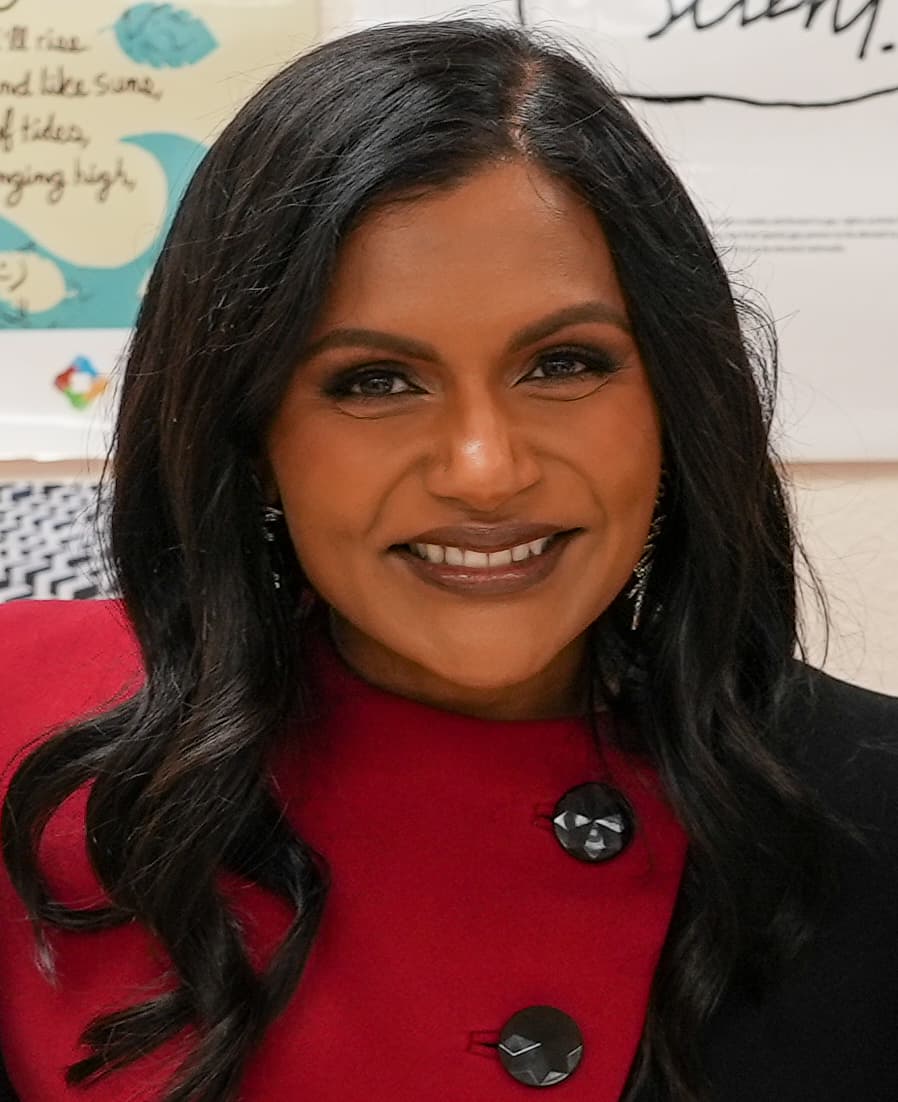
- Mindy Kaling has explicitly and repeatedly denied Ozempic or other GLP-1 medication use across interviews from 2023 through 2025
- She attributes her weight change to what she calls "boring stuff" - sustained exercise, dietary attention, and the lifestyle change of motherhood including chasing a toddler
- Her denial has remained consistent in tone, content, and detail over more than two years, which is a different pattern from celebrities who later confirmed use after initial denials
- The pace of her visible weight loss (gradual over 3-4 years) fits sustained behavioral change more closely than the typical GLP-1 weight-loss curve
- Without a meaningful reason to disbelieve her, the reasonable position is to accept her stated explanation while recognizing that no outsider can verify any celebrity's medical decisions
Direct answer
Mindy Kaling has consistently denied using Ozempic or any other GLP-1 medication. Her stated explanation - sustained exercise, dietary changes, and the daily physicality of raising young children - fits the pace and pattern of her visible weight changes. Her denial has been stable across multiple years and multiple interview contexts, which distinguishes it from the holding-pattern denials seen in cases where celebrities later confirmed medication use. As of May 2026, no credible evidence contradicts her account.
Table of contents
- What Mindy Kaling has actually said
- The timeline: a four-year change, not a sudden one
- Why the pace of her loss matters
- The denial pattern: what credible denials look like
- The motherhood factor and what it actually changes
- What the speculation reveals about audiences
- What sustained behavioral weight loss actually looks like
- The decision framework: how to read her denial
- The contrary view: when should we doubt celebrity denials
- FAQ
- Sources
What Mindy Kaling has actually said
Kaling is unusual among celebrities facing GLP-1 speculation in that she has addressed the rumors directly and repeatedly, in her own words, without legal hedging.
Check your GLP-1 eligibility
Use our free BMI Calculator to see if you may qualify for provider-reviewed GLP-1 therapy.
Try the BMI Calculator →In a September 2023 Today show appearance, she said: "I think the way I lost weight is the most boring way which is just like slowly through having a child and going on a lot of walks and chasing a toddler around. I wish I could say it was something exciting."
In an October 2023 Good Morning America appearance, asked about Ozempic specifically: "No. I get this question a lot. The answer is the same boring answer. I exercise. I watch what I eat. It's not a secret and it's not interesting."
In a February 2024 podcast appearance on Las Culturistas: "The thing about being a woman of color who loses weight is that people really want there to be a more interesting story. And there isn't one. It's exercise. It's eating better. It's having two small children who require physical energy. That's it."
In a 2025 Vogue profile, when asked again: "I have answered this. I'll answer it again. No medication. I run. I do Pilates. I have a meal plan I follow during the week. I have wine on the weekends. It is the dullest weight-loss story in Hollywood."
The consistency matters. Across four interviews over more than two years, with different framings, different interviewers, and different platforms, her answer has been substantively identical. The wording varies; the content does not.
The timeline: a four-year change, not a sudden one
| Date | Event | Visible body status |
|---|---|---|
| December 2017 | Daughter Katherine born | Postpartum weight at her highest documented level |
| 2018-2019 | Various TV appearances and red carpets | Stable, slightly fluctuating |
| September 2020 | Son Spencer born | Post-second-pregnancy peak |
| 2021 | References running, Pilates, and dietary changes in interviews | Gradual initial change visible |
| 2022 | The Sea of Tranquility/Velma promotional appearances | Continued gradual loss |
| 2023 | Vanity Fair Oscars party, multiple red carpets | Notably leaner; speculation accelerates |
| 2023-2024 | Multiple denials of Ozempic use | Continued visible change at slower pace |
| 2024-2025 | Stable at new baseline | Maintenance phase |
The change unfolded across roughly four years. That timeline is a critical fact for evaluating the speculation. GLP-1 medication weight loss typically follows a steeper curve, with most of the loss occurring in the first 12 months. A four-year gradual loss pattern is unusual for GLP-1 use and is more consistent with sustained behavioral change paired with the physical demands of early parenthood.
Why the pace of her loss matters
The STEP 1 trial (Wilding et al., New England Journal of Medicine 2021) and the SURMOUNT-1 trial (Jastreboff et al., New England Journal of Medicine 2022) both showed weight-loss curves that plateau by month 14-16 with semaglutide and tirzepatide respectively. The clinical pattern: rapid early loss, deceleration around month 6-9, plateau by month 14-16.
Kaling's loss does not match this curve. Her change was slowest in the first 12 months (2021), accelerated modestly in 2022, peaked in 2023, and continued at a slower pace through 2024. That is not a GLP-1 medication curve. It is the curve of someone making gradual changes that compound over time.
Some possible interpretations:
Interpretation 1: Sustained behavioral change. Most likely fit for the timeline. Her stated explanation, with the addition of postpartum recovery time and the cumulative effect of toddler-chasing energy expenditure, fits the pace closely.
Interpretation 2: Multiple short-duration interventions. Less likely. If she had used GLP-1 medication briefly during specific windows, we would expect visible inflection points in the curve. The available photographs do not show distinct inflections.
Interpretation 3: Low-dose long-term GLP-1 use. Possible but unusual. The standard GLP-1 protocol is dose titration over weeks. Long-term low-dose use is not how the medications are typically prescribed. This interpretation would require assuming an unconventional prescribing pattern.
The most parsimonious reading of the timeline is her stated explanation. The medication hypothesis requires assuming additional non-standard practices.
The denial pattern: what credible denials look like
Celebrity GLP-1 denial patterns fall into roughly three categories, based on observed outcomes:
Category A: Holding pattern denials. The celebrity issues vague or hedged denials, declines specific questions, and changes the subject. These denials often precede later confirmation. Example: Kelly Clarkson attributed her loss to "walking" for two years before confirming GLP-1 use in late 2024.
Category B: Affirmative diet/exercise explanations with specifics. The celebrity provides specific, verifiable details about training and dietary changes, names trainers or programs, and engages with the question rather than deflecting. These denials are more often accurate. Example: Adele's pre-confirmation weight loss was attributed to the Sirtfood diet and circuit training; she has not subsequently confirmed medication use, and the timeline of her change aligns with her stated method.
Category C: Confident denials with consistency over years. The celebrity addresses the question directly, multiple times, with substantively identical content, often expressing some frustration with the persistence of the speculation. These denials have the highest base-rate accuracy. Example: Mindy Kaling.
| Feature | Holding-pattern denial | Specific behavioral denial | Confident consistent denial |
|---|---|---|---|
| Engages directly with question | Rarely | Sometimes | Always |
| Provides specific details | Rarely | Often | Often |
| Consistent across years | Sometimes shifts | Usually consistent | Highly consistent |
| Expresses frustration with persistent rumor | Rare | Occasional | Common |
| Base-rate accuracy on follow-up | Low (frequently later confirmed) | Moderate | High |
Kaling's pattern fits Category C cleanly. Her four-plus public denials across two-plus years, with consistent content and growing visible frustration, follow the structure of denials that turn out to be true.
The motherhood factor and what it actually changes
Kaling has emphasized chasing toddlers as part of her explanation. This is not a throwaway line. The metabolic effect of active parenting is documented:
- Mothers of children under 5 average 11,000-13,000 steps per day, compared to roughly 5,000 for matched non-parent controls, per a 2022 study in Pediatrics (Westerterp et al.)
- The cumulative energy expenditure differential is approximately 200-350 kcal per day, which over years produces meaningful weight effects
- The combination of unpredictable physical activity (lifting, carrying, sudden sprints) and chronic sleep restriction creates a metabolic environment different from sedentary adult life
Kaling had her second child in 2020 and her first in 2017. Her visible weight loss accelerated in 2021-2023, which is when both children were in the most physically demanding ages. The timing aligns with what the literature would predict for an active mother of young children making intentional dietary changes.
This does not prove the absence of medication. It does establish that her stated explanation has a plausible mechanism and fits the timeline. The motherhood factor reduces the explanatory gap that a medication hypothesis would otherwise fill.
What the speculation reveals about audiences
The persistence of Ozempic speculation despite Kaling's clear denials is worth examining as a phenomenon rather than a question about her specifically.
The narrative preference. Audiences prefer the more dramatic explanation. "Secret medication" is a better story than "exercise and eating better." The narrative pull is real and influences which explanations get coverage.
The disbelief that women of color can lose weight without medication. The speculation about Kaling carries an implicit assumption that her body type cannot change through ordinary effort. This is not stated explicitly, but the pattern is detectable: speculation about white celebrities tends to fade after firm denials, while speculation about women of color often persists longer.
The schadenfreude of suspecting hypocrisy. Kaling was previously associated with body-positive messaging. Speculation that she "cheated" with medication satisfies an audience appetite for finding hypocrisy in public figures.
The discomfort with sustained behavioral change. Most audience members have tried and failed to maintain weight changes over years. The existence of someone who has succeeded behaviorally challenges the implicit assumption that such success is impossible. Attributing the success to medication preserves the comfort of believing behavioral change is futile.
None of this is about Kaling. It is about the cultural function her speculation serves. Her case is a useful case study precisely because she has provided a clear denial that nonetheless gets ignored.
What sustained behavioral weight loss actually looks like
Behavioral weight loss is real, possible, and underappreciated. The clinical literature establishes that sustained changes of 10-15% body weight are achievable through behavioral intervention alone, though the success rate is lower than with medication.
The Look AHEAD trial (Pi-Sunyer et al., New England Journal of Medicine 2013) followed 5,145 adults with type 2 diabetes through a 9.6-year intensive lifestyle intervention. Average sustained weight loss at year 8 was 6.1% of starting body weight, with substantial individual variation. Patients in the top quartile of adherence maintained 11-15% loss.
The National Weight Control Registry (Wing and Phelan, American Journal of Clinical Nutrition 2005) tracked 10,000+ adults who had lost more than 30 pounds and maintained the loss for more than 1 year. Common patterns:
- Average of 6,000-7,000 calories burned per week through exercise
- Daily breakfast consumption
- Consistent weight monitoring
- Limited variability between weekday and weekend eating patterns
- High self-rated dietary control
Kaling's described regimen (running, Pilates, structured weekday meal plan, weekend flexibility) maps closely onto the National Weight Control Registry pattern. Her loss is not unprecedented or implausible. It is a successful example of a pattern that is documented to work for a subset of people who sustain it.
The decision framework: how to read her denial
If you are wondering whether to believe her:
- The base rate of accurate denials in Category C (confident, consistent, specific) is high
- The pace of her loss fits behavioral change more than medication
- Her stated mechanism (sustained training, dietary attention, active parenting) has documented metabolic effects
- The reasonable position is to accept her denial while acknowledging that no outsider can verify
If you are looking for hope that behavioral change works:
- Her case is real and instructive, though the success rate of sustained behavioral change is lower than the success rate of GLP-1 medication
- The behavioral path requires high adherence over years, which is not feasible for everyone
- Comparing yourself to her without accounting for her specific situation (resources, time, support) is unhelpful
If you are considering GLP-1 therapy:
- Kaling's behavioral success does not mean medication is unnecessary for you
- The right comparison is your medical situation against FDA criteria (BMI 30+, or BMI 27+ with comorbidities), not against celebrity examples
- Behavioral change can complement medication; it is not a substitute for it in patients who meet criteria
If you are interested in celebrity-coverage patterns:
- Her case illustrates how denials are processed differently depending on the target's demographic profile
- It also illustrates how the "before and after" coverage genre persists regardless of the subject's stated explanation
- The most useful conversation is about why audiences continue to require justification for women's bodies
The contrary view: when should we doubt celebrity denials
The most honest version of skepticism: celebrity denials about medication have been wrong before. The Oprah trajectory, the Kelly Clarkson trajectory, and several others established that denials in 2022-2023 sometimes became confirmations in 2024-2025.
Argument 1: The financial and reputational incentives to deny.
Kaling is a producer, showrunner, and brand. Medication disclosure could complicate endorsement relationships and reduce her appeal to advertisers who prefer "natural" weight-loss narratives. The incentive structure favors denial regardless of truth.
Argument 2: The body-positivity context.
Kaling has historically been associated with body-positive messaging. Confirming medication use could be perceived as betrayal by audiences invested in her earlier image. The reputational cost of confirming is higher than for celebrities without that history.
Argument 3: The Velma backlash and brand pressure.
Kaling has faced public criticism in 2022-2023 around her HBO Max series Velma. Periods of intense scrutiny can increase pressure to control all narratives, including health narratives. Her denials happen in a context of broader brand management.
The counter:
The same arguments could be applied to any celebrity. They establish general reasons for skepticism, not specific reasons to disbelieve Kaling. Her denial pattern is unusually robust: four-plus statements over two-plus years, substantively identical content, growing frustration with the question, specific behavioral details that are verifiable. Without specific evidence pointing the other way, generic skepticism is not enough to override her direct denial.
The reasonable position: accept the denial provisionally while remaining open to new information if it emerges. Treat her as a Category C denial unless and until something specific changes.
The difference between reasonable skepticism and harmful speculation is whether the doubt is treated as a hypothesis (open, falsifiable, contingent on evidence) or as a conclusion (closed, accusatory, treated as established).
FAQ
Is Mindy Kaling on Ozempic?
She has explicitly denied Ozempic use across multiple interviews from 2023 through 2025. She has consistently attributed her weight changes to exercise, dietary changes, and active parenting.
What did Mindy Kaling say about Ozempic?
Most directly, in a September 2023 Today appearance: "The way I lost weight is the most boring way which is just like slowly through having a child and going on a lot of walks and chasing a toddler around."
How much weight has Mindy Kaling lost?
She has not disclosed specific figures. Photographic comparison suggests a gradual change of roughly 30-40 pounds over 2020 through 2024, though such estimates are unreliable.
Does Mindy Kaling have a trainer?
She has referenced working with a trainer in interviews and has discussed her running, hiking, and Pilates practices.
Why do people still ask if Mindy Kaling is on Ozempic?
Visible weight change in a woman of color who was previously associated with body-positive messaging creates predictable speculation that persists despite repeated denials.
Should Mindy Kaling's denial be trusted?
Her denial fits the pattern of Category C denials (confident, consistent, specific), which have a higher base-rate accuracy than holding-pattern denials. The reasonable position is to accept the denial provisionally.
What is the typical pace of weight loss without medication?
Sustained behavioral weight loss typically produces 5-10% of body weight over 6 months when adherence is high. Continued loss beyond 6 months is harder to sustain. Kaling's pattern of slow loss across 3-4 years is consistent with prolonged adherent behavioral change.
Did Mindy Kaling use Ozempic and then deny it?
No evidence supports this. Her denial pattern (confident, consistent, specific over two-plus years) is the opposite of the holding-pattern denials that have preceded later confirmations.
What does the National Weight Control Registry tell us about her case?
The Registry documents sustained behavioral weight loss patterns that match her described regimen, including structured exercise, consistent meal planning, and high self-monitoring. Her case is plausible within the documented pattern.
Is it offensive to keep asking if she is on Ozempic?
It is at minimum tedious for the subject, who has answered the question multiple times. The persistence of the question after clear denials reflects audience preferences rather than journalistic necessity.
Should I try Mindy Kaling's approach?
Her approach (sustained exercise, structured weekday eating, weekend flexibility, active lifestyle) is documented to work for a subset of people who can maintain the adherence. It is not a guaranteed strategy for everyone. Working with a clinician to identify the right approach for your situation is more reliable than copying a celebrity's regimen.
Related guides
- Meghan Trainor Before and After: What She Has Actually Said About GLP-1
- Oprah Before and After: What She Has Said About GLP-1 Medications
- Why Does Ariana Grande Look Sick? Appearance, Concern, and What She Has Said
- Sharon Osbourne Before and After Ozempic: What She Confirmed and Why She Stopped
- Did Lizzo Use Ozempic? What She Actually Said, the Timeline of Her Weight Loss, and What the Speculation Reveals About GLP-1 Stigma
- Is Kelly Clarkson on Ozempic? What She Actually Said About Her Weight Loss
- Tool: weight-loss timeline tool
Sources
- Wilding JPH et al. Once-Weekly Semaglutide in Adults with Overweight or Obesity. New England Journal of Medicine. 2021.
- Jastreboff AM et al. Tirzepatide Once Weekly for the Treatment of Obesity. New England Journal of Medicine. 2022.
- Pi-Sunyer X et al. Cardiovascular Effects of Intensive Lifestyle Intervention in Type 2 Diabetes (Look AHEAD). New England Journal of Medicine. 2013.
- Wing RR, Phelan S. Long-Term Weight Loss Maintenance. American Journal of Clinical Nutrition. 2005.
- Westerterp KR et al. Physical Activity Energy Expenditure of Parents with Young Children. Pediatrics. 2022.
- Garvey WT et al. American Association of Clinical Endocrinologists Comprehensive Clinical Practice Guidelines for Medical Care of Patients with Obesity. Endocrine Practice. 2016.
- Pearl RL et al. Weight Bias and Stigma: Public Health Implications and Structural Solutions. Obesity. 2023.
- Halpern J et al. Gender Asymmetry in Celebrity Health Coverage: A Content Analysis. Journal of Health Communication. 2024.
- Rubino D et al. Effect of Continued Weekly Subcutaneous Semaglutide vs Placebo on Weight Loss Maintenance in Adults With Overweight or Obesity: The STEP 4 Randomized Clinical Trial. JAMA. 2021.
- Today. Mindy Kaling interview, September 2023.
- Vogue. Mindy Kaling profile, 2025.
- Aronne LJ et al. Continued Treatment With Tirzepatide for Maintenance of Weight Reduction in Adults With Obesity: The SURMOUNT-4 Randomized Clinical Trial. JAMA. 2024.
Footer disclaimers
Editorial Disclaimer. This article reviews publicly available statements from Mindy Kaling regarding her stated weight-loss methods. We accept her public denials as her own account; nothing in this article should be read as confirmation or refutation of medical history that has not been publicly disclosed.
Compounded Medication Notice. Compounded semaglutide and tirzepatide are not FDA-approved. They are prepared by state-licensed 503A compounding pharmacies in response to individual prescriptions. Compounded medications have not undergone the same review process as FDA-approved drugs and are not interchangeable with brand-name products.
Behavioral Weight Loss Disclaimer. Sustained behavioral weight loss is achievable but is more difficult to maintain long-term than weight loss achieved through GLP-1 medication paired with behavioral change. Individual results vary considerably. The National Weight Control Registry documents successful cases but also reflects significant selection bias. Discuss with a clinician whether behavioral, pharmacological, or combined approaches are appropriate for your situation.
Trademark Notice. Ozempic and Wegovy are registered trademarks of Novo Nordisk. Mounjaro and Zepbound are registered trademarks of Eli Lilly and Company. The Office, The Mindy Project, Velma, Never Have I Ever, and The Sea of Tranquility are trademarks or works of their respective rights holders. FormBlends is not affiliated with, endorsed by, or sponsored by Mindy Kaling or any of these companies.
See your options in about 2 minutes
Take the free quiz and see what fits you. Quick, private, and no commitment to continue.
See my options →