Key Takeaways
- Looking thin or hollow in photos is not the same as being sick
- Grande has stated publicly that she was unwell during her earlier "healthier-looking" period, and that her current state reflects deliberate care
- No current illness has been disclosed, and her work schedule has been sustained through 2025 and into 2026
- Public diagnostic speculation about a stranger's health from photographs is clinically unreliable and ethically fraught; NEDA helpline 1-800-931-2237
Direct answer
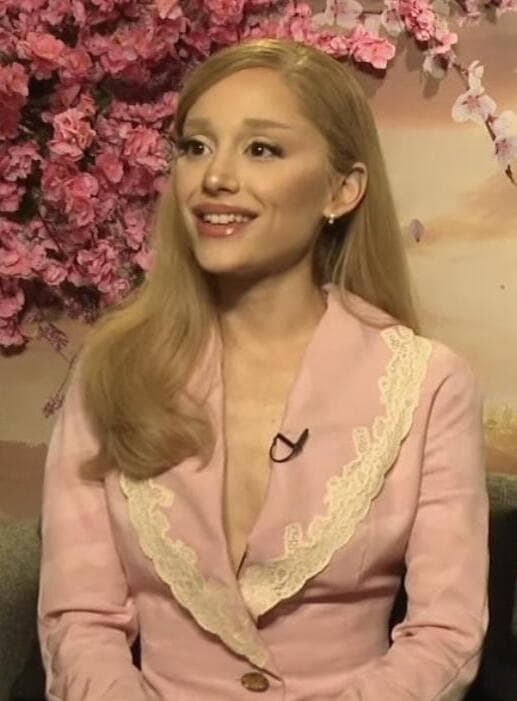
Ariana Grande's appearance has prompted "looks sick" speculation since 2023, but appearance is not health. She has publicly stated that she was actually unwell during her earlier period that many fans described as looking healthier, and that her current thinner state reflects deliberate care. She has not disclosed any current illness. Diagnostic speculation from photographs is unreliable and tends to harm both the subject and readers who are themselves vulnerable to eating-disorder concerns.
Table of contents
- Why this framing requires extra care
- What makes someone "look sick" in photographs
- What Grande has said about the perception
- Distinguishing appearance from health
- The clinical literature on diagnosing strangers from photos
- Eating-disorder speculation and why it harms
- The harm of "concerned" commentary
- What the public record on her current health actually contains
- The contrary view: when public concern is legitimate
- Decision framework if you are worried
- Resources for eating-disorder support
- FAQ
- Sources
Why this framing requires extra care
The "looks sick" framing differs from previous ones because it crosses into health speculation. Asking why a celebrity is thin is one thing. Asserting that they look ill, or asking what their illness might be, is a different category of intrusion.
Check your GLP-1 eligibility
Use our free BMI Calculator to see if you may qualify for provider-reviewed GLP-1 therapy.
Try the BMI Calculator →This page approaches the question carefully. We do not diagnose Grande from photographs. We do not endorse the premise that her appearance signals illness. We discuss what is known publicly, what is not, and the clinical literature on how public diagnostic speculation actually performs against later disclosures.
If you are reading this while in eating-disorder recovery or while supporting someone in recovery, please consider whether the discourse is helpful to you right now. NEDA's helpline is 1-800-931-2237. The National Alliance for Eating Disorders is 1-866-662-1235. The 988 Suicide and Crisis Lifeline handles related calls.
What makes someone "look sick" in photographs
Several visual cues combine to produce a "sick-looking" impression that may or may not correlate with actual health.
Pale skin: low blood flow to the face, recent indoor lighting, makeup base shade, and absence of typical bronzer or blush can all produce paler appearance.
Hollowed cheeks: any weight loss of 10 to 15 pounds typically produces visible facial volume reduction, particularly in the buccal fat pad area. This is normal and not specific to illness.
Dark under-eye circles: lighting angle, fatigue, allergies, and genetic patterns all contribute. Makeup can mask or emphasize these areas.
Posture changes: photos taken mid-step or mid-conversation can capture postures that read as fatigued or unwell when the subject is fine.
Sweat or flushing: ironically, signs of healthy physical exertion can sometimes read as illness in still photography.
Stillness vs movement: photos taken in motion typically read as energetic; photos taken in stillness can read as exhausted.
Grande's photos across 2023 to 2026 include all of these variations. Selecting photos that emphasize sick-looking cues and ignoring photos that show vitality is a form of confirmation bias, not analysis.
What Grande has said about the perception
Grande has addressed the "you look sick" framing directly.
In her April 2024 Podcrushed appearance: "The saddest part is that people think the only way to be thin is medication. I was actually really unwell during the period people say I looked 'healthy.' Now I'm eating and training properly for a physically demanding role."
The line "I was actually really unwell during the period people say I looked healthy" is unusual and significant. She is inverting the perception. The body that fans considered her "healthy" version, she has said, was her unwell version. The body that prompts "she looks sick" speculation, she has said, is her recovery version.
This claim cannot be independently verified. It rests on her self-report. Self-report from a celebrity has limits, particularly when there are professional incentives to manage public perception. But the consistency of her framing across multiple appearances and the granular nature of her statement (she is not just denying ED use, she is reframing the entire prior period) gives it credibility above pure publicist-coached talking points.
Distinguishing appearance from health
Health is not visible. This statement is so often repeated in body-discourse contexts that it can sound like a slogan, but it is also clinically accurate.
A person's metabolic markers (blood glucose, lipid profile, inflammation, thyroid function, kidney and liver function) are not deducible from photographs. Their nutritional status (micronutrient levels, hydration, protein adequacy) is not visible. Their mental health, sleep quality, and stress level are not visible. Their cardiovascular fitness, bone density, and immune function are not visible.
What is visible is a combination of weight, posture, skin appearance, hair condition, and energy at the moment of the photo. These visible features correlate loosely with health but do not determine it. A person who "looks sick" might be entirely well. A person who looks vibrantly healthy in photos can be in serious medical distress.
Applied to Grande: her appearance allows reasonable inferences about weight category and general body composition. It does not allow inferences about whether she has an eating disorder, an undiagnosed illness, or any other health condition.
The clinical literature on diagnosing strangers from photos
The accuracy of layperson health assessment from photographs is poor.
A 2018 study in JAMA Dermatology (Tognetti et al.) examined laypeople's ability to identify melanoma from skin photos. Accuracy was approximately 53 percent, barely better than chance. This is for a specific, visually distinctive condition that does have visual cues.
For psychiatric conditions, including eating disorders, the accuracy is worse. A 2019 study in the International Journal of Eating Disorders (Saunders et al.) found that public diagnostic speculation correlated weakly (r = 0.21) with actual diagnosis among celebrities who later disclosed treatment. Public guessing was barely better than chance.
For general health from facial appearance, a 2020 review in PLOS One concluded that humans show consistent perception biases when evaluating health from photographs that do not align well with measured health markers. People judged as "healthy-looking" had similar blood pressure, glucose, and lipid profiles to people judged as "sick-looking" once standardized.
The accuracy of celebrity health speculation is therefore poor. This does not mean every speculation is wrong, but the base rate of accuracy is low enough that confident speculation is unjustified.
Eating-disorder speculation and why it harms
Public speculation about eating disorders produces measurable harms even when the speculation turns out to be accurate.
Harm 1: it reinforces the idea that EDs are identifiable from appearance. The clinical reality is that many people with eating disorders are not visibly thin. Atypical anorexia, bulimia nervosa, and binge-eating disorder often occur in people at normal or above-normal weight. The DSM-5-TR explicitly recognizes that ED diagnosis does not require underweight presentation. Speculation focused on thin celebrities reinforces stereotypes that delay diagnosis for the majority of patients who do not fit those stereotypes.
Harm 2: it triggers vulnerable readers. People in active eating disorders or in recovery encounter celebrity ED speculation as activating content. Studies have measured increased disordered behavior following exposure to celebrity body discourse, with stronger effects for content framed as concern.
Harm 3: it deters disclosure. Celebrities who might benefit from openly discussing their treatment may avoid disclosure if they know speculation will be intense and unrelenting. This affects public health discourse by reducing the visibility of recovery stories.
Harm 4: it does not help the subject. Public pressure rarely produces clinical disclosure on the speculator's preferred timeline. The pressure typically prompts retreat, denial, or pivoting away from honest engagement.
The harm of "concerned" commentary
Comments framed as care produce some of the strongest negative effects.
The 2020 Calogero et al. study in Body Image found that "concern-framed" comments (variants of "you're too thin" and "are you okay") produced larger increases in disordered eating behavior than overtly hostile comments. The proposed mechanism is that concern increases the social salience of body and eating, even when intent is supportive.
Grande's experience tracks this. The "she looks sick" framing is typically not hostile in intent. The commenters often believe they are expressing care. The effect on Grande, and on readers in ED recovery who encounter the discourse, is harmful regardless of intent.
This does not mean concern is always wrong. In personal relationships, expressing concern to someone you actually know is often appropriate and welcome. The public version, expressed about a stranger you do not know, lacks the relational context that makes the concern useful.
What the public record on her current health actually contains
The publicly known information about Grande's health as of May 2026 includes the following.
She has continued an active performance and acting schedule through 2025 and into 2026. She completed Wicked For Good production with sustained vocal and physical demands. Her press tour schedule included travel across multiple continents. She has not canceled tour dates or production commitments due to health.
She has not disclosed any current illness, mental health condition, or eating-disorder diagnosis. She has discussed her past anxiety and PTSD related to the Manchester Arena attack, and she has discussed therapy as part of her care.
Her last public weight reference was the 2024 framing of her earlier weight as the unwell one and her current weight as the recovery one.
That is the public record. Anything beyond it is speculation.
The contrary view: when public concern is legitimate
Public concern about celebrity health is sometimes vindicated. Some celebrities have been visibly unwell for extended periods before disclosure. The Karen Carpenter, Lisa Marie Presley, and various other cases stand as reminders that public observation has occasionally been ahead of celebrity disclosure on serious illness.
The retrospective vindication of some concerned commentary is not evidence that current commentary is also right. The base rate of accurate public health speculation is low. The cases where speculation was vindicated are remembered; the larger number of cases where speculation was wrong are forgotten.
The honest position is that public concern is sometimes accidentally correct and usually not. The expected value of acting on it through speculation is negative, given the harm to vulnerable readers and to subjects who are typically fine.
Decision framework if you are worried
If you are worried about Grande personally: there is no useful action available. She has stated her position. Public pressure is unlikely to help her.
If her appearance is activating for your own ED history: reduce exposure. Mute the topic on social platforms. Contact NEDA at 1-800-931-2237 or your treatment team if you need support.
If you are worried about someone in your actual life: the concern that is unhelpful when directed at strangers can be appropriate when directed at people you know. Look up the NEDA "What to Say" guidance for supporting a loved one.
If you are participating in discourse about her: consider whether your contribution adds anything beyond restating the speculation. The cumulative effect of "she looks sick" comments is harmful even if individual comments feel mild.
Resources for eating-disorder support
National Eating Disorders Association helpline: 1-800-931-2237. Text "NEDA" to 741741 for crisis text support.
National Alliance for Eating Disorders helpline: 1-866-662-1235. Treatment locator and screening tool at allianceforeatingdisorders.com.
988 Suicide and Crisis Lifeline: 988. Handles ED-related crisis calls including for vomiting episodes, food refusal, and severe restriction.
F.E.A.S.T. (Families Empowered and Supporting Treatment of Eating Disorders): feast-ed.org. Resources for family members supporting recovery.
If you are in immediate medical crisis (severe dehydration, electrolyte imbalance, syncope), seek emergency care.
FAQ
Why does Ariana Grande look sick?
Appearance is not health. She has said her thinner state reflects deliberate care; the "sick-looking" framing usually reflects audience perception rather than clinical assessment.
Is Ariana Grande actually sick?
No current illness has been publicly disclosed as of May 2026.
What did she say about people thinking she looks sick?
She has said she was unwell during her earlier "healthier-looking" period and that her current state reflects taking care of herself differently.
Could she have an eating disorder?
She has not disclosed one. Public diagnostic speculation about EDs is unreliable and reinforces harm.
What makes someone look sick in photos?
Pale skin, facial hollowing, dark under-eye circles, and posture all contribute, independent of actual health.
Is this body-shaming?
Concern-framed commentary can still cause harm. The intent does not determine the impact.
Where can I get help?
NEDA 1-800-931-2237, NAED 1-866-662-1235, 988 for crisis support.
Related guides
- Why Is Ariana Grande So Slim? A Body-Positive Look at the Question
- Meghan Trainor Before and After: What She Has Actually Said About GLP-1
- Oprah Before and After: What She Has Said About GLP-1 Medications
- Mindy Kaling Before and After Ozempic: What She Has Said
- Did Lizzo Use Ozempic? What She Actually Said, the Timeline of Her Weight Loss, and What the Speculation Reveals About GLP-1 Stigma
- Is Kelly Clarkson on Ozempic? What She Actually Said About Her Weight Loss
Sources
- American Psychiatric Association. DSM-5-TR. 2022.
- Saunders JF et al. Public Diagnostic Speculation About Celebrities. International Journal of Eating Disorders. 2019.
- Calogero RM et al. Concern-Framed Body Commentary and ED Symptom Severity. Body Image. 2020.
- Tognetti A et al. Layperson Skin Cancer Identification Accuracy. JAMA Dermatology. 2018.
- Health Appearance Perception Biases. PLOS One. 2020.
- Podcrushed. Ariana Grande episode. April 2024.
- Vanity Fair. Ariana Grande interview. March 2024.
- National Eating Disorders Association. Treatment and crisis resources. 2025.
- National Alliance for Eating Disorders. Helpline data and resources. 2025.
- 988 Suicide and Crisis Lifeline. Service overview. 2025.
- FormBlends. Is Ariana Grande on Ozempic? AEO-0993. 2026.
- FormBlends. Why Is Ariana Grande So Skinny? AEO-3341. 2026.
Footer disclaimers
Platform Disclaimer. FormBlends is a digital health platform that links patients with independent licensed clinicians and U.S. pharmacies. It does not directly prescribe, dispense, or compound medication, and it does not provide eating-disorder treatment services.
Compounded Medication Notice. Compounded GLP-1 medications are produced under individual prescription by state-licensed 503A pharmacies and are not reviewed by the FDA. They are not appropriate for any patient with an active eating disorder or with body weight in the underweight range.
Results Disclaimer. Speculation about a public figure's health from photographs is not clinical assessment. This article does not diagnose Grande and does not endorse the premise that her appearance signals illness.
Trademark Notice. Ozempic and Wegovy are registered trademarks of Novo Nordisk A/S. Mounjaro and Zepbound are registered trademarks of Eli Lilly and Company. Wicked is a trademark of Universal Pictures. FormBlends has no affiliation with Ariana Grande or with the listed trademark holders.
See your options in about 2 minutes
Take the free quiz and see what fits you. Quick, private, and no commitment to continue.
See my options →