Key Takeaway
How many doses are in your peptide vial? A peptide vial doses calculator answers this question instantly. Enter your vial size, the amount of water you add, and your prescribed dose per injection. The tool tells you exactly how many injections you can get from a single vial.
How many doses are in your peptide vial? A peptide vial doses calculator answers this question instantly. Enter your vial size, the amount of water you add, and your prescribed dose per injection. The tool tells you exactly how many injections you can get from a single vial.
Key Takeaways: - Learn how to calculate doses per vial - Common Peptide Vial Calculations - Planning Your Reorders
This information helps you plan ahead. You'll know when to reorder, how long each vial lasts, and what your true cost per dose works out to. No more guessing or running out mid-protocol.
How to Calculate Doses Per Vial
The math behind doses per vial is simple. Take the total amount of peptide in your vial (in milligrams) and divide it by your dose per injection (also in milligrams or converted to milligrams).
For example, a 5mg vial of BPC-157 with a 250mcg (0.25mg) dose per injection gives you 20 doses. That's 5mg divided by 0.25mg. If you inject twice daily, the vial lasts 10 days. If you inject once daily, it lasts 20 days.
The water volume you add doesn't change the number of doses. Adding 1mL or 2mL of bacteriostatic water changes the concentration but not the total peptide amount. You just draw a different volume on your syringe for each injection.
Our calculator handles all of this automatically. Enter your three numbers and get your answer along with a calendar showing how many days or weeks your vial will last based on your injection frequency.
"GLP-1 receptor agonists represent the most significant advance in obesity pharmacotherapy in decades. For the first time, we have medications that produce weight loss approaching what was previously only achievable through bariatric surgery.") Dr. Robert Kushner, MD, Northwestern University, speaking at ObesityWeek 2023
For detailed instructions on the reconstitution calculator process itself, visit our or read the .
Free Download: Dose Conversion Table A quick-reference chart showing doses per vial for the most common peptide and vial size combinations. Print it and keep it with your supplies. Get yours free (we'll email it to you instantly.
[Download Now]
Common Peptide Vial Calculations
Here are the most popular peptide and vial combinations with their doses-per-vial breakdown. Use these as a quick reference or verify them with our calculator.
View data table
| Category | Mean Body Weight Loss (%) | Detail |
|---|---|---|
| Tirzepatide | 22 | ~22% body weight at 72 wks |
| Semaglutide | 15 | ~15% body weight at 68 wks |
| Liraglutide | 8 | ~8% body weight at 56 wks |
| Retatrutide | 24 | ~24% in Phase 2 trial |
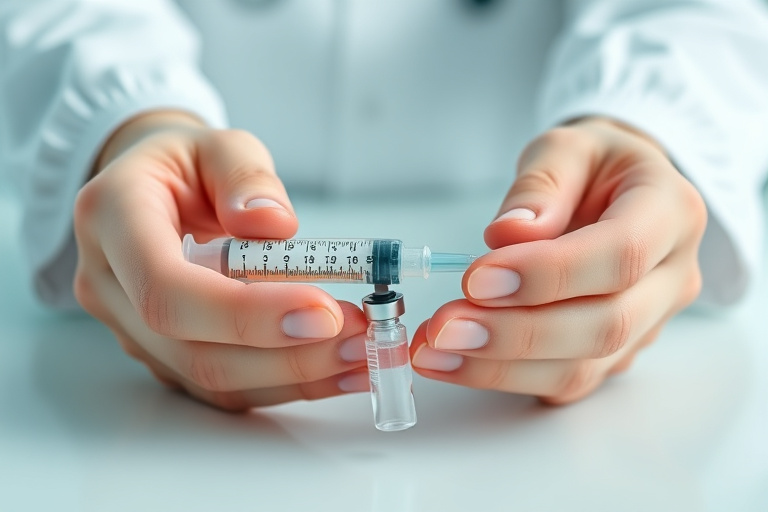
BPC-157 (5mg vial): - At 250mcg per dose: 20 doses per vial - At 500mcg per dose: 10 doses per vial - Twice daily at 250mcg: vial lasts 10 days - Once daily at 250mcg: vial lasts 20 days
TB-500 (5mg vial): - At 2.5mg loading dose: 2 doses per vial - At 750mcg maintenance dose: approximately 6 doses per vial - Loading phase (twice weekly at 2.5mg): vial lasts 1 week - Maintenance phase (once weekly at 750mcg): vial lasts 6 weeks
CJC-1295 (2mg vial): - At 100mcg per dose: 20 doses per vial - At 200mcg per dose: 10 doses per vial - Daily at 100mcg: vial lasts 20 days
Ipamorelin (5mg vial): - At 200mcg per dose: 25 doses per vial - At 300mcg per dose: approximately 16 doses per vial - Twice daily at 200mcg: vial lasts about 12 days
These numbers assume you extract every bit of usable peptide from the vial. In practice, a small amount may remain stuck to the vial walls or lost in the needle dead space. Plan for about 5 to 10 percent less than the theoretical maximum.
For stacking protocols like the , calculate each peptide separately since they come in different vials.
Planning Your Reorders
Running out of peptide mid-protocol disrupts your results. The vial doses calculator helps you plan reorders so you never miss a dose.
Check your GLP-1 eligibility
Use our free BMI Calculator to see if you may qualify for provider-reviewed GLP-1 therapy.
Try the BMI Calculator →Count your remaining doses. If you know how many injections you have taken from a vial, subtract that from the total. The remainder tells you how many doses are left. Some people use a tally on the vial itself.
Factor in shipping time. Most compounding pharmacies ship within 3 to 5 business days. Order your next vial when you have about 7 to 10 days of doses remaining. This gives you a comfortable buffer.
Calculate monthly cost. Knowing your doses per vial lets you figure out your true monthly cost. If a 5mg BPC-157 vial costs $50 and gives you 20 doses at your prescribed level, each dose costs $2.50. At twice daily dosing, that's $5 per day or about $150 per month.
Consider buying in bulk. Some pharmacies offer discounts for multi-vial orders. If your protocol runs 8 to 12 weeks, calculate the total number of vials you need upfront. This can save money and prevent gaps in your protocol.
Track your vial usage and injection schedule with the . The app logs every dose and can remind you when it's time to reorder based on your remaining supply.
Frequently Asked Questions
Does adding more water change the number of doses in my vial?
No. The total amount of peptide in the vial stays the same regardless of how much bacteriostatic water you add. More water means a more dilute solution, so you draw more units per dose. Fewer water means more concentrated, so you draw fewer units. The dose count stays identical.
How long does a reconstituted peptide vial last before it expires?
Most reconstituted peptides remain stable for 4 to 6 weeks when stored in the refrigerator at 36 to 46 degrees Fahrenheit. Use bacteriostatic water (not plain sterile water) to maximize shelf life. If your dosing schedule means the vial lasts longer than 6 weeks, consider using a smaller vial size.
Why am I getting fewer doses than expected from my vial?
A small amount of peptide is lost in the needle dead space with each injection and some remains on the vial walls. This typically amounts to 5 to 10 percent loss. Using low dead space syringes can minimize this. Also ensure you're drawing the correct number of units per our .
Can I use the last bit of peptide in a nearly empty vial?
Yes, as long as you can accurately measure your dose. If the remaining volume is too small to draw a full dose, it's better to discard it and start a fresh vial. An inaccurate partial dose is worse than skipping one injection.
Ready to Take the Next Step?
Your treatment plan is personal) and you deserve a plan that fits. FormBlends connects you with licensed providers who can evaluate your needs and create a personalized protocol.
Medical References
- Davies M, Færch L, Jeppesen OK, et al. Semaglutide 2.4 mg once a week in adults with overweight or obesity, and type 2 diabetes (STEP 2). Lancet. 2021;397(10278):971-984. [PubMed | ClinicalTrials.gov | DOI]
- Wadden TA, Bailey TS, Billings LK, et al. Effect of Subcutaneous Semaglutide vs Placebo as an Adjunct to Intensive Behavioral Therapy on Body Weight in Adults With Overweight or Obesity (STEP 3). JAMA. 2021;325(14):1403-1413. [PubMed | ClinicalTrials.gov | DOI]
- Garvey WT, Batterham RL, Bhatt DL, et al. Two-year effects of semaglutide in adults with overweight or obesity (STEP 5). Nat Med. 2022;28(10):2083-2091. [PubMed | ClinicalTrials.gov | DOI]
Sources &. References
- Stierman B, Afful J, Carroll MD, et al. National Health and Nutrition Examination Survey 2017-March 2020 Prepandemic Data Files. NCHS Data Brief. No. 492. CDC/NCHS. 2023.
- Sumithran P, Prendergast LA, Delbridge E, et al. Long-Term Persistence of Hormonal Adaptations to Weight Loss. N Engl J Med. 2011;365(17):1597-1604. Doi:10.1056/NEJMoa1105816
- Wilding JPH, Batterham RL, Calanna S, et al. Once-Weekly Semaglutide in Adults with Overweight or Obesity. N Engl J Med. 2021;384(11):989-1002. Doi:10.1056/NEJMoa2032183
- Davies M, Færch L, Jeppesen OK, et al. Semaglutide 2.4 mg once a week in adults with overweight or obesity, and type 2 diabetes (STEP 2 (Davies et al., Lancet, 2021)). Lancet. 2021;397(10278):971-984. Doi:10.1016/S0140-6736(21)00213-0
- Wadden TA, Bailey TS, Billings LK, et al. Effect of Subcutaneous Semaglutide vs Placebo as an Adjunct to Intensive Behavioral Therapy on Body Weight in Adults With Overweight or Obesity (STEP 3 (Wadden et al., JAMA, 2021)). JAMA. 2021;325(14):1403-1413. Doi:10.1001/jama.2021.1831
- Garvey WT, Batterham RL, Bhatt DL, et al. Two-Year Effects of Semaglutide in Adults with Overweight or Obesity (STEP 5 (Garvey et al., Nat Med, 2022)). Nat Med. 2022;28:2083-2091. Doi:10.1038/s41591-022-02026-4
- Lincoff AM, Brown-Frandsen K, Colhoun HM, et al. Semaglutide and Cardiovascular Outcomes in Obesity without Diabetes. N Engl J Med. 2023;389(24):2221-2232. Doi:10.1056/NEJMoa2307563
The information in this article is intended for educational use only and shouldn't be considered medical advice. Consult a qualified healthcare provider before making any changes to your medication or supplement regimen. FormBlends helps with connections with licensed providers for personalized medical guidance.
Last updated: 2026-03-24
See your options in about 2 minutes
Take the free quiz and see what fits you. Quick, private, and no commitment to continue.
See my options →