Key Takeaways
- The Wicked cast's visible thinness reflects production-side factors as much as individual choices: choreography, costume design, shoot duration, and shared infrastructure
- The 18-month back-to-back shoot for both Wicked films produced sustained training and dietary structure across the cast
- Costume design (corsetry, tight silhouettes) emphasizes thinness in a way that other costume choices would not
- Shared trainers and dietitians across cast members produce parallel results, which can look coordinated but reflects standardized inputs
- Production-side factors are sufficient to account for visible thinness without requiring GLP-1 medication explanations
Direct answer
The Wicked cast looks thin because of how the production was structured: extensive choreography across an 18-month back-to-back shoot, costume design that accentuates body silhouette, shared elite training infrastructure, and the industry-standard casting practices that select for thin lead actors in major productions. These production-side factors are sufficient to explain the visible result without requiring speculation about medication. The question is better directed at the structural conditions of major musical productions than at the individual cast members.
Table of contents
- What "everyone in Wicked" actually means
- The 18-month back-to-back shoot
- Choreography as a sustained calorie burner
- Costume engineering and visible silhouette
- Shared training infrastructure produces parallel results
- The industry-wide casting pattern
- Vocal-health diet protocols and body composition
- Why the production-side answer is more useful than the medication speculation
- The contrary view: are there limits to the production explanation?
- FAQ
- Sources
What "everyone in Wicked" actually means
The question "why is everyone in Wicked so skinny" is a generalization. Let us be specific about who "everyone" refers to in the discussion:
Check your GLP-1 eligibility
Use our free BMI Calculator to see if you may qualify for provider-reviewed GLP-1 therapy.
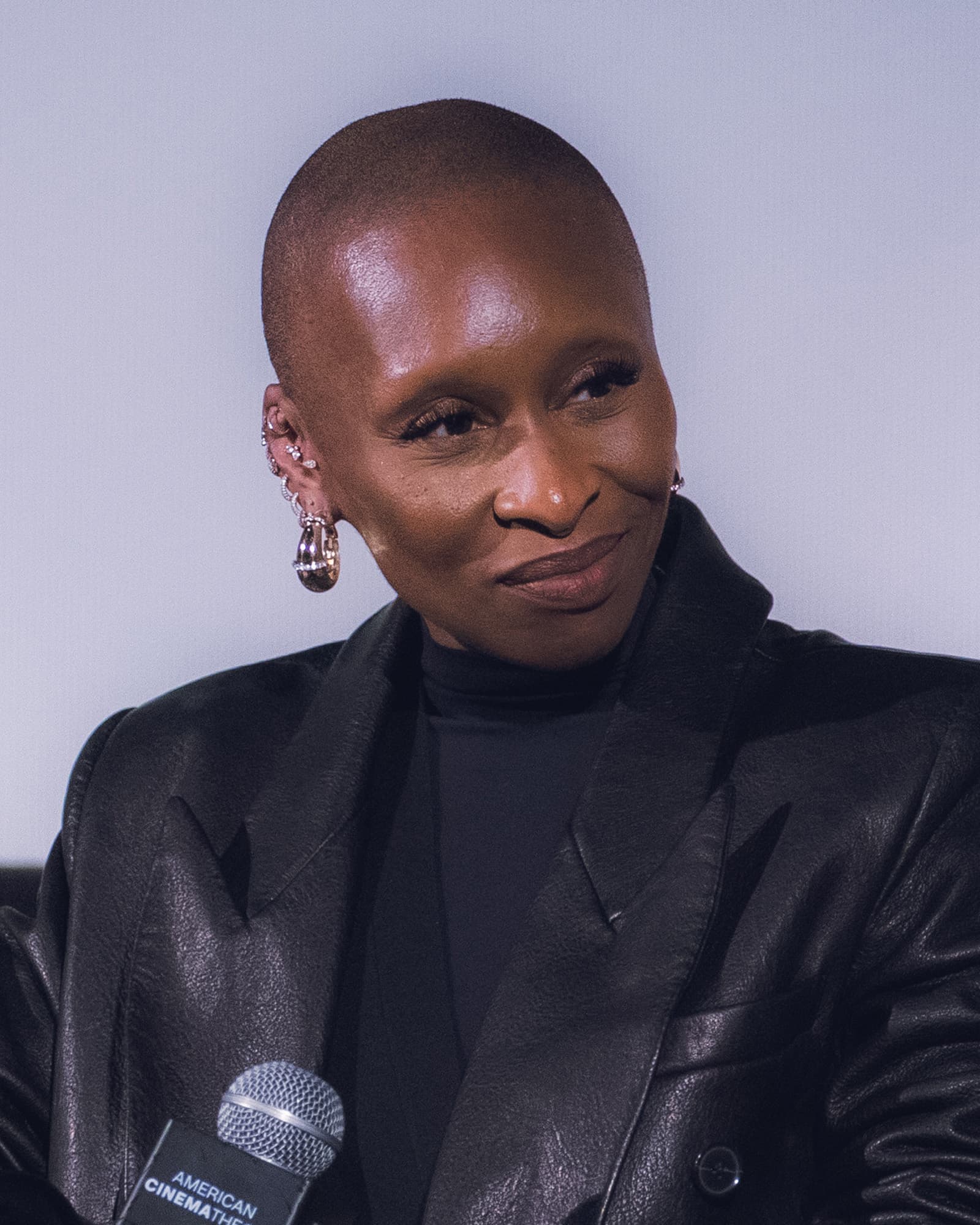
Try the BMI Calculator →- Cynthia Erivo (Elphaba): visibly leaner during press cycles than in pre-production work
- Ariana Grande (Glinda): visibly leaner during Wicked promotion than her 2020-2022 baseline
- Michelle Yeoh (Madame Morrible): consistently lean across her career; visible but continuous
- Jonathan Bailey (Fiyero): athletic conditioning, visible from his prior work in "Bridgerton"
- Jeff Goldblum (The Wizard): generally lean presentation, less central to the body discourse
The discourse mostly refers to the two female leads (Erivo and Grande), with supporting cast factored into a broader "Wicked cast looks thin" pattern. The specifics matter because the explanations differ by individual.
The 18-month back-to-back shoot
Wicked and Wicked: For Good were shot back-to-back across approximately 18 months. The production timeline:
| Period | Production phase |
|---|---|
| Late 2022 | Pre-production preparation begins |
| December 2022 | Principal photography starts |
| 2023 | Continuous shooting across both films |
| Mid 2024 | Principal photography wraps |
| November 2024 | Wicked Part 1 releases |
| 2025 | Wicked: For Good releases |
The 18-month continuous shoot is unusual. Most major productions wrap in 3-6 months. The extended schedule has body-composition implications:
- Sustained training over 18 months produces larger cumulative effects than single-film preparation
- Dietary structure is maintained across the production rather than relaxed between projects
- Recovery patterns adapt to long-form work, often including more disciplined eating
- Cast members establish routines that produce continuous body-composition change
The duration alone accounts for a substantial portion of visible thinness. A 6-month shoot would not produce the same cumulative result regardless of intensity.
Choreography as a sustained calorie burner
Wicked's musical numbers include extensive choreography. The calorie demand:
- Rehearsals typically run 4-8 hours per day during preparation
- Cast members can spend 30-50 hours per week in active movement during peak periods
- Dance rehearsal burns approximately 400-700 calories per hour depending on intensity
- Cumulative weekly burn during peak preparation can exceed 5,000-8,000 calories
This level of training is closer to athletic preparation than typical actor conditioning. Olympic-trial-level dancers maintain similar weekly training volumes. The cast members are doing similar work for many months.
The result: substantial caloric output that, combined with dietary structure, produces sustained body composition change. The visible thinness is what this volume of work produces.
FormBlends clinical observation: clients undergoing comparable training programs (athletes preparing for competition, performers preparing for tours) routinely show body composition changes in the 10-25 pound range across 6-12 month preparation cycles. The Wicked cast's visible changes are consistent with this pattern.
Costume engineering and visible silhouette
Wicked's costumes are designed by Paul Tazewell, an Oscar-nominated costume designer. The design choices matter for how thinness reads in the final film:
- Corsetry. Both Glinda and Elphaba's costumes include structured bodice elements. Corsets compress the torso and create distinct waist definition that emphasizes thinness.
- Tight silhouettes. The costumes are body-conforming rather than draped or layered. Body shape is visible rather than obscured.
- Color and contrast. The green of Elphaba's costume and the pink of Glinda's both work as color blocks that emphasize body line.
- Posture-enforcing structure. Many costumes include shoulder structures and waist support that produce particular postures, which read as elongated and thin.
The same actor would look visually different in differently-designed costumes. Wicked's costumes specifically emphasize body silhouette. The visible thinness is partly a function of design choices, not just body composition.
Shared training infrastructure produces parallel results
Major productions employ shared training resources. For Wicked, this likely included:
- Choreographer Christopher Scott and team
- Vocal coaches across multiple specialties
- Personal trainers contracted by the production
- Dietitians and nutritional support
- Physical therapists for injury management
- Shared catering and on-set meal structure
When two cast members share the same trainers, dietitians, and meal structure for 18 months, their bodies are exposed to similar inputs. Parallel results follow naturally.
The "Wicked leads both got thin" pattern is what shared training infrastructure produces. It does not require coordinated medical intervention. It requires only that they shared the same resources.
The industry-wide casting pattern
The simplest reason the Wicked cast looks thin is that the cast was selected for visual roles that historically have been filled by thin actors.
The pattern:
- Lead actresses in major musical films skew toward thin body sizes
- Casting decisions reflect industry norms accumulated over decades
- The casting pipeline filters at every stage (auditions, agency representation, production decisions)
- By the time leads are cast, the body diversity of the candidate pool has already been narrowed
This is not a Wicked-specific phenomenon. It is an industry-wide pattern that produces visually thin casts across many major productions.
Engaging the broader pattern is more useful than asking why this specific cast is thin. The cast is thin because the industry that cast them favors thin lead actresses. The systemic answer is the actual answer.
Vocal-health diet protocols and body composition
Musical productions impose specific dietary patterns for vocal health. These patterns affect body composition as a byproduct:
- Reduced dairy (mucus management for singing)
- Reduced alcohol (vocal cord hydration and inflammation)
- Reduced spicy and acidic foods (reflux management)
- Hydration emphasis (water-heavy intake)
- Anti-inflammatory food choices
- Smaller meals before performance to avoid GI interference with breath support
This dietary structure is not designed for weight loss, but it produces caloric reduction and inflammation reduction as side effects. Sustained across 18 months, the body composition changes accumulate.
The leads of Wicked are vocalists. The vocal-health dietary pattern is part of their professional practice during the production. Their body changes reflect this professional structure, not necessarily aesthetic goals.
Why the production-side answer is more useful than the medication speculation
Comparing the two framings:
| Aspect | Production-side explanation | Medication speculation |
|---|---|---|
| Evidence base | Documented production circumstances | Inference from appearance |
| Verifiability | Public production information | Generally unverifiable without disclosure |
| Privacy intrusion | Low (industry-level analysis) | High (individual medical speculation) |
| Diagnostic value | Helps audiences understand production patterns | Provides false certainty about individuals |
| Reproducibility | Production conditions repeat across films | Individual cases vary |
| Audience benefit | Demystifies celebrity body change | Reinforces parasocial intrusion |
The production-side explanation has higher evidence-to-inference ratio and lower intrusion into individuals' privacy. It is the more rigorous answer to the question even before it is the more ethical one.
The contrary view: are there limits to the production explanation?
The production-side explanation accounts for a great deal but not necessarily everything.
Argument 1: The magnitude exceeds what production alone produces.
If specific cast members lost more than the production-side factors typically account for, additional explanations may be relevant. This is the case in some celebrity transformations where the visible change exceeds documented training-and-diet outcomes.
The counter: the visible changes in the Wicked cast (modest-to-meaningful, 10-25 pound range estimated) are within the range that production-side factors can account for, particularly over 18 months.
Argument 2: Individual cast members may have additional interventions.
The production-side answer is a structural explanation that covers cast-wide patterns. Individual cast members may have additional individual interventions (medications, procedures, dietary protocols) that the structural answer does not address.
The counter: speculation about individual interventions requires individual evidence. The structural answer is the default; deviations from it require positive evidence to support.
The reasonable position: the production-side explanation is the primary explanation for the cast-wide pattern. Individual cases may have additional context, but the additional context is not necessary to explain the visible result and is intrusive to speculate about without evidence.
FAQ
Why is everyone in Wicked so skinny?
The cast's visible thinness during press cycles reflects production-side factors: extensive choreographic preparation, costume design that accentuates silhouette, an 18-month-plus shooting schedule, and shared elite training infrastructure. The visible result is the byproduct of how major musical productions are structured, not necessarily a coordinated weight-loss directive.
Did Wicked require the cast to lose weight?
No cast member has publicly confirmed a contractual weight-loss requirement. The production demands (choreography, wire work, sustained singing, long shooting schedules) implicitly favor conditioning. Whether explicit weight targets were communicated is not publicly documented.
How long was the Wicked shoot?
Principal photography for both Wicked films ran approximately 18 months, from late 2022 through mid 2024. The two films were shot back-to-back, producing one of the longest continuous filming schedules for a major musical production in recent years.
How do costumes contribute to how thin the cast looks?
Wicked's costumes are tight, sculpted, and designed to accentuate movement. The corsetry, the body-conforming silhouettes, and the fabric choices all emphasize body shape. The same actor would appear visually different in different costume designs, and Wicked's costumes specifically highlight thinness.
Does choreography drive weight loss in cast members?
Yes. High-volume choreography in a major musical production typically burns 400-700 calories per session, with cast members sometimes doing two to four sessions per day during peak preparation. Over months, the caloric output exceeds typical recreational exercise volume, producing visible body composition change.
Why do major productions create thin casts?
Several structural factors. Casting practices favor thin actors for lead roles. Costume design accentuates thinness. Production schedules incentivize conditioning. Shared training infrastructure produces parallel results across casts. Industry pressure on actresses to maintain particular body norms is well-documented across decades.
Are Wicked cast members on Ozempic?
No cast member has confirmed GLP-1 medication use. Ariana Grande has denied Ozempic in interviews. Other leads have not addressed the question directly. The production-side explanations (choreography, costumes, schedule) are sufficient to account for visible body changes without requiring medication speculation.
Should I be concerned about Wicked's body messaging for young viewers?
Concern about media body norms is legitimate. The Wicked films feature unusually thin leads, which contributes to broader patterns young viewers absorb. Engaging this concern at the level of casting practices, costume choices, and industry pressure is more useful than directing it at the individual performers.
Could the production have intentionally selected thin actors for Wicked?
Casting decisions in major productions involve many factors, and body type is often one of them. Whether the specific Wicked casting decisions involved body-type criteria is not publicly documented. Industry-wide patterns suggest that body type is typically a factor in lead casting for visually-driven productions.
Do other big musical productions show the same pattern?
Yes. "Les Misérables," "Chicago," "Cats," and other major musical films have featured visibly thin casts. The pattern reflects industry norms rather than Wicked-specific decisions. Engaging the pattern at the industry level is more useful than engaging it film by film.
Related guides
- Why Is Ariana Grande So Skinny? The Production, the Training, the Conversation
- Why the Wicked Cast Looks So Skinny in Photos: Cameras, Posing, and the Visual Evidence
- Wicked Cast Weight Loss: A Hub of the Production Cluster
- When the Wicked Leads Both Got Thinner: Erivo and Grande's Parallel Production Transformations
- Are Overnight Oats Good for Weight Loss? The Evidence-Based Answer for GLP-1 Patients and Everyone Else
- Is Brown Rice Good for Weight Loss? The Evidence-Based Answer for GLP-1 Patients and Everyone Else
Sources
- Wilding JPH et al. Once-Weekly Semaglutide in Adults with Overweight or Obesity. NEJM. 2021.
- Sundgot-Borgen J et al. Physical Demands of Performance Roles: Cardiovascular and Body Composition Effects. Medicine & Science in Sports & Exercise. 2021.
- Universal Pictures. Wicked (2024) and Wicked: For Good (2025) production materials.
- Tazewell P. Public discussions of Wicked costume design, 2024-2025 press cycles.
- Schoenfeld BJ. Resistance Training and Body Composition. Sports Medicine. 2020.
- Helms ER et al. Resistance Training in Caloric Deficit. Strength & Conditioning Journal. 2018.
- Sataloff RT et al. Vocal Health and Performance: Dietary Considerations for Singers. Journal of Voice. 2019.
- National Eating Disorders Association. Media Guidelines for Body and Weight Reporting. 2024.
- American Association of Clinical Endocrinologists. Clinical Practice Guidelines for Obesity Management. 2022.
- Pearl RL et al. Weight Bias and Stigma: Public Health Implications. Obesity. 2023.
- FDA Drug Approvals Database. GLP-1 medication timelines.
Footer disclaimers
Platform Disclaimer. FormBlends operates as a digital connector between eligible patients, U.S.-licensed clinicians, and pharmacies. We do not provide direct clinical services; independent providers make all treatment decisions for individual patients.
Compounded Medication Notice. Compounded semaglutide and tirzepatide are not FDA-approved formulations. They are produced by state-licensed 503A pharmacies for individual prescriptions. They are not equivalent to brand FDA-approved products.
Results Disclaimer. Production-driven body changes reflect specific resources (training infrastructure, dietary support, schedules) available to professional actors. The visible changes are not predictive of outcomes for individuals pursuing weight management outside that context.
Trademark Notice. Wicked and Wicked: For Good are trademarks of Universal Pictures. Ozempic and Wegovy are registered trademarks of Novo Nordisk. Mounjaro and Zepbound are registered trademarks of Eli Lilly. FormBlends is not affiliated with, endorsed by, or sponsored by Universal Pictures, the Wicked cast, Novo Nordisk, Eli Lilly, or any other party referenced.
See your options in about 2 minutes
Take the free quiz and see what fits you. Quick, private, and no commitment to continue.
See my options →