Key Takeaway
Starting a new medication can bring up questions about how it might affect your mental health. The connection between GLP-1 and anxiety is one of the most common concerns people raise before and during treatment. Some people report feeling more anxious after starting semaglutide or tirzepatide.
Starting a new medication can bring up questions about how it might affect your mental health. The connection between GLP-1 and anxiety is one of the most common concerns people raise before and during treatment. Some people report feeling more anxious after starting semaglutide or tirzepatide. Others say their anxiety actually improved.
Key Takeaways: - Understand what research says about glp-1 and anxiety - Discover why anxiety may increase early in treatment - Managing Anxiety While on GLP-1 Medication - When to Talk to Your Provider About Anxiety
This article breaks down what current research shows, why anxiety may shift during GLP-1 treatment, and practical steps to manage your mental health while on medication.
What Research Says About GLP-1 and Anxiety
GLP-1 receptors exist not only in the gut and pancreas but also in the brain. This is why GLP-1 medications can affect appetite, fullness, and food-related thoughts. But it also means they may influence mood and emotional regulation.
Large clinical trials for semaglutide and tirzepatide haven't identified anxiety as a common side effect. But post-marketing reports and patient communities suggest that some people do experience changes in their anxiety levels.
A few important points from the research so far:
- GLP-1 receptors are present in brain regions involved in stress response, including the amygdala and hippocampus
- Animal studies have shown mixed results, with some suggesting GLP-1 agonists may have anxiolytic (anxiety-reducing) properties
- Weight loss itself can reduce anxiety in some people by improving self-image, physical comfort, and overall health
- Rapid dietary changes and calorie reduction can temporarily increase stress hormones in some individuals
"The conversation about obesity needs to shift from willpower to biology. These medications work because obesity is a neuroendocrine disease, not a character flaw.") Dr. Fatima Cody Stanford, MD, MPH, Massachusetts General Hospital
GLP-1 medications don't appear to directly cause anxiety in most people. But the physical and lifestyle changes that come with treatment can sometimes trigger or shift anxiety patterns.
Why Anxiety May Increase Early in Treatment
If you notice increased anxiety after starting GLP-1 medication, several factors could be at play. Understanding them helps you address the root cause rather than just the symptom.
View data table
| Category | Impact on Treatment Outcomes (%) | Detail |
|---|---|---|
| Protein Intake | 90 | Preserves muscle mass |
| Exercise | 85 | Enhances weight loss |
| Sleep Quality | 78 | Supports metabolism |
| Hydration | 72 | Reduces side effects |
| Stress Mgmt | 65 | Cortisol reduction |

Reduced food intake. Many people use food as a coping mechanism for stress and anxiety. When GLP-1 medication dramatically reduces your appetite and eliminates food noise, you may suddenly lose a familiar comfort tool. This can feel unsettling, especially in the first few weeks.
Blood sugar fluctuations. As your eating patterns change, your blood sugar may dip lower than usual, particularly if you skip meals. Low blood sugar can mimic anxiety symptoms, including shakiness, rapid heartbeat, and a sense of unease. Eating regular, balanced meals helps stabilize this. Learn more in our .
Physical side effects. Nausea, fatigue, and digestive discomfort are common during early treatment and after dose increases. Feeling physically unwell can heighten anxious feelings. These side effects typically improve within 2 to 4 weeks. Read our for management tips.
Patient Perspective: "The 'food noise' going quiet was the most unexpected benefit. I didn't realize how much mental energy I spent thinking about food until it stopped. It was like someone turned down the volume on a radio I'd been hearing my whole life.", Emily R., 36, FormBlends patient (name changed for privacy)
Body changes. Rapid physical changes can be psychologically disorienting, even when they're positive. Your relationship with your body, your wardrobe, and even how others treat you may shift. These changes take time to process.
Ready to explore treatment options? about your mental health concerns before or during GLP-1 treatment.
Managing Anxiety While on GLP-1 Medication
If anxiety is part of your experience, you don't have to just push through it. Here are evidence-based strategies that work well alongside GLP-1 treatment.
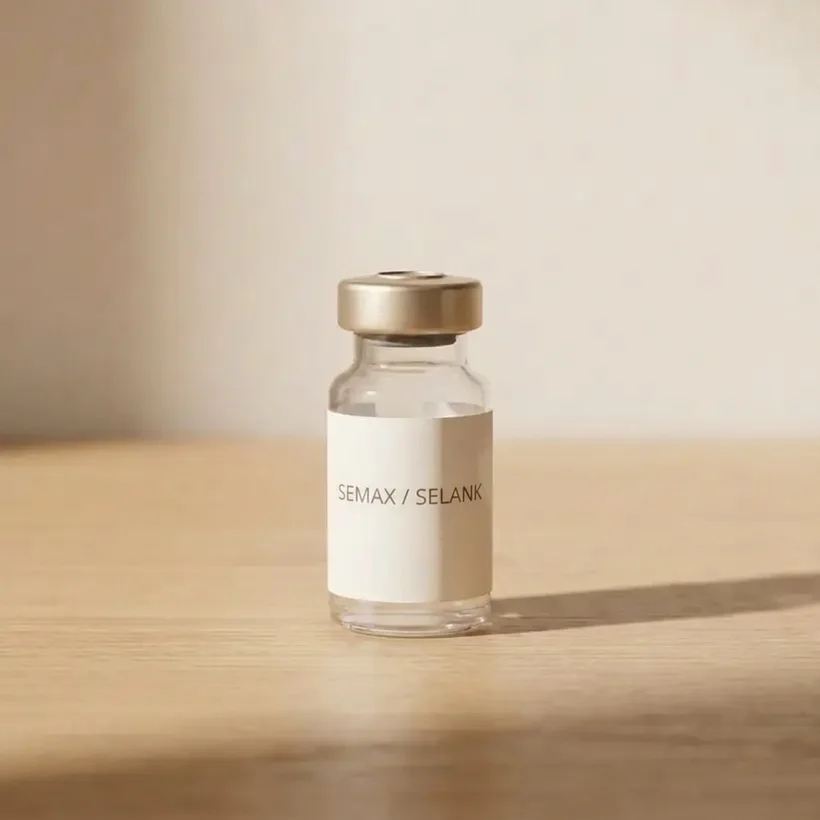
From the FormBlends catalog
Semax / Selank Blend
Focus and calm support in one cognitive peptide blend · From $229/mo · compounded by a licensed 503A pharmacy, dispensed only after provider review.
View Semax / Selank Blend →Eat consistently. Even if your appetite is low, eat small meals at regular intervals. Focus on protein and complex carbs to keep blood sugar stable. Skipping meals can worsen both physical side effects and anxious feelings.
Move your body. Regular physical activity is one of the most effective anxiety management tools available. Even a 20-minute walk can reduce anxiety hormones and boost mood. You don't need intense workouts. Consistency matters more than intensity.
Practice relaxation techniques. Deep breathing, progressive muscle relaxation, and mindfulness meditation can all reduce anxiety. Even 5 to 10 minutes daily makes a difference. Many free apps and videos can guide you through these practices.
Maintain social connections. Isolation tends to amplify anxiety. Stay connected with friends, family, or support groups. Online communities for GLP-1 users can also provide reassurance and shared experiences.
Limit caffeine. Caffeine can intensify anxiety symptoms, and some people become more sensitive to it after starting GLP-1 medication, especially if they're eating less food alongside their coffee.
Journal your experience. Writing down your thoughts and feelings helps externalize anxiety. The includes tracking features where you can log your mood alongside your medication data. This creates a record you can share with your provider.
When to Talk to Your Provider About Anxiety
Some level of adjustment is normal when starting any new medication. But certain situations call for a conversation with your healthcare provider.
Reach out if you experience: - Anxiety that interferes with daily activities, work, or relationships - Panic attacks that did not occur before starting treatment - Persistent feelings of dread or worry that last more than 2 weeks - Sleep disruption caused by anxious thoughts - Thoughts of self-harm or suicide (call 988 Suicide and Crisis Lifeline immediately)
Your provider can evaluate whether your anxiety is related to the medication, the lifestyle changes, or an underlying condition that needs separate treatment. Options may include adjusting your GLP-1 dose, adding therapy or counseling, or in some cases, prescribing anti-anxiety medication.
Be honest about your mental health history when you . If you have a history of anxiety or depression, your provider can monitor you more closely and create a plan that addresses both your physical and emotional well-being.
Many people find that once they adjust to GLP-1 medication and develop new coping strategies, their anxiety actually improves. Weight loss, better sleep, increased physical activity, and reduced food preoccupation can all contribute to a calmer, more grounded mental state over time.
Frequently Asked Questions
Can GLP-1 medication make anxiety worse?
While clinical trials haven't identified anxiety as a common side effect, some individuals do report increased anxiety, particularly in the early weeks of treatment. This is often related to dietary changes, blood sugar shifts, or losing food as a coping tool rather than a direct effect of the medication itself.
Should I stop taking GLP-1 medication if I feel anxious?
Don't stop your medication without talking to your provider first. Increased anxiety during the adjustment period is usually temporary. Your provider can help determine whether the anxiety is related to the medication and suggest management strategies or dose adjustments.
Does weight loss from GLP-1 improve anxiety long term?
For many people, yes. Preliminary data suggest that significant weight loss can improve anxiety symptoms over time. Improved physical health, better sleep, increased confidence, and greater mobility all contribute to reduced anxiety levels for many GLP-1 users.
Can I take anxiety medication while on GLP-1?
Many people safely take anti-anxiety medications alongside GLP-1 agonists. But drug interactions and timing considerations vary. Always discuss all medications, including supplements, with your provider to ensure they're compatible with your GLP-1 treatment.
How long does adjustment anxiety last on GLP-1?
Most people who experience increased anxiety during the start of GLP-1 treatment report that it improves within 2 to 6 weeks as their body adjusts and they develop new routines. If anxiety persists beyond this window, consult your provider for further evaluation.
Ready to Take the Next Step?
Your health outcomes is personal) and you deserve a plan that fits. FormBlends connects you with licensed providers who can evaluate your needs and create a personalized protocol.
Medical References
- Davies M, Færch L, Jeppesen OK, et al. Semaglutide 2.4 mg once a week in adults with overweight or obesity, and type 2 diabetes (STEP 2). Lancet. 2021;397(10278):971-984. [PubMed | ClinicalTrials.gov | DOI]
- Wadden TA, Bailey TS, Billings LK, et al. Effect of Subcutaneous Semaglutide vs Placebo as an Adjunct to Intensive Behavioral Therapy on Body Weight in Adults With Overweight or Obesity (STEP 3). JAMA. 2021;325(14):1403-1413. [PubMed | ClinicalTrials.gov | DOI]
- Garvey WT, Batterham RL, Bhatt DL, et al. Two-year effects of semaglutide in adults with overweight or obesity (STEP 5). Nat Med. 2022;28(10):2083-2091. [PubMed | ClinicalTrials.gov | DOI]
Sources &. References
- Wilding JPH, Batterham RL, Calanna S, et al. Once-Weekly Semaglutide in Adults with Overweight or Obesity. N Engl J Med. 2021;384(11):989-1002. Doi:10.1056/NEJMoa2032183
- Davies M, Færch L, Jeppesen OK, et al. Semaglutide 2.4 mg once a week in adults with overweight or obesity, and type 2 diabetes (STEP 2 (Davies et al., Lancet, 2021)). Lancet. 2021;397(10278):971-984. Doi:10.1016/S0140-6736(21)00213-0
- Wadden TA, Bailey TS, Billings LK, et al. Effect of Subcutaneous Semaglutide vs Placebo as an Adjunct to Intensive Behavioral Therapy on Body Weight in Adults With Overweight or Obesity (STEP 3 (Wadden et al., JAMA, 2021)). JAMA. 2021;325(14):1403-1413. Doi:10.1001/jama.2021.1831
- Garvey WT, Batterham RL, Bhatt DL, et al. Two-Year Effects of Semaglutide in Adults with Overweight or Obesity (STEP 5 (Garvey et al., Nat Med, 2022)). Nat Med. 2022;28:2083-2091. Doi:10.1038/s41591-022-02026-4
- Lincoff AM, Brown-Frandsen K, Colhoun HM, et al. Semaglutide and Cardiovascular Outcomes in Obesity without Diabetes. N Engl J Med. 2023;389(24):2221-2232. Doi:10.1056/NEJMoa2307563
- Stierman B, Afful J, Carroll MD, et al. National Health and Nutrition Examination Survey 2017-March 2020 Prepandemic Data Files. NCHS Data Brief. No. 492. CDC/NCHS. 2023.
- Sumithran P, Prendergast LA, Delbridge E, et al. Long-Term Persistence of Hormonal Adaptations to Weight Loss. N Engl J Med. 2011;365(17):1597-1604. Doi:10.1056/NEJMoa1105816
The information in this article is intended for educational use only and shouldn't be considered medical advice. Consult a qualified healthcare provider before making any changes to your medication or supplement regimen. FormBlends helps with connections with licensed providers for personalized medical guidance.
Last updated: 2026-03-24
Ready when you are
Semax / Selank Blend
Focus and calm support in one cognitive peptide blend · From $229/mo · compounded by a licensed 503A pharmacy, dispensed only after provider review.
View Semax / Selank Blend →