Key Takeaway
Stress doesn't take a break just because you started medication. This managing stress GLP-1 treatment resource covers the important information you need to make informed decisions.
Stress doesn't take a break just because you started medication. This managing stress GLP-1 treatment resource covers the important information you need to make informed decisions. Learning strategies for managing stress on GLP-1 treatment matters because chronic stress can directly interfere with your weight loss results and overall health. Cortisol, your primary stress hormone, affects fat storage, sleep quality, food choices, and even how your body responds to medication.
Key Takeaways: - Learn how stress affects your glp-1 results - Stress Management Techniques That Work - Building a Daily Stress Management Routine - When Stress Requires Professional Support
This guide explains the stress-weight connection, offers practical stress management techniques, and helps you protect both your mental health and your GLP-1 results.
How Stress Affects Your GLP-1 Results
Stress isn't just a mental experience. It has measurable physical effects that can slow or stall your progress.
Cortisol and fat storage. When you're stressed, your body produces more cortisol. improved cortisol promotes fat storage, particularly visceral fat around the abdomen. This is exactly the type of fat GLP-1 medications are meant to help reduce. Chronic stress can partially counteract the medication's effects.
Stress eating. Even with GLP-1 reducing physical hunger, stress can trigger emotional eating. The urge to eat under stress is driven by brain pathways separate from physical hunger. Some people on GLP-1 report that stress is the one thing that still overrides their reduced appetite.
Sleep disruption. Stress and poor sleep create a vicious cycle. Stress makes it harder to fall asleep. Poor sleep raises cortisol, which increases stress. As we covered in our , adequate sleep is critical for weight loss.
Inflammation. Chronic stress increases systemic inflammation, which is linked to insulin resistance, metabolic dysfunction, and slower weight loss. GLP-1 medications have some anti-inflammatory properties, but chronic stress can overwhelm these benefits.
Medication adherence. When you're stressed, basic self-care routines slip. You may forget your injection, skip meals, neglect hydration, or abandon your exercise routine. Consistency is important for GLP-1 effectiveness.
"The conversation about obesity needs to shift from willpower to biology. These medications work because obesity is a neuroendocrine disease, not a character flaw.") Dr. Fatima Cody Stanford, MD, MPH, Massachusetts General Hospital
Stress Management Techniques That Work
Not every stress management technique works for every person. Try several and stick with what resonates.
View data table
| Category | Impact on Treatment Outcomes (%) | Detail |
|---|---|---|
| Protein Intake | 90 | Preserves muscle mass |
| Exercise | 85 | Enhances weight loss |
| Sleep Quality | 78 | Supports metabolism |
| Hydration | 72 | Reduces side effects |
| Stress Mgmt | 65 | Cortisol reduction |

Deep breathing exercises. The simplest, most accessible tool. Try box breathing: inhale for 4 counts, hold for 4 counts, exhale for 4 counts, hold for 4 counts. Repeat for 2 to 5 minutes. This directly activates your parasympathetic nervous system and lowers cortisol.
Physical movement. Exercise is one of the most potent stress relievers available. It processes cortisol and adrenaline, releases endorphins, and improves mood. A 30-minute walk can measurably reduce cortisol levels. Resistance training, yoga, and swimming are also excellent options.
Time in nature. Clinical data indicate that spending 20 minutes in a natural setting reduces cortisol significantly. A park, a garden, a trail, or even sitting under a tree works. No special equipment or training required.
Progressive muscle relaxation. Starting from your toes and working up to your head, tense each muscle group for 5 seconds, then release. This technique teaches your body what relaxation actually feels like, which is useful if you carry tension without realizing it.
Journaling. Writing about stressful experiences for 15 to 20 minutes can reduce their emotional charge. You don't need a fancy journal. A note in your phone works. The act of putting stress into words processes it differently than just thinking about it.
Patient Perspective: "The 'food noise' going quiet was the most unexpected benefit. I didn't realize how much mental energy I spent thinking about food until it stopped. It was like someone turned down the volume on a radio I'd been hearing my whole life.", Emily R., 36, FormBlends patient (name changed for privacy)
Need support with your treatment plan? about a integrated approach to GLP-1 treatment.
Building a Daily Stress Management Routine
Sporadic stress management is better than nothing, but a consistent daily routine produces the best results. Here is a simple structure.
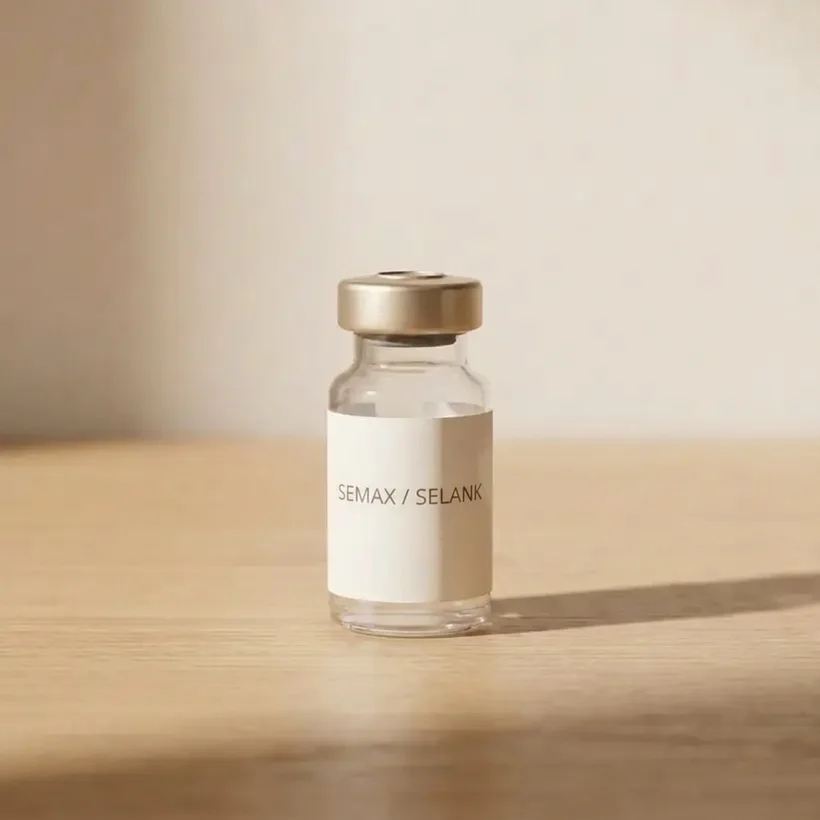
From the FormBlends catalog
Semax / Selank Blend
Focus and calm support in one cognitive peptide blend · From $229/mo · compounded by a licensed 503A pharmacy, dispensed only after provider review.
View Semax / Selank Blend →Morning (5 to 10 minutes): - 3 minutes of deep breathing or meditation before checking your phone - Set one intention for the day: "Today I will respond to stress instead of reacting" - Eat a to stabilize blood sugar and mood
Midday (5 minutes): - Take a brief walk, even if it's just around the building - Do a body scan: where are you holding tension? Release it consciously - Drink a full glass of water
Evening (10 to 15 minutes): - Review your day without judgment - Log your mood, stress level, and any triggers in the - Do a relaxation exercise: yoga, stretching, progressive muscle relaxation, or a warm bath - Limit screen time 30 to 60 minutes before bed
Weekly: - Engage in one longer stress-relieving activity: a hike, a social outing, a creative project, or a massage - Review your stress patterns from the week and identify recurring triggers - Adjust your plan based on what worked and what did not
This routine doesn't need to be perfect. Even doing half of these practices most days can significantly reduce chronic stress.
When Stress Requires Professional Support
Everyday stress management techniques work well for normal life pressures. But some situations call for professional help.
Consider therapy or counseling if: - Stress feels unmanageable despite self-care efforts - You experience anxiety or panic attacks regularly - Stress leads to depression, hopelessness, or withdrawal - You use unhealthy coping mechanisms like binge eating, excessive drinking, or other harmful behaviors - Major life events are compounding (job loss, divorce, illness, caregiving) - You notice your GLP-1 progress stalling and stress seems like a factor
Cognitive behavioral therapy is particularly effective for stress management. It helps you identify thought patterns that amplify stress and replace them with more balanced perspectives.
Your can discuss how stress may be affecting your treatment and help connect you with mental health resources. Many telehealth platforms offer integrated behavioral health services.
Don't wait until stress becomes a crisis. Early intervention is always more effective than trying to recover from burnout. Read more about the .
Frequently Asked Questions
Can stress cause a weight loss plateau on GLP-1?
Yes. Chronic stress improves cortisol, which promotes fat storage and fluid retention. It can also disrupt sleep and lead to poor food choices. If you have hit a plateau and your stress levels are high, addressing stress may be the key to restarting progress.
Does GLP-1 medication help with stress eating?
GLP-1 medication reduces physical hunger and food noise, which helps many people eat less overall. But stress eating is emotionally driven, not hunger-driven. While GLP-1 may reduce the physical satisfaction of stress eating, the emotional urge may persist and needs to be addressed with behavioral strategies.
How much exercise do I need to manage stress on GLP-1?
Even modest amounts help. Research suggests 150 minutes of moderate activity per week, about 30 minutes five days a week, significantly reduces stress hormones and improves mood. You don't need to do it all at once. Three 10-minute walks per day count.
Can I take supplements for stress while on GLP-1?
Some supplements like magnesium, ashwagandha, and L-theanine are commonly used for stress management. But always discuss supplements with your provider before starting them alongside GLP-1 medication to check for interactions and ensure they're appropriate for your situation.
Will reducing stress help my GLP-1 side effects?
Stress can worsen gastrointestinal symptoms like nausea and bloating, which are common GLP-1 side effects. Reducing stress may help moderate these symptoms. Many people notice that their side effects are worse during high-stress periods and improve when stress is managed.
Start your protocol Today
Every transformation starts with a single step. Talk to a licensed FormBlends provider about whether this approach is right for you) consultations are free and confidential.
Medical References
- Davies M, Færch L, Jeppesen OK, et al. Semaglutide 2.4 mg once a week in adults with overweight or obesity, and type 2 diabetes (STEP 2). Lancet. 2021;397(10278):971-984. [PubMed | ClinicalTrials.gov | DOI]
- Wadden TA, Bailey TS, Billings LK, et al. Effect of Subcutaneous Semaglutide vs Placebo as an Adjunct to Intensive Behavioral Therapy on Body Weight in Adults With Overweight or Obesity (STEP 3). JAMA. 2021;325(14):1403-1413. [PubMed | ClinicalTrials.gov | DOI]
- Garvey WT, Batterham RL, Bhatt DL, et al. Two-year effects of semaglutide in adults with overweight or obesity (STEP 5). Nat Med. 2022;28(10):2083-2091. [PubMed | ClinicalTrials.gov | DOI]
Sources &. References
- Wilding JPH, Batterham RL, Calanna S, et al. Once-Weekly Semaglutide in Adults with Overweight or Obesity. N Engl J Med. 2021;384(11):989-1002. Doi:10.1056/NEJMoa2032183
- Davies M, Færch L, Jeppesen OK, et al. Semaglutide 2.4 mg once a week in adults with overweight or obesity, and type 2 diabetes (STEP 2 (Davies et al., Lancet, 2021)). Lancet. 2021;397(10278):971-984. Doi:10.1016/S0140-6736(21)00213-0
- Wadden TA, Bailey TS, Billings LK, et al. Effect of Subcutaneous Semaglutide vs Placebo as an Adjunct to Intensive Behavioral Therapy on Body Weight in Adults With Overweight or Obesity (STEP 3 (Wadden et al., JAMA, 2021)). JAMA. 2021;325(14):1403-1413. Doi:10.1001/jama.2021.1831
- Garvey WT, Batterham RL, Bhatt DL, et al. Two-Year Effects of Semaglutide in Adults with Overweight or Obesity (STEP 5 (Garvey et al., Nat Med, 2022)). Nat Med. 2022;28:2083-2091. Doi:10.1038/s41591-022-02026-4
- Lincoff AM, Brown-Frandsen K, Colhoun HM, et al. Semaglutide and Cardiovascular Outcomes in Obesity without Diabetes. N Engl J Med. 2023;389(24):2221-2232. Doi:10.1056/NEJMoa2307563
- Stierman B, Afful J, Carroll MD, et al. National Health and Nutrition Examination Survey 2017-March 2020 Prepandemic Data Files. NCHS Data Brief. No. 492. CDC/NCHS. 2023.
- Sumithran P, Prendergast LA, Delbridge E, et al. Long-Term Persistence of Hormonal Adaptations to Weight Loss. N Engl J Med. 2011;365(17):1597-1604. Doi:10.1056/NEJMoa1105816
This article is for educational purposes only and doesn't constitute medical advice. Always consult with a licensed healthcare provider before starting, changing, or stopping any medication or supplement. FormBlends connects you with licensed providers who can evaluate your individual health needs.
Last updated: 2026-03-24
Ready when you are
Semax / Selank Blend
Focus and calm support in one cognitive peptide blend · From $229/mo · compounded by a licensed 503A pharmacy, dispensed only after provider review.
View Semax / Selank Blend →