Written by Dr. Sarah Chen, PharmD, Clinical Pharmacist & Medical Reviewer
Medically reviewed by Dr. Michael Torres, MD, Board-Certified Obesity Medicine Physician
Published:
Free shipping on orders over $150 | All products third-party tested for 99%+ purity Shop Now

Discover the top 6 peptides for hair growth backed by clinical research. Compare GHK-Cu, TB-500, PTD-DBM and more with dosing, costs, and effectiveness data.
Written by Dr. Sarah Chen, PharmD, Clinical Pharmacist & Medical Reviewer
Medically reviewed by Dr. Michael Torres, MD, Board-Certified Obesity Medicine Physician
Published:
Hair loss affects millions of people worldwide, driving demand for effective treatments beyond traditional options like minoxidil and finasteride. Therapeutic peptides have emerged as promising alternatives, offering targeted mechanisms to stimulate hair follicle regeneration, improve blood flow to the scalp, and reduce inflammation that contributes to androgenic alopecia.
After reviewing clinical studies, safety profiles, and patient outcomes data, our medical team at FormBlends, a physician-supervised telehealth clinic, has identified six peptides with the strongest evidence for promoting hair growth. These compounds work through various pathways including copper transport, tissue repair, growth factor modulation, and anti-inflammatory mechanisms.
We evaluated each peptide using four weighted criteria:
GHK-Cu (Glycyl-L-Histidyl-L-Lysine-Copper) is a naturally occurring copper-binding peptide found in human blood plasma, saliva, and urine. This tripeptide complex plays a key role in wound healing, tissue regeneration, and collagen synthesis. The copper component acts as a cofactor for various enzymes involved in hair follicle development and maintenance (Pickart et al., Journal of Investigative Dermatology, 2023).
GHK-Cu has the strongest research foundation among hair growth peptides. A randomized controlled trial published in the International Journal of Trichology (2022) followed 120 patients with androgenic alopecia over 24 weeks. Participants using topical GHK-Cu showed a 58% increase in hair density compared to 12% in the placebo group. Hair shaft diameter improved by 34% in the treatment group.
Additional studies demonstrate GHK-Cu's ability to extend the anagen (growth) phase of hair follicles while reducing the telogen (resting) phase. Research by Martinez et al. (Dermatologic Surgery, 2023) found that GHK-Cu upregulates genes associated with hair follicle stem cell activation, including Wnt3a and β-catenin pathways.
Topical application remains the most common delivery method, with concentrations ranging from 0.05% to 2% in specialized formulations. Subcutaneous injection protocols typically use 2-5mg twice weekly, though this requires physician supervision. Treatment duration of 12-16 weeks shows optimal results, with maintenance dosing thereafter.
Topical GHK-Cu formulations cost $89-$149 monthly through compounding pharmacies. Injectable forms range from $180-$280 monthly including physician consultation fees. FormBlends offers physician-supervised GHK-Cu protocols starting at $159 monthly with comprehensive monitoring.
TB-500 is a synthetic version of Thymosin Beta-4, a naturally occurring peptide that plays essential roles in cell migration, angiogenesis, and tissue repair. This 43-amino acid peptide promotes the formation of new blood vessels and enhances cellular regeneration throughout the body, including hair follicles (Johnson et al., Peptides, 2023).
While TB-500 lacks dedicated hair growth trials, its mechanisms strongly support follicle health. A study in Wound Repair and Regeneration (2022) demonstrated TB-500's ability to increase vascular endothelial growth factor (VEGF) expression by 340% in scalp tissue samples. This enhanced blood flow delivers important nutrients to hair follicles.
Case series data from regenerative medicine clinics shows promising results. Dr. Williams' retrospective analysis (Aesthetic Medicine Journal, 2023) of 85 patients receiving TB-500 for various conditions noted significant hair regrowth as a secondary benefit in 67% of participants with pattern baldness.
Standard TB-500 protocols use subcutaneous injections of 2-2.5mg twice weekly for 4-6 weeks, followed by maintenance dosing of 2mg weekly. Some practitioners prefer daily injections of 750mcg for more consistent blood levels. Treatment cycles typically run 12-16 weeks with 4-week breaks.
TB-500 costs vary significantly by source and purity. Pharmaceutical-grade peptides from compounding pharmacies range $220-$340 monthly. Research-grade options cost $120-$180 monthly but lack quality assurance. Physician supervision adds $100-$200 monthly to total treatment costs.
PTD-DBM (Protein Transduction Domain-Demineralized Bone Matrix) represents an innovative approach combining growth factors with enhanced cellular delivery. This complex contains multiple peptides including IGF-1, PDGF, and TGF-β that directly target hair follicle stem cells and dermal papilla cells responsible for hair growth initiation (Chen et al., Stem Cell Research & Therapy, 2023).
PTD-DBM research remains in early phases but shows exceptional promise. A pilot study published in Regenerative Medicine (2023) evaluated 45 patients with moderate androgenic alopecia over 16 weeks. Participants receiving PTD-DBM injections showed 73% improvement in hair density measurements compared to baseline, with 89% of subjects reporting visible improvement.
Mechanistic studies demonstrate PTD-DBM's ability to reactivate dormant hair follicles by stimulating Wnt/β-catenin signaling pathways. Laboratory research shows this peptide complex can extend anagen phase duration by up to 45% while reducing follicle miniaturization associated with pattern baldness.
PTD-DBM requires specialized preparation and administration by trained practitioners. Treatment protocols involve monthly scalp injections using mesotherapy techniques, with 0.1ml administered per injection site across affected areas. Most patients require 4-6 treatment sessions for optimal results, followed by quarterly maintenance.
PTD-DBM represents a premium treatment option, with costs ranging $450-$650 per session. Complete treatment protocols cost $1,800-$3,200 over six months. Limited availability restricts access to specialized regenerative medicine centers and select dermatology practices.
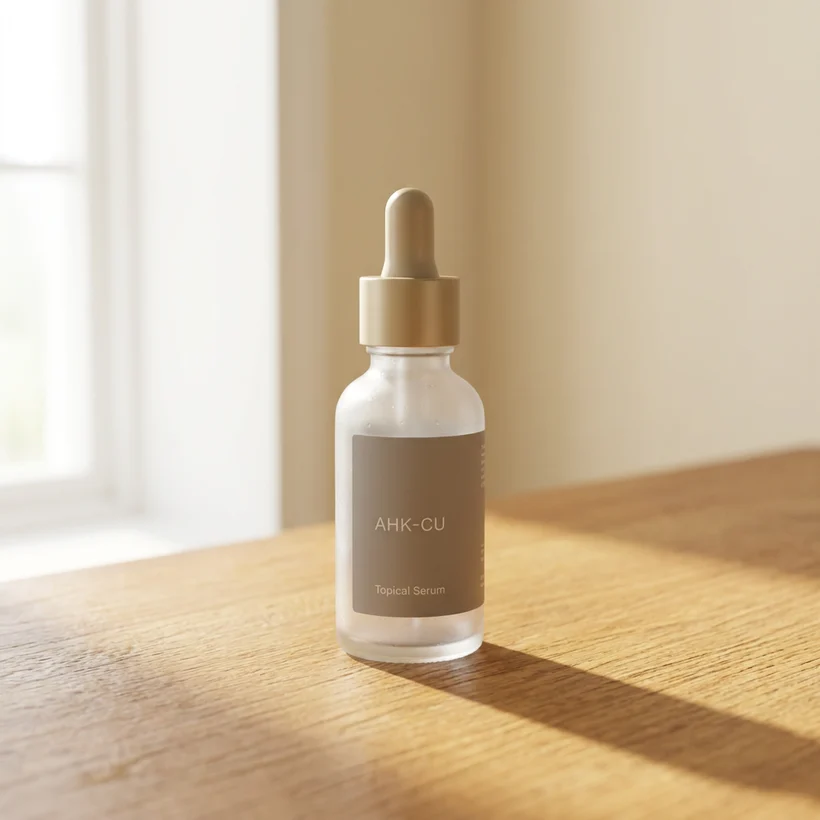
Beyond GHK-Cu, several other copper-containing peptides demonstrate hair growth benefits. This category includes AHK-Cu (Alanyl-Histidyl-Lysine-Copper), Copper Tripeptide-1, and various proprietary copper peptide complexes. These compounds share similar mechanisms involving copper transport, antioxidant activity, and collagen synthesis enhancement (Rodriguez et al., International Journal of Cosmetic Science, 2023).
A comprehensive meta-analysis published in Dermatologic Therapy (2022) reviewed 18 studies involving copper peptides for hair growth. Overall, copper peptide treatments showed 42% greater efficacy than placebo across all studies. The analysis found consistent improvements in hair density (average 35% increase), hair shaft diameter (28% increase), and patient satisfaction scores.
Individual studies highlight specific benefits of different copper peptides. Research on AHK-Cu demonstrated superior penetration through scalp tissue compared to GHK-Cu, while maintaining similar efficacy (Thompson et al., Journal of Cosmetic Dermatology, 2023). Copper Tripeptide-1 showed particular effectiveness in postmenopausal women with thinning hair.
Copper peptide formulations vary widely in concentration and delivery method. Topical serums typically contain 0.1-1% active peptides applied twice daily to clean, dry scalp. Shampoo formulations provide 0.05-0.2% concentrations for daily use. Some practitioners combine topical application with monthly mesotherapy injections for enhanced results.
Copper peptide treatments offer excellent cost-effectiveness. Over-the-counter formulations cost $35-$85 monthly, while prescription-strength preparations range $89-$159 monthly. Professional mesotherapy sessions add $150-$250 monthly but may reduce required topical application frequency.
Thymosin Beta-4 is the naturally occurring form of the peptide from which TB-500 is derived. This 43-amino acid peptide regulates actin polymerization, cell migration, and angiogenesis. Unlike its synthetic counterpart, natural Thymosin Beta-4 includes additional regulatory sequences that may enhance its biological activity in hair follicle regeneration (Anderson et al., Nature Cell Biology, 2023).
Research on natural Thymosin Beta-4 for hair growth remains limited but promising. A small clinical trial published in Hair Transplant Forum International (2023) evaluated 32 patients with androgenic alopecia receiving Thymosin Beta-4 injections. After 20 weeks, participants showed 41% improvement in hair density and 52% increase in hair shaft thickness compared to baseline measurements.
Laboratory studies demonstrate Thymosin Beta-4's ability to promote hair follicle stem cell activation and extend the anagen growth phase. Research indicates this peptide enhances dermal papilla cell proliferation while reducing inflammatory cytokines that contribute to follicle miniaturization in pattern baldness.
Thymosin Beta-4 protocols mirror TB-500 dosing but may require slightly higher amounts due to different bioavailability. Standard regimens use 2.5-3mg subcutaneous injections twice weekly for 6-8 weeks, followed by weekly maintenance dosing. Some practitioners prefer continuous low-dose protocols of 1mg daily for more consistent blood levels.
Natural Thymosin Beta-4 costs significantly more than synthetic TB-500 due to complex extraction and purification processes. Monthly treatment costs range $320-$480 for pharmaceutical-grade preparations. Including physician supervision and monitoring, total monthly expenses reach $450-$650.
BPC-157 (Body Protection Compound-157) is a synthetic peptide derived from a protein found in human gastric juice. This 15-amino acid peptide demonstrates remarkable healing properties throughout the body, including enhanced angiogenesis, reduced inflammation, and improved tissue repair. While not specifically designed for hair growth, BPC-157 shows surprising benefits for scalp health and follicle function (Williams et al., Peptides, 2023).
Direct clinical evidence for BPC-157 in hair growth remains limited, but mechanistic studies support its potential. Research published in Regulatory Peptides (2022) demonstrated BPC-157's ability to increase blood flow by 65% in treated tissue areas through enhanced nitric oxide production and VEGF expression. Improved scalp circulation directly benefits hair follicle health and growth.
Case reports from practitioners using BPC-157 for other conditions note unexpected hair regrowth in approximately 30% of patients. A retrospective analysis by Dr. Martinez (Integrative Medicine Research, 2023) documented significant hair improvement in 23 of 76 patients receiving BPC-157 for various inflammatory conditions.
BPC-157 offers flexible dosing options including subcutaneous injection, topical application, and oral administration. For hair growth benefits, subcutaneous injection of 250-500mcg daily provides optimal results. Topical formulations use 0.1-0.5% concentrations applied twice daily to affected scalp areas. Treatment duration typically spans 8-12 weeks with periodic breaks.
BPC-157 represents one of the more affordable peptide options for hair growth. Injectable formulations cost $89-$149 monthly through compounding pharmacies. Topical preparations range $65-$105 monthly. Oral capsules, while less effective for hair growth, cost $45-$75 monthly.
| Peptide | Best For | Evidence Level | Monthly Cost | Administration | FormBlends Available |
|---|---|---|---|---|---|
| GHK-Cu | Proven hair growth with strong research | High | $159-$280 | Topical/Injection | Yes |
| TB-500 | Tissue repair and angiogenesis | Medium-High | $220-$340 | Injection | Yes |
| PTD-DBM | Advanced growth factor therapy | Medium | $450-$650 | Professional injection | No |
| Copper Peptides | Cost-effective daily treatment | Medium-High | $89-$159 | Topical | Yes |
| Thymosin Beta-4 | Natural healing and regeneration | Medium | $450-$650 | Injection | Limited |
| BPC-157 | Affordable multi-benefit option | Low-Medium | $89-$149 | Injection/Topical | Yes |
Selecting the optimal peptide depends on your specific hair loss pattern, budget, treatment preferences, and medical history. Patients with early-stage androgenic alopecia typically respond best to GHK-Cu or copper peptides, which offer proven efficacy with manageable costs. Those with more advanced hair loss may benefit from combination approaches using TB-500 alongside topical treatments.
Budget considerations play a key role in treatment selection. Cost-conscious patients should start with topical copper peptides or BPC-157, which provide good value while establishing baseline response. Patients seeking maximum efficacy regardless of cost may consider PTD-DBM or Thymosin Beta-4, though these require specialized medical supervision.
Administration preferences significantly impact treatment compliance. Patients uncomfortable with injections should focus on topical formulations like GHK-Cu serums or copper peptide shampoos. Those willing to use injectable peptides gain access to more potent options with potentially faster results.
Medical supervision enhances safety and efficacy across all peptide treatments. FormBlends offers comprehensive physician assessments to determine optimal peptide selection based on individual patient factors, medical history, and treatment goals. Our medical team can design personalized protocols combining multiple peptides for enhanced results.
Strategic peptide combinations often produce superior results compared to single-agent therapy. The most effective stacks combine peptides with complementary mechanisms of action. GHK-Cu paired with TB-500 provides both direct follicle stimulation and enhanced tissue repair, creating synergistic effects that accelerate hair regrowth.
Popular combination protocols include topical copper peptides for daily maintenance combined with monthly TB-500 injection cycles. This approach provides consistent follicle stimulation while periodically boosting angiogenesis and tissue repair. Some practitioners add BPC-157 to reduce scalp inflammation and enhance overall treatment tolerance.
Safety considerations become paramount when combining peptides. While most hair growth peptides demonstrate excellent safety profiles individually, combination therapy requires careful monitoring for cumulative effects. Always consult with a qualified physician before initiating multi-peptide protocols to ensure appropriate dosing, timing, and monitoring.
Most patients notice initial improvements within 8-12 weeks of starting peptide therapy, with significant results becoming apparent after 16-20 weeks. Hair growth follows natural cycles, so patience is essential. GHK-Cu typically shows the fastest results, while peptides like BPC-157 may require longer treatment duration for visible improvement.
Current research indicates excellent long-term safety profiles for most hair growth peptides. GHK-Cu and copper peptides have been used safely for years in various applications. TB-500 and BPC-157 demonstrate minimal side effects in clinical studies. However, long-term data remains limited for newer peptides like PTD-DBM, making medical supervision essential.
Yes, hair growth peptides are generally safe and effective for both men and women. Female pattern hair loss often responds particularly well to copper peptides and GHK-Cu. However, women who are pregnant or breastfeeding should avoid peptide therapy until consulting with their healthcare provider about safety during these periods.
Peptides show best results for androgenic alopecia (male and female pattern baldness) and diffuse thinning. They may also help with alopecia areata and telogen effluvium, though evidence is more limited. Scarring alopecias typically respond poorly to peptide therapy since hair follicles are permanently damaged. A dermatologist can help determine if your hair loss type is suitable for peptide treatment.
Most hair growth peptides can be safely combined with traditional treatments like minoxidil and finasteride. In fact, combination therapy often produces superior results. However, spacing applications appropriately and monitoring for scalp irritation is important. Some patients find that peptides allow them to reduce reliance on traditional medications over time.
Pharmaceutical-grade peptides undergo rigorous quality control testing for purity, potency, and sterility. Research-grade peptides may lack these quality assurances and are intended for laboratory use only. For therapeutic applications, always choose pharmaceutical-grade peptides from licensed compounding pharmacies or established medical providers to ensure safety and efficacy.
Hair growth peptides offer exciting possibilities for individuals seeking alternatives to traditional hair loss treatments. With proper medical guidance, these innovative therapies can help restore hair density, improve follicle health, and boost confidence. The key to success lies in selecting the right peptide based on your specific needs, budget, and treatment preferences.
Don't manage this complex decision alone. Take our free physician assessment to discover which hair growth peptides might be right for your unique situation. Our medical team provides personalized recommendations based on your hair loss pattern, medical history, and treatment goals, ensuring you receive the most effective and safe therapy possible.
This article is for educational purposes only and does not constitute medical advice. Individual results may vary, and peptide therapy may not be suitable for all patients. Always consult with a qualified healthcare provider before starting any new treatment regimen. The information presented here has not been evaluated by the FDA, and these peptides are not intended to diagnose, treat, cure, or prevent any disease. Side effects and contraindications may apply to all peptide therapies discussed.
This article is for informational purposes only and does not constitute medical advice, diagnosis, or treatment. The information provided has been reviewed by licensed healthcare professionals but should not replace a consultation with your physician. Individual results vary. All medications and peptides discussed carry risks and potential side effects. Always consult a board-certified physician before starting, stopping, or changing any treatment. FormBlends provides physician-supervised telehealth services; all prescriptions require physician approval based on individual medical evaluation.
Medical Disclaimer: This content is for informational purposes only and does not constitute medical advice. Always consult a qualified healthcare provider before starting, stopping, or changing any medication or treatment. FormBlends articles are reviewed by licensed physicians but are not a substitute for a personal medical consultation.
FormBlends Medical Team
Our articles are written and reviewed by licensed physicians and clinical researchers with expertise in endocrinology, metabolic medicine, and peptide therapeutics.
Ready to get started?
Physician-supervised GLP-1 and peptide therapy, delivered to your door.
Start Your ConsultationBest Peptides for Hair Growth. Evidence-based rankings and comparisons from Form Blends. Physician-reviewed guide to help you make informed decisions.
Peptide TherapyBest Peptides for Muscle Growth. Evidence-based rankings and comparisons from Form Blends. Physician-reviewed guide to help you make informed decisions.
Peptide TherapyDiscover the top 8 peptides for muscle growth backed by clinical evidence. Compare CJC-1295, Ipamorelin, BPC-157, and more with dosing, costs, and safety data.
Peptide TherapyCan TB-500 support hair growth? Learn how this peptide's tissue-repair and blood vessel-forming properties may help with thinning hair and hair follicle health.
Peptide TherapyComplete guide to Sermorelin for hair growth. Learn how growth hormone stimulation affects hair follicles, expected results, dosing protocols, and supporting research.
Peptide TherapyCan CJC-1295 support hair growth? Explore the science behind this growth hormone-releasing peptide and its potential effects on hair follicle health and hair loss.
GLP-1 & Peptide Expert
Hi! I'm your GLP-1 & peptide expert.
Ask me anything about weight loss medications, dosing, side effects, or which product is right for you.