Key Takeaway
Can TB-500 support hair growth? Learn how this peptide's tissue-repair and blood vessel-forming properties may help with thinning hair and hair follicle health.
TB-500 for hair growth works through its ability to promote blood vessel formation, reduce inflammation around hair follicles, and support cellular migration and tissue repair, all of which are critical factors in maintaining healthy hair growth cycles. While not a traditional hair loss treatment, TB-500's regenerative properties have generated significant interest among people looking for peptide-based approaches to thinning hair.
What Is TB-500?
TB-500 is a synthetic version of Thymosin Beta-4, a naturally occurring peptide found in nearly all human cells. Thymosin Beta-4 plays a fundamental role in tissue repair, wound healing, and cellular development. TB-500 replicates the active region of this protein, giving it potent regenerative properties in a format that can be used therapeutically.
TB-500 has been studied primarily for its wound healing, anti-inflammatory, and tissue regeneration capabilities. Its connection to hair growth stems from the same biological pathways that make it effective for healing: angiogenesis, stem cell activation, and inflammation control.
How TB-500 May Support Hair Growth
Angiogenesis and Blood Supply
Hair follicles depend on a strong blood supply to receive the oxygen and nutrients needed for growth. When blood flow to the scalp is compromised, follicles can shrink and enter prolonged resting phases, leading to thinning hair. TB-500 is a potent promoter of angiogenesis, meaning it stimulates the formation of new blood vessels . By improving microcirculation to the scalp, TB-500 may create a more favorable environment for hair follicle activity.

Anti-Inflammatory Effects
Chronic inflammation around hair follicles is a recognized contributor to hair loss, including androgenetic alopecia (pattern baldness) and alopecia areata (autoimmune hair loss). TB-500 has well-documented anti-inflammatory properties that reduce the production of inflammatory cytokines and promote a healing environment . By calming inflammation at the follicular level, TB-500 may help prevent the damage that leads to follicle miniaturization and hair thinning.
Stem Cell Activation
Research on Thymosin Beta-4 has shown that it plays a role in activating hair follicle stem cells. A landmark study published in the Proceedings of the National Academy of Sciences demonstrated that Thymosin Beta-4 promoted hair growth in mice by stimulating the migration and differentiation of stem cells within the hair follicle . These stem cells are important for regenerating the hair follicle during each growth cycle.
Cellular Migration
TB-500 promotes the migration of keratinocytes, the cells that form the primary structural component of hair. By enhancing the ability of these cells to move and organize, TB-500 may support the formation of stronger, healthier hair shafts.
What the Research Shows
The most relevant research on TB-500 and hair growth comes from studies on its parent protein, Thymosin Beta-4:
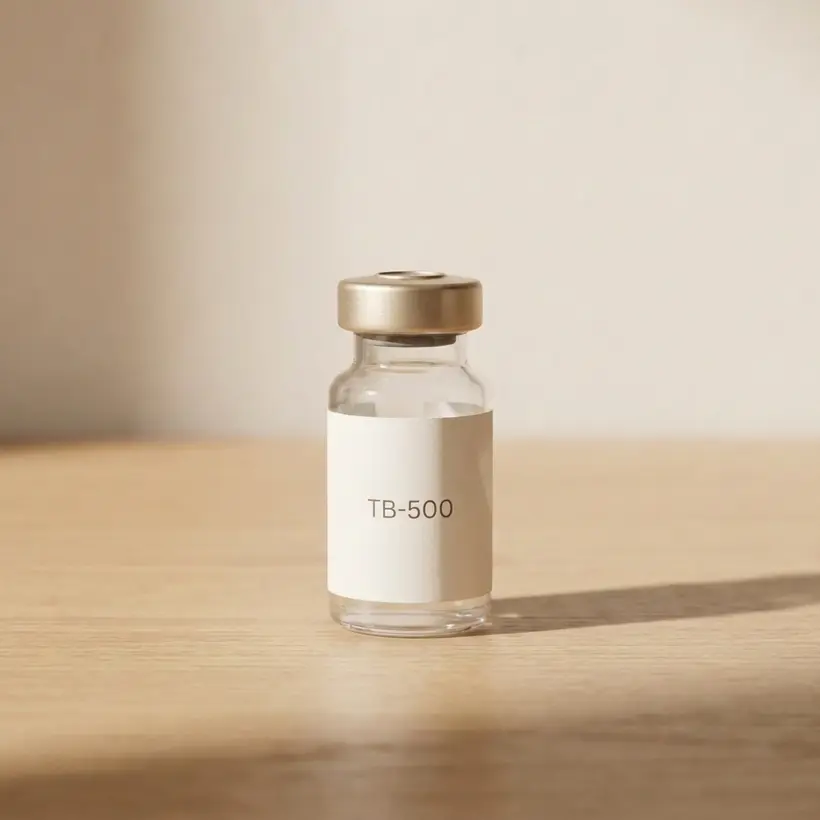
From the FormBlends catalog
TB-500 (Thymosin Beta-4)
Universal repair peptide for tissue regeneration · From $49/mo · compounded by a licensed 503A pharmacy, dispensed only after provider review.
Learn about TB-500 (Thymosin Beta-4) →- Mouse hair growth study: Thymosin Beta-4 applied topically to mice significantly accelerated hair growth, with treated mice showing faster hair regrowth after shaving compared to controls
- Hair follicle stem cell activation: The same research identified that Thymosin Beta-4 increased the number of active hair follicle stem cells and promoted their migration to the base of the follicle where new hair is formed
- Wound healing with hair regrowth: In wound healing studies, areas treated with Thymosin Beta-4 showed new hair growth at wound sites, a finding that further supports its role in follicle regeneration
These studies used Thymosin Beta-4 directly, and most were conducted in animal models. TB-500, as a synthetic fragment of Thymosin Beta-4, is expected to carry similar properties, but direct human clinical trials for TB-500 and hair growth haven't yet been published.
TB-500 vs Traditional Hair Loss Treatments
| Factor | TB-500 | Minoxidil (Rogaine) | Finasteride (Propecia) |
|---|---|---|---|
| Primary mechanism | Angiogenesis, stem cell activation, anti-inflammatory | Vasodilation (improved blood flow) | DHT blocker (hormonal) |
| Administration | Subcutaneous injection | Topical application | Oral pill |
| Hormonal effects | None | None | Yes (reduces DHT) |
| Sexual side effects | None reported | None | Possible (decreased libido, erectile issues) |
| Systemic healing benefits | Yes (tissue repair, reduced inflammation) | No | No |
| Human clinical data for hair | Limited | Extensive | Extensive |
Dosing TB-500 for Hair Growth
There's no standardized hair-growth-specific dosing protocol for TB-500. But practitioners typically follow general TB-500 dosing guidelines:
Loading Phase (Weeks 1-4)
- Dose: 2-2.5 mg administered twice per week
- Purpose: Build up therapeutic levels in the body
Maintenance Phase (Weeks 5-8)
- Dose: 2 mg once per week or every two weeks
- Purpose: Sustain benefits while reducing frequency
Cycle Length
A typical cycle runs 8-12 weeks, followed by a rest period of 4-6 weeks. For cycling details, see our TB-500 cycling protocol guide. Hair growth results, if they occur, typically become noticeable during the second month of use or later, as hair growth is inherently a slow process.
Combining TB-500 with Other Approaches
Many people exploring peptide therapy for hair growth combine TB-500 with other supportive strategies:
- BPC-157: The combination of TB-500 and BPC-157 may offer combined tissue repair benefits, including improved scalp health
- GHK-Cu: This copper peptide has its own hair growth research and may complement TB-500's mechanisms
- Microneedling: Creating micro-injuries in the scalp can stimulate healing responses that TB-500 then amplifies
- Nutritional support: Adequate protein, biotin, iron, zinc, and vitamin D are foundational for hair health
- Stress management: Chronic stress is a known driver of hair loss, and addressing it improves outcomes with any treatment
Who Might Benefit Most
TB-500 for hair growth may be most relevant for:
- Individuals experiencing diffuse thinning with no identified hormonal cause
- People whose hair loss may be related to poor scalp circulation
- Those with inflammatory scalp conditions contributing to hair loss
- Individuals who want to avoid hormonal treatments like finasteride
- People already using TB-500 for other healing purposes who notice hair quality improvements as a secondary benefit
Who Should Not Use TB-500 for Hair Growth
- Pregnant or breastfeeding women
- Individuals with active cancer (due to TB-500's pro-angiogenic properties)
- People with known allergies to Thymosin Beta-4 or related peptides
- Anyone not under physician supervision
Frequently Asked Questions
How long does it take for TB-500 to affect hair growth?
Hair growth is a slow biological process. If TB-500 is going to help, you should expect to wait at least 2-3 months before noticing changes. Some users report improved hair texture and reduced shedding before visible new growth appears.
Can I inject TB-500 directly into my scalp?
TB-500 is typically administered subcutaneously in areas like the abdomen or thigh, not directly into the scalp. Because TB-500 acts systemically, it doesn't need to be injected at the target site to exert its effects. Scalp injections would need to be performed by a medical professional if attempted.
Will my hair fall out again if I stop TB-500?
This depends on the underlying cause of your hair loss. If TB-500 helped by resolving inflammation or improving blood supply, some benefits may persist after stopping. If the underlying condition (such as genetic pattern baldness) is ongoing, you may see a gradual return to your previous state, similar to stopping any hair treatment.
Is TB-500 better than minoxidil for hair growth?
Minoxidil has far more human clinical evidence supporting its use for hair growth. TB-500 offers a different mechanism of action with additional whole-body benefits, but less direct evidence for hair specifically. They aren't mutually exclusive and could potentially be used together under physician guidance.
Medical References
- Goldstein AL, Hannappel E, Sosne G, Kleinman HK. Thymosin beta4: a multi-functional regenerative peptide. Basic properties and clinical applications. Expert Opin Biol Ther. 2012;12(1):37-51. [PubMed | DOI]
Explore TB-500 Therapy with FormBlends
If you're interested in exploring TB-500 for hair growth or other regenerative benefits, FormBlends offers physician-supervised peptide therapy through our convenient telehealth platform. Our medical team can evaluate whether TB-500 is appropriate for your situation, design a personalized protocol, and monitor your progress. Start your consultation with a FormBlends physician today.
Ready when you are
TB-500 (Thymosin Beta-4)
Universal repair peptide for tissue regeneration · From $49/mo · compounded by a licensed 503A pharmacy, dispensed only after provider review.
Learn about TB-500 (Thymosin Beta-4) →