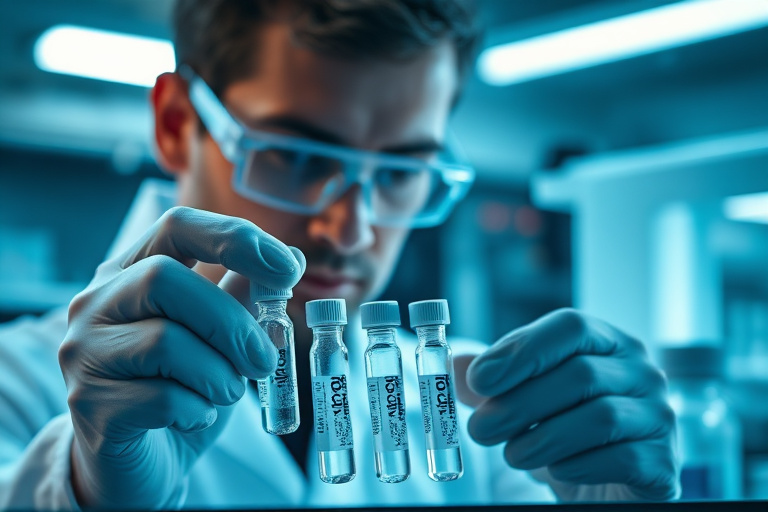
You're on a GLP-1 medication for weight management and wondering about adding BPC-157 to the mix. Maybe you've heard it can help with the gut side effects. Maybe you have a nagging injury you want to address at the same time.
You're on a GLP-1 medication for weight management and wondering about adding BPC-157 to the mix. Maybe you've heard it can help with the gut side effects. Maybe you have a nagging injury you want to address at the same time. The BPC-157 GLP-1 stack is one of the most common questions FormBlends providers receive, and for good reason.
Key Takeaways:
- Discover why people want to stack bpc-157 with glp-1
- Understand what we know about combining them
- Learn how providers structure a bpc-157 + glp-1 protocol
- Who Should NOT Stack BPC-157 with GLP-1
The short answer: there are no known interactions between BPC-157 and GLP-1 medications in the current research. Some providers are finding that BPC-157 may actually help manage GI side effects that GLP-1 medications can cause. But this is absolutely a conversation to have with your provider before combining anything.
Why People Want to Stack BPC-157 with GLP-1
The reasons for combining these two treatments fall into two main categories: managing GLP-1 side effects and addressing separate health goals simultaneously.
GI side effect management. Nausea, bloating, constipation, and acid reflux are among the most common side effects of GLP-1 medications like compounded semaglutide and tirzepatide. These side effects are significant enough that some people discontinue treatment. BPC-157's well-documented gastroprotective properties in animal research make it an interesting option for supporting gut health during GLP-1 therapy.
Research by Sikiric et al. Has shown BPC-157 can protect gastric mucosa, promote healing of gut lesions, and modulate gastrointestinal motility in animal models. For someone dealing with GLP-1-related nausea or gastroparesis-like symptoms, these properties are relevant.
Injury recovery during weight loss. Many people on GLP-1 medications are also starting or intensifying exercise programs. More activity means more potential for strains, joint issues, and overuse injuries. BPC-157's tissue repair capabilities make it a logical companion for someone who's getting more active while losing weight.
"Compounding pharmacies serve a critical role in healthcare, but patients need to understand the difference between a properly regulated 503B facility and an unregulated operation. Ask about PCAB accreditation and third-party testing.") Dr. Scott Brunner, PharmD, Alliance for Pharmacy Compounding
Gut barrier support. Weight loss and dietary changes can stress the GI system. BPC-157 may support gut barrier integrity during these transitions, though this benefit hasn't been specifically studied in the context of GLP-1 use.
For a full understanding of how GLP-1 medications work, check out our or .
Free Download: BPC-157 Reconstitution calculator Cheat Sheet
Covers reconstitution, dosing, storage, and injection site guidance for BPC-157. important if you're adding a peptide protocol to your GLP-1 treatment. Get yours free (we'll email it to you instantly.
[Download Now]
What We Know About Combining Them
Patient Perspective:"I tried BPC-157 for a chronic rotator cuff issue after 8 months of physical therapy with minimal improvement. Within 3 weeks of a BPC-157 protocol alongside continued PT, I noticed significantly less pain during overhead movements. I can't say for certain what caused the improvement, but the timeline was notable.") Chris D., 38, FormBlends patient (name changed for privacy)
Popular Therapeutic Peptides by Use Case. Based on published peptide research literature.
View data table
Bar chart showing popular therapeutic peptides by use case: BPC-157 (88), TB-500 (82), Sermorelin (78), Ipamorelin (75), GHK-Cu (70)
Category
Clinical Interest Score
Detail
BPC-157
88
Tissue repair and gut healing
TB-500
82
Injury recovery
Sermorelin
78
Growth hormone support
Ipamorelin
75
Anti-aging and recovery
GHK-Cu
70
Skin and tissue repair
Let's be clear about what the evidence does and doesn't show.
No known pharmacological interactions. BPC-157 and GLP-1 receptor agonists work through completely different mechanisms. GLP-1 medications act on GLP-1 receptors in the pancreas and brain to regulate blood sugar and appetite. BPC-157 works primarily through growth factor modulation, nitric oxide pathways, and anti-inflammatory mechanisms. They don't compete for the same receptors or metabolic pathways.
No published combination studies. There are no published clinical trials specifically studying BPC-157 and GLP-1 medications used together. The safety profile of the combination comes from clinical observation and the absence of known mechanistic conflicts, not from dedicated research.
Clinical observations are encouraging. Providers who prescribe both compounds report that patients tolerate the combination well. Some providers note that patients who add BPC-157 to their GLP-1 protocol report improved GI comfort, though this is anecdotal and not yet supported by controlled studies.
Timing considerations. Most providers recommend injecting BPC-157 and GLP-1 medications at different sites and often at different times of day. GLP-1 medications are typically weekly injections (subcutaneous), while BPC-157 is usually daily. Separating injection sites prevents any local interaction at the injection location.
This is exactly the kind of decision that needs a provider's input. A licensed FormBlends provider can evaluate your specific situation and determine whether this combination makes sense for you.
How Providers Structure a BPC-157 + GLP-1 Protocol
When providers do recommend combining BPC-157 with GLP-1 therapy, here's what a typical approach looks like.
From the FormBlends catalog
BPC-157
The body protection compound for accelerated healing · From $169/mo · compounded by a licensed 503A pharmacy, dispensed only after provider review.
GLP-1 medication stays on its standard schedule. If you're on a weekly semaglutide or tirzepatide injection, that timing and dosing don't change. Your GLP-1 titration schedule is set by your provider based on your tolerance and response.
BPC-157 runs as a separate cycle. A standard 4-to-6-week BPC-157 cycle at 250 to 500 mcg per day operates independently from your GLP-1 schedule. You can learn more about .
Injection site rotation. Use different body areas for each medication. For example, GLP-1 in the abdomen and BPC-157 in the thigh or near an injury site. This prevents any confusion about which injection goes where and avoids stacking two injections in the same tissue.
Monitoring and tracking. When running two protocols simultaneously, tracking becomes more important. You need to know which compound is producing which effects. The lets you log both your GLP-1 doses and BPC-157 injections in one place. This gives your provider a clear picture at your check-ins.
Lab work. Your provider may want baseline and follow-up blood work to monitor liver function, inflammatory markers, and metabolic panels. This is standard good practice when using multiple compounds.
Who Should NOT Stack BPC-157 with GLP-1
While the combination appears well tolerated, some situations call for caution.
If you're still titrating your GLP-1 medication. When you're in the early weeks of GLP-1 therapy and still adjusting to side effects, adding a second compound can make it harder to tell what's causing what. Most providers suggest getting stable on your GLP-1 medication first before adding BPC-157.
If you have active GI complications. Severe gastroparesis, bowel obstruction, or pancreatitis require focused medical management. Adding a peptide during an acute GI crisis isn't appropriate without specific provider guidance.
If you're on multiple other medications. The more compounds in the mix, the harder it's to track interactions and side effects. Your provider needs to evaluate your complete medication and supplement list.
If budget is a concern. Running both protocols simultaneously costs more. If finances are tight, your provider can help you prioritize which treatment offers the most benefit for your current health goals.
For more on managing GLP-1 side effects through other strategies, our covers dietary tips, timing adjustments, and what's normal versus what needs medical attention.
Frequently Asked Questions
Will BPC-157 interfere with my weight loss from GLP-1 medication?
There's no evidence that BPC-157 interferes with the appetite-suppressing or metabolic effects of GLP-1 medications. They work through entirely different pathways. BPC-157 doesn't affect GLP-1 receptors, blood sugar regulation, or appetite signaling.
Can BPC-157 help with the nausea from semaglutide?
Some providers report that patients experience reduced GI discomfort when adding BPC-157 to their GLP-1 protocol. This is consistent with BPC-157's gastroprotective properties seen in animal research. But this benefit hasn't been confirmed in controlled human studies. Talk to your provider about whether it's worth trying.
Do I inject BPC-157 and semaglutide in the same spot?
No. Use different injection sites for each medication. This avoids any potential local interaction and makes it easier to distinguish injection site reactions. For example, use the abdomen for your GLP-1 injection and the thigh for BPC-157.
How long should I be on a GLP-1 before adding BPC-157?
Most providers suggest waiting until you're stable on your GLP-1 medication, typically after completing the initial titration period (4 to 8 weeks). This lets you establish a baseline response to the GLP-1 medication so you can clearly identify any effects from adding BPC-157.
Is the BPC-157 and GLP-1 combination more expensive?
Yes, running both protocols simultaneously increases your overall treatment cost. BPC-157 cycles typically add $100 to $300 for a 4-to-6-week cycle on top of your GLP-1 medication cost. Check for current rates on both.
What's Your Next Move?
You have the information. Now let a licensed provider help you put it into action. FormBlends makes it simple, answer a few questions and get a personalized recommendation.
Chang CH, Tsai WC, Lin MS, et al. The promoting effect of pentadecapeptide BPC 157 on tendon healing involves tendon outgrowth, cell survival, and cell migration. J Appl Physiol. 2011;110(3):774-780. Doi:10.1152/japplphysiol.00945.2010
Seiwerth S, Brcic L, Vuletic LB, et al. BPC 157 and blood vessels. Curr Pharm Des. 2014;20(7):1121-1125. Doi:10.2174/13816128113199990421
This content is provided for informational and educational purposes only. It isn't a substitute for professional medical advice, diagnosis, or treatment. Always seek the advice of a licensed healthcare provider with any questions about a medical condition or treatment plan.
Last updated: 2026-03-24
Ready when you are
BPC-157
The body protection compound for accelerated healing · From $169/mo · compounded by a licensed 503A pharmacy, dispensed only after provider review.
FormBlends does not claim an individual clinician byline unless a named reviewer is available. For this page, the editorial team checks medical and regulatory claims against primary sources, clinical trials, public datasets, and regulator guidance.
For Bpc 157 With Glp 1 Can You Stack, FormBlends checks the page topic against primary trials, systematic reviews, guidelines, and current PubMed-indexed literature where available. These citations are context, not medical advice, proof of eligibility, or a claim that every study applies to every patient.
Use this page to decide if a provider review is the right next step
Direct answer
Bpc 157 With Glp 1 Can You Stack research is most useful when it helps you compare eligibility, expected results, side effects, cost, and the supervision needed before treatment.
You're on a GLP-1 medication for weight management and wondering about adding BPC-157 to the mix. Maybe you've heard it can help with the gut side effects. Maybe you have a nagging injury you want to address at the same time. The practical reason to read "Bpc 157 With Glp 1 Can You Stack" is to separate useful context from easy claims about BPC-157, side effects. It sits in a peptide therapy guide where research status, sourcing, compounding quality, dosing, and clinician oversight all need extra scrutiny and should help with patient education and clinical context. Because this article has 7 major sections, scan the headings first and then use the FAQ or summary sections to pressure-test the answer. Use the page to sharpen your next question, especially if your health history or medications change the risk profile.
Confirm whether the page is discussing an FDA-approved use, a compounded option, or research-only context.
Ask a licensed clinician how the evidence applies to your health history, medications, labs, and side-effect risk.
Check the latest label, trial update, pharmacy policy, or state rule when the article touches medication access.
Original tools and data
Use the FormBlends research stack
These assets are built to be useful beyond a single article: shareable data pages, calculators, provider comparisons, and safety checks that give Google and readers something original to crawl.
Practical 2026 note for Bpc 157 With Glp 1 Can You Stack
This update makes Bpc 157 With Glp 1 Can You Stack more specific by tying semaglutide, tirzepatide, BPC-157, cash-pay pricing, safety signals, bpc to the page's original clinical, cost, access, or comparison angle.
The goal is to make the article more useful for people who already know the headline question and need page-level specifics, not another interchangeable peptide therapy summary.
For 2026 review, the content emphasizes current verification, treatment fit, and patient-safety questions that can be discussed with a qualified provider.
Custom 2026 image for Bpc 157 With Glp 1 Can You Stack, peptide therapy, and better treatment decision-making.
Image description: Unique image for this page covering Bpc 157 With Glp 1 Can You Stack, peptide therapy, safety, cost, provider selection, and patient decision-making.
Download the Peptide Quick Reference Card
A printable 2-page reference covering popular peptides, dosing ranges, stacking protocols, and storage.
Free download. We'll also send helpful GLP-1 guides to your inbox. Unsubscribe anytime.
Medical Disclaimer: This content is for informational purposes only and does not constitute medical advice. Always consult a qualified healthcare provider before starting, stopping, or changing any medication or treatment. FormBlends articles are source-checked against medical and regulatory references, but they are not a substitute for a personal medical consultation.
Written by Emily Rodriguez, RDN, CSSD
Registered Dietitian. This article was researched against primary regulatory, trial, prescribing, and manufacturer sources where available. Reviewed against primary medical, regulatory, and trial sources for accuracy, sourcing, and patient-safety framing.
Ready to get started?
Provider-reviewed GLP-1 and peptide therapy, delivered to your door.